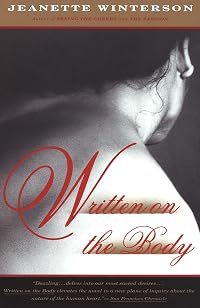
Written on the Body
by Jeanette Winterson
On This Page
Description
Fiction. Literature. Romance. LGBTQIA+ (Fiction.) HTML:The most beguilingly seductive novel to date from the author of The Passion and Sexing the Cherry. Winterson chronicles the consuming affair between the narrator, who is given neither name nor gender, and the beloved, a complex and confused married woman.“At once a love story and a philosophical meditation.” —New York Times Book Review..
Tags
Recommendations
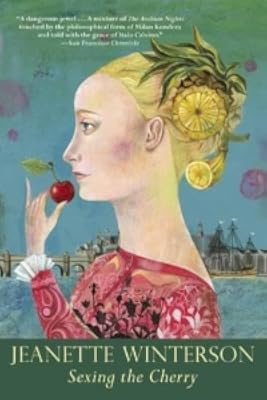
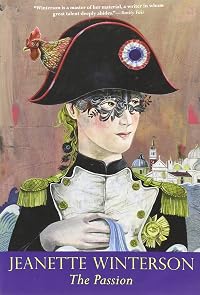
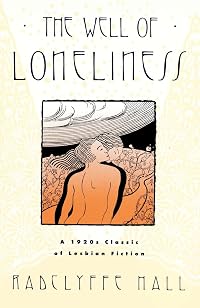
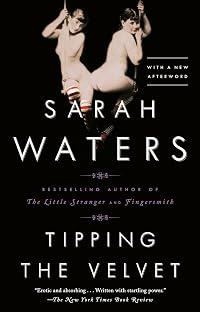
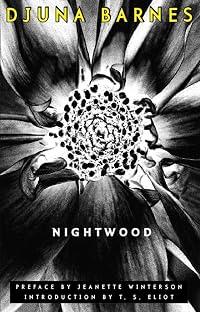
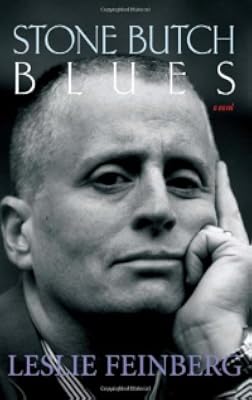
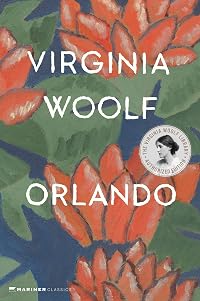
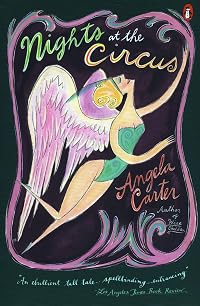
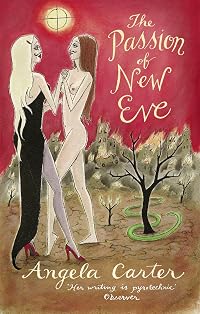
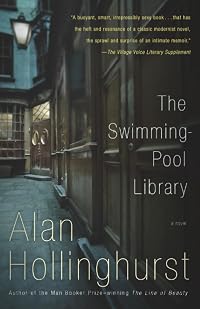
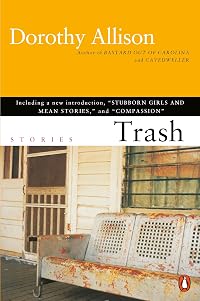


Member Recommendations

Member Reviews
On the surface, this is a sensual, reflective, and sometimes humorous recollection of the narrator’s loves won and lost, compared with the current one. Unwelcome news triggers a difficult choice, with huge ramifications. It was made with love, but was it the right decision, and did the narrator even have the right to make it? It’s a curious amalgam of styles, yet unmistakably Winterson, including a set of short, more abstract sections, and the fact the bisexual narrator’s gender is unspecified.
But peel back the gilt and what’s beneath is not so straightforward. All the best literature has a unique message for every reader, on each encounter. Gilt reflects: what spoke to me is not what you will hear and respond to.
Image: show more Antique mirror (Source.)
I found this shockingly, painfully good. I knew it was about relationships and was ambiguous about gender, but I was unprepared for the raw dissection of loss. It punched hard, but was shot through with love. Definitely the right book at the right time for me.
“Why is the measure of love loss?”
The opening line, repeated later, brought tears. It’s the converse of my recent experience of grief as the price of love - love with nowhere to go. But nevertheless, and without question, “Love is worth it”.
"You don't get over it because 'it' is the person you loved."
Image: My father’s keys, his writing instantly recognisable from just four letters.
“No-one tells you in grief-counselling or books on loss what it will be like when you find part of the beloved unexpectedly.”
Love is…
“I went to church… I wanted the comfort of other people’s faith.”
The Bible of her childhood infuses atheist Winterson’s writing, and this is no exception: phrases, ideas, and liturgical repetition and rhythm. Here, it’s most obvious in how the “emotional nomad” writes about love:
“Love demands expression. It will not stay still, stay silent, be good, be modest, be seen and not heard, no.”
and
“No-one can legislate love; it cannot be given orders or cajoled into service. Love belongs to itself, deaf to pleading and unmoved by violence. Love is not something you can negotiate. Love is the one thing stronger than desire and the only proper reason to resist temptation.”
From 1 Corinthians 13, v4-8 (NIV):
“Love is patient, love is kind. It does not envy, it does not boast, it is not proud. It does not dishonor others, it is not self-seeking, it is not easily angered, it keeps no record of wrongs. Love does not delight in evil but rejoices with the truth. It always protects, always trusts, always hopes, always perseveres. Love never fails.”
But I don’t think the Bible is right: love can fail:
“What then kills love? Only this: neglect.”
The other message, from way back in 1992, is that gender doesn’t matter; there is no question or hand-wringing; it’s not relevant to the story.
Image: “Love is love” in current parlance. (Source.)
Marriage
“Is happiness always a compromise?”
“Contentment… are you sure it’s not an absence of feeling?”
In my teens, I remember my father quoting (allegedly) Prince Philip: “Marriage is the highest form of prostitution”. There is truth in that, touched on repeatedly here. We all exchange things for sex and love: our motives are mixed and rarely pure. And the promises of marriage can be hard to keep.
“Marriage is the flimsiest weapon against desire.”
“Cheating is easy… To borrow against the trust someone has placed in you costs nothing at first.”
The Translator, Translated
“Articulacy of the fingers… signing on the body body longing.”
“Your flesh is my flesh. You deciphered me and now I am plain to read.”
The narrator is a translator (there are many references to great literature, as usual for Winterson), but better in abstract than with those they love, let alone themself.
“Written on the body is a secret code only visible in certain lights… In places the palimpsest is so heavily worked that the letters feel like Braille… I didn’t know that Louse would have reading hands. She has translated me into her own book.”
Bio-anatomical Prose Poetry
“I know the stigmata of presumption.”
There are no chapters, but two-thirds through, there are four short sections that defy easy description: semi-abstract musings on cells, skin, skeleton, and “special senses”, as the narrator agonises over anticipatory loss in a profound and sensual way.
“To remember you it’s my own body I touch.”
Ending
“Is this the proper ending? If not the proper then the inevitable?”
As I approached the end, I was nervous: I wasn’t sure what a happy ending would be, but knew I didn't want one. I need not have feared. It is everything and nothing - interpret as you like. I could quote the whole closing paragraph, without fear of spoilers.
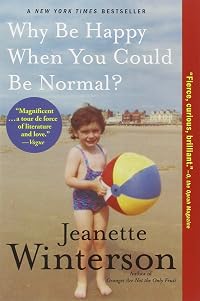
In her brilliant autobiography, Why be Happy when you Could be Normal? (see my review HERE), Winterson categorises three types of ending: revenge, tragedy and forgiveness. Both books contain all three.
Other Quotes
Memory of Love
• “How easy is it to destroy the past and how difficult to forget it?”
• “Wisdom says forget. The body howls.”
• “I’ve tried to get you out of my head but I can’t seem to get you out of my flesh.”
• “I don’t want to be reminded of you, I want you.”
• “The power of memory is such that it can lift reality for a time.”
Relationships and Fallout
• “I used to think of marriage as a plate-glass window just begging for a brick.”
• “Odd that marriage, a public display and free to all, gives way to that most secret of liaisons, an adulterous affair.”
• “I had to keep my heart to myself in case I infected somebody” with “emotional clap”.
• “You never give away your heart; you lend it from time to time.”
• “I had no dreams to possess you - but I wanted you to possess me.”
• “With old friends… you know one another as well as lovers do and you have less to pretend about” - so you’re more likely to be honest.
Dry Humour
• “The ultimate act of selfishness; a woman who put herself first.”
• “Her husband lies over her like a tarpaulin.”
• “The women wore their jewellery like medals… a palimpsest of love-affairs” on show at the opera.
• “I’d run my hands over her padded flesh with all the enthusiasm of a second-hand sofa dealer.”
• “They considered themselves to be Australian aristocracy, that is, they were descended from convicts.”
• “She had a steady hand but she like to spill. It made work for her daughter.”
Other
• “What you risk reveals what you value.”
• “People usually know exactly why they are happy. They very rarely know why they are miserable.”
Winterson is queen of the extended metaphor. This is one of many (others include maps, animals, jigsaws):
“When she lifted the soup spoon to her lips how I longed to be that innocent piece of stainless steel… Let me be diced carrot, vermicelli, just so that you will take me in your mouth. I envied the French stick. I watched her break and butter each piece, soak it slowly in her bowl, let it float, grow heavy and fat, sink under the deep red weight and then be resurrected to the glorious pleasure of her teeth… I will taste you if only through your cooking.” show less
But peel back the gilt and what’s beneath is not so straightforward. All the best literature has a unique message for every reader, on each encounter. Gilt reflects: what spoke to me is not what you will hear and respond to.
Image: show more Antique mirror (Source.)
I found this shockingly, painfully good. I knew it was about relationships and was ambiguous about gender, but I was unprepared for the raw dissection of loss. It punched hard, but was shot through with love. Definitely the right book at the right time for me.
“Why is the measure of love loss?”
The opening line, repeated later, brought tears. It’s the converse of my recent experience of grief as the price of love - love with nowhere to go. But nevertheless, and without question, “Love is worth it”.
"You don't get over it because 'it' is the person you loved."
Image: My father’s keys, his writing instantly recognisable from just four letters.
“No-one tells you in grief-counselling or books on loss what it will be like when you find part of the beloved unexpectedly.”
Love is…
“I went to church… I wanted the comfort of other people’s faith.”
The Bible of her childhood infuses atheist Winterson’s writing, and this is no exception: phrases, ideas, and liturgical repetition and rhythm. Here, it’s most obvious in how the “emotional nomad” writes about love:
“Love demands expression. It will not stay still, stay silent, be good, be modest, be seen and not heard, no.”
and
“No-one can legislate love; it cannot be given orders or cajoled into service. Love belongs to itself, deaf to pleading and unmoved by violence. Love is not something you can negotiate. Love is the one thing stronger than desire and the only proper reason to resist temptation.”
From 1 Corinthians 13, v4-8 (NIV):
“Love is patient, love is kind. It does not envy, it does not boast, it is not proud. It does not dishonor others, it is not self-seeking, it is not easily angered, it keeps no record of wrongs. Love does not delight in evil but rejoices with the truth. It always protects, always trusts, always hopes, always perseveres. Love never fails.”
But I don’t think the Bible is right: love can fail:
“What then kills love? Only this: neglect.”
The other message, from way back in 1992, is that gender doesn’t matter; there is no question or hand-wringing; it’s not relevant to the story.
Image: “Love is love” in current parlance. (Source.)
Marriage
“Is happiness always a compromise?”
“Contentment… are you sure it’s not an absence of feeling?”
In my teens, I remember my father quoting (allegedly) Prince Philip: “Marriage is the highest form of prostitution”. There is truth in that, touched on repeatedly here. We all exchange things for sex and love: our motives are mixed and rarely pure. And the promises of marriage can be hard to keep.
“Marriage is the flimsiest weapon against desire.”
“Cheating is easy… To borrow against the trust someone has placed in you costs nothing at first.”
The Translator, Translated
“Articulacy of the fingers… signing on the body body longing.”
“Your flesh is my flesh. You deciphered me and now I am plain to read.”
The narrator is a translator (there are many references to great literature, as usual for Winterson), but better in abstract than with those they love, let alone themself.
“Written on the body is a secret code only visible in certain lights… In places the palimpsest is so heavily worked that the letters feel like Braille… I didn’t know that Louse would have reading hands. She has translated me into her own book.”
Bio-anatomical Prose Poetry
“I know the stigmata of presumption.”
There are no chapters, but two-thirds through, there are four short sections that defy easy description: semi-abstract musings on cells, skin, skeleton, and “special senses”, as the narrator agonises over anticipatory loss in a profound and sensual way.
“To remember you it’s my own body I touch.”
Ending
“Is this the proper ending? If not the proper then the inevitable?”
As I approached the end, I was nervous: I wasn’t sure what a happy ending would be, but knew I didn't want one. I need not have feared. It is everything and nothing - interpret as you like. I could quote the whole closing paragraph, without fear of spoilers.
In her brilliant autobiography, Why be Happy when you Could be Normal? (see my review HERE), Winterson categorises three types of ending: revenge, tragedy and forgiveness. Both books contain all three.
Other Quotes
Memory of Love
• “How easy is it to destroy the past and how difficult to forget it?”
• “Wisdom says forget. The body howls.”
• “I’ve tried to get you out of my head but I can’t seem to get you out of my flesh.”
• “I don’t want to be reminded of you, I want you.”
• “The power of memory is such that it can lift reality for a time.”
Relationships and Fallout
• “I used to think of marriage as a plate-glass window just begging for a brick.”
• “Odd that marriage, a public display and free to all, gives way to that most secret of liaisons, an adulterous affair.”
• “I had to keep my heart to myself in case I infected somebody” with “emotional clap”.
• “You never give away your heart; you lend it from time to time.”
• “I had no dreams to possess you - but I wanted you to possess me.”
• “With old friends… you know one another as well as lovers do and you have less to pretend about” - so you’re more likely to be honest.
Dry Humour
• “The ultimate act of selfishness; a woman who put herself first.”
• “Her husband lies over her like a tarpaulin.”
• “The women wore their jewellery like medals… a palimpsest of love-affairs” on show at the opera.
• “I’d run my hands over her padded flesh with all the enthusiasm of a second-hand sofa dealer.”
• “They considered themselves to be Australian aristocracy, that is, they were descended from convicts.”
• “She had a steady hand but she like to spill. It made work for her daughter.”
Other
• “What you risk reveals what you value.”
• “People usually know exactly why they are happy. They very rarely know why they are miserable.”
Winterson is queen of the extended metaphor. This is one of many (others include maps, animals, jigsaws):
“When she lifted the soup spoon to her lips how I longed to be that innocent piece of stainless steel… Let me be diced carrot, vermicelli, just so that you will take me in your mouth. I envied the French stick. I watched her break and butter each piece, soak it slowly in her bowl, let it float, grow heavy and fat, sink under the deep red weight and then be resurrected to the glorious pleasure of her teeth… I will taste you if only through your cooking.” show less
Exactly the sort of precise, too-intimate writing that I love delving into and reading over and over, at points spending several minutes on a single paragraph. The plot itself is meandering, perhaps melodramatic, but the plot is secondary.
"'Explore me,' you said and I collected my ropes, flasks and maps, expecting to be back home soon. I dropped into the mass of you and I cannot find the way out. Sometimes I think I'm free, coughed up like Jonah from the whale, but then I turn a corner and recognise myself again. Myself in your skin, myself lodged in your bones, myself floating in the cavities that decorate every surgeon's wall. That is how I know you. You are what I know."
"'Explore me,' you said and I collected my ropes, flasks and maps, expecting to be back home soon. I dropped into the mass of you and I cannot find the way out. Sometimes I think I'm free, coughed up like Jonah from the whale, but then I turn a corner and recognise myself again. Myself in your skin, myself lodged in your bones, myself floating in the cavities that decorate every surgeon's wall. That is how I know you. You are what I know."
This novel is a treatise on love, lust, loss and grief. Mostly on love, though. That precise emotion that terrifies. Winterson's writing is also a precise emotion, by turns caustic, funny and beautiful. I loved almost everything. Only the ending let the book down.
i'm glad to see that this holds up, even as the genderless narrator isn't radical in the way that it originally was when this was published, and for years afterward. still, the not knowing means that the reader is constantly making assumptions and bringing their own stuff into it. of course that's always true when we're reading, but it's just insistently in your face when reading this.
i didn't love this as much this time around, but i still really, really liked it. her references (she's so smart) her writing her meditations her ability to focus on the thing that most people don't. there is such exquisite beauty in this. so much to think about.
"I took them into the garden and burned them one by one and I thought how easy it is to destroy show more the past and how difficult to forget it."
"Louise, in this single bed, between these garish sheets, I will find a map as likely as any treasure hunt. I will explore you and mine you and you will redraw me according to your will. We shall cross one another's boundaries and make ourselves one nation. Scoop me in your hands for I am good soil. Eat of me and let me be sweet."
"I wasn't happy but the power of memory is such that it can lift reality for a time. Or is memory the more real place?"
on the clavicle: 'I cannot think of the double curve lithe and flowing with movement as a bony ridge, I think of it as the musical instrument that bears the same root. Clavis. Key. Clavichord. The first stringed instrument with a keyboard. Your clavicle is both keyboard and key. If I push my fingers into the recesses behind the bone I find you like a soft shell crab. I find the openings between the springs of muscle where I can press myself into the chords of your neck. The bone runs in perfect scale from sternum to scapula. It feels lathe-turned. Why should a bone be balletic?"
"Wisdom says forget, the body howls." (4 stars)
from nov 2013:
this book is simply and utterly gorgeous from the first word to virtually the last. it's a beautiful poem (but isn't poetry) that i read as slowly as i could to savor it. the parts that aren't lyrical are beautiful in their own and very different way, as she's talking about sickness and death, about the body decaying or functioning. this book, although even better in my memory of it (i remember swooning over it the first time) than in actuality, is truly wonderful.
but - it's not for everyone, as it's not a plot-heavy novel (although the plot isn't tenuous at all). it's simply the narrator's experience of love and loss, focusing on the most recent of the many loves in his/her life. (the gender of the narrator isn't clear, making this i guess theoretically more accessible to readers in general? although i found it distracting - because i was trying to label the narrator, not because she wrote it in a way that made it distracting. actually i thought she did a really incredible job making it totally plausible that the narrator could be either a man or a woman; it was written very naturally, she didn't seem to be trying to exclude language or detail.) the overwhelming love the narrator feels is so perfectly described. truly, just gorgeous all around.
this is a love letter to love (and sex) but also to language and words.
"I don't like to think of myself as an insincere person but if I say I love you and I don't mean it then what else am I? Will I cherish you, adore you, make way for you, make myself better for you, look at you and always see you, tell you the truth? And if love is not those things then what things?"
"Louise, in this single bed, between these garish sheets, I will find a map as likely as any treasure hunt. I will explore you and mine you and you will redraw me according to your will. We shall cross one another's boundaries and make ourselves one nation. Scoop me in your hands for I am good soil. Eat of me and let me be sweet."
"Written on the body is a secret code only visible in certain lights; the accumulations of a lifetime gather there. In places the palimpsest is so heavily worked that the letters feel like braille. I like to keep my body rolled up away from prying eyes. Never unfold too much, tell the whole story. I didn't know that Louise would have reading hands. She has translated me into her own book."
"I've hidden those words in the lining of my coat. I take them out like a jewel thief when no-one's watching. They haven't faded. Nothing about you has faded. You are still the colour of my blood. You are my blood. When I look in the mirror it's not my own face I see. Your body is twice. Once you once me. Can I be sure which is which?"
"My lover is an olive tree whose roots grow by the sea. Her fruit is pungent and green. It is my joy to get at the stone of her. The little stone of her hard by the tongue. Her thick-fleshed salt-veined swaddle stone.
Who eats an olive without first puncturing the swaddle? The waited moment when the teeth shoot a strong burst of clear juice that has in it the weight of the land, the vicissitudes of the weather, even the first name of the olive keeper.
The sun is in your mouth. The burst of an olive is breaking of a bright sky. The hot days when the rains come. Eat the day where the sand burned the soles of your feet before the thunderstorm brought up your skin in bubbles of rain.
Our private grove is heavy with fruit. I shall worm you to the stone, the rough swaddle stone."
and the last paragraph of the book, which has spoilers, sort of:
"This is where the story starts, in this threadbare room. The walls are exploding. The windows have turned into telescopes. Moon and stars are magnified in this room. The sun hangs over the mantelpiece. I stretch out my hand and reach the corners of the world. The world is bundled up in this room. Beyond the door, where the river is, where the roads are, we shall be. We can take the world with us when we go and sling the sun under your arm. Hurry now, it's getting late. I don't know if this is a happy ending but here we are let loose in open fields."
fucking gorgeous. (5 stars) show less
i didn't love this as much this time around, but i still really, really liked it. her references (she's so smart) her writing her meditations her ability to focus on the thing that most people don't. there is such exquisite beauty in this. so much to think about.
"I took them into the garden and burned them one by one and I thought how easy it is to destroy show more the past and how difficult to forget it."
"Louise, in this single bed, between these garish sheets, I will find a map as likely as any treasure hunt. I will explore you and mine you and you will redraw me according to your will. We shall cross one another's boundaries and make ourselves one nation. Scoop me in your hands for I am good soil. Eat of me and let me be sweet."
"I wasn't happy but the power of memory is such that it can lift reality for a time. Or is memory the more real place?"
on the clavicle: 'I cannot think of the double curve lithe and flowing with movement as a bony ridge, I think of it as the musical instrument that bears the same root. Clavis. Key. Clavichord. The first stringed instrument with a keyboard. Your clavicle is both keyboard and key. If I push my fingers into the recesses behind the bone I find you like a soft shell crab. I find the openings between the springs of muscle where I can press myself into the chords of your neck. The bone runs in perfect scale from sternum to scapula. It feels lathe-turned. Why should a bone be balletic?"
"Wisdom says forget, the body howls." (4 stars)
from nov 2013:
this book is simply and utterly gorgeous from the first word to virtually the last. it's a beautiful poem (but isn't poetry) that i read as slowly as i could to savor it. the parts that aren't lyrical are beautiful in their own and very different way, as she's talking about sickness and death, about the body decaying or functioning. this book, although even better in my memory of it (i remember swooning over it the first time) than in actuality, is truly wonderful.
but - it's not for everyone, as it's not a plot-heavy novel (although the plot isn't tenuous at all). it's simply the narrator's experience of love and loss, focusing on the most recent of the many loves in his/her life. (the gender of the narrator isn't clear, making this i guess theoretically more accessible to readers in general? although i found it distracting - because i was trying to label the narrator, not because she wrote it in a way that made it distracting. actually i thought she did a really incredible job making it totally plausible that the narrator could be either a man or a woman; it was written very naturally, she didn't seem to be trying to exclude language or detail.) the overwhelming love the narrator feels is so perfectly described. truly, just gorgeous all around.
this is a love letter to love (and sex) but also to language and words.
"I don't like to think of myself as an insincere person but if I say I love you and I don't mean it then what else am I? Will I cherish you, adore you, make way for you, make myself better for you, look at you and always see you, tell you the truth? And if love is not those things then what things?"
"Louise, in this single bed, between these garish sheets, I will find a map as likely as any treasure hunt. I will explore you and mine you and you will redraw me according to your will. We shall cross one another's boundaries and make ourselves one nation. Scoop me in your hands for I am good soil. Eat of me and let me be sweet."
"Written on the body is a secret code only visible in certain lights; the accumulations of a lifetime gather there. In places the palimpsest is so heavily worked that the letters feel like braille. I like to keep my body rolled up away from prying eyes. Never unfold too much, tell the whole story. I didn't know that Louise would have reading hands. She has translated me into her own book."
"I've hidden those words in the lining of my coat. I take them out like a jewel thief when no-one's watching. They haven't faded. Nothing about you has faded. You are still the colour of my blood. You are my blood. When I look in the mirror it's not my own face I see. Your body is twice. Once you once me. Can I be sure which is which?"
"My lover is an olive tree whose roots grow by the sea. Her fruit is pungent and green. It is my joy to get at the stone of her. The little stone of her hard by the tongue. Her thick-fleshed salt-veined swaddle stone.
Who eats an olive without first puncturing the swaddle? The waited moment when the teeth shoot a strong burst of clear juice that has in it the weight of the land, the vicissitudes of the weather, even the first name of the olive keeper.
The sun is in your mouth. The burst of an olive is breaking of a bright sky. The hot days when the rains come. Eat the day where the sand burned the soles of your feet before the thunderstorm brought up your skin in bubbles of rain.
Our private grove is heavy with fruit. I shall worm you to the stone, the rough swaddle stone."
and the last paragraph of the book, which has spoilers, sort of:
"This is where the story starts, in this threadbare room. The walls are exploding. The windows have turned into telescopes. Moon and stars are magnified in this room. The sun hangs over the mantelpiece. I stretch out my hand and reach the corners of the world. The world is bundled up in this room. Beyond the door, where the river is, where the roads are, we shall be. We can take the world with us when we go and sling the sun under your arm. Hurry now, it's getting late. I don't know if this is a happy ending but here we are let loose in open fields."
fucking gorgeous. (5 stars) show less
I originally read this book for an introductory class on literary criticism and theory, for which it is well suited. But beyond that, it's quite an enjoyable novel. One of the main themes is that the narrator has no identity except in relation to the various relationships he/she has - and since it's told from a first person perspective, the reader can't even know if the narrator should be referred to as "he" or "she."
I've seen this technique elsewhere, where a character is meant to be mysterious and given know descriptors, but in most cases it seems pretty stilted and stupid. Not so for Written on the Body! With this novel, the importance isn't placed on who the narrator is, but on how the narrator interacts with lovers and what happens show more with those relationships.
It was kind of fun to read this in class and hear about the judgments on the sex that my classmates made. Some were absolutely convinced that the narrator is a man while others were equally certain that the narrator is a woman, although any sex acts could involve either (and the relationships are with both men and women, further blurring the lines). It was an interesting look at why a particular voice can sound masculine or feminine and readers' prejudices.
All this is more of a reason for why it's a good novel for a literary criticism class, I suppose, but it's also why I enjoy rereading it. Maybe it's not a "fun" book and it requires a bit more thought than beach reading, but it's well worth the effort. show less
I've seen this technique elsewhere, where a character is meant to be mysterious and given know descriptors, but in most cases it seems pretty stilted and stupid. Not so for Written on the Body! With this novel, the importance isn't placed on who the narrator is, but on how the narrator interacts with lovers and what happens show more with those relationships.
It was kind of fun to read this in class and hear about the judgments on the sex that my classmates made. Some were absolutely convinced that the narrator is a man while others were equally certain that the narrator is a woman, although any sex acts could involve either (and the relationships are with both men and women, further blurring the lines). It was an interesting look at why a particular voice can sound masculine or feminine and readers' prejudices.
All this is more of a reason for why it's a good novel for a literary criticism class, I suppose, but it's also why I enjoy rereading it. Maybe it's not a "fun" book and it requires a bit more thought than beach reading, but it's well worth the effort. show less
The unnamed narrator is a philanderer, conducting relationships with both men and women. We follow the narrator’s many exploits on a quest for love and self-knowledge. The narrator eventually falls in love with Louise, a married woman. The gender of the narrator is not revealed. The reader may choose, based on the reader’s own background, preferences, and experiences.
Winterson is a skilled writer. I was surprised at how much we got to know the narrator through actions and language. While the narrator initially seems aloof, personality traits emerge – selfishness, temper, inability to commit. But by the end, the narrator is changed profoundly. It is an examination of identity, love, and grief.
On love: “Sometimes I think of you show more and I feel giddy. Memory makes me lightheaded, drunk on champagne. All the things we did. And if anyone has said this was the price I would have agreed to pay it. That surprises me; that with the hurt and the mess comes a shift of recognition. It was worth it. Love is worth it.”
On grief: “Fragile creatures of a small blue planet, surrounded by light years of silent space. Do the dead find peace beyond the rattle of the world? What peace is there for us whose best love cannot return them even for a day? I raise my head to the door and think I will see you in the frame. I know it is your voice in the corridor but when I run outside the corridor is empty. There is nothing I can do that will make any difference. The last word was yours.”
It is a sensual novel, written poetically. There is a section in the middle that reads as an ode to the beloved’s body. It portrays the universality of love, loss, pain, grief, happiness, and joy. I enjoyed it more than I thought I would. show less
Winterson is a skilled writer. I was surprised at how much we got to know the narrator through actions and language. While the narrator initially seems aloof, personality traits emerge – selfishness, temper, inability to commit. But by the end, the narrator is changed profoundly. It is an examination of identity, love, and grief.
On love: “Sometimes I think of you show more and I feel giddy. Memory makes me lightheaded, drunk on champagne. All the things we did. And if anyone has said this was the price I would have agreed to pay it. That surprises me; that with the hurt and the mess comes a shift of recognition. It was worth it. Love is worth it.”
On grief: “Fragile creatures of a small blue planet, surrounded by light years of silent space. Do the dead find peace beyond the rattle of the world? What peace is there for us whose best love cannot return them even for a day? I raise my head to the door and think I will see you in the frame. I know it is your voice in the corridor but when I run outside the corridor is empty. There is nothing I can do that will make any difference. The last word was yours.”
It is a sensual novel, written poetically. There is a section in the middle that reads as an ode to the beloved’s body. It portrays the universality of love, loss, pain, grief, happiness, and joy. I enjoyed it more than I thought I would. show less
this book is simply and utterly gorgeous from the first word to virtually the last. it's a beautiful poem (but isn't poetry) that i read as slowly as i could to savor it. the parts that aren't lyrical are beautiful in their own and very different way, as she's talking about sickness and death, about the body decaying or functioning. this book, although even better in my memory of it (i remember swooning over it the first time) than in actuality, is truly wonderful.
but - it's not for everyone, as it's not a plot-heavy novel (although the plot isn't tenuous at all). it's simply the narrator's experience of love and loss, focusing on the most recent of the many loves in his/her life. (the gender of the narrator isn't clear, making this i show more guess theoretically more accessible to readers in general? although i found it distracting - because i was trying to label the narrator, not because she wrote it in a way that made it distracting. actually i thought she did a really incredible job making it totally plausible that the narrator could be either a man or a woman; it was written very naturally, she didn't seem to be trying to exclude language or detail.) the overwhelming love the narrator feels is so perfectly described. truly, just gorgeous all around.
this is a love letter to love (and sex) but also to language and words.
"I don't like to think of myself as an insincere person but if I say I love you and I don't mean it then what else am I? Will I cherish you, adore you, make way for you, make myself better for you, look at you and always see you, tell you the truth? And if love is not those things then what things?"
"Louise, in this single bed, between these garish sheets, I will find a map as likely as any treasure hunt. I will explore you and mine you and you will redraw me according to your will. We shall cross one another's boundaries and make ourselves one nation. Scoop me in your hands for I am good soil. Eat of me and let me be sweet."
"Written on the body is a secret code only visible in certain lights; the accumulations of a lifetime gather there. In places the palimpsest is so heavily worked that the letters feel like braille. I like to keep my body rolled up away from prying eyes. Never unfold too much, tell the whole story. I didn't know that Louise would have reading hands. She has translated me into her own book."
"I've hidden those words in the lining of my coat. I take them out like a jewel thief when no-one's watching. They haven't faded. Nothing about you has faded. You are still the colour of my blood. You are my blood. When I look in the mirror it's not my own face I see. Your body is twice. Once you once me. Can I be sure which is which?"
"My lover is an olive tree whose roots grow by the sea. Her fruit is pungent and green. It is my joy to get at the stone of her. The little stone of her hard by the tongue. Her thick-fleshed salt-veined swaddle stone.
Who eats an olive without first puncturing the swaddle? The waited moment when the teeth shoot a strong burst of clear juice that has in it the weight of the land, the vicissitudes of the weather, even the first name of the olive keeper.
The sun is in your mouth. The burst of an olive is breaking of a bright sky. The hot days when the rains come. Eat the day where the sand burned the soles of your feet before the thunderstorm brought up your skin in bubbles of rain.
Our private grove is heavy with fruit. I shall worm you to the stone, the rough swaddle stone."
and the last paragraph of the book, which has spoilers, sort of:
"This is where the story starts, in this threadbare room. The walls are exploding. The windows have turned into telescopes. Moon and stars are magnified in this room. The sun hangs over the mantelpiece. I stretch out my hand and reach the corners of the world. The world is bundled up in this room. Beyond the door, where the river is, where the roads are, we shall be. We can take the world with us when we go and sling the sun under your arm. Hurry now, it's getting late. I don't know if this is a happy ending but here we are let loose in open fields."
fucking gorgeous. show less
but - it's not for everyone, as it's not a plot-heavy novel (although the plot isn't tenuous at all). it's simply the narrator's experience of love and loss, focusing on the most recent of the many loves in his/her life. (the gender of the narrator isn't clear, making this i show more guess theoretically more accessible to readers in general? although i found it distracting - because i was trying to label the narrator, not because she wrote it in a way that made it distracting. actually i thought she did a really incredible job making it totally plausible that the narrator could be either a man or a woman; it was written very naturally, she didn't seem to be trying to exclude language or detail.) the overwhelming love the narrator feels is so perfectly described. truly, just gorgeous all around.
this is a love letter to love (and sex) but also to language and words.
"I don't like to think of myself as an insincere person but if I say I love you and I don't mean it then what else am I? Will I cherish you, adore you, make way for you, make myself better for you, look at you and always see you, tell you the truth? And if love is not those things then what things?"
"Louise, in this single bed, between these garish sheets, I will find a map as likely as any treasure hunt. I will explore you and mine you and you will redraw me according to your will. We shall cross one another's boundaries and make ourselves one nation. Scoop me in your hands for I am good soil. Eat of me and let me be sweet."
"Written on the body is a secret code only visible in certain lights; the accumulations of a lifetime gather there. In places the palimpsest is so heavily worked that the letters feel like braille. I like to keep my body rolled up away from prying eyes. Never unfold too much, tell the whole story. I didn't know that Louise would have reading hands. She has translated me into her own book."
"I've hidden those words in the lining of my coat. I take them out like a jewel thief when no-one's watching. They haven't faded. Nothing about you has faded. You are still the colour of my blood. You are my blood. When I look in the mirror it's not my own face I see. Your body is twice. Once you once me. Can I be sure which is which?"
"My lover is an olive tree whose roots grow by the sea. Her fruit is pungent and green. It is my joy to get at the stone of her. The little stone of her hard by the tongue. Her thick-fleshed salt-veined swaddle stone.
Who eats an olive without first puncturing the swaddle? The waited moment when the teeth shoot a strong burst of clear juice that has in it the weight of the land, the vicissitudes of the weather, even the first name of the olive keeper.
The sun is in your mouth. The burst of an olive is breaking of a bright sky. The hot days when the rains come. Eat the day where the sand burned the soles of your feet before the thunderstorm brought up your skin in bubbles of rain.
Our private grove is heavy with fruit. I shall worm you to the stone, the rough swaddle stone."
and the last paragraph of the book, which has spoilers, sort of:
"This is where the story starts, in this threadbare room. The walls are exploding. The windows have turned into telescopes. Moon and stars are magnified in this room. The sun hangs over the mantelpiece. I stretch out my hand and reach the corners of the world. The world is bundled up in this room. Beyond the door, where the river is, where the roads are, we shall be. We can take the world with us when we go and sling the sun under your arm. Hurry now, it's getting late. I don't know if this is a happy ending but here we are let loose in open fields."
fucking gorgeous. show less
Members
- Recently Added By
Published Reviews
ThingScore 50
In the end, the narrator appears more touching than revolutionary. But that is no complaint. The novel finds its subversiveness in its central theme -- that love by its nature must make its own rules: "It will not stay still, stay silent, be good, be modest, be seen and not heard, no. It will break out in tongues of praise, the high note that smashes the glass and spills the liquid."
added by Nickelini
This fourth effort from British writer Winterson ( Sexing the Cherry ) is a high-concept erotic novelette, a Vox for the postmarital crowd. The narrator, a lifelong philanderer (``I used to think marriage was a plate-glass window just begging for a brick''), has fallen in love with Louise, a pre-Raphaelite beauty. ... One wonders, as Winterson intends, and then wonders some more. For show more Louise--and the narrator's love for her--never seems quite real; in this cold-hearted novel love itself, however eloquently expressed, is finally nothing more than a product of the imagination. show less
added by Lemeritus
Like The Passion, Winterson's clever, prize- winning novel, Written on the Body seeks to dazzle the reader with self-conscious brilliance but cannot conceal its cruelty, the bloody chamber behind its opulent facade.
added by Nickelini
Lists

1001 Books You Must Read Before You Die
1,448 works; 1,134 members

Best Contemporary Literary Fiction (Around the Last 30 Years)
388 works; 124 members

Female Author
1,234 works; 67 members

Experimental Literature
141 works; 19 members

Top Five Books of 2015
811 works; 240 members

1990s
309 works; 17 members

1,001 BYMRBYD Concensus
723 works; 27 members

Good LGBT fiction for LGBT folk and friends
551 works; 55 members

Llibres que he llegit el 2019
42 works; 1 member

For the Senses (Fiction)
13 works; 7 members
Author Information

55+ Works 37,161 Members
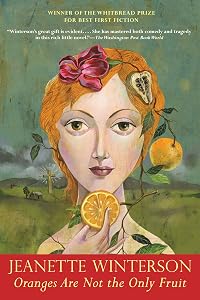
Jeanette Winterson was born in Manchester, England in 1959 and graduated from St. Catherine's College, Oxford. Her book, Oranges Are Not the Only Fruit, is a semi-autobiographical account of her life as a child preacher (she wrote and gave sermons by the time she was eight years old). The book was the winner of the Whitbread Prize for best first show more fiction and was made into an award-winning TV movie. The Passion won the John Llewelyn Rhys Memorial Prize for best writer under thirty-five, and Sexing the Cherry won the American Academy of Arts and Letters' E. M. Forster Award. (Bowker Author Biography) Jeanette Winterson lives in London & the Cotswolds. (Publisher Provided) show less
Some Editions
Awards and Honors
Awards
Series
Belongs to Publisher Series
Common Knowledge
- Canonical title*
- Auf den Körper geschrieben
- Original title
- Written on the Body
- Original publication date
- 1992
- People/Characters
- Elgin; Louise
- Important places
- London, England, UK; Yorkshire, England, UK
- Dedication
- for Peggy Reynolds with love
- First words
- Why is the measure of love loss?
- Quotations
- What I wanted to do was to fasten my index finger and thumb at the bolts of your collar bone, push out, spread the web of my hand until it caught against your throat. You asked me if I wanted to strangle you. No, I wanted to ... (show all)fit you, not just in the obvious ways but in so many indentations.
Cheating is easy. There's no swank to infidelity. To borrow against the trust someone has placed in you costs nothing at first. You get away with it, you take a little more and a little more until there is no more to draw o... (show all)n. Oddly, your hands should be full with all that taking but when you open them there's nothing there.
欺骗很容易。一开始凭借某人对你的信任而索取,你不会有丝毫损失。你逃脱了惩罚,你就会要得到更多,更多,直到再也没有什么可被索取。奇怪的是,你拿了那么多,双手本该装满,但摊开时却空空如也。 - Last words
- (Click to show. Warning: May contain spoilers.)I don't know if this is a happy ending but here we are let loose in open fields.
- Original language*
- Englisch
- Canonical DDC/MDS
- 823.914
- Canonical LCC
- PR6073.I558
*Some information comes from Common Knowledge in other languages. Click "Edit" for more information.
Classifications
Statistics
- Members
- 4,317
- Popularity
- 3,499
- Reviews
- 70
- Rating
- (3.97)
- Languages
- 18 — Catalan, Chinese, Danish, Dutch, English, Estonian, Finnish, French, German, Italian, Norwegian (Bokmål), Polish, Portuguese, Romanian, Russian, Spanish, Swedish, Turkish
- Media
- Paper, Ebook
- ISBNs
- 47
- ASINs
- 10