
On This Page
Description
When the spoilt and haughty Dona Constanza tries to divert a river to fill her swimming pool, she starts a running battle with the locals. The skirmishes are so severe that the Government dispatches a squadron of soldiers led by the fat, brutal and stupid Figueras to deal with them.Despit visiting plagues of laughing fits and giant cats upon the troops, the villagers know that to escape the cruel and unusual tortures planned for them, they must run. Thus they plan to head for the mountains show more and start a new and convivial civilisation. show lessTags
Recommendations





















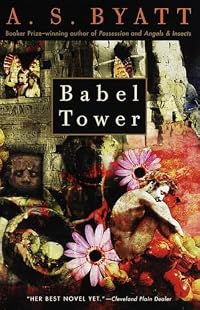
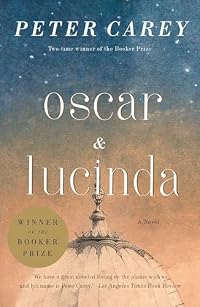
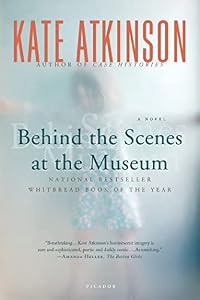


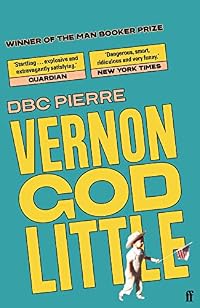













Member Recommendations

Pedrolina Both books take on the slightly surreal side to war, but with serious consequences nonetheless.
Member Reviews
The War of Don Emmanuel’s Nether Parts – Louis De Bernieres
4 stars
“Life is nothing if not a random motion of coincidences and quirks of chance; it never goes as planned or as foretold; frequently one gains happiness from being obliged to follow an unchosen path or misery from following a chosen one. “ Louis De Bernieres – The War of Don Emmanuel’s Nether Parts
I’m reading Bernieres backward. I started with Birds Without Wings and I’ve been working my way backward through his publication history. This book (which must be a contender for “Best Title of the 20th century”) was published in 1990. It was a very ambitious first novel. In an author’s note, Bernieres states that he has created an imaginary Latin American show more country with history, topography and language jumbled up from various sources. There are nearly 40 characters whose lives intersect in a story that includes guerilla war, military corruption, paranormal intervention, brutality, passion, outrageous humor and biting satire.
A book this complex should be read with great attention. The need for attention to detail is not immediately apparent. Characters and situations are introduced is short, well-constructed passages that seem only loosely connected. At the beginning it is easy to read briefly about one character, put the book down and come back to it much later. I did this several times, but I lost out on the connections and found that I had difficulty with pivotal events when I could not remember each character’s significance. The book improved when I sat down to read for longer periods of time. I was able to grasp the intricate web of intertwined lives that Bernieres was building.
I was mildly disappointed that Don Emmanuel’s nether parts play a very minor role in the story. In a very round about way, it is essentially the story of an impoverished, insignificant village and its hilariously devious victory over the corrupt and brutal military establishment. It is a temporary victory. I found the surreal salvation of the village to be the weakest part of the story. The best parts concern individual characters who are drawn realistically, but with great affection and humor. As in his later books, Bernieres has an underlying social agenda. He touches on the implications of United States covert military intervention, drug trafficking, the Falklands Island conflict, and international pressure concerning ‘Los Deseparecidos”.
There are a great many similarities between this book and the later Birds Without Wings. It even begins with the death of a bird, in this case, a vulture. The later book is stronger and I’ve tried to define why I think so. The biggest difference is the use of first person narrative. Bernieres allowed the many characters of Eskibahce to speak for themselves. The characters in Don Emmanuel’s fictional country did not speak up in their own voices. They are wonderful characters, but they stayed in the book and did not come alive for me in the same way. show less
Kitties! Loved this warm, funny, touching novel. I really loved the episodic structure, each chapter an elegantly crafted short story of its own, and how he weaves all these characters and episodes together. Some of the chapters are stomach-turning horrific; some beautifully sweet and tender; some laugh-out-loud funny. Just enough magical realism to keep everything woven together, including magical cats! Tons of characters, some of them not a lot more than types, many of them vivid, all of them beautifully drawn. And the humor. The satirical, wry, British influenced, and Latin influenced humor....dark and slicing and intelligent and wacky with such a keen eye and ear for the absurd. This goes right up among my favorite satire, including show more A Confederacy of Dunces, Pride and Prejudice, Geek Love. show less
Like all of Louis de Bernieres' books, this is a riotous, irreverent sprawl of humour and imagination, lush with vivid characters and sparkling prose. It's magical realism taken to the extreme, and though at times the pacing and the plot wobble close to being farcical, to breaking the reader's suspension of disbelief, it's still a marvellously fun read. Not quite my favourite of his, but a strong contender.
De Bernieres' debut novel begins when Dona Constanza decides to divert the river to fill her swimming pool and by so doing sets in motion a series of events that lead to chaos in the villages of this unnamed South American country. It is the first in a trilogy of novels.
This is probably best described as political satire. It’s not for everyone, and frankly, if I saw that description before picking it up I probably would have passed. But I’m glad I didn’t go in with that pre-judgment.
There is a huge cast of characters - military, politicians, industrialists, peasants, Indians, guerrillas, spirits and animals. De Bernieres writes with vivid descriptions as he relates the experiences his characters have – scenes of violence, of show more familial love, of the glories of nature, of dangerous conflicts, of treacherous terrain. He includes a fair amount of magical realism which may not appeal to everyone, but which I love when done well, and De Bernieres does is masterfully. He also sprinkles in words or phrases in Spanish, Portuguese, and Indian dialects - and even a few that he makes up entirely.
Review updated on re-reading: 14Feb26 show less
This is probably best described as political satire. It’s not for everyone, and frankly, if I saw that description before picking it up I probably would have passed. But I’m glad I didn’t go in with that pre-judgment.
There is a huge cast of characters - military, politicians, industrialists, peasants, Indians, guerrillas, spirits and animals. De Bernieres writes with vivid descriptions as he relates the experiences his characters have – scenes of violence, of show more familial love, of the glories of nature, of dangerous conflicts, of treacherous terrain. He includes a fair amount of magical realism which may not appeal to everyone, but which I love when done well, and De Bernieres does is masterfully. He also sprinkles in words or phrases in Spanish, Portuguese, and Indian dialects - and even a few that he makes up entirely.
Review updated on re-reading: 14Feb26 show less
"In a historic feat of compromise," we learn of the country's recent past, "democracy was restored by the abolition of elections."
Firstly I should point out that this is the first of the author's South American trilogy, although to be honest I didn't realise it at the time, but it doesn't really matter as they are stand alone novels and as such can be read in any particular order. The title is also a little misleading as it has nothing really to do with war but instead is a piece of political satire mixed with a touch of magic.
The action takes place in a remote community in an unnamed South American Andean country which is ruled over by a corrupt oligarchy and fascist military officers. Problems begin when Dona Constanza Evans, an show more aristocratic wife of a wealthy landowner and descendant of a Welsh speculator, decides to divert the local river in order to supply water for her private swimming pool. Astounded by this turn of events the local villagers ask Don Emmanuel, another rich local landowner whose own land is down river of Dona Constanza's property and as such would also be adversely affected if the scheme goes ahead especially as he likes to bathe his 'nether parts in the river, to try and dissuade her.
However, when diplomacy fails Don Emmanuel and the villagers decide to sabotage her scheme. Which in turn has the unintended and undesired affect of bringing both Government soldiers and Communist guerrillas to the scene to investigate until the villagers force the Army to return to their base. Meanwhile back in the capitol of the country the President and a corrupt cabal of military officers are vying for control.
The author cleverly intertwines a series of almost cartoon like incidents inflicted on the Army with some fairly graphic portrayals of torture perpetrated by the Army, an inept and divided guerilla movement, some rather racy sex scenes with tales of romance, witty political satire with the supernatural.
There is an abundance of characters which at least initially can be a little off putting and confusing but if you stick with it they tend to sort themselves out in the end. These characters tend to be fall into certain groups: clever peasants, wise whores, arrogant dames transformed by love, and inept officials .
Although in the novel the country is unnamed many readers and no doubt academics with come to the conclusion that it is based on Colombia, a country that has suffered a number of civil wars over the years in which hundreds of thousand of it's inhabitants have died. Perhaps given this fact and the grimness of the author's political satire the ending, where the villagers establish a new Utopian civilization in a ruined Inca city, is a little too optimistic to bear too much scrutiny. However, this should not take away from the fact that this IMHO is a beautifully written piece of work that left me, if not laughing out loud, with a constant grin on my face. No bad thing surely? show less
Firstly I should point out that this is the first of the author's South American trilogy, although to be honest I didn't realise it at the time, but it doesn't really matter as they are stand alone novels and as such can be read in any particular order. The title is also a little misleading as it has nothing really to do with war but instead is a piece of political satire mixed with a touch of magic.
The action takes place in a remote community in an unnamed South American Andean country which is ruled over by a corrupt oligarchy and fascist military officers. Problems begin when Dona Constanza Evans, an show more aristocratic wife of a wealthy landowner and descendant of a Welsh speculator, decides to divert the local river in order to supply water for her private swimming pool. Astounded by this turn of events the local villagers ask Don Emmanuel, another rich local landowner whose own land is down river of Dona Constanza's property and as such would also be adversely affected if the scheme goes ahead especially as he likes to bathe his 'nether parts in the river, to try and dissuade her.
However, when diplomacy fails Don Emmanuel and the villagers decide to sabotage her scheme. Which in turn has the unintended and undesired affect of bringing both Government soldiers and Communist guerrillas to the scene to investigate until the villagers force the Army to return to their base. Meanwhile back in the capitol of the country the President and a corrupt cabal of military officers are vying for control.
The author cleverly intertwines a series of almost cartoon like incidents inflicted on the Army with some fairly graphic portrayals of torture perpetrated by the Army, an inept and divided guerilla movement, some rather racy sex scenes with tales of romance, witty political satire with the supernatural.
There is an abundance of characters which at least initially can be a little off putting and confusing but if you stick with it they tend to sort themselves out in the end. These characters tend to be fall into certain groups: clever peasants, wise whores, arrogant dames transformed by love, and inept officials .
Although in the novel the country is unnamed many readers and no doubt academics with come to the conclusion that it is based on Colombia, a country that has suffered a number of civil wars over the years in which hundreds of thousand of it's inhabitants have died. Perhaps given this fact and the grimness of the author's political satire the ending, where the villagers establish a new Utopian civilization in a ruined Inca city, is a little too optimistic to bear too much scrutiny. However, this should not take away from the fact that this IMHO is a beautifully written piece of work that left me, if not laughing out loud, with a constant grin on my face. No bad thing surely? show less
This is the novel that hooked me on de Bernieres. This is the first of a trilogy of magic realist novels set in an unnamed country in South America. The second and third have equally intriguing titles; they are, respectively, Senor Vivo and the Coca Lords, and The Troublesome Offspring of Cardinal Guzman.
The characters feature the somewhat boorish don of the title, rebels, spoiled and subsequently unspoiled indolent female landowners who become (by virtue of the power of love) something significantly different, a cast of large and relatively docile panthers, various corrupt and not-so-corrupt army men, a native South American man very much in touch with the spirit world and a resurrected conquistador. The tone is musing, humorous and show more yet tinged with grim horror and sadness; there are laugh out loud moments and episodes you wish had not happened. The themes are universal.
Heartily recommended, as are the equally enjoyable second and third books. show less
The characters feature the somewhat boorish don of the title, rebels, spoiled and subsequently unspoiled indolent female landowners who become (by virtue of the power of love) something significantly different, a cast of large and relatively docile panthers, various corrupt and not-so-corrupt army men, a native South American man very much in touch with the spirit world and a resurrected conquistador. The tone is musing, humorous and show more yet tinged with grim horror and sadness; there are laugh out loud moments and episodes you wish had not happened. The themes are universal.
Heartily recommended, as are the equally enjoyable second and third books. show less
The blurb on the back cover doesn't do this book justice - it's just a tiny part of what happens. This is a great big patchwork quilt of a book that entertains and horrifies in equal measure. It's hard to avoid comparisons with Gabriel Garcia Marquez given the setting, and the 'magical realism' but I found this a lot more enjoyable than Marquez.
It's a book of great contrasts: One minute the pace will be very slow, the next minute the narrative will race ahead, covering many months in a single paragraph. One minute the focus will be on a single character alone in a forest, the next minute the 'camera' will draw back and focus on whole countries and continents, and their political inter-relationships. One minute it will be laugh-out-loud show more funny, the next minute it will describe some act of violence for which 'shocking' is not an adequate description.
I suspect some of the slower parts, and the policital analysis will put some people off, and certainly if you lose the thread it can be hard to pick up again. On the other hand, because of its massive scale and ambition this book hits the highs others can not hope to reach. show less
It's a book of great contrasts: One minute the pace will be very slow, the next minute the narrative will race ahead, covering many months in a single paragraph. One minute the focus will be on a single character alone in a forest, the next minute the 'camera' will draw back and focus on whole countries and continents, and their political inter-relationships. One minute it will be laugh-out-loud show more funny, the next minute it will describe some act of violence for which 'shocking' is not an adequate description.
I suspect some of the slower parts, and the policital analysis will put some people off, and certainly if you lose the thread it can be hard to pick up again. On the other hand, because of its massive scale and ambition this book hits the highs others can not hope to reach. show less
Members
- Recently Added By
Lists

Global Reads: Books Set South and Central America
40 works; 7 members

A Novel Cure
742 works; 23 members

Myth (Reuse and Retelling)
188 works; 24 members

Books With the Most Memorable Titles
478 works; 158 members

Fiction with Men's Given Names in the Title
302 works; 11 members
Author Information

36+ Works 18,244 Members
Louis de Bernières was born on December 8, 1954, in England to a military family. He spent four months in the British army in his late teens. When he was nineteen, he spent a year in Colombia where he wrote a short story about a true incident of violence that occurred there. Fifteen years later, while recuperating from a motorcycle accident, de show more Bernières used that short story as the basis for the first volume of his Latin American Trilogy, The War of Don Emmanuel's Nether Parts, Senor Vivo and the Coca Lord, and The Troublesome Offspring of Cardinal Guzman. In the 1980s, de Bernières worked as an auto mechanic and then as a supply teacher in London. In 1993 he took a holiday on the Greek island of Cephallonia. That became the setting for Captain Correlli's Mandolin, a novel of war, love, and heroism, which remained on the (London) Times bestseller list for four years. It has sold more than 600,000 copies, has been reprinted in paperback more than thirty times, and has been translated into more than seventeen languages.The book also won the Commonwealth Writers Prize for Best Book. It was also shortlisted for the 1994 Sunday Express Book of the Year. De Bernières was named one of Granta's 20 Best British Novelists in 1993, and Author of the Year 1998 by England's Publishing News. He will be give the opening night address at the 2015 Melbourne Writers Festival. His title The Dust that Falls from Dreams made the New Zealand Best Seller List in 2015 (Bowker Author Biography) show less
Some Editions
Awards and Honors
Notable Lists
Series

Work Relationships
Is contained in
Inspired
Common Knowledge
- Canonical title
- The War of Don Emmanuel's Nether Parts
- Original title
- The War of Don Emmanuel's Nether Parts
- Alternate titles*
- La guerra de Don Emmanuel
- Original publication date
- 1990
- Important places*
- Londen, Engeland, Verenigd Koninkrijk
- Dedication
- To the Incorrigible and Legendary Don Benjamin of Poponte, who entrusted me with several children and three horses.
- First words
- It had been an auspicious week for Captain Rodrigo Jose Figueras.
- Last words
- (Click to show. Warning: May contain spoilers.)Here the history of the War of Don Emmanuel's Nether Parts comes to a close, and in its place begins the history of the city of Cochadebajo de los Gatos; of the unsurpassable love of Remedios and the Conde Pompeyo Xavier de Estremadura; of Francesca and Capitan Papagato; of Parlanchina's child; of the children of Farides, of Annicca, Dionisio and the Coca Letters; all this being also the history of the New Albigensian Crusade and the terrible crimes of the New Inquisition.
*Some information comes from Common Knowledge in other languages. Click "Edit" for more information.
Classifications
Statistics
- Members
- 1,606
- Popularity
- 14,013
- Reviews
- 28
- Rating
- (3.89)
- Languages
- 16 — Czech, Dutch, English, French, German, Greek, Hungarian, Italian, Polish, Russian, Serbian, Croatian, Spanish, Turkish, Portuguese (Portugal), Portuguese (Brazil)
- Media
- Paper, Audiobook, Ebook
- ISBNs
- 25
- UPCs
- 1
- ASINs
- 13