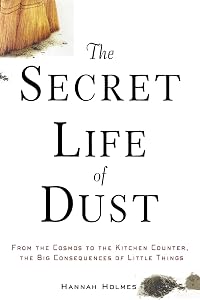
The Secret Life of Dust: From the Cosmos to the Kitchen Counter, the Big Consequences of Little Things
by Hannah Holmes
On This Page
Description
"Some see dust as dull stuff, useless at best, and sneeze-inducing at worst. But in the hands of writer Hannah Holmes, dust becomes a dazzling and mysterious force. As Holmes says, dust is a messenger, and air is its medium. And by the end of this fascinating journey through The Secret Life of Dust, we cannot help but agree."--Jacket.Tags
Recommendations




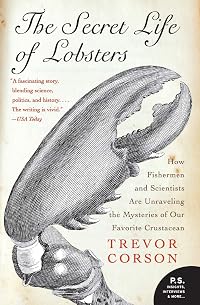
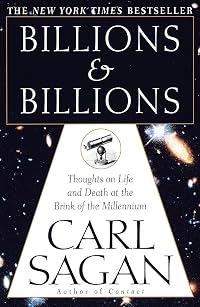
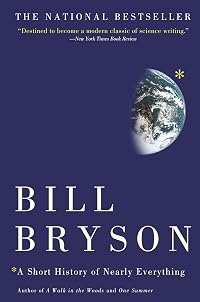
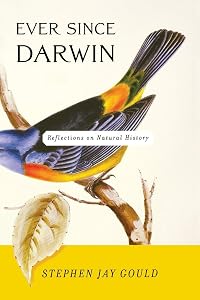
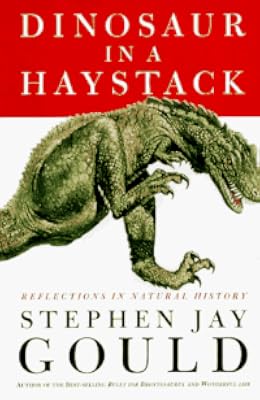

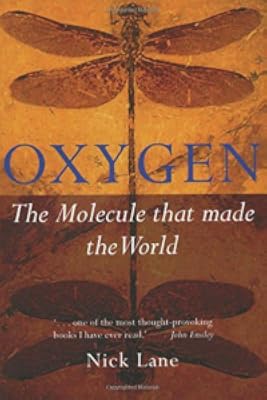

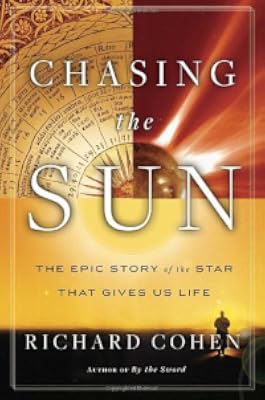


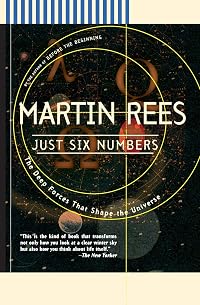
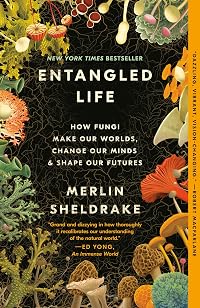


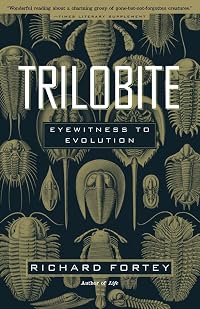
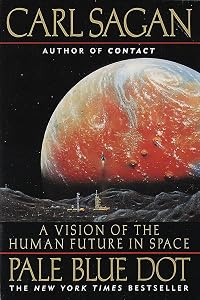

Member Recommendations
Member Reviews
So I bought myself a rather nice "dissecting" microscope and a friend asked what I was using it for. "Oh, examining the dust from the vacuum cleaner" I replied. Well it's what you do isn't it? And I've long been curious about dust. How much of it is falling on us at any one time? Where does it come from? Am I getting dangerous levels of dust by living near to a freeway? Does it cause asthma? So I had quite a few questions before i even began the book. And, I must admit I was put off by the "accessible-science" writing style....lot's of folksy descriptions of people ..and overwrought prose....for example: “Hayley Duffel was a typical student, from Yorkshire, England. She was slim and wore her thick, dark hair in a sensible ponytail. show more With a quirky grin she introduced herself as a dust girl”. And then this: “The Phillipines islands……sit atop a seam in the planet. In fact, the entire Pacific Ocean is underlain by a particularly combative section of the earth’s crust. Its rock melting conflicts with neighbouring plates have earned the region the nickname the “Ring of fire”.”
All a bit much…. And given the size of Pacific, probably incorrect in the wider sense…. Yes there is a ring of fire but it’s not everywhere in the Pacific.
So in the initial stages I was getting so annoyed with the style that I almost gave up. But I'm glad that I soldiered on. The style was the same but there is some really interesting content in there. Though you do come up against the perennial problem of popularising science: how do you make the figures meaningful. So we are told that as the tires on your car wear down, 25,000 tons of rubber dust go into the air. And, hitting the brakes sends 35,000 tons of brake lining dust into the air each year in the USA. OK this sounds like a lot of pollution ...but if half of it falls to the ground within 5 min and the rest is mixed up with, say, the first 1000m of atmosphere the 25,000 tons of rubber dust becomes 0.0013 gm per cubic m of air. And this doesn't sound like quite so much to me. (In fact, it's significant because it's added onto all the other micro dust in the atmosphere and if it's all in the form of micro particles then we are talking about 1.3 micrograms of dangerous dust per cubic m of air. ......And there is no safe lower level of these particles). Anyway, it's hard to grasp the significance of such figures...and a lot of such figures are cited.
So where does dust come from? Well a whole lot of places really......from outer space comes a steady downpour.....from our deserts comes dust that crosses both the pacific from China and the Atlantic from Africa. And plants put out pollen and fungal spores and trees give off chemicals like isoprene, terpene, alcohol and formaldehyde, I've already mentioned from the roads and from engines. Add in dust from fires and volcanoes,..plus household dust (especially from mites and insect sheddings). If you're breathing really clean air you are taking in at least a billion and a half pieces of dust into your nose and mouth every day. (Sounds like a lot). And the industrial dusts of today (especially from diesel engines) are smaller than the dusts of the past and can penetrate the deepest recesses of our lungs.As one epidemiologist says..."air pollution kills people".
And there are some especially nasty dusts: mercury, asbestos, silica, coal dust (a black lung fund is doling out money to 200,000 people per year...both diseased miners and their families). But just about any mining dust can cause problems (I remember in Esperance, Western Australia, a few years ago birds were dying ...which was traced back to lead in the dust from a mine but it didn't stop there ....it was found that the lead and nickle were on the roofs and rainwater tanks of the entire city). But Hannah Holmes goes on to tell the horror stories from talc dust, wood dust, cotton dust, wheat flour dust (with its propensity to explode), synthetic fibre dust and dusts from intensive animal raising...especially poultry and pigs. Then there are cooking dusts ...especially bad for those who cook over open fires in confined spaces, pesticide dusts, mould clouds and spores from fungi.
Homes devotes quite a bit of energy to drawing a link between asthma and dusts but doesn't quite make the connection. There are obvious links but there always seem to be exceptions that don't fit the theory. For example, kids who grow up in dirty environments appear to have less asthma than kids who grow up in clean environments ......are the developing immunity? She finishes with a homily on the dusts from cremation...and some ashes being rocketed into space.
Altogether quite fascinating. A power of information there. Sufficient for me to overlook her overwrought prose and folksy introductions to the experts. Happy to give it 4.5stars. show less
All a bit much…. And given the size of Pacific, probably incorrect in the wider sense…. Yes there is a ring of fire but it’s not everywhere in the Pacific.
So in the initial stages I was getting so annoyed with the style that I almost gave up. But I'm glad that I soldiered on. The style was the same but there is some really interesting content in there. Though you do come up against the perennial problem of popularising science: how do you make the figures meaningful. So we are told that as the tires on your car wear down, 25,000 tons of rubber dust go into the air. And, hitting the brakes sends 35,000 tons of brake lining dust into the air each year in the USA. OK this sounds like a lot of pollution ...but if half of it falls to the ground within 5 min and the rest is mixed up with, say, the first 1000m of atmosphere the 25,000 tons of rubber dust becomes 0.0013 gm per cubic m of air. And this doesn't sound like quite so much to me. (In fact, it's significant because it's added onto all the other micro dust in the atmosphere and if it's all in the form of micro particles then we are talking about 1.3 micrograms of dangerous dust per cubic m of air. ......And there is no safe lower level of these particles). Anyway, it's hard to grasp the significance of such figures...and a lot of such figures are cited.
So where does dust come from? Well a whole lot of places really......from outer space comes a steady downpour.....from our deserts comes dust that crosses both the pacific from China and the Atlantic from Africa. And plants put out pollen and fungal spores and trees give off chemicals like isoprene, terpene, alcohol and formaldehyde, I've already mentioned from the roads and from engines. Add in dust from fires and volcanoes,..plus household dust (especially from mites and insect sheddings). If you're breathing really clean air you are taking in at least a billion and a half pieces of dust into your nose and mouth every day. (Sounds like a lot). And the industrial dusts of today (especially from diesel engines) are smaller than the dusts of the past and can penetrate the deepest recesses of our lungs.As one epidemiologist says..."air pollution kills people".
And there are some especially nasty dusts: mercury, asbestos, silica, coal dust (a black lung fund is doling out money to 200,000 people per year...both diseased miners and their families). But just about any mining dust can cause problems (I remember in Esperance, Western Australia, a few years ago birds were dying ...which was traced back to lead in the dust from a mine but it didn't stop there ....it was found that the lead and nickle were on the roofs and rainwater tanks of the entire city). But Hannah Holmes goes on to tell the horror stories from talc dust, wood dust, cotton dust, wheat flour dust (with its propensity to explode), synthetic fibre dust and dusts from intensive animal raising...especially poultry and pigs. Then there are cooking dusts ...especially bad for those who cook over open fires in confined spaces, pesticide dusts, mould clouds and spores from fungi.
Homes devotes quite a bit of energy to drawing a link between asthma and dusts but doesn't quite make the connection. There are obvious links but there always seem to be exceptions that don't fit the theory. For example, kids who grow up in dirty environments appear to have less asthma than kids who grow up in clean environments ......are the developing immunity? She finishes with a homily on the dusts from cremation...and some ashes being rocketed into space.
Altogether quite fascinating. A power of information there. Sufficient for me to overlook her overwrought prose and folksy introductions to the experts. Happy to give it 4.5stars. show less
The Secret Life of Dust: From the Cosmos to the Kitchen Counter, the Big Consequences of Little Things by Hannah Holmes. It's surprising just how interesting dust can be. Holmes looks at cosmic dust, global movement and climactic implications of dust, and the more localized and human problems caused by dust. This is one of the most frightening books I've read. Dust is EVERYWHERE, and it is full of bad stuff. I'm glad I'm not a clean freak, because this would have turned me into a basket case. "Thus, even in the world's cleanest air, any given cubic inch might host 1,500 specks of various pedigree." And those specks are full of irritants, toxins, chemicals, bacteria and molds. No matter where you live, or what your job, you can't escape. show more "These days workers in the United States are so well protected by antidust regulations that . . . well, actually, thousands of them still keel over each year, their lungs jammed with dust." Our attempts to clean up just stir up the particles, making them easier to inhale. And the smallest particles are the most deadly. In the final chapter, the author describes in some detail how we will all eventually turn into dust.
The first few and last few chapters of this book are the most interesting, especially the last three, about interactions between dust and the human body. It drags a bit around the middle, though. Having one chapter about dust going up into the air, one about dust floating in the air, and one about dust coming back down, means that this section is rather drawn out and repetitive. Still, I felt that the good parts made it worth the slog through the middle. My only complaint about the style is the obsession that journalists seem to have with providing a physical description of every person they interview. At least Holmes limited it to a line or two each, but seriously, I just don't need to know that a scientist was not wearing socks.
The book had its faults, but it contained a lot of fascinating information. I would recommend it to readers who like to scare the bejeebers out of themselves with science. show less
The first few and last few chapters of this book are the most interesting, especially the last three, about interactions between dust and the human body. It drags a bit around the middle, though. Having one chapter about dust going up into the air, one about dust floating in the air, and one about dust coming back down, means that this section is rather drawn out and repetitive. Still, I felt that the good parts made it worth the slog through the middle. My only complaint about the style is the obsession that journalists seem to have with providing a physical description of every person they interview. At least Holmes limited it to a line or two each, but seriously, I just don't need to know that a scientist was not wearing socks.
The book had its faults, but it contained a lot of fascinating information. I would recommend it to readers who like to scare the bejeebers out of themselves with science. show less
I found the last few chapters the most interesting. I am not as much a cosmic big picture kind of person, so the space dust (pretty much the first half) left me cold. Once she started focusing on health and the living components of dust I was fascinated.
Who would have thought a book about dust could keep me up all night reading? Then, of course, you have to get up early to make sure you get the dust out from under the bed, because the author reminds you all the things that can be in dust.
It covers everything from the big bang and planet formation to pollution and diseases carried in the air. I found it tedious to read at times and fascinating at others. Although there is a bibliography, there is no index (which I consider essential in non-fiction.)
it covers everything from the big bang and planet formation to pollution and diseases floating in our air. It found it tedious to read at times and fascinating at others. Although there is an extensive bibliography, there is no index (which I consider essential in a non-fiction book.)
Ratings
Members
- Recently Added By
Author Information

8 Works 883 Members
Hannah Holmes is a science and natural history writer whose work has been widely published, appearing in the Los Angeles Times Magazine, the New York Times Magazine, Outside, Sierra, National Geographic Traveler, and Escape. Her broadcast work has been featured on "Living on Earth" and Discovery Channel Online's "Science Live."
Awards and Honors
Common Knowledge
- Canonical title
- The Secret Life of Dust: From the Cosmos to the Kitchen Counter, the Big Consequences of Little Things
- Original publication date
- 2001
- Dedication
- To my big, fat muse, P. Earth
- First words
- Picture a juice glass sitting on a porch railing in the sunshine.
- Blurbers
- Dr. Neil de Grasse Tyson
Classifications
Statistics
- Members
- 321
- Popularity
- 99,009
- Reviews
- 6
- Rating
- (3.38)
- Languages
- English
- Media
- Paper, Ebook
- ISBNs
- 9
- UPCs
- 1
- ASINs
- 4