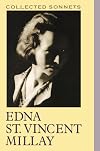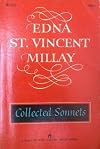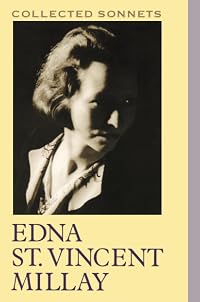
Collected Sonnets
by Edna St. Vincent Millay 
On This Page
Description
More than 180 sonnets selected from Millay's books of poems, including 20 sonnets from Mine the Harvest not contained in previous editions of her Collected Sonnets, are brought together in this new, expanded edition. An introduction by Norma Millay, written expressly for this volume, focuses on examples of the poet's variations in sonnet structure. Here is the voice of Millay, whose prophetic vision, devotion to freedom, and intellectual daring combine with her mastery of the sonnet form to show more speak eloquently for the human spirit.-- show lessTags
Recommendations

























Member Reviews
She had kept that kettle boiling all night long, for company.
How can your heart not break, with that image in your mind?
How can your heart not break, with that image in your mind?
I fell desperately in love with Millay after reading "First Fig" in my history textbook. Some years later, I chose my college partly based upon the fact that she had gone there. Funny, irreverant, passionate and smart, Millay's work has incredible rhythm, rhyme, and impact.
If Shakespeare be the king of the sonnet, Edna St. Vincent Millay is clearly the queen. Classically structures but incredibly modern. Sexy, depressing, beautiful.
Sonnets written about her love for her (dead) husband.
We were very happy, we were very merry
We rode back and forth all day on the ferry
We rode back and forth all day on the ferry
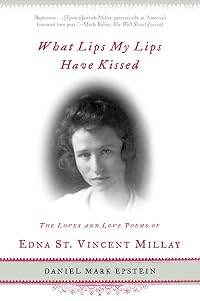
"What lips my lips have kissed, and where, and why,
I have forgotten...but the rain
Is full of ghosts tonight, that tap and sigh
Upon the glass and listen for reply..."
I have forgotten...but the rain
Is full of ghosts tonight, that tap and sigh
Upon the glass and listen for reply..."
Ratings
Members
- Recently Added By
Lists

Poetry Corner
187 works; 15 members

Our Favorite Comfort Reads
334 works; 200 members
Author Information

129+ Works 6,698 Members
Edna St. Vincent Millay 1892-1950 Edna St. Vincent Millay, American poet, dramatist, lyricist, lecturer, and playwright, was born on February 22, 1892 in Rockland, Maine, and educated at Barnard College and at Vassar College, where she earned her B. A. (Her poem "Renascence" won fourth place in a contest and was published in The Lyric Year in show more 1912; this resulted in a scholarship to Vassar.) Millay's first volume of poetry, "Renascence and Other Poems," was published in 1917. In 1923, "The Ballad of the Harp-Weaver" won her a Pulitzer Prize in Poetry. Other works include: "A Few Figs from Thistles;" "Sonnets in American Poetry," "A Miscellany," "The Lamp and the Bell" and "There Are No Islands Any More." Millay also wrote the libretto for "The King's Henchman," one of the few American grand operas. Edna St. Vincent Millay married Eugen Jan Boissevain in 1923. Shortly after, they purchased a farm in upstate New York, which they called Steepletop. Millay lived here for the rest of her life, composing some of her finest work in a little shack separate from the main house. Boissevain died in 1949. Millay died of a heart attack in her home on October 19, 1950. (Bowker Author Biography) show less
Edna St. Vincent Millay has a Legacy Library. Legacy libraries are the personal libraries of famous readers, entered by LibraryThing members from the Legacy Libraries group.
Some Editions
Common Knowledge
- Canonical title
- Collected Sonnets
- Original publication date
- 1959
Classifications
Statistics
- Members
- 863
- Popularity
- 31,612
- Reviews
- 6
- Rating
- (4.30)
- Languages
- English
- Media
- Paper, Ebook
- ISBNs
- 5
- ASINs
- 31