On This Page
Description
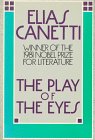
This is the third volume of Elias Canetti's autobiography. It is set in Vienna between 1931 and 1937, at a time when the European catastrophe was already clear to anyone with eyes to see. The book is both a portrait of its time and an intellectual and spiritual autobiography. Canetti describes his relationships with Herman Broch, Robert Musil, Fritz Wortruba, the composer Alban Berg, and Alma MahlTags
Recommendations

















Member Recommendations

Member Reviews
In this third volume of memoirs the tone shifts a bit from describing Canetti’s life to portraits of the people around him. We meet Canetti in 1931 when he is in a slump after finishing the novel that became Die Blendung/Auto-da-fé (then still provisionally titled Kant catches fire), and follow his life in Vienna up to his mother’s death in June 1937.
Reading Büchner’s Woyzeck gets Canetti out of post-novel slump and inspires him to write a play, and that in turn brings him into contact with the writer Hermann Broch, who becomes a kind of mentor, and the conductor Hermann Scherchen, who slightly oddly invites him to a contemporary music congress in Strasburg. Through Scherchen he meets Anna Mahler (sculptor and daughter of Alma show more and Gustav), with whom he seems to have had a brief affair.
He also becomes close friends with Anna’s teacher, the working-class sculptor Fritz Wotruba.
But his most important friendship in this period seems to have been with the Hebrew poet Avraham Ben-Yitzhak (“Dr Sonne”), the quiet, scholarly figure he portrays as the antithesis of Karl Kraus, and with whom he had the sort of coffee-house friendship in which despite long, serious discussions both parties avoid seeking out personal information about the other.
The novel is eventually published in 1935, and Canetti starts to win recognition as a writer. He also finally gets around to marrying Veza and moving into an apartment with her in Grinzing — there is comedy when it turns out that Karl Kraus’s publisher, Benedikt, lives across the road, and Canetti finds himself annexed by one of Benedikt’s young daughters, who has ambitions to become a novelist herself.
The Spanish Civil War gives Canetti a push to reconnect with the language he spoke in childhood and his family’s Spanish roots (before 1492), and to reflect on the nature of exile — something that was to help him deal with his coming exile from the German-speaking region. Not that we get to hear anything further about that in this book, of course, that’s for next time… show less
Reading Büchner’s Woyzeck gets Canetti out of post-novel slump and inspires him to write a play, and that in turn brings him into contact with the writer Hermann Broch, who becomes a kind of mentor, and the conductor Hermann Scherchen, who slightly oddly invites him to a contemporary music congress in Strasburg. Through Scherchen he meets Anna Mahler (sculptor and daughter of Alma show more and Gustav), with whom he seems to have had a brief affair.
He also becomes close friends with Anna’s teacher, the working-class sculptor Fritz Wotruba.
But his most important friendship in this period seems to have been with the Hebrew poet Avraham Ben-Yitzhak (“Dr Sonne”), the quiet, scholarly figure he portrays as the antithesis of Karl Kraus, and with whom he had the sort of coffee-house friendship in which despite long, serious discussions both parties avoid seeking out personal information about the other.
The novel is eventually published in 1935, and Canetti starts to win recognition as a writer. He also finally gets around to marrying Veza and moving into an apartment with her in Grinzing — there is comedy when it turns out that Karl Kraus’s publisher, Benedikt, lives across the road, and Canetti finds himself annexed by one of Benedikt’s young daughters, who has ambitions to become a novelist herself.
The Spanish Civil War gives Canetti a push to reconnect with the language he spoke in childhood and his family’s Spanish roots (before 1492), and to reflect on the nature of exile — something that was to help him deal with his coming exile from the German-speaking region. Not that we get to hear anything further about that in this book, of course, that’s for next time… show less
I did not enjoy this third part of the memoirs of Elias Canetti as much as the first two, but nonetheless a very well-written book. Too much reportage in this third, name-dropping the norm, but still the ending was well worth my time.
Ratings
Members
- Recently Added By
Lists

German Literature
518 works; 56 members
Author Information

93+ Works 10,482 Members
Elias Canetti was born in Rustschuk, Bulgaria on July 25, 1905 into a Sephardic Jewish family. He was educated in Germany, Switzerland, and Austria and received a Ph.D. in chemistry from the University of Vienna in 1929. He wrote novels and plays in German. His works explored the emotions of crowds, the psychopathology of power, and the position show more of the individual at odds with the society around him. His novels include Auto-da- Fé and Masse und Macht. His plays include Hochzeit, Komödie der Eitelkeit, and Die Befristeten. He also published excerpts from his notebooks, a book of character sketches, and an autobiography. He received numerous awards including the Vienna Prize in 1966, the Critics Prize (Germany) in 1967, the Great Austrian State Prize in 1967, the Buchner Prize in 1972, the Sachs Prize in 1975, the Hebbel Prize in 1980, and the Nobel Prize for Literature in 1981. He died on August 14, 1994. (Bowker Author Biography) show less
Series

Belongs to Publisher Series
Work Relationships
Common Knowledge
- Canonical title*
- Het ogenspel
- Original title
- Das Augenspiel
- Original publication date
- 1985 (Duits) (Duits); 1986 (Nederlands) (Nederlands)
- People/Characters*
- Elias Canetti
- Important places*
- Oostenrijk; Roese, Bulgarije; Bulgarije
- Original language*
- Duits
*Some information comes from Common Knowledge in other languages. Click "Edit" for more information.
Classifications
Statistics
- Members
- 437
- Popularity
- 70,479
- Reviews
- 2
- Rating
- (3.99)
- Languages
- 18 — Catalan, Danish, Dutch, English, Finnish, French, German, Greek, Italian, Japanese, Lithuanian, Norwegian (Bokmål), Polish, Portuguese, Romanian, Spanish, Swedish, Turkish
- Media
- Paper, Ebook
- ISBNs
- 42
- ASINs
- 11