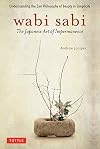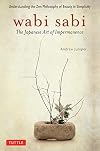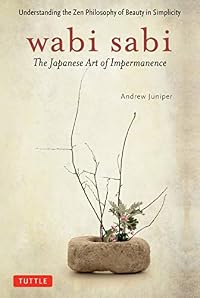
Wabi Sabi: The Japanese Art of Impermanence
by Andrew Juniper
On This Page
Description
Developed out of the aesthetic philosophy of cha-no-yu (the tea ceremony) in fifteenth-century Japan, wabi sabi is an aesthetic that finds beauty in things imperfect, impermanent, and incomplete. Taken from the Japanese words wabi, which translates to less is more, and sabi, which means attentive melancholy, wabi sabi refers to an awareness of the transient nature of earthly things and a corresponding pleasure in the things that bear the mark of this impermanence. As much a state of mind-an show more awareness of the things around us and an acceptance of our surroundings-as it is a design style, wabi sabi begs us to appreciate the simple beauty in life-a chipped vase, a quiet rainy day, the impermanence of all things. Presenting itself as an alternative to today's fast-paced, mass-produced, neon-lighted world, wabi sabi reminds us to slow down and take comfort in the simple, natural beauty around us. In addition to presenting the philosophy of wabi-sabi, this book includes how-to design advice-so that a transformation of body, mind, and home can emerge. Chapters include: - History: The Development of Wabi Sabi - Culture: Wabi Sabi and the Japanese Character - Art: Defining Aesthetics - Design: Creating Expressions with Wabi Sabi Materials - Spirit: The Universal Spirit of Wabi Sabi. show lessTags
Recommendations



































Member Reviews
This is an excellent book. It is an excellent companion to Leonard Koren's book. In this book, Andrew Juniper starts by giving us a superb historical context. He also related Wabi-Sabi to the original philosophy of Tao.
From there, he went on to the spiritual concepts and then on to design.
He ended the book well, by giving us an example of an old African shawl, stating that the African embodied the philosophy of Wabi-Sabi more than some modern Japanese do.
Overall, an excellent book that weaves the practical with the spiritual, and some warnings.
From there, he went on to the spiritual concepts and then on to design.
He ended the book well, by giving us an example of an old African shawl, stating that the African embodied the philosophy of Wabi-Sabi more than some modern Japanese do.
Overall, an excellent book that weaves the practical with the spiritual, and some warnings.
Found when searching for a children's book about a cat (both of same name) recommended by a dear friend who is a watercolorist. This turned out to be the book I'd been looking for for years regarding what I'd been calling, as a writer, "a discipline of indiscipline." My friend had never heard of the concept either, and when I showed her this book, she asked for her own copy. It has created a special bond between us, crossing generations, spiritual practice, and artistic media.
http://pixxiefishbooks.blogspot.com/2...
For most people, what jumps to mind when they think of the Japanese aesthetic is 'all things Zen'. Well, Andrew Juniper has gone beyond Zen and provided an introduction to wabi sabi. From the back of the book:
Wabi sabi describes a traditional Japanese aesthetic sensibility based on an appreciation of the transient beauty of the physical world. It embodies the melancholic appeal of the impermanence of all things - especially the modest, the rustic, the imperfect, and even the decayed. With its focus on the delicate subtleties, objects, effects, and environments of the natural world, wabi sabi promotes an alternative approach to the appreciation of both beauty and life itself.
I'm a librarian so show more probably not even supposed to admit to thoughts like this, but if there was ever a book I didn't want to return to the library and wanted to keep for myself, this book is it. (But I'll be good and bring it back!) I will just have to find my own copy to have and to hold. There are beautiful images, philosophies and ideas that combine to make this a great book. I don't think I can review it any better than that. show less
For most people, what jumps to mind when they think of the Japanese aesthetic is 'all things Zen'. Well, Andrew Juniper has gone beyond Zen and provided an introduction to wabi sabi. From the back of the book:
Wabi sabi describes a traditional Japanese aesthetic sensibility based on an appreciation of the transient beauty of the physical world. It embodies the melancholic appeal of the impermanence of all things - especially the modest, the rustic, the imperfect, and even the decayed. With its focus on the delicate subtleties, objects, effects, and environments of the natural world, wabi sabi promotes an alternative approach to the appreciation of both beauty and life itself.
I'm a librarian so show more probably not even supposed to admit to thoughts like this, but if there was ever a book I didn't want to return to the library and wanted to keep for myself, this book is it. (But I'll be good and bring it back!) I will just have to find my own copy to have and to hold. There are beautiful images, philosophies and ideas that combine to make this a great book. I don't think I can review it any better than that. show less
Really wanted to like this book as it is a topic that truly interests me, but didn't like the writing style. I gave up part way through the writing about the tea ceremony. I might come back to it in the future.
Helpful read. Repetitive at times. Missing some salient points, like the quality of objects that age well. All in all, a good introduction.
Wabi-sabi (侘寂) represents Japanese aesthetics and a Japanese world view centered on the acceptance of transience and imperfection.
Ratings
Members
- Recently Added By
Author Information
2 Works 254 Members
Andrew Juniper runs the Wabi Sabi Design Company in the South of England and also translates for UK and Japanese government bodies.
Common Knowledge
- Canonical title
- Wabi Sabi: The Japanese Art of Impermanence
Classifications
Statistics
- Members
- 250
- Popularity
- 127,648
- Reviews
- 6
- Rating
- (3.63)
- Languages
- English, German, Spanish
- Media
- Paper, Ebook
- ISBNs
- 5
- UPCs
- 2
- ASINs
- 1