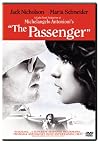
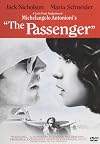
The Passenger [1975 film]
by Michelangelo Antonioni (Director), Carlo Di Carlo (Editor)
On This Page
Description
A reporter assumes the identity of a dead man. The more he does this, the further he is from his true identity. When he finds himself in danger, will he be able to become himself once again, or will it be too late?Tags
Recommendations




















Member Reviews
The original French title of this film ('Profession:Reporteur') gives a better idea of what this film is about, with its suggestions of being an observer rather than participant, of always being restless and moving on, of a deep form of superficiality. Basically a story of how a man tries to disappear by adopting another man's identity and then finding that man's life even harder to live, the film has two very good performances in the leads. Jack Nicholson is deeply unlikeable but very right for the reporter, and Maria Schneider's performance as the young woman he finds en route is more multi-dimensional than in 'Last Tango in Paris' which she made only a couple of years earlier. She has changed physically too and manages to embody show more distance alongside sizzling heat. The ending of the film, where the surroundings seem to swallow up life, is a masterpiece of direction.
The only thing that seems unlikely is that the 1970s Spanish police would devote so much time and effort to chasing around on the basis of very vague information about someone who is not even Spanish. But the wife's involvement lends an essential extra side to the story. show less
The only thing that seems unlikely is that the 1970s Spanish police would devote so much time and effort to chasing around on the basis of very vague information about someone who is not even Spanish. But the wife's involvement lends an essential extra side to the story. show less
2024 movie #75. 1975. A frustrated reporter (Nicholson), covering a war in north Africa that he can't seem to find, adopts the identity of a dead countryman, who turns out to be a gun runner. A flop when released, but Nicholson is good and today considered somewhat of a classic.
A visually stunning adventure. The Passenger retains a singular intrigue: it's the first, and probably the last, thriller ever made about depression. Nicholson plays the character with personal flair, as penetrating as Antonioni's handling of the film. Intended as a thriller of sorts, though Antonioni is, as always, too deeply involved in the angst of his characters to bother much with the adventure story à la Graham Greene. The result is something like a glamorous stream-of-consciousness thriller or a fascinating disaster film in slow motion. The film's final seven-minute shot is one of the great denouements in film editing history.
Jun 1, 2025English (UK)
Den utbrente journalisten David Loche er på oppdrag i Afrika da en engelskmann han har blitt litt kjent med, og som bor vegg-i-vegg med ham på samme hotell, plutselig dør av hjerteinfarkt.
David er lei livet sitt; han er lei jobben, kona, adoptivbarnet osv. Han bestemmer seg for å bytte identitet med avdøde, og dermed forsvinne ut av sitt gamle liv for godt. Han har imidlertid ikke tatt høyde for hvem Mr. Robertsen er, og før han vet ordet av det er han viklet inn i et farlig spill med våpensmuglere, på farten gjennom Europa. Underveis møter han en vakker kvinne, som han forelsker seg i og reiser sammen med. I mellomtiden oppdager hans kone at det ikke kan være liket av mannen hennes som er sendt fra Afrika ...
Tidvis var show more filmen noe stillestående, og jeg hadde nok forventet litt mer tempo og action. Samtidig er det alltid fornøyelig å se gamle filmer med Jack Nicholson i hovedrollen! show less
David er lei livet sitt; han er lei jobben, kona, adoptivbarnet osv. Han bestemmer seg for å bytte identitet med avdøde, og dermed forsvinne ut av sitt gamle liv for godt. Han har imidlertid ikke tatt høyde for hvem Mr. Robertsen er, og før han vet ordet av det er han viklet inn i et farlig spill med våpensmuglere, på farten gjennom Europa. Underveis møter han en vakker kvinne, som han forelsker seg i og reiser sammen med. I mellomtiden oppdager hans kone at det ikke kan være liket av mannen hennes som er sendt fra Afrika ...
Tidvis var show more filmen noe stillestående, og jeg hadde nok forventet litt mer tempo og action. Samtidig er det alltid fornøyelig å se gamle filmer med Jack Nicholson i hovedrollen! show less
Mar 9, 2009Norwegian
Ratings
Members
- Recently Added By
Lists

Movies wishlist
134 works; 2 members
Author Information

Michelangelo Antonioni was born in Italy in 1912, graduated from the University of Bologna, studied cinema in Rome, and started out in films as a critic and screenwriter. When he made his first feature films in the 1950s, he broke away from the neo-realism then in vogue in Italy. Rather, in a rigorously disciplined style, he explored the interior show more states of the isolated men and women in such films as La Notte (1960), L'Eclipse (1961), and The Red Desert (1964). Although Antonioni's films are usually about the prosperous classes, his only social criticism is oblique. 'Avventura (1959), his sixth film, established his fame internationally as an original artist. His English-language films are Blow-Up (1966), set in mod London, and Zabriskie Point (1970), an apocalyptic vision of contemporary American youth and its politics. His last notable film is The Passenger (1975). (Bowker Author Biography) show less
Series
Belongs to Publisher Series
Common Knowledge
- Canonical title
- The Passenger [1975 film]
- Original title
- Professione: reporter
- Original publication date
- 1996
Classifications
Statistics
- Members
- 104
- Popularity
- 315,156
- Reviews
- 4
- Rating
- (3.67)
- Languages
- English, French, Italian, Thai
- ISBNs
- 3
- UPCs
- 3
- ASINs
- 9