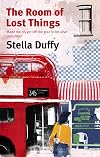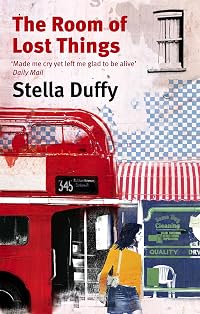
The Room of Lost Things
by Stella Duffy
On This Page
Description
Under his railway arch in Loughborough Junction, South London, Robert Sutton is taking leave of a lifetime of hard work. His dry-cleaning shop lies at the heart of a lively community, a fixed point in a changing world. And, as he explains to his successor, young East Londoner Akeel, it is also the resting place for the contents of his customers' pockets - and for their secrets and lies. As he helps Akeel to make a new life out of his old one, Robert also hands on all he knows of his world: show more the dirty dip of the Thames; the parks, rare green oases in a desert of high-rises and decaying mansion blocks; and the varied lives that converge at the junction. Humming with life, packed tight with detail, The Room of Lost Things is a hymn of love to a great and overflowing city, and a profoundly human story that holds us in its grip from the first sentence until the last. show lessTags
Recommendations






















Member Recommendations
Member Reviews
This is an odd little book I picked up because I think Tomas mentioned it on The Readers podcast. It reminded me a lot of So Many Ways to Begin by Jon McGregor which came out 2 years previously. They’re both what I call ‘slice of life’ novels. Sure, there is a nominal plot point to be revealed, but it isn’t urgent and not all of the narratives have anything more to do with each other than serendipity and propinquity. The thing that reminded me of the McGregor novel is the fact that both main characters save objects that most everyone else would throw away. In Duffy’s book it is a dry cleaner who picks his patrons’ pockets before doing the work and then files the things away just in case someone comes back to claim them. No show more one ever does and honestly the collection doesn’t have much bearing on anyone’s story, but works as a metaphor on its own.
The story mostly revolves around Robert and Akeel; Robert is selling his cleaning business and Akeel wants to buy it. In a sort of forced apprenticeship, Akeel must spend a year in the shop with Robert to learn the ropes. Slowly the men form a friendship all the while knowing it won’t last beyond the year. Robert’s wife Jean left him 25 years ago with their daughter Katie and has only recently communicated with him and it is not good news. Eventually we learn why they split and it’s a little surprising.
The stories of some of Robert’s customers are interspersed through the novel. Helen, the ex-pat from New Zealand. Dean the bad lad and drug dealer. Marilyn the home health worker who always seems to be eating. Mostly they hold your interest, but I found myself skimming some of Dean’s story.
Surprising also is the amount of racial pre-supposition that lurks waiting to trap the white reader. I admit I didn’t originally conceive of anyone in this book as other than white until explained otherwise. Certainly laid open my subconscious character imaginings. From what I understand it’s pretty common and not just to us pasty pale people. As a matter of fact, there’s a lot of about race relations in the book and it was enlightening and thought-provoking without being preachy. Also concealed are some other situations that I thought cleverly done.Like the whole introduction to Helen’s story leads us to believe she is the trapped wife and mother, but no, she’s the nanny; trapped also, but not equally.
The writing is engaging and she has some interesting turns of phrase like this one on page 62 - “St. Anne’s Residences were built in the 1890s, the work of a handful of London philanthropists, old men nervous of camel’s humps and needle’s eyes.”
All in all a satisfying book about a time and place and the people who live there, work there and are dying of love there. show less
The story mostly revolves around Robert and Akeel; Robert is selling his cleaning business and Akeel wants to buy it. In a sort of forced apprenticeship, Akeel must spend a year in the shop with Robert to learn the ropes. Slowly the men form a friendship all the while knowing it won’t last beyond the year. Robert’s wife Jean left him 25 years ago with their daughter Katie and has only recently communicated with him and it is not good news. Eventually we learn why they split and it’s a little surprising.
The stories of some of Robert’s customers are interspersed through the novel. Helen, the ex-pat from New Zealand. Dean the bad lad and drug dealer. Marilyn the home health worker who always seems to be eating. Mostly they hold your interest, but I found myself skimming some of Dean’s story.
Surprising also is the amount of racial pre-supposition that lurks waiting to trap the white reader. I admit I didn’t originally conceive of anyone in this book as other than white until explained otherwise. Certainly laid open my subconscious character imaginings. From what I understand it’s pretty common and not just to us pasty pale people. As a matter of fact, there’s a lot of about race relations in the book and it was enlightening and thought-provoking without being preachy. Also concealed are some other situations that I thought cleverly done.
The writing is engaging and she has some interesting turns of phrase like this one on page 62 - “St. Anne’s Residences were built in the 1890s, the work of a handful of London philanthropists, old men nervous of camel’s humps and needle’s eyes.”
All in all a satisfying book about a time and place and the people who live there, work there and are dying of love there. show less
Robert has been the owner of a dry cleaner shop in south London all his life. He is ready to retire and move on. He decides to sell to Akeel. This softly and gently written story brought tears to my eyes. Roberts life: sad, full of dispair, full of disappointment. And then the book beautifully diverts into sub-plots of other people who use the dry cleaner and who pass it by: Dan and Charlie who sleep under the arches of the bridge, the poet who sings on the bus, Helen the nanny, Marylin the social worker. A well recommended read!!
19 December 2009 - Borders closing down sale
I read about this book on the DoveGreyReader blog and was intrigued, so glad to pick it up in the Borders sale.
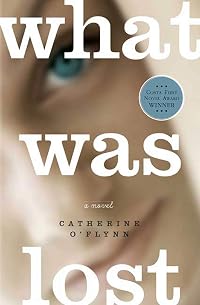
Jon McGregor's If Nobody Speaks of Remarkable Things sought to portray an urban streetscape through the shifting viewpoints of its residents, and Andrew Sean Greer's Story of a Marriage played with our expectations of race and class; this novel, feted like those two, felt like it achieved what they failed. Set in Loughborough Junction (between Camberwell and Brixton), this is a hugely recognisable South London, and I do wonder what someone who hadn't lived in the boroughs South East of the Thames would make of it (an interesting thought given the discussion we had about What Was Lost show more and Birmingham at Book Group the other night). Centering around the aging Robert, slowly planning to give up his dry cleaners, and Akeel, the young man from East London who wants to take over the business, Duffy quietly assembles a cast of supporting characters and weaves them seamlessly and cleverly through the (little) action of the plot, just as I recall the community in New Cross working. All are drawn well, with their different voices, and there's a quiet elegaic feeling for the things that are lost and the things that are left behind. From a homesick Australian nanny to a singing Rastafarian man on the 345 bus, we have a bond with the characters, who seem like people drawn from life, rather than invented cyphers.
As I consider the book after finishing it, it reminds me of a TV documentary shown a while back about the inhabitants of a tower block in South London which was being regenerated, and I wonder if that, directly or indirectly, inspired the author.
There was a little more action than I at first expected, and I'm not sure if I will re-read this or not, so it will rest in my permanent collection for a while, but available for loan. I think I'll find myself thinking about this book well after closing its pages at the end of the story. show less
I read about this book on the DoveGreyReader blog and was intrigued, so glad to pick it up in the Borders sale.
Jon McGregor's If Nobody Speaks of Remarkable Things sought to portray an urban streetscape through the shifting viewpoints of its residents, and Andrew Sean Greer's Story of a Marriage played with our expectations of race and class; this novel, feted like those two, felt like it achieved what they failed. Set in Loughborough Junction (between Camberwell and Brixton), this is a hugely recognisable South London, and I do wonder what someone who hadn't lived in the boroughs South East of the Thames would make of it (an interesting thought given the discussion we had about What Was Lost show more and Birmingham at Book Group the other night). Centering around the aging Robert, slowly planning to give up his dry cleaners, and Akeel, the young man from East London who wants to take over the business, Duffy quietly assembles a cast of supporting characters and weaves them seamlessly and cleverly through the (little) action of the plot, just as I recall the community in New Cross working. All are drawn well, with their different voices, and there's a quiet elegaic feeling for the things that are lost and the things that are left behind. From a homesick Australian nanny to a singing Rastafarian man on the 345 bus, we have a bond with the characters, who seem like people drawn from life, rather than invented cyphers.
As I consider the book after finishing it, it reminds me of a TV documentary shown a while back about the inhabitants of a tower block in South London which was being regenerated, and I wonder if that, directly or indirectly, inspired the author.
There was a little more action than I at first expected, and I'm not sure if I will re-read this or not, so it will rest in my permanent collection for a while, but available for loan. I think I'll find myself thinking about this book well after closing its pages at the end of the story. show less
I probably liked this especially because it is set in Brixton so reading it I recognised the descriptions, the street names and the types of people. The main thread of it is about Robert, the drycleaner who wants to retire, and Akeel, the younger man who is learning his trade to take over the business. Other characters drift in and out of the book, and I think this has mixed results - some of them just seem a little too disconnected from the main thread to really matter, others gradually weave into the story more strongly. Ultimately there is more about Roberts life, however I felt the ending was a bit of a cop out.
This is about the residents of an area of south London near Loughborough Junction station, an area I'm fairly familiar with as I used to know someone who lived round there. The main part of the plot is about Robert, who owns the dry cleaners, but is going to sell up to Akeel, a young Muslim man. He teaches Akeil the business and that as a cleaner, he sees secret parts of his customers lives. Wooven around this story, we see the lives of some of his customers, including an Australian nanny, a mixed-race social worker, a gay dance instructor, a criminal.
When I first moved to London, I loved reading books set here where the location and London's mix of people was an important part of the story, but now I'm ready to leave London, I'm less show more keen on that type of book, so I didn't think I would like this that much. But it managed to surprise me and was much more memorable than I was expecting. It becomes clear early in the book that Robert has a secret, but what it was took me completely by surprise. There were also a couple of other little twists that made me question by own assumptions. It also has a beautifully poignant ending. show less
When I first moved to London, I loved reading books set here where the location and London's mix of people was an important part of the story, but now I'm ready to leave London, I'm less show more keen on that type of book, so I didn't think I would like this that much. But it managed to surprise me and was much more memorable than I was expecting. It becomes clear early in the book that Robert has a secret, but what it was took me completely by surprise. There were also a couple of other little twists that made me question by own assumptions. It also has a beautifully poignant ending. show less
This was a book I picked up from the Retro Reads shelves in the library. Focused on Robert, who is about to sell the dry cleaning business in South London his mother set up and he continued to run, it's a year's worth of coming to terms with leaving the place and lives he's come to know intimately. Alongside Robert, the book also dips into the lives of some of those who use the dry cleaners.
The central characters in this novel are a man in his sixties called Robert and a British Asian man in his twenties called Akeel. Robert is in his sixties and finally thinking about moving on from running the family dry cleaning business to which he has devoted most of his life. Akeel is an ambitious young man who wishes to buy and run the business. The central spine of the novel charts the growth of their unlikely friendship, and tells the story of both their lives. Akeel is by far the more positive and optimistic of the two. He may be daunted by the prospect of becoming a father, but he still has most of his life ahead of him. Robert, by contrast, is burdened by the weight of his past, though it is not until the end of the novel that show more we discover the heaviest of his burdens.
In addition to following Robert and Akeel, we are introduced to a number of varied characters from the surrounding area most of whom are also customers of the dry cleaner. These further characters range from a couple of homeless men at the bottom of the social scale, to the family of a prominent human rights lawyer. These characters, and the places they inhabit, together form what appears to an outsider to be a fairly convincing portrait of a particular corner of south London.
The other major element are the things that get left behind in the pockets of garments left for cleaning. It transpires that Robert has been keeping an archive of these items in a the storeroom, and it is from this that the novel's title derives.
When it seems that the majority of novels set in England are set in or around London, it is quite an achievement to have produced a fictional work about the capital that still seems fresh. I enjoyed reading about Robert and Akeel, though I recoiled somewhat from harder characters such as the one-time assasin and drug dealer Dean. show less
In addition to following Robert and Akeel, we are introduced to a number of varied characters from the surrounding area most of whom are also customers of the dry cleaner. These further characters range from a couple of homeless men at the bottom of the social scale, to the family of a prominent human rights lawyer. These characters, and the places they inhabit, together form what appears to an outsider to be a fairly convincing portrait of a particular corner of south London.
The other major element are the things that get left behind in the pockets of garments left for cleaning. It transpires that Robert has been keeping an archive of these items in a the storeroom, and it is from this that the novel's title derives.
When it seems that the majority of novels set in England are set in or around London, it is quite an achievement to have produced a fictional work about the capital that still seems fresh. I enjoyed reading about Robert and Akeel, though I recoiled somewhat from harder characters such as the one-time assasin and drug dealer Dean. show less
Members
- Recently Added By
Lists

Books Read in 2016
4,666 works; 197 members
Author Information

22+ Works 1,514 Members
Awards and Honors
Awards
Common Knowledge
- Canonical title*
- La Chambre des vies oubliées
- Original publication date
- 2008
- Important places*
- Londres, Angleterre, Royaume-Uni
- Dedication*
- Pour Faisal, avec mes remerciements
*Some information comes from Common Knowledge in other languages. Click "Edit" for more information.
Classifications
Statistics
- Members
- 98
- Popularity
- 326,095
- Reviews
- 8
- Rating
- (3.83)
- Languages
- English, French
- Media
- Paper, Ebook
- ISBNs
- 7
- ASINs
- 3