On This Page
Description
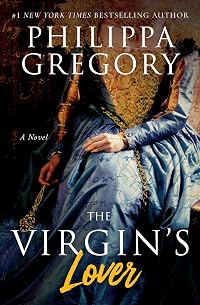
A fictional portrait of the early years of the reign of Elizabeth I follows the young queen as she copes with intrigues aimed at placing Mary, Queen of Scots, on the British throne, and her passion for the traitorous Robert Dudley.Tags
Recommendations
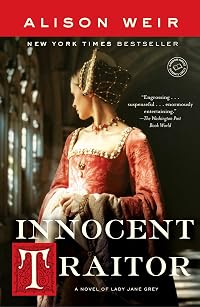
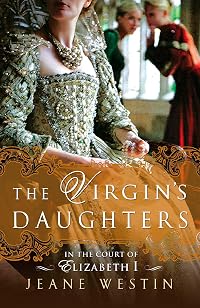
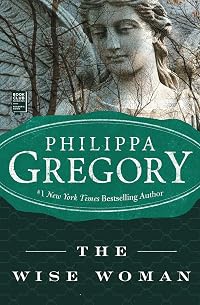
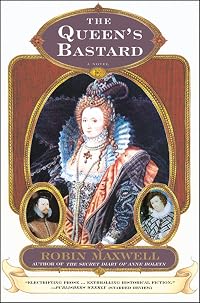


Member Recommendations
Member Reviews
Philippa Gregory has taken the story of the relationship between Elizabeth I and Robert Dudley, a married high ranking man in Tudor times. She shows Elizabeth as a passionate woman, different from the virgin queen I had a vague image of. She refers to how she is never considered as good as a man and the pressure she has to deal with. She shows Robert Dudley's wife, Amy, sympathetically and the book ends with the scandal around Amy's death. Robert Dudley's is drawn as an ambitious and cunning man. Not as enjoyable as other Philippa Gregory novels but I learnt a lot, as usual.
First things first. I recommend you read The Queen's Fool before reading this one. It contains a bit background information and a bit of a foundation to carry you over to The Virgin's Lover. It's not necessary but it's nice to have that extra bit of info in the small moments where the book makes a reference to the past. Besides, The Queen's Fool was a good book so why would you not want to read it? :)
There's plenty of intrigue and double crossing in here, so if you're really into that this is the book for you. I love that stuff. I love seeing characters you don't like get the axe because they were too careless and got double crossed. It's just so satisfying. Which brings me to this other point.
I hate Robert Dudley.
Everything about him show more made me want to grind my teeth, made me want to jump into the book and punch him in the gonads, or made me want to run a lance into him. I just can't stand the guy. He oozes sliminess and his ambition is just way over the top it made you want to roll your eyes and slap him across the head with a sledgehammer. His arrogance made me want to scream. He was all right at first but once you saw past his true colors you just wanted to curl your lip in disgust at the guy. Either I need serious help, or Ms. Gregory just did a wonderful job at character development and creation here. :P I have never hated a character so much until I came across Robert Dudley.
Amy (Dudley's wife) made you want to cringe because she was everything you didn't want her to be. She was the epitome of submissive wife. There were moments where she finally grew a backbone (and you had to cheer for her during those times) but you just can't help but pity the poor woman. Of all the characters in the book I sympathized with Amy the most. It was just painful to see her pain and suffering and the way she fawned at Dudley made you want to pity her, but at the same time be quite disgusted with her. She admirable though. She put up with a lot of issues and crap for that time.
It's hard to decide how I feel about Elizabeth. She's whiny. She's NEEDY. She's clingy. She nearly made me want to jab something in my eye. However there were moments where I thought "Heeeey..she's not so stupid after all!" so it's very hard to see Elizabeth in a different view than what you usually see (usually as a very strong character who defied the Spanish Armada). So I thought it was difficult to like her in this novel. I was on the fence with her.
Overall, I thought it was a good read. There are romantic parts but not that explicit and quickly done and over with. So to me, they were tolerable. No battle scenes here which was unfortunate but wasn't really the main part of the subject anyway (this book rather focuses on Dudley and Elizabeth). The intrigue of court life was here as usual (all of Gregory's novels have it) so that was good to see. I just really enjoyed the character development and creation in this book. show less
There's plenty of intrigue and double crossing in here, so if you're really into that this is the book for you. I love that stuff. I love seeing characters you don't like get the axe because they were too careless and got double crossed. It's just so satisfying. Which brings me to this other point.
I hate Robert Dudley.
Everything about him show more made me want to grind my teeth, made me want to jump into the book and punch him in the gonads, or made me want to run a lance into him. I just can't stand the guy. He oozes sliminess and his ambition is just way over the top it made you want to roll your eyes and slap him across the head with a sledgehammer. His arrogance made me want to scream. He was all right at first but once you saw past his true colors you just wanted to curl your lip in disgust at the guy. Either I need serious help, or Ms. Gregory just did a wonderful job at character development and creation here. :P I have never hated a character so much until I came across Robert Dudley.
Amy (Dudley's wife) made you want to cringe because she was everything you didn't want her to be. She was the epitome of submissive wife. There were moments where she finally grew a backbone (and you had to cheer for her during those times) but you just can't help but pity the poor woman. Of all the characters in the book I sympathized with Amy the most. It was just painful to see her pain and suffering and the way she fawned at Dudley made you want to pity her, but at the same time be quite disgusted with her. She admirable though. She put up with a lot of issues and crap for that time.
It's hard to decide how I feel about Elizabeth. She's whiny. She's NEEDY. She's clingy. She nearly made me want to jab something in my eye. However there were moments where I thought "Heeeey..she's not so stupid after all!" so it's very hard to see Elizabeth in a different view than what you usually see (usually as a very strong character who defied the Spanish Armada). So I thought it was difficult to like her in this novel. I was on the fence with her.
Overall, I thought it was a good read. There are romantic parts but not that explicit and quickly done and over with. So to me, they were tolerable. No battle scenes here which was unfortunate but wasn't really the main part of the subject anyway (this book rather focuses on Dudley and Elizabeth). The intrigue of court life was here as usual (all of Gregory's novels have it) so that was good to see. I just really enjoyed the character development and creation in this book. show less
The Virgin's Lover was well written of course. I love Gregory's ability to blend history and fact so well with fiction. This book was, however, aggravating from start to finish. The Queen and Robert are deplorable, miserable human beings really. There was not a moment in which I was not infuriated by this book. Gregory's books are great, but I would recommend picking up a different one.
There are plot spoilers, but if you know the history of Elizabeth and of Lord Dudley, you know the spoilers already...
The Virgin's Lover left me cold.
Philippa Gregory’s fictional tale of Lord Robert Dudley’s relationship with Elizabeth Tudor, The Virgin’s Lover, overlaps minimally with Gregory’s The Queen’s Fool. Hannah, the Fool, thankfully plays no active role in this lackluster book full of unlikeable characters.
And phenominally unlikeable they are! Lord Dudley continues to manipulate, plot, and lie his way toward Elizabeth’s bed and the throne of England. Does he actually love Elizabeth or is she another pawn in a long-line of Dudley family pawns? Most disgraceful is Dudley’s treatment of his wife, Amy, who does show more nothing but love him, dote on him, and pine for him.
Amy, though, was so unlikeable, I couldn’t muster and ounce of pity for her. Simpering, self-depreciating, too forgiving of her husband’s lusts for power and for Elizabeth, Amy Dudley is a two-dimensional caricature of a weak, childish woman too anxiety ridden to be considered devoted. I actually skipped ahead to see how many more pages of her I’d have to suffer through before she finally died.
The Virgin Queen, Elizabeth, is portrayed similarly here as in The Queen’s Fool. She is sickly, paranoid, so anxious she bites her nails and picks her cuticles until they bleed, and so unable to overcome her baser desires that she can not protect her own throne. After more than 20 years in and out of court, fighting to obtain the throne, you’d think she would have a minimal idea of how to sit on it. Instead, she requires the guidance of strong and guileful men in order to make and stick to the tiniest decision.
For most of the book, the only main character I found appealing was Sir William Cecil, Elizabeth’s Secretary of State. Cecil was intelligent, kind to the Queen despite how she exasperated him, and looked first to the good of England. In the last quarter of the book, though, he set in motion something unforgivable. Granted, his thoughts were always to keeping Elizabeth on the throne in order to protect England, but he went too far and lost all the respect Gregory had endowed him with.
The only likable character in the entire book was Amy’s companion, Lizzie Oddingsell, who was a true friend. She protected Amy from rumor and scandal, defended her reputation against gossips, fretted over her health, stood up to the head of her own house when he wanted Amy to leave, found Amy new accommodations when no one wanted her, and was honestly and heartily distressed at her death. Lizzie, though, was a minor character, hardly seen on 30 pages.
Lack of likable characters in not this book’s only fault. As was The Queen’s Fool, The Virgin’s Lover is repetitive. Page after page, Elizabeth changes her mind again and again; page after page, Amy longs desperately for the love of her husband; page after page, Elizabeth can’t live without Dudley; page after page, after page, after page. There are entire paragraphs of dialog that seem to be re-wordings of paragraphs that were re-wordings of yet other paragraphs.
More importantly, the writing style lacks depth and nuance. There is no rising and falling action with The Virgin’s Lover, no climax, and the end comes abruptly. I looked closely to see if pages had been torn out of my copy; they had not. I can’t say I was disappointed about it.
Two Stars: Read if DESPERATE show less
The Virgin's Lover left me cold.
Philippa Gregory’s fictional tale of Lord Robert Dudley’s relationship with Elizabeth Tudor, The Virgin’s Lover, overlaps minimally with Gregory’s The Queen’s Fool. Hannah, the Fool, thankfully plays no active role in this lackluster book full of unlikeable characters.
And phenominally unlikeable they are! Lord Dudley continues to manipulate, plot, and lie his way toward Elizabeth’s bed and the throne of England. Does he actually love Elizabeth or is she another pawn in a long-line of Dudley family pawns? Most disgraceful is Dudley’s treatment of his wife, Amy, who does show more nothing but love him, dote on him, and pine for him.
Amy, though, was so unlikeable, I couldn’t muster and ounce of pity for her. Simpering, self-depreciating, too forgiving of her husband’s lusts for power and for Elizabeth, Amy Dudley is a two-dimensional caricature of a weak, childish woman too anxiety ridden to be considered devoted. I actually skipped ahead to see how many more pages of her I’d have to suffer through before she finally died.
The Virgin Queen, Elizabeth, is portrayed similarly here as in The Queen’s Fool. She is sickly, paranoid, so anxious she bites her nails and picks her cuticles until they bleed, and so unable to overcome her baser desires that she can not protect her own throne. After more than 20 years in and out of court, fighting to obtain the throne, you’d think she would have a minimal idea of how to sit on it. Instead, she requires the guidance of strong and guileful men in order to make and stick to the tiniest decision.
For most of the book, the only main character I found appealing was Sir William Cecil, Elizabeth’s Secretary of State. Cecil was intelligent, kind to the Queen despite how she exasperated him, and looked first to the good of England. In the last quarter of the book, though, he set in motion something unforgivable. Granted, his thoughts were always to keeping Elizabeth on the throne in order to protect England, but he went too far and lost all the respect Gregory had endowed him with.
The only likable character in the entire book was Amy’s companion, Lizzie Oddingsell, who was a true friend. She protected Amy from rumor and scandal, defended her reputation against gossips, fretted over her health, stood up to the head of her own house when he wanted Amy to leave, found Amy new accommodations when no one wanted her, and was honestly and heartily distressed at her death. Lizzie, though, was a minor character, hardly seen on 30 pages.
Lack of likable characters in not this book’s only fault. As was The Queen’s Fool, The Virgin’s Lover is repetitive. Page after page, Elizabeth changes her mind again and again; page after page, Amy longs desperately for the love of her husband; page after page, Elizabeth can’t live without Dudley; page after page, after page, after page. There are entire paragraphs of dialog that seem to be re-wordings of paragraphs that were re-wordings of yet other paragraphs.
More importantly, the writing style lacks depth and nuance. There is no rising and falling action with The Virgin’s Lover, no climax, and the end comes abruptly. I looked closely to see if pages had been torn out of my copy; they had not. I can’t say I was disappointed about it.
Two Stars: Read if DESPERATE show less
Really, really... not good. I think it really suffers from not having a Hannah Green or a Mary Boleyn--a character who's either fictional or relatively unknown to history who can view historical events from the sidelines. As it is, we're left with nothing but ridiculous Elizabeth/Dudley sex scenes. Gregory does have the courage, however, to make Amy Dudley both [sym]pathetic and really, truly annoying.
Another of Gregory's historical novels surrounding the Tudor court, this time focusing on the enduring historical mystery of why Elizabeth I never married. Today, in a cynical age, many doubt that Elizabeth had died a 'Virgin queen'.
Had she done so the whole course of history may have been very different and she belonged to an age where unmarried women of her status were unheard of. Quite possibly it was due to her very unhappy childhood experiences exposed to the marriages of her own father and the execution of her mother, or possibly she had a fear of child-birth having lost two of her step-mothers as a result of giving birth. Her own sister's marriage was worse than a disaster so who could blame her for steering clear? Or possibly show more she fell in love during her formative years and had her heart broken beyond repair. Or maybe all of the above.
Gregory weaves a masterful tale suggesting that the relationship she had with her childhood sweetheart Dudley was not as innocent as she would have had people believe.
However, Robert Dudley was a married man. If the rumours are to be believed, this was an irritation to him, as it was an obstacle in his way towards marrying the queen Elizabeth. His wife Amy Dudley died, and many historians see this death as convenient for Dudley, and fishy to say the least. Did Dudley order her death? Did Elizabeth? Did Amy kill herself? Or was it truly an accident? We will never know, although Gregory portrays her own theory.
Gregory certainly paints Elizabeth in an interesting way - indecisive, unpredictable and perhaps rather foolish - not a way that we tend to regard her now. The personal `agony' she suffered as a result of her doomed relationship with Dudley is very well written. I am unsure of the alleged `betrothal' to Dudley and whether that could be considered `binding' in any sense given that Dudley was already married so it would be null and void in the eyes of the church and in law - indeed adulterous and I wonder if this actually did happen?
Amy Dudley is portrayed to be a rather weak and helpless woman - although the full misery of her situation was not one I had fully appreciated, having no home, the endless wandering from house to house and the humiliation of being `put aside' by the man she loved.
Of course, this is a novel of fiction, and not to be taken literally, although the novel bases itself around events that did happen and characters that exist. It’s very easy to empathise with all the characters, including at times - and my surprise - Dudley. show less
Had she done so the whole course of history may have been very different and she belonged to an age where unmarried women of her status were unheard of. Quite possibly it was due to her very unhappy childhood experiences exposed to the marriages of her own father and the execution of her mother, or possibly she had a fear of child-birth having lost two of her step-mothers as a result of giving birth. Her own sister's marriage was worse than a disaster so who could blame her for steering clear? Or possibly show more she fell in love during her formative years and had her heart broken beyond repair. Or maybe all of the above.
Gregory weaves a masterful tale suggesting that the relationship she had with her childhood sweetheart Dudley was not as innocent as she would have had people believe.
However, Robert Dudley was a married man. If the rumours are to be believed, this was an irritation to him, as it was an obstacle in his way towards marrying the queen Elizabeth. His wife Amy Dudley died, and many historians see this death as convenient for Dudley, and fishy to say the least. Did Dudley order her death? Did Elizabeth? Did Amy kill herself? Or was it truly an accident? We will never know, although Gregory portrays her own theory.
Gregory certainly paints Elizabeth in an interesting way - indecisive, unpredictable and perhaps rather foolish - not a way that we tend to regard her now. The personal `agony' she suffered as a result of her doomed relationship with Dudley is very well written. I am unsure of the alleged `betrothal' to Dudley and whether that could be considered `binding' in any sense given that Dudley was already married so it would be null and void in the eyes of the church and in law - indeed adulterous and I wonder if this actually did happen?
Amy Dudley is portrayed to be a rather weak and helpless woman - although the full misery of her situation was not one I had fully appreciated, having no home, the endless wandering from house to house and the humiliation of being `put aside' by the man she loved.
Of course, this is a novel of fiction, and not to be taken literally, although the novel bases itself around events that did happen and characters that exist. It’s very easy to empathise with all the characters, including at times - and my surprise - Dudley. show less
This is the story of the early years of Elizabeth I's reign, focussing on her relationships with her advisors, particularly the very ambitious Robert Dudley. It is told from the various viewpoints of the protagonists, exploring the motivations and emotions of all those involved.
This is a wonderful book. I found it completely gripping the whole way through. Usually I find it hard to empathise with characters I don't like and while these all had their flaws they were compelling and engaging; I wanted to know their stories.
What I found most interesting was this portrayal of Elizabeth; it depicts a young, malleable and at times, weak, woman. She relies heavily (far too much) on the men around her and has little confidence in her own show more strength. All I've ever learnt about her in history is how she ruled like a king, so it was intriguing to see her shed in a completely different light. I would love to read Gregory's take on the rest of Elizabeth's life, to learn how she developed as a woman and a monarch. show less
This is a wonderful book. I found it completely gripping the whole way through. Usually I find it hard to empathise with characters I don't like and while these all had their flaws they were compelling and engaging; I wanted to know their stories.
What I found most interesting was this portrayal of Elizabeth; it depicts a young, malleable and at times, weak, woman. She relies heavily (far too much) on the men around her and has little confidence in her own show more strength. All I've ever learnt about her in history is how she ruled like a king, so it was intriguing to see her shed in a completely different light. I would love to read Gregory's take on the rest of Elizabeth's life, to learn how she developed as a woman and a monarch. show less
Members
- Recently Added By
Lists

Best Historical Fiction
620 works; 261 members

Historical Fiction
889 works; 91 members

KayStJ's to-read list
1,616 works; 11 members

Very Very Bad
22 works; 7 members
Author Information

127+ Works 86,672 Members
Philippa Gregory was born in Nairobi, Kenya on January 9, 1954. She received a B.A. in history at Sussex University in 1982 and a Ph.D. in 18th-century literature from the University of Edinburgh in 1984. She has taught at numerous universities and was made a fellow of Kingston University in 1994. Her historical novels include: Wideacre, The show more Queen's Fool, The Virgin's Lover, The Constant Princess, The Boleyn Inheritance, The Other Queen, The White Queen, The Red Queen, The Lady of the Rivers and The White Princess. She has also written several contemporary fiction works including Perfectly Correct, The Little House and Zelda's Cut. She adapted her novel A Respectable Trade, about the slave trade in England, into a four-part series for BBC television. Her script won an award from the Committee for Racial Equality. She won the Feminist Book Fortnight Award in 1990 and the Romantic Novelist of the Year Award in 2002. Her book, The Other Boleyn Girl, won the Parker Romantic Novel of the Year award and was adapted into a major feature film in 2008 starring Natalie Portman and Scarlett Johansson. The White Queen was adapted into an original cable series on the Starz nertwork in 2013 starring Max Irons and Rebecca Ferguson. Her title The Kings Curse made the New York Times bestseller list in 2014. Her title, The Taming of the Queen, made the New York Times bestseller list in 2015. Her latest bestseller is Three Sisters, Three Queens. Gregory also writes children's books, is a regular contributor to newspapers and magazines, a frequent broadcaster for radio and television, and runs a small charity that builds wells in schoolyards in Gambia. (Bowker Author Biography) show less
Some Editions
Awards and Honors
Awards
Distinctions
Series

Work Relationships
Is contained in
The Boleyn Inheritance/The Other Boleyn Girl/The Virgin's Lover/Queen's Fool/Wideacre/Constant Princess/Meridon/Earthly Joys/Virgin Earth by Philippa Gregory
Five Book Set By Philippa Gregory: Wideacre, Virgin Earth, Queen's Fool, Virgin's Lover, Meridon by Philippa Gregory
The Other Boleyn Girl / The Virgin's Lover / The Queen's Fool / The Constant Princess / The Other Queen / The White Queen by Philippa Gregory
The Other Boleyn Girl / The Queen's Fool / The Virgin's Lover / The Wise Woman / Virgin Earth / Wideacre / Meridon / The Favored Child / Fallen Skies by Philippa Gregory
The Other Boleyn Girl/The Queen's Fool/The Virgin's Lover/Earthly Joys/Virgin Earth/The Constant Princess by Philippa Gregory
The Virgin's Lover/The Other Boleyn Girl/The Boleyn Inheritance/Wideacre/Meridon by Phillipa Gregory
Common Knowledge
- Canonical title*
- Der Geliebte der Königin
- Original title
- The Virgin's Lover
- Original publication date
- 2004
- People/Characters
- Elizabeth I, Queen of England; Katherine Ashley; Mildred Cecil, Lady Burghley; William Cecil, 1st Baron Burghley; Robert Dudley, 1st Earl of Leicester; Katherine Carey, Lady Knollys (as Lady Catherine Knollys) (show all 10); Sir Francis Knollys; Lettice Knollys; Alvarez, Bishop de Quadra; Amy Robsart
- Important places
- England, UK; Aragon, Spain
- Important events
- Accession of Elizabeth I (1558-11-17)
- Dedication
- For Anthony
- First words
- All the bells in Norfolk were ringing for Elizabeth, pounding the peal into Amy's head, first the treble bell screaming out like a mad woman, and then the whole agonizing, jangling sob till the great bell boomed a warning tha... (show all)t the whole discordant carillon was about to shriek out again.
- Quotations
- All the bells in Hertfordshire were ringing for Elizabeth, pounding the peal into her head ... Elizabeth threw open the shutters of Hatfield Palace, flung open the window, wanting to be drowned in the noise, deafened by her o... (show all)wn triumph ... Elizabeth laughed out loud at the racket which hammered out the news: poor sick Queen Mary was dead at last, and Princess Elizabeth was the uncontested heir. “Thank God,” she shouted up at the whirling clouds.
Cecil was a great one for lists; their march down the page matched the orderly progression of his thinking.
William Hyde summoned his sister to his office, the room where he transacted the business of his estate ... He was seated behind the great table, which was circular and sectioned with drawers, each bearing a letter of the alp... (show all)habet. The table could turn on its axis toward the landlord and each drawer had the contracts and rent books of the tenant farmers, filed under the initial letter of their name. Lizzie remarked idly that the drawer marked Z had never been used, and wondered that no one thought to make a table which was missing the X and the Z, since these must be uncommon initial letters in English. - Last words
- (Click to show. Warning: May contain spoilers.)They had their verdict; they brought it in. It was accidental death. Better for all of us if we leave it so, perhaps.
- Original language
- English
*Some information comes from Common Knowledge in other languages. Click "Edit" for more information.
Classifications
Statistics
- Members
- 5,371
- Popularity
- 2,528
- Reviews
- 97
- Rating
- (3.45)
- Languages
- 10 — Danish, English, German, Hungarian, Italian, Lithuanian, Polish, Portuguese, Swedish, Turkish
- Media
- Paper, Audiobook, Ebook
- ISBNs
- 60
- ASINs
- 21