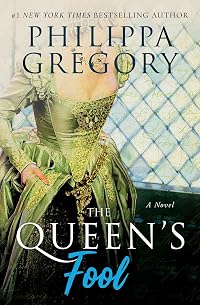
The Queen's Fool
by Philippa Gregory
Tudor Court: Chronological Order (6), Plantagenets and Tudors (12)
On This Page
Description
#1 New York Times bestselling author and "queen of royal fiction" (USA TODAY) Philippa Gregory weaves a spellbinding tale of a young woman with the ability to see the future in an era when destiny was anything but clear.Winter, 1553. Pursued by the Inquisition, Hannah Green, a fourteen-year-old Jewish girl, is forced to flee with her father from their home in Spain. But Hannah is no ordinary refugee; she has the gift of "Sight," the ability to foresee the future, priceless in the troubled show more times of the Tudor court. Hannah is adopted by the glamorous Robert Dudley, the charismatic son of King Edward's protector, who brings her to court as a "holy fool" for Queen Mary and, ultimately, Queen Elizabeth. Hired as a fool but working as a spy; promised in wedlock but in love with her master; endangered by the laws against heresy, treason, and witchcraft, Hannah must choose between the safe life of a commoner and the dangerous intrigues of the royal family that are inextricably bound up with her own yearnings and desires.
Teeming with vibrant period detail and peopled by characters seamlessly woven into the sweeping tapestry of history, The Queen's Fool is a rich and emotionally resonant gem from a masterful storyteller. show less
Tags
Recommendations
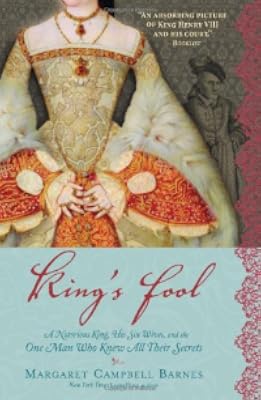
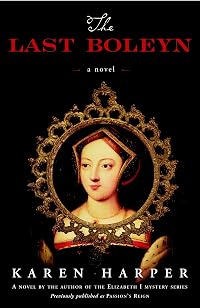

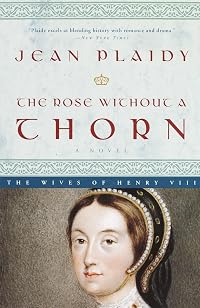
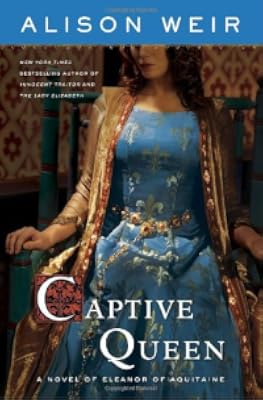
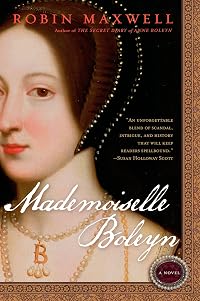
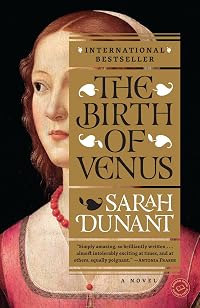
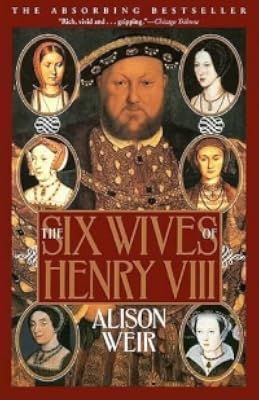
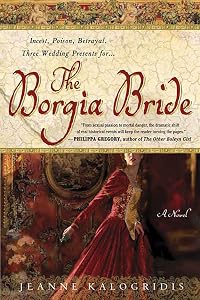

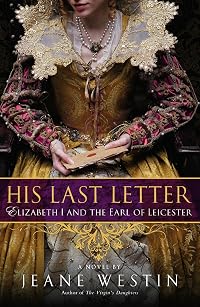
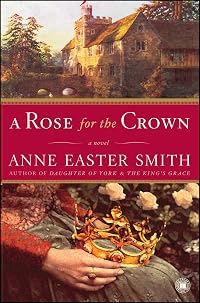
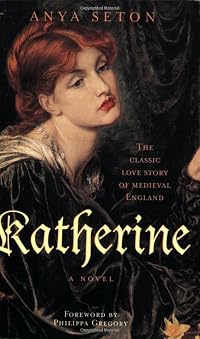

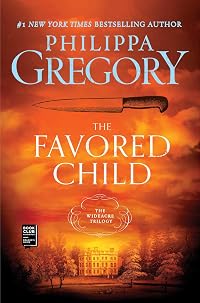



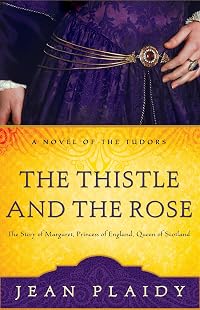
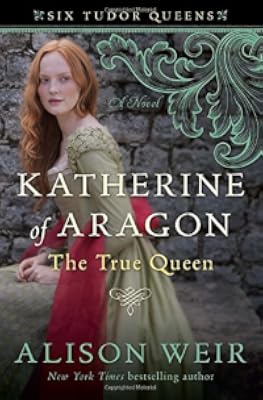
Member Recommendations
jordantaylor In the book by Yolen, a girl serves as fool to Mary Queen of Scots. In Gregory's book, a girl serves as fool to Mary I of England.
Member Reviews
A bit of a mixed bag here. I liked her characterization of Mary - mostly. I didn't really like Hannah - again, mostly. The story had a fantastic concept - a woman with the "sight" who would then be in a perfect position to be present with Edward, Mary and Elizabeth but ALSO show us life as an outsider. It also had moments where the writing "sang" (when Philippa Gregory is "on", she's really "on"). But it didn't fully deliver on the promise because the characters were inconsistent in their strengths, weaknesses and goals. Philippa Gregory books are a little like crappy cakes: you know they're not really good for you, but you eat them anyway. This was not my first PG book; it will not be my last....
I doubt I would have gotten around to reading this book for quite some time, had a friend not recommended it to me. I am very grateful to her, because I thoroughly enjoyed it.
This is a fictional story, set against a factual backdrop. Hannah Green is a Jewish girl, who is sold into the service of Sir Robert Dudley, son of the Duke of Northumberland, who is advisor to King Edward. When Edward dies, Hannah finds herself sold as a 'fool' to the heir Princess Mary. Despite her expectations, Hannah grows to admire and respect the new Queen, as well as admiring the Queen's sister, Elizabeth, who is portrayed as a plotting schemer, and not to be trusted. Hannah finds her loyalties tested, in an England where being Jewish is enough to have show more someone tried and executed for heresy.
Also in the story is Hannah's relationship with her betrothed, Daniel, which takes some surprising twists and turns.
This is a hugely enjoyable book, which really brings history to life, and could be seen as somewhat educational. Very well researched - this is an intelligent page-turner. show less
This is a fictional story, set against a factual backdrop. Hannah Green is a Jewish girl, who is sold into the service of Sir Robert Dudley, son of the Duke of Northumberland, who is advisor to King Edward. When Edward dies, Hannah finds herself sold as a 'fool' to the heir Princess Mary. Despite her expectations, Hannah grows to admire and respect the new Queen, as well as admiring the Queen's sister, Elizabeth, who is portrayed as a plotting schemer, and not to be trusted. Hannah finds her loyalties tested, in an England where being Jewish is enough to have show more someone tried and executed for heresy.
Also in the story is Hannah's relationship with her betrothed, Daniel, which takes some surprising twists and turns.
This is a hugely enjoyable book, which really brings history to life, and could be seen as somewhat educational. Very well researched - this is an intelligent page-turner. show less
I am of mixed feelings about The Queen's Fool. I found the characters to be inconsistent and weak, but even as I say that, I feel as though I am being unfair to the author - I am not learned on Tudor England, and perhaps the view she offers is realistic. Nonetheless, I found all the main characters a bit pathetic, which led to a lot of skimming and page turning. The book, much like a plot in an English court, requires patience and waiting for things to move along, as they do at their own very slow pace.
The fictionalized content in this book is greater than the other two I have read (The Constant Princess and The Boleyn Inheritance) since the protagonist herself is a work of fiction. Hannah, being a "seer," leads this particular book on show more the edge of a fantasy, being as often her episodes are what drives the entire plot forward. Gregory repeats herself often, then changes her mind, then repeats herself again - I'm not sure if all the characters are disloyal and ambivalent, or if it was the author herself who could not make up her mind.
That said, it wasn't a terrible read. It served for entertainment, and despite my dislike of the character and the speed of the storyline, Gregory does have a way of drawing her reader right into the world of Tudor England and enchanting us with the scenery and bringing to life the way things were. For that, she gets three stars. show less
The fictionalized content in this book is greater than the other two I have read (The Constant Princess and The Boleyn Inheritance) since the protagonist herself is a work of fiction. Hannah, being a "seer," leads this particular book on show more the edge of a fantasy, being as often her episodes are what drives the entire plot forward. Gregory repeats herself often, then changes her mind, then repeats herself again - I'm not sure if all the characters are disloyal and ambivalent, or if it was the author herself who could not make up her mind.
That said, it wasn't a terrible read. It served for entertainment, and despite my dislike of the character and the speed of the storyline, Gregory does have a way of drawing her reader right into the world of Tudor England and enchanting us with the scenery and bringing to life the way things were. For that, she gets three stars. show less
The Queen's Fool tells the tale of Hannah Green, a secret Jew with the ability to see the future, who serves both Mary Tudor and Elizabeth Tudor as a fool. Hannah, partly because of her unique Sight, becomes embroiled with several plots in the turbulent Tudor court. Furthermore, she must hide her heritage and religious beliefs at a time of religious unrest and uncertainty. I found Hannah's Jewish beliefs one of the more interesting aspects of this novel, as it brought out an unseen portion of England's religious struggles in the sixteenth century and created a character adept at hiding her true beliefs. However, Hannah, for all the time she spends in the royal court, strikes me as incredibly naive, even towards the novel's end. Overall, show more The Queen's Fool is an good piece of historical fiction and a good read for fans of the Tudor era. show less
Book number twelve in the Tudor saga, The Queen’s Fool seems to me to be one of Gregory’s weaker efforts, or perhaps I am growing tired of her at last. I love historical fiction that contains MORE of the historical and LESS of the fiction. I have loved Gregory at times because I felt her fictional accounts fit so perfectly into the narrative that we know to be true, into the facts that surround the tale. I cannot say that I felt she did a good job here, though, as I walked away thinking that the story was completely ludicrous in view of the known facts and that, rather than offering me a believable interpretation of the people, she had offered an interpretation that I would judge has less than an hair’s breadth of being true. show more
I’m not sure I can buy Bloody Mary Tudor as a sweet girl who was trying to save the souls of one and all by burning them at the stake. Wouldn’t it make a bit more sense that this woman, who was treated so poorly by her father and his cronies, while being no doubt influenced by her mother’s unwavering adherence to Catholicism, might have had a bit of a vengeful streak in her that would have made burning people and lopping off heads an easier task? I kept asking myself unanswerable questions: Would you continue to love a person and put them above your own safety and that of your father if they signed an order to have you interrogated by the Inquisition? Can a person truly serve two masters faithfully? I know, it makes for a character who can relate first hand what is going on in both camps, but really, wouldn’t your true feelings lean one way or the other? And, finally, history tells us Elizabeth I was a strong and independent woman. I just can’t buy this slutty, femme fatale version of her. If she had been this woman, could she have survived to have reigned and would these men have respected her judgment as history tells us they did?
So, given these failings, how can I give it a 3-star rating? Well, Gregory knows her craft well enough to spin a tale that you want to see through to fruition. She makes you stay, even at those moments when you are shaking your head and saying, “I don’t think so.” I’ll give her a star for that alone. With another author, I would probably have been out of there less than half way in.
I have two more novels to read in this series of books about the Plantagenets and Tudors. Since I have not read them in complete order, I have already read the next book in line, The Virgin’s Lover, which is the continuation of this book into the life and reign of Elizabeth I. I thought it also a weaker novel than her norm. Perhaps Gregory is tired, perhaps I am tired, or perhaps she doesn’t like Elizabeth and feels moved to malign her?I am hoping that the last two will revert to the quality of some of the earlier ones. The book about Katherine Parr should be more interesting if handled well, since I am not as familiar with her and might not notice the historical inconsistencies quite as much. The last will be The Last Tudor, which by its title promises to be the last in this long, long line. I admit I will not be unhappy to have it done. show less
I’m not sure I can buy Bloody Mary Tudor as a sweet girl who was trying to save the souls of one and all by burning them at the stake. Wouldn’t it make a bit more sense that this woman, who was treated so poorly by her father and his cronies, while being no doubt influenced by her mother’s unwavering adherence to Catholicism, might have had a bit of a vengeful streak in her that would have made burning people and lopping off heads an easier task? I kept asking myself unanswerable questions: Would you continue to love a person and put them above your own safety and that of your father if they signed an order to have you interrogated by the Inquisition? Can a person truly serve two masters faithfully? I know, it makes for a character who can relate first hand what is going on in both camps, but really, wouldn’t your true feelings lean one way or the other? And, finally, history tells us Elizabeth I was a strong and independent woman. I just can’t buy this slutty, femme fatale version of her. If she had been this woman, could she have survived to have reigned and would these men have respected her judgment as history tells us they did?
So, given these failings, how can I give it a 3-star rating? Well, Gregory knows her craft well enough to spin a tale that you want to see through to fruition. She makes you stay, even at those moments when you are shaking your head and saying, “I don’t think so.” I’ll give her a star for that alone. With another author, I would probably have been out of there less than half way in.
I have two more novels to read in this series of books about the Plantagenets and Tudors. Since I have not read them in complete order, I have already read the next book in line, The Virgin’s Lover, which is the continuation of this book into the life and reign of Elizabeth I. I thought it also a weaker novel than her norm. Perhaps Gregory is tired, perhaps I am tired, or perhaps she doesn’t like Elizabeth and feels moved to malign her?I am hoping that the last two will revert to the quality of some of the earlier ones. The book about Katherine Parr should be more interesting if handled well, since I am not as familiar with her and might not notice the historical inconsistencies quite as much. The last will be The Last Tudor, which by its title promises to be the last in this long, long line. I admit I will not be unhappy to have it done. show less
I used to enjoy Gregory's novels more, but now I've pretty much had it with English royalty in general and the Tudors in particular. While I appreciated her including a Jewish heroine in "The Queen's Fool," her inaccurate description of 16th-century Judaism was a real turn-off. As a Jewish historical novelist whose heroines are also Jewish, I expect other authors to do their research on this delicate subject. Good historical fiction can teach readers a great deal about history, particularly about the lives of women. But if done poorly, stereotypes are reinforced and innocent people [or peoples] defamed.
4.5 stars.
14 year old Hannah Green and her father are Jewish and have been running since Hannah's mother was burned at the stake in Spain. They come to England, where Hannah is brought to King Edward's court by Robert Dudley to serve as a fool when he discovers she has the gift of "sight". While Edward is dying, Hannah is sent to keep his sister Mary company. Hannah and Mary become close, and after Mary becomes queen, Hannah is sent to keep company with Mary's half-sister Elizabeth.
Between Robert, Mary and Elizabeth, Hannah is keeping company with and serving three different people with three different agendas. In the meantime, Hannah is betrothed to Daniel, a Jewish boy who has been hiding in England with his own family. Can Hannah show more keep up with all the deception and treachery that happens at court without getting herself and her Jewish family into trouble?
As much as I've read about the Tudors, I haven't actually read much about Mary, so this was interesting. I know it's fictional, but of course, there is some truth to the events in the story, though Hannah and her family are entirely fictional. This is the second Philippa Gregory book I've read, and another one I've really enjoyed. I will be reading more. show less
14 year old Hannah Green and her father are Jewish and have been running since Hannah's mother was burned at the stake in Spain. They come to England, where Hannah is brought to King Edward's court by Robert Dudley to serve as a fool when he discovers she has the gift of "sight". While Edward is dying, Hannah is sent to keep his sister Mary company. Hannah and Mary become close, and after Mary becomes queen, Hannah is sent to keep company with Mary's half-sister Elizabeth.
Between Robert, Mary and Elizabeth, Hannah is keeping company with and serving three different people with three different agendas. In the meantime, Hannah is betrothed to Daniel, a Jewish boy who has been hiding in England with his own family. Can Hannah show more keep up with all the deception and treachery that happens at court without getting herself and her Jewish family into trouble?
As much as I've read about the Tudors, I haven't actually read much about Mary, so this was interesting. I know it's fictional, but of course, there is some truth to the events in the story, though Hannah and her family are entirely fictional. This is the second Philippa Gregory book I've read, and another one I've really enjoyed. I will be reading more. show less
Members
- Recently Added By
Lists

Historical Fiction
889 works; 91 members

Unread books
1,063 works; 87 members

Some of my Favourite Historical Fiction
15 works; 1 member

Authors from England
147 works; 4 members

KayStJ's to-read list
1,616 works; 11 members

Set in the 15th and 16th Centuries
28 works; 4 members
Author Information

127+ Works 86,677 Members
Philippa Gregory was born in Nairobi, Kenya on January 9, 1954. She received a B.A. in history at Sussex University in 1982 and a Ph.D. in 18th-century literature from the University of Edinburgh in 1984. She has taught at numerous universities and was made a fellow of Kingston University in 1994. Her historical novels include: Wideacre, The show more Queen's Fool, The Virgin's Lover, The Constant Princess, The Boleyn Inheritance, The Other Queen, The White Queen, The Red Queen, The Lady of the Rivers and The White Princess. She has also written several contemporary fiction works including Perfectly Correct, The Little House and Zelda's Cut. She adapted her novel A Respectable Trade, about the slave trade in England, into a four-part series for BBC television. Her script won an award from the Committee for Racial Equality. She won the Feminist Book Fortnight Award in 1990 and the Romantic Novelist of the Year Award in 2002. Her book, The Other Boleyn Girl, won the Parker Romantic Novel of the Year award and was adapted into a major feature film in 2008 starring Natalie Portman and Scarlett Johansson. The White Queen was adapted into an original cable series on the Starz nertwork in 2013 starring Max Irons and Rebecca Ferguson. Her title The Kings Curse made the New York Times bestseller list in 2014. Her title, The Taming of the Queen, made the New York Times bestseller list in 2015. Her latest bestseller is Three Sisters, Three Queens. Gregory also writes children's books, is a regular contributor to newspapers and magazines, a frequent broadcaster for radio and television, and runs a small charity that builds wells in schoolyards in Gambia. (Bowker Author Biography) show less
Some Editions
Series


Work Relationships
Is contained in
Wideacre / The Favored Child / Meridon / The Constant Princess / The Boleyn Inheritance / The Queen's Fool / The Other Boleyn Girl by Philippa Gregory
The Boleyn Inheritance/The Other Boleyn Girl/The Virgin's Lover/Queen's Fool/Wideacre/Constant Princess/Meridon/Earthly Joys/Virgin Earth by Philippa Gregory
Five Book Set By Philippa Gregory: Wideacre, Virgin Earth, Queen's Fool, Virgin's Lover, Meridon by Philippa Gregory
The Other Boleyn Girl / The Virgin's Lover / The Queen's Fool / The Constant Princess / The Other Queen / The White Queen by Philippa Gregory
The Other Boleyn Girl / The Queen's Fool / The Virgin's Lover / The Wise Woman / Virgin Earth / Wideacre / Meridon / The Favored Child / Fallen Skies by Philippa Gregory
The Other Boleyn Girl/The Queen's Fool/The Virgin's Lover/Earthly Joys/Virgin Earth/The Constant Princess by Philippa Gregory
Common Knowledge
- Canonical title
- The Queen's Fool
- Original title
- The Queen's Fool
- Original publication date
- 2003
- People/Characters
- Hannah Green; Mary I, Queen of England; Elizabeth I, Queen of England; Will Sommers; Robert Dudley, 1st Earl of Leicester; John Dee
- Important places
- England, UK; Calais, Pas-de-Calais, Hauts-de-France, France; London, England, UK
- Dedication
- For Anthony
- First words
- The girl, giggling and overexcited, was running in the sunlit garden, running away from her stepfather, but not so fast that he could not catch her.
- Quotations
- I relearned the skill of reading backwards, I relearned the skill of the sweep of the ink ball, the flick of the clean sheet and the smooth heave on the handle of the press so that the typeface just kissed the whiteness of th... (show all)e paper and it came away clean.
The old palace at Hatfield had been the royal nursery for generations, chosen for its clean air and proximity to London. It was an old building, small-windowed and dark-beamed. - Last words
- (Click to show. Warning: May contain spoilers.)Yes, I said, in the England that Elizabeth will make.
- Original language
- English
- Disambiguation notice
- WorldCat has ISBN 0276428722 for Of Love and Life by Reader's Digest
Classifications
Statistics
- Members
- 6,681
- Popularity
- 1,815
- Reviews
- 138
- Rating
- (3.71)
- Languages
- 10 — Danish, Dutch, English, German, Hungarian, Italian, Lithuanian, Portuguese, Swedish, Turkish
- Media
- Paper, Audiobook, Ebook
- ISBNs
- 61
- ASINs
- 21