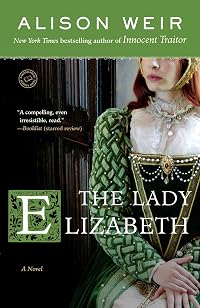
The Lady Elizabeth
by Alison Weir
On This Page
Description
A vivid fictional portrait of the tumultuous early life of Queen Elizabeth I describes her perilous path to the throne of England and the scandal, political intrigues, and religious turmoil she confronted along the way, from the deaths of her parents, Anne Boleyn and Henry VIII, to the fanaticism of her sister, Mary I.Tags
Recommendations
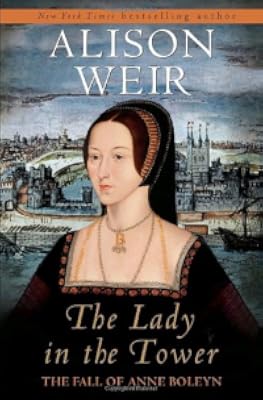






Member Recommendations
Member Reviews
This fictional account covers Elizabeth I’s life from the time her mother, Anne Boleyn, is killed up to when she becomes queen.
I do like Alison Weir. This may be the highest I've rated a book about Elizabeth I; I usually don't find her quite as interesting as some of the other Tudors. Surprisingly enough, historian Weir does admit (in a Q&A at the end) to taking a big step away from what she believes really happened in one part of the book, but she said she was enjoying the liberty of it being fiction and decided to go with - what if...? I don’t think that “what if” pushed the book to 4 stars for me, though. The book was already there and remained there throughout. I’ve been meaning to read this for years and I’m glad I show more finally have! For those who want more factual historical fiction, this may not be the one for you, but I really liked this one! show less
I do like Alison Weir. This may be the highest I've rated a book about Elizabeth I; I usually don't find her quite as interesting as some of the other Tudors. Surprisingly enough, historian Weir does admit (in a Q&A at the end) to taking a big step away from what she believes really happened in one part of the book, but she said she was enjoying the liberty of it being fiction and decided to go with - what if...? I don’t think that “what if” pushed the book to 4 stars for me, though. The book was already there and remained there throughout. I’ve been meaning to read this for years and I’m glad I show more finally have! For those who want more factual historical fiction, this may not be the one for you, but I really liked this one! show less
What can possibly be left to say about Queen Elizabeth I that hasn't already be said? For the fervent fan of the monarch, about all that is left is for the author to handle the story skillfully, or to attempt to find an unexplored viewpoint.
Weir has chosen the former here, and does a fine job of inhabiting both the world and the mind of the young Elizabeth, from the death of Ann Boleyn to the death of Queen Mary Tudor. The historical material is presented, along with fictional speculation about Elizabeth's relationship with her stepfather, Thomas Seymour, and the princess / lady / princess / heir-to-the-crown's internal struggles with the notion of marriage. Or not.
The thing one takes away, always, from well-told history (or historical show more fiction) about this remarkable woman, is how well she played a very real -- and very dangerous -- Game of Thrones, and did so from the moment of Henry VIII's death, when she was but fourteen years old.
'The Lady Elizabeth' would be a fine introduction into historical fiction of the Tudor era, and an enjoyable interlude for readers already familiar with the story. show less
Weir has chosen the former here, and does a fine job of inhabiting both the world and the mind of the young Elizabeth, from the death of Ann Boleyn to the death of Queen Mary Tudor. The historical material is presented, along with fictional speculation about Elizabeth's relationship with her stepfather, Thomas Seymour, and the princess / lady / princess / heir-to-the-crown's internal struggles with the notion of marriage. Or not.
The thing one takes away, always, from well-told history (or historical show more fiction) about this remarkable woman, is how well she played a very real -- and very dangerous -- Game of Thrones, and did so from the moment of Henry VIII's death, when she was but fourteen years old.
'The Lady Elizabeth' would be a fine introduction into historical fiction of the Tudor era, and an enjoyable interlude for readers already familiar with the story. show less
Set from 1536-1558, “Lady Elizabeth” is an engrossing account of Elizabeth I’s early life up till the moment she became Queen of England. It is divided into three parts: “The King’s Daughter”, “The King’s Sister”, and “The Queen’s Sister”, exploring how each ruling monarch affected Elizabeth, as with each death she drew closer to the throne – and closer to danger.
During Henry VIII’s reign Elizabeth starts out as a princess but, aged two, her title is reduced to “Lady” soon after her mother – Anne Boleyn – is beheaded. Her father doesn’t love his little Bessy any less though. Some of the scenes between England’s (arguably) most tyrannical king and his young daughter are engaging and at times show more touching. According to the author’s note, Elizabeth really was in awe of her father in the same way as she is portrayed to be in this novel.
During her younger brother’s reign, Elizabeth does not have the same freedom as previously, for Edward VI inherited the throne aged eleven, and no women were present at court, thus his two half-sisters could not attend except during Christmastime.
When Mary becomes Queen, then Elizabeth’s liberty becomes constrained, with her very life in the balance at times. The main problem here is religion. Mary was a devout Catholic, while Elizabeth was Protestant, though she claimed to follow the Roman faith to appease her older sister. Many Protestants were burned at the stake just for their opposing views, which to me is one of the most horrific death sentences imaginable.
Alison Weir does a good job of bringing the Tudor monarchs alive, giving them believable characteristics. She points out that although she’s predominantly stuck to the facts, she’s also added in a few scenes for dramatic purposes, including the belief that Elizabeth had sex with Sir Thomas Seymour whilst he was married to Catherine Parr. I’m glad the author chose to add this to the story, as I found the episodes highly entertaining where Seymour bursts into Elizabeth’s bedroom, while she’s in bed, and yanks the sheets down, often slapping her rear end in a jovial manner – and he was her step-father! Amusing stuff!
Another majestic read courtesy of Alison Weir. show less
During Henry VIII’s reign Elizabeth starts out as a princess but, aged two, her title is reduced to “Lady” soon after her mother – Anne Boleyn – is beheaded. Her father doesn’t love his little Bessy any less though. Some of the scenes between England’s (arguably) most tyrannical king and his young daughter are engaging and at times show more touching. According to the author’s note, Elizabeth really was in awe of her father in the same way as she is portrayed to be in this novel.
During her younger brother’s reign, Elizabeth does not have the same freedom as previously, for Edward VI inherited the throne aged eleven, and no women were present at court, thus his two half-sisters could not attend except during Christmastime.
When Mary becomes Queen, then Elizabeth’s liberty becomes constrained, with her very life in the balance at times. The main problem here is religion. Mary was a devout Catholic, while Elizabeth was Protestant, though she claimed to follow the Roman faith to appease her older sister. Many Protestants were burned at the stake just for their opposing views, which to me is one of the most horrific death sentences imaginable.
Alison Weir does a good job of bringing the Tudor monarchs alive, giving them believable characteristics. She points out that although she’s predominantly stuck to the facts, she’s also added in a few scenes for dramatic purposes, including the belief that Elizabeth had sex with Sir Thomas Seymour whilst he was married to Catherine Parr. I’m glad the author chose to add this to the story, as I found the episodes highly entertaining where Seymour bursts into Elizabeth’s bedroom, while she’s in bed, and yanks the sheets down, often slapping her rear end in a jovial manner – and he was her step-father! Amusing stuff!
Another majestic read courtesy of Alison Weir. show less
No. No. No. No one can beat Alison Weir for nonfiction, but this book irked me. I felt betrayed that Weir used the rumors (spoiler coming) that Elizabeth had indeed been pregnant by Thomas Seymour....I was also annoyed that Elizabeth was portrayed as not as careful in her dealings as she had to have been.
That said, the writing itself was good, if you can get past the head hopping. The story was internally consistent, if you can get past the historical errors (which Weir of all people should not have made). If I hadn't had such strong feelings about the subject matter, and if I hadn't had point of view issues slammed into me every week at my critique groups, I probably would have enjoyed it very much.
That said, the writing itself was good, if you can get past the head hopping. The story was internally consistent, if you can get past the historical errors (which Weir of all people should not have made). If I hadn't had such strong feelings about the subject matter, and if I hadn't had point of view issues slammed into me every week at my critique groups, I probably would have enjoyed it very much.
A novel, but written within the framework of historical facts, it deals with that tendency to fill in the gaps, to imagine actual conversations and backstory when the facts run dry, or are incomplete. Follows Elizabeth 1st's life until ascending the throne, including all the intrigue and uncertainties that exist in her childhood & adolescence. Written by a historian, so the framework is thoroughly researched and it's not at all easy to spot the joins between truth & fiction - and that make it so successful, this could well be what happened, but we'll never actually know...
Historian Alison Weir makes some bold assumptions in the fictional account of the life of Elizabeth I. She indicates in her notes at the end of the book, that while their is no absolute verifiable evidence that Elizabeth became pregnant by Thomas Seymour, there were enough historically recorded rumors to all for the possibility. She takes these possibilities to write a different story of the young 'Virgin Queen'. The story takes us up only to the day she becomes Queen upon the death of her half-sister Mary. It begins with a precocious not quite 3 year old and takes up through all the emotional peaks and valleys--- the death of her mother, the ensuing musical chairs list of step-mothers, her imprisonment in the Tower, her house arrest, show more the on again/off again availability of tutors to help her keep her very keen mind engaged, her numerous illnesses, the plots in which she (or her servants) may or may not have been involved, the constant moving from one house to another, her early teenage crush on Tom Seymour, the death of her brother Edward, her feigned re-conversion to Catholocism to please her sister Mary--- that Elizabeth endured before assuming the throne at the age of 25.
I highly recommend this for fans of the era, although I'm not sure if I'd say this is the best place to start if you've never read anything else about Elizabeth. There certainly are no lack of other volumes on the subject. show less
I highly recommend this for fans of the era, although I'm not sure if I'd say this is the best place to start if you've never read anything else about Elizabeth. There certainly are no lack of other volumes on the subject. show less
Taking fiction and some fact, Alison Weir weaves an interesting story about Queen Elizabeths life before she became Queen. Including a pregnancy that miscarried and an occasional nocturnal presence that may or may not have been her mother's ghost (the author mentions introducing a paranormal element, it didn't really come across as strong enough to be labelled as paranormal but I'm sure some readers would disagree)
Yes, there are times when things stretch belief but I found it an interesting read, though it did lag in places. I found myself wanting to find out more about some of the various characters involved which isn't a bad thing when you're reading historical fiction.
Yes, there are times when things stretch belief but I found it an interesting read, though it did lag in places. I found myself wanting to find out more about some of the various characters involved which isn't a bad thing when you're reading historical fiction.
Members
- Recently Added By
Lists

Best Historical Fiction
620 works; 261 members

Historical Fiction
889 works; 90 members

Best Historical Fiction authors
41 works; 9 members

Great Audiobooks
96 works; 10 members

Fiction with Women's Names in the Title
378 works; 15 members

Books with Noble Titles
179 works; 11 members
KayStJ's to-read list
1,616 works; 11 members
Author Information

75+ Works 37,471 Members
Alison Weir was born in London, England on July 8, 1951. She received training to be a teacher with a concentration in history from the North Western Polytechnic. Before becoming a full-time writer, she worked as a civil servant and ran her own school for children with learning difficulties from 1991 to 1997. Her first book, Britain's Royal show more Families, was published in 1989. Her other books include The Six Wives of Henry VIII; Children of England; Eleanor of Aquitaine; Henry VIII: King and Court; Mary, Queen of Scots; and Isabella. Her first novel, Innocent Traitor, was published in 2006. Her other novels include The Lady Elizabeth, The Lady in the Tower: The Fall of Anne Boleyn, The Captive Queen, A Dangerous Inheritance, and Katherine of Aragon, the True Queen. (Bowker Author Biography) show less
Awards and Honors
Distinctions
Common Knowledge
- Canonical title
- The Lady Elizabeth
- Original publication date
- 2008-04-29
- People/Characters
- Elizabeth I, Queen of England; Mary I, Queen of England; Edward VI, King of England; Lady Jane Grey; Henry VIII, King of England; Katherine Parr (Catherine Parr, 1512-1548) (show all 9); Thomas Seymour (1508-1549); Robert Dudley, 1st Earl of Leicester (1533-1588); Katherine Ashley
- Important places
- England, UK
- Dedication
- To my dear friends
Tracy Borman,
Sarah Gristwood,
Kate Williams,
Martha Whittome,
Ann Morrice,
and
Siobhan Clarke
for all their help and support,
with much love. - First words
- On a hot, still morning in July, the Lady Mary, daughter to King Henry the Eighth, arrived at the great country palace of Hatfield, trotting into the courtyard on a white palfrey followed by four gentlemen, two ladies-in-wait... (show all)ing, and a female fool.
- Original language
- English
Classifications
Statistics
- Members
- 1,962
- Popularity
- 10,784
- Reviews
- 60
- Rating
- (3.85)
- Languages
- English, French, Italian
- Media
- Paper, Audiobook, Ebook
- ISBNs
- 24
- ASINs
- 6