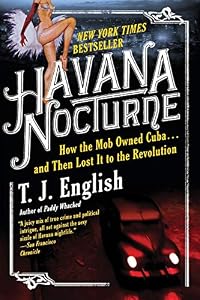
Havana Nocturne: How the Mob Owned Cuba and Then Lost It to the Revolution
by T. J. English
On This Page
Description
An award-winning journalist and historian offers the complete story of how the Mob infiltrated Havana in the 1950s, made a fortune--and lost it all to Fidel Castro.Tags
Recommendations






Member Reviews
Back in the 1940s and '50s, US mobsters were realizing plenty of financial success, but it wasn't easy: politicians and law enforcement had to be paid off, money laundering was difficult, reform-minded civilians kept shutting down their gambling/booze/prostitution rackets, and - most troubling of all - the US government was figuring out how to weaponize tax laws to nab mob bosses. Even Lucky Luciano, the king of the mobsters, couldn't save himself from being jailed and then deported back to Sicily. Moreover, they lived socially marginalized lives: even mob fan-boy Frank Sinatra understood the necessity of denying his mob buddies in public.
Until New Jersey-based mobster Meyer Lansky, a chum of Luciano's since childhood, came up with a show more bold plan: why shouldn't the mob create its own mobster paradise? A country where payoffs would be institutionalized, money laundering condoned, reform-minded civilians suppressed by a cooperative government, and - best of all - mobsters wouldn't have to hide but could openly fraternize with politicians, businessmen, celebrities, and other financial peers? Enter Cuba, a country that already had a long history of being exploited by US fruit & sugar barons, and the country's easily-corrupted leader, Fulgencio Batista. Suddenly US mobsters were importing their US-trained employees to transform Cuba's seedy gaming & vice industries into a classy, well-run gaming & vice industry, complete with a glossy new coat of glamour and respectability.
English is an adept storyteller, which is important because, even given such juicy narrative fodder, there are a LOT of gangsters to track, all with slightly different agendas. English, however, does a crackerjack job of weaving the narratives in such a way that you never lose track of who's up to what, or why. His research - FBI files, intelligence files, memoirs, interviews - expands to incorporate a range of fascinating peripheral events - Anastasia's Murder Inc., the involvement of the mob in WW2 intelligence-gathering, the mob's reputed ties to prominent politicians and celebrities, and, of course, the genesis and major events of the Cuban revolution, culminating in the ascendency of Castro and the death of the mob's short-lived but now legendary fiefdom.
What I appreciated most about this narrative, however, is that English resists succumbing to the urge to celebrate what was, despite the trappings of glamour, a historical event that promulgated murder & violence, victimized innocents, exploited women, and depended on the violent repression of Cuban civil rights by a corrupt government. This narrative manages to strike just the right balance between acknowledging the magnetism of Cuba's hedonism without whitewashing its seedy underbelly. One might even view the book as timely exploration of the means employed by wealthy, unprincipled individuals to corrupt governments, economic systems, judicial processes, and social norms in order to line their own pockets.
In short, feeling fairly confident that others are likely to find this as diverting (and informative) read as I did. show less
Until New Jersey-based mobster Meyer Lansky, a chum of Luciano's since childhood, came up with a show more bold plan: why shouldn't the mob create its own mobster paradise? A country where payoffs would be institutionalized, money laundering condoned, reform-minded civilians suppressed by a cooperative government, and - best of all - mobsters wouldn't have to hide but could openly fraternize with politicians, businessmen, celebrities, and other financial peers? Enter Cuba, a country that already had a long history of being exploited by US fruit & sugar barons, and the country's easily-corrupted leader, Fulgencio Batista. Suddenly US mobsters were importing their US-trained employees to transform Cuba's seedy gaming & vice industries into a classy, well-run gaming & vice industry, complete with a glossy new coat of glamour and respectability.
English is an adept storyteller, which is important because, even given such juicy narrative fodder, there are a LOT of gangsters to track, all with slightly different agendas. English, however, does a crackerjack job of weaving the narratives in such a way that you never lose track of who's up to what, or why. His research - FBI files, intelligence files, memoirs, interviews - expands to incorporate a range of fascinating peripheral events - Anastasia's Murder Inc., the involvement of the mob in WW2 intelligence-gathering, the mob's reputed ties to prominent politicians and celebrities, and, of course, the genesis and major events of the Cuban revolution, culminating in the ascendency of Castro and the death of the mob's short-lived but now legendary fiefdom.
What I appreciated most about this narrative, however, is that English resists succumbing to the urge to celebrate what was, despite the trappings of glamour, a historical event that promulgated murder & violence, victimized innocents, exploited women, and depended on the violent repression of Cuban civil rights by a corrupt government. This narrative manages to strike just the right balance between acknowledging the magnetism of Cuba's hedonism without whitewashing its seedy underbelly. One might even view the book as timely exploration of the means employed by wealthy, unprincipled individuals to corrupt governments, economic systems, judicial processes, and social norms in order to line their own pockets.
In short, feeling fairly confident that others are likely to find this as diverting (and informative) read as I did. show less
My Cuban father told me that, when Fidel Castro took on the Cuban government, people thought he might have a chance. When Fidel — the longtime Cuban leader was always just called “Fidel,” whether by admirers or the rabidly anticommunist — took on the Americans, everyone thought he’d have a real fight on his hands. (Just look at Guatemala and Jacobo Arbenz or Panama in 1925.)
But, when Fidel took on the Mob, my father said, no one thought he could triumph.
“Los Americanos were one thing — but la Mafia italiana, that was something else,” he told me.
With a history like that, I wanted to read it for myself.
But, when Fidel took on the Mob, my father said, no one thought he could triumph.
“Los Americanos were one thing — but la Mafia italiana, that was something else,” he told me.
With a history like that, I wanted to read it for myself.
In The Godfather Part II, a famous scene is set in Havana, Cuba. Michael Corleone is taken by his brother Fredo and some friends to a nightclub where they watch a live sex show. It is in that sleazy establishment that Michael realizes Fredo has betrayed him. At the same time, communist revolutionaries are taking to the streets to fight and soon after the Mafia flies back to America. While this is a fictional story, it isn’t far from what the situation truly was in Havana, 1959. Fidel Castro’s revolutionary 26th of July Movement was destined to clash with the American Mob because the presence of American organized crime gangs was one of the reasons the revolution happened. It’s all explained in T.J. English’s Havana Nocturne.
show more This book follows two main threads, that of the Cuban revolutionaries and that of the high level Mafia operations. The latter begins with two well-known characters in Mafia lore, Lucky Luciano and Meyer Lansky. At the end of World War II, Luciano was released from prison and ordered to leave the country. And Lansky was ambitious after having successfully opened the Flamingo hotel and casino in Las Vegas. With big plans in their minds, the two National Crime Syndicate bosses arrived in Havana and moved into luxury suites in the Hotel Nacional.
Meyer Lansky had a vision of turning the entire island of Cuba into a luxury resort packed with casinos from Matanzas to Oriente. Ex-president of Cuba. At the same time, Fulgencio Batista, was living exiled in Florida when he came into contact with Lansky who talked him into running for a second term. During the election of 1953, Batista slid behind in the polls so he launched a coup that ousted then president Carlos Prio, canceling the elections and becoming Cuba’s next dictator. The party leading in the polls was the Ortodoxos, running an anti-corruption campaign. Although unknown at the time, he most famous member of the Ortodoxo party was a young lawyer who would become the most polarizing figure in Latin American history. His name was Fidel Castro.
When Batista seized the governor’s palace, he brought the American mobsters in with him. A new era of greed, graft, tourism, and crime was initiated in Cuba. Meanwhile the common people were stuck in the redundant cycles of poverty and illiteracy, reinforced by state control through the mechanisms of torture, police brutality, and censorship. While the citizens suffered, bribery ensured that the Mafia got special treatment.
When the US government learned Lucky Luciano was comfortably living in Havana, they put pressure on the Cuban government to deport him. After Luciano made one last move to his final home in Italy, Santo Trafficante moved in to take his place. Trafficante rose to power as a Mob boss in Tampa by running the bolito racket. As a trilingual speaker of English, Italian, and Spanish, he was well suited to be a crime lord in Cuba. Even better, he was well-acquainted with Cuban cultural ways through his running of illegal gambling operations in Florida. He wasn’t on good terms with Meyer Lansky though. Despite their differences, the two oversaw a growing casino industry that was linked to the nightclub scene and the tourist trade. Lansky had an honest streak and he caused his casinos to flourish by cleaning up the business, kicking con men and corrupt pit bosses out. He knew from experience in Las Vegas that casinos where customers are treated fairly draw bigger crowds. Lansky also didn’t like violence so he kept his gang’s assassinations and strongarm tactics to a minimum. He preferred to do business the gentleman’s way through financial favors and tax evasion. He was a macro level gangster who didn’t concern himself with small rackets. Under Lanksy’s and Trafficante’s guidance, the Cuban branch of the American Syndicate also made inroads into banking, real estate, and hotels.
The narrative alternates between the story of the Mob in Havana and the story of Fidel Castro and his rise to power with the Cuban Revolution of 1959. Castro started out as a young boy with ambitions of becoming a Catholic priest. In college he joined a political gang. Later he became a lawyer then led an attack on the Moncada military barracks. The failed coup landed Fidel and his brother Raul in prison where they plotted a bigger venture in seizing power from the unpopular Batista regime. After their release, the Castro brothers fled to Mexico where they organized a militia, bought a boat, and sailed for Cuba. While hiding in the Sierra Maestra mountains and training for guerilla warfare, Fidel Castro was interviewed by a journalist from The New York Times. He also bought arms from the American Mob who possibly acted as middlemen and traffickers for the American government. Clandestine connections between American intelligence agents and Castro are hinted at by the author but never fully explored. Word of the Revolution spread rapidly throughout Cuba and soon Batista was on a plane to the Bahamas after being persuaded by the CIA to step down. This meant the end of American organized crime in Cuba as Lansky, Trafficante and pals were chased out of the country.
Aside from these main threads, there are a lot of side stories. A brief but detailed account of the history of the Mafia from the Castellamarese War to the forming of the National Crime Syndicate to the Kafauver Committee congressional hearings and beyond are all told. A lot is also said about the Cuban music scene and the culture of hotels, casinos, and nightclubs like the legendary Tropicana. Also of legendary Cuban lore is the unregulated underworld of vice that mostly catered to tourists. During the Prohibition era in America, Havana became a haven for lushes. Along with that came a seedy underbelly of whorehouses, cocaine dealers, hit men for hire, and pornographic movie theaters. Slightly more respectable were the fully nude dancers and live sex shows. The character called Superman, who gets it on with a lady tied up on a stage in The Godfather Part II, is actually based on a real person. The real Superman was an Afro-Cuban man who was hung like a horse. He made a living by perfoming in sex shows, pornos, and working as a gigolo to pleasure white female tourists from El Norte. And he did all this for a living even though he was gay. According to the author, the Mob didn’t actually having anything to do with this kind of sordid, street level sleaze. Their sights were set higher on bigger fish to fry like gambling, hotels, and politics.
These side story passages are interesting, but they amount to little more than padding to fill in a thin story. Most of these passages aren’t directly related to the Lansky-Trafficante activities. However, they do give some context and information that isn’t easily available in other sources. These are some of the most vivid and detailed accounts of Havana night life before the Revolution that I’ve encountered so far. But actually the Mob wasn’t in Cuba long enough to do anything too exciting. Fidel Castro killed Meyer Lansky’s dream of a gambling and offshore banking paradise long before he got a chance to build anything more than one ultramodern hotel on the Malecon. The strongest part of this book is its account of the Cuban Revolution which is short on fine details, but direct and comprehensive enough to be of value to someone who wants to learn what happened without plowing through dense historical tomes like those of Hugh Thomas or Tad Szulc.
There are a number of stray details I find questionable. T.J. English, for example, claims Fidel Castro was a Marxist from the start. A lot of other sources that go into greater detail about the dictator’s biography say otherwise. While Castro had studied Marx, he didn’t actually embrace communism as a political system until after he seized power. In the beginning he wanted to maintain trade and diplomatic relations with the USA, but John F. Kennedy snubbed him so he turned to the USSR for support and recognition instead. Fidel Castro was a puritan, a moralist, and an orator, but he was no ideologue. He was an adventurist, a man of action, and a narcissist more than anything else. Tad Szulc covers this extensively in his biography of Castro, which English uses as a source for this book, so it is surprising that this error was made.
Also questionable are some anecdotes about Frank Sinatra and John F. Kennedy. English claims Sinatra worked as a courier fro the Mob, carrying suitcases full of money and guns from New Jersey to Havana. He also claims that when Kennedy was a senator, Meyer Lansky arranged for him to have an orgy with three Cuban prostitutes in a hotel while Lansky watched through a two-way mirror in the next room. Given Kennedy’s reputation as the Don Juan of the Democrats, it wouldn’t surprise me if he went to Cuba for sex, but the part about Lansky watching doesn’t ring true. These stories sound like yellow journalism or conspiracy theory fodder more than fact, but of course I can’t know what’s actually true. In these days of the Epstein files being released, it’s hard to know what to believe about people in power. Still, stories like this seem too sensationalistic to be true.
This book also leaves a giant gap in accounting for the relationship between Lansky and Batista. The exact nature and depth of their relationship is not disclosed. Nor is Batista’s relations with American corporate businessmen, American intelligence agencies, and the American government. The details of why the Americans persuaded Batista to abandon his dictatorship are murky by all accounts, especially considering they had supported him for so long. Also murky are details about Fidel Castro’s relations with the USA; he went on fundraising campaigns up north, but details of who actually gave him money for the Revolution haven’t been examined in any books I’ve read.
Havana Nocturne isn’t great, but it’s interesting. There is a lot of filler, but at least the filler is informative even though the bulk of it isn’t directly related to the story. It is good for filling in some details about organized crime in Cuba before the Revolution. While books on that particular turning point of the Cold War in the Caribbean always mention the Mob presence in Cuba, the actual story of what they were up to hasn’t been thoroughly examined in any book I know. It’s also a good read for Cubanophiles and those who want to understand how a small group of underworld criminals had a major impact on world affairs. But is there a moral to this story? Yes. The next time you are at a live sex show, be aware that commies might be coming to chop off your head. Be careful and don’t be a Fredo. show less
show more This book follows two main threads, that of the Cuban revolutionaries and that of the high level Mafia operations. The latter begins with two well-known characters in Mafia lore, Lucky Luciano and Meyer Lansky. At the end of World War II, Luciano was released from prison and ordered to leave the country. And Lansky was ambitious after having successfully opened the Flamingo hotel and casino in Las Vegas. With big plans in their minds, the two National Crime Syndicate bosses arrived in Havana and moved into luxury suites in the Hotel Nacional.
Meyer Lansky had a vision of turning the entire island of Cuba into a luxury resort packed with casinos from Matanzas to Oriente. Ex-president of Cuba. At the same time, Fulgencio Batista, was living exiled in Florida when he came into contact with Lansky who talked him into running for a second term. During the election of 1953, Batista slid behind in the polls so he launched a coup that ousted then president Carlos Prio, canceling the elections and becoming Cuba’s next dictator. The party leading in the polls was the Ortodoxos, running an anti-corruption campaign. Although unknown at the time, he most famous member of the Ortodoxo party was a young lawyer who would become the most polarizing figure in Latin American history. His name was Fidel Castro.
When Batista seized the governor’s palace, he brought the American mobsters in with him. A new era of greed, graft, tourism, and crime was initiated in Cuba. Meanwhile the common people were stuck in the redundant cycles of poverty and illiteracy, reinforced by state control through the mechanisms of torture, police brutality, and censorship. While the citizens suffered, bribery ensured that the Mafia got special treatment.
When the US government learned Lucky Luciano was comfortably living in Havana, they put pressure on the Cuban government to deport him. After Luciano made one last move to his final home in Italy, Santo Trafficante moved in to take his place. Trafficante rose to power as a Mob boss in Tampa by running the bolito racket. As a trilingual speaker of English, Italian, and Spanish, he was well suited to be a crime lord in Cuba. Even better, he was well-acquainted with Cuban cultural ways through his running of illegal gambling operations in Florida. He wasn’t on good terms with Meyer Lansky though. Despite their differences, the two oversaw a growing casino industry that was linked to the nightclub scene and the tourist trade. Lansky had an honest streak and he caused his casinos to flourish by cleaning up the business, kicking con men and corrupt pit bosses out. He knew from experience in Las Vegas that casinos where customers are treated fairly draw bigger crowds. Lansky also didn’t like violence so he kept his gang’s assassinations and strongarm tactics to a minimum. He preferred to do business the gentleman’s way through financial favors and tax evasion. He was a macro level gangster who didn’t concern himself with small rackets. Under Lanksy’s and Trafficante’s guidance, the Cuban branch of the American Syndicate also made inroads into banking, real estate, and hotels.
The narrative alternates between the story of the Mob in Havana and the story of Fidel Castro and his rise to power with the Cuban Revolution of 1959. Castro started out as a young boy with ambitions of becoming a Catholic priest. In college he joined a political gang. Later he became a lawyer then led an attack on the Moncada military barracks. The failed coup landed Fidel and his brother Raul in prison where they plotted a bigger venture in seizing power from the unpopular Batista regime. After their release, the Castro brothers fled to Mexico where they organized a militia, bought a boat, and sailed for Cuba. While hiding in the Sierra Maestra mountains and training for guerilla warfare, Fidel Castro was interviewed by a journalist from The New York Times. He also bought arms from the American Mob who possibly acted as middlemen and traffickers for the American government. Clandestine connections between American intelligence agents and Castro are hinted at by the author but never fully explored. Word of the Revolution spread rapidly throughout Cuba and soon Batista was on a plane to the Bahamas after being persuaded by the CIA to step down. This meant the end of American organized crime in Cuba as Lansky, Trafficante and pals were chased out of the country.
Aside from these main threads, there are a lot of side stories. A brief but detailed account of the history of the Mafia from the Castellamarese War to the forming of the National Crime Syndicate to the Kafauver Committee congressional hearings and beyond are all told. A lot is also said about the Cuban music scene and the culture of hotels, casinos, and nightclubs like the legendary Tropicana. Also of legendary Cuban lore is the unregulated underworld of vice that mostly catered to tourists. During the Prohibition era in America, Havana became a haven for lushes. Along with that came a seedy underbelly of whorehouses, cocaine dealers, hit men for hire, and pornographic movie theaters. Slightly more respectable were the fully nude dancers and live sex shows. The character called Superman, who gets it on with a lady tied up on a stage in The Godfather Part II, is actually based on a real person. The real Superman was an Afro-Cuban man who was hung like a horse. He made a living by perfoming in sex shows, pornos, and working as a gigolo to pleasure white female tourists from El Norte. And he did all this for a living even though he was gay. According to the author, the Mob didn’t actually having anything to do with this kind of sordid, street level sleaze. Their sights were set higher on bigger fish to fry like gambling, hotels, and politics.
These side story passages are interesting, but they amount to little more than padding to fill in a thin story. Most of these passages aren’t directly related to the Lansky-Trafficante activities. However, they do give some context and information that isn’t easily available in other sources. These are some of the most vivid and detailed accounts of Havana night life before the Revolution that I’ve encountered so far. But actually the Mob wasn’t in Cuba long enough to do anything too exciting. Fidel Castro killed Meyer Lansky’s dream of a gambling and offshore banking paradise long before he got a chance to build anything more than one ultramodern hotel on the Malecon. The strongest part of this book is its account of the Cuban Revolution which is short on fine details, but direct and comprehensive enough to be of value to someone who wants to learn what happened without plowing through dense historical tomes like those of Hugh Thomas or Tad Szulc.
There are a number of stray details I find questionable. T.J. English, for example, claims Fidel Castro was a Marxist from the start. A lot of other sources that go into greater detail about the dictator’s biography say otherwise. While Castro had studied Marx, he didn’t actually embrace communism as a political system until after he seized power. In the beginning he wanted to maintain trade and diplomatic relations with the USA, but John F. Kennedy snubbed him so he turned to the USSR for support and recognition instead. Fidel Castro was a puritan, a moralist, and an orator, but he was no ideologue. He was an adventurist, a man of action, and a narcissist more than anything else. Tad Szulc covers this extensively in his biography of Castro, which English uses as a source for this book, so it is surprising that this error was made.
Also questionable are some anecdotes about Frank Sinatra and John F. Kennedy. English claims Sinatra worked as a courier fro the Mob, carrying suitcases full of money and guns from New Jersey to Havana. He also claims that when Kennedy was a senator, Meyer Lansky arranged for him to have an orgy with three Cuban prostitutes in a hotel while Lansky watched through a two-way mirror in the next room. Given Kennedy’s reputation as the Don Juan of the Democrats, it wouldn’t surprise me if he went to Cuba for sex, but the part about Lansky watching doesn’t ring true. These stories sound like yellow journalism or conspiracy theory fodder more than fact, but of course I can’t know what’s actually true. In these days of the Epstein files being released, it’s hard to know what to believe about people in power. Still, stories like this seem too sensationalistic to be true.
This book also leaves a giant gap in accounting for the relationship between Lansky and Batista. The exact nature and depth of their relationship is not disclosed. Nor is Batista’s relations with American corporate businessmen, American intelligence agencies, and the American government. The details of why the Americans persuaded Batista to abandon his dictatorship are murky by all accounts, especially considering they had supported him for so long. Also murky are details about Fidel Castro’s relations with the USA; he went on fundraising campaigns up north, but details of who actually gave him money for the Revolution haven’t been examined in any books I’ve read.
Havana Nocturne isn’t great, but it’s interesting. There is a lot of filler, but at least the filler is informative even though the bulk of it isn’t directly related to the story. It is good for filling in some details about organized crime in Cuba before the Revolution. While books on that particular turning point of the Cold War in the Caribbean always mention the Mob presence in Cuba, the actual story of what they were up to hasn’t been thoroughly examined in any book I know. It’s also a good read for Cubanophiles and those who want to understand how a small group of underworld criminals had a major impact on world affairs. But is there a moral to this story? Yes. The next time you are at a live sex show, be aware that commies might be coming to chop off your head. Be careful and don’t be a Fredo. show less
Havana Nocturne by T. J. English
This is a fascinating look at Cuba just before Castro rose to power.
Havana in the 1950s was a steamy, beautiful, sexy city. Batista was in control of Cuba and the mob was in control of Havana with intentions of turning it into a Monte Carlo-like playground just off America's shore. This book brings 1950s and '60s American and Cuban politics to life but reads like great crime fiction. I couldn't put it down. The author explains how the mob came to build great, glittering casinos in Havana and writes about the movie stars and American politicians who befriended the mobsters and frequented those casinos. The wild nightlife of Havana is sharply contrasted with a poorer Cuba outside the city where we learn of show more the rise of Castro and his revolutionaries and their many attempts to come to power.
I knew little about Cuba and its history before reading Havana Nocturne. However, this book piqued my interest in this neighboring island that the US still blockades. If you liked The Godfather, I think you'll love this true story and learn some history in the process. I highly recommend it. show less
This is a fascinating look at Cuba just before Castro rose to power.
Havana in the 1950s was a steamy, beautiful, sexy city. Batista was in control of Cuba and the mob was in control of Havana with intentions of turning it into a Monte Carlo-like playground just off America's shore. This book brings 1950s and '60s American and Cuban politics to life but reads like great crime fiction. I couldn't put it down. The author explains how the mob came to build great, glittering casinos in Havana and writes about the movie stars and American politicians who befriended the mobsters and frequented those casinos. The wild nightlife of Havana is sharply contrasted with a poorer Cuba outside the city where we learn of show more the rise of Castro and his revolutionaries and their many attempts to come to power.
I knew little about Cuba and its history before reading Havana Nocturne. However, this book piqued my interest in this neighboring island that the US still blockades. If you liked The Godfather, I think you'll love this true story and learn some history in the process. I highly recommend it. show less
Having been born in 1973 and grown up in Australia, I’ve never really known that much about Cuba. From film and television I knew that smoking Cuban cigars was naughty because the U.S. had a trade embargo with them and any country that wanted to be friends with the U.S. respected that. From the same sources, I knew that there were many Cubans in Florida and that the media reported them to be mostly rabidly anti-Castro. I knew that people routinely risked the seas to escape from Cuba in a similar way that my best friend in high school had escaped from Communist Poland. But at the same time I was vaguely aware that perhaps once Castro had been a man of more democratic principles, loved by the Cubans before they came to fear that they show more may disappear at night never to be heard from again. After all, activists both trendy and genuine wore T-shirts with Castro’s once-partner’s face on it and Streisand listed Guevara as one of her father figures in the live version of “Poppa can you hear me” alongside Gandhi. The implication was that, as in so many places around the world, the U.S. had had some role to play in the making of their monster to the South.
The focus of Havana Nocturne is the mob in Cuba and their attempt to create their ultimate haven, within easy reach of everything that was good in America and without any thought for the Cuban people living in fear and poverty outside their Casino walls. T. J. English expertly, and necessarily, weaves the stories of the mob and the revolution together to create a thoroughly engrossing read that connects the dots so deliberately left unconnected for so many years. He leaves aside the demonization of any one of his true characters and, without pulling any punches, shows us flawed human beings and gives us greed, revenge and human failing as the ultimate culprits in the mess that is Cuba.
I’ll feel a lot more educated about the whole issue now as the U.S. begins to deal with a post-Castro Cuba. Whether this tiny country can recover from their decades of corruption, trade sanctions and U.S. meddling will be a test with international relevance. show less
The focus of Havana Nocturne is the mob in Cuba and their attempt to create their ultimate haven, within easy reach of everything that was good in America and without any thought for the Cuban people living in fear and poverty outside their Casino walls. T. J. English expertly, and necessarily, weaves the stories of the mob and the revolution together to create a thoroughly engrossing read that connects the dots so deliberately left unconnected for so many years. He leaves aside the demonization of any one of his true characters and, without pulling any punches, shows us flawed human beings and gives us greed, revenge and human failing as the ultimate culprits in the mess that is Cuba.
I’ll feel a lot more educated about the whole issue now as the U.S. begins to deal with a post-Castro Cuba. Whether this tiny country can recover from their decades of corruption, trade sanctions and U.S. meddling will be a test with international relevance. show less
Very interesting read - it gives a thorough history of the mob involvement on the island, and how that affected the revolution. It stays away from the titillating and focuses on Meyer Lansky, almost as an anti-hero.
Easy to read. A bit shaky on some of the details I know about independently, so docking a half-star. Doesn't really give a very good sense of how it was possible for Castro, leader of what seems like a pretty rag-tag revolutionary movement, to seize power when so much was at stake.
Members
- Recently Added By
Lists

Books Cited in Wasteland by W. Scott Poole
120 works; 1 member
Author Information

11 Works 2,026 Members
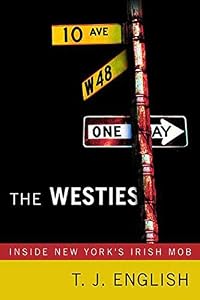
T.J. English's first work in the genre known as "True Crime" was The Westies: Inside the Hell's Kitchen Irish Mob, published in 1990. It was later adapted into a film called State of Grace starring Sean Penn. His second work, Born to Kill: America's Most Notorious Vietnamese Gang, and the Changing Face of Organized Crime (1995) was nominated for show more both an Anthony Award and an Edgar Allan Poe Award for best "True Crime" in 1996. Prior to becoming a nonfiction writer focusing on gangs and organized crime, English was a journalist writing for the Irish Voice during the police investigation and subsequent trial of those same members of the Hell's Kitchen mob who were the focus of his first nonfiction work. English, who was born in 1957, continues to do extensive research and write. (Bowker Author Biography) show less
Awards and Honors
Awards
Distinctions
Common Knowledge
- Original title
- Havana Nocturne: How the Mob Owned Cuba and Then Lost It to the Revolution
- Original publication date
- 2008-06-03
- People/Characters
- Meyer Lansky; Fulgencio Batista; Fidel Castro; Ernesto ''Che'' Guevara; Santo Trafficante Jr.; Albert Anastasia (show all 7); Lucky Luciano
- Important places
- Havana, Cuba; Cuba
- Important events
- Cuban Revolution
- Epigraph
- "And in my imagination's dreams I see the nation's representatives dancing, drunk with enthusiasm, eyes blindfolded, their movements dizzying, their momentum inexhaustible . . . Amid this sinister splendor, a red specter lets... (show all) out a strident cackle. They dance . . . Dance now, dance."
-- José Martî, Cuban patriot
"She can wiggle her ass, but she can't sing a goddamn note."
-- Meyer Lansky on Ginger Rogers, opening night at the Copa Room, Havana, Cuba, 1957 - First words
- When Charles Luciano of Naples, Italy, boarded a huge freighter in the autumn of 1946 and headed out to sea, he had many things on his mind but only one thing that mattered: Cuba.
- Last words
- (Click to show. Warning: May contain spoilers.)The dream was that Havana wold be a party that never ended. Instead, it turned out to be one of the great hangovers of all time.
- Canonical DDC/MDS
- 364.106097291
- Canonical LCC
- HV6453.C9
Classifications
- Genres
- General Nonfiction, History, Nonfiction, Politics and Government
- DDC/MDS
- 364.106097291 — Society, government, & culture Social problems and social services Crime Criminal offenses Organized Crime Standard subdivisions History, geographic treatment, biography
- LCC
- HV6453 .C9 — Social sciences Social pathology. Social and public welfare. Criminology Social pathology. Social and public welfare. Criminology Crimes and offenses
- BISAC
Statistics
- Members
- 661
- Popularity
- 43,415
- Reviews
- 28
- Rating
- (3.82)
- Languages
- 6 — English, French, Italian, Portuguese, Spanish, Swedish
- Media
- Paper, Audiobook, Ebook
- ISBNs
- 23
- ASINs
- 9