On This Page
Description
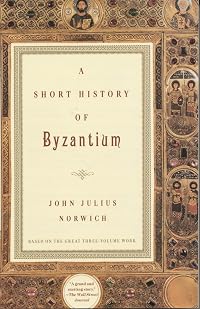
"At a moment when the splendors of Byzantine art are being rediscovered and celebrated in America, John Julius Norwich has brought together in this remarkable edition the most important and fascinating events of his dazzling trilogy of the rise and fall of the Byzantine Empire." "With wit, intelligence and an unerring eye for riveting detail, Lord Norwich tells the dramatic history of Byzantium from its beginnings in AD 330 when Constantine the Great moved the imperial capital from Rome to show more the site of an old Greek port in Asia Minor called Byzantium and renamed it Constantinople, to its rise as the first and most long-lasting Christian empire, to its final heroic days and eventual defeat by the Turks in 1453." "It was a history marked by tremendous change and drama: the adoption of Christianity by the Greco-Roman world; the fall of Rome and its empire; the defeat by the Seljuk Turks at Manzikert in 1071; the reigns of Constantine, Theodosius the Great, Justinian and Basil II. There were centuries of bloodshed in which the empire struggled for its life; centuries of controversy in which men argued about the nature of Christ and the Church; centuries of scholarship in which ancient culture was kept alive and preserved by scribes; and, most of all, centuries of creativity in which the Byzantine genius brought forth art and architecture inspired by a depth of spirituality unparalleled in any other age. After more than fourteen centuries, the ever-dazzling brilliance of the mosaics of Ravenna and the ethereal splendor of the great church of St. Sophia in Istanbul still have the power to take one's breath away."--Jacket. show lessTags
Recommendations
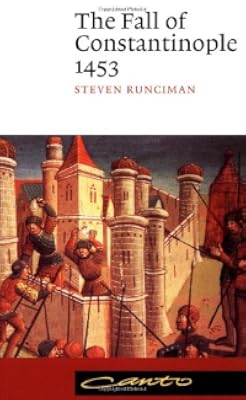
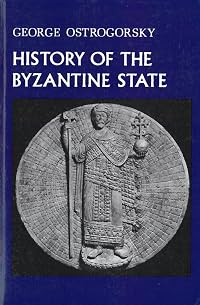
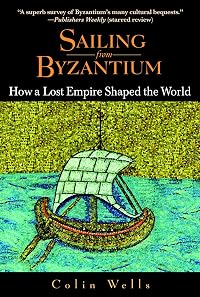
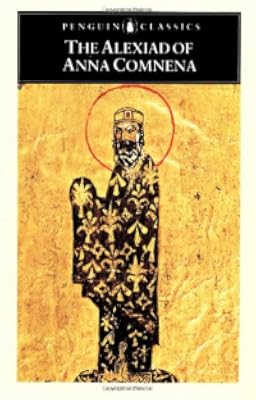
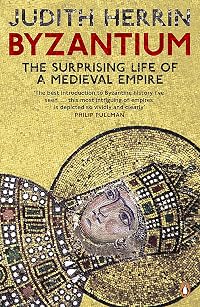
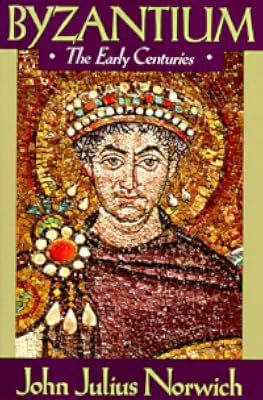
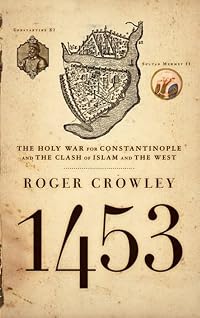
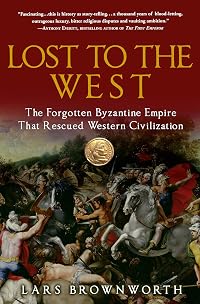
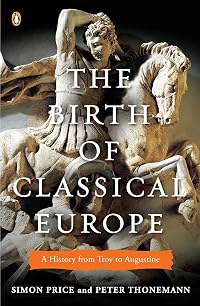
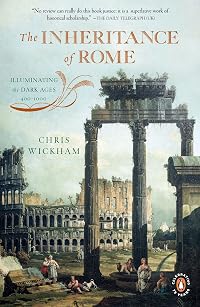
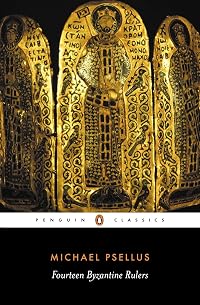





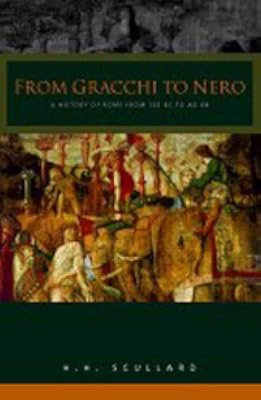
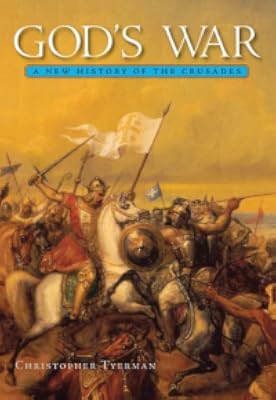
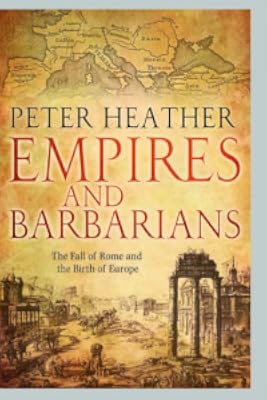
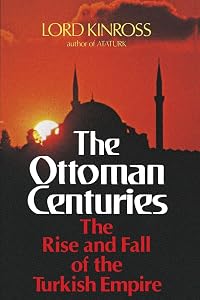
Member Recommendations

The Decline and Fall of the Roman Empire, Vol. 2 {unabridged - Modern Library 3v.} A.D. 395 to A.D. 1185 by Edward Gibbon
mattries37315 Two different views on the Byzantine Empire.

Member Reviews
As the title suggests, this is a short version of the history of the Byzantium Empire, based on the trilogy on 1200 pages by the same author. In the preface the author excuses himself that he had to omit so many anecdotes and jokes in this short story. But after reading this book, I actually can’t stop wondering how the original three volumes are, considering this one proved to be extremely entertaining 380 pages that made me laugh out loudly more than ones.
According to Norwich, the eastern empire with Constantinople as the capital of the empire wasn’t an offshoot of the Roman Empire. It was the natural successor, since the eastern Mediterranean had become both the economical and the intellectual hub of the empire. At the same time show more it was the part under most eminent external threat, and needed the constant attention of a present emperor. Therefore the fall of West Rome can be seen as the natural shrinking of the whole Roman Empire, losing the less important parts during a severely chaotic era. The Byzantine Empire was actually the guardian of most of the European culture, history, and science, during dark times when the Western Europe, couldn’t give it any shelter. The Empire wasn’t just a corrupt, internal striving, military weak, cruel and bizarre freak (but the author provides us with ample examples of that too) that was constantly shrinking. It fought back several times under successful emperors, beating many fearful opponents, growing in size, and having occasional Golden ages. Today Byzantium is mostly seen as an example of how Christian world was fighting, several Muslim invasions during The Middle Ages. That is partly true, but an important factor in the destruction of Byzantium, was the constant state of war the Empire found itself in with more or less Christian neighbor states in the Balkans, city-states of Italy, and western catholic kingdoms with the backing of the Pope. The ever-lasting fuel for many of these disputes was the internal strive in the Christian church, between the Latin pope and the Orthodox Greeks. All the crusades were also utterly catastrophic for the Christian Byzantine Empire, the worst being the morally deplorable forth crusade that never even reached Palestine, but instead ended up in Constantinople sacking the city and installing a Latin king there. After this treatment of fellow Christians, the orthodox Byzantines in the last 100 years of the existence of the Empire didn’t have much stamina left to fight of the Ottomans, who actually at the time proved to be far more lenient masters. The small, corrupt, plundered and bankrupt remnants of the Empire at last succumbed to the Ottoman tide, without much help from the West. In the end only the city of Constantinople held out in the epic, heroic but sad siege against the Turks, that ended with the fall of the city and the total destruction of the Empire 1453 (also described by Roger Crowley in his book 1453).
The book can best be described as a rather orthodox form of history literature, focusing on emperors, their wars and opponents, and less so on economics, social issues etc. But Norwich has done this with amazing distinction, spiced with some anecdotes and a amazing language. At times it’s hard to keep the names of all Emperors, generals, Empresses apart, but with about 100 emperors in a book of 380 pages, it is certainly a normal phenomenon that the author can’t be blamed for. The story telling of the book is somewhat anecdotal, but the author is clear enough pointing out when that is the case. One of the most entertaining history books I have ever read. A five out of five, and maybe I will go for the trilogy…. show less
According to Norwich, the eastern empire with Constantinople as the capital of the empire wasn’t an offshoot of the Roman Empire. It was the natural successor, since the eastern Mediterranean had become both the economical and the intellectual hub of the empire. At the same time show more it was the part under most eminent external threat, and needed the constant attention of a present emperor. Therefore the fall of West Rome can be seen as the natural shrinking of the whole Roman Empire, losing the less important parts during a severely chaotic era. The Byzantine Empire was actually the guardian of most of the European culture, history, and science, during dark times when the Western Europe, couldn’t give it any shelter. The Empire wasn’t just a corrupt, internal striving, military weak, cruel and bizarre freak (but the author provides us with ample examples of that too) that was constantly shrinking. It fought back several times under successful emperors, beating many fearful opponents, growing in size, and having occasional Golden ages. Today Byzantium is mostly seen as an example of how Christian world was fighting, several Muslim invasions during The Middle Ages. That is partly true, but an important factor in the destruction of Byzantium, was the constant state of war the Empire found itself in with more or less Christian neighbor states in the Balkans, city-states of Italy, and western catholic kingdoms with the backing of the Pope. The ever-lasting fuel for many of these disputes was the internal strive in the Christian church, between the Latin pope and the Orthodox Greeks. All the crusades were also utterly catastrophic for the Christian Byzantine Empire, the worst being the morally deplorable forth crusade that never even reached Palestine, but instead ended up in Constantinople sacking the city and installing a Latin king there. After this treatment of fellow Christians, the orthodox Byzantines in the last 100 years of the existence of the Empire didn’t have much stamina left to fight of the Ottomans, who actually at the time proved to be far more lenient masters. The small, corrupt, plundered and bankrupt remnants of the Empire at last succumbed to the Ottoman tide, without much help from the West. In the end only the city of Constantinople held out in the epic, heroic but sad siege against the Turks, that ended with the fall of the city and the total destruction of the Empire 1453 (also described by Roger Crowley in his book 1453).
The book can best be described as a rather orthodox form of history literature, focusing on emperors, their wars and opponents, and less so on economics, social issues etc. But Norwich has done this with amazing distinction, spiced with some anecdotes and a amazing language. At times it’s hard to keep the names of all Emperors, generals, Empresses apart, but with about 100 emperors in a book of 380 pages, it is certainly a normal phenomenon that the author can’t be blamed for. The story telling of the book is somewhat anecdotal, but the author is clear enough pointing out when that is the case. One of the most entertaining history books I have ever read. A five out of five, and maybe I will go for the trilogy…. show less
This is an absolutely marvellous work of narrative history, which I was inspired to read after watching the first episode of Simon Sebag Montefiore's recent TV documentary on the history of the three cities of Byzantium/Constantinople/Istanbul. The book is an abridged version of the author's own three volume history of the 1,123 years and 18 days that the Byzantine Empire lasted, from its consecration by Constantine the Great, the first Roman Emperor to adopt Christianity, to the final collapse of the moribund empire, reduced to the size of the city of Constantinople itself, at the hands of the Ottoman Sultan Mehmet II in the early hours of Tuesday 29 May 1453, the last Emperor Constantine XI Paleologus being presumed killed in the show more melee of the final defence. The story covers a rich galaxy of colourful, fascinating, heroic, horrifying and tragic Emperors, Empresses, princes, Patriarchs, generals and others. The Empire was the guardian of the gems of Latin and Greek civilisation during the time of the so called Dark Ages in Western Europe, after the collapse of the Western Roman Empire, and the creator of fabulous art and architecture, much of which was destroyed not only by foreign conquerors, but also by the Byzantines themselves during the period when the iconoclasts held sway. Byzantium was often ruled by people whose actions can seem shockingly cruel to us now (the same goes for any other past civilisation, of course), while at the same time, many of those rulers were great scholars and lovers of philosophy and culture, and generally tolerant of other races. These features combine to shed a fascinating and absorbing light on an Empire which is relatively little known to most readers in Western Europe today, obscured by the preeminence of the western Roman cultural heritage. Finally, the book comes replete with many maps, genealogical tables and lists of Emperors, Popes, Sultans and Despots. A great read, and I am tempted to seek out the full three volume version. show less
Surprisingly, a history book one can read from beginning to finish that reads like a novel, while retaining enough factual information to be an evergreen reference book. Not that the one function doesn't intrude upon the other once in a while--there are pages where you will hunger for more details (and isn't this how we determine the next books we want to read?) and other pages where one's eyes begin to glaze over (all those Leo's, Matthew's, Constantine's and Nicholas' ... ARGH!). But a book in which I was sorely sorry to turn the last page.
I confess I am a JJ Norwich fan and have read (or am currently reading) several of his other books. (You know the question about whom you would like to be seated next to at a dinner party? He is my show more number one choice.) Although not trained as an academician (which appears to have been of concern to some readers), he is one of the best historians I have read. His sheer love of the subject is totally engaging, and is clearly based upon decades of research, and reading, and walking the very lanes, and visiting many of the locales that played a role in this rich history. Moreover, despite being the condensation of three large volumes, Norwich still managed to include many of those fascinating little tales and facts that add just the right punch to the text and stick in your memory. (The maps and dynastic charts are also especially helpful and I copied several to tuck into other reference books.)
If you have any reason to read about the history of Byzantium and its 1123 years and 18 days (330-1453) of wars and arguments, not only with its neighbours but also within its ruling families, wait no more. A treat awaits you. show less
I confess I am a JJ Norwich fan and have read (or am currently reading) several of his other books. (You know the question about whom you would like to be seated next to at a dinner party? He is my show more number one choice.) Although not trained as an academician (which appears to have been of concern to some readers), he is one of the best historians I have read. His sheer love of the subject is totally engaging, and is clearly based upon decades of research, and reading, and walking the very lanes, and visiting many of the locales that played a role in this rich history. Moreover, despite being the condensation of three large volumes, Norwich still managed to include many of those fascinating little tales and facts that add just the right punch to the text and stick in your memory. (The maps and dynastic charts are also especially helpful and I copied several to tuck into other reference books.)
If you have any reason to read about the history of Byzantium and its 1123 years and 18 days (330-1453) of wars and arguments, not only with its neighbours but also within its ruling families, wait no more. A treat awaits you. show less
This is history the way you always wished it could be but never is. It is a scarcely-believable catalogue of violent deaths (try being pierced at close range by hundreds of arrows until you bleed slowly to death), sexual intrigues (one Empress had specially-trained geese to peck corn from her nether regions), and religious oddities (men who live their whole lives on top of a column, for instance).
With barbarian hordes, crusading knights, treasures and quests, the whole thing is like Tolkien got together with David Lynch to invent something that you could never get away with if it were fiction.
There are times, especially near the beginning and end, where you can tell that this has been abridged from the three-volume edition (which show more doesn't seem to be easily available any more). But on the whole it's a very enjoyable and fascinating canter through a period of history which is still not well known, and which is the link from the classical world to the mediaeval world. Great fun. show less
With barbarian hordes, crusading knights, treasures and quests, the whole thing is like Tolkien got together with David Lynch to invent something that you could never get away with if it were fiction.
There are times, especially near the beginning and end, where you can tell that this has been abridged from the three-volume edition (which show more doesn't seem to be easily available any more). But on the whole it's a very enjoyable and fascinating canter through a period of history which is still not well known, and which is the link from the classical world to the mediaeval world. Great fun. show less
A bit of a heavy slog, partially due to the ancient habit of repeating names in ruling families--with some irony Constantinople was founded by Constantine I, also known as "the Great" and its final emperor was Constantine XI Paleologus. It would be unfair to say that the latter ruler lost Constantine to the Turks. By all accounts he did everything possible to save the remains of the empire and died courageously in its final day as a Christian city. But, as is the nature of monarchies the rulers between these Constantines included brave men and cowards, thrifty and wastrels, wise and foolish, abstemious and self-indulgent, honest and corrupt. One advantage that the Empire had in choosing rulers was that it was not entirely a hereditary show more monarchy. Ruling emperors could pass over an older son for a younger or bring in a favored nephew or son-in-law as a co-ruler and assumed heir. OTH this had the disadvantage that civil wars could break out if there were rival claimants who refused to step down gracefully. It also allowed for claimants proclaimed by the army to be seen as valid.
The history of Byzantium is also inevitability the history of Christian theology as the East and the West grew apart in interpretation of fine points of doctrine and wars were fought over the differing beliefs about the nature of Jesus. Later came the battles between the iconoclasts who wanted no physical representations of God or saints and the icon supporters, who eventually triumphed.
Good emperors tended to support the small landowners against the nobility, knowing that a healthy peasant class the the backbone of the army, But this was not always possible for an emperor who had natural affinity with a powerful noble family or needed support in a civil war or other conflict.
The Empire faced many problems through the centuries. Once the threat from the Persian Empire ended the religion of Islam united the southern peoples as a threat. From the west the city suffered from the mercantile rivalry of Venice and Genoa and from the depredations of Crusaders on their way to the Holy Land. In short, a long, complex and interesting history. However, like many histories this focuses exclusively on the power struggles at the top and with foreign powers. There is little about the everyday life of the people: how did they farm, what did they manufacture and trade; what was the justice system like, how did men and women of the different classes actually spend their lives? The work would also have benefited from several small maps within the text to help keep track of invasions and expansions. Cities and territories mentioned in the text were difficult to locate on the maps in the front of the book. I suspect the author or editors of thinking "who doesn't know where Thessalonika is.?' "Me sure." show less
The history of Byzantium is also inevitability the history of Christian theology as the East and the West grew apart in interpretation of fine points of doctrine and wars were fought over the differing beliefs about the nature of Jesus. Later came the battles between the iconoclasts who wanted no physical representations of God or saints and the icon supporters, who eventually triumphed.
Good emperors tended to support the small landowners against the nobility, knowing that a healthy peasant class the the backbone of the army, But this was not always possible for an emperor who had natural affinity with a powerful noble family or needed support in a civil war or other conflict.
The Empire faced many problems through the centuries. Once the threat from the Persian Empire ended the religion of Islam united the southern peoples as a threat. From the west the city suffered from the mercantile rivalry of Venice and Genoa and from the depredations of Crusaders on their way to the Holy Land. In short, a long, complex and interesting history. However, like many histories this focuses exclusively on the power struggles at the top and with foreign powers. There is little about the everyday life of the people: how did they farm, what did they manufacture and trade; what was the justice system like, how did men and women of the different classes actually spend their lives? The work would also have benefited from several small maps within the text to help keep track of invasions and expansions. Cities and territories mentioned in the text were difficult to locate on the maps in the front of the book. I suspect the author or editors of thinking "who doesn't know where Thessalonika is.?' "Me sure." show less
Since I can't afford to buy the full three volume set of Norwich's histories, this abridged version will have to do me for now. Though Norwich is forced to condense nearly fifteen hundred years of Byzantine history into just under four hundred pages, he does so with aplomb. It's a very orthodox history--politics and emperors, the biggest personalities and the bloodiest wars--with little by way of social or cultural history, which normally wouldn't draw me in so much. But Norwich's prose is clean and effortly readable, and he has an unerring instinct for what makes a good, humourous anecdote. A great canter through Byzantine imperial history; really makes me wish I were in Istanbul (or is it Constantinople? *g*)
Having read John Julius Norwich's book "A Short History of Byzantium", I can only express my admiration for him as an author and as an historian. And I have no interest in reading the three volume work of Norwich's from which this "short" history was taken. 382 pages, 88 emperors, 1100 years of complicated history (the term "Byzantine" as a descriptor in our language does not come by accident), the ins and outs of the relationship between the Catholic and Orthodox Religions, the Holy Roman Empire and Byzantium, the Crusades - that is sufficient for my understanding!
But what a read! Norwich is an excellent writer. He interjects his own dry but humorous observations fairly regularly throughouit the book. And his prose can reach the show more heighths. The final chapter, describing the ultimate fall of Constantinople and the Byzantine Empire (such as it was at the time) to the Muslim Ottomans is worth the price of admission alone. But his ability to deal with the complexity of the interactions of nations, religions, politicians, common pepole and so many other elements in the mix of history at the time, and keep them straight and the reader still engaged is a monumental task that he pulls off I think quite well, by Jove! show less
But what a read! Norwich is an excellent writer. He interjects his own dry but humorous observations fairly regularly throughouit the book. And his prose can reach the show more heighths. The final chapter, describing the ultimate fall of Constantinople and the Byzantine Empire (such as it was at the time) to the Muslim Ottomans is worth the price of admission alone. But his ability to deal with the complexity of the interactions of nations, religions, politicians, common pepole and so many other elements in the mix of history at the time, and keep them straight and the reader still engaged is a monumental task that he pulls off I think quite well, by Jove! show less
Members
- Recently Added By
Lists

Top Five Books of 2013
1,562 works; 715 members

Read This Next
120 works; 3 members
Author Information

102+ Works 12,694 Members
John Julius Norwich was born in the United Kingdom on September 15, 1929. He served in the Royal Navy before receiving a degree in French and Russian at New College, Oxford. After graduation, he joined the H. M. Foreign Service and served in Belgrade, Beirut, and as a member of British delegation to the Disarmament Conference in Geneva. In 1954, show more he inherited the title of Viscount Norwich. In 1964, he resigned from the Foreign Service to become a writer. He was a historian, travel writer, and television personality. His books included The Normans in the South, A History of Venice, The Italian World, Venice: A Traveller's Companion, 50 Years of Glyndebourne: An Illustrated History, A Short History of Byzantium, Absolute Monarchs: A History of the Papacy, Sicily: An Island at the Crossroads of History, and A History of France. He and H. C. Robbins Landon wrote Five Centuries of Music in Venice. Norwich was the host of the BBC radio panel game My Word! from 1978 to 1982. He wrote and presented more than 30 television documentaries including Maestro, The Fall of Constantinople, Napoleon's Hundred Days, Cortés and Montezuma, Maximilian of Mexico, The Knights of Malta, The Treasure Houses of Britain, and The Death of the Prince Imperial in the Zulu War. In 1993, he was appointed CVO for having curated an exhibition at the Victoria and Albert Museum to mark the 40th anniversary of the Queen's accession to the throne. In 2015, he was awarded the Biographers' Club award for his lifetime service to biography. He died on June 1, 2018 at the age of 88. (Bowker Author Biography) show less
All Editions
Awards and Honors
Series

Work Relationships
Is an abridged version of
Common Knowledge
- Canonical title
- A Short History of Byzantium
- Original title
- A Short History of Byzantium
- Alternate titles
- Short History of Byzantium
- Original publication date
- 1997
- Important places
- Byzantium; Byzantine Empire; Constantinople
- Dedication
- For Moll
- First words
- In the beginning was the word-- surely one of the most magically resonant place-names in all history.
- Last words
- (Click to show. Warning: May contain spoilers.)That is why five and a half centuries later, throughout the Greek world, Tuesday is still believed to be the unluckiest day of the week; why the Turkish flag still depicts not a crescent but a waning moon, reminding us that the moon was in its last quarter when Constantinople finally fell; and why, excepting only the Great Church of St Sophia itself, it is the Land Walls-- broken, battered, but still marching from sea to sea-- that stand as the city's grandest and most tragic monument.
- Original language
- English
Classifications
- Genres
- History, Nonfiction, General Nonfiction, Religion & Spirituality
- DDC/MDS
- 949.502 — History & geography History of Europe Greece, Albania, Yugoslavia, Serbia, Romania, Bulgaria Greece and the Byzantine Empire Byzantine Empire -- 323-1453 Byzantine Empire ; Byzantine prosperity, 717-1081
- LCC
- DF553 .N68 — History of Europe, Asia, Africa and Oceania Greece History of Greece Medieval Greece. Byzantine Empire, 323-1453 History Eastern Empire, 323/476-1057. Constantine the Great
- BISAC
Statistics
- Members
- 1,457
- Popularity
- 16,154
- Reviews
- 27
- Rating
- (3.87)
- Languages
- 6 — English, French, Greek, Italian, Norwegian (Bokmål), Spanish
- Media
- Paper, Audiobook, Ebook
- ISBNs
- 19
- ASINs
- 9