On This Page
Description
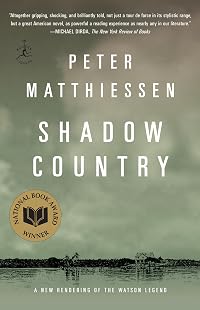
Inspired by a near-mythic event of the wild Florida frontier at the turn of the twentieth century, Shadow Country reimagines the legend of the inspired Everglades sugar planter and notorious outlaw E. J. Watson, who drives himself relentlessly toward his own violent end at the hands of neighbors who mostly admired him, in a killing that obsessed his favorite son.--From publisher description.Tags
Recommendations






Member Recommendations
rareflorida Historical fiction masterpiece set in the Everglades.
Member Reviews
I am in blood
Stepped in so far, that, should I wade no more,
Returning were as tedious as go o’er.
- Macbeth, 3.4.157-9.
Fabliau of Florida
Barque of phosphor
On the palmy beach,
Move outward into heaven,
Into the alabasters
And night blues.
Foam and cloud are one.
Sultry moon-monsters
Are dissolving.
Fill your black hull
With white moonlight.
There will never be an end
To this droning of the surf.
- Wallace Stevens
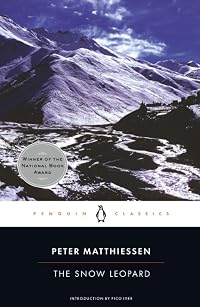
Peter Matthiessen, best-known for [The Snow Leopard], has written a blood-boiling, soul-searching novel in Shadow Country, which won the American National Book Award in 2008. Although first published as three separate novels, Matthiessen always intended the story to be a single edifice, and that it is. He was also dissatisfied with the show more middle book, saying it reminded him “not agreeably of the long belly of a dachshund, slung woefully between its upright sturdy legs.” Although in my opinion still the weakest part of the novel, the middle section still works well. More on that later, however. Let me first describe the story, which is based on real events. Matthiessen’s novel is a character-study of E.J. Watson, an infamous Florida sugarcane planter of the early twentieth century, who after many unsavoury incidents, was gunned down by his Chokoloskee neighbours under strange circumstances. Matthiessen has weaved a magnificent story from the disparate facts in the case of Watson, creating an engaging, revealing story about… well, about everything from greed, desperation, and insanity, to love, hope, and redemption.
The first part of the book consists of numerous voices relating Watson’s story from every conceivable angle. Each character who narrates the story reveals something about Watson, the times, and themselves as Matthiessen creates a brilliant collage of voices from the past. This first part is beautifully controlled, and Matthiessen is astoundingly good at capturing the diversity of characters. The suspicions of the people concerning Watson are carefully ratcheted up, until the final crescendo on a fateful day in 1910. Matthiessen is also great at describing the Florida coast, its lonely keys and hidden waterways. As one would expect, there is a great deal on the natural environment and its creatures. This creates an atmosphere of authenticity and verisimilitude that is rare in modern fiction. Matthiessen already uses this section to address his main themes, especially those of guilt, racism, and environmentalism.
The second part focusses on Watson’s son, Lucius, and his attempt to clear his father’s name. Lucius is an engaging character, yet also deeply flawed. He loves his father and the Florida coast, but he lacks the strength of conviction, and often allows events to spiral out of control, a problem which is exacerbated by his drinking. This section extends the story into the 1930s, with Lucius trying to find out as much about his father as possible. Matthiessen uses this premise to flesh out the story, adding lots of details to extant story from the first part. This part is very concerned with how families develop and become estranged, how they hide things from each and learn to cope with this history. I thought this part was also excellent, but Lucius is a bit too weak to carry the story as well as the multi-voice approach.
Matthiessen confronts this problem head-on in the third and final part, which is narrated by Watson himself. It spans the time from his birth to his death, and is absolutely brilliant. Engrossing, engrossing, I tell you, with Watson himself as a larger-than-life frontiersman, desperado and rounded human being providing the impetus to a story of sound and fury. Yet it signifies much, despite Watson’s ignominious end. Watson is one of the most realised characters that I have ever encountered in a novel. He is at times funny, harsh, evil, good, greedy, compassionate… the adjectives pile up without quite catching the living, breathing Watson. I loved this section the most; it was the best-written, best-conceived part of the novel, and convinced me totally.
As anyone can see, I am very excited by, and enamoured of, Matthiessen’s masterpiece. This is the stuff of writer’s envy, but also of inspiration. (The claim that it is too long is merely silliness; I was left wanting more). I will certainly be reading it again, and will be looking out for Matthiessen’s other books. show less
Stepped in so far, that, should I wade no more,
Returning were as tedious as go o’er.
- Macbeth, 3.4.157-9.
Fabliau of Florida
Barque of phosphor
On the palmy beach,
Move outward into heaven,
Into the alabasters
And night blues.
Foam and cloud are one.
Sultry moon-monsters
Are dissolving.
Fill your black hull
With white moonlight.
There will never be an end
To this droning of the surf.
- Wallace Stevens
Peter Matthiessen, best-known for [The Snow Leopard], has written a blood-boiling, soul-searching novel in Shadow Country, which won the American National Book Award in 2008. Although first published as three separate novels, Matthiessen always intended the story to be a single edifice, and that it is. He was also dissatisfied with the show more middle book, saying it reminded him “not agreeably of the long belly of a dachshund, slung woefully between its upright sturdy legs.” Although in my opinion still the weakest part of the novel, the middle section still works well. More on that later, however. Let me first describe the story, which is based on real events. Matthiessen’s novel is a character-study of E.J. Watson, an infamous Florida sugarcane planter of the early twentieth century, who after many unsavoury incidents, was gunned down by his Chokoloskee neighbours under strange circumstances. Matthiessen has weaved a magnificent story from the disparate facts in the case of Watson, creating an engaging, revealing story about… well, about everything from greed, desperation, and insanity, to love, hope, and redemption.
The first part of the book consists of numerous voices relating Watson’s story from every conceivable angle. Each character who narrates the story reveals something about Watson, the times, and themselves as Matthiessen creates a brilliant collage of voices from the past. This first part is beautifully controlled, and Matthiessen is astoundingly good at capturing the diversity of characters. The suspicions of the people concerning Watson are carefully ratcheted up, until the final crescendo on a fateful day in 1910. Matthiessen is also great at describing the Florida coast, its lonely keys and hidden waterways. As one would expect, there is a great deal on the natural environment and its creatures. This creates an atmosphere of authenticity and verisimilitude that is rare in modern fiction. Matthiessen already uses this section to address his main themes, especially those of guilt, racism, and environmentalism.
The second part focusses on Watson’s son, Lucius, and his attempt to clear his father’s name. Lucius is an engaging character, yet also deeply flawed. He loves his father and the Florida coast, but he lacks the strength of conviction, and often allows events to spiral out of control, a problem which is exacerbated by his drinking. This section extends the story into the 1930s, with Lucius trying to find out as much about his father as possible. Matthiessen uses this premise to flesh out the story, adding lots of details to extant story from the first part. This part is very concerned with how families develop and become estranged, how they hide things from each and learn to cope with this history. I thought this part was also excellent, but Lucius is a bit too weak to carry the story as well as the multi-voice approach.
Matthiessen confronts this problem head-on in the third and final part, which is narrated by Watson himself. It spans the time from his birth to his death, and is absolutely brilliant. Engrossing, engrossing, I tell you, with Watson himself as a larger-than-life frontiersman, desperado and rounded human being providing the impetus to a story of sound and fury. Yet it signifies much, despite Watson’s ignominious end. Watson is one of the most realised characters that I have ever encountered in a novel. He is at times funny, harsh, evil, good, greedy, compassionate… the adjectives pile up without quite catching the living, breathing Watson. I loved this section the most; it was the best-written, best-conceived part of the novel, and convinced me totally.
As anyone can see, I am very excited by, and enamoured of, Matthiessen’s masterpiece. This is the stuff of writer’s envy, but also of inspiration. (The claim that it is too long is merely silliness; I was left wanting more). I will certainly be reading it again, and will be looking out for Matthiessen’s other books. show less
Shadow country relates the legend of Edgar J. Watson, a sugar planter and outlaw living on the wild Florida frontier of the thousand islands around the turn of the last century. With its nearly nine hundred pages it is a vast work, with the evolution of a multitude of characters, different settings along the wild rim of the Everglades and a timespan stretching from the Civil War up to thirties of the last century.
The book opens with the killing, or rather the execution of Planter E.J Watson by his neighbors, most of them hardworking and peaceful farmers and fishers, minding their own business. Why they come to kill him, the incidents leading up to Watson’s final moment and the aftermath and repercussions are developed in the three show more parts, that make up the nearly 900 pages of this hunk of a book. Each part tells the same story, albeit from a different point of view and time frame, in order to give the reader a kaleidoscopic view on the whole drama.
In the first one we get the story in a multitude of short recollections by the people who knew Watson: short interviews, remembrances, eye witnesses accounts, hear-say, gossip and so on, leaving a lot of questions unanswered and opinions contradicting each other.
The second part consists of the investigation by his son Lucius, trying to find out who were the instigators of the execution. This part develops also more the consequences and the aftermath of the crime up until the second war.
The last part is the story of his life by Watson himself. It delves deeper into the past of Watson, starting in the terrible last months of the Civil War, explaining why he became the man everybody feared and why he did what according to him, he HAD to do. The Outlaw’s take on the story, fills in a lot of blanks and gives an (one-sided) explanation of the occurrences that lead to Watson’s dead.
Shadow country, written in 1978, is in fact a retake, a director’s cut so to say, of three of Matthiessen’s earlier books on the same subject : “Killing Mister Watson”, “Lost Man River” and “Bone by Bone”. The original manuscript started in 1978, totaled 1500 pages and his editor had insisted cutting the large tome in three parts.
The Watson legend was Mathiessen’s obsession. Set against a background of civil war, imperialism, rape of the land and life in the name of Industrial progress and abject and tragic racism, Watson’s story epitomizes for the writer all that is wrong in the world.
“…(the) book draws together in one work the themes that have absorbed me all my life – the pollution of land, air and water that is inevitable in the blind obliteration of the wilderness and its wild creatures and also the injustice to the poor of our own species, especially the indigenous peoples and the inheritors of slavery left behind by the cruel hypocrisy of what those in power represent as progress and democracy”.
It is hard book indeed. Violence prevails throughout the pages. Watson is who he is, partly, because he responds in his own way, to what surrounds him growing up: Child abuse and neglect, awful racism all around him, lawlessness, social injustice, family feuds, debilitating poverty, lack of education and all that in a Wilderness of Plenty.
Luckily Matthiessen gives us break from time to time with the lingo of the frontier people and sometimes hilarious expressions which made me laugh aloud.
A good read ! show less
The book opens with the killing, or rather the execution of Planter E.J Watson by his neighbors, most of them hardworking and peaceful farmers and fishers, minding their own business. Why they come to kill him, the incidents leading up to Watson’s final moment and the aftermath and repercussions are developed in the three show more parts, that make up the nearly 900 pages of this hunk of a book. Each part tells the same story, albeit from a different point of view and time frame, in order to give the reader a kaleidoscopic view on the whole drama.
In the first one we get the story in a multitude of short recollections by the people who knew Watson: short interviews, remembrances, eye witnesses accounts, hear-say, gossip and so on, leaving a lot of questions unanswered and opinions contradicting each other.
The second part consists of the investigation by his son Lucius, trying to find out who were the instigators of the execution. This part develops also more the consequences and the aftermath of the crime up until the second war.
The last part is the story of his life by Watson himself. It delves deeper into the past of Watson, starting in the terrible last months of the Civil War, explaining why he became the man everybody feared and why he did what according to him, he HAD to do. The Outlaw’s take on the story, fills in a lot of blanks and gives an (one-sided) explanation of the occurrences that lead to Watson’s dead.
Shadow country, written in 1978, is in fact a retake, a director’s cut so to say, of three of Matthiessen’s earlier books on the same subject : “Killing Mister Watson”, “Lost Man River” and “Bone by Bone”. The original manuscript started in 1978, totaled 1500 pages and his editor had insisted cutting the large tome in three parts.
The Watson legend was Mathiessen’s obsession. Set against a background of civil war, imperialism, rape of the land and life in the name of Industrial progress and abject and tragic racism, Watson’s story epitomizes for the writer all that is wrong in the world.
“…(the) book draws together in one work the themes that have absorbed me all my life – the pollution of land, air and water that is inevitable in the blind obliteration of the wilderness and its wild creatures and also the injustice to the poor of our own species, especially the indigenous peoples and the inheritors of slavery left behind by the cruel hypocrisy of what those in power represent as progress and democracy”.
It is hard book indeed. Violence prevails throughout the pages. Watson is who he is, partly, because he responds in his own way, to what surrounds him growing up: Child abuse and neglect, awful racism all around him, lawlessness, social injustice, family feuds, debilitating poverty, lack of education and all that in a Wilderness of Plenty.
Luckily Matthiessen gives us break from time to time with the lingo of the frontier people and sometimes hilarious expressions which made me laugh aloud.
A good read ! show less
Shadow Country is Peter Matthiessen’s reworked rendering of his earlier trilogy of historical fiction relating the life of the brutal Florida pioneer Edgar J. Watson. This version still consists of three “books” and runs to almost 900 pages. I did not read the earlier version and so cannot offer comparisons between the two.
Shadow Country is almost entirely set in the 1890’s and early 1900’s in a frontier region not widely known – the Ten Thousand Islands of south Gulf Coast Florida (the Everglades area). The area was absurdly remote at the time and presented such daunting challenges and dangers to any settlers that it was in fact nearly unsettled. And nearly all who did settle there were running or hiding from something, show more such as the law or deserted family members. Or they were just deeply anti-social. Aside from its remoteness, the area had almost nothing to recommend itself (I usually the qualified ‘almost nothing’ in the vent that I think of some redeeming feature). It is brutally hot and humid, resistant to agriculture, possessed of dangerous animals (on sea and land), prone to calamitous storms, infested with mosquitoes, and inhabited by a large proportion of suddenly violent men as well as sociopathic criminals. This is the place Edgar J. Watson chooses to live.
Within the first ten pages of Book One, the reader confronts this sentence: “Oh Lord God,” she cries. “They are killing Mr. Watson!” (Killing off the main character in the opening pages of a 900-page work of fiction proves Matthiessen is either brave or foolish.) The story is told with a dozen different narrators recalling Watson’s arrival and life in the islands. Matthiessen’s remarkable ability to produce so many distinctive voices makes this book incredibly readable. These people can all tell a story (they are in good practice life on the islands providing so much idle time). Matthiessen does not, however, make them all tell the same story; differences of viewpoint produce a fascinating ambiguity.
That Watson is an exceptional man is undoubted. Beginning with nothing, he manages to set himself up as a power to be reckoned with. He is also grandiose, violent, and merciless. But is he a murderer (several times over)? Opinions vary. He drinks too much. He loses what he has and what he wants and what he values. It is a hard life in a hard place.
Book Two traces the story of Lucius Watson’s “obsessive quest for the truth about his father” (NYT Review). It is the 1920’s and Lucius is writing a history of his father’s life (he has a doctorate in history), traveling to courthouse archives and interviewing long-forgotten family members. But he also has “the list” of the armed men who gunned down the elder Watson. The list naturally makes people nervous and some of them are quite dangerous. Book Two reveals some fascinating history, including the mostly unsavory operation of the law in south Florida, such as sheriff’s renting the labor of black inmates to business interests (and pocketing much of the money).
Book Three presents Edgar himself as the narrator of his life story from a child in South Carolina to various stopping places in Florida, Arkansas, and finally the Thousand Islands. The brutality of his childhood, the ready violence of white men toward blacks and of his own father toward him, makes Edgar’s later actions more understandable person, if not justified. He develops a rigid personal code that demands recompense in full for any slight. He attempts a justification that reveals some complexity and contradictions, but falls short of the mark.
Shadow Country is an American epic of a mysterious historical character (yes, Edgar Watson really lived and died in the islands). The writing is at times exquisite. The story it tells is often brutal or just about plain hard life. The writing is compelling, the reading can be draining. show less
Shadow Country is almost entirely set in the 1890’s and early 1900’s in a frontier region not widely known – the Ten Thousand Islands of south Gulf Coast Florida (the Everglades area). The area was absurdly remote at the time and presented such daunting challenges and dangers to any settlers that it was in fact nearly unsettled. And nearly all who did settle there were running or hiding from something, show more such as the law or deserted family members. Or they were just deeply anti-social. Aside from its remoteness, the area had almost nothing to recommend itself (I usually the qualified ‘almost nothing’ in the vent that I think of some redeeming feature). It is brutally hot and humid, resistant to agriculture, possessed of dangerous animals (on sea and land), prone to calamitous storms, infested with mosquitoes, and inhabited by a large proportion of suddenly violent men as well as sociopathic criminals. This is the place Edgar J. Watson chooses to live.
Within the first ten pages of Book One, the reader confronts this sentence: “Oh Lord God,” she cries. “They are killing Mr. Watson!” (Killing off the main character in the opening pages of a 900-page work of fiction proves Matthiessen is either brave or foolish.) The story is told with a dozen different narrators recalling Watson’s arrival and life in the islands. Matthiessen’s remarkable ability to produce so many distinctive voices makes this book incredibly readable. These people can all tell a story (they are in good practice life on the islands providing so much idle time). Matthiessen does not, however, make them all tell the same story; differences of viewpoint produce a fascinating ambiguity.
That Watson is an exceptional man is undoubted. Beginning with nothing, he manages to set himself up as a power to be reckoned with. He is also grandiose, violent, and merciless. But is he a murderer (several times over)? Opinions vary. He drinks too much. He loses what he has and what he wants and what he values. It is a hard life in a hard place.
Book Two traces the story of Lucius Watson’s “obsessive quest for the truth about his father” (NYT Review). It is the 1920’s and Lucius is writing a history of his father’s life (he has a doctorate in history), traveling to courthouse archives and interviewing long-forgotten family members. But he also has “the list” of the armed men who gunned down the elder Watson. The list naturally makes people nervous and some of them are quite dangerous. Book Two reveals some fascinating history, including the mostly unsavory operation of the law in south Florida, such as sheriff’s renting the labor of black inmates to business interests (and pocketing much of the money).
Book Three presents Edgar himself as the narrator of his life story from a child in South Carolina to various stopping places in Florida, Arkansas, and finally the Thousand Islands. The brutality of his childhood, the ready violence of white men toward blacks and of his own father toward him, makes Edgar’s later actions more understandable person, if not justified. He develops a rigid personal code that demands recompense in full for any slight. He attempts a justification that reveals some complexity and contradictions, but falls short of the mark.
Shadow Country is an American epic of a mysterious historical character (yes, Edgar Watson really lived and died in the islands). The writing is at times exquisite. The story it tells is often brutal or just about plain hard life. The writing is compelling, the reading can be draining. show less
A long novel. Same story told three times from three different perspectives. Main character, E. J. Watson, is a really bad guy that you really want (almost) to like. This is a third iteration of this story. The first try was a single novel of over 1,500 pages that didn’t get published. Next try: published as three separate novels. Third try: recomposed as a single novel, whittled down to approximately 900 pages, and wins the Pulitzer Prize. I liked reading about E.J. Watson. I have always enjoyed reading about those I don’t admire and don’t feel I agree with morally almost as much as the opposite. The magic of E.J. Watson is that he is never one thing or another. After 900 pages you still don’t have a firm handle on who he is. show more
The three different perspectives were well done. They overlapped but there was enough different each time that you didn’t feel you were reading the same story. You learned different pieces of the story in each retelling. In fact, the biggest challenge of the novel was reconciling the three different perspectives given they were separated by so many pages. I also enjoyed reading about the Wild, Wild West era of Florida; the description of Florida reminded me of The Yearling. Ultimately, what detracted from the story was its length. It could have been and needed to be tighter and more concisely delivered. show less
The three different perspectives were well done. They overlapped but there was enough different each time that you didn’t feel you were reading the same story. You learned different pieces of the story in each retelling. In fact, the biggest challenge of the novel was reconciling the three different perspectives given they were separated by so many pages. I also enjoyed reading about the Wild, Wild West era of Florida; the description of Florida reminded me of The Yearling. Ultimately, what detracted from the story was its length. It could have been and needed to be tighter and more concisely delivered. show less
In this churchyard in a woodland meadow at the end of a white road, he missed what he had never known, the peace of living one day then another in communion with others of one’s blood and at the end, at the close of one’s works and days, to draw that last breath and come to rest in earth where one’s bones belonged.
It is strange that this one escaped my wobbly notation, my wayward sense of inventory. Shadow Country was picked up in Indianapolis over a Memorial Day weekend and immediately masticated with zest and zeal. The sifting of accounts and weighing of evidence was an exciting lot, though the descriptions of the flora and fauna were haunting in a lingering manner. The third section struck me as too lean and calculated, show more leaving strategic doubt while caulking up other rumor streams. The abridgement had to have a victim, though the grave is well marked in this case. show less
It is strange that this one escaped my wobbly notation, my wayward sense of inventory. Shadow Country was picked up in Indianapolis over a Memorial Day weekend and immediately masticated with zest and zeal. The sifting of accounts and weighing of evidence was an exciting lot, though the descriptions of the flora and fauna were haunting in a lingering manner. The third section struck me as too lean and calculated, show more leaving strategic doubt while caulking up other rumor streams. The abridgement had to have a victim, though the grave is well marked in this case. show less
‘País de sombras’ (Shadow Country, 2005), de Peter Mattiessen incluye juntas las tres novelas que forman la Trilogía Watson: ‘Killing Mister Watson’ (1990), ‘Lost Man’s River’ (1997) y ‘Bone by Bone’ (1999). Matthiessen decidió en 2005 publicarlas como un todo, ante la evidente estructura interna común. De esta manera ya no se trata de tres novelas independientes, sino de un todo que las entrelaza. Cada una de las partes sirve de complemento a la anterior, transformando la perspectiva del lector. ‘País de sombras’ ganó el Nacional Book Award, algo que fue motivo de una cierta polémica ante la idoneidad del premio. La excelente traducción al español corre a cargo de Javier Calvo, que en palabras suyas en su show more blog, se trata de la más larga e intensa de toda mi carrera, y a la que dedicó todo un año.
‘País de sombras’ narra la historia de Edgar J. Watson, un pionero que en la segunda mitad del siglo XIX se instaló en las pantanosas tierras de Florida con el fin de cultivar tierras y expandirse. Watson fue un personaje real, con una personalidad violenta, y sospechoso de numerosos delitos y asesinatos, al que se le apodó como Sanguinario Watson. El libro se abre con un sobrecogedor prólogo en el que Watson es abatido a tiros por sus vecinos. A partir de aquí, Matthiessen nos ofrece las diferentes facetas de este controvertido personaje, en un juego de sombras en el que lector ha de componer su propia visión, el porqué de este linchamiento.
En la primera parte, País de sombras, se nos muestran los testimonios de algunos de los implicados en el asesinato de Watson, cada uno con su particular visión de los hechos. Las opiniones son diversas, y van desde los que lo odiaban y lo calificaban de sanguinario, un tipo sin escrúpulos, hasta los que lo veían como alguien siempre dispuesto a echar una mano. Esta parte, entre testimonios de familiares y testigos, es excelente, y aporta un retrato directo del personaje.
En la segunda parte, El río Lost Man, es uno de los hijos de Watson el que toma las riendas de la narración. Lucius Watson vive angustiado y obsesionado por la muerte de su padre, y desea conocer la verdad sobre su vida. Para ello se embarca en una odisea personal a través de los paisajes, escenarios y personas de su niñez, siempre persiguiendo la verdad, para conformar la biografía de su padre. Al mismo tiempo, deberá hacer frente a sus conflictos personales y familiares, así como a diversos peligros.
En la tercera y última parte, Hueso a hueso, es el propio Edgar J. Watson quien, en primera persona, contará su historia, desde la niñez a su muerte. Aunque al lector siempre le quedan dudas sobre la veracidad de los hechos.
‘País de sombras’ es una obra ambiciosa, un asombroso retrato de muerte y crueldad, conflictos raciales y culturales, segregación e integración, explotación urbanística y oda al medio ambiente, de sombras huidizas y verdades subjetivas. Pero también se hace evidente el cansancio del lector, sobre todo en la última parte, ya que llega exhausto y fatigado, tanto por el número de páginas como al conocer los hechos sobradamente y tener que volver a leer sobre los mismos. Aun así, se trata de una muy buena novela. show less
‘País de sombras’ narra la historia de Edgar J. Watson, un pionero que en la segunda mitad del siglo XIX se instaló en las pantanosas tierras de Florida con el fin de cultivar tierras y expandirse. Watson fue un personaje real, con una personalidad violenta, y sospechoso de numerosos delitos y asesinatos, al que se le apodó como Sanguinario Watson. El libro se abre con un sobrecogedor prólogo en el que Watson es abatido a tiros por sus vecinos. A partir de aquí, Matthiessen nos ofrece las diferentes facetas de este controvertido personaje, en un juego de sombras en el que lector ha de componer su propia visión, el porqué de este linchamiento.
En la primera parte, País de sombras, se nos muestran los testimonios de algunos de los implicados en el asesinato de Watson, cada uno con su particular visión de los hechos. Las opiniones son diversas, y van desde los que lo odiaban y lo calificaban de sanguinario, un tipo sin escrúpulos, hasta los que lo veían como alguien siempre dispuesto a echar una mano. Esta parte, entre testimonios de familiares y testigos, es excelente, y aporta un retrato directo del personaje.
En la segunda parte, El río Lost Man, es uno de los hijos de Watson el que toma las riendas de la narración. Lucius Watson vive angustiado y obsesionado por la muerte de su padre, y desea conocer la verdad sobre su vida. Para ello se embarca en una odisea personal a través de los paisajes, escenarios y personas de su niñez, siempre persiguiendo la verdad, para conformar la biografía de su padre. Al mismo tiempo, deberá hacer frente a sus conflictos personales y familiares, así como a diversos peligros.
En la tercera y última parte, Hueso a hueso, es el propio Edgar J. Watson quien, en primera persona, contará su historia, desde la niñez a su muerte. Aunque al lector siempre le quedan dudas sobre la veracidad de los hechos.
‘País de sombras’ es una obra ambiciosa, un asombroso retrato de muerte y crueldad, conflictos raciales y culturales, segregación e integración, explotación urbanística y oda al medio ambiente, de sombras huidizas y verdades subjetivas. Pero también se hace evidente el cansancio del lector, sobre todo en la última parte, ya que llega exhausto y fatigado, tanto por el número de páginas como al conocer los hechos sobradamente y tener que volver a leer sobre los mismos. Aun así, se trata de una muy buena novela. show less
I'm a huge fan of historical fiction so when this book came out I was sure I'd like it. However, it had a lot going against it. First of all, its' daunting length-just short of 900 pages of dense writing. Then the absolutely incredible number of characters-impossible to keep straight and the lengthy list in the front of the book doesn't even scratch the surface. On page 715 I was still back pedalling, trying to refresh my memory about recurring characters. Then there was the southern dialect that I thought would make for difficult reading. With all that going against it, why did I absolutely LOVE this book? It was the writing! Matthiessen really can write. All the quotes on the first couple of pages, "epic," "masterpiece," "magnum show more opus," "touchstone of modern American literature" that usually seem like platitudes turned out to be dead on.
There's no way to summarize the book- as I said, too many characters. The novel is divided into three books and at the beginning of the first book, in the prologue, we learn about the killing of Mr. Watson, which the rest of the book explores from different viewpoints. Book One is divided into sections told by different characters-his neighbors, those people on the shore where he died and sections of his daughter Carrie's diary. Book Two is the story of Watson's son Lucius and his research into those responsible for his father's death. Along the way, he has to accept that the father he loved and adored was more and less than what he seemed. In Book Three, EJ Watson tells the story of his life and adventures, including all that led up to his death.
Set in southwestern Florida for the most part, with forays into northern Florida, South Carolina and the Oklahoma Indian Territory, in the years following the Civil War into the 1920's, Mattiessen tells a tale about the settling of and taming of the Florida Everglades and, in the telling, you learn about the frontier spirit that founded our great country. With a smattering of famous figures including Thomas Edison and Mark Twain, Matthiessen's themes include the unrelenting racism displayed in this part of the country during that time, nature's power, poverty, class struggle, man vs. nature, man vs. man and man vs. himself. In the end EJ Watson, who should be a hated figure, gives us much to think about. He will certainly go down as one of the most fascinating and riveting characters ever developed. Highly recommended. show less
There's no way to summarize the book- as I said, too many characters. The novel is divided into three books and at the beginning of the first book, in the prologue, we learn about the killing of Mr. Watson, which the rest of the book explores from different viewpoints. Book One is divided into sections told by different characters-his neighbors, those people on the shore where he died and sections of his daughter Carrie's diary. Book Two is the story of Watson's son Lucius and his research into those responsible for his father's death. Along the way, he has to accept that the father he loved and adored was more and less than what he seemed. In Book Three, EJ Watson tells the story of his life and adventures, including all that led up to his death.
Set in southwestern Florida for the most part, with forays into northern Florida, South Carolina and the Oklahoma Indian Territory, in the years following the Civil War into the 1920's, Mattiessen tells a tale about the settling of and taming of the Florida Everglades and, in the telling, you learn about the frontier spirit that founded our great country. With a smattering of famous figures including Thomas Edison and Mark Twain, Matthiessen's themes include the unrelenting racism displayed in this part of the country during that time, nature's power, poverty, class struggle, man vs. nature, man vs. man and man vs. himself. In the end EJ Watson, who should be a hated figure, gives us much to think about. He will certainly go down as one of the most fascinating and riveting characters ever developed. Highly recommended. show less
Members
- Recently Added By
Published Reviews
ThingScore 100
To sum it up in a few words is impossible since its interest lies in the ambition of storytelling and inevitability of story.
added by Shortride
Lists

Recommend the 20 best books you've read in the last five years
2,168 works; 606 members

Books Read in 2020
4,379 works; 123 members

50 Books from the Past 50 Years
50 works; 8 members

National Book Award - Fiction
78 works; 10 members
Author Information

48+ Works 13,947 Members
Peter Matthiessen was born in Manhattan, New York on May 22, 1927. He served in the Navy at Pearl Harbor. He graduated with a degree in English from Yale University in 1950. It was around this time that he was recruited by the CIA and traveled to Paris, where he became acquainted with several young expatriate American writers. In the postwar years show more the CIA covertly financed magazines and cultural programs to counter the spread of Communism. While in Paris, he helped found The Paris Review in 1953. After returning to the United States, he worked as a commercial fisherman and the captain of a charter fishing boat. His first novel, Race Rock, was published in 1954. His other fiction works include Partisans, Raditzer, Far Tortuga, and In Paradise. His novel, Shadow Country, won a National Book Award. His novel, At Play in the Fields of the Lord, was made into a movie. He started writing nonfiction after divorcing his first wife. An assignment for Sports Illustrated to report on American endangered species led to the book Wildlife in America, which was published in 1959. His travels took him to Asia, Australia, South America, Africa, New Guinea, the Florida swamps, and beneath the ocean. These travels led to articles in The New Yorker as well as numerous nonfiction books including The Cloud Forest: A Chronicle of the South American Wilderness, Under the Mountain Wall: A Chronicle of Two Seasons of Stone Age New Guinea, Blue Meridian: The Search for the Great White Shark, The Tree Where Man Was Born, and Men's Lives. The Snow Leopard won the 1979 National Book Award for nonfiction. He died from leukemia on April 5, 2014 at the age of 86. (Bowker Author Biography) show less
Some Editions
Awards and Honors
Series

Work Relationships
Is an adaptation of
Common Knowledge
- Canonical title
- Shadow Country
- Original publication date
- 2008
- People/Characters
- Edgar Watson
- Important places
- Florida, USA; Ten Thousand Islands, Florida, USA; Chokoloskee, Florida, USA; Everglades, Florida, USA
- Epigraph
- Look at a stone cutter hammering away at his rock, perhaps a hundred times without so much a crack showing in it. Yet at the hundre-and-first blow it will split in two, and I know it was not the last blow that did it, but al... (show all)l that had gone before. -- Jacob Riis
- Dedication
- With love to my brother Carey and my ever dear Maria
- First words
- Sea birds are aloft again, a tattered few.
- Quotations
- Plume hunters shoot early in the breeding season when egret plumes are coming out real good. When them nestlings get pinfeathered, and squawking loud cause they are always hungry, them parent birds lose the little sense God g... (show all)ive 'em. They are going to come in to tend their young no matter what, and a man using one of them Flobert rifles that don't snap no louder than a twig can stand there under the trees in a big rookery and pick them birds off as fast as he can reload. . . . A broke-up rookery, that ain't a picture you want to think about too much. The pile of carcasses left behind when you strip the plumes and move on to the next place is just pitiful, and it's a piss-poor way to harvest, cause there ain't no adults left to feed them young and protect 'em from the sun and rain. let alone the crows and buzzards that come sailing and flopping in, tear 'em to pieces. A real big rookery like that one the Frenchman worked up on Tampa Bay had four-five hundred acres of black mangrove, maybe ten nests to a tree. Might take you three-four years to clean it out but after that them birds are gone for good. . . . It's the dead silence after all the shooting that comes back today, though I never stuck around to hear it; I kind of remember it when I am dreaming. Them ghostly trees on dead white guano ground, the sun and silence and dry stink, the squawking and flopping of their wings, and varmints hurrying in without no sound, coons, rats, and possums, biting and biting, and the ants flowing up all them white trees in their dark ribbonds to eat at the scrawny things that's backed up to the edge of the nest, gullets pushing and mouths open wide for the food and water that ain't never going to come. Luckiest ones will perish before something finds 'em, cause they's so many young that the carrion birds just can't keep up. Damn vultures set hunched up on them dead limbs so stuffed and stupid they can't hardly fly.
truth don’t count for much after all these years cause folks hangs on to what it suits ’em to believe and won’t let go of it. - Last words
- (Click to show. Warning: May contain spoilers.)this world is painted on a wild dark metal
- Blurbers
- Merwin, W.S.; Dillard, Annie; Ford, Richard; DeLillo, Don
Classifications
Statistics
- Members
- 1,412
- Popularity
- 16,739
- Reviews
- 43
- Rating
- (3.97)
- Languages
- English, Spanish
- Media
- Paper, Audiobook, Ebook
- ISBNs
- 18
- ASINs
- 6