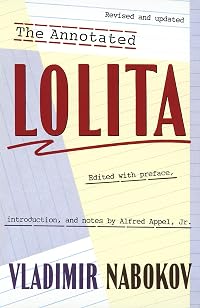
Lolita [annotated • Penguin]
by Vladimir Nabokov (Author), Alfred Appel (Editor)
On This Page
Description
In this first volume of his Frank Bascombe trilogy, Bascombe is a sportswriter attempting to cope with his failed marriage and the death of his son. Unable to establish true connections with people, Bascombe drifts into and out of various relationships, but retains an introspective eye that allows him to transcend life's obstacles.Tags
Recommendations






Member Recommendations
Member Reviews
Rates in my personal top 10. This is my 4th read of Lolita and each time is remarkably different. This time I was struck by not only the brilliance of the wordplay and the device of the narrator's blindness and attempted manipulation of everyone, including the reader--but also by the pain of all involved: the deluded and pretentious wife, the powerless victim and the "monster" sex addict. The fact that such a clever and beautifully constructed and styled novel can also be so moving and morally powerful is just one of the achievements of this unique masterpiece. Definitely a gift that keeps on giving and meets the reader wherever he or she is at the moment, reading after reading.
So how do you rate a book that so effectively explores the mind of a pervert? And how do you justify admitting that you think it is a great book?
Admittedly, it's about a relationship that the protagonist in a moment of lucidity admits robbed a child of her childhood. But it's also about the vast landscape of the US in the first post-war years seen through the eyes of an observer experiencing it for the first time, everything from awesome natural beauty to the seedy succession of motor courts. Perhaps this is what makes the book feel creepy at the same time that it reads like great literature: in this experience of America, we sense the voice and reactions of Nabokov the author behind the words of the protagonist. So how can we be sure show more that the protagonist's taste in sexuality -- something he clearly expects us to disapprove us, despite the repeated allusions to practices in antiquity or to Poe's Annabel Lee -- doesn't in some way have a nod of approval from the author? Nabokov of course denied it, and handles the matter with the refined sensibility of an aesthete (the depiction of Dolores/Lolita on the tennis court is more erotic than the account of the first sex between Humbert Humbert and his step-daughter).
In addition to being about hopeless, self-destructive attraction to a nymphet and omnivorous depictions of America in its grandeur and grit, it is also literature about literature. It feels as Nabokov never forgot a book he admired, and weaves his text into the larger fabric.
So yes, I think it's a great book.
A note on the edition: I bought the annotated edition because I had heard of the author's penchant for obscure literary allusions and multi-lingual puns. Dutiful as I am, I read the lengthy, erudite introduction first, then tackled the novel, looking up every annotation. I gave this up after a few pages, though, and my enjoyment soared. Still glad the notes are there. When it comes time to reread the book, I think I'll read all the annotations first, then the book. But I don't recommend doing this the first time through, though. Just settle in, enjoy the book, and don't worry what obscure reference you might be missing. show less
Admittedly, it's about a relationship that the protagonist in a moment of lucidity admits robbed a child of her childhood. But it's also about the vast landscape of the US in the first post-war years seen through the eyes of an observer experiencing it for the first time, everything from awesome natural beauty to the seedy succession of motor courts. Perhaps this is what makes the book feel creepy at the same time that it reads like great literature: in this experience of America, we sense the voice and reactions of Nabokov the author behind the words of the protagonist. So how can we be sure show more that the protagonist's taste in sexuality -- something he clearly expects us to disapprove us, despite the repeated allusions to practices in antiquity or to Poe's Annabel Lee -- doesn't in some way have a nod of approval from the author? Nabokov of course denied it, and handles the matter with the refined sensibility of an aesthete (the depiction of Dolores/Lolita on the tennis court is more erotic than the account of the first sex between Humbert Humbert and his step-daughter).
In addition to being about hopeless, self-destructive attraction to a nymphet and omnivorous depictions of America in its grandeur and grit, it is also literature about literature. It feels as Nabokov never forgot a book he admired, and weaves his text into the larger fabric.
So yes, I think it's a great book.
A note on the edition: I bought the annotated edition because I had heard of the author's penchant for obscure literary allusions and multi-lingual puns. Dutiful as I am, I read the lengthy, erudite introduction first, then tackled the novel, looking up every annotation. I gave this up after a few pages, though, and my enjoyment soared. Still glad the notes are there. When it comes time to reread the book, I think I'll read all the annotations first, then the book. But I don't recommend doing this the first time through, though. Just settle in, enjoy the book, and don't worry what obscure reference you might be missing. show less
I'm surprised at how much I loved this book. The subject matter is complex and yes, the main character is a pedophile but thanks to Nabokov's masterful language play I got sucked in to the narrative and began to somewhat acknowledge Humbert Humbert's obsessive "love" for his Lolita. Of course, I don't condone his actions but you can't finish the book without pitying/sympathizing with him while also taking into the account the destruction caused by his unusual sexual preferences.
I also recommend the annotated edition. I confess that without it I wouldn't have understood many of the puns, and historical and literary references weaved into the text.
I also recommend the annotated edition. I confess that without it I wouldn't have understood many of the puns, and historical and literary references weaved into the text.
What a read. Seriously, what a read. What's strange is that the most striking feature of this novel is not the illicit, pseudo-incestual relationship between Humbert and Lolita, what captures the imagination the most is the language. The way Humbert speaks (aka the way Nabokov writes) is ingenious. He artfully plays with words, the structure of sentences, the use of allusion, the creation of new words. Humbert's voice is everything in this novel. First of all because he is the one telling the story. Second because it is so appealing. Seriously appealing.
If you are holding off on reading this because of the subject matter, I urge you to reconsider. The story is secondary to the language, and really the language makes the story quite show more palatable. show less
If you are holding off on reading this because of the subject matter, I urge you to reconsider. The story is secondary to the language, and really the language makes the story quite show more palatable. show less
Humbert is a pedophile who moves in with and then marries a woman who has a twelve year old daughter he wants. Stuff.... happens between them... (I am being vague about that not so much for spoiler purposes as because Humbert is the least reliable narrator in literary history and making definitive statements about this book starts arguments), then the mom dies in a freak accident, and then Humbert has the girl all to himself. For sex. Hooray. But he is consumed by obsessive jealousy (not to mention the fear of being punished for his crime.)
In a more conventional novel Lolita's struggle to escape Humbert's custody would be the central conflict but here it's more Humbert's attempts to persuade the reader that there's moral complexity at show more play and that he has redeeming characteristics and that he truly loves her in his own way etc.
It's hilarious as long as you have a taste for really fucking black comedy. Also, in case you didn't know this, there are pretty much no explicit sex scenes. show less
In a more conventional novel Lolita's struggle to escape Humbert's custody would be the central conflict but here it's more Humbert's attempts to persuade the reader that there's moral complexity at show more play and that he has redeeming characteristics and that he truly loves her in his own way etc.
It's hilarious as long as you have a taste for really fucking black comedy. Also, in case you didn't know this, there are pretty much no explicit sex scenes. show less
I suppose it is a good novel about the ability to deceive oneself, but it is hard to push through a novel with few sympathetic characters. One feels sorry for Delores, orphaned and left to the care of the pedophile Humbert. But we are forced to see her through his eyes, which distracts us from whatever her true character might me. Humbert is a creep. The narration at least assures the reader that he will be punished, but we learn that he is not punished for the rape of Delores, but for killing another pedophile. Justice or not? Too much time in the mind of someone one wouldn't want to know.
A review in two parts:
1) The Annotation. In short - worth it. For someone new to Nabokov, and to Lolita, this can be hugely helpful. The annotations are extensive (excessive? maybe) and constantly flipping to the endnotes can be annoying. However, the annoyance is totally worth it - Appel does a great job identifying Nabokov's brilliant wordplay. Since I am not as clever as Nabokov, and my vocabulary is significantly smaller, the annotations really helped me appreciate his genius. FWIW, I first read Lolita in Appel's class in college, and he definitely knows this book.
2) Lolita itself. Love, love, love this book. Love the humor, love the descriptions of America in the late 40s and 50s, even love Humbert Humbert. Again, the wordplay is show more fantastic - its hard to believe that English wasn't even Nabokov's first language, it is so completely his plaything. Read this! And then go read Pale Fire, and Speak, Memory! show less
1) The Annotation. In short - worth it. For someone new to Nabokov, and to Lolita, this can be hugely helpful. The annotations are extensive (excessive? maybe) and constantly flipping to the endnotes can be annoying. However, the annoyance is totally worth it - Appel does a great job identifying Nabokov's brilliant wordplay. Since I am not as clever as Nabokov, and my vocabulary is significantly smaller, the annotations really helped me appreciate his genius. FWIW, I first read Lolita in Appel's class in college, and he definitely knows this book.
2) Lolita itself. Love, love, love this book. Love the humor, love the descriptions of America in the late 40s and 50s, even love Humbert Humbert. Again, the wordplay is show more fantastic - its hard to believe that English wasn't even Nabokov's first language, it is so completely his plaything. Read this! And then go read Pale Fire, and Speak, Memory! show less
Members
- Recently Added By
Lists

American Lit for Eng 11 Research Project
368 works; 6 members

Stuff from Bard
70 works; 1 member

Books for Birute
39 works; 1 member

Best Satire
188 works; 29 members

Great American Novels
158 works; 40 members
Author Information

432+ Works 96,300 Members
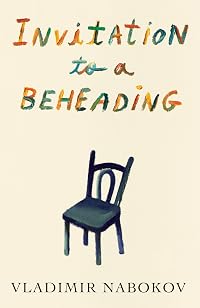
Vladimir Vladimirovich Nobokov was born April 22, 1899 in St. Petersburg, Russia to a wealthy family. He attended Trinity College, Cambridge. When he left Russia, he moved to Paris and eventually to the United States in 1940. He taught at Wellesley College and Cornell University. Nobokov is revered as one of the great American novelists of the show more 20th Century. Before he moved to the United States, he wrote under the pseudonym Vladimir Serin. Among those titles, were Mashenka, his first novel and Invitation to a Beheading. The first book he wrote in English was The Real Life of Sebastian Knight. He is best know for his work Lolita which was made into a movie in 1962. In addition to novels, he also wrote poetry and short stories. He was a finalist for the National Book Award for Fiction seven times, but never won it. Nabokov died July 2, 1977. show less

Alfred Appel, Jr., is Professor Emeritus of English at Northwestern University.
All Editions
Work Relationships
Contains
Reference guide/companion to
Common Knowledge
- Canonical title
- The Annotated Lolita; Lolita [annotated • Penguin]
- Original publication date
- 1971 (annotated edition) (annotated edition)
- People/Characters
- Dolores Haze; Humbert Humbert; Charlotte Haze
- Important places
- Ramsdale, New England, USA
- Related movies
- Lolita (1962 | IMDb); Lolita (1997 | IMDb)
- Dedication
- to Véra
- Original language
- English
- Disambiguation notice
- Please do not combine The Annotated Lolita with Lolita.
Classifications
Statistics
- Members
- 2,641
- Popularity
- 7,126
- Reviews
- 45
- Rating
- (4.48)
- Languages
- English
- Media
- Paper, Audiobook, Ebook
- ISBNs
- 10
- ASINs
- 16