On This Page
Description
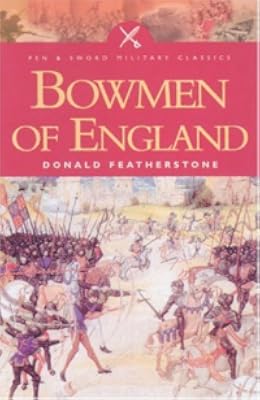
The centuries-long history of the legendary and deadly English longbow is explored and explained in a "classic work . . . an engaging, enjoyable read" (De Re Military). From the twelfth to the fifteenth centuries, the longbow was the weapon that changed European history more than any other. In the skilled hands of English and Welsh archers it revolutionized all the medieval concepts and traditions of war. It was the winning factor in every major battle from Morlaix in 1342 to Patay in show more 1429. This well-researched study of the English longbow from its early development until the Wars of the Roses offers fascinating insight into a game-changing tool of warfare and the men who wielded it in an age of courage, vitality, and endurance--culminating in an enthralling reconstruction of the engagement in which it was last used: in 1940 France at the outbreak of World War II. show lessTags
Recommendations







Member Reviews
It's a good thing Robin Hood probably couldn't read. He might have some complaints about this book otherwise.
Don't misunderstand that. It's a good read. But the historical weaknesses are pretty evident to anyone who knows much about the Middle Ages. Yes, the longbow was an amazing weapon -- in a way, the world's first terror weapon, because (in the hands of a man trained to it) it was the first long-range weapon with both high accuracy and a high rate of fire. It let the English win great battles at Crécy and Agincourt. It made them feared in France and much of Europe.
But the stories about the bow's success can be exaggerated. It made surprisingly little difference in the Wars of the Roses, for instance. And by the time Henry VIII was show more sending bowmen to invade France, it was an out-of-date weapon -- it was still faster and more accurate than firearms, but any knucklehead could fire a gun; longbows took skill. So the longbow, despite its amazing reputation, was a major weapon for only about a century, and won only a handful of battles.
I won't get into the historical errors in this book; suffice it to say that there are a number of them. It's a fun tale if you like soldier tales, but it it's just not entirely trustworthy. show less
Don't misunderstand that. It's a good read. But the historical weaknesses are pretty evident to anyone who knows much about the Middle Ages. Yes, the longbow was an amazing weapon -- in a way, the world's first terror weapon, because (in the hands of a man trained to it) it was the first long-range weapon with both high accuracy and a high rate of fire. It let the English win great battles at Crécy and Agincourt. It made them feared in France and much of Europe.
But the stories about the bow's success can be exaggerated. It made surprisingly little difference in the Wars of the Roses, for instance. And by the time Henry VIII was show more sending bowmen to invade France, it was an out-of-date weapon -- it was still faster and more accurate than firearms, but any knucklehead could fire a gun; longbows took skill. So the longbow, despite its amazing reputation, was a major weapon for only about a century, and won only a handful of battles.
I won't get into the historical errors in this book; suffice it to say that there are a number of them. It's a fun tale if you like soldier tales, but it it's just not entirely trustworthy. show less
Fun, not to be taken seriously. Featherstone's prose in amusing, but the history is not up to current standards. Still, worth a read for those interested in the story of the English longbowmen in action.
I found this an easy and entertaining book to read. In fact, it was almost "too entertaining".
Mr. Featherstone does a good job of relating the historical developement and emergence of England's pride of martial prowess, but one big problem I have with it is the quoting of Sir Conan Doyle's "The White Company" which is, in fact, a piece of fiction. It is well based on history and research, but quoting fiction sources in a "military history" piece is a big no-no in my eyes.
One thing I really did like is Mr. Featherstone keeps away from all the socio-economic-geopolitical machinations of the times that lead to these battles. He gets right down to the nitty-gritty much like a fighting man would do himself.
A novice on medieval warfare show more would love this book and it would serve to inspire many to more research. The "wizened" vet on the subject is bombarded by the same anecdotes, stories, and quotes that he has read a hundred times before. But I found if far from tiresome and sort of comfortable actually. Overall, a good book. show less
Mr. Featherstone does a good job of relating the historical developement and emergence of England's pride of martial prowess, but one big problem I have with it is the quoting of Sir Conan Doyle's "The White Company" which is, in fact, a piece of fiction. It is well based on history and research, but quoting fiction sources in a "military history" piece is a big no-no in my eyes.
One thing I really did like is Mr. Featherstone keeps away from all the socio-economic-geopolitical machinations of the times that lead to these battles. He gets right down to the nitty-gritty much like a fighting man would do himself.
A novice on medieval warfare show more would love this book and it would serve to inspire many to more research. The "wizened" vet on the subject is bombarded by the same anecdotes, stories, and quotes that he has read a hundred times before. But I found if far from tiresome and sort of comfortable actually. Overall, a good book. show less
Ratings
Members
- Recently Added By
Published Reviews
ThingScore 75
Still, overall Bowmen of England remains a classic. It can serve as a good introduction to people who are unfamiliar with the longbow’s history. While not intended to be a scholarly work, Featherstone’s romantic and nationalistic prose may entice the reader into further study.
added by AndreasJ
Author Information

59 Works 1,163 Members
Series

Belongs to Publisher Series
Pen and Sword Military Classics (No. 1)
Common Knowledge
- Canonical title
- Bowmen of England
- Original publication date
- 1967
- People/Characters
- Robert the Bruce; Edward III, King of England; Henry V, King of England; Edward, the Black Prince
- Important places
- England, UK; Scotland, UK; France
- Important events
- Wars of Scottish Independence; Hundred Years' War (1337 | 1453); Battle of Bannockburn (1314-06-24); Battle of Sluys (1340-06-24); Battle of Crécy (1346-08-26); Battle of Poitiers (1356-09-19) (show all 8); Battle of Agincourt (1415-10-25); Battle of Formigny (1450-04-15)
- First words
- The shooting of arrows with a bow is undoubtedly one of the oldest of the arts still practiced today.
- Last words
- (Click to show. Warning: May contain spoilers.)Five years before the first atomic bomb exploded and nearl 600 years after the battle of Crecy an English archer had incongruously and briefly returned to the ancient battlefields of France.
Classifications
- Genres
- History, Nonfiction, Sports and Leisure, General Nonfiction
- DDC/MDS
- 356.162 — Society, government, & culture Public administration & military science Foot forces and warfare Organization Special infantry troops Snipers
- LCC
- DA60 .F4 — History of Europe, Asia, Africa and Oceania Great Britain History of Great Britain England History Political, military, naval, and Air Force history.
- BISAC
Statistics
- Members
- 114
- Popularity
- 286,019
- Reviews
- 3
- Rating
- (3.00)
- Languages
- English
- Media
- Paper, Ebook
- ISBNs
- 6
- ASINs
- 4