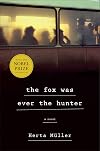
The Fox Was Ever the Hunter
by Herta Müller
On This Page
Description
"An early masterpiece from the winner of the Nobel Prize hailed as the laureate of life under totalitarianism. Romania--the last months of the Ceausescu regime. Adina is a young schoolteacher. Paul is a musician. Clara works in a wire factory. Pavel is Clara's lover. But one of them works for the secret police and is reporting on all of the group.One day Adina returns home to discover that her fox fur rug has had its tail cut off. On another occasion it's the hindleg. Then a foreleg. The show more mutilated fur is a sign that she is being tracked by the secret police--the fox was ever the hunter.Images of photographic precision combine into a kaleidoscope of terror as Adina and her friends struggle to keep mind and body intact in a world pervaded by complicity and permeated with fear, where it's hard to tell victim from perpetrator.In The Fox Was Always a Hunter, Herta Mu?ller once again uses language that displays the "concentration of poetry and the frankness of prose"--as the Swedish Academy noted upon awarding her the Nobel Prize--to create a hauntingly cinematic portrayal of the corruption of the soul under totalitarianism"-- show lessTags
Recommendations















Member Reviews
How can language so plain be so luscious and so alienating. As alienating as it must be to find traces of stolen entry into your most personal spaces, emotional and physical. Is there a clear reason for the book's fragmented details or a firm sense of its plot. Perhaps as much as there is reason or sense behind persecution by the state. How can the sun rise every day and every day make nothing of an appearance from behind the clouds. Until the sky is blue.
 This review was written for LibraryThing Early Reviewers.
Composed of imagistic vignettes with recurring motifs aplenty. Unfortunately this is at the expense of plot, character, and readerly giving of fucks. You do get a sense of the awfulness of the regime, the secret police, the besetting poverty and paranoia, but it’s all through a watery lens, softened and warped. The story is powerful despite the way it’s written.
Herta Müller writes declarative sentence after declarative sentence. The sentences redeem themselves by brilliant turns of phrase and strange juxtapositions. Scene succeeds scene in dreamlike sequence. The blurb on the back says "kaleidoscope" and kaleidoscope is correct as patterns recur and shift: poplars, faces, eyes, mouths, sunflower seeds, windows. Slowly, slowly the reader is sucked into the terror of life that is something other than human in Ceauşescu's Romania.
Adina is a schoolteacher. Her lover Ilie is a soldier; her former lover Paul is a musician. Her friend Clara works in the factory making wire mesh, and her lover Pavel is a lawyer. One day Adina comes home to find that someone has been in her apartment and razored the show more tail off the fox rug that she has had since she was ten. It is a warning.
As other reviewers have noted, this is not a book for people who demand straightforward narrative or deep character development. It is an immersive experience. I doubt that I'll reread it; I know that I won't forget it. Thank you, Early Reviewers. show less
Adina is a schoolteacher. Her lover Ilie is a soldier; her former lover Paul is a musician. Her friend Clara works in the factory making wire mesh, and her lover Pavel is a lawyer. One day Adina comes home to find that someone has been in her apartment and razored the show more tail off the fox rug that she has had since she was ten. It is a warning.
As other reviewers have noted, this is not a book for people who demand straightforward narrative or deep character development. It is an immersive experience. I doubt that I'll reread it; I know that I won't forget it. Thank you, Early Reviewers. show less
This review was written for LibraryThing Early Reviewers.Hipnotize edici bir roman, bizi bir kez daha Çavuşesku'nun Romanyasına götürüyor. Klostrofobik bir fabrika, bir çiftçi kasabası, açlık, intihar ve duman çevresinde örgüsünü oluşturuyor. Çingeneler ve gizli polis dışında hiç kimsenin çok fazla bir umuda sahip olmadığı bir "totaliter" kasabada çiftçiler çok yer, çok içerler, çünkü her şeye sahiptiler; az konuşurlar, çünkü çok şey bilmektedirler.Herta Müller "bir" ülkenin maddi ve varoluşsal güçlüklerini şimdiye kadar hiçbir yazarda görülmeyen benzersiz bir şiirsel gerçeklikle yazıya geçirirken çağdaş bir Rabelais'ye dönüşüyor. Herta Müller için "güneş kızgın bir kabak"tır; ele batan "iğnenin anası dünyadaki bütün show more iğneleri doğurmuş olan en eski iğnedir", kavaklar yeşil bıçaklara benzer, ölüm ise "birkaç günlük"tür. Bürlesk olarak da tanımlayabileceğimiz bir ortamda, dikkatler yavaş yavaş biri öğretmen, öteki mühendis olan iki arkadaş üzerinde yoğunlaşır. Kahramanlardan biri bir polis şefine aşıkken öteki bir çingene müzisyenle olan ilişkisi nedeniyle soruşturmaya uğramaktadır.Eleştirmenlerin de belirttiği gibi "Almanca edebiyatta benzeri bulunmayan" bir yazarın ürünü olan Tilki Daha O Zaman Avcıydı'yı herhangi bir roman türüne sokmak kolay olmasa da onu bir "dedektif romanı" olarak tanımlarsak yanlış yapmış olmayız. Romanın bir başka çarpıcı yanı da yüreğin vuruş temposuna benzeyen yazılış ritmi.Yürekteki Hayvan'dan (Telos Yayıncılık, 1997) sonra Tilki Daha O Zaman Avcıydı ile çağdaş romanın keşfine çıkan okurun önünde roman sanatının yepyeni bir ufku açılıyor... show less
Herta Müller eases us into The Fox Was Ever the Hunter. In its initial chapters, we’re introduced to an unnamed town in an unnamed country in an unnamed year: Müller provides no direct clues about whether the county is democratic or autocratic, capitalist or communist. It is only later that Müller casually let’s us know that the unnamed country is Romania, that impoverished Romania is a dictatorship, and that Ceausescu’s regime is falling after his long reign.
Müller portrays Adina, a school teacher, and Clara, her friend and factory worker, their relationship with each, their relationships with their lovers, and their relationships with their co-workers. But Romania in the final days of Ceausescu—Romania with its grey, show more relentless poverty, its pervasive fear, its divisions between the overwhelming power of the governing bureaucrats and the masses—is the real protagonist in The Fox Was Ever the Hunter: “Beyond the flat roof of the café is the park, beyond the park the rooftops are pointed. Here are the streets of the directors and inspectors, the mayors, secret police and army officers. The quiet streets of power, where even the wind is afraid when it starts to blow. And when it does blow it is afraid to eddy. And when it blusters it would rather break its own ribs than a branch.”
A joke can be seditious, but can it be treasonous? In Müller’s Romania, “A little Romanian dies and goes to hell, there’s a lot of pushing and shoving and everybody’s up to their neck in boiling mud. The devil sends the little Romanian off to the last empty space in the corner, and the man goes there and sinks up to his chin. From there he catches sight of a man close to the devil’s throne who’s also standing in boiling mud but only up to his knees. The little Romanian cranes his neck and recognizes Ceausescu. Where’s the justice in that, he asks the devil, that man has a lot more to atone for than I do. You’re right, says the devil, but he’s standing on top of his wife.” In the Romania of The Fox Was Ever the Hunter, the telling of the joke is apparently sufficient to warrant a stay in jail and to raise fears about the safety of to whom the joke was told.
The Fox Was Ever the Hunter is not a novel for those readers needing a clearly delineated plot moving briskly from event to event, not is it a novel for readers needing strong characterizations. But for those readers who want to better understand Ceausecu’s Romania specifically and life in an autocracy, it’s a deeply memorable and haunting read. show less
Müller portrays Adina, a school teacher, and Clara, her friend and factory worker, their relationship with each, their relationships with their lovers, and their relationships with their co-workers. But Romania in the final days of Ceausescu—Romania with its grey, show more relentless poverty, its pervasive fear, its divisions between the overwhelming power of the governing bureaucrats and the masses—is the real protagonist in The Fox Was Ever the Hunter: “Beyond the flat roof of the café is the park, beyond the park the rooftops are pointed. Here are the streets of the directors and inspectors, the mayors, secret police and army officers. The quiet streets of power, where even the wind is afraid when it starts to blow. And when it does blow it is afraid to eddy. And when it blusters it would rather break its own ribs than a branch.”
A joke can be seditious, but can it be treasonous? In Müller’s Romania, “A little Romanian dies and goes to hell, there’s a lot of pushing and shoving and everybody’s up to their neck in boiling mud. The devil sends the little Romanian off to the last empty space in the corner, and the man goes there and sinks up to his chin. From there he catches sight of a man close to the devil’s throne who’s also standing in boiling mud but only up to his knees. The little Romanian cranes his neck and recognizes Ceausescu. Where’s the justice in that, he asks the devil, that man has a lot more to atone for than I do. You’re right, says the devil, but he’s standing on top of his wife.” In the Romania of The Fox Was Ever the Hunter, the telling of the joke is apparently sufficient to warrant a stay in jail and to raise fears about the safety of to whom the joke was told.
The Fox Was Ever the Hunter is not a novel for those readers needing a clearly delineated plot moving briskly from event to event, not is it a novel for readers needing strong characterizations. But for those readers who want to better understand Ceausecu’s Romania specifically and life in an autocracy, it’s a deeply memorable and haunting read. show less
This review was written for LibraryThing Early Reviewers.Nobel Prize winner Horta Muller's __The Fox Was Ever the Hunter__ is a rich, engaging, perceptive novel about living in a police state and finding that you cannot know which of the people you know are true friends, and which are agents of the oppressive state. Even direct, physical observations of the sights and sounds around the main character are regularly turned into intriguing but obscure metaphors--such as the book's title. Nothing is certain, nothing is what it seems, or at least it may also be something else, something hidden. The feelings of doubt and even paranoia are well-presented and convincing. When I finished the book, I accepted the idea that the main character was on her way to safety, but could not be certain that she show more ever would be secure. Disturbingly convincing writing. show less
This review was written for LibraryThing Early Reviewers.Muller writes in rather short sentences. Maybe that is how she wrote. Or maybe it is how her work was translated. Perhaps she is trying to convey a sense of bleakness in Romania by avoiding the use of commas. As if commas were in short supply. Like color. Or hope.
Perhaps it is the fault of the translator who broke the sentences into choppy, simple statements with drab, unimaginative prose. Or, perhaps that was exactly the point. If it’s possible to write in grainy, blurred black and white, then that is what this is. The prose is flat, lifeless and uninspired. Perhaps that was exactly Muller’s goal: to write in a manner that reflects the bleakness of life under Ceausescu’s rule. If that was her goal, she accomplished it many times show more over.
After I had read the first 100 pages (of a 252-page book), one of my children asked me what the book was about. I responded, “I don’t know.” To that point the book had been a collection of vignettes of life in a town in Romania, although they were less than vignettes—they were more like brief glimpses one might see looking out the train window as the train runs through the edge of town. There are no characters—there are people with names, but not personalities. There is no conflict except this sense of struggling to breathe under this pointless existence.
This book may be far better than I deserve. The Nobel committee seems to think so. I am one of those unsophisticated readers who expects a story to actually be that—a story, not an extended mood piece. Mood is valuable—some of my favorite writers are masters of mood—but I need more than that. I need a story.
Disclosure: I received a complimentary copy of this book with the expectation I would provide an honest review. show less
Perhaps it is the fault of the translator who broke the sentences into choppy, simple statements with drab, unimaginative prose. Or, perhaps that was exactly the point. If it’s possible to write in grainy, blurred black and white, then that is what this is. The prose is flat, lifeless and uninspired. Perhaps that was exactly Muller’s goal: to write in a manner that reflects the bleakness of life under Ceausescu’s rule. If that was her goal, she accomplished it many times show more over.
After I had read the first 100 pages (of a 252-page book), one of my children asked me what the book was about. I responded, “I don’t know.” To that point the book had been a collection of vignettes of life in a town in Romania, although they were less than vignettes—they were more like brief glimpses one might see looking out the train window as the train runs through the edge of town. There are no characters—there are people with names, but not personalities. There is no conflict except this sense of struggling to breathe under this pointless existence.
This book may be far better than I deserve. The Nobel committee seems to think so. I am one of those unsophisticated readers who expects a story to actually be that—a story, not an extended mood piece. Mood is valuable—some of my favorite writers are masters of mood—but I need more than that. I need a story.
Disclosure: I received a complimentary copy of this book with the expectation I would provide an honest review. show less
This review was written for LibraryThing Early Reviewers.Members
- Recently Added By
Published Reviews
Reven var alt dengang jeger (P) :
Reven var alt dengang jeger foregår i en liten industriby ved Donau de siste månedene før Ceausescus fall og diktaturets sammenbrudd. Byen er svøpt i gul røyk fra fabrikken, popler som dolker mot himmelen, en spøkelsesaktig strøm av mennesker over bybroen og langs alleen. Undertrykte og maktens håndlangere lever side om side.
Ut av angstens flimrende show more bilder trer hovedpersonen frem, får historie, kontur, og handler. Det er lærerinnen Adina, venninnen Clara og hennes kjæreste, Pavel, som er Securitate-offiser.
En dag hun kommer hjem fra jobb, snubler Adina i reveskinnet i entreen, halen er kuttet av helt inne ved roten. Et fint, nesten usynlig snitt. Neste dag er det høyre forpote, dagen etter venstre. Så forstår Adina at det er Den hemmelige tjenesten som driver sitt spill.
Forfatteren flyktet fra Romania og Ceausescus regime i 1987, og regnes som en av de største tyskspråklige forfattere av yngre generasjon. Poetisk og suggererende. show less
Reven var alt dengang jeger foregår i en liten industriby ved Donau de siste månedene før Ceausescus fall og diktaturets sammenbrudd. Byen er svøpt i gul røyk fra fabrikken, popler som dolker mot himmelen, en spøkelsesaktig strøm av mennesker over bybroen og langs alleen. Undertrykte og maktens håndlangere lever side om side.
Ut av angstens flimrende show more bilder trer hovedpersonen frem, får historie, kontur, og handler. Det er lærerinnen Adina, venninnen Clara og hennes kjæreste, Pavel, som er Securitate-offiser.
En dag hun kommer hjem fra jobb, snubler Adina i reveskinnet i entreen, halen er kuttet av helt inne ved roten. Et fint, nesten usynlig snitt. Neste dag er det høyre forpote, dagen etter venstre. Så forstår Adina at det er Den hemmelige tjenesten som driver sitt spill.
Forfatteren flyktet fra Romania og Ceausescus regime i 1987, og regnes som en av de største tyskspråklige forfattere av yngre generasjon. Poetisk og suggererende. show less
added by kirstenlund
Lists

Kirkus Starred Fiction Reviews of Books Published in 2016
63 works; 3 members

Books I've read
87 works; 2 members
Author Information

90+ Works 5,147 Members
Born in Romania in 1953, Herta Müller lost her job as a teacher and suffered repeated threats after refusing to cooperate with Ceausescu's Secret Police. She succeeded in emigrating in 1987 and now lives in Berlin. The recipient of the European Literature Prize, she has also won the International IMPAC Dublin Literary Award for her previous show more novel, The Land of Green Plums. Müller was awarded the Nobel Prize in Literature in 2009. (Publisher Provided) Herta Müller was born in Nitzkydorf, Romania on August 17, 1953 to German parents. She studied German studies and Romanian literature at Timisoara University. While there, she became part of the Aktionsgruppe Banat, a group of idealistic Romanian-German writers seeking freedom of expression under the Ceaucescu dictatorship. After graduation, she worked as a translator in a machine factory, but was fired for refusing to cooperate with the secret police. Her first short story collection, Niederungen, was published in 1982 in a censored form. She immigrated to West Germany in 1987. She is a novelist, poet and essayist whose works depict the harsh conditions of life in Communist Romania under the repressive Nicolae Ceausescu regime. Her works include Herztier or The Land of Green Plums; The Appointment; Der Fuchs War Damals Schon der Jäger or The Passport; and Atemschaukel or Everything I Possess I Carry with Me. She has won numerous awards including the Marieluise-Fleißer Prize in 1990, the Kranichsteiner Literary Prize in 1991, the Kleist Prize in 1994, and the 2009 Nobel Prize in Literature. (Bowker Author Biography) show less
Some Editions
Awards and Honors
Awards
Distinctions
Notable Lists
Series
Belongs to Publisher Series
Common Knowledge
- Canonical title
- The Fox Was Ever the Hunter
- Original title
- Der Fuchs war damals schon der Jäger
- Original publication date
- 1992 (original German) (original German); 1993 (Norwegian translation) (Norwegian translation); 1993 (Dutch translation) (Dutch translation); 1994 (Swedish translation) (Swedish translation); 1995 (Hungarian translation) (Hungarian translation); 1995 (Icelandic translation) (Icelandic translation) (show all 11); 1995 (Romanian translation) (Romanian translation); 1997 (French translation) (French translation); 1998 (Turkish translation) (Turkish translation); 2005 (Polish translation) (Polish translation); 2016 (English Translation) (English Translation)
- Important places
- Romania
- Important events*
- Val regime Ceausescu (1989)
- Epigraph
- That doesn’t matter, I said to myself.
Doesn’t matter at all.
Venedikt Yerofeyev - First words
- The ant is carrying a dead fly three times its size.
- Last words
- (Click to show. Warning: May contain spoilers.)Above the earthen wall the long-distance runner dangles his naked legs over the city, and one coat slinks into another.
- Original language
- German
*Some information comes from Common Knowledge in other languages. Click "Edit" for more information.
Classifications
- Genres
- Fiction and Literature, General Fiction
- DDC/MDS
- 833.914 — Literature & rhetoric German & related literatures German fiction 1900- 1900-1990 1945-1990
- LCC
- PT2673 .U29234 .F8313 — Language and Literature German, Dutch and Scandinavian literatures German literature Individual authors or works 1961-2000
- BISAC
Statistics
- Members
- 427
- Popularity
- 72,253
- Reviews
- 23
- Rating
- (3.42)
- Languages
- 16 — Danish, Dutch, English, French, German, Hungarian, Icelandic, Japanese, Norwegian (Bokmål), Polish, Portuguese (Portugal), Romanian, Russian, Spanish, Swedish, Turkish
- Media
- Paper, Audiobook, Ebook
- ISBNs
- 42
- ASINs
- 1