On This Page
Description
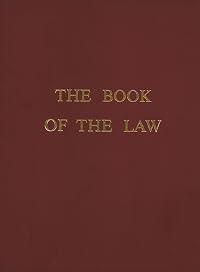
The Book of the Law, the holy text that forms the basis of Thelema, was transmitted to Crowley by the entity known as Aiwass in Cairo, on three successive days during April 1904. Acting as a medium, Crowley recorded the communications on hotel notepads and later organized his automatic writing into a short, coherent document. Aiwass/Crowley presents The Book of the Law as an expression of three god-forms in three chapters: Nuit, Hadit, and Ra-Hoor-Khuit.Tags
Recommendations
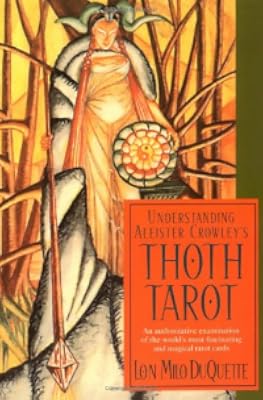
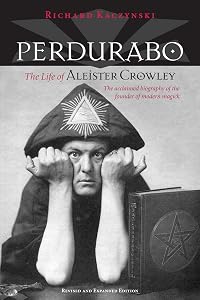


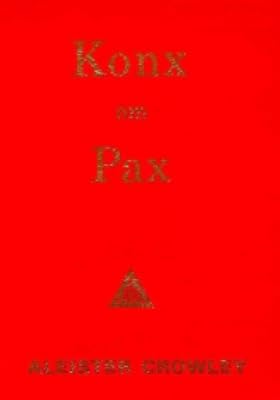
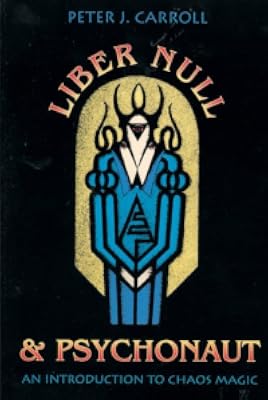

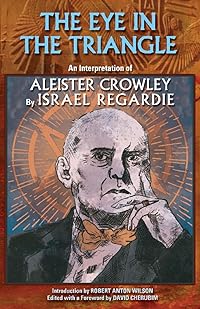


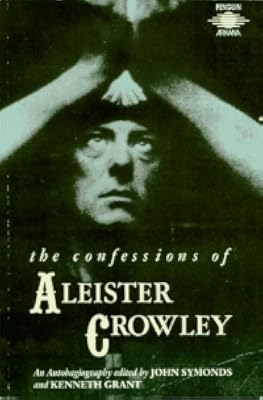
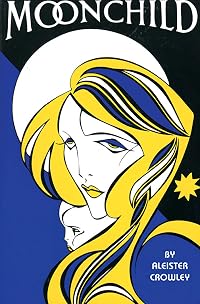
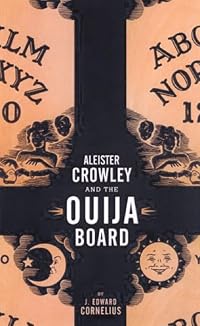

Member Recommendations


Member Reviews
It is always going to be difficult to review a religious text especially one produced only 120 years or so ago (1904). Such a text is going to be regarded by some as holy beyond criticism and by others as arrant nonsense wholly to be disregarded.
I come between the two positions in seeing such texts as insights into particular mind-sets at particular times and places in history and their reception indicating hidden, or shall we say 'occult', psychological needs - in this case in the post-decadent Edwardian era as much as in Crowley himself.
A lot of this particular text is nonsense - romantic egypto-mania synthesising many different influences in the mind of the creative narcissist called the Beast (Aleister Crowley). The religious text, show more numerology, the tarot, a sub-Nietzchean Will and whatever comes to hand makes the whole.
On the other hand, we also see a restless 29-year old adventurer who had a poetic sensibility in a stuffy conformist culture already sensing that it had peaked. If Crowley was writing nonsense, it was still a poetic response to the nonsense that was the post-Victorian British Imperial 'hive'.
The book, very short and exclamatory and, of course, contradictory, is made for 'ekstasis' and declamation. Crowley was a poet of the decadent type before he started publishing rather than performing magickal works.
By the time he wrote the Book of the Law in Egypt, he had had nearly a decade of hyper-sexualisation, occultism and foreign adventuring behind him. The Book of the Law is a poetic yell centred on the essence of what this was all about - the will to freedom from social constraint.
It was not enough though to just say 'I will' and be a libertarian individualist. He needed to find meaning in his will. The meaning lay in the freedom to desire and to be (the two things appearing to be much the same thing in him).
An ambiguous egalitarian individualistic "every man and every woman is a star" was contradicted by a form of salvationary elitism for those who understood this maxim - so that we have a touch of the Robespierre in Crowley perhaps.
The message was not this (after all, it was just a statement of fact in his mind) so much as "love is the law, love under will". This is not crassly to be interpreted as a merely sexual position but as something that underpins all existence and to which one's True Will is aligned.
Perhaps if he had just said this in non-poetic terms, it would have been easier for everyone but this would not have fitted Crowley's penchant for the dramatic or allowed him to take a leadership role in attracting people into his orbit, creating an image that was later to draw in many creative people.
Although no stranger to scandal, indeed generally seeking it, where would be the fun in just looking Edwardian Britain in the eye and simply giving it a rationalised alternative model of libertarian being that it would have discounted as 'mad'? Later, Jack Parsons could be rational enough for us.
We have to recognise that Crowley was not only a narcissist but also sincere in his lust for a life of both freedom and meaning. To construct the conditions for an occult religion with a supernatural intervention and himself as prophet fitted his demonstrable love of the dramatic.
I suspect most people reading "The Book of the Law"are either going to lose themselves in the nonsense while picking up on those two key phrases as the hook for their own lives or they are going to be puzzled and then uninterested in the effort of trying to unravel Crowley's meaning.
Although everyone has the potential to be a star (divine) in Crowley's vision, that potential required each person to 'get' the revelation of their own freedom and True Will. This meant paradoxically overcoming both the world in which ones lives and the Thelemite alternative.
There is little consistency and a lot of ego in Crowley. This was no Kantian system-builder. His existentialism was intellectually rocky to say the least. But as dramaturge he went beyond any reasonable statement of freedom and desire to create its absurd artistic opportunity.
In this respect he was insidiously culturally important, especially to the Sixties Generation, and reached deep into popular culture, largely through musical appreciation of the creative link between music and the occult and, thence, through later adolescent identification, into the other popular arts.
On balance, unless you have the passion to become a Thelemite, Liber AL vel Legis (the Book of the Law) can probably be passed by but it should not be dismissed as unimportant. Crowley's poetic and dramatic magickal intervention did change our world. show less
I come between the two positions in seeing such texts as insights into particular mind-sets at particular times and places in history and their reception indicating hidden, or shall we say 'occult', psychological needs - in this case in the post-decadent Edwardian era as much as in Crowley himself.
A lot of this particular text is nonsense - romantic egypto-mania synthesising many different influences in the mind of the creative narcissist called the Beast (Aleister Crowley). The religious text, show more numerology, the tarot, a sub-Nietzchean Will and whatever comes to hand makes the whole.
On the other hand, we also see a restless 29-year old adventurer who had a poetic sensibility in a stuffy conformist culture already sensing that it had peaked. If Crowley was writing nonsense, it was still a poetic response to the nonsense that was the post-Victorian British Imperial 'hive'.
The book, very short and exclamatory and, of course, contradictory, is made for 'ekstasis' and declamation. Crowley was a poet of the decadent type before he started publishing rather than performing magickal works.
By the time he wrote the Book of the Law in Egypt, he had had nearly a decade of hyper-sexualisation, occultism and foreign adventuring behind him. The Book of the Law is a poetic yell centred on the essence of what this was all about - the will to freedom from social constraint.
It was not enough though to just say 'I will' and be a libertarian individualist. He needed to find meaning in his will. The meaning lay in the freedom to desire and to be (the two things appearing to be much the same thing in him).
An ambiguous egalitarian individualistic "every man and every woman is a star" was contradicted by a form of salvationary elitism for those who understood this maxim - so that we have a touch of the Robespierre in Crowley perhaps.
The message was not this (after all, it was just a statement of fact in his mind) so much as "love is the law, love under will". This is not crassly to be interpreted as a merely sexual position but as something that underpins all existence and to which one's True Will is aligned.
Perhaps if he had just said this in non-poetic terms, it would have been easier for everyone but this would not have fitted Crowley's penchant for the dramatic or allowed him to take a leadership role in attracting people into his orbit, creating an image that was later to draw in many creative people.
Although no stranger to scandal, indeed generally seeking it, where would be the fun in just looking Edwardian Britain in the eye and simply giving it a rationalised alternative model of libertarian being that it would have discounted as 'mad'? Later, Jack Parsons could be rational enough for us.
We have to recognise that Crowley was not only a narcissist but also sincere in his lust for a life of both freedom and meaning. To construct the conditions for an occult religion with a supernatural intervention and himself as prophet fitted his demonstrable love of the dramatic.
I suspect most people reading "The Book of the Law"are either going to lose themselves in the nonsense while picking up on those two key phrases as the hook for their own lives or they are going to be puzzled and then uninterested in the effort of trying to unravel Crowley's meaning.
Although everyone has the potential to be a star (divine) in Crowley's vision, that potential required each person to 'get' the revelation of their own freedom and True Will. This meant paradoxically overcoming both the world in which ones lives and the Thelemite alternative.
There is little consistency and a lot of ego in Crowley. This was no Kantian system-builder. His existentialism was intellectually rocky to say the least. But as dramaturge he went beyond any reasonable statement of freedom and desire to create its absurd artistic opportunity.
In this respect he was insidiously culturally important, especially to the Sixties Generation, and reached deep into popular culture, largely through musical appreciation of the creative link between music and the occult and, thence, through later adolescent identification, into the other popular arts.
On balance, unless you have the passion to become a Thelemite, Liber AL vel Legis (the Book of the Law) can probably be passed by but it should not be dismissed as unimportant. Crowley's poetic and dramatic magickal intervention did change our world. show less
This is a happy little book -- e.g., "We have nothing w/ the outcast and the unfit: let them die in their misery. For they feel not. Compassion is the vice of kings: stamp down the wretched & the weak: this is the law of the strong: this is our law and the joy of the world" (pg. 41).
Actually, the foregoing has much in common w/ the central philosophy of The Secret; viz, the idea that the suffering and pain of others must be ignored or turned away from lest the observer attract these ills unto him- or herself.
But isn't that a little cold? It is. "I am alone: there is no God where I am" (pg. 42). And alone, the king in a kingdom of one. And that's, basically, the place one finds oneself when one considers only oneself to be the be-all, show more end-all of creation. At one w/ oneself. (One is the loneliest number.)
And that, ultimately, is the Law of the Book, the Law of Thelema: "Do what thou wilt shall be the whole of the Law."
Enjoy! show less
Actually, the foregoing has much in common w/ the central philosophy of The Secret; viz, the idea that the suffering and pain of others must be ignored or turned away from lest the observer attract these ills unto him- or herself.
But isn't that a little cold? It is. "I am alone: there is no God where I am" (pg. 42). And alone, the king in a kingdom of one. And that's, basically, the place one finds oneself when one considers only oneself to be the be-all, show more end-all of creation. At one w/ oneself. (One is the loneliest number.)
And that, ultimately, is the Law of the Book, the Law of Thelema: "Do what thou wilt shall be the whole of the Law."
Enjoy! show less
Apparently people study this text for years to make heads or tails of it. There's some lovely language, but ultimately I feel more confused than enlightened.
An interesting document, whether "inspired" or formulated and crafted, it has been very influential—though also seldom read and less understood, even by its amanuensis. "Do what thou wilt shall be the whole of the Law"—but "What wilt thou do?"
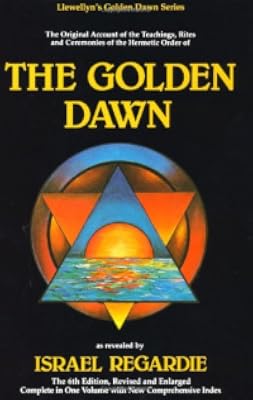
This is NOT a starting place for research into magic. Read THE GOLDEN DAWN. It's a better-written, better-researched book about Crowley and his work (as well as that of other member of the group). You'll learn a lot more, a lot more safely.
Wow, I am speechless.
Definitely a great book to read. A little confusing at first. But with some background information it's totally logical.
Love it. That's for sure.
Definitely a great book to read. A little confusing at first. But with some background information it's totally logical.
Love it. That's for sure.
Do I interpret this book? Do I burn it? I'm not gonna burn it, I bought it. Oh Crowley, you wacky.
Members
- Recently Added By
Lists

Books About Non-Abrahamic Religions
98 works; 2 members

Books Read in 2025
4,091 works; 97 members

Our Favorite Comfort Reads
334 works; 200 members
Author Information

500+ Works 19,885 Members
Aleister Crowley was born Edward Alexander Crowley in Leamington Spa, England on October 12, 1875. His parents belonged to the Plymouth Brethren, a strict fundamentalist Christian sect, so he was raised with a thorough knowledge of the Bible. He attended Trinity College at Cambridge University, but left before completing his degree. He became a show more member of the Hermetic Order of the Golden Dawn, an occult society which taught magic, qabalah, alchemy, tarot, and astrology, in 1898, but the group disbanded in 1900. In 1903, he married Rose Kelly, who began entering trance states and sending him messages from Horus, an Egyptian god. These messages formed the first three chapters of The Book of the Law, which introduced Crowley's main concept of Thelema. He founded his own occult society. He was a prolific writer, who published works on a wide variety of topics. His works include The Book of Thoth, The Vision and the Voice, 777 and Other Qabalistic Writings, The Book of Lies, Little Essays Toward Truth, and The Confessions of Aleister Crowley. He also wrote fiction including plays, novels, and poems. His fictional works include Moonchild, Diary of a Drug Fiend, The Stratagem and Other Stories, White Stains, Clouds without Water, and Hymn to Pan. Three of his compositions, The Quest, The Neophyte, and The Rose and the Cross were included in the 1917 collection The Oxford Book of English Mystical Verse. He died on December 1, 1947 at the age of 72. (Bowker Author Biography) show less
Some Editions
Series

Work Relationships
Is contained in
Gems from the Equinox: Instructions by Aleister Crowley for His Own Magical Order by Aleister Crowley
Modern Occult Rhetoric: Mass Media and the Drama of Secrecy in the Twentieth Century (Albma Rhetoric Cult & Soc Crit) by Joshua Gunn
The Writings of Aleister Crowley: The Book of Lies, The Book of the Law, Magick and Cocaine by Aleister Crowley
The Law Is For All: The Authorized Popular Commentary of Liber Al Vel Legis Sub Figura CCXX, the Book of the Law by Aleister Crowley
Common Knowledge
- Canonical title*
- Knjiga Zakona
- Original title
- Liber L; Liber AL vel LEGIS
- Alternate titles
- The Book of the Law; Book of the Law; Liber AL vel Legis; Liber CCXX; Liber AL; Liber 220 (show all 9); Liber Legis; Lovens Bok; Liber AL vel Legis sub figura CCXX
- Original publication date
- 1904
- People/Characters
- Aiwass; Nuit; Hadit; Ra-hoor-khuit; Beast; Scarlet Woman (show all 8); Asar; Isa
- Important places
- palace of four gates; Victorious City
- Important events
- Equinox of the Gods
- First words
- Had! The manifestation of Nuit.
- Quotations
- There is no law beyond Do what thou wilt.
- Last words
- (Click to show. Warning: May contain spoilers.)The Book of the Law is Written and Concealed. Aum. Ha.
- Original language
- English
*Some information comes from Common Knowledge in other languages. Click "Edit" for more information.
Classifications
Statistics
- Members
- 1,325
- Popularity
- 18,165
- Reviews
- 13
- Rating
- (3.90)
- Languages
- 17 — Czech, Danish, Dutch, English, Finnish, French, German, Hungarian, Italian, Japanese, Norwegian (Bokmål), Norwegian, Polish, Serbian, Spanish, Swedish, Portuguese (Portugal)
- Media
- Paper, Audiobook, Ebook
- ISBNs
- 58
- UPCs
- 1
- ASINs
- 33