On This Page
Description
The Dark Volume forges ahead with the impossible adventures of three unlikely allies washed ashore on the forbidding Iron Coast. Encountering a series of savage murders, Miss Celeste Temple, Cardinal Chang, and Dr. Abelard Svenson discover that their enemies are on the move and that the insidious glass books are far more bewitching-and lethal-than they'd ever imagined. Brimming with reckless desire, bold terror, and breathless suspense, this unique feat of the imagination will hold audiences show more in its dark thrall long after the novel has been devoured. show lessTags
Recommendations


















Member Reviews
In finishing this book, Dorothy Parker came to mind... "This is not a novel to be tossed lightly aside. It should be thrown with great force."
The greatest joy that I experienced with this book came when I was finally finished and could set it aside. I disliked The Dark Volume so intensely that my opinion of the first book (in what is now clearly intended to be a series), The Glass Books of the Dream Eaters, was actually tainted by association.
Gordon Dahlquist, what happened? Oh wait, I know. The large amounts of studied creativity, character development and lavish scenery gave way to the deep need to keep things going in a serial format, and thus yielded a book where very little was described in valuable detail and a great deal show more happened, but almost none of it was of any consequence. I may have only spent nine days reading this (or rather, trying to read this, as I couldn't ever say that I got into it enough to the point where I experienced any pains in setting it down, even in the middle of a sentence), but it felt like the longest nine days that I've experienced in a great while. As a result, not only was I frustrated, but anyone who happened to be around me while I read this was incensed against the book, too. My significant other implored me to stop reading it, as he could hardly take my growls of annoyance and exasperated exclamations of, "Just die already!" (which were directed at multiple characters throughout the course of the novel).
And as far as trajectory, well, we seem to have ended up in the exact same damn place, only everyone is much dirtier. (Though admittedly, that clearly is the goal of the author, to expose the darker, corrosive side of what might seem an alluring power. Still, I was overjoyed when a character stopped to take a bath during this volume.) Confrontation between a large number of characters where the alliances are tenuous at best before everything shatters... I mean honestly, if it was going to lead to such a similar conclusion, what was even gained by the events of this book? At least the last time we saw this tableau, it was aboard a dirigible! (There may be a dirigible on the cover of this book, but there is not one in the book... unless you count references to the sunken one from the first book.) The Dark Volume failed to have anywhere near the same amount of creativity as its predecessor (not to mention that at least The Glass Books of the Dream Eaters took place in interesting locations, whereas we spend the whole of The Dark Volume in destroyed and crumbling buildings, inhaling smoke from explosions, and crawling through the woods while everyone bleeds and vomits). While I'm not necessarily an advocate for Dahlquist spending even more time describing things, perhaps the most crucial oversight was that he failed to explain exactly why we should even care about the events taking place! He relied entirely on our attachment to the characters on the basis of the first novel and made little attempt to endear any of them to us (except, perhaps, for Doctor Svenson who was tormented by his feelings for Mrs. Dujong, but it was hard to feel sympathy when I wanted to stab her repeatedly for being stupid and useless).
And by the end? We still suspect that the majority of the baddies are dead (though again, the only person we know who is still fully functional and at large is the Contessa), and the only difference is that we are led to believe that the majority of the goodies are dead, too... (or course, as with the last book, only a fool really believes it).
I won't bother to explain the plot, I will only suggest that if you have read and enjoyed The Glass Books of the Dream Eaters, you should do yourself a favor and not bother to pick up its sequel. I rarely abandon a series, but I doubt that I could survive another installment of this... and besides, I made the arrangement with myself that all I needed to set these books aside with a clear conscience was for a kiss to take place between two particular characters. Having received that small satisfaction, I say farewell to Dahlquist and I curse the urge that drove me to purchase this terrible thing in hardcover. show less
The greatest joy that I experienced with this book came when I was finally finished and could set it aside. I disliked The Dark Volume so intensely that my opinion of the first book (in what is now clearly intended to be a series), The Glass Books of the Dream Eaters, was actually tainted by association.
Gordon Dahlquist, what happened? Oh wait, I know. The large amounts of studied creativity, character development and lavish scenery gave way to the deep need to keep things going in a serial format, and thus yielded a book where very little was described in valuable detail and a great deal show more happened, but almost none of it was of any consequence. I may have only spent nine days reading this (or rather, trying to read this, as I couldn't ever say that I got into it enough to the point where I experienced any pains in setting it down, even in the middle of a sentence), but it felt like the longest nine days that I've experienced in a great while. As a result, not only was I frustrated, but anyone who happened to be around me while I read this was incensed against the book, too. My significant other implored me to stop reading it, as he could hardly take my growls of annoyance and exasperated exclamations of, "Just die already!" (which were directed at multiple characters throughout the course of the novel).
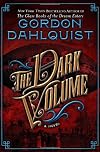
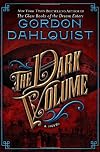
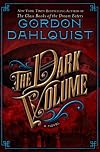
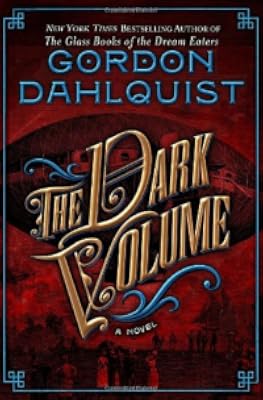
And as far as trajectory, well, we seem to have ended up in the exact same damn place, only everyone is much dirtier. (Though admittedly, that clearly is the goal of the author, to expose the darker, corrosive side of what might seem an alluring power. Still, I was overjoyed when a character stopped to take a bath during this volume.) Confrontation between a large number of characters where the alliances are tenuous at best before everything shatters... I mean honestly, if it was going to lead to such a similar conclusion, what was even gained by the events of this book? At least the last time we saw this tableau, it was aboard a dirigible! (There may be a dirigible on the cover of this book, but there is not one in the book... unless you count references to the sunken one from the first book.) The Dark Volume failed to have anywhere near the same amount of creativity as its predecessor (not to mention that at least The Glass Books of the Dream Eaters took place in interesting locations, whereas we spend the whole of The Dark Volume in destroyed and crumbling buildings, inhaling smoke from explosions, and crawling through the woods while everyone bleeds and vomits). While I'm not necessarily an advocate for Dahlquist spending even more time describing things, perhaps the most crucial oversight was that he failed to explain exactly why we should even care about the events taking place! He relied entirely on our attachment to the characters on the basis of the first novel and made little attempt to endear any of them to us (except, perhaps, for Doctor Svenson who was tormented by his feelings for Mrs. Dujong, but it was hard to feel sympathy when I wanted to stab her repeatedly for being stupid and useless).
And by the end? We still suspect that the majority of the baddies are dead (though again, the only person we know who is still fully functional and at large is the Contessa), and the only difference is that we are led to believe that the majority of the goodies are dead, too... (or course, as with the last book, only a fool really believes it).
I won't bother to explain the plot, I will only suggest that if you have read and enjoyed The Glass Books of the Dream Eaters, you should do yourself a favor and not bother to pick up its sequel. I rarely abandon a series, but I doubt that I could survive another installment of this... and besides, I made the arrangement with myself that all I needed to set these books aside with a clear conscience was for a kiss to take place between two particular characters. Having received that small satisfaction, I say farewell to Dahlquist and I curse the urge that drove me to purchase this terrible thing in hardcover. show less
Dahlquist's 'The Dark Volume' really is a page-turner! I literally couldn't stop myself reading page by page by page until it was finished and I enjoyed all of it as much as the first in the series. As a Crime/Mystery Fiction novel, Dahlquist's novel really fits the bill, it's full of danger, corruption and dastardly plans to take over the world, one mind at a time. The characters are brutal and damaged but brilliantly portrayed with as much detail to their persona's as to make them real to life. The book is written eloquently and is full of suspense with each twist and turn, reeling you into the mystery and the character's criminal activities.
Definitely a book to be read by all crime and mystery fans and I'm most certainly looking show more forward to the next, hoping once more that all evil plans can be conquered after all (but with Dahlquist's favour for suspense and cliff-hangers, I really doubt it!) show less
Definitely a book to be read by all crime and mystery fans and I'm most certainly looking show more forward to the next, hoping once more that all evil plans can be conquered after all (but with Dahlquist's favour for suspense and cliff-hangers, I really doubt it!) show less
I find this series intriguing but not great literature. The first volume was suspenseful, mysterious, and sexy. This one is a continuation of the first without the sexy part. In fact the sexual tension in this book is just plain silly and you find yourself wanting to shout to Miss Temple "Get Over It Already!" This volume was suspenseful but over long and clearly just a bridge between the first book and something else. Is the author trying to make this the Harry Potter of adult literature? These two volumes are average to good thrillers but not worth a two million dollar advance.
But Eloise cried out sharply, even as thin lines of tears broke forth down her cheeks. 'Who are you to know anything, Celeste Temple? You are a wilful thing who has been happily asleep these past cruel days - who has money and confident ease, who has been rescued from your brazen presumption again and again by these very men who may now be dead - or who knows where? Who I have watched over night after night, watched alone, only to have you abandon me at every adventuresome whim that pops into your spoilt-brat's brain!'
This book is a sequel to "The Glass Books of the Dream Eaters", and I may as well just repeat what I wrote about that book.
A steampunk adventure in which three disparate people (a hired killer, a jilted woman, and a doctor show more whose job is to keep a dissolute prince out of trouble) come together to investigate a secret cabal. It was rather long and could easily have been edited to a more manageable length. In my opinion the reader doesn't really need to have the same time period covered in tortuous detail not once but three times (from the point of view of each of the protagonists). And just how many times did the baddies leave someone to kill one of the protagonists and assume they were dead, only to have them escape and pop up just as the baddies are gloating over their death? More times than your average James Bond movie, I reckon! But I still enjoyed it, even though it took me well over a fortnight to slog my way through it.
"The Dark Volume" is a bit shorter and the escapes from certain death are rather less James Bondesque, but otherwise it is just more of the same. And as it finishes with one of the characters swearing revenge, I guess there will be a third book coming along sometime soon. show less
This book is a sequel to "The Glass Books of the Dream Eaters", and I may as well just repeat what I wrote about that book.
A steampunk adventure in which three disparate people (a hired killer, a jilted woman, and a doctor show more whose job is to keep a dissolute prince out of trouble) come together to investigate a secret cabal. It was rather long and could easily have been edited to a more manageable length. In my opinion the reader doesn't really need to have the same time period covered in tortuous detail not once but three times (from the point of view of each of the protagonists). And just how many times did the baddies leave someone to kill one of the protagonists and assume they were dead, only to have them escape and pop up just as the baddies are gloating over their death? More times than your average James Bond movie, I reckon! But I still enjoyed it, even though it took me well over a fortnight to slog my way through it.
"The Dark Volume" is a bit shorter and the escapes from certain death are rather less James Bondesque, but otherwise it is just more of the same. And as it finishes with one of the characters swearing revenge, I guess there will be a third book coming along sometime soon. show less
The original Glass Books of the Dream Eaters – the first book in the series, was initially published as a single volume – not the two volumes commonly seen and reviewed here - the first with a cliffhanger ending, which I hate so much. This was the doing of the second publisher, who split the novel, obviously thinking that a 768 page novel was too much for today's ADD type audiences. Too bad, they screwed that up. Now, with the Dark Volume, what is truly the second book in the series, Dahlquist's ending is not really an ending that we would think of a series ending. It is true, there are no more books out by Mr. Dahlquist, so I am going to have to settle for what is actually written in these two books to satisfy whatever curiosity I show more have, and settle I must, as I find that the ending was not satisfactory at all. This last volume is different from the other. It does have the same characters, the same cadence, the same wonderful characterization and imagery, the rich weirdos, the Evil Cabal, and everything else we found in The Glass Books, but there is something missing from this work that it's hard to describe – an essential part, that was included in the previous volume that isn't here. Dahlquist is still writing in tip top shape, its just that he seems to stall and repeat himself in the middle of the volume, but once we get toward the ending, its classic Dahlquist all the way. It turns out Johnny Depp and his Infinitum Nihil production company has opted the film rights for the Glass Books of the Dream Eaters and is developing the project as we speak. This is very exciting news, as the work is very cinematic already, and would work on the silver screen quite nicely. I wonder who our three heroes would be? And the Rich Weirdos? I vote for Angelina Jolie for the Contessa.
THE PLOT: As we left our heroes in book two (or the end of book one, if you bought the combined volume), they had just survived a Battle Royale on an airship bound for Macklenburg with the Comte, the Contessa, Harold Crabbe, Francis Xonck, Caroline Stearne, Roger Bascombe, Dr. Lorenz, and Eloise DuJong. Our heroes are asked to reveal what they know about the factions and secrets of the Cabal before they are put to death – which is when all the trouble starts, between the Cabal. With Cardinal Chang, Dr, Svenson and Miss Temple egging them on – the Rich Weirdos of the Evil Cabal turn on each other with a ferocity only seen in beasts of the jungle. When the smoke clears the only people alive are our three heroes, Eloise DuJong, who has been helping them, and the Contessa, who has stationed herself on the roof of the airship – which is sinking, because she has jammed the controls and slashed the airbags. Soon the airship has hit the water. Our heroes scramble to the top, but there is no sign of the Contessa – they assume she has jumped off and drowned in the sea, due to the weight of her clothing. Amazingly, on the other side of the gasbag, they see shore. They swim there and lodge with locals. Mysterious murders being to happen. Stable boys whose throats have been ripped out, a fisherman stabbed, an entire family with their throats ripped out, our heroes can no longer stay. But are these murders the work of one or more Cabal members? Did the Contessa really die or is that her out there? And what about the one murder that looked completely different from the rest – who did that? Our heroes make their way singly, closer and closer to London, only to find the Government in complete turmoil and under the control of the Blue Glass Woman – Mrs. Marchmoor who is controlling the Duke, who advises the Queen. Later they find another of the Cabal still alive, yet mortally ill, due to his ingestion of blue glass to stop his fatal wounding on the airship. He wreaks havoc everywhere he goes. And then there is Charlotte Trapping and her children – of which Eloise DuJong was the tutor. The Government now has the children in their power. Who will side against whom? And where are the Comte's transformation machines? They've been removed from Harschmort House, but where did they go? And who moved them? This moving of the machines must have been planned from the very beginning, as everyone was supposed to be in Macklenburg for a month celebrating the Prince and Princesses wedding. Who had the most to gain? This plot is more byzantine than the last plot, in that you go deeper into the minds and plots of the enemies with in the Cabal, and their secret plans for treachery that are just now executing. It seems there is a lot more to the treachery of the members of the Cabal then anyone even knew. Come with me and find out how deep this treachery goes – read the book and see how each member planned to take over The Process, and hence the power and the Governments of the World from the others. It is a wild ride. For plot I give this novel a 10/10
THE CHARACTERIZATION: As always, Dahlquist drives everything forward with characterization. Everything is a facet of characterization – the action, the dialogue, peoples movements, their plans, their descriptions, everything that happens deepens his characterization of each character. We get to meet new people in this book that we previously did not know, including Charlotte Trapping, the widow of the murdered Colonel Trapping, Alfred Leveret – a flunky of Francis Xonck at Xonck Armaments, Mr. Harcourt, Mr. Phelps, Mr. Soume along with other functionaries working for the Duke of Stalmaere who is actually dead, but is being used as a puppet by the Blue Glass Woman – Mrs. Marchmoor. These people are strictly under full mind control and don't remember Mrs. Marchmoor at all, but believe the Duke is alive. Their physical condition is deteriorating rapidly as they go about the Glass Woman's business, a side effect of the mind control. They will all be dead soon. Mr. Rawsbarth was the assistant to Roger Bascombe, former fiance to Miss Temple and Cabal member who was killed on the airship. Rawsbarth has decided to take power into his own hands and grab as much as he can now that his boss is out of the picture. Rawsbarth too is under mind control, though he does not know it. He, too will be dead soon. His characterization was done brilliantly. A greedy man who sees opportunity everywhere, now that his superiors have all gone missing, and simply wants to fill the vacuum of power left by those dead, with himself. He is a grasping, venal, demanding, selfish, little man whose overriding goal is to climb as high as possible in the social structure grabbing as much money and power as possible. This is his opportunity. Dahlquist does an outstanding job with every character in this book – right down to the butlers and maids – using their gestures, speech and every detail about them to bring together a characterization that is spot on. For characterization, I give this novel a 10/ 10.
THE IMAGERY: Dahlquist is a tour de force of imagery – there are a number of settings that he describes beautifully, but especially the one location that they pass through shortly after they leave the Iron Coast, as they travel toward London in a cart. It was Celeste Temple and Eloise DuJong together in the back of a cart on their way to the city of Karthe – they passed through an area where black rocks seemed to raise up from the ground – like the bones of the world, left out for millenia. Black and stark for all to see, they rose up to the sky, with grasses below - the basalt foundation of the world. I can think of no more dreary place than this, as they traveled mile after mile, through the same landscape, covered by those stones. Now I can't describe it like Dahlquist – not by a mile, but his imagery is so imaginative, so cinematic, that he sets it up, then lets it play out like a movie – covering all five senses – touch, taste, scent, hearing and sight. For Imagery, I give this novel, a 10/10.
THE GORE SCORE: This novel did have some significant violence, though it is not nearly as bad as some of the novels that I've read lately, you do need to know that there is bloodshed, decapitation, stabbing, shooting, exploding people, and some of the descriptions of the results of this violence while graphic is not gratuitous. A lot of people die in this book. The factions are at war with each other – there are armies of trained soldiers involved. Mobs get involved as well, so slaughter would not be an inappropriate word to use for the ending. Just be warned. For a Gore Score, I give this novel, a 7/10.
THE DIALOGUE: Dahlquist uses dialogue as a facet of characterization. The Contessa, being a quick, smart and aggressive person, has quick, smart and aggressive dialogue. The Comte, being a big, slow, thinking-type of person – speaks more slowly and thoughtfully. He clearly thinks before he speaks. He uses words sparingly. When he is inspired, as when he is speaking of his Process, he speaks passionately. This is all part of his character. Celeste is a talker. She not only speaks to everyone, she also speaks inside her own head quite regularly with a running dialogue that rarely stops. This too is part of her character. Dr. Svenson too, has a running dialogue inside his head. He is a thinker. When he speaks, it is authoritative. He knows what he is talking about. He is correct in his topic and facts. He makes suppositions and logic leaps that are correct as well. He is actually quite brilliant, but no one has recognized that fact, especially him. Cardinal Chang too is brilliant – he does not speak often, only when he knows that he will get the desired result will he speak. He too has a running dialogue in his head. He is amazing at putting facts together to come up with conclusions that are spot on. His leaps in logic are amazing and correct. He and Doctor Svenson helped the most to make the Cabal turn upon itself in the airship, by putting the pieces together after gathering information at Harschmort House and elsewhere to determine who was doing what to whom. It was quite impressive. He spoke concisely and to the point – putting words together effectively and spinning them effortlessly to get the most vicious response out of the Cabal members. It worked. He does this later with Dr. Svenson as well in the Dark Volume. For Dialogue, I give this novel, a 9/10.
THE PACING: The pacing of this novel, unlike the first one, was inconsistent. The first third of the novel was done at breakneck speed. This matched the pace of the entire first novel, (or if you read it in two volumes, the first two volumes), but then we reach a section that was quite different. It was funny, but I was reminded quite strongly of The Lord of the Rings trilogy movie series, where Strider, Legolas, and Gimli are constantly running across mountains, meadows and forests. Every time that happened in the movie, I would laugh. Believe me, it happened often. “Off they go!” I would say, laughing uproariously. How many times did they do that in the movie? I didn't count, but my best guess is about thirty seven. The second third of the novel is just like that. And then they started running...It gets tiresome to say the least. It does not move the action forward at all, and while, it does move the characters to a different physical spot, and a very few things do actually happen, it is all set up for the Big Battle Royale of the ending. Dahlquist just needs to get all his characters in one single place for the big ending. In my opinion, he could have done a much better job of it. It was boring to say the least. While I didn't laugh, it was too boring for laughter, I did wish that many pages had been excised, and he had found another way for the characters to all end up at the same place without all the shenanigans that he put them through. The last third of the book was back to the breakneck pace I was used to. The Big Battle Royale, put the one at the end of the first book to shame. More on that later. For pacing, I give this novel, a 6/10.
THE ENDING: This was the Biggest Battle Royale since – well, I don't know. It was simply humungous. People changing sides, so many factions vying for power, everyone wanting The Process, the original Cabal members down to four Francis Xonck – a zombie who had ingested blue glass to heal his fatal wounds and was dying, the Contessa, Mrs. Marchmoor – the Blue Glass Woman and The Comte put into another body but tainted by death. Our three heroes are still alive and watching the action as prisoners, but they have been forever changed by their proximity to the Blue Glass and their dealings with the Cabal. The other people and government soldiers pulled in by Mrs. Marchmoor and mercenaries pulled in by Alfred Leveret on behalf of Francis Xonck, before Francis became a monster, as well as Charlotte Trapping, who has her own game to play. All want The Process and the machines that make people do their will, making them slaves to their bidding so that they can rule the World, starting with the Government of England and moving on to Macklenburg. All factions are ruthless, and won't hesitate to wipe all the others out, include Charlotte Trappings child, who is present. The battle begins, and doesn't end, until almost all factions are slaughtered. Who will come out on top? Who will own The Process? Will England ever be the same again? Does the Cabal regroup and succeed? What about our heroes? Do they come out unscathed? The ending left me feeling that there was another book in the works, but I have seen nothing to indicate that this is true. For an ending, the dramatic tension is intense, and it did tie up many lose ends that were floating around from the previous books, but it opened up new avenues to explore, just like a middle book in a series would. For an ending, I give this book a 7/10.
THE UPSHOT: I was rather disappointed overall in this book. While I loved this first third and the last third of the book, the second third of the book consisted solely of the characters running around in separate directions and winding up at the same destination. As I said previously, it was like The Lord of the Rings trilogy movie series, where Strider, Legolas, and Gimli ran everywhere about thirty seven times, except our heroes ran separately to their destinations. Sometimes they were at the same destination, but did not meet when there, which, quite frankly, was disappointing. The second third of the book could be titled, And Then They Ran Around. The final third of the book was when they met up, which was when things really started to happen again. That's when the Big Battle Royale occurred, and what a spectacle that was. Overall, it was a good read, but nothing as good as the first book at all. Maybe, Dahlquist had trouble bringing his characters together for the Big Battle Royale – I don't know, but he fumbled this one. For a score, this novel, gets a score of 53/60 which gives it 5 stars. For a total of over 1000 pages, one would think that you could get an entire story across, but it looks like, out in the wind somewhere, there might be more. Stay tuned, as we will update you, if we hear anything about a third book.
MLB Star Scale
50 – 60 5 Stars
40 – 49 4 Stars
30 – 39 3 Stars
20 – 29 2 Stars
10 – 19 1 Stars
00 – 09 0 Stars show less
THE PLOT: As we left our heroes in book two (or the end of book one, if you bought the combined volume), they had just survived a Battle Royale on an airship bound for Macklenburg with the Comte, the Contessa, Harold Crabbe, Francis Xonck, Caroline Stearne, Roger Bascombe, Dr. Lorenz, and Eloise DuJong. Our heroes are asked to reveal what they know about the factions and secrets of the Cabal before they are put to death – which is when all the trouble starts, between the Cabal. With Cardinal Chang, Dr, Svenson and Miss Temple egging them on – the Rich Weirdos of the Evil Cabal turn on each other with a ferocity only seen in beasts of the jungle. When the smoke clears the only people alive are our three heroes, Eloise DuJong, who has been helping them, and the Contessa, who has stationed herself on the roof of the airship – which is sinking, because she has jammed the controls and slashed the airbags. Soon the airship has hit the water. Our heroes scramble to the top, but there is no sign of the Contessa – they assume she has jumped off and drowned in the sea, due to the weight of her clothing. Amazingly, on the other side of the gasbag, they see shore. They swim there and lodge with locals. Mysterious murders being to happen. Stable boys whose throats have been ripped out, a fisherman stabbed, an entire family with their throats ripped out, our heroes can no longer stay. But are these murders the work of one or more Cabal members? Did the Contessa really die or is that her out there? And what about the one murder that looked completely different from the rest – who did that? Our heroes make their way singly, closer and closer to London, only to find the Government in complete turmoil and under the control of the Blue Glass Woman – Mrs. Marchmoor who is controlling the Duke, who advises the Queen. Later they find another of the Cabal still alive, yet mortally ill, due to his ingestion of blue glass to stop his fatal wounding on the airship. He wreaks havoc everywhere he goes. And then there is Charlotte Trapping and her children – of which Eloise DuJong was the tutor. The Government now has the children in their power. Who will side against whom? And where are the Comte's transformation machines? They've been removed from Harschmort House, but where did they go? And who moved them? This moving of the machines must have been planned from the very beginning, as everyone was supposed to be in Macklenburg for a month celebrating the Prince and Princesses wedding. Who had the most to gain? This plot is more byzantine than the last plot, in that you go deeper into the minds and plots of the enemies with in the Cabal, and their secret plans for treachery that are just now executing. It seems there is a lot more to the treachery of the members of the Cabal then anyone even knew. Come with me and find out how deep this treachery goes – read the book and see how each member planned to take over The Process, and hence the power and the Governments of the World from the others. It is a wild ride. For plot I give this novel a 10/10
THE CHARACTERIZATION: As always, Dahlquist drives everything forward with characterization. Everything is a facet of characterization – the action, the dialogue, peoples movements, their plans, their descriptions, everything that happens deepens his characterization of each character. We get to meet new people in this book that we previously did not know, including Charlotte Trapping, the widow of the murdered Colonel Trapping, Alfred Leveret – a flunky of Francis Xonck at Xonck Armaments, Mr. Harcourt, Mr. Phelps, Mr. Soume along with other functionaries working for the Duke of Stalmaere who is actually dead, but is being used as a puppet by the Blue Glass Woman – Mrs. Marchmoor. These people are strictly under full mind control and don't remember Mrs. Marchmoor at all, but believe the Duke is alive. Their physical condition is deteriorating rapidly as they go about the Glass Woman's business, a side effect of the mind control. They will all be dead soon. Mr. Rawsbarth was the assistant to Roger Bascombe, former fiance to Miss Temple and Cabal member who was killed on the airship. Rawsbarth has decided to take power into his own hands and grab as much as he can now that his boss is out of the picture. Rawsbarth too is under mind control, though he does not know it. He, too will be dead soon. His characterization was done brilliantly. A greedy man who sees opportunity everywhere, now that his superiors have all gone missing, and simply wants to fill the vacuum of power left by those dead, with himself. He is a grasping, venal, demanding, selfish, little man whose overriding goal is to climb as high as possible in the social structure grabbing as much money and power as possible. This is his opportunity. Dahlquist does an outstanding job with every character in this book – right down to the butlers and maids – using their gestures, speech and every detail about them to bring together a characterization that is spot on. For characterization, I give this novel a 10/ 10.
THE IMAGERY: Dahlquist is a tour de force of imagery – there are a number of settings that he describes beautifully, but especially the one location that they pass through shortly after they leave the Iron Coast, as they travel toward London in a cart. It was Celeste Temple and Eloise DuJong together in the back of a cart on their way to the city of Karthe – they passed through an area where black rocks seemed to raise up from the ground – like the bones of the world, left out for millenia. Black and stark for all to see, they rose up to the sky, with grasses below - the basalt foundation of the world. I can think of no more dreary place than this, as they traveled mile after mile, through the same landscape, covered by those stones. Now I can't describe it like Dahlquist – not by a mile, but his imagery is so imaginative, so cinematic, that he sets it up, then lets it play out like a movie – covering all five senses – touch, taste, scent, hearing and sight. For Imagery, I give this novel, a 10/10.
THE GORE SCORE: This novel did have some significant violence, though it is not nearly as bad as some of the novels that I've read lately, you do need to know that there is bloodshed, decapitation, stabbing, shooting, exploding people, and some of the descriptions of the results of this violence while graphic is not gratuitous. A lot of people die in this book. The factions are at war with each other – there are armies of trained soldiers involved. Mobs get involved as well, so slaughter would not be an inappropriate word to use for the ending. Just be warned. For a Gore Score, I give this novel, a 7/10.
THE DIALOGUE: Dahlquist uses dialogue as a facet of characterization. The Contessa, being a quick, smart and aggressive person, has quick, smart and aggressive dialogue. The Comte, being a big, slow, thinking-type of person – speaks more slowly and thoughtfully. He clearly thinks before he speaks. He uses words sparingly. When he is inspired, as when he is speaking of his Process, he speaks passionately. This is all part of his character. Celeste is a talker. She not only speaks to everyone, she also speaks inside her own head quite regularly with a running dialogue that rarely stops. This too is part of her character. Dr. Svenson too, has a running dialogue inside his head. He is a thinker. When he speaks, it is authoritative. He knows what he is talking about. He is correct in his topic and facts. He makes suppositions and logic leaps that are correct as well. He is actually quite brilliant, but no one has recognized that fact, especially him. Cardinal Chang too is brilliant – he does not speak often, only when he knows that he will get the desired result will he speak. He too has a running dialogue in his head. He is amazing at putting facts together to come up with conclusions that are spot on. His leaps in logic are amazing and correct. He and Doctor Svenson helped the most to make the Cabal turn upon itself in the airship, by putting the pieces together after gathering information at Harschmort House and elsewhere to determine who was doing what to whom. It was quite impressive. He spoke concisely and to the point – putting words together effectively and spinning them effortlessly to get the most vicious response out of the Cabal members. It worked. He does this later with Dr. Svenson as well in the Dark Volume. For Dialogue, I give this novel, a 9/10.
THE PACING: The pacing of this novel, unlike the first one, was inconsistent. The first third of the novel was done at breakneck speed. This matched the pace of the entire first novel, (or if you read it in two volumes, the first two volumes), but then we reach a section that was quite different. It was funny, but I was reminded quite strongly of The Lord of the Rings trilogy movie series, where Strider, Legolas, and Gimli are constantly running across mountains, meadows and forests. Every time that happened in the movie, I would laugh. Believe me, it happened often. “Off they go!” I would say, laughing uproariously. How many times did they do that in the movie? I didn't count, but my best guess is about thirty seven. The second third of the novel is just like that. And then they started running...It gets tiresome to say the least. It does not move the action forward at all, and while, it does move the characters to a different physical spot, and a very few things do actually happen, it is all set up for the Big Battle Royale of the ending. Dahlquist just needs to get all his characters in one single place for the big ending. In my opinion, he could have done a much better job of it. It was boring to say the least. While I didn't laugh, it was too boring for laughter, I did wish that many pages had been excised, and he had found another way for the characters to all end up at the same place without all the shenanigans that he put them through. The last third of the book was back to the breakneck pace I was used to. The Big Battle Royale, put the one at the end of the first book to shame. More on that later. For pacing, I give this novel, a 6/10.
THE ENDING: This was the Biggest Battle Royale since – well, I don't know. It was simply humungous. People changing sides, so many factions vying for power, everyone wanting The Process, the original Cabal members down to four Francis Xonck – a zombie who had ingested blue glass to heal his fatal wounds and was dying, the Contessa, Mrs. Marchmoor – the Blue Glass Woman and The Comte put into another body but tainted by death. Our three heroes are still alive and watching the action as prisoners, but they have been forever changed by their proximity to the Blue Glass and their dealings with the Cabal. The other people and government soldiers pulled in by Mrs. Marchmoor and mercenaries pulled in by Alfred Leveret on behalf of Francis Xonck, before Francis became a monster, as well as Charlotte Trapping, who has her own game to play. All want The Process and the machines that make people do their will, making them slaves to their bidding so that they can rule the World, starting with the Government of England and moving on to Macklenburg. All factions are ruthless, and won't hesitate to wipe all the others out, include Charlotte Trappings child, who is present. The battle begins, and doesn't end, until almost all factions are slaughtered. Who will come out on top? Who will own The Process? Will England ever be the same again? Does the Cabal regroup and succeed? What about our heroes? Do they come out unscathed? The ending left me feeling that there was another book in the works, but I have seen nothing to indicate that this is true. For an ending, the dramatic tension is intense, and it did tie up many lose ends that were floating around from the previous books, but it opened up new avenues to explore, just like a middle book in a series would. For an ending, I give this book a 7/10.
THE UPSHOT: I was rather disappointed overall in this book. While I loved this first third and the last third of the book, the second third of the book consisted solely of the characters running around in separate directions and winding up at the same destination. As I said previously, it was like The Lord of the Rings trilogy movie series, where Strider, Legolas, and Gimli ran everywhere about thirty seven times, except our heroes ran separately to their destinations. Sometimes they were at the same destination, but did not meet when there, which, quite frankly, was disappointing. The second third of the book could be titled, And Then They Ran Around. The final third of the book was when they met up, which was when things really started to happen again. That's when the Big Battle Royale occurred, and what a spectacle that was. Overall, it was a good read, but nothing as good as the first book at all. Maybe, Dahlquist had trouble bringing his characters together for the Big Battle Royale – I don't know, but he fumbled this one. For a score, this novel, gets a score of 53/60 which gives it 5 stars. For a total of over 1000 pages, one would think that you could get an entire story across, but it looks like, out in the wind somewhere, there might be more. Stay tuned, as we will update you, if we hear anything about a third book.
MLB Star Scale
50 – 60 5 Stars
40 – 49 4 Stars
30 – 39 3 Stars
20 – 29 2 Stars
10 – 19 1 Stars
00 – 09 0 Stars show less
I was curious as to what the sequel to "Glass Books" would be - and I didn't have many expectations, as the original was befuddling and confounding enough - in a fairly good way; new and surprising, rather than senseless. I'm sorry to say I found "Dark Volume" a disappointment.
This book seemed to take a lot of time getting nowhere fast. Much of it is taken up with train rides and runs and walks through various bits of the countryside, encounters with various functionaries and occasionally, main enemies - but nothing much seemed to happen until the last 20 pages. Perhaps I simply missed key plot information snuck in among the random folks the main character run into - I've perhaps failed to see the contours of the grand, overarching show more conspiracy. But I'd be a hard sell to believe that.
The main characters are limited in their knowledge, and the narrator doesn't ever stretch beyond what the character currently being narrated knows - so the reader doesn't have a clear picture of what's going on. Each of Chang, Svenson, Temple and Dujong know bits and pieces of the plot since the previous book - they each make small discoveries. Yet, added together, these discoveries seemed to have no real import - nothing really new seemed to happen, except more political maneuverings that seemed destined to fail. A surprise ending that was clearly a setup for a third book didn't manage to save this one, for me.
If you like political maneuverings, I'd go to Trollope instead; if you want mystery and paranormalcy, the first book works just fine. This one, I think you can leave on the shelf. show less
This book seemed to take a lot of time getting nowhere fast. Much of it is taken up with train rides and runs and walks through various bits of the countryside, encounters with various functionaries and occasionally, main enemies - but nothing much seemed to happen until the last 20 pages. Perhaps I simply missed key plot information snuck in among the random folks the main character run into - I've perhaps failed to see the contours of the grand, overarching show more conspiracy. But I'd be a hard sell to believe that.
The main characters are limited in their knowledge, and the narrator doesn't ever stretch beyond what the character currently being narrated knows - so the reader doesn't have a clear picture of what's going on. Each of Chang, Svenson, Temple and Dujong know bits and pieces of the plot since the previous book - they each make small discoveries. Yet, added together, these discoveries seemed to have no real import - nothing really new seemed to happen, except more political maneuverings that seemed destined to fail. A surprise ending that was clearly a setup for a third book didn't manage to save this one, for me.
If you like political maneuverings, I'd go to Trollope instead; if you want mystery and paranormalcy, the first book works just fine. This one, I think you can leave on the shelf. show less
Rather vexing ending, as I have no idea who is actually dead and who the author just wants us to think is dead.
I actually think I prefer the first book in the series, The Glass Books of the Dream Eaters. Still, I enjoyed reading this enormously, and I'm looking forward to the next book in the series.
I actually think I prefer the first book in the series, The Glass Books of the Dream Eaters. Still, I enjoyed reading this enormously, and I'm looking forward to the next book in the series.
Members
- Recently Added By
Published Reviews
ThingScore 63
Since most of the pleasure of The Dark Volume, GW Dahlquist's sequel to The Glass Books of the Dream Eaters, lies in the twists and surprises of its Gordian plot, be warned that there are spoilers ahead. In fact, you shouldn't read the blurb on the book either, as it tells you things you wouldn't otherwise discover for 200 pages. The title doesn't reveal anything, though, the dark volume in show more question only gradually surfacing from the muddy waters of a novel that's never as clear as it should be. show less
added by simon_carr
The Dark Volume is the second part of GW Dahlquist's Glass Books Trilogy. The first book, which you don't have to read, but really should, established the heroes – the daring virgin Miss Temple, the assassin Cardinal Chang and the compromised Dr Svenson – and the nefarious technology of blue glass, which can capture memories, store them, and play them into other minds. It also killed off show more all the villains – dun dun da! – or did it? The heroes are cast ashore and apart; someone – but who? – is killing the local villagers. They leave trails of blue clay as if – but how? – some of the wicked Cabal has survived. show less
added by simon_carr
Lists

The Hermenautic Bookshelf
111 works; 7 members
Author Information

20 Works 3,021 Members
Some Editions
Series

Common Knowledge
- Canonical title
- The Dark Volume
- Original publication date
- 2008-05-01
- People/Characters
- Celeste Temple; Cardinal Chang; Abelard Svenson; Contessa di Lacquer-Sforza; Eloise DuJong; Francis Xonck (show all 12); Charlotte Trapping; Alfred Leveret; Francesca Trapping; Colonel Aspiche; Margaret Hooke (Mrs. Marchmoor); Robert Vandariff
- Important places
- Harschmort House; Parchfeldt Park
- Dedication
- For Morgand and Ali, and for Anne
- First words
- She did not know what time it was, because of the new rule.
- Last words
- (Click to show. Warning: May contain spoilers.)Beyond the train was the city, her certain death . . . and her revenge.
- Blurbers
- Mosse, Kate
- Original language
- English
- Canonical DDC/MDS
- 813.087627
Classifications
Statistics
- Members
- 451
- Popularity
- 68,074
- Reviews
- 13
- Rating
- (3.44)
- Languages
- 7 — English, French, German, Hungarian, Italian, Polish, Portuguese
- Media
- Paper, Audiobook, Ebook
- ISBNs
- 18
- ASINs
- 6