On This Page
Description
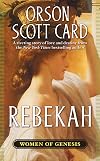
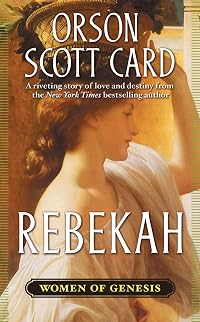
Born into a time and place where a woman speaks her mind at her own peril, and reared as a motherless child by a doting father, Rebekah grew up to be a stunning headstrong beauty. She was chosen by God for a special duty. For Rebekah must leave her fathers house to marry Isaac, the studious young son of the Patriarch Abraham. Her struggles to find her place in the family of Abraham are a true test of her faith, but through it all she finds her own relationship with God and does her best to show more serve His cause in the lives of those she loves. In Rebekah, Orson Scott Card has created an astonishing personality, complex and intriguing, and her story will engage your heart as it captures your imagination.. show less
Tags
Recommendations













Member Recommendations
anonymous user Book 1 of "The Women of Genesis"
Member Reviews
The first half of this book is fantastic! The account of Rebekah's young life and her path to womanhood and marriage is compelling and richly woven. After that...Let's just say after the first time I didn't even bother reading the second half. Rebekah becomes whiny, stubborn, fault-finding...not saying she's the only one at fault, but her husband is painted as the most cruel and stupid of men. Isaac probably wasn't perfect, but there is a reason God chose him to be a prophet, too! I just had trouble relating to anyone in the last half because I was to busy rolling my eyes at the over-villainization (a la Harry Potter no. 5...we GET it, Umbridge is a bad person...moving on...)
Rebekah is the sequel to Sarah in Orson Scott Card's Women of Genesis series focusing on the lives of the wives of the Old Testament patriarchs. To a certain extent, some embellishment of the original Rebekah story is necessary. After all, Rebekah and Isaac occupy about a half a dozen pages in Genesis, so expanding the story to a 400 page novel requires some expansion of the source material. Unfortunately, Rebekah is married to Isaac, who is one of the more passive patriarchs in Genesis, and who seems to exist mostly to be tied up for sacrifice by his father, and duped by his younger son Jacob. As a result, Card has little to work with.
The main problem Card has is that the stories that Isaac is involved in are, if taken literally, show more examples of what can only be described as fairly warped morality. In the first, Abraham is commanded by God to sacrifice Isaac, which he sets about doing only to be stopped at the last minute by an angel. In the second, Jacob, Isaacs's younger son, with the help of his mother Rebekah, dupes an elderly and blind Isaac into giving him his older brother Esau's inheritance and blessing. Abraham, willing to kill his own son, and Jacob, who lies to his father, are both presented as being morally good. Although Abraham at least has the somewhat defensible position that God commanded his actions, the moral basis for Jacob's deception is unclear in the original text. Jacob's deception is made even more morally dubious in Genesis due to the fact that there seems to be little other than greed which motivates his actions: the inheritance he is given is basically Isaac's wealth and authority. Card solves these problems by inventing a heritable priesthood for the Hebrews, and adding a series of family conflicts.
The heritable priesthood was established in Sarah, to give a reason for Abraham to be treated as an equal by various kings and nobles of the era. In Rebekah, the priesthood becomes the bone of contention between Abraham and Isaac, and later between Isaac, Esau and Jacob. In both conflicts, Rebekah is stuck in the middle. However, Rebekah doesn't become embroiled in Abraham's family conflicts until well into the book. The first portion of the book is spent establishing the dysfunctional nature of her childhood living in her father Bethuel's household. Since no information is given in Genesis about Bethuel other than the fact that he is Rebekah and Laban's father and Abraham's nephew, Card has a blank page to work with. He fills in this page with a family torn apart by internal dissension, as it turns out that while Rebekah had been told her mother died as a child, the real story is that Rebekah's mother was turned out by Bethuel as an idol worshipper. In addition, Bethuel is stricken deaf and Rebekah and Laban must learn to read and write in order to communicate with him. Her father's disability and mother's absence forces Rebekah to assume control over the women of the household, giving her authority far beyond what would be expected for a girl her age.
Card elects to have Rebekah embarrassed by her attractive appearance, and wear a veil as a symbol of her independence (a story element not found in Genesis). This is spurred by an incident where a smitten and spurned servant boy begins writing scurrilous things about Rebekah, and when he is found out, Bethuel banishes him. Apparently, centuries of enforced oppression of women began with Rebekah wanting to hide her face because the men around her will do silly things if allowed to gaze upon her beauty. Eventually, Rebekah's parents reconcile due to some deception on her mother's part, and Rebekah's faith is only reinforced by her mother's fumbling attempts to control her father's household.
Tying the story back into Genesis, Abraham's servant Eliezer comes across Rebekah at a well and she gives him and his animals water. Apparently he had prayed for a sign from God in the form of a girl who would do this, which would indicate this was the woman for him to bring home for Isaac to marry. It turns out that God's signs are pretty run-of-the-mill happenings. It also turns out that Rebekah, who instigates the deception of Isaac by Jacob, was specially chosen by God to be Isaac's wife, meaning, it seems, that the deception was divinely inspired.
Rebekah moves from a household in which her father cast out his wife and lied to his children, and her mother deceives her father into remarrying her and then undermining his authority, to one that is just as dysfunctional. Abraham is transformed from the wise and virtually infallible patriarch of Sarah into a bitter and somewhat mean spirited old man. Isaac, still stung by his father's choice to obey God's command to sacrifice him, feels himself unworthy of the heritable priesthood, even though he clearly loves studying the writings that form the basis of that inheritance. Isaac also lives in the shadow of his more manly older half-brother Ishmael, apparently thinking his father should have gone ahead with the sacrifice so Ishmael could have been given the birthright. This father-son dynamic, coupled with the introduction of Abraham's somewhat overbearing concubine Keturah is the world into which Rebekah steps as a teen bride.
One of the odd side effects of making the priesthood a heritable "birthright" is that Card appears to demote Abraham's second wife (as she is identified in the Old Testament) Keturah from wife to concubine. Presumably this is to prevent there being any question as to whether Isaac should inherit the priesthood rather than one of Keturah's many sons (who are thus disqualified from inheriting on the same basis that Ishmael is disqualified from inheriting, as they were not born to Abraham's wife). In other words, in order to make the story palatable, Card is forced to make a change that alters actual scripture. In addition, there is no indication that Isaac either had a strained relationship with Abraham, or was jealous of Ishmael, or considered himself in any way to be unmanly in comparison to his various half-brothers. Once again, due to the paucity of the source material, Card is forced to cut from whole cloth, and he does so to try to make Jacob's deception palatable.
All of these dysfunctional family relationships are to explain why Abraham and Isaac both dote upon the athletic but intellectually uncurious Esau and neglect his studious and thoughtful younger brother Jacob. Abraham favors Esau because he doesn't want an heir who is wimpy like Isaac, and Isaac favors Esau because he believes himself to be unworthy compared to Ishmael. The prophecy contained in the Old Testament that essentially says that Jacob will rule over Esau is given as a vision to Rebekah, and although both Abraham and Isaac recognize it as divinely granted, they take it as a warning of something to be avoided. While Isaac's distrust of God may be somewhat justified, Abraham's behavior hardly seems like the reaction of a prophet so devoted to God he would sacrifice his own son. The story as framed by Card makes clear that Esau is entirely unsuited to taking the birthright, a judgment reinforced by God's prophecy, which makes the fact that Abraham and Isaac are so devoted to making sure he gets it seem bizarre. In many ways, one has to question the judgment of the two prophets, which seems to me to undermine their authority and the value of the scriptures rather than reinforcing them. If God picked dullards like the Abraham and Isaac portrayed in this book, then God must have had a pretty weak pool of applicants to choose from.
As a side note, it seems to me like the story of Esau and Jacob should be read allegorically: Esau is a hunter, while Jacob is a shepherd. Esau represents an older, more primitive way of life for the Hebrews, while Jacob represents a more modern (for the time the books were written) way of life. Isaac's blessing of the younger, but more modern way of life could be construed as symbolic of shedding the older nomadic hunter-gatherer lifestyle for a lifestyle centered around herding and farming. In this light, bypassing Esau makes sense, and has an almost inevitable air about it. On the other hand, if, as Card does, one assumes that Esau and Jacob are actual brothers rather than symbols of a way of life, then Jacob seems to be a conniving sneak, and hardly the sort of man one would think would be chosen as a prophet of God.
And this is the central problem Card must deal with. The story of Jacob's deception of Isaac, if taken at face value in the Old Testament, makes Jacob a thief and a liar (and based on the text of the Old Testament, a person who would lie and steal to obtain herds of sheep and other mundane possessions, in other words, someone who would lie and steal out of mere greed). This, of course, will not do, as he is also supposed to be a prophet of God and thus a source of moral authority. So Card intertwines the two invented themes of the book - the heritable priesthood and the dysfunctional family relationships - and attempts to make Jacob's unpalatable behavior not merely justified, but morally correct.
The inheritance that the virtuous Jacob is set upon obtaining is not the herds and wealth of Isaac, but rather the priesthood and the documents that go with it. He is not motivated by greed, but rather fears for the status of the birthright should Esau, who cares nothing for learning or scholarship or obedience to God, obtain the priesthood. Esau's sale of the birthright to Jacob for a meal is cast in this rendition as a warning against how little Esau would care for it should it come into his hands. Esau is not only unsuited to caring for the priesthood, he marries two non-Hebrew women who are idol worshipers. Of course, Isaac, who favors Esau over Jacob, refuses to see the dangers posed by Esau despite it being written in big brightly colored letters, making him seem to be a fairly dim bulb. Rebekah and Jacob are cast as virtuous protectors of God's message, plotting to keep an obstinate Isaac from handing over this divine gift to an obviously unsuited candidate. In fact, after the deception is complete, Isaac finally comes to his senses and realizes that Jacob and Rebekah were completely correct to deceive him and that the birthright should thenceforth be handed down to the eldest worthy son (one wonders if this had been the rule a generation earlier would it have healed Isaac's wounded relationship with his father if Abraham had chosen to give him the birthright, rather than it being handed to Isaac by accident of birth).
In one sense, the way Card makes Jacob's deception seem necessary and correct is a testament to his skills as a story teller. On the other hand, the fact that he has to go to such lengthy contortions to do so reveals the paucity of the source material. In a way, Isaac is one of the least interesting characters in the Old Testament. God does not promise Isaac will be the father of many nations, as Abraham is, nor is he given a vision of a ladder to heaven, as Jacob is. Many times in Card's story Isaac protests that he will be remembered as a caretaker of the holy books, standing in between more significant prophets, and despite Rebekah's protestations to the contrary, that is more or less Isaac's place in Genesis. The things Isaac is credited with doing: digging wells, moving about to avoid disputes over those wells, and so on, seem fairly mundane, and this is reflected in Card's treatment of him. The one divine vision associated with Isaac, the prophecy of Jacob and Esau, is handed to Rebekah.
And once again, the story seems to assume the correctness of belief in the God of Abraham without demonstrating any actual basis for that conclusion. As in Sarah, the characters believe themselves to be divinely inspired at times, they attribute a "feeling of correctness" to some of their actions and ideas, which they assert is evidence of God. But there is no indication that this feeling is actually a sign from God, nor does the story explain why someone who believes in, for example, Ba'al, could not have a similar feeling of rightness about something they do. The story also makes a big show of condemning idol worshipers, but one wonders what the source of this condemnation is. The story takes place before the Egyptian bondage, and therefore before the Ten Commandments are laid down (and thus before the commandment to make no graven images). The fact that condemning idolatry looms so large in the framing of the story (forming the basis for Rebekah's broken family, and one of the key elements disqualifying Esau from the birthright) makes the source of this condemnation critical. And yet this appears to be something simply added to Genesis by Card. In addition, as in Sarah, Card feels the need to prop up scripture by adding some modern astronomy to the text, saying God revealed to Abraham and Isaac the true nature of the stars. Effectively, Card has to create so much to make the story work and prop up the prophetic credentials of the two patriarchs, that one is left wondering whether the original story of Isaac and Rebekah is persuasive or valuable.
In the end, the weakness of the original material coupled with Card's invention of families of unpleasant characters sniping at one another makes the story drag. To try to make Jacob's deception morally justified, Card has to make Abraham and then Isaac into fools, which seems to be a direct betrayal of the source material. With these glaring weaknesses, not even Card's obvious love of the subject matter and relatively deft storytelling can make this more than an average novel.
This review has also been posted to my blog Dreaming About Other Worlds. show less
The main problem Card has is that the stories that Isaac is involved in are, if taken literally, show more examples of what can only be described as fairly warped morality. In the first, Abraham is commanded by God to sacrifice Isaac, which he sets about doing only to be stopped at the last minute by an angel. In the second, Jacob, Isaacs's younger son, with the help of his mother Rebekah, dupes an elderly and blind Isaac into giving him his older brother Esau's inheritance and blessing. Abraham, willing to kill his own son, and Jacob, who lies to his father, are both presented as being morally good. Although Abraham at least has the somewhat defensible position that God commanded his actions, the moral basis for Jacob's deception is unclear in the original text. Jacob's deception is made even more morally dubious in Genesis due to the fact that there seems to be little other than greed which motivates his actions: the inheritance he is given is basically Isaac's wealth and authority. Card solves these problems by inventing a heritable priesthood for the Hebrews, and adding a series of family conflicts.
The heritable priesthood was established in Sarah, to give a reason for Abraham to be treated as an equal by various kings and nobles of the era. In Rebekah, the priesthood becomes the bone of contention between Abraham and Isaac, and later between Isaac, Esau and Jacob. In both conflicts, Rebekah is stuck in the middle. However, Rebekah doesn't become embroiled in Abraham's family conflicts until well into the book. The first portion of the book is spent establishing the dysfunctional nature of her childhood living in her father Bethuel's household. Since no information is given in Genesis about Bethuel other than the fact that he is Rebekah and Laban's father and Abraham's nephew, Card has a blank page to work with. He fills in this page with a family torn apart by internal dissension, as it turns out that while Rebekah had been told her mother died as a child, the real story is that Rebekah's mother was turned out by Bethuel as an idol worshipper. In addition, Bethuel is stricken deaf and Rebekah and Laban must learn to read and write in order to communicate with him. Her father's disability and mother's absence forces Rebekah to assume control over the women of the household, giving her authority far beyond what would be expected for a girl her age.
Card elects to have Rebekah embarrassed by her attractive appearance, and wear a veil as a symbol of her independence (a story element not found in Genesis). This is spurred by an incident where a smitten and spurned servant boy begins writing scurrilous things about Rebekah, and when he is found out, Bethuel banishes him. Apparently, centuries of enforced oppression of women began with Rebekah wanting to hide her face because the men around her will do silly things if allowed to gaze upon her beauty. Eventually, Rebekah's parents reconcile due to some deception on her mother's part, and Rebekah's faith is only reinforced by her mother's fumbling attempts to control her father's household.
Tying the story back into Genesis, Abraham's servant Eliezer comes across Rebekah at a well and she gives him and his animals water. Apparently he had prayed for a sign from God in the form of a girl who would do this, which would indicate this was the woman for him to bring home for Isaac to marry. It turns out that God's signs are pretty run-of-the-mill happenings. It also turns out that Rebekah, who instigates the deception of Isaac by Jacob, was specially chosen by God to be Isaac's wife, meaning, it seems, that the deception was divinely inspired.
Rebekah moves from a household in which her father cast out his wife and lied to his children, and her mother deceives her father into remarrying her and then undermining his authority, to one that is just as dysfunctional. Abraham is transformed from the wise and virtually infallible patriarch of Sarah into a bitter and somewhat mean spirited old man. Isaac, still stung by his father's choice to obey God's command to sacrifice him, feels himself unworthy of the heritable priesthood, even though he clearly loves studying the writings that form the basis of that inheritance. Isaac also lives in the shadow of his more manly older half-brother Ishmael, apparently thinking his father should have gone ahead with the sacrifice so Ishmael could have been given the birthright. This father-son dynamic, coupled with the introduction of Abraham's somewhat overbearing concubine Keturah is the world into which Rebekah steps as a teen bride.
One of the odd side effects of making the priesthood a heritable "birthright" is that Card appears to demote Abraham's second wife (as she is identified in the Old Testament) Keturah from wife to concubine. Presumably this is to prevent there being any question as to whether Isaac should inherit the priesthood rather than one of Keturah's many sons (who are thus disqualified from inheriting on the same basis that Ishmael is disqualified from inheriting, as they were not born to Abraham's wife). In other words, in order to make the story palatable, Card is forced to make a change that alters actual scripture. In addition, there is no indication that Isaac either had a strained relationship with Abraham, or was jealous of Ishmael, or considered himself in any way to be unmanly in comparison to his various half-brothers. Once again, due to the paucity of the source material, Card is forced to cut from whole cloth, and he does so to try to make Jacob's deception palatable.
All of these dysfunctional family relationships are to explain why Abraham and Isaac both dote upon the athletic but intellectually uncurious Esau and neglect his studious and thoughtful younger brother Jacob. Abraham favors Esau because he doesn't want an heir who is wimpy like Isaac, and Isaac favors Esau because he believes himself to be unworthy compared to Ishmael. The prophecy contained in the Old Testament that essentially says that Jacob will rule over Esau is given as a vision to Rebekah, and although both Abraham and Isaac recognize it as divinely granted, they take it as a warning of something to be avoided. While Isaac's distrust of God may be somewhat justified, Abraham's behavior hardly seems like the reaction of a prophet so devoted to God he would sacrifice his own son. The story as framed by Card makes clear that Esau is entirely unsuited to taking the birthright, a judgment reinforced by God's prophecy, which makes the fact that Abraham and Isaac are so devoted to making sure he gets it seem bizarre. In many ways, one has to question the judgment of the two prophets, which seems to me to undermine their authority and the value of the scriptures rather than reinforcing them. If God picked dullards like the Abraham and Isaac portrayed in this book, then God must have had a pretty weak pool of applicants to choose from.
As a side note, it seems to me like the story of Esau and Jacob should be read allegorically: Esau is a hunter, while Jacob is a shepherd. Esau represents an older, more primitive way of life for the Hebrews, while Jacob represents a more modern (for the time the books were written) way of life. Isaac's blessing of the younger, but more modern way of life could be construed as symbolic of shedding the older nomadic hunter-gatherer lifestyle for a lifestyle centered around herding and farming. In this light, bypassing Esau makes sense, and has an almost inevitable air about it. On the other hand, if, as Card does, one assumes that Esau and Jacob are actual brothers rather than symbols of a way of life, then Jacob seems to be a conniving sneak, and hardly the sort of man one would think would be chosen as a prophet of God.
And this is the central problem Card must deal with. The story of Jacob's deception of Isaac, if taken at face value in the Old Testament, makes Jacob a thief and a liar (and based on the text of the Old Testament, a person who would lie and steal to obtain herds of sheep and other mundane possessions, in other words, someone who would lie and steal out of mere greed). This, of course, will not do, as he is also supposed to be a prophet of God and thus a source of moral authority. So Card intertwines the two invented themes of the book - the heritable priesthood and the dysfunctional family relationships - and attempts to make Jacob's unpalatable behavior not merely justified, but morally correct.
The inheritance that the virtuous Jacob is set upon obtaining is not the herds and wealth of Isaac, but rather the priesthood and the documents that go with it. He is not motivated by greed, but rather fears for the status of the birthright should Esau, who cares nothing for learning or scholarship or obedience to God, obtain the priesthood. Esau's sale of the birthright to Jacob for a meal is cast in this rendition as a warning against how little Esau would care for it should it come into his hands. Esau is not only unsuited to caring for the priesthood, he marries two non-Hebrew women who are idol worshipers. Of course, Isaac, who favors Esau over Jacob, refuses to see the dangers posed by Esau despite it being written in big brightly colored letters, making him seem to be a fairly dim bulb. Rebekah and Jacob are cast as virtuous protectors of God's message, plotting to keep an obstinate Isaac from handing over this divine gift to an obviously unsuited candidate. In fact, after the deception is complete, Isaac finally comes to his senses and realizes that Jacob and Rebekah were completely correct to deceive him and that the birthright should thenceforth be handed down to the eldest worthy son (one wonders if this had been the rule a generation earlier would it have healed Isaac's wounded relationship with his father if Abraham had chosen to give him the birthright, rather than it being handed to Isaac by accident of birth).
In one sense, the way Card makes Jacob's deception seem necessary and correct is a testament to his skills as a story teller. On the other hand, the fact that he has to go to such lengthy contortions to do so reveals the paucity of the source material. In a way, Isaac is one of the least interesting characters in the Old Testament. God does not promise Isaac will be the father of many nations, as Abraham is, nor is he given a vision of a ladder to heaven, as Jacob is. Many times in Card's story Isaac protests that he will be remembered as a caretaker of the holy books, standing in between more significant prophets, and despite Rebekah's protestations to the contrary, that is more or less Isaac's place in Genesis. The things Isaac is credited with doing: digging wells, moving about to avoid disputes over those wells, and so on, seem fairly mundane, and this is reflected in Card's treatment of him. The one divine vision associated with Isaac, the prophecy of Jacob and Esau, is handed to Rebekah.
And once again, the story seems to assume the correctness of belief in the God of Abraham without demonstrating any actual basis for that conclusion. As in Sarah, the characters believe themselves to be divinely inspired at times, they attribute a "feeling of correctness" to some of their actions and ideas, which they assert is evidence of God. But there is no indication that this feeling is actually a sign from God, nor does the story explain why someone who believes in, for example, Ba'al, could not have a similar feeling of rightness about something they do. The story also makes a big show of condemning idol worshipers, but one wonders what the source of this condemnation is. The story takes place before the Egyptian bondage, and therefore before the Ten Commandments are laid down (and thus before the commandment to make no graven images). The fact that condemning idolatry looms so large in the framing of the story (forming the basis for Rebekah's broken family, and one of the key elements disqualifying Esau from the birthright) makes the source of this condemnation critical. And yet this appears to be something simply added to Genesis by Card. In addition, as in Sarah, Card feels the need to prop up scripture by adding some modern astronomy to the text, saying God revealed to Abraham and Isaac the true nature of the stars. Effectively, Card has to create so much to make the story work and prop up the prophetic credentials of the two patriarchs, that one is left wondering whether the original story of Isaac and Rebekah is persuasive or valuable.
In the end, the weakness of the original material coupled with Card's invention of families of unpleasant characters sniping at one another makes the story drag. To try to make Jacob's deception morally justified, Card has to make Abraham and then Isaac into fools, which seems to be a direct betrayal of the source material. With these glaring weaknesses, not even Card's obvious love of the subject matter and relatively deft storytelling can make this more than an average novel.
This review has also been posted to my blog Dreaming About Other Worlds. show less
This is one of Card's "Women of Genesis" series, his historical novels about Biblical figures. It's not at all bad, but I wouldn't say it was Card's greatest work. These books were primarily written to illustrate Card's religious faith, but they do a good job of creating characters that bridge the gap between being historically believable and contemporarily accessible.
Interestingly, in the book the "birthright" of Abraham is not just a collection of blessings (as I have always read it) but the actual physical guardianship of holy, Biblical writings. Card works in a lot about the right to literacy. (Against Abraham and Isaac's will, Rebekah is literate and wishes to read the holy writings).
She's portrayed as a both strong and show more strong-willed woman, able to competently manage people, but also rigid and intolerant, with an unbending opinion of what she thinks is right, especially in religious matters. She doesn't hesitate to even criticize the patriarch in religious and family matters, and has no sympathy for religious practices other than her own. Card, disturbingly, but not surprisingly, seems to think her intolerance is pretty much a good thing, seeing as, of course, in his opinion, she is Right and the worshipers of Asherah and Baal are Wrong. I don't see things that way (and I totally disagree with the whole Importance of Raising Your Children in the True Faith theme which is a big part of Rebekah's life), so it made his Rebekah a very unsympathetic character to me.
Card's very idealized view of How Families Ought To Be is also a big part of the book, and there's a lot of a message that conflicts between people in families are often based on simple misunderstandings and everyone would get along if they just put more effort into understanding each other. That would be nice - but it's often also not true.
Finally, one hard-to-avoid weakness of the book is that, in this story, the conflict between Rebekah's sons, Jacob and Esau, and Jacob's 'theft' of the firstborn Esau's birthright is originally the main focus and most interesting part of the story. Concentrating on Rebekah as protagonist in this part of the book makes it slightly awkward, when the main drama is happening between other characters. show less
Interestingly, in the book the "birthright" of Abraham is not just a collection of blessings (as I have always read it) but the actual physical guardianship of holy, Biblical writings. Card works in a lot about the right to literacy. (Against Abraham and Isaac's will, Rebekah is literate and wishes to read the holy writings).
She's portrayed as a both strong and show more strong-willed woman, able to competently manage people, but also rigid and intolerant, with an unbending opinion of what she thinks is right, especially in religious matters. She doesn't hesitate to even criticize the patriarch in religious and family matters, and has no sympathy for religious practices other than her own. Card, disturbingly, but not surprisingly, seems to think her intolerance is pretty much a good thing, seeing as, of course, in his opinion, she is Right and the worshipers of Asherah and Baal are Wrong. I don't see things that way (and I totally disagree with the whole Importance of Raising Your Children in the True Faith theme which is a big part of Rebekah's life), so it made his Rebekah a very unsympathetic character to me.
Card's very idealized view of How Families Ought To Be is also a big part of the book, and there's a lot of a message that conflicts between people in families are often based on simple misunderstandings and everyone would get along if they just put more effort into understanding each other. That would be nice - but it's often also not true.
Finally, one hard-to-avoid weakness of the book is that, in this story, the conflict between Rebekah's sons, Jacob and Esau, and Jacob's 'theft' of the firstborn Esau's birthright is originally the main focus and most interesting part of the story. Concentrating on Rebekah as protagonist in this part of the book makes it slightly awkward, when the main drama is happening between other characters. show less
It's a little strange reading about legendary Bible characters as deeply flawed human beings. But these are still some of my favorite Bible stories, due in part to how well OSC brings the people and events to life.
Some thoughts - I liked the fact that men who are prophets can be fallible but they can still be inspired. Abraham & Isaac made poor decisions because of their personal failings and weaknesses, but God could still use them at key moments. I also thought Mr. Card made an interesting observation when Isaac described his father when his mother was still alive. In effect, he said that his father was a different, better man. I also thought the whole exploration of deception was interesting. Fear often drives us to do things we are opposed to in theory. I still can't decide if the deceptions that were made were overall positive or negative. Finally, the impact that poor self-image can have on a marriage was also an interesting thing to see show more played out. show less
Out of the three books in this series (there's hopefully a fourth coming eventually), this book was my least favorite. It was still a pretty good book, but the second half ended up being rather tiresome.
As plot tools Card creates a contentious relationship between Rebekah, Isaac, Abraham, Jacob, and Esau. It works well for the plot, especially considering that Card was bound by scripture on major points, but reading 200 pages of quarrels between the characters (3 of whom were prophets and one of whom was the main character) got old and became somewhat strenuous to read. In all fairness, Card's use of these plot tools was quite effective, it made the (otherwise slightly confusing) scriptural account quite plausible, but that doesn't make show more it any more fun to read about the tension and anger in what could otherwise be imagined as a 'happy' family life of prophet, his wife, and his two sons.
If nothing else, you probably won't walk away from this book thinking 'Hey, I really liked those Rebekah and Isaac characters!' It's just not going to happen. show less
As plot tools Card creates a contentious relationship between Rebekah, Isaac, Abraham, Jacob, and Esau. It works well for the plot, especially considering that Card was bound by scripture on major points, but reading 200 pages of quarrels between the characters (3 of whom were prophets and one of whom was the main character) got old and became somewhat strenuous to read. In all fairness, Card's use of these plot tools was quite effective, it made the (otherwise slightly confusing) scriptural account quite plausible, but that doesn't make show more it any more fun to read about the tension and anger in what could otherwise be imagined as a 'happy' family life of prophet, his wife, and his two sons.
If nothing else, you probably won't walk away from this book thinking 'Hey, I really liked those Rebekah and Isaac characters!' It's just not going to happen. show less
Starts a bit slow, and I really wonder if women in Rebekah's age really had as much power to affect their destinies as Rebekah seems to. Still, Card does a great job of bringing the simple Bible story to life, and even the religious aspects are lightly and delicately handled, unlike in some other series (where such delicacy is left behind, so to speak).
Rebekah is quite nice in the early part of Card's rendition, as in the Bible, but where that good book shows her and son Jacob growing up to be sort of, well, jerks, Card keeps his main characters as unadulterated good guys. Jacob especially comes across as a goody-two-shoes. It might have made for a better story if Card had attempted some more complex characterization. Nevertheless an show more excellent read if you have interest in the time and place. show less
Rebekah is quite nice in the early part of Card's rendition, as in the Bible, but where that good book shows her and son Jacob growing up to be sort of, well, jerks, Card keeps his main characters as unadulterated good guys. Jacob especially comes across as a goody-two-shoes. It might have made for a better story if Card had attempted some more complex characterization. Nevertheless an show more excellent read if you have interest in the time and place. show less
Members
- Recently Added By
Lists

Genesis in literature
47 works; 7 members
Author Information

575+ Works 214,662 Members
Orson Scott Byron Walley Card, was born in 1951 and studied theater at Brigham Young University. He received his B.A. in 1975 and his M.A. in English in 1981. He wrote plays during that time, including Stone Tables (1973) and the musical, Father, Mother, Mother and Mom (1974). A Mormon, Scott served a two-year mission in Brazil before starting show more work as a journalist in Utah. He also designed games at Lucas Film Games, 1989-92. He is best known for his science fiction novels, including the popular Ender series. Well known titles include A Planet Called Treason (1979), Treasure Box (1996), and Heartfire (1998). He has also written the guide called How to Write Science Fiction and Fantasy (1990). His novel Ender's Game and its sequel Speaker for the Dead, both won Hugo and Nebula awards, making Card the only author to win both prizes in consecutive years. His titles Shadows in Flight, Ruins and Ender's Game made The New York Times Best Seller List. He is also the author of The First Formic War Series, which includes the titles Earth Unaware, Earth Afire, and Earth Awakens. (Bowker Author Biography) show less
Some Editions
Series

Work Relationships
Is contained in
Common Knowledge
- Canonical title
- Rebekah
- Original publication date
- 2001-12
- People/Characters
- Rebekah, wife of Isaac
- Dedication
- To Zina
alight with all the graces
you are the joy of this old man's life - First words
- Rebekah's mother died a few days after she was born, but she never thought of this as something that happened in her childhood.
- Last words
- (Click to show. Warning: May contain spoilers.)And when we are both dead, and our bodies are in the ground, I will still be at home with him forever.
Classifications
Statistics
- Members
- 836
- Popularity
- 33,022
- Reviews
- 16
- Rating
- (3.70)
- Languages
- English
- Media
- Paper, Audiobook, Ebook
- ISBNs
- 10
- ASINs
- 6