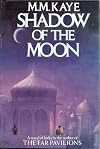
Shadow of the Moon
by M. M. Kaye
On This Page
Description
"The story of Winter de Ballesteros, a beautiful English heiress who has come to India to be married. It is also the tale of Captain Alex Randall, her escort and protector, who knows that Winter's husband-to-be has become a debauched wreck of a man. When India bursts into flaming hatreds and bitter bloodshed during the dark days of the Mutiny, Alex and Winter are thrown unwillingly together in the brutal and urgent struggle for survival"--From back cover.Tags
Recommendations































Member Reviews
M. M. Kaye is my new standard for historical fiction and I'm a bit forlorn that with Shadow of the Moon, I've finished the last of her major novels. I enjoy her whodunits, but The Far Pavilions, Trade Wind, and Shadow of the Moon are unforgettable, even monumental reading experiences.
In The Far Pavilions, the 1857 Sepoy Mutiny is a passing, though terrifying, event in the hero's childhood. But here, Kaye makes that grisly uprising the focal point of the story. Winter de Ballesteros is a mixed child of English and Spanish descent whose father's noble family has made its home in India. After her parents' death she is shipped off to England where she becomes the ugly duckling of her mother's side. When she is 11, an unscrupulous distant show more relative, Conway Barton, convinces her grandfather to agree to their betrothal. The purpose, of course, is Winter's large fortune. Conway spends the next six years in India as Commissioner of Lunjore, degrading quickly into heavy drinking, women, and drugs. When Winter comes of age, he sends Captain Alex Randall to fetch her. Winter, who remembers Conway as a hero who will rescue her from her unkind relatives, refuses to listen to Alex's warning and sails for India. I'll stop there to avoid revealing any real spoilers.
Kaye takes her time. This is a 700-page commitment and there is no rush as she introduces the characters, tells their backstories, and effortlessly paints the historical period. But once you're in the grip of the story, there is no escape. Beautifully written, with never a word out of place or even the hint of an anachronism, the tale sweeps you along. A small dash of the supernatural—a recurring theme in Kaye's stories—spices the action nicely. My only criticism, and the reason half a star is knocked off, is a very improbable sex scene (it's tasteful and not explicit, but the circumstances surrounding it are a bit hard to believe, in my opinion).
The novel is filled with fascinating people. Yes, Winter is strikingly beautiful and Alex is very handsome. We can forgive them that convention because they are otherwise truly believable, human characters whom we come to love. Other characters are equally well drawn: Conway, Niaz, Lottie, Carlyon, Lou Cottar, and so many others.
Kaye, who clearly loves India, doesn't shrink from describing the unthinkable atrocities committed during this rebellion, especially against women and children (things I will never forget, I saw them so clearly in my mind's eye). But alongside the horrors perpetrated by the rebels, there are a handful of faithful Indian sepoys, retainers, and ayahs who die trying to protect their feringhi employers. All they had to do to survive was join their people against the whites or even just disappear from the scene, but many didn't. These nameless heroes are remembered here and it gives me something to balance against the awful evils that took place.
What else can I say? Shadow of the Moon is the kind of book you stay up till the wee hours to finish. And then you can't start your next book because you're not done thinking about this one yet. Stunning and splendid! show less
In The Far Pavilions, the 1857 Sepoy Mutiny is a passing, though terrifying, event in the hero's childhood. But here, Kaye makes that grisly uprising the focal point of the story. Winter de Ballesteros is a mixed child of English and Spanish descent whose father's noble family has made its home in India. After her parents' death she is shipped off to England where she becomes the ugly duckling of her mother's side. When she is 11, an unscrupulous distant show more relative, Conway Barton, convinces her grandfather to agree to their betrothal. The purpose, of course, is Winter's large fortune. Conway spends the next six years in India as Commissioner of Lunjore, degrading quickly into heavy drinking, women, and drugs. When Winter comes of age, he sends Captain Alex Randall to fetch her. Winter, who remembers Conway as a hero who will rescue her from her unkind relatives, refuses to listen to Alex's warning and sails for India. I'll stop there to avoid revealing any real spoilers.
Kaye takes her time. This is a 700-page commitment and there is no rush as she introduces the characters, tells their backstories, and effortlessly paints the historical period. But once you're in the grip of the story, there is no escape. Beautifully written, with never a word out of place or even the hint of an anachronism, the tale sweeps you along. A small dash of the supernatural—a recurring theme in Kaye's stories—spices the action nicely. My only criticism, and the reason half a star is knocked off, is a very improbable sex scene (it's tasteful and not explicit, but the circumstances surrounding it are a bit hard to believe, in my opinion).
The novel is filled with fascinating people. Yes, Winter is strikingly beautiful and Alex is very handsome. We can forgive them that convention because they are otherwise truly believable, human characters whom we come to love. Other characters are equally well drawn: Conway, Niaz, Lottie, Carlyon, Lou Cottar, and so many others.
Kaye, who clearly loves India, doesn't shrink from describing the unthinkable atrocities committed during this rebellion, especially against women and children (things I will never forget, I saw them so clearly in my mind's eye). But alongside the horrors perpetrated by the rebels, there are a handful of faithful Indian sepoys, retainers, and ayahs who die trying to protect their feringhi employers. All they had to do to survive was join their people against the whites or even just disappear from the scene, but many didn't. These nameless heroes are remembered here and it gives me something to balance against the awful evils that took place.
What else can I say? Shadow of the Moon is the kind of book you stay up till the wee hours to finish. And then you can't start your next book because you're not done thinking about this one yet. Stunning and splendid! show less
I love historical fiction, especially when there's a bit of romance. Shadow of the Moon may just be my very favorite book in this genre, one I've read and reread many times. It's a book that has earned a place atop a list that includes Diana Gabaldon's Outlander series, Susan Howatch's great retellings of English and Roman history, Sharon Kay Penman's English and Welsh series, as well as M.M. Kaye's more famous work, The Far Pavilions.
Historical fiction doesn't venture far east often, but Shadow of the Moon is set in India during the Indian Mutiny of 1857. Winter de Ballesteros is the daughter of privilege though she never realized it growing up. Born in India, which she idealized, she was sent to England to be raised and only wants to show more return to the land of her dreams. Her ticket is marriage to Conway Barton, a betrothal arranged when she was very young. Alex Randall, Conway's attache, is sent to retrieve her since the ensuing years have not been kind to Conway, who is only interested in Winter's fortune.
Ms. Kaye is British but was born in India and heard stories of the rebellion from her family's servants. She, in my opinion, treats the subject with care and is fairly even-handed with the causes though atrocities were on both sides. The various religions and sects in India were hard for anyone to deal with, but the British too often viewed them through Western eyes and imposed restrictions without understanding the implications for the people they ruled.
Her writing is lyrical with the descriptions of India, the scents and colors of flora and fauna. The romance is not typical; both Winter and Alex struggle against it before finding love. Many historical figures are referenced: Sir Henry Lawrence, his brother John, General John Nicholson, William Hodson, and others of the East India company and army, as well as Bahadur Shah and Nana Sahib.
It's a wonderful story, full of action and drama, sadness and joy, and one to be read again and again. show less
Historical fiction doesn't venture far east often, but Shadow of the Moon is set in India during the Indian Mutiny of 1857. Winter de Ballesteros is the daughter of privilege though she never realized it growing up. Born in India, which she idealized, she was sent to England to be raised and only wants to show more return to the land of her dreams. Her ticket is marriage to Conway Barton, a betrothal arranged when she was very young. Alex Randall, Conway's attache, is sent to retrieve her since the ensuing years have not been kind to Conway, who is only interested in Winter's fortune.
Ms. Kaye is British but was born in India and heard stories of the rebellion from her family's servants. She, in my opinion, treats the subject with care and is fairly even-handed with the causes though atrocities were on both sides. The various religions and sects in India were hard for anyone to deal with, but the British too often viewed them through Western eyes and imposed restrictions without understanding the implications for the people they ruled.
Her writing is lyrical with the descriptions of India, the scents and colors of flora and fauna. The romance is not typical; both Winter and Alex struggle against it before finding love. Many historical figures are referenced: Sir Henry Lawrence, his brother John, General John Nicholson, William Hodson, and others of the East India company and army, as well as Bahadur Shah and Nana Sahib.
It's a wonderful story, full of action and drama, sadness and joy, and one to be read again and again. show less
I read M.M. Kaye's The Far Pavilions ages ago and so I was delighted to find another of her novels at a used bookstore. This lengthy novel is centered around the Sepoy Rebellion and often the romance between Alex Randall and Winter de Ballesteros sometimes takes a backseat to a tale of British complacence on the eve of a rebellion. Plenty of this novel could be considered problematic in terms of colonialism and I will say I liked the character of Kishan Prasad more than the author intended. Overall, an interesting read.
MM Kaye was born in Simla, India, and came from a long line of people who served the British Raj. Several of her novels are set in India, most notably, of course, The Far Pavilions. Set against the backdrop of the Sepoy Rebellion of 1857, Shadow of the Moon is the story of the love between two British subjects with close ties to India: half-Spanish Winter de Ballesteros and Captain Alex Randall. The story begins properly when Winter, who spent her younger years in India and England, goes back to India to marry Conway Barton, Commissioner of Lunjore, who turns out to be obese and a drunkard. Her marriage doesn’t turn out to be the romance she has envisioned, however, but that part of the story takes a backseat to the larger events show more going on.
To be sure, this is a romance-type of novel, but it’s subtle. Winter isn’t your typical English rose, and her liveliness is captivating. Alex is harder to get to know, because he’s often inscrutable. Nevertheless, he’s a long-range planner, able to understand exactly what needs to be done. Because of the time he’s spent in India, he understands the way that the natives think; but he’s not necessarily sympathetic towards them. Like the rest of his compatriots, he believes in the rule of the British Raj—but he differs in several respects. Alex is less blind to the turmoil going on around him than the government officials he serves.
I found Alex to be a little less believable; for example, I found it hard to believe that he was able to predict the exact time of year that the Sepoy rebellion was going to happen, as well as the exact mechanism that would set it off—regardless of how well he understands India and its people. Conway Barton also descends into caricature at times; for example, when the rebels storm the Residency at Lunjore (though I did find it believable that they would think him mad).
Nonetheless, I loved the period and place detail—MM Kaye had a lot of love for India, and it shows up time and again in this novel. She also doesn’t skimp on details of the rebellion and the horrible brutalities incurred against the British—not for the fait of heart. It’s tragic because along the way the reader is introduced to characters whose death is inevitable. It makes you want Alex and Winter’s fate to come out all right in the end. show less
To be sure, this is a romance-type of novel, but it’s subtle. Winter isn’t your typical English rose, and her liveliness is captivating. Alex is harder to get to know, because he’s often inscrutable. Nevertheless, he’s a long-range planner, able to understand exactly what needs to be done. Because of the time he’s spent in India, he understands the way that the natives think; but he’s not necessarily sympathetic towards them. Like the rest of his compatriots, he believes in the rule of the British Raj—but he differs in several respects. Alex is less blind to the turmoil going on around him than the government officials he serves.
I found Alex to be a little less believable; for example, I found it hard to believe that he was able to predict the exact time of year that the Sepoy rebellion was going to happen, as well as the exact mechanism that would set it off—regardless of how well he understands India and its people. Conway Barton also descends into caricature at times; for example, when the rebels storm the Residency at Lunjore (though I did find it believable that they would think him mad).
Nonetheless, I loved the period and place detail—MM Kaye had a lot of love for India, and it shows up time and again in this novel. She also doesn’t skimp on details of the rebellion and the horrible brutalities incurred against the British—not for the fait of heart. It’s tragic because along the way the reader is introduced to characters whose death is inevitable. It makes you want Alex and Winter’s fate to come out all right in the end. show less
Shadow of the Moon by M.M. Kaye is a historical fiction novel set in India and details the 1857 Sepoy Mutiny. Although this author wrote many books, she is probably most famous as the author of The Far Pavilions, which is also a historical drama set in India. In The Shadow of the Moon, the author combines adventure, romance and history effortlessly into one epic story of over 600 pages. Originally published in 1957, this is a re-read for me as I fell in love with this author’s historical novels during the 1970’s.
This is a lengthy story as the author sets the scene with many descriptions of the colonial policies of the East India Trade Company which had virtual control over the Indian sub-continent. Indian laws and practices were show more changed to British ways and this caused smouldering resentment that eventually flared into open revolt. The romantic angle of the book is the attraction between Winter de Ballesteros, the granddaughter of the Earl of Ware, and, Captain Alex Randall, who escorted her from England to India in order for her to marry her intended, the drunken, dissipated Conway Barton. This engagement took place when Barton visited England and schemed to tie the heiress to him. At the time Winter was only eleven. The scenery of India serves as a constant backdrop as the characters travel toward their destiny. When the rebellion ignites Winter and Alex are caught up in the turmoil and violence.
I believe that I admire this book even more today than I did back in the 1970’s. The author was born in India and knew that country well, but the painstaking research she did shows in the details of fashion, customs and politics of the Victorian era and the British Raj. The timeline of the mutiny is followed to the letter and she accurately guides the reader through the turbulence and violence. The romance was intense and satisfying and the adventure was engrossing. I was totally able to escape into this book and it was an excellent read. show less
This is a lengthy story as the author sets the scene with many descriptions of the colonial policies of the East India Trade Company which had virtual control over the Indian sub-continent. Indian laws and practices were show more changed to British ways and this caused smouldering resentment that eventually flared into open revolt. The romantic angle of the book is the attraction between Winter de Ballesteros, the granddaughter of the Earl of Ware, and, Captain Alex Randall, who escorted her from England to India in order for her to marry her intended, the drunken, dissipated Conway Barton. This engagement took place when Barton visited England and schemed to tie the heiress to him. At the time Winter was only eleven. The scenery of India serves as a constant backdrop as the characters travel toward their destiny. When the rebellion ignites Winter and Alex are caught up in the turmoil and violence.
I believe that I admire this book even more today than I did back in the 1970’s. The author was born in India and knew that country well, but the painstaking research she did shows in the details of fashion, customs and politics of the Victorian era and the British Raj. The timeline of the mutiny is followed to the letter and she accurately guides the reader through the turbulence and violence. The romance was intense and satisfying and the adventure was engrossing. I was totally able to escape into this book and it was an excellent read. show less
I have to say, I really loved this book. Not only a lesson of history, it was also romance so what better can a book offer. I have to admit that I have little knowledge of the India/British history and conflicts so even if a fictional historical story, I learned a great deal and the writing transported me to the streets and grand homes of India during this time period.
Star crossed lovers, the British Raj & India, what more can you want in a book? This was just an amazing book. Once the author set up her characters and story line things just cooked along -- be prepared for the last 200 pages, because you will not surface for air until it's done! We have Winter, a wealthy heiress born and orphaned in India and sent to England to be raised by mostly uncaring relatives(except for the great-grandfather). When her great-grandfather dies, she is sent at the age of 17 to join her fiancee under the care of Alex Randall, who unbeknownst to her is now a debauched, obese drunk. Alex does try to tell her, but she maintains her childhood image of her "hero" and will not listen, to her great regret.
Lots of trials show more and tribulations as our hero and heroine travel back to India, the meeting and marriage to Conway and the Sepoy rebellion, and vividly portrayed by an author who has a great knowledge and love of the country and it's history. This is not only a story of two lovers, but one of stubborn, bigoted officials hiding their heads in the sand, treachery, intrigue and the brutal way in which the rebellion played out against the British, even shocking some of their own people. As with The Far Pavilions, it is shocking to see after 150 years not much of life and politics has changed in the Far East, nor should the Europeans (or Americans now for that matter) be interfering in their life, culture and religion.
Highly recommended for any lover of historical fiction, India, or just a darn good book. This would make an awesome mini series, the sequences from the attack on the British and Alex and Winter's escape are just breathtaking. As a side note for those loooking for well written books for younger readers, this should be a good choice. Originally written in the 50's, the love scenes are quite chaste. Just be prepared for some gory, though accurate, portrayal of the violence aginst the British (including women and children) during the rebellion.
If you enjoy this book, I would also recommend Zemindar. The same topic, the Sepoy rebellion, and beautifully written. The author's prose was gorgeous, very reminiscent of Charlotte Bronte. show less
Lots of trials show more and tribulations as our hero and heroine travel back to India, the meeting and marriage to Conway and the Sepoy rebellion, and vividly portrayed by an author who has a great knowledge and love of the country and it's history. This is not only a story of two lovers, but one of stubborn, bigoted officials hiding their heads in the sand, treachery, intrigue and the brutal way in which the rebellion played out against the British, even shocking some of their own people. As with The Far Pavilions, it is shocking to see after 150 years not much of life and politics has changed in the Far East, nor should the Europeans (or Americans now for that matter) be interfering in their life, culture and religion.
Highly recommended for any lover of historical fiction, India, or just a darn good book. This would make an awesome mini series, the sequences from the attack on the British and Alex and Winter's escape are just breathtaking. As a side note for those loooking for well written books for younger readers, this should be a good choice. Originally written in the 50's, the love scenes are quite chaste. Just be prepared for some gory, though accurate, portrayal of the violence aginst the British (including women and children) during the rebellion.
If you enjoy this book, I would also recommend Zemindar. The same topic, the Sepoy rebellion, and beautifully written. The author's prose was gorgeous, very reminiscent of Charlotte Bronte. show less
Members
- Recently Added By
Lists

Historical Fiction
889 works; 91 members
Author Information

30+ Works 9,038 Members
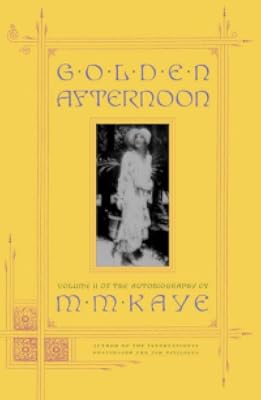
M. M. Kaye was born on August 21, 1908 in Simla, India to British parents. She wrote numerous books during her lifetime including Death Walks in Kashmir, Later than You Think, Shadow of the Moon, Trade Wind, The Far Pavilions, The Sun in the Morning, Golden Afternoon, and Enchanted Evening. She also wrote and illustrated children's books including show more The Ordinary Princess. She died on January 29, 2004 at the age of 95. (Bowker Author Biography) show less
Awards and Honors
Distinctions
Notable Lists
Work Relationships
Contains
Common Knowledge
- Original title
- Shadow of the Moon
- Original publication date
- 1957
- People/Characters
- Captain Alex Randall; Winter de Ballesteros; William Hodson; Conway Barton; Sir Henry Lawrence; Lord Carlyon (show all 11); Lou Cottar; Kishan Prasad; Mrs. Arbuthnot; Lady Emily Grantham; Sabrina Grantham
- Important places
- Lunjore, India (a fictional town in north India); Lucknow, Uttar Pradesh, India
- Important events
- British Raj (1857 | 1947); Indian Mutiny (1857-05 | 1858-06); Indian Rebellion of 1857
- Epigraph
- ...and there you can see
Our English sun, convalescent after passing
Through the valley of the shadow of the moon.
CHRISTOPHER FRY
Venus Observed - Dedication
- To
Sir John William Kaye who wrote a history of the Indian Mutiny,
Major Edward Kaye who commanded a battery at the Siege of Delhi,
my grandfather, William Kaye of the Indian Civil Service,
my father, Sir Cecil ... (show all)Kaye,
my brother, Colonel William Kaye,
and to all other men and women of my family and
of so many other British families who
served, lived in and loved India.
And to
The Lovely Land
and all her peoples,
with admiration, affection and gratitude. - First words
- "Winter"! Who ever heard of such a name?
- Last words
- (Click to show. Warning: May contain spoilers.)And it was Alex.
Classifications
- Genres
- Fiction and Literature, General Fiction, Romance, Historical Fiction
- DDC/MDS
- 823.914 — Literature & rhetoric English & Old English literatures English fiction 1900- 1901-1999 1945-1999
- LCC
- PZ4 .K233 — Language and Literature Fiction and juvenile belles lettres Fiction and juvenile belles lettres Fiction in English
- BISAC
Statistics
- Members
- 981
- Popularity
- 26,948
- Reviews
- 21
- Rating
- (4.18)
- Languages
- 10 — Danish, Dutch, English, Estonian, Finnish, French, German, Italian, Spanish, Swedish
- Media
- Paper, Audiobook, Ebook
- ISBNs
- 33
- ASINs
- 26