
On This Page
Description
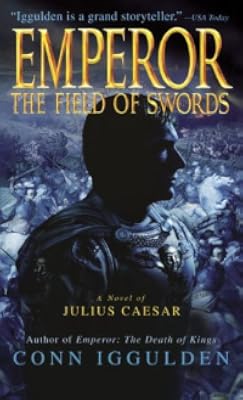
From the author of the bestselling The Dangerous Book for BoysWith his acclaimed Emperor novels, author Conn Iggulden brings a dazzling world to lifeâ??the rich, complex world of ancient Rome as seen through the eyes of one extraordinary man: Julius Caesar. Now Iggulden returns to the story of Julius Caesar and a realm that stretches from the sands of North Africa to the coast of Britain. Against this magnificent backdrop, Caesar, his first victories under his belt and a series of key show more alliances in place, makes his move toward power and gloryâ??and commands his famous legions on one of historyâ??s bloodiest and most daring military campaigns.
It is the heart of the first century B.C. For Julius Caesar, the time has come to enter the treacherous political battleground that has become Rome. Having proved his valor in the slavesâ?? revolt, Caesar is strengthened by the love and vision of a beautiful older woman, and by the sword of his loyal friend, Marcus Brutus. And when he is appointed to a new position of power, Caesar manages to do what none of the other great figures of his time could: capture the hearts of the Roman people themselves. Crushing a rebellion, bringing order to the teeming city, Caesar then makes the move that will change history. He leaves Rome for the foothills of the Alps. And with an army made in his own image, he begins a daring charge through Gaul, across the English Channel, and to the wilds of tribal Britain.
Here, in a series of cataclysmic clashes, the legend of Julius Caesar will be forged. And while Caesar and Brutus pit their livesâ??and those of their menâ??against the armies of the wilderness, their political adversaries in Rome grow at once more fearful and more formidable. So when the fighting at the dominionâ??s edge is over, the greatest danger to Julius Caesar will await him on the Tiberâ??with a man who wants Rome himself.
From the clash of armies to the heat of a womanâ??s seduction, from the thunder of battle to the orgies of pleasure and plunder that follow in a warriorâ??s wake, Emperor: The Field of Swords captures in riveting detail a world being shaped by a brilliant civilization. And in this extraordinary novel, the fate of Rome is being driven by the ambitions of a single man. A man with show less
Tags
Recommendations










Member Reviews
“The Field of Swords” did not appeal to me as much as the previous two books in the series.
Good points:
This is a fast-paced adventure yarn from the first-century BC, starring Julius Caesar and Marcus Brutus.
The battle scenes are vivid and believable. ...more
Delete
22 hours, 47 min ago · comment · see review · preview book
Phil Syphe is currently reading
Nero by Jürgen Malitz
Nero
by Jürgen Malitz
Read
My rating:
1 of 5 stars
[ 2 of 5 stars ]
3 of 5 stars
4 of 5 stars
5 of 5 stars
Delete
Sep 04, 2017 09:53AM · like · comment · preview book
Phil Syphe rated a book liked it
The Field of Swords by Conn Iggulden
The Field of Swords (Emperor, #3)
by Conn Iggulden
Read
My rating:
1 of 5 stars
2 of 5 stars
[ 3 of 5 stars ]
4 of 5 stars
5 of 5 stars
“The show more Field of Swords” did not appeal to me as much as the previous two books in the series.
Good points:
This is a fast-paced adventure yarn from the first-century BC, starring Julius Caesar and Marcus Brutus.
The battle scenes are vivid and believable.
Despite the high number of characters, they are all well-portrayed.
Bad points:
While some reviewers have criticised – or condemned – the author for his lack of historical accuracy, I can forgive this owing to him making it plain in an afterward that his “errors” are intentional.
My issue is his use – or rather, abuse – of English style. Like most historical novelists, Mr Iggulden doesn’t appear to have studied the art of fiction or elements of style. He never uses free-indirect speech, for example. The number of occasions that we’re informed that “Julius knew” or “he knew” or “she knew” is annoying.
Worse still, his overuse of adverbs is astonishing. How is it possible that a modern-day writer doesn’t know that “the road to hell is paved with adverbs”? I lost count of the amount of times that a character said something “softly”, while on many occasions I learned that someone is “waiting patiently”.
Adverbs *tell*. A good author should *show*. show less
Good points:
This is a fast-paced adventure yarn from the first-century BC, starring Julius Caesar and Marcus Brutus.
The battle scenes are vivid and believable. ...more
Delete
22 hours, 47 min ago · comment · see review · preview book
Phil Syphe is currently reading
Nero by Jürgen Malitz
Nero
by Jürgen Malitz
Read
My rating:
1 of 5 stars
[ 2 of 5 stars ]
3 of 5 stars
4 of 5 stars
5 of 5 stars
Delete
Sep 04, 2017 09:53AM · like · comment · preview book
Phil Syphe rated a book liked it
The Field of Swords by Conn Iggulden
The Field of Swords (Emperor, #3)
by Conn Iggulden
Read
My rating:
1 of 5 stars
2 of 5 stars
[ 3 of 5 stars ]
4 of 5 stars
5 of 5 stars
“The show more Field of Swords” did not appeal to me as much as the previous two books in the series.
Good points:
This is a fast-paced adventure yarn from the first-century BC, starring Julius Caesar and Marcus Brutus.
The battle scenes are vivid and believable.
Despite the high number of characters, they are all well-portrayed.
Bad points:
While some reviewers have criticised – or condemned – the author for his lack of historical accuracy, I can forgive this owing to him making it plain in an afterward that his “errors” are intentional.
My issue is his use – or rather, abuse – of English style. Like most historical novelists, Mr Iggulden doesn’t appear to have studied the art of fiction or elements of style. He never uses free-indirect speech, for example. The number of occasions that we’re informed that “Julius knew” or “he knew” or “she knew” is annoying.
Worse still, his overuse of adverbs is astonishing. How is it possible that a modern-day writer doesn’t know that “the road to hell is paved with adverbs”? I lost count of the amount of times that a character said something “softly”, while on many occasions I learned that someone is “waiting patiently”.
Adverbs *tell*. A good author should *show*. show less
Field of Swords is a heavy book. The third volume in Conn Iggulden’s Emperor series bridges many gaps in the lives of not only Julius Caesar but his companions as well. Yes this is a somewhat fictional account of the lives of these men and women but the story is damn good. The character timeline is off. The writer could have done better by Octavian though. Octavian, the future Emperor, would have only been a child during the Gallic Wars led by Julius. Once again. Historical Fiction. The scenes with Octavian were daring and bold even though he was only a child at the time. The author does include a list of deviations from fact. But does not include anything about Octavian.
This story highlights events that push Julius full force into show more his destiny. From scorned love to the battlefield. We see a young man grow old far too quickly as he breaks himself not only upon the gears of war and the politics which drive those gears but the desire to walk in the footsteps of a conqueror. The writing in this book is very smooth and seeks to entangle the reader in the mud and blood of the Pre-Empirical years of Rome. The reader is given only a glimpse of the mess that was the invasion of Britannia. The first half of the book is mostly politics but the second half shoves us face down in the dirt. It is impossible to truly understand what these soldiers must have endured. A decade on the battlefields of Gaul…no rest, no quarter and a thousand other unsaid elements that define the life of a Legionnaire in the Roman Army.
In addition to the time on the battlefield we catch a view of what it was like afterwards for these soldiers. In today’s modern world we have PTSD along with checks and balances to help Veterans, but in ancient times there was no such thing. Men weaned on the teats of blood and death lived and died by the sword and it is hard to imagine what their thoughts could have been. All in all Field of Swords is a great read and a proper addition to the series. show less
This story highlights events that push Julius full force into show more his destiny. From scorned love to the battlefield. We see a young man grow old far too quickly as he breaks himself not only upon the gears of war and the politics which drive those gears but the desire to walk in the footsteps of a conqueror. The writing in this book is very smooth and seeks to entangle the reader in the mud and blood of the Pre-Empirical years of Rome. The reader is given only a glimpse of the mess that was the invasion of Britannia. The first half of the book is mostly politics but the second half shoves us face down in the dirt. It is impossible to truly understand what these soldiers must have endured. A decade on the battlefields of Gaul…no rest, no quarter and a thousand other unsaid elements that define the life of a Legionnaire in the Roman Army.
In addition to the time on the battlefield we catch a view of what it was like afterwards for these soldiers. In today’s modern world we have PTSD along with checks and balances to help Veterans, but in ancient times there was no such thing. Men weaned on the teats of blood and death lived and died by the sword and it is hard to imagine what their thoughts could have been. All in all Field of Swords is a great read and a proper addition to the series. show less
The Field of Swords is the third book in Conn Iggulden’s four volume fictional retelling of the life of Gaius Julius Caesar.
This one starts off a few years into Caesar’s turn in Spain. The country has already been pacified and Caesar grows bored with the easy life. This is the overall theme of this book. Multiple times in this novel, Caesar accomplishes something incredible only to discover that the struggle is better and more rewarding than the accomplishment as he chases Alexander’s legacy.
The first half of the novel covers Caesar’s triumphant return to Rome and his candidacy for consul. For me this was the best part of the novel. The intricacies of the election, the attempts to rig and then spoil it (by Suetonius, a bitter show more man living in Caesar’s shadow) and the back room deals cut afterwards are just as thrilling as the battles that have run through the series.
My one complaint in this part of the book was the handling of the actual election itself. Mr. Iggulden seemed to gloss over some details that seemed important even to understand the rest of what he wrote. Who was and was not allowed to vote in the election? What was a voting century? They were mentioned several times, but I did not quite understand what was going on.
On the upside, the actual details of the ballot box and how they would cast their vote was covered in fair detail. I know how dull this sounds, but when you are reading the novel you won’t be able to put it down.
This leads to the second half of the novel: Caesar’s legendary invasion of Gaul. This is where the Emperor series starts having trouble. Mr. Iggulden just tried to condense too much here.
Don’t misunderstand me. The writing is still very well done. Watching Caesar kick the stuffing out of the various tribes while flashing back to watch chaos erupting in Rome at the hands to two competing (and corrupt) senators is well done and exciting. But (near the end especially) time will suddenly leap forward.
You are reading about Caesar preparing to cross over to England. The next chapter will start with Caesar’s second attempt at the Britons.
A second time, we have been following the rise of the Gaul’s high king Vergingetorix and his consolidation of the disparate tribes and the extreme measures they take while the Romans are away. Everything leads to a tense point as you wait for the Romans to return and see what has happened. Again, the next chapter starts some weeks later.
In both of the above examples, Mr. Iggulden does a fair job on filling you in. It’s just that it makes it perhaps too obvious that the author is rushing through the story to end this book at the Rubicon without crossing some arbitrary page limit. Exciting stuff is hinted at and skipped over.
Still, this is another winner overall. I think that perhaps the series would have benefited by having a fifth book fitting between this one and the finale to focus on Gaul and England. Then again, the author has succeeded if they leave you wanting more. I definitely want more. show less
This one starts off a few years into Caesar’s turn in Spain. The country has already been pacified and Caesar grows bored with the easy life. This is the overall theme of this book. Multiple times in this novel, Caesar accomplishes something incredible only to discover that the struggle is better and more rewarding than the accomplishment as he chases Alexander’s legacy.
The first half of the novel covers Caesar’s triumphant return to Rome and his candidacy for consul. For me this was the best part of the novel. The intricacies of the election, the attempts to rig and then spoil it (by Suetonius, a bitter show more man living in Caesar’s shadow) and the back room deals cut afterwards are just as thrilling as the battles that have run through the series.
My one complaint in this part of the book was the handling of the actual election itself. Mr. Iggulden seemed to gloss over some details that seemed important even to understand the rest of what he wrote. Who was and was not allowed to vote in the election? What was a voting century? They were mentioned several times, but I did not quite understand what was going on.
On the upside, the actual details of the ballot box and how they would cast their vote was covered in fair detail. I know how dull this sounds, but when you are reading the novel you won’t be able to put it down.
This leads to the second half of the novel: Caesar’s legendary invasion of Gaul. This is where the Emperor series starts having trouble. Mr. Iggulden just tried to condense too much here.
Don’t misunderstand me. The writing is still very well done. Watching Caesar kick the stuffing out of the various tribes while flashing back to watch chaos erupting in Rome at the hands to two competing (and corrupt) senators is well done and exciting. But (near the end especially) time will suddenly leap forward.
You are reading about Caesar preparing to cross over to England. The next chapter will start with Caesar’s second attempt at the Britons.
A second time, we have been following the rise of the Gaul’s high king Vergingetorix and his consolidation of the disparate tribes and the extreme measures they take while the Romans are away. Everything leads to a tense point as you wait for the Romans to return and see what has happened. Again, the next chapter starts some weeks later.
In both of the above examples, Mr. Iggulden does a fair job on filling you in. It’s just that it makes it perhaps too obvious that the author is rushing through the story to end this book at the Rubicon without crossing some arbitrary page limit. Exciting stuff is hinted at and skipped over.
Still, this is another winner overall. I think that perhaps the series would have benefited by having a fifth book fitting between this one and the finale to focus on Gaul and England. Then again, the author has succeeded if they leave you wanting more. I definitely want more. show less
The first part is dedicated to the establishment of the triumvirate of Caesar, Pompey and Crassus. The second and possibly the best part of the series so far, however, focuses on the long years of Gallic wars, Caesar's triumphs and setbacks on the battlefields, incursions into Britain and fierce tribal rebellions, including the major rise under the king Vercingetorix.
I'd give this five stars if it weren't for the fact that Iggulden skirts some of the more controversial issues, such as the slaughter of the entire city of Avaricum, which is barely mentioned.
Read this in Slovene under the title Polje mečev.
I'd give this five stars if it weren't for the fact that Iggulden skirts some of the more controversial issues, such as the slaughter of the entire city of Avaricum, which is barely mentioned.
Read this in Slovene under the title Polje mečev.
It seems that every series has that one book - that one book that is both necessary, but also unbelievably slow and ultimately a disappointment in the context of its brethren. Sadly, Iggulden's Rome series did not escape this phenomenon of series, and Field of Swords is the episode that really let me down. Some of this was unavoidable, as clearly Iggulden could not just skip right over important times in Caesar's life just because they weren't as exciting as the events we know him best for. On the other hand, a good deal of this book's downfall was Iggulden's attempt to get into Caesar's head, to get into his emotions. Let's just say psychology is not this author's strong point, and he should stick to the action writing as much as show more possible.
This episode follows Julius and his friends through their time in Spain, their return to Rome, and (most importantly) the campaign in Gaul and Britain. Unfortunately, it is not as action-packed or entertaining as its predecessors, but it plays an important role setting up the fourth and final installation, and I didn't feel that my time was wasted reading it. show less
This episode follows Julius and his friends through their time in Spain, their return to Rome, and (most importantly) the campaign in Gaul and Britain. Unfortunately, it is not as action-packed or entertaining as its predecessors, but it plays an important role setting up the fourth and final installation, and I didn't feel that my time was wasted reading it. show less
My book review for www.audiojukebox.com
Today is March 15th, or as most of us know, the Ides of March. The three most common facts known about Julius Caesar is that he was one of the greatest rulers of the Roman Empire, he was assassinated on the Ides of March, and he created an amazing salad dressing that he named after himself. Okay, so I made up that last bit about the salad dressing to see if anyone really reads these reviews. But if you are at all curious and want to learn more about the life of Caesar, or even want to hear some thrilling historical fiction, then listen to Conn Iggulden’s Emperor series. There are four books to this amazing series that cover Caesar’s entire life starting as a young boy growing up in Ancient Rome show more through his rise to power as a military conqueror and dictator and finishing with his decline and assassination. Each book in this series is pretty lengthy – The Field of Swords weighs in at over 17 and a half hours, which might seem a bit of overkill in describing the life of any individual, even a type A overachiever like Julius Caesar. But Conn Iggulden’s books cover so much more than the mere life of one man; they provide a vivid storytelling experience that describes the people, the times and the amazing power of the Roman Empire.
The Field of Swords begins in Spain where Caesar has led his legions on a very successful campaign that has captured the Iberian peninsula for Rome. Although his political enemies, feeling threatened by his status as a conqueror and hero, want him to stay away from the city, Julius decides to return to Rome and run for election as Consol. As with elections today, winning the support and votes of the people costs a small fortune, and the election leaves Caesar victorious, but heavily in debt. What is the best way to get out of debt? Conquer a neighboring territory, of course, and Caesar heads off to run a campaign in Gaul. The story alternates between Caesar’s military campaign in Gaul and Britain and the political intrigue and treachery back in Rome. Both parts are exciting and filled with many major historical players of the time – Pompey, Mark Antony, Crassius, and Brutus, as well as a large cast of colorful and well depicted fictional characters. I loved learning about the military strategy of the highly trained and disciplined Roman legions as well as the complex negotiations in the political arena, making this book not only highly entertaining, but definitely worth the listen for the history lesson.
The audiobook is read by Paul Blake. This is my first experience with him as a narrator and I have to say that my feelings about this performance are mixed. His voices for various characters were satisfactory, but not distinct enough that I could tell one character from the other by simply hearing a piece of dialog. This did not really cause any confusion as far as the plot is concerned, but it made this performance feel not as polished. I also found his narrations of descriptive text passages to be overly emotional and over acted, which for me, detracted from the book. However, either he improved over time or I became accustomed to his style because after 5 or 6 hours into the book, I was hooked and found myself loving the story.
So, whether you want an exciting novel of ancient Rome, or want to learn more about the great man, Julius Caesar, then Friends, Romans, and Countrymen – lend your ears to this audiobook and enjoy a captivating story. show less
Today is March 15th, or as most of us know, the Ides of March. The three most common facts known about Julius Caesar is that he was one of the greatest rulers of the Roman Empire, he was assassinated on the Ides of March, and he created an amazing salad dressing that he named after himself. Okay, so I made up that last bit about the salad dressing to see if anyone really reads these reviews. But if you are at all curious and want to learn more about the life of Caesar, or even want to hear some thrilling historical fiction, then listen to Conn Iggulden’s Emperor series. There are four books to this amazing series that cover Caesar’s entire life starting as a young boy growing up in Ancient Rome show more through his rise to power as a military conqueror and dictator and finishing with his decline and assassination. Each book in this series is pretty lengthy – The Field of Swords weighs in at over 17 and a half hours, which might seem a bit of overkill in describing the life of any individual, even a type A overachiever like Julius Caesar. But Conn Iggulden’s books cover so much more than the mere life of one man; they provide a vivid storytelling experience that describes the people, the times and the amazing power of the Roman Empire.
The Field of Swords begins in Spain where Caesar has led his legions on a very successful campaign that has captured the Iberian peninsula for Rome. Although his political enemies, feeling threatened by his status as a conqueror and hero, want him to stay away from the city, Julius decides to return to Rome and run for election as Consol. As with elections today, winning the support and votes of the people costs a small fortune, and the election leaves Caesar victorious, but heavily in debt. What is the best way to get out of debt? Conquer a neighboring territory, of course, and Caesar heads off to run a campaign in Gaul. The story alternates between Caesar’s military campaign in Gaul and Britain and the political intrigue and treachery back in Rome. Both parts are exciting and filled with many major historical players of the time – Pompey, Mark Antony, Crassius, and Brutus, as well as a large cast of colorful and well depicted fictional characters. I loved learning about the military strategy of the highly trained and disciplined Roman legions as well as the complex negotiations in the political arena, making this book not only highly entertaining, but definitely worth the listen for the history lesson.
The audiobook is read by Paul Blake. This is my first experience with him as a narrator and I have to say that my feelings about this performance are mixed. His voices for various characters were satisfactory, but not distinct enough that I could tell one character from the other by simply hearing a piece of dialog. This did not really cause any confusion as far as the plot is concerned, but it made this performance feel not as polished. I also found his narrations of descriptive text passages to be overly emotional and over acted, which for me, detracted from the book. However, either he improved over time or I became accustomed to his style because after 5 or 6 hours into the book, I was hooked and found myself loving the story.
So, whether you want an exciting novel of ancient Rome, or want to learn more about the great man, Julius Caesar, then Friends, Romans, and Countrymen – lend your ears to this audiobook and enjoy a captivating story. show less
The Field of Swords by Conn Iggulden is the third in the Julius Caesar series. It covers the campaigns in Gaul and England, so it is most battles. Mark Anthony makes his appearance in this one and at the end Caesar is marching on Rome, with Brutus and Mark Anthony at his side. Who would guess that this series is not going to end well for Julius!
Lots of battles, but a real sense of the time. There is one bit of information I am hoping that the series tells, but hasn't yet - how the Tenth wound up in England for good. They have been and come back so far. I am going to be disappointed if I learn that they didn't come and stay (thus wrecking one of my favorite movies, The Last Legion...)
Lots of battles, but a real sense of the time. There is one bit of information I am hoping that the series tells, but hasn't yet - how the Tenth wound up in England for good. They have been and come back so far. I am going to be disappointed if I learn that they didn't come and stay (thus wrecking one of my favorite movies, The Last Legion...)
Members
- Recently Added By
Lists

Kindle Historical Re-Read
69 works; 1 member
Author Information

96+ Works 23,741 Members
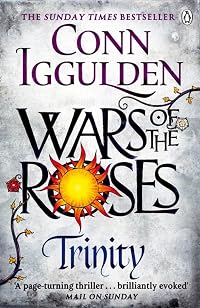
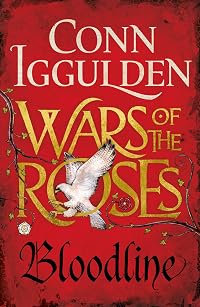
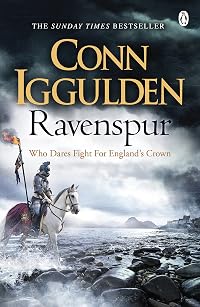
Conn Iggulden is a British fiction writer, born in 1971. He studied at English at the University of London. Iggulden headed the English Department at St. Gregory's Roman Catholic School in London and taught English there for seven years. He left teaching to write his first novel, The Gates of Rome. Iggulden has also co-authored the #1 New York show more Times bestseller, "The Dangerous Book for Boys". His title Trinity is the second of the series of books covering the Wars of the Roses, when the English noble families were at war with each other. Book 4, Ravenspur: Rise of the Tudors, was released in May 2016 show less
Series

Work Relationships
Common Knowledge
- Canonical title
- The Field of Swords
- Original title
- Emperor. The Field of Swords
- Alternate titles
- Emperor: The Field of Swords
- Original publication date
- 2005
- People/Characters
- Julius Caesar; Marcus Brutus
- Important places
- Ancient Rome
Classifications
Statistics
- Members
- 1,393
- Popularity
- 16,962
- Reviews
- 20
- Rating
- (3.93)
- Languages
- 13 — Danish, Dutch, English, Finnish, German, Italian, Norwegian (Bokmål), Polish, Portuguese, Croatian, Slovenian, Spanish, Swedish
- Media
- Paper, Audiobook, Ebook
- ISBNs
- 56
- UPCs
- 1
- ASINs
- 9