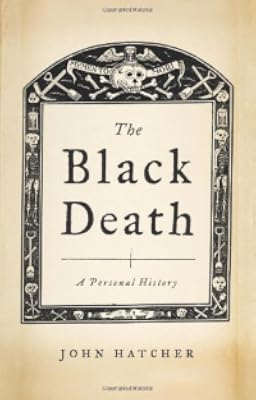
The Black Death: A Personal History
by John Hatcher
On This Page
Description
In this fresh approach to the history of the Black Death, John Hatcher, a world-renowned scholar of the Middle Ages, recreates everyday life in a mid-fourteenth century rural English village. By focusing on the experiences of ordinary villagers as they lived -- and died -- during the Black Death (1345-50 AD), Hatcher vividly places the reader directly into those tumultuous years and describes in fascinating detail the day-to-day existence of people struggling with the tragic effects of the show more plague. Dramatic scenes portray how contemporaries must have experienced and thought about the momentous events -- and how they tried to make sense of it all. John Hatcher, a leading expert in medieval and early modern social and economic history, is Professor of Economic and Social History and Chairman of the History Faculty at the University of Cambridge. B July 2009 "This book uses a bit of fiction, mixing it with [Hatcher's] vast knowledge to illuminate that catastrophe." Curled Up with a Good Book "This book screams 'docudrama.' One wonders if it will be made into a TV mini-series, so vivid is its novelistic story line yet accurate its information…What Hatcher has done, and done well, is to tell the tale of the Black Plague that swept through Europe in the 14th century from the viewpoint of a single English village." Cleveland Plain Dealer, 8/7/09 "The core of the story -- the plague's effect on the lives of everyday people-- is as true as can be surmised, nearly 700 years later.". show lessTags
Recommendations



Member Recommendations
Member Reviews
Written by an academic historian, this book fails on so many levels.
Firstly, it is intended to be about the plagues of the black death in the 14th century, but the focus is primarily on the medieval church - the book is half over before the plague arrives.
The details of the plague are brief to a fault. There are three paragraphs giving some technical details of the plague - the other mentions seem to be limited to buboes and blood and dying.
I was prepared to forego the macabre details of the plague when the author starts dealing with the economic impact - particularly the new found power of the serfs to bargain for higher wages. Sadly, while the book gives some coverage, there is only a very limited attempt to put the changes in show more context.
Then there is the structure of the book - written as a sort of historic fiction. The idea is that the limited documentary evidence would be presented in the lives and words of the individuals of the village that is the focus of the book. Nice idea, but badly delivered. The reader is left struggling to comprehend what is pure fiction, what is probable fiction and what is fact.
And then there is the church. As Mentioned above, the focus is the church. The main character in the book is Master John, the saintly village priest. Bizarrely, this leading character is one that is NOT in the documentary evidence. So, we plough through endless pages of his thoughts and actions (did I mention that they were all saintly?) while there seems to be a total lack of documentary evidence for any of it. Sure, he is a composite of other figures in the country at the time, but why is this the focus of the book? Why so much detail about the church at all?
I'm not sure that it was the intention of the author, but the focus on the church and its response to the plague, generous though that focus is, makes the church and religious belief in general, a farce. show less
Firstly, it is intended to be about the plagues of the black death in the 14th century, but the focus is primarily on the medieval church - the book is half over before the plague arrives.
The details of the plague are brief to a fault. There are three paragraphs giving some technical details of the plague - the other mentions seem to be limited to buboes and blood and dying.
I was prepared to forego the macabre details of the plague when the author starts dealing with the economic impact - particularly the new found power of the serfs to bargain for higher wages. Sadly, while the book gives some coverage, there is only a very limited attempt to put the changes in show more context.
Then there is the structure of the book - written as a sort of historic fiction. The idea is that the limited documentary evidence would be presented in the lives and words of the individuals of the village that is the focus of the book. Nice idea, but badly delivered. The reader is left struggling to comprehend what is pure fiction, what is probable fiction and what is fact.
And then there is the church. As Mentioned above, the focus is the church. The main character in the book is Master John, the saintly village priest. Bizarrely, this leading character is one that is NOT in the documentary evidence. So, we plough through endless pages of his thoughts and actions (did I mention that they were all saintly?) while there seems to be a total lack of documentary evidence for any of it. Sure, he is a composite of other figures in the country at the time, but why is this the focus of the book? Why so much detail about the church at all?
I'm not sure that it was the intention of the author, but the focus on the church and its response to the plague, generous though that focus is, makes the church and religious belief in general, a farce. show less
A fascinating account of the great plague from the perspective of a typical 14th century English manor village. The author combines historical fact with educated speculation to create an account that is not quite straight history but far more than mere historical fiction. Due to the paucity of information regarding everyday life from the perspective of peasants and local clergy, such a work provides a unique perspective far more interesting than most works about the Black Death.
Interesting, easy reading and well written. Highly recommended.
Interesting, easy reading and well written. Highly recommended.
Góð samantekt á áhrifum Svarta dauðans á íbúa smáþorps í Englandi. Höfundurinn er sagnfræðingur sem gjörþekkir efnið en hér er á ferðinni sögulegur skáldskapur sem veitir lesanda innsýn í hugarheim þorpsbúa þegar þeir upplifa það sem þeir telja refsingu Guðs og heimsendi svo eitthvað sé nefnt. Stutt hljóðbók sem er afskaplega góð kynning á hamförunum.
This isn't a bad book, but it is an odd one. In The Black Death: A Personal History, Hatcher sets out to show the effects which the Black Death had on one small village: Walsham in Suffolk, England. Of course, there is one big drawback to this approach: while Walsham is unusually well-documented for the fourteenth century, it still has nowhere near the amount or kind of surviving documentation which would allow a historian to write a thorough micro-history of what its inhabitants went through during the Plague. Hatcher therefore created a kind of textual docudrama—a blend of historical fact and narrative fiction. It makes for an odd read; neither fish nor fowl, it reads a little like a novelisation of a BBC documentary. It is show more well-researched, however, and may well appeal to the interested lay reader or to an undergraduate audience (if there is enough time devoted to teasing apart the factual versus fictional elements of the book). show less
Good History, Weak Storytelling
John Hatcher's knowledge of the Black Death is unrivaled. He is an excellent academic and historian. In "The Black Death: A Personal History," Hatcher provides an account of the Black Death before, during, and after the plague strikes.
This book straddles the line between non-fiction and fiction. It focuses on a made-up priest, but otherwise most of the names, places, and incidents are found in the record books of Walsham, a real city in Suffolk. Because Hatcher relies so much on real incidents in order to push the narrative, there is little emphasis on the usual trappings of a novel: character development, dialogue, action, and so forth. As an instrument for history, the book is wonderful. As an instrument show more for fiction, it is very dry.
The exposition dominates the book. It concentrates on descriptions of the town and its' inhabitants, along with various rituals and customs. The descriptions of feudal relationships in the town are very interesting. While giving these descriptions in the first half of the book, Hatcher also projects the fears and rumors going through Walsham when word of a plague in distant lands arrives by traders.
When the plague comes to the Walsham, the residents mostly shut themselves in, venturing out only to seek help from the priest and his assistants when their loved-ones become ill. During the month or so in which the plague ravishes the village, very little happens in terms of a story, though various characters are brought in and out of the narrative to show the impact of the plague.
The final chapters, while skimpy, were the most interesting. These chapters showed how Walsham and the land-owners tried to recover from a shortage of labor, products, and markets.
The book held my interest despite of the somewhat tedious and repetitive descriptions in the exposition. Again, as a tool to tell about society, I think "The Black Death" is excellent. However, as a novel, it is rather monotonous. show less
John Hatcher's knowledge of the Black Death is unrivaled. He is an excellent academic and historian. In "The Black Death: A Personal History," Hatcher provides an account of the Black Death before, during, and after the plague strikes.
This book straddles the line between non-fiction and fiction. It focuses on a made-up priest, but otherwise most of the names, places, and incidents are found in the record books of Walsham, a real city in Suffolk. Because Hatcher relies so much on real incidents in order to push the narrative, there is little emphasis on the usual trappings of a novel: character development, dialogue, action, and so forth. As an instrument for history, the book is wonderful. As an instrument show more for fiction, it is very dry.
The exposition dominates the book. It concentrates on descriptions of the town and its' inhabitants, along with various rituals and customs. The descriptions of feudal relationships in the town are very interesting. While giving these descriptions in the first half of the book, Hatcher also projects the fears and rumors going through Walsham when word of a plague in distant lands arrives by traders.
When the plague comes to the Walsham, the residents mostly shut themselves in, venturing out only to seek help from the priest and his assistants when their loved-ones become ill. During the month or so in which the plague ravishes the village, very little happens in terms of a story, though various characters are brought in and out of the narrative to show the impact of the plague.
The final chapters, while skimpy, were the most interesting. These chapters showed how Walsham and the land-owners tried to recover from a shortage of labor, products, and markets.
The book held my interest despite of the somewhat tedious and repetitive descriptions in the exposition. Again, as a tool to tell about society, I think "The Black Death" is excellent. However, as a novel, it is rather monotonous. show less
As others have mentioned the author seemed torn between 2 ideas. Does he recount the life of a village going through the Black Death, based only on the scanty records? Or does he fictionalise the characters, to try to bring a sense of what it was like to go through the plague? He goes for the latter, but can't quite seem to drag himself away from the first. Its fine to explain in the introduction that the characters are fictional, and on what basis he has created them. But by introducing each chapter with "the facts" he destroys any suspension of disbelief the reader has managed. Not only does Hatcher sometimes take further opportunities to remind us that the characters are fictional, just when we've built up some empathy with them, but show more the merging of fact and fiction is clumsily handled. A "factual" introduction tells of a letter from the King sent to all churches - and lo, 2 pages later here is Master John the fictional priest receiving and taking comfort from it. The "facts" tell us of decrees against "idling" (how little things have changed) and 2 pages later we have the local peasants down the pub, complaining about it.
The book is also repetitive - the last 40 pages, which contain what would have been quite an interesting description of how the plague changed the rural social fabric through the increased bargaining power of labourers, were ruined for me by labouring ad nauseam of the same point. We get it. The workers discovered that shortage provided opportunity for them. The landowners didn't like it. This doesnt need 2 chapters
A shame because I really wanted to like this book, but it didn't really work show less
The book is also repetitive - the last 40 pages, which contain what would have been quite an interesting description of how the plague changed the rural social fabric through the increased bargaining power of labourers, were ruined for me by labouring ad nauseam of the same point. We get it. The workers discovered that shortage provided opportunity for them. The landowners didn't like it. This doesnt need 2 chapters
A shame because I really wanted to like this book, but it didn't really work show less
The author had a good idea here -- a "docudrama" of the Black Death in a small English village, using known historical facts and records to reconstruct things as they would have been. However, the book turned out to be far more document than drama.
Hatcher is a professional historian and I believe his research to be unimpeachable. In particular I liked the way he showed just how deeply religion was embedded into ordinary people's lives in those days. But he doesn't really seem to know how to write fiction. The characters all sounded the same when they talked -- not like real people, but like history books -- and they were archetypes rather than fully rounded individuals, the priest Master John being a good example of this. Much of the show more book concerned the aftermath of the Black Death rather than the pestilence itself, and mainly focused on the socioeconomic changes that resulted, transfers of property and the like. Hardly thrilling stuff.
This book could have been so much more than it was. For a more comprehensive and more engaging docudrama of the Black Death, try John Kelly's The Great Mortality: An Intimate History of the Black Death, the Most Devastating Plague of All Time. show less
Hatcher is a professional historian and I believe his research to be unimpeachable. In particular I liked the way he showed just how deeply religion was embedded into ordinary people's lives in those days. But he doesn't really seem to know how to write fiction. The characters all sounded the same when they talked -- not like real people, but like history books -- and they were archetypes rather than fully rounded individuals, the priest Master John being a good example of this. Much of the show more book concerned the aftermath of the Black Death rather than the pestilence itself, and mainly focused on the socioeconomic changes that resulted, transfers of property and the like. Hardly thrilling stuff.
This book could have been so much more than it was. For a more comprehensive and more engaging docudrama of the Black Death, try John Kelly's The Great Mortality: An Intimate History of the Black Death, the Most Devastating Plague of All Time. show less
Members
- Recently Added By
Author Information

4 Works 616 Members
John Hatcher, a leading expert in medieval and early modern social and economic history, is Professor of Economic and Social History, Chairman of the History Faculty at the University of Cambridge, and Vice-Master of Corpus Christi College. He has taught the subject of the Black Death for twenty years and is the author of eight academic books on show more medieval history. He is frequently seen on television talking about the Black Death. He lives in Cambridge, England. show less
Common Knowledge
- Important events
- Black Death
Classifications
Statistics
- Members
- 557
- Popularity
- 53,333
- Reviews
- 19
- Rating
- (3.47)
- Languages
- English, Italian
- Media
- Paper, Audiobook, Ebook
- ISBNs
- 9
- ASINs
- 6