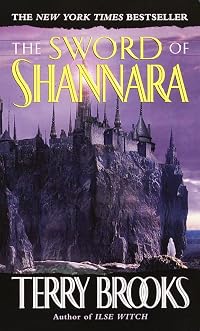
The Sword of Shannara
by Terry Brooks
Shannara-Zyklus, The Original Shannara Trilogy (1), Shannara - Publication order (1), Shannara Universe: Chronological (10)
On This Page
Description
The Sword of Shannara is the first volume of the classic series that has becomeone of the most popular fantasy tales of all time.Long ago, the wars of the ancient Evil ruined the world. In peaceful Shady Vale, half-elfin Shea Ohmsford knows little of such troubles. But the supposedly dead Warlock Lord is plotting to destroy everything in his wake.The sole weapon against this Power of Darkness is the Sword of Shannara, which can be used only by a trueheir of Shannara. On Shea, last of the show more bloodline,rests the hope of all the races.
Thus begins the enthralling Shannara epic,a spellbinding tale of adventure, magic, and myth . . .
BONUS: This edition contains an excerpt from Terry Brooks's The Measure of the Magic. show less
Tags
Recommendations

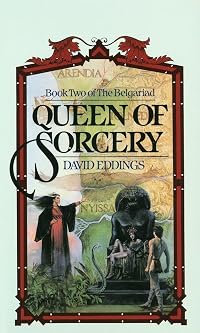
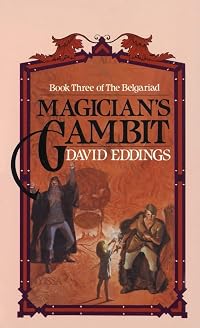
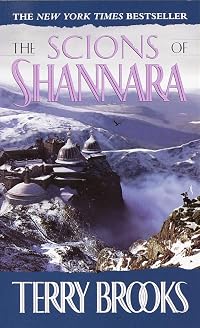
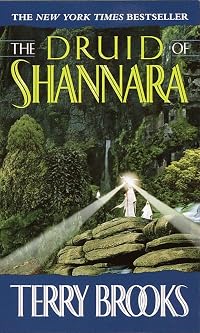
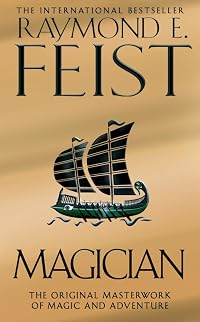

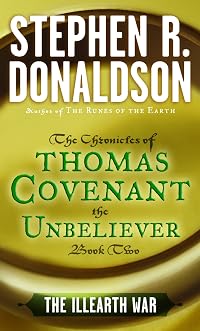
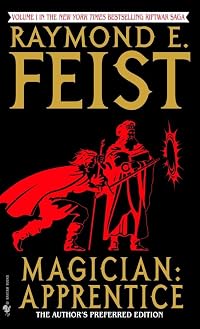
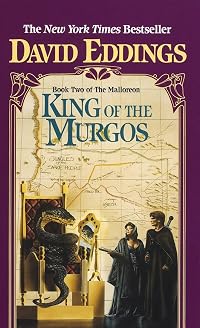

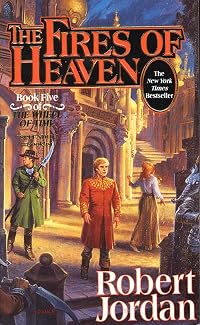
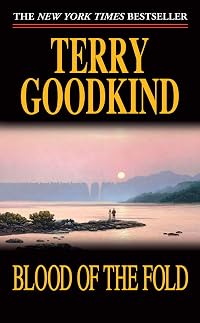
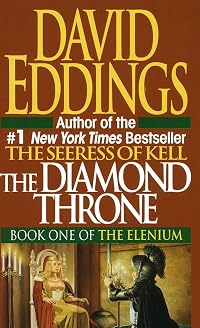
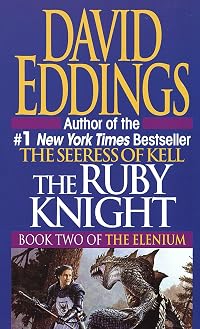

Member Recommendations
Member Reviews
The Sword of Shannara was also the first of the high fantasy best-sellers, and since I’m in the middle of a (partial) reread of the Wheel of Time series, I thought it might be worth seeing what this novel was like. I shouldn’t have bothered. It’s fucking dreadful. A “Valeman” on his way home one night is scared by some giant flappy thing in the sky, and then waylaid by a scary man over seven foot tall with a goatee. Except the scary man is well-known to the Valemen (they live in a vale, see), although he is very mysterious. Cue info-dump. The Valeman’s adopted brother is half-elvish, and is actually the only surviving relative of an ancient elvish king. Because of this, he’s the only person who can wield the Sword of show more Shannara, an ancient, er, sword, and defeat the Warlock Lord, an evil sorcerer who is about to invade the Four Lands and kill everyone. Or maybe just enslave them. It’s not clear. There’s the good guys – one of which is a dwarf, and another is Boromir in all but name – and they have to make their way to Druid’s Keep to retrieve the sword before the evil gnome army. But the gnomes get there first, and Shea (the naming is absolutely terrible in this book), the half-elf half-not-a-hobbit-honestly, is separated from the others and ends up travelling into absolutely-not-Mordor chasing after the titular sword. Meanwhile, the others are involved in defending Tyrsis – which is definitely not Minas Tirith – against a huge army of gnomes and rock trolls… This was the first of the big-selling Tolkien rip-offs, and I can’t honestly see what its appeal is. Did people just want another LotR with the serial numbers filed off? And were they so desperate for it, they’d accept this sub-literate crap? Even now, fantasy fans still recommend this book – and then they do that thing, which is absolutely fucking stupid, of explaining that the first few books are not very good but “it gets a lot better around book four or five”. Seriously, fuck off. I’m not going to read half a dozen shit 700-page novels to reach one which is “better”, especially since as a fan of the series, the person recommending it clearly has no idea what a good book actually is. Books like this should no longer be in print. They do the genre a disservice, they do its readers a disservice. show less
I've heard this book compared to Tolkien's Lord of the Rings--it's comparable all right, and it's not in Sword of Shannara's favor. I've read the book was the first fantasy to make it on the New York Times bestseller list. I can only speculate it was a matter of timing--that in the late seventies the fantasy reading public was hungry for an epic fantasy along Lord of the Rings lines--and here we have a quest, a Dark Lord and a group of heroes traveling together in almost a one to one correspondence with the Fellowship of the Ring including a wizard, a dwarf, more than one elf and more than one Prince of the blood. It's far too easy to match up the Tolkien characters with their Brooks counterparts: Gandalf (Allanon), Sam (Flick), Frodo show more (Shea), Sauron (Brona), Aragorn (Balinor), Boromir (Menion), Gimli (Hendel), Legolas (Durin and Dayel--brothers who are indistinguishable and interchangeable), Gollum (Orl Fane) and the Nazgûl (Skull Bearers). Even places and matters of plot can be matched point for point. I can't recall ever reading such a blatant rip-off.
Except that compared to a Gandolf or Frodo, these characters come across as stock, the plot and themes as shallow as a video game, and unlike Tolkien, who has memorable scenes and lines, the writing here isn't even workmanlike, with a shoddy omniscient point of view and a style that hits every branch on the clunker tree out of guides of how not to write.
I only stayed beyond page 50 of this because I wanted to give what I know some see as a beloved book a fair chance. Then I pushed beyond 200 pages out of curiosity if a female would get a speaking part--because at that point, were it not for a brief scene with a female monster that almost traps one character and a mention by another character he had a sweetie at home (and that the central character once had a mother) I might have thought they only had one gender in this fantasy world. Even Tolkien, who I thought slighted female characters, did much, much better than that. (Even books set on ships at sea and monasteries tend to do better than that). Finally, a female character did show up--on page 456 of 726--naturally to be rescued. I gave up. I will not be reading more Terry Brooks. show less
Except that compared to a Gandolf or Frodo, these characters come across as stock, the plot and themes as shallow as a video game, and unlike Tolkien, who has memorable scenes and lines, the writing here isn't even workmanlike, with a shoddy omniscient point of view and a style that hits every branch on the clunker tree out of guides of how not to write.
I only stayed beyond page 50 of this because I wanted to give what I know some see as a beloved book a fair chance. Then I pushed beyond 200 pages out of curiosity if a female would get a speaking part--because at that point, were it not for a brief scene with a female monster that almost traps one character and a mention by another character he had a sweetie at home (and that the central character once had a mother) I might have thought they only had one gender in this fantasy world. Even Tolkien, who I thought slighted female characters, did much, much better than that. (Even books set on ships at sea and monasteries tend to do better than that). Finally, a female character did show up--on page 456 of 726--naturally to be rescued. I gave up. I will not be reading more Terry Brooks. show less
What began as a sentimental re-read, ended up a history lesson on genre publishing. I've long decried the phenomenon of Tolkien knock-offs overwhelming the fantasy genre, even as I acknowledged my part in making it. I was either never clear or had clearly forgotten that The Sword Of Shannara was the opening salvo in that war. I shan't be reading further in the series: it wasn't in the end that sentimental a revisit. I'm pleased to have clarified the genre history, though, even as the knock-offs today mimic other authors rather than Tolkien: Caroline Maas, Sharon Gilbert, J.K. Rowling.
Two things I learned this reading that struck me as wholly unfamiliar:
- the world is a post-nuclear apocalypse version of our own (though the information show more shared in this novel isn't explicit and would support other interpretations)
- the Del Rey imprint was launched with this novel, its success fueling so much of the fantasy genre I initially embraced and now find boring
Shippey attributes the book's success to the post-Tolkien advent of the fantasy genre: "What The Sword Of Shannara seems to show is that many readers had developed the taste ... for heroic fantasy so strongly that if they could not get the real thing they would take any substitute, no matter how diluted." Mea culpa, or anyway so my teen self. show less
Two things I learned this reading that struck me as wholly unfamiliar:
- the world is a post-nuclear apocalypse version of our own (though the information show more shared in this novel isn't explicit and would support other interpretations)
- the Del Rey imprint was launched with this novel, its success fueling so much of the fantasy genre I initially embraced and now find boring
Shippey attributes the book's success to the post-Tolkien advent of the fantasy genre: "What The Sword Of Shannara seems to show is that many readers had developed the taste ... for heroic fantasy so strongly that if they could not get the real thing they would take any substitute, no matter how diluted." Mea culpa, or anyway so my teen self. show less
I loved this when I was thirteen.
I loved it when I was sixteen. And probably at least once in between there.
When I was thirty-six I picked it up, made it about a chapter and a half in, and threw it against the wall.
Literally.
It left a dent.
This book was written before fan-fic was quite so mainstream. There were no fic websites out there then – there were no websites then. There was still fan-fic, printed in little fanzines and passed around among friends and such. And then there was this sort of thing, perpetrated on a public that had been introduced to wonder in the form of elves and wizards and quests. I've read here and there that bad as this one is, the rest of the series improves – it couldn't get much worse, I have show more to say. But this: this is shameful. show less
I loved it when I was sixteen. And probably at least once in between there.
When I was thirty-six I picked it up, made it about a chapter and a half in, and threw it against the wall.
Literally.
It left a dent.
This book was written before fan-fic was quite so mainstream. There were no fic websites out there then – there were no websites then. There was still fan-fic, printed in little fanzines and passed around among friends and such. And then there was this sort of thing, perpetrated on a public that had been introduced to wonder in the form of elves and wizards and quests. I've read here and there that bad as this one is, the rest of the series improves – it couldn't get much worse, I have show more to say. But this: this is shameful. show less
This book wears its influence on its sleeve. If you're looking for something Tolkien-esque, there are certainly direct analogues to Frodo, Gandalf, Sauron, Gollum, the one ring, the Nazgul, and the evil hordes of The Lord of the Rings; but the prose and the worldbuilding aren't nearly up to the same standard. There's not much original material (at least, little that receives any narrative focus), with one exception: Brooks' depiction of fantasy race is somewhat more complex than Tolkien's (admittedly a low bar). While the good race/evil race dichotomy is preserved, there are exceptions to the rule for both of the "evil" races, include one character who is an important part of the plot and treated as generally heroic. Not exactly show more groundbreaking or even progressive stuff, but certainly an improvement.
One of the odd things about this book is that the obstacles the characters face are almost always solved in uninteresting ways: the characters notice something they didn't before, or are rescued by someone else, or make an unremarkable plan to distract the enemy. The obstacles themselves usually come from the characters failing to notice something, or being deceived by their enemies. There is no character arc or thematically cohesive plot--just a series of fights, puzzles, and traps that eventually leads to getting the artifact and defeating the dark lord. In other words, it reads exactly like someone transcribed their Dungeons & Dragons campaign and turned it into a book. Originating as a role-playing game would certainly explain why the plot is so episodic, and the characters are so flat and archetypal--what's interesting to players of a game is completely different from what's interesting to readers of a book. I would say that modern Tolkien-esque fantasy tabletop games, if not directly influencing (or being influenced by) the Shannara books, at the very least come from a similar emotional place: the desire to live in Tolkien's world and experience an epic, world-changing quest of one's own. In satisfying that kind of desire, originality and cohesiveness are less important than a sense of nostalgia and identification with the characters. I understand why some people might like it; but ultimately, I just don't think a book is the best medium for this kind of story. show less
One of the odd things about this book is that the obstacles the characters face are almost always solved in uninteresting ways: the characters notice something they didn't before, or are rescued by someone else, or make an unremarkable plan to distract the enemy. The obstacles themselves usually come from the characters failing to notice something, or being deceived by their enemies. There is no character arc or thematically cohesive plot--just a series of fights, puzzles, and traps that eventually leads to getting the artifact and defeating the dark lord. In other words, it reads exactly like someone transcribed their Dungeons & Dragons campaign and turned it into a book. Originating as a role-playing game would certainly explain why the plot is so episodic, and the characters are so flat and archetypal--what's interesting to players of a game is completely different from what's interesting to readers of a book. I would say that modern Tolkien-esque fantasy tabletop games, if not directly influencing (or being influenced by) the Shannara books, at the very least come from a similar emotional place: the desire to live in Tolkien's world and experience an epic, world-changing quest of one's own. In satisfying that kind of desire, originality and cohesiveness are less important than a sense of nostalgia and identification with the characters. I understand why some people might like it; but ultimately, I just don't think a book is the best medium for this kind of story. show less
The Prince of Tolkien imitators (after McKiernan's Iron Tower) the original Sword of Shannara, written rapidly by a law student in the 1970s.
The Shannara series eventually branches off into its own universe, dear reader, and Brooks actually becomes a decent to strong writer, although with an over-reliance on the present tense/voice, but this was the beginning, when he was a novice.
Butbutbut...
Some of the unique ideas and takes on old magical/fantasy tropes that characterize his Shannara universe begin here, with the first entry.
The Four Lands are the aftermath of a nuclear holocaust and winter, recalled as the Great Wars that lasted only minutes, and the long slow climb back to civilization. Mankind has splintered into mutant subraces show more from the combination of fallout and refuge- the claustrophobic Dwarfs whose ancestors once hid underground, the powerful, scaled Trolls who lived in the blasted wastelands, the yellowed and varied Gnomes who survived in the forests, and the far southern tribes of Men who remained recognizably men- and the story of the Elves comes later.
Guided by the council of Druids, wise men who inherited scraps of knowledge from their forebears, the lands have crawled into a medieval era- but in their rush to restore what was lost, some Druids turned to magic instead of technology, and with the loss of widespread use of technology, magic had a void it could now fill.
(Can you get more 1970s than that?)
One fell, and rose as a Dark Lord, the Warlock Lord; defeated twice before, he has now returned to the Four Lands, united the Trolls and Gnomes, and there is but one Druid who remains to oppose him and one artifact he fears- the Sword of Jerle Shannara, who once banished the Warlock Lord and can only be wielded by his descendants.
Of whom only one was not assassinated by the agents of the Warlock Lord, a half-Elven orphan living quietly in Shady Vale, a village of no import.
I would strongly recommend the serious fantasy fan read it for the impact and importance of the series on the development of fantasy, and as a gateway to the rest of the series, which becomes much more mature and interesting starting with the next entry, but honestly, this entry in the series today would probably be sent straight to young adult. The Sword itself is a clever idea I won't spoil, and a few characters are highly memorable, such as Padishar Creel- but it is telling that Brooks is at his best when he stopped trying to write "expected" fantasy and wrote to his own voice. Balinor is memorable, but I couldn't recall either Elven brother to save my life. The wild Leah and obstinate Flick are interesting characters, but Shea himself- a Frodo stand-in - falls somewhat flat. show less
The Shannara series eventually branches off into its own universe, dear reader, and Brooks actually becomes a decent to strong writer, although with an over-reliance on the present tense/voice, but this was the beginning, when he was a novice.
Butbutbut...
Some of the unique ideas and takes on old magical/fantasy tropes that characterize his Shannara universe begin here, with the first entry.
The Four Lands are the aftermath of a nuclear holocaust and winter, recalled as the Great Wars that lasted only minutes, and the long slow climb back to civilization. Mankind has splintered into mutant subraces show more from the combination of fallout and refuge- the claustrophobic Dwarfs whose ancestors once hid underground, the powerful, scaled Trolls who lived in the blasted wastelands, the yellowed and varied Gnomes who survived in the forests, and the far southern tribes of Men who remained recognizably men- and the story of the Elves comes later.
Guided by the council of Druids, wise men who inherited scraps of knowledge from their forebears, the lands have crawled into a medieval era- but in their rush to restore what was lost, some Druids turned to magic instead of technology, and with the loss of widespread use of technology, magic had a void it could now fill.
(Can you get more 1970s than that?)
One fell, and rose as a Dark Lord, the Warlock Lord; defeated twice before, he has now returned to the Four Lands, united the Trolls and Gnomes, and there is but one Druid who remains to oppose him and one artifact he fears- the Sword of Jerle Shannara, who once banished the Warlock Lord and can only be wielded by his descendants.
Of whom only one was not assassinated by the agents of the Warlock Lord, a half-Elven orphan living quietly in Shady Vale, a village of no import.
I would strongly recommend the serious fantasy fan read it for the impact and importance of the series on the development of fantasy, and as a gateway to the rest of the series, which becomes much more mature and interesting starting with the next entry, but honestly, this entry in the series today would probably be sent straight to young adult. The Sword itself is a clever idea I won't spoil, and a few characters are highly memorable, such as Padishar Creel- but it is telling that Brooks is at his best when he stopped trying to write "expected" fantasy and wrote to his own voice. Balinor is memorable, but I couldn't recall either Elven brother to save my life. The wild Leah and obstinate Flick are interesting characters, but Shea himself- a Frodo stand-in - falls somewhat flat. show less
The list continues!
Back in 1977 a new publishing group called Ballantine, owned by Lester Del Rey, brought out an epic fantasy called The Sword of Shannara. At the time the genre we now call epic or heroic fantasy consisted largely of JRR Tolkien's masterpiece The Lord of the Rings and...nothing else really.
The Sword of Shannara sold quite well and author Terry Brooks was widely hailed as the successor to Professor Tolkien.
Today if you admit to having read The Sword of Shannara and even worse actually enjoying it then you're met with a curled lip and a scornful 'That Lord of the Rings rip off!'
It is true that some of the major events and characters in The Sword of Shannara are Tolkienesque, but I found most of the similarities were show more superficial (Tolkien used wizards, dwarves and elves, so did Brooks) and the story is still entertaining. If you want to look hard enough, yes you'll become convinced that Terry Brooks rewrote The Lord of the Rings and retitled it The Sword of Shannara, although I don't know how you'd find the character of Panamon Creel in The Lord of the Rings as he was based on The Prisoner of Zenda's Rupert of Hentzau.
If you want an old fashioned quest adventure story then Shannara fits the bill. The plot is fairly basic, along the lines of a young idealistic protagonist (Shea Ohmsford) in a sleepy backwater (Shady Vale) is told by a mysterious stranger (Allanon) that he holds great power, and is the only person who can stop an evil overlord (Brona) from taking over the world by wielding a magical artifact (The Sword of Shannara). To save the world and protect his friends and family the young protagonist sets off on a journey to retrieve the magical artifact and is joined by a band of diverse allies (Flick Ohmsford, Menion Leah, Hendel, Balinor, Durin and Dayel). Together they will overcome seemingly insurmountable odds, not all of them will survive, and either singly or in groups, they will learn things about themselves that they were previously unaware of. Some of them will find love, and ultimately their effort will save the word and defeat the evil overlord.
I last read The Sword of Shannara over 20 years ago, when I was still a teenager. It didn't hold up that badly. As long as you approach it in the right frame of mind it's an entertaining piece of fun. Brooks' prose is a bit overdone and I'm surprised that his publisher, editor and mentor Lester Del Rey let through a few minor continuity errors, but it's far from the only first novel to make that mistake. I'd recommend the book to readers in their early teens or someone who's new to epic fantasy and wants to find out what the genre is about.
The Sword of Shannara is no great work of literature, but it did show publishers that there was a market for epic fantasy out there and for that lovers of the sub genre owe it a debt of gratitude, no matter how derivative of JRR Tolkien they think it is.
I would advise reading The Lord of the Rings after reading Shannara and if you enjoy Brooks, he wrote a number of sequels and prequels to his first tale of the post apocalyptic world of Shannara. Along the same lines are Tad Williams trilogy Memory, Sorrow and Thorn and David and Leigh Eddings 5 volume epic The Belgariad. show less
Back in 1977 a new publishing group called Ballantine, owned by Lester Del Rey, brought out an epic fantasy called The Sword of Shannara. At the time the genre we now call epic or heroic fantasy consisted largely of JRR Tolkien's masterpiece The Lord of the Rings and...nothing else really.
The Sword of Shannara sold quite well and author Terry Brooks was widely hailed as the successor to Professor Tolkien.
Today if you admit to having read The Sword of Shannara and even worse actually enjoying it then you're met with a curled lip and a scornful 'That Lord of the Rings rip off!'
It is true that some of the major events and characters in The Sword of Shannara are Tolkienesque, but I found most of the similarities were show more superficial (Tolkien used wizards, dwarves and elves, so did Brooks) and the story is still entertaining. If you want to look hard enough, yes you'll become convinced that Terry Brooks rewrote The Lord of the Rings and retitled it The Sword of Shannara, although I don't know how you'd find the character of Panamon Creel in The Lord of the Rings as he was based on The Prisoner of Zenda's Rupert of Hentzau.
If you want an old fashioned quest adventure story then Shannara fits the bill. The plot is fairly basic, along the lines of a young idealistic protagonist (Shea Ohmsford) in a sleepy backwater (Shady Vale) is told by a mysterious stranger (Allanon) that he holds great power, and is the only person who can stop an evil overlord (Brona) from taking over the world by wielding a magical artifact (The Sword of Shannara). To save the world and protect his friends and family the young protagonist sets off on a journey to retrieve the magical artifact and is joined by a band of diverse allies (Flick Ohmsford, Menion Leah, Hendel, Balinor, Durin and Dayel). Together they will overcome seemingly insurmountable odds, not all of them will survive, and either singly or in groups, they will learn things about themselves that they were previously unaware of. Some of them will find love, and ultimately their effort will save the word and defeat the evil overlord.
I last read The Sword of Shannara over 20 years ago, when I was still a teenager. It didn't hold up that badly. As long as you approach it in the right frame of mind it's an entertaining piece of fun. Brooks' prose is a bit overdone and I'm surprised that his publisher, editor and mentor Lester Del Rey let through a few minor continuity errors, but it's far from the only first novel to make that mistake. I'd recommend the book to readers in their early teens or someone who's new to epic fantasy and wants to find out what the genre is about.
The Sword of Shannara is no great work of literature, but it did show publishers that there was a market for epic fantasy out there and for that lovers of the sub genre owe it a debt of gratitude, no matter how derivative of JRR Tolkien they think it is.
I would advise reading The Lord of the Rings after reading Shannara and if you enjoy Brooks, he wrote a number of sequels and prequels to his first tale of the post apocalyptic world of Shannara. Along the same lines are Tad Williams trilogy Memory, Sorrow and Thorn and David and Leigh Eddings 5 volume epic The Belgariad. show less
Members
- Recently Added By
Lists

NPRs your picks: top 100 Sci-Fi/Fantasy books
297 works; 80 members

Farm Boy Fantasy
51 works; 21 members

Bibliography for Among Others
159 works; 15 members

Books about characters you'd like to know
34 works; 15 members

Read in 2006
140 works; 1 member

Books I Read Before The Invention Of The Internet.
144 works; 1 member

Books Read in 2006
424 works; 8 members

um actually
76 works; 3 members

Plan to Read Books
75 works; 1 member

al.vick-series
381 works; 2 members

Books Read in 2007
326 works; 8 members

Amazon's 100 Science Fiction & Fantasy Books to Read in a Lifetime
87 works; 23 members

Allie's Wishlist
217 works; 2 members

Blue Pyramid 1,276 Best Books of All Time
1,248 works; 32 members

Unread books
1,063 works; 87 members
Survey of Fantasy Classics
111 works; 23 members

Books You Couldn't Finish
202 works; 32 members

Books Read in 2026
2,127 works; 70 members
Author Information

152+ Works 112,489 Members
Terry Brooks was born in Sterling, Illinois on January 8, 1944. He received a bachelor's degree in English literature from Hamilton College and a graduate degree from the School of Law at Washington and Lee University. Before becoming a full-time writer, he was a practicing attorney for many years. His first book The Sword of Shannara (1977) was show more the first work of fiction to appear on the New York Times Trade Paperback Bestseller List. He made the list again with his title The High Druid'd Blade: The Defenders of Shannara. His other works include the Word and Void trilogy, The Heritage of Shannara series, Magic Kingdom of Landover series, The Voyage of the Jerle Shannara series, High Druid of Shannara series, Genesis of Shannara series, and the novelization to Star Wars Episode I: The Phantom Menace. (Bowker Author Biography) show less
Some Editions
Awards and Honors
Awards
Distinctions
Series

Shannara-Zyklus
35 works

The Original Shannara Trilogy
3 works (1)

Shannara - Publication order
36 works (1)

Shannara Universe: Chronological
39 works (10)
Belongs to Publisher Series
blanvalet (24267)
Goldmann Fantasy (23828)
Work Relationships
Is contained in
Contains
Is abridged in
Was inspired by
Has as a reference guide/companion
Has as a student's study guide
Common Knowledge
- Canonical title
- The Sword of Shannara
- Original title
- The Sword of Shannara
- Alternate titles*
- Das Schwert von Shannara; Shannara I: Das Schwert - Der Sohn - Der Erbe
- Original publication date
- 1977
- People/Characters
- Shea Ohmsford; Flick Ohmsford; Allanon; Menion Leah (Prince of Leah); Balinor Buckhannah (Prince of Callahorn); Hendel (show all 34); Panamon Creel; Durin Elessedil (cousin of the elven king); Dayel Elessedil (cousin of the elven king); Shirl Ravenlock; Keltset Mallicos; Palance Buckhannah; Stenmin; Orl Fane; Brona; Acton; Breen Elessedil; Eventine Elessedil; Fandrez; Fandwick; Ginnisson; Janus Senpre; Jon Lin Sandor; King of the Silver River; Lynliss; Messaline; Pahn; Ruhl Buckhannah; Bremen; Sheelon; Warlock Lord; Galaphile; Jerle Shannara; Skull Bearers
- Important places
- Shady Vale, Southland; Cullhaven; Paranor; Tyrsis; Four Lands; Callahorn (show all 12); Northland; Leah; Kern; Mermiddon River; Outer Wall, Tyrsis; Bridge of Sendic
- Important events
- Nuclear winter; The Great Wars; War of the Races
- Epigraph
- Het begin...Shannara
- Dedication
- For My Parents, Who Believed
- First words
- The sun was already sinking into the deep green of the hills to the west of the valley, the red and gray-pink of its shadows touching the corners of the land, when Flick Ohmsford began his descent.
- Last words
- (Click to show. Warning: May contain spoilers.)In a rush, his sons were past him, through the kitchen door, and halfway down the hallway to the lobby of the inn.
- Publisher's editor
- Del Rey, Lester
- Blurbers
- Herbert, Frank
- Original language
- English
- Canonical DDC/MDS
- 813.087661
- Disambiguation notice*
- Die ist die Ausgabe, die das komplette The Sword of Shannara enthält. Nicht kombinieren mit dem gleichnamigen Werk, das nur den ersten von drei Teilen enthält, in die The Sword of Shannara für die erste deuts... (show all)chsprachige Ausgabe aufgeteilt wurde.
*Some information comes from Common Knowledge in other languages. Click "Edit" for more information.
Classifications
- Genres
- Fantasy, Fiction and Literature
- DDC/MDS
- 813.087661 — Literature & rhetoric American literature in English American fiction in English By type Genre fiction Adventure fiction Speculative fiction Fantasy High fantasy
- LCC
- PS3552 .R6596 .S9 — Language and Literature American literature American literature Individual authors 1961-
- BISAC
Statistics
- Members
- 8,836
- Popularity
- 1,233
- Reviews
- 121
- Rating
- (3.47)
- Languages
- 15 — Czech, Danish, Dutch, English, French, German, Hungarian, Italian, Norwegian (Bokmål), Norwegian, Portuguese, Russian, Spanish, Swedish, Turkish
- Media
- Paper, Audiobook, Ebook
- ISBNs
- 90
- ASINs
- 41