On This Page
Description
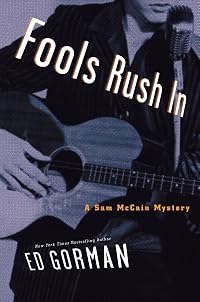
A "genuinely affecting" mystery set in small-town Iowa in the 1950s (The Wall Street Journal). Sam McCain loves Buddy Holly because he's the only rock-and-roll star who still seems like a dweeb, and Sam knows how that feels. With the unrequited love of his life at his side, Sam drives more than three hours through the snow to watch his idol play the Surf Ballroom. That night, Buddy Holly dies in the most famous plane crash in music history, but Sam has no time to grieve. Because there are show more too many lawyers in this small town, Sam makes a living as a PI, doing odd jobs for an eccentric judge--whose nephew, it seems, has a problem only a detective could solve. His trophy wife has been murdered, and as soon as Sam arrives, the nephew kills himself, too. The police see this as a clear-cut murder-suicide, but Sam wants to know more, diving into a mystery by Ellery Queen Award-winning author Ed Gorman that will get dangerous faster than you can say "bye-bye, Miss American Pie." show lessTags
Recommendations

















Member Reviews
Sam McCain is an attorney and a private investigator in Black River Falls, Iowa. It’s the late 1950s and he likes rock and roll, Pall Malls and his rag-top 1951 red Ford convertible. Sam works for Judge Esme Ann Whitney, so when she calls him early in the morning and tells him to go to her nephew’s mansion he goes right out there; Kenny Whitney seems near hysterical, the Judge tells Sam. When he arrives he finds Kenny’s wife, Susan, dead in a pool of blood and Kenny holed up in his bedroom with a gun. Before he can get the whole story, however, Kenny shoots himself, but Sam doesn’t believe he killed Susan.
This is a basic murder mystery with a sprinkling of cultural references from the late 1950s that had me taking an enjoyable show more trip down memory lane. The plot has several twists and complications that kept me guessing, and there is a bit of romantic tension to add interest. Sam McCain is a great character and I like his interactions with the various women in his life – his mother, his sister, the judge, and two old flames. I also liked the very bad relationship between McCain and Sheriff Sykes, and think this sets up a nice source of tension for future novels in the series. On the other hand, I thought it lacked a little in terms of atmosphere; it is set in February and snow or cold is mentioned a couple of times, but mostly just ignored. On the whole, it’s a short, fast, enjoyable read, and I’ll probably read more of Gorman in the future. show less
This is a basic murder mystery with a sprinkling of cultural references from the late 1950s that had me taking an enjoyable show more trip down memory lane. The plot has several twists and complications that kept me guessing, and there is a bit of romantic tension to add interest. Sam McCain is a great character and I like his interactions with the various women in his life – his mother, his sister, the judge, and two old flames. I also liked the very bad relationship between McCain and Sheriff Sykes, and think this sets up a nice source of tension for future novels in the series. On the other hand, I thought it lacked a little in terms of atmosphere; it is set in February and snow or cold is mentioned a couple of times, but mostly just ignored. On the whole, it’s a short, fast, enjoyable read, and I’ll probably read more of Gorman in the future. show less
Sam McCain is a young lawyer in Black River Falls, Iowa in the late 1950s. Unfortunately, Black River Falls already has more than their fair share of lawyers so McCain is forced to do detective work for Judge Esme Anne Whitney who represents all the wealth, power, and eccentricities of Old Money. Sam has just arrived home after attending the final concert by Buddy Holly, when he is ordered by the judge to go to her son’s house. McCain hates the son who has always been a bully and a snob but what he discovers there makes him feel only sorrow for the man. Now, Sam finds himself embroiled in what looks like a murder/suicide. However, he has his doubts. Unfortunately, the sheriff disagrees and Sam is on his own to discover what really show more happened.
McCain is an extremely likable character. He is witty and smart but he is also empathetic and nonjudgmental. He recognizes his own flaws as well as those of others but, for the most part, accepts people for who they are while despising all the myriad large and small injustices that permeate the town and the decade. He likes rock’n’roll, hot rods, and has loved the wrong girl since the fourth grade. He also loves his parents and his little sister and will do anything to protect them. The judge is wonderfully eccentric and, although most of the rest of the characters lack much depth, they make for some very interesting reading.
Author Ed Gorman is easily the best living writer of noir today in the tradition of Dashiell Hammett. His style of writing is clean and sparse and his characters and his plots tend to lean toward the darker side of life. The book may be set in the 1950s but this is definitely no Norman Rockwell picture of small town Americana. Set against the backdrop of the plane crash that killed Buddy Holly, Richie Valens and the Big Bopper and which inspired the Don McLean song, The Day the Music Died, author Ed Gorman’s fifties display all the racism, inequality, and hatred of the decade. In this, the first of the McCain series, Gorman looks at racism, domestic violence, adultery, and the human cost of illegal abortions.
Due to the content of this book, it will clearly not appeal to everyone. As in most historical fiction, there are some minor inconsistencies in the history but not enough to effect my enjoyment of the tale. However, for fans of noir and who like their mysteries with a touch of social commentary and the cerebral, I can’t recommend it highly enough. show less
McCain is an extremely likable character. He is witty and smart but he is also empathetic and nonjudgmental. He recognizes his own flaws as well as those of others but, for the most part, accepts people for who they are while despising all the myriad large and small injustices that permeate the town and the decade. He likes rock’n’roll, hot rods, and has loved the wrong girl since the fourth grade. He also loves his parents and his little sister and will do anything to protect them. The judge is wonderfully eccentric and, although most of the rest of the characters lack much depth, they make for some very interesting reading.
Author Ed Gorman is easily the best living writer of noir today in the tradition of Dashiell Hammett. His style of writing is clean and sparse and his characters and his plots tend to lean toward the darker side of life. The book may be set in the 1950s but this is definitely no Norman Rockwell picture of small town Americana. Set against the backdrop of the plane crash that killed Buddy Holly, Richie Valens and the Big Bopper and which inspired the Don McLean song, The Day the Music Died, author Ed Gorman’s fifties display all the racism, inequality, and hatred of the decade. In this, the first of the McCain series, Gorman looks at racism, domestic violence, adultery, and the human cost of illegal abortions.
Due to the content of this book, it will clearly not appeal to everyone. As in most historical fiction, there are some minor inconsistencies in the history but not enough to effect my enjoyment of the tale. However, for fans of noir and who like their mysteries with a touch of social commentary and the cerebral, I can’t recommend it highly enough. show less
This was an odd mixture of great story-telling, catchy style, appealing main characters, poor research, rotten editing and abrupt ending. I was really caught up in the story, thinking I had found a new author I could turn to when I just wanted to lose myself for a couple hours, but then he threw me right out with an anachronism that no man born in 1941 should be guilty of. Mentioning his parents' attitude toward black people, the main character referred to his mother getting tears in her eyes when she saw "little Negro kids blasted off the streets with fire hoses" on the nightly news. My civil rights time-line tells me that happened in 1963. If your title makes a point of the precise date when your story begins, (that’s February 3, show more 1958, just so you don’t have to go look it up), it just doesn't do to get your historical facts wrong. Gorman also has one of his characters, a Judge, suggest that the Democrats had recently put John Kennedy forward as a potential Presidential candidate; again, the history I know about that is that Kennedy started looking pretty strong for the nomination when the New Hampshire State Democratic Committee endorsed him late in 1959, but in February of 1958 was he considered a strong contender already? In Iowa, a Republican stronghold? I don’t know, but it doesn’t feel right. Another reviewer has pointed out a couple of minor cultural goofs that I didn't even notice, so there may be other references that should have been vetted more closely by someone before this book went to print. There were also at least two instances of a character referring to the content of a conversation that had taken place earlier in the book, by way of saying “aha---that was a clue!”. The only trouble is, the clue wasn’t mentioned in the version of the conversation the reader got. Finally, and fatally, partly due to those missing clues, the revelation of who the murderer was came almost completely out of the blue. This is the first in a series, but not the author’s first novel, by any means. I’d like to read more of his stuff, because I like his setting and his characters, and love his titles. But I don’t trust him now. show less
Sam McCain—everyone calls him just McCain—is a young man who finished law school and instead of striking out for new territory, returned to the little Iowa town where he grew up. There he moons after the beautiful girl he fell in love with in high school, who is in love with someone else. He tries to be nice to the girl who’s loved him since high school, meanwhile being bullied by his boss the judge and by the police chief. Some of us would think of suicide at this point, and in fact one of McCain’s old schoolmates does commit suicide in the first chapters of the book, thus starting an investigation that no one seems to think McCain capable of finishing.
The book begins on the night of February 3, 1959, as McCain drives back show more from the last concert given by Ritchie Valens, Buddy Hollly, and the Bog Bopper, J. P. Richardson. Gorman captures the late fifties in small town America and its mix of innocence, provinciality, racial bigotry, complacence, and Cold War tension. He neglects neither the good side of the social cohesion of small town life fifty years ago, nor the ugly side that included coat-hangar abortions and the aggregation of power in the hands of two or three moneyed families.
One of the town’s plutocrats, a spoiled and alcoholic do-nothing, has apparently killed his wife and himself—McCain arrives on the scene before the suicide. But McCain discovers that the guns for the two killings were different, and as he searches for the wife’s real killer, his own family, his boss, and his old friends from high school all become part of the story.
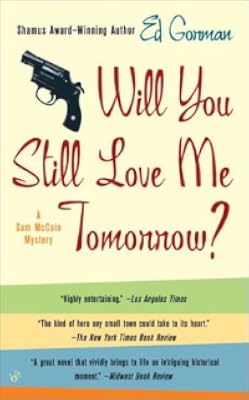
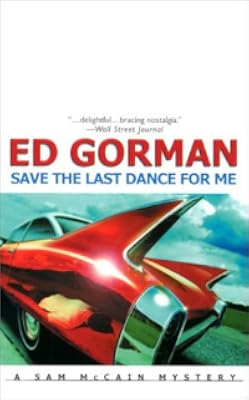
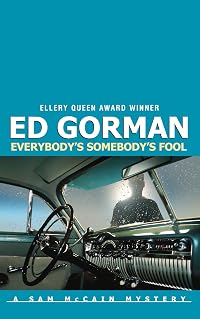
I won’t quibble that it was a yellow, not a pink polka-dot bikini, that the record players ought to be Hi Fi rather than stereo, or that the car in Route 66 was a Corvette rather than a Thunderbird. For the most part, Gorman gets it right. His picture of 50s life is hardly sugar-coated: his people are not happy and terrible things happen. Yet the book will still feed nostalgia for the 50s. If you have that old-time feeling and want to go back when Ike was still in office, J. Edgar Hoover was railing about the Communist menace, John Kennedy was a rising Senator, and poodle skirts were just beginning to lose their fashion edge, you’ll like The Day the Music Died, and probably the other McCain books Ed Gorman has written, Wake Up Little Susie, Save the Last Dance for Me, Everybody’s Somebody’s Fool, and Will You Still Love Me Tomorrow?. show less
The book begins on the night of February 3, 1959, as McCain drives back show more from the last concert given by Ritchie Valens, Buddy Hollly, and the Bog Bopper, J. P. Richardson. Gorman captures the late fifties in small town America and its mix of innocence, provinciality, racial bigotry, complacence, and Cold War tension. He neglects neither the good side of the social cohesion of small town life fifty years ago, nor the ugly side that included coat-hangar abortions and the aggregation of power in the hands of two or three moneyed families.
One of the town’s plutocrats, a spoiled and alcoholic do-nothing, has apparently killed his wife and himself—McCain arrives on the scene before the suicide. But McCain discovers that the guns for the two killings were different, and as he searches for the wife’s real killer, his own family, his boss, and his old friends from high school all become part of the story.
I won’t quibble that it was a yellow, not a pink polka-dot bikini, that the record players ought to be Hi Fi rather than stereo, or that the car in Route 66 was a Corvette rather than a Thunderbird. For the most part, Gorman gets it right. His picture of 50s life is hardly sugar-coated: his people are not happy and terrible things happen. Yet the book will still feed nostalgia for the 50s. If you have that old-time feeling and want to go back when Ike was still in office, J. Edgar Hoover was railing about the Communist menace, John Kennedy was a rising Senator, and poodle skirts were just beginning to lose their fashion edge, you’ll like The Day the Music Died, and probably the other McCain books Ed Gorman has written, Wake Up Little Susie, Save the Last Dance for Me, Everybody’s Somebody’s Fool, and Will You Still Love Me Tomorrow?. show less
I had to review the latest Sam McCain mystery by Ed Gorman entitled Riders on the Storm. Since I was unfamiliar with the series, it prompted me to at least read the first book entitled The Day the Music Died. It is quite an enjoyable series. There are 10 books including the latest, spanning 1958 – 1971 and the titles are the names of songs popular during the year the action takes place.
The setting is Black River Falls, Iowa, a town of approximately 25,000. Everyone knows everyone else and the books aptly portray small town life.
The Day the Music Died: In 1958 the unfortunate deaths of Buddy Holly, Richie Valens and J. P. the “Big Bopper” Richardson occurred. Sam McCain, small town lawyer and sometimes private investigator is show more devastated. He saw them the night before in Cedar Rapids with Pamela Forrest, a girl he’s loved since fourth grade who does not reciprocate the feelings.
In the wee hours of the next morning, he is called by Judge Whitney, for whom he investigates. Her nephew, Kenny called her very distraught, and McCain is needed at Kenny’s house. Upon arriving, he discovers Kenny’s wife shot to death and Kenny is brandishing a gun. McCain seems to calm Kenny somewhat, but soon after Kenny manages to go to an upstairs bedroom and shoot his head off.
Bumbling sheriff Cliff Sykes is happy for two reasons: (1) it seems to be an open and shut case of murder/suicide and (2) the Sykes and Whitneys, the two richest families in town, hate each other and revel in ways to drag the others’ name through the mud. However, McCain doesn’t think Kenny murdered his wife and Judge Whitney hangs on to that thought prodding McCain to prove it.
McCain is a plodder. He has no brainstorms, no ah-ha moments. In many respects things happen to him vs. him making things happen. While dealing with the investigation, McCain also has to deal with some family matters and his unrequited love for Pamela. The book also introduces Mary Hardy who loves McCain but whose feelings for her are uncertain. These quandaries carry through to the latest book as well.
Riders on the Storm: It is 1971, the height of the Vietnam War. RidersOnTheStormThe night after Steve Donovan beat up Willie Cullen at an afternoon party in which Donovan announced his Congressional candidacy, he was murdered. Cullen was charged with the crime. Donovan, a recent Vietnam veteran running on a patriotism platform, disliked Cullen, also a veteran, because of his affiliation with a veterans group denouncing the war. Few of Cullen’s friends think he is capable of murder despite having been institutionalized twice after returning from the war. However, he does have motive, opportunity and means: the murder weapon was found in the back seat of his car. Attorney and private investigator Sam McCain, Cullen’s friend of twenty five years, ‘knows’ Cullen is innocent and sets out to prove it or at least plant reasonable doubt in the mind of the new sheriff. However, it is proving difficult because Cullen is hospitalized again and will not speak.
While trying to prove his friend’s innocence McCain also struggles with his own recent soldiering injuries and commitment issues with his girlfriend Mary. McCain hides neither his anti-war sentiment nor his disgust with politicians supporting the war but managing to keep their sons at home.
McCain can be forceful, humorous and tender. There is little violence but enough action in these books. I enjoy McCain’s liberal slant on the issues of the day. He deals with racism, Communism, abortion, Vietnam. These are satisfying stories for mystery fans who also like the human side of their detectives. I happen to like a series where the protagonists age and their lives change accordingly and this surely fits the bill.
I will warn you, though. You will not be able to figure out ‘who done it’. If you somehow manage, you have to let me know how you did. I wasn’t even close.
An easy read (two-three days at most) but quite enjoyable. show less
The setting is Black River Falls, Iowa, a town of approximately 25,000. Everyone knows everyone else and the books aptly portray small town life.
The Day the Music Died: In 1958 the unfortunate deaths of Buddy Holly, Richie Valens and J. P. the “Big Bopper” Richardson occurred. Sam McCain, small town lawyer and sometimes private investigator is show more devastated. He saw them the night before in Cedar Rapids with Pamela Forrest, a girl he’s loved since fourth grade who does not reciprocate the feelings.
In the wee hours of the next morning, he is called by Judge Whitney, for whom he investigates. Her nephew, Kenny called her very distraught, and McCain is needed at Kenny’s house. Upon arriving, he discovers Kenny’s wife shot to death and Kenny is brandishing a gun. McCain seems to calm Kenny somewhat, but soon after Kenny manages to go to an upstairs bedroom and shoot his head off.
Bumbling sheriff Cliff Sykes is happy for two reasons: (1) it seems to be an open and shut case of murder/suicide and (2) the Sykes and Whitneys, the two richest families in town, hate each other and revel in ways to drag the others’ name through the mud. However, McCain doesn’t think Kenny murdered his wife and Judge Whitney hangs on to that thought prodding McCain to prove it.
McCain is a plodder. He has no brainstorms, no ah-ha moments. In many respects things happen to him vs. him making things happen. While dealing with the investigation, McCain also has to deal with some family matters and his unrequited love for Pamela. The book also introduces Mary Hardy who loves McCain but whose feelings for her are uncertain. These quandaries carry through to the latest book as well.
Riders on the Storm: It is 1971, the height of the Vietnam War. RidersOnTheStormThe night after Steve Donovan beat up Willie Cullen at an afternoon party in which Donovan announced his Congressional candidacy, he was murdered. Cullen was charged with the crime. Donovan, a recent Vietnam veteran running on a patriotism platform, disliked Cullen, also a veteran, because of his affiliation with a veterans group denouncing the war. Few of Cullen’s friends think he is capable of murder despite having been institutionalized twice after returning from the war. However, he does have motive, opportunity and means: the murder weapon was found in the back seat of his car. Attorney and private investigator Sam McCain, Cullen’s friend of twenty five years, ‘knows’ Cullen is innocent and sets out to prove it or at least plant reasonable doubt in the mind of the new sheriff. However, it is proving difficult because Cullen is hospitalized again and will not speak.
While trying to prove his friend’s innocence McCain also struggles with his own recent soldiering injuries and commitment issues with his girlfriend Mary. McCain hides neither his anti-war sentiment nor his disgust with politicians supporting the war but managing to keep their sons at home.
McCain can be forceful, humorous and tender. There is little violence but enough action in these books. I enjoy McCain’s liberal slant on the issues of the day. He deals with racism, Communism, abortion, Vietnam. These are satisfying stories for mystery fans who also like the human side of their detectives. I happen to like a series where the protagonists age and their lives change accordingly and this surely fits the bill.
I will warn you, though. You will not be able to figure out ‘who done it’. If you somehow manage, you have to let me know how you did. I wasn’t even close.
An easy read (two-three days at most) but quite enjoyable. show less
Great - nice time capsule and engaging misytery
Ratings
Members
- Recently Added By
Author Information

236+ Works 8,767 Members
Edward Joseph Gorman was born on November 2, 1941 in Cedar Rapids, Iowa. He attended Coe College, but didn't graduate. Before becoming a full-time author, he worked for 23 years in advertising, public relations, and politics. His first novel, Rough Cut, was published in 1984. In 1985, he founded Mystery Scene Magazine and was the executive editor show more until 2002. He wrote crime fiction, horror fiction, and western fiction under his own name and several pseudonyms. Using the pseudonym Daniel Ransom, he wrote horror and science fiction books including Daddy's Little Girl, The Babysitter, Nightmare Child, The Fugitive Stars, and Zone Soldiers. Using the pseudonym Richard Driscoll, he and Kevin D. Randle co-wrote the Star Precinct trilogy. Under his own name, he wrote crime and mystery books including Wolf Moon, The First Lady, the Sam McCain Mystery series, the Robert Payne Mystery series, the Jack Dwyer Mystery series, and the Dev Conrad Mystery series. His novel The Poker Club was adapted into a movie in 2008. He also wrote The First Lady and Senatorial Privilege under the pseudonym E. J. Gorman. He edited many volumes of science fiction, horror, and crime. He received numerous awards including a Spur Award for Best Short Fiction for The Face in 1992, the Anthony Award for Best Critical Work for The Fine Art of Murder in 1994, and an International Horror Guild Award for Cages in 1995. He also received the Shamus Award, the Bram Stoker Award, the International Fiction Writers Award, and The Eye, the lifetime achievement award given out by the Private Eye Writers of America. He died after a long battle with cancer on October 14, 2016 at the age of 74. (Bowker Author Biography) show less
Series

Work Relationships
Common Knowledge
- Canonical title
- The Day the Music Died
- Original publication date
- 1998
- People/Characters
- Sam McCain; Pamela Forrest; Mary Travers; Judge Esme Witney; Kenny Whitney; Darin Greene (show all 8); Cliff Sykes; Ruthie McCain
- Important places
- Black River Falls, Iowa, USA
- Epigraph
- He wasn't really happy; he was only watching happiness from close to instead of from far away. - Graham Greene, "The Basement Room"
- Dedication
- To ROz, Madeline and Marty- the Greenbergs of Green Bay- with fondness, gratitude and love
- First words
- She didn't say much after we left the Surf Ballroom that night, Pamela Forrest.
- Last words
- (Click to show. Warning: May contain spoilers.)As my dad says, life is like that sometimes.
- Blurbers
- Pickard, Nancy; Hess, Joan
Classifications
Statistics
- Members
- 123
- Popularity
- 264,402
- Reviews
- 6
- Rating
- (3.34)
- Languages
- English, French
- Media
- Paper, Audiobook, Ebook
- ISBNs
- 12
- ASINs
- 4