Blake's Poetry and Designs [Norton Critical Edition, 1st ed.]
by William Blake
On This Page
Description
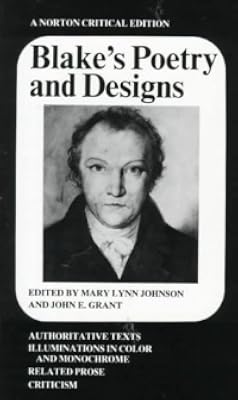
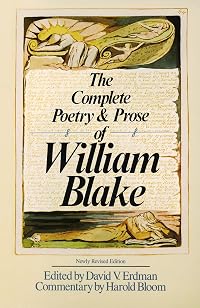
The major poetic and prose works of Blake are accompanied by his illuminations and selected criticism. In addition to a broad selection of the poems, the volume includes over 100 images (16 in color), emphasizing the centrality of pictorial representations to Blake"s verse. Biographical context is provided through dozens of excerpts from Blake"s notebook, letters, marginalia, and other writings. 'Criticism' offers twenty wide-ranging commentaries by writers from Blake"s contemporaries to show more present-day critics, among them Samuel Taylor Coleridge, Northrop Frye, Allen Ginsberg, Morris Eaves, Harold Bloom, Alicia Ostriker, John Mee, Saree Makdisi, and Julia Wright. A section on Textual Technicalities, a Chronology of Blake"s life and work, a Selected Bibliography, and an Index of Titles and First Lines are also included. show lessTags
Recommendations






Member Reviews
I’ll start by saying that this collection includes one of my favorite quotes of all time, from Auguries of Innocence:
“To see a World in a Grain of Sand
And a Heaven in a Wild Flower:
Hold Infinity in the palm of your hand
And Eternity in an hour.”
Blake was creative, intense, and quasi-religious, opposing both the repressiveness of the established church and the rationalism of its critics. As the commentary in this edition states, “…after eighteen centuries during which Christianity had come to identify itself with the interests of the ruling class, it was now high time to recall the disruptive and revolutionary actions of Jesus.” However, Blake also rejected the popular Deist movement of the day: “…you are also Enemies of show more the Human Race & of Universal Nature.”
So in some ways a good portion of his writing is a pulling down of religion, with Blake creating his own mythology to replace it. He sees the fall from grace as (1) the error of perceiving life as finite and corrupt, and limited to the physical plane (personified by a character he calls Urizen, who reduces all reality to what can be manipulated by cold, calculating rationality, the proponent of royalty and creator of religion), and (2) the error of perceiving reality as brute matter resulting from a failure of imagination (which is symbolized by Los, the creative force, a poet, and the ‘eternal prophet’).
There are many other aspects to this mythos: Fuzon, pure defiance, the pent-up lust of Urizen who cannot better the world; Orc, who struggles against political oppression, sexual repression, and all rational constrictions and restrictions on energy (representing America) … and many others that I won’t go through as it’s a bit tedious. Blake sees the resurrection as man, with the help of imagination, attaining self-acceptance and a recognition of the divinity within.
There are occasional nuggets of gold in the passages, but Blake is a bit overwrought and I am a little surprised in retrospect that I read through this entire book. The Norton Edition is quite nice if you’re a Blake fan; it includes all his artwork; personally I think his art is only ‘ok’ but they do add to the text, and are given beautiful treatment including color plates in the center.
Quotes:
On babies, from A cradle song in Blake’s Notebook:
“Sleep sleep beauty bright
Dreaming oer the joys of night
Sleep sleep: in thy sleep
Little sorrows sit & weep
Sweet Babe in thy face
Soft desires I can trace
Secret joys & secret smiles
Little pretty infant wiles”
On clarity, from A Memorable Fancy in The Marriage of Heaven and Hell; which Jim Morrison read and named his band after:
“If the doors of perception were cleansed every thing would appear to man as it is, infinite.”
On experience, from Night II:
“What is the price of Experience? do men buy it for a song?
Or wisdom for a dance in the street? No, it is bought with the price
Of all that a man hath: his house, his wife, his children.
Wisdom is sold in the desolate market where none come to buy,
And in the withered field where the farmer plows for bread in vain.”
On goodbye, from An Island in the Moon:
“Leave, O leave me to my sorrows,
Here I’ll sit & fade away,
Till I’m nothing but a spirit
And I lose this form of clay.
Then if chance along this forest
Any walk in pathless ways,
Thro the gloom he’ll see my shadow,
Hear my voice upon the Breeze.”
On the holiness of life, from America: A Prophecy:
“For every thing that lives is holy, life delights in life:
Because the soul of sweet delight can never be defil’d.”
And this one, from Milton, Book the Second:
“His little throat labours with inspiration; every feather
On throat & breast & wings vibrates with the effluence Divine;
All Nature listens silent to him & the awful Sun
Stands still upon the Mountain looking on this little Bird
With eyes of soft humility & wonder, love & awe.”
On innocence, this is actually from the criticism, Northrop Frye, Blake’s Treatment of the Archetype:
“When we say that a child is in the state of innocence, we do not mean that he is sinless or harmless, but that he is able to assume a coherence, a simplicity and kindliness in the world that adults have lost and wish they could regain.”
On pity, and forgiveness, from Jerusalem:
“Every Harlot was once a Virgin: every criminal an Infant Love!”
On religion, from Milton, Book the Second:
“Thy purpose & the purpose of thy Priests & of thy Churches
Is to impress on men the fear of death; to teach
Trembling & fear, terror, constriction; abject selfishnesss.
Mine is to teach Men to despise death & to go on
In fearless majesty annihilating Self, laughing to scorn
Thy Laws & terrors, shaking down thy Synagogues as webs.”
On tolerance, from The Divine Image in Songs of Innocence:
“An all must love the human form,
In heathen, turk or jew.
Where Mercy, Love & Pity dwell
There God is dwelling too.”
On transience, from The Book of Thel:
“O life of this our spring! why fades the lotus of the water?
Why fade these children of the spring? born but to smile & fall.
Ah! Thel is like a watry bow, and like a parting cloud.
Like a reflection in a glass, like shadows in the water,
Like dreams of infants, like a smile upon an infant’s face,
Like the dove’s voice, like transient day, like music in the air:
Ah! gentle may I lay me down, and gentle rest my head…”
On war, and achieving peace, from The Grey Monk:
“But vain the Sword & vain the Bow,
They never can work War’s overthrow.
The Hermit’s Prayer & the Widow’s tear
Alone can free the World from fear.
For a Tear is an Intellectual Thing.
And a Sigh is the Sword of an Angel King,
And the bitter groan of the Martyr’s woe
Is an arrow from the Almightie’s Bow.” show less
“To see a World in a Grain of Sand
And a Heaven in a Wild Flower:
Hold Infinity in the palm of your hand
And Eternity in an hour.”
Blake was creative, intense, and quasi-religious, opposing both the repressiveness of the established church and the rationalism of its critics. As the commentary in this edition states, “…after eighteen centuries during which Christianity had come to identify itself with the interests of the ruling class, it was now high time to recall the disruptive and revolutionary actions of Jesus.” However, Blake also rejected the popular Deist movement of the day: “…you are also Enemies of show more the Human Race & of Universal Nature.”
So in some ways a good portion of his writing is a pulling down of religion, with Blake creating his own mythology to replace it. He sees the fall from grace as (1) the error of perceiving life as finite and corrupt, and limited to the physical plane (personified by a character he calls Urizen, who reduces all reality to what can be manipulated by cold, calculating rationality, the proponent of royalty and creator of religion), and (2) the error of perceiving reality as brute matter resulting from a failure of imagination (which is symbolized by Los, the creative force, a poet, and the ‘eternal prophet’).
There are many other aspects to this mythos: Fuzon, pure defiance, the pent-up lust of Urizen who cannot better the world; Orc, who struggles against political oppression, sexual repression, and all rational constrictions and restrictions on energy (representing America) … and many others that I won’t go through as it’s a bit tedious. Blake sees the resurrection as man, with the help of imagination, attaining self-acceptance and a recognition of the divinity within.
There are occasional nuggets of gold in the passages, but Blake is a bit overwrought and I am a little surprised in retrospect that I read through this entire book. The Norton Edition is quite nice if you’re a Blake fan; it includes all his artwork; personally I think his art is only ‘ok’ but they do add to the text, and are given beautiful treatment including color plates in the center.
Quotes:
On babies, from A cradle song in Blake’s Notebook:
“Sleep sleep beauty bright
Dreaming oer the joys of night
Sleep sleep: in thy sleep
Little sorrows sit & weep
Sweet Babe in thy face
Soft desires I can trace
Secret joys & secret smiles
Little pretty infant wiles”
On clarity, from A Memorable Fancy in The Marriage of Heaven and Hell; which Jim Morrison read and named his band after:
“If the doors of perception were cleansed every thing would appear to man as it is, infinite.”
On experience, from Night II:
“What is the price of Experience? do men buy it for a song?
Or wisdom for a dance in the street? No, it is bought with the price
Of all that a man hath: his house, his wife, his children.
Wisdom is sold in the desolate market where none come to buy,
And in the withered field where the farmer plows for bread in vain.”
On goodbye, from An Island in the Moon:
“Leave, O leave me to my sorrows,
Here I’ll sit & fade away,
Till I’m nothing but a spirit
And I lose this form of clay.
Then if chance along this forest
Any walk in pathless ways,
Thro the gloom he’ll see my shadow,
Hear my voice upon the Breeze.”
On the holiness of life, from America: A Prophecy:
“For every thing that lives is holy, life delights in life:
Because the soul of sweet delight can never be defil’d.”
And this one, from Milton, Book the Second:
“His little throat labours with inspiration; every feather
On throat & breast & wings vibrates with the effluence Divine;
All Nature listens silent to him & the awful Sun
Stands still upon the Mountain looking on this little Bird
With eyes of soft humility & wonder, love & awe.”
On innocence, this is actually from the criticism, Northrop Frye, Blake’s Treatment of the Archetype:
“When we say that a child is in the state of innocence, we do not mean that he is sinless or harmless, but that he is able to assume a coherence, a simplicity and kindliness in the world that adults have lost and wish they could regain.”
On pity, and forgiveness, from Jerusalem:
“Every Harlot was once a Virgin: every criminal an Infant Love!”
On religion, from Milton, Book the Second:
“Thy purpose & the purpose of thy Priests & of thy Churches
Is to impress on men the fear of death; to teach
Trembling & fear, terror, constriction; abject selfishnesss.
Mine is to teach Men to despise death & to go on
In fearless majesty annihilating Self, laughing to scorn
Thy Laws & terrors, shaking down thy Synagogues as webs.”
On tolerance, from The Divine Image in Songs of Innocence:
“An all must love the human form,
In heathen, turk or jew.
Where Mercy, Love & Pity dwell
There God is dwelling too.”
On transience, from The Book of Thel:
“O life of this our spring! why fades the lotus of the water?
Why fade these children of the spring? born but to smile & fall.
Ah! Thel is like a watry bow, and like a parting cloud.
Like a reflection in a glass, like shadows in the water,
Like dreams of infants, like a smile upon an infant’s face,
Like the dove’s voice, like transient day, like music in the air:
Ah! gentle may I lay me down, and gentle rest my head…”
On war, and achieving peace, from The Grey Monk:
“But vain the Sword & vain the Bow,
They never can work War’s overthrow.
The Hermit’s Prayer & the Widow’s tear
Alone can free the World from fear.
For a Tear is an Intellectual Thing.
And a Sigh is the Sword of an Angel King,
And the bitter groan of the Martyr’s woe
Is an arrow from the Almightie’s Bow.” show less
Blake is my favorite poet, and this collection contains his best work. Including the well-known "Tyger, Tyger". Also included are his wonderful original illustrations.
A Norton Critical Edition
Ratings
Members
- Recently Added By
Author Information

501+ Works 20,199 Members
William Blake's poems, prophecies, and engravings represent his strong vision and voice for rebellion against orthodoxy and all forms of repression. Born in London in November 1757; his father, a hosier of limited means, could do little for the boy's education. However, when the young Blake's talent for design became apparent, his wise father sent show more him to drawing school at the age of 10. In 1771 Blake was apprenticed to an engraver. Blake went on to develop his own technique, a method he claimed that came to him in a vision of his deceased younger brother. In this, as in so many other areas of his life, Blake was an iconoclast; his blend of printing and engraving gave his works a unique and striking illumination. Blake joined with other young men in support of the Revolutions in France and America. He also lived his own revolt against established rules of conduct, even in his own home. One of his first acts after marrying his lifetime companion, Catherine Boucher, was to teach her to read and write, rare for a woman at that time. Blake's writings were increasingly styled after the Hebrew prophets. His engravings and poetry give form and substance to the conflicts and passions of the elemental human heart, made real as actual characters in his later work. Although he was ignored by the British literary community through most of his life, interest and study of his work has never waned. Blake's creativity and original thinking mark him as one of the earliest Romantic poets, best known for his Songs of Innocence (1789) and Songs of Experience (1794) and The Tiger. Blake died in London in 1827. (Bowker Author Biography) show less
All Editions
Series
Belongs to Publisher Series
Work Relationships
Common Knowledge
- Canonical title
- Blake's Poetry and Designs [Norton Critical Edition, 1st ed.]
- Disambiguation notice
- Do Not Combine: This is a "Norton Critical Edition", it is a unique work with significant added material, including essays and background materials. Do not combine with other editions of the work.
Please maintai... (show all)n the phrase "Norton Critical Edition" in the Canonical Title and Publisher Series fields.
Classifications
Statistics
- Members
- 445
- Popularity
- 69,002
- Reviews
- 3
- Rating
- (4.40)
- Languages
- English
- Media
- Paper
- ISBNs
- 2
- ASINs
- 4