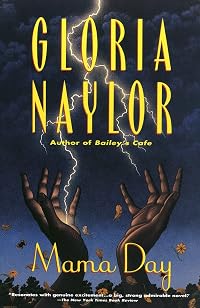
Mama Day
by Gloria Naylor
On This Page
Description
On an island off the coast of Georgia, there's a place where superstition is more potent than any trappings of the modern world. In Willow Springs, the formidable Mama Day uses her powers to heal. But her great niece, Cocoa, can't wait to get away. In New York City, Cocoa meets George. They fall in love and marry quickly. But when she finally brings him home to Willow Springs, the island's darker forces come into play. As their connection is challenged, Cocoa and George must rely on Mama show more Day's mysticism. show lessTags
Recommendations

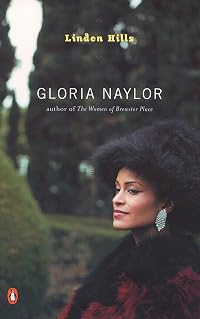
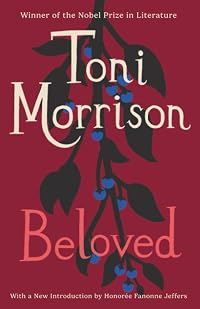
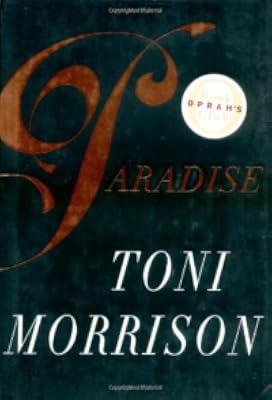
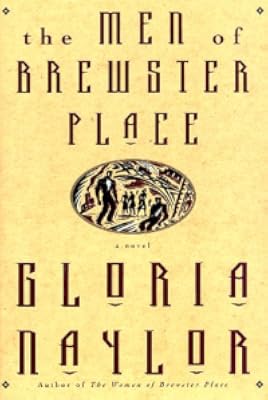
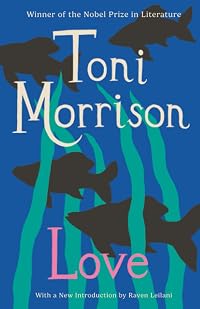
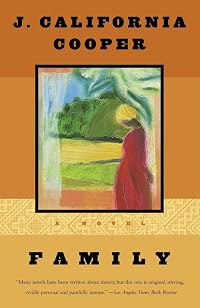
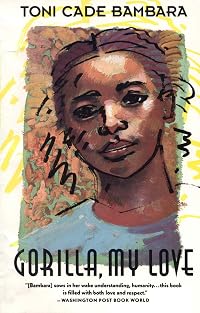


Member Recommendations
Member Reviews
This is a story in parts - Mama Day strides across most of it like a colossus. I want to call her the matriarch, but she's not a mother. Perhaps the high priestess is a better description.
Cocoa, her grand-niece, and George, Cocoa's husband who ultimately sacrifices himself to save Cocoa's life because he can't understand the world he is in.
And that's the other part of this story. Mama Day lives in a world that we might call magical, although she denies she "does that Hoodoo nonsense." Cocoa crosses that world to the everyday world of job hunting, marriage, dinner parties and the like. George is firmly based in the mundane - he's an engineer who never has the grand idea, but takes the grand ideas of others and turns them into hard show more reality.
The clash of these ideas and worlds makes for a compelling, fascinating book. Unusually to my mind, George is the character that I strongly suspect most of us will relate to - he's the everyman that relates to this wild, old, confusing world in which his wife grew up. show less
Cocoa, her grand-niece, and George, Cocoa's husband who ultimately sacrifices himself to save Cocoa's life because he can't understand the world he is in.
And that's the other part of this story. Mama Day lives in a world that we might call magical, although she denies she "does that Hoodoo nonsense." Cocoa crosses that world to the everyday world of job hunting, marriage, dinner parties and the like. George is firmly based in the mundane - he's an engineer who never has the grand idea, but takes the grand ideas of others and turns them into hard show more reality.
The clash of these ideas and worlds makes for a compelling, fascinating book. Unusually to my mind, George is the character that I strongly suspect most of us will relate to - he's the everyman that relates to this wild, old, confusing world in which his wife grew up. show less
There were so many themes -- love where women break men’s hearts, trust, believing, conjuring, slave history, the importance of community and oral tradition -- with so much foreshadowing along with so many allusions to Shakespeare’s plays, it was hard to reconcile all of them and discover Naylor’s intent.
There was explicit reference to King Lear, a nod to Hamlet with one of the main characters named Ophelia, and, of course to The Tempest, with Mama Day’s given name, Miranda. And maybe a little bit of Romeo and Juliet with George and Ophelia as star-crossed lovers.
I had trouble resolving all of this because the narrative arc never really followed any of these tantalizing threads. While Lear and the Tempest both take place on show more islands in the midst of storms, everybody dies in Lear while everyone lives to make up and be happy at the end of the Tempest. The outcome is a little more mixed at the end of Mama Day.
In the midst of discussing this, the leader of our book group made a great observation. Gloria Naylor’s education immersed her heavily into the literature of dead white men (e.g., Shakespeare) but rather than following them blindly, she’s using some of their themes while layering her own cultural tradition on top of it.
Re-examing Mama Day in that light and looking more closely again at the Tempest, I began to see that Naylor was picking and choosing her Shakespearean references as part of a richer and more complex stew. The cultural conditions are not an overlay but the heart of a story that follows its own narrative arc from Africa to Willow Springs to New York City and back again. The Shakespearean references are more like easter eggs (hidden messages or images hidden in video games or movies) than plot drivers.
• Mama Day sends her magic yellow pollen in Cocoa’s letter to George – think Prospero sending Ariel to beguile Ferdinand into loving Miranda. The union of both couples is intended to resolve historical rifts and restore balance.
• Mama Day’s shock at seeing the water lilies carved into the rocker made by Ambush and Beatrice – think death by drowning (a theme in Mama Day) of Ophelia as depicted in the famous Pre-Raphaelite painter John Everett Millais
• Even though Mama Day is most closely aligned with The Tempest, George is most engaged by King Lear. He’s reading the wrong play!!
• The importance of Mama Day’s walking stick and ancient book in Cocoa’s cure – think of Prospero’s soliloquy at the end of The Tempest when his work is almost done and he’s ready to abandon his “rough magic.” “I’ll break my staff, / Bury it certain fathoms in the earth, / And, deeper than did ever plummet sound, / I’ll drown my book”
Mama Day is an amazing book. Rich, difficult and ultimately rewarding in its blending of so many diverse cultural traditions to create something unique in its own right.
The narration was excellent with three different readers. I didn't always agree with their choices of inflection, but each narrator caught the spirit of the character and the book. Since the book uses multiple POV without little or no indication of change, it can be challenging to follow. The narrators solved that problem for the reader without detracting from the language or the structure. show less
There was explicit reference to King Lear, a nod to Hamlet with one of the main characters named Ophelia, and, of course to The Tempest, with Mama Day’s given name, Miranda. And maybe a little bit of Romeo and Juliet with George and Ophelia as star-crossed lovers.
I had trouble resolving all of this because the narrative arc never really followed any of these tantalizing threads. While Lear and the Tempest both take place on show more islands in the midst of storms, everybody dies in Lear while everyone lives to make up and be happy at the end of the Tempest. The outcome is a little more mixed at the end of Mama Day.
In the midst of discussing this, the leader of our book group made a great observation. Gloria Naylor’s education immersed her heavily into the literature of dead white men (e.g., Shakespeare) but rather than following them blindly, she’s using some of their themes while layering her own cultural tradition on top of it.
Re-examing Mama Day in that light and looking more closely again at the Tempest, I began to see that Naylor was picking and choosing her Shakespearean references as part of a richer and more complex stew. The cultural conditions are not an overlay but the heart of a story that follows its own narrative arc from Africa to Willow Springs to New York City and back again. The Shakespearean references are more like easter eggs (hidden messages or images hidden in video games or movies) than plot drivers.
• Mama Day sends her magic yellow pollen in Cocoa’s letter to George – think Prospero sending Ariel to beguile Ferdinand into loving Miranda. The union of both couples is intended to resolve historical rifts and restore balance.
• Mama Day’s shock at seeing the water lilies carved into the rocker made by Ambush and Beatrice – think death by drowning (a theme in Mama Day) of Ophelia as depicted in the famous Pre-Raphaelite painter John Everett Millais
• Even though Mama Day is most closely aligned with The Tempest, George is most engaged by King Lear. He’s reading the wrong play!!
• The importance of Mama Day’s walking stick and ancient book in Cocoa’s cure – think of Prospero’s soliloquy at the end of The Tempest when his work is almost done and he’s ready to abandon his “rough magic.” “I’ll break my staff, / Bury it certain fathoms in the earth, / And, deeper than did ever plummet sound, / I’ll drown my book”
Mama Day is an amazing book. Rich, difficult and ultimately rewarding in its blending of so many diverse cultural traditions to create something unique in its own right.
The narration was excellent with three different readers. I didn't always agree with their choices of inflection, but each narrator caught the spirit of the character and the book. Since the book uses multiple POV without little or no indication of change, it can be challenging to follow. The narrators solved that problem for the reader without detracting from the language or the structure. show less
"My side. He don't listen to my side. She don't listen to my side. Just like that chicken coop, everything got four sides: his side, her side, an outside, and an inside. All of it is the truth."
Ophelia Day, who goes by Cocoa, is a difficult woman and she knows it. She's small town at heart, born and raised on the island of Willow Springs, which is located off the coasts of, but not belonging to, South Carolina and Georgia. An island with a proud Black heritage and mysterious origins.
Cocoa leaves the island for the big city of New York, but after seven years, she hasn't really lived in the city, instead staying within an area about as big as the island she'd left behind (abandoned, as Mama Day sees it). Cocoa would like a husband yet show more doesn't want to compromise her Self to have one, and she's very particular about the kind of man she'll accept. On the outside, she comes across as high maintenance, possibly even a gold-digger; on the inside, she just want to be loved, accepted and respected.
Enter George, who grew up in an orphanage, has a heart defect, and is a successful businessman. He doesn't quite understand why, after a chance encounter with Cocoa in a diner and then at a job interview, he wants to get to know her better. He's a no nonsense kinda man and he sees no value in looking back, only moving forward. Oh, and George loves him some football; it's a dealbreaker - if anyone tries to come between him and football, he's out.
They both have walls to bust through if they'll be able to love each other fully. Cocoa pushes George to open up. George pushes back when Cocoa is being unreasonable and demanding. Theirs is a relationship that could pass the test of time... if they can survive the summer that Cocoa takes George home to Willow Springs to meet her family: her grandmother, Abigail, and her great-aunt, Miranda, known in Willow Springs as Mama Day.
Told in a way that the reader suspects from the start that one or both of these "star-crossed lovers" won't survive till the end, there's a heavy foreboding on every page. However, the narrative style - stream of consciousness - really makes you work for the reward. If you're well read - and by that I mean, having read many books across various genres, inside and outside your comfort zone - you know that having to work through a book isn't necessarily a bad thing. There's very little dialogue in the first part of the story (165 pages) and, in part one, both Cocoa and George can be kind of hard to root for with their personality flaws, unwillingness to settle, and fear of opening up to the wrong person. So just keep that in mind if you're on the fence about whether or not to give Mama Day a go.
Once you turn the page into Part II, though, and you get to spend more time in Willow Springs with Abigail and Miranda, the pace picks up, the magical realism amps up, and the heart of the story begins to reveal itself. Call me selfish, but I wish the story had more to do with the elder Day women than with Cocoa's self-discovery and awareness of her history and what fate has in store for her.
I'm glad I put in the work because that final page, where Mama Day walks out to meet Ophelia by the circle of oaks, is beautiful and caused my eyes to leak a little.
3 stars
(Pitched as a modern retelling of The Tempest; and, I guess if you look closely, the allusions are there, but I think Mama Day works best on its own without the comparison to Shakespeare.)
---------------------------------
"She stops and puts a bit of moss in her open-toe sandals, then goes on past those graves to a spot just down the rise toward The Sound, a little bit south of that circle of oaks. And if he was patient and stayed off a little ways, he'd realize she was there to meet up with her first husband so they could talk about that summer fourteen years ago when she left, but he stayed."
"The way a man chews can tell you loads about the kind of lover he'll turn out to be. Don't laugh -- meat is meat." (Cocoa)
"I was never in that camp of a night out with someone is better than a night alone. I was someone, and there was always something to do with me." (Cocoa)
"Your opinions of our political system were only a bit less horrifying than your attitude on race relations. You were one of the youngest - and most evenhanded - bigots I had ever met." (George's reaction to Cocoa referring to different ethnic groups as foods; e.g., bagels, tacos, kumquats.)
"Now I'm gonna tell you about cool. It comes with the cultural territory: the beating of the bush drum, the rocking of the slave ship, the rhythm of the hand going from cotton sack to cotton row and back again. It went on to settle into the belly of the blues, the arms of Jackie Robinson, and the head of every ghetto kid who lives to a ripe old age. You can keep it, you can hide it, you can blow it -- but even when your ass is in the tightest crack, you must never, ever, LOSE it. And I didn't, did I?" (Cocoa)
"She hopes Baby Girl knows what she's got. It would be a crying shame for them to go the way of so many of these young people nowadays. Just letting things crumble apart, 'cause everybody wants to be right in a world where there ain't no right or wrong to be found. My side. He don't listen to my side. She don't listen to my side. Just like that chicken coop, everything got four sides: his side, her side, an outside, and an inside. All of it is the truth. But that takes a lot of work and young folks ain't about working hard no more. When getting at the truth starts to hurt, it's easier to turn away." (Mama Day)
"Mama Day was right -- give him the simple truth. And it's the one truth about you that I hold on to. Because what really happened to us, George? You see, that's what I mean -- there are just too many sides to the whole story." (Cocoa)
"It's a face that's been given the meaning of peace. A face ready to go in search of answers, so at last there ain't no need for words as they lock eyes over the distance. Under a sky so blue it's stopped being sky, one is closer to the circle of oaks than the other. But both can hear clearly that on the east side of the island and on the west side, the waters were still." show less
Ophelia Day, who goes by Cocoa, is a difficult woman and she knows it. She's small town at heart, born and raised on the island of Willow Springs, which is located off the coasts of, but not belonging to, South Carolina and Georgia. An island with a proud Black heritage and mysterious origins.
Cocoa leaves the island for the big city of New York, but after seven years, she hasn't really lived in the city, instead staying within an area about as big as the island she'd left behind (abandoned, as Mama Day sees it). Cocoa would like a husband yet show more doesn't want to compromise her Self to have one, and she's very particular about the kind of man she'll accept. On the outside, she comes across as high maintenance, possibly even a gold-digger; on the inside, she just want to be loved, accepted and respected.
Enter George, who grew up in an orphanage, has a heart defect, and is a successful businessman. He doesn't quite understand why, after a chance encounter with Cocoa in a diner and then at a job interview, he wants to get to know her better. He's a no nonsense kinda man and he sees no value in looking back, only moving forward. Oh, and George loves him some football; it's a dealbreaker - if anyone tries to come between him and football, he's out.
They both have walls to bust through if they'll be able to love each other fully. Cocoa pushes George to open up. George pushes back when Cocoa is being unreasonable and demanding. Theirs is a relationship that could pass the test of time... if they can survive the summer that Cocoa takes George home to Willow Springs to meet her family: her grandmother, Abigail, and her great-aunt, Miranda, known in Willow Springs as Mama Day.
Told in a way that the reader suspects from the start that one or both of these "star-crossed lovers" won't survive till the end, there's a heavy foreboding on every page. However, the narrative style - stream of consciousness - really makes you work for the reward. If you're well read - and by that I mean, having read many books across various genres, inside and outside your comfort zone - you know that having to work through a book isn't necessarily a bad thing. There's very little dialogue in the first part of the story (165 pages) and, in part one, both Cocoa and George can be kind of hard to root for with their personality flaws, unwillingness to settle, and fear of opening up to the wrong person. So just keep that in mind if you're on the fence about whether or not to give Mama Day a go.
Once you turn the page into Part II, though, and you get to spend more time in Willow Springs with Abigail and Miranda, the pace picks up, the magical realism amps up, and the heart of the story begins to reveal itself. Call me selfish, but I wish the story had more to do with the elder Day women than with Cocoa's self-discovery and awareness of her history and what fate has in store for her.
I'm glad I put in the work because that final page, where Mama Day walks out to meet Ophelia by the circle of oaks, is beautiful and caused my eyes to leak a little.
3 stars
(Pitched as a modern retelling of The Tempest; and, I guess if you look closely, the allusions are there, but I think Mama Day works best on its own without the comparison to Shakespeare.)
---------------------------------
"The way a man chews can tell you loads about the kind of lover he'll turn out to be. Don't laugh -- meat is meat." (Cocoa)
"I was never in that camp of a night out with someone is better than a night alone. I was someone, and there was always something to do with me." (Cocoa)
"Your opinions of our political system were only a bit less horrifying than your attitude on race relations. You were one of the youngest - and most evenhanded - bigots I had ever met." (George's reaction to Cocoa referring to different ethnic groups as foods; e.g., bagels, tacos, kumquats.)
"Now I'm gonna tell you about cool. It comes with the cultural territory: the beating of the bush drum, the rocking of the slave ship, the rhythm of the hand going from cotton sack to cotton row and back again. It went on to settle into the belly of the blues, the arms of Jackie Robinson, and the head of every ghetto kid who lives to a ripe old age. You can keep it, you can hide it, you can blow it -- but even when your ass is in the tightest crack, you must never, ever, LOSE it. And I didn't, did I?" (Cocoa)
"She hopes Baby Girl knows what she's got. It would be a crying shame for them to go the way of so many of these young people nowadays. Just letting things crumble apart, 'cause everybody wants to be right in a world where there ain't no right or wrong to be found. My side. He don't listen to my side. She don't listen to my side. Just like that chicken coop, everything got four sides: his side, her side, an outside, and an inside. All of it is the truth. But that takes a lot of work and young folks ain't about working hard no more. When getting at the truth starts to hurt, it's easier to turn away." (Mama Day)
"Mama Day was right -- give him the simple truth. And it's the one truth about you that I hold on to. Because what really happened to us, George? You see, that's what I mean -- there are just too many sides to the whole story." (Cocoa)
My husband recommended this book to me and so far it’s my absolute favorite out of all of his recommendations. Willow Springs is an island that is part of the US, but doesn’t really belong to any state — it’s just sort of its own place. There, Mama Day is renowned for her powers as a healer and is often called upon to work some small bits of magic on people to help them keep their health. Her great-niece Cocoa has moved away from the island to live in New York, and when she comes to the island with her husband to visit, she catches the eye of a voodoo practitioner who’s been known to cast evil spells on women her husband finds pretty. Cocoa is put in trouble as the voodoo woman’s husband makes a pass at her, and Mama Day has show more to do everything in her power to save her great-niece from the woman’s curse.
The beginning starts off slow — I wasn’t a fan of the budding romance story line between Cocoa and George, though it’s important to the story overall. It’s a little dull, as they seem to love each other, but don’t really seem to be a good match for each other. George doesn’t want to make a lot of sacrifices to let Cocoa into his life, and Cocoa doesn’t seem to be willing either. They get into a lot of fights and play games with each other, but it somehow manages to even out and work between them. Once they’re established as a couple it gets better, especially when they visit Willow Springs with each other.
The parts that really brought me in were the magical realism elements; Naylor’s magical realism plays with the ideas of old wives’ tales and superstition, just giving them a whole lot more power than they really have. Mama Day is a great healer because she knows how plants work and how to use them on bodies to make them well. She’s also able to somewhat tell the future by reading the way nature behaves, which is an interesting take on how magic works. It’s incredibly believable and not at all jarring, which is nice. It’s also super interesting. All of the action that takes place at Willow Springs shines and makes the novel incredible.
This novel is something that I spent days thinking about after I finished it — it deals with how the past has its hold on all of us, how even our distant ancestors’ decisions weighs in on our lives and creates patterns that are difficult to break. It explores the power of woman and nature and how the ties between us and our loved ones gives us strength and also serve as weaknesses. I will say that though this is a Tempest reworking, I like this a whole lot better than The Tempest. It’s a wonderful, tragic story, and one of my favorites this year. Definitely recommend to those interested in magical realism, tales of family, and literary works.
Also posted on Purple People Readers. show less
The beginning starts off slow — I wasn’t a fan of the budding romance story line between Cocoa and George, though it’s important to the story overall. It’s a little dull, as they seem to love each other, but don’t really seem to be a good match for each other. George doesn’t want to make a lot of sacrifices to let Cocoa into his life, and Cocoa doesn’t seem to be willing either. They get into a lot of fights and play games with each other, but it somehow manages to even out and work between them. Once they’re established as a couple it gets better, especially when they visit Willow Springs with each other.
The parts that really brought me in were the magical realism elements; Naylor’s magical realism plays with the ideas of old wives’ tales and superstition, just giving them a whole lot more power than they really have. Mama Day is a great healer because she knows how plants work and how to use them on bodies to make them well. She’s also able to somewhat tell the future by reading the way nature behaves, which is an interesting take on how magic works. It’s incredibly believable and not at all jarring, which is nice. It’s also super interesting. All of the action that takes place at Willow Springs shines and makes the novel incredible.
This novel is something that I spent days thinking about after I finished it — it deals with how the past has its hold on all of us, how even our distant ancestors’ decisions weighs in on our lives and creates patterns that are difficult to break. It explores the power of woman and nature and how the ties between us and our loved ones gives us strength and also serve as weaknesses. I will say that though this is a Tempest reworking, I like this a whole lot better than The Tempest. It’s a wonderful, tragic story, and one of my favorites this year. Definitely recommend to those interested in magical realism, tales of family, and literary works.
Also posted on Purple People Readers. show less
If someone, like David Wroblewski, wants to write a tragedy he should read a little Gloria Naylor to get some perspective on how it should be done. This is a powerful book with noble people - Mama Day, the matriarch we'd all want to turn to for strength, her loving sister Abigail, the fierce Cocoa, the proud and practical George. There's also a trifling worthless man, a colorful character and a mountainous example of wobbly malevolence. The people all interact in a beautiful nowhere island where time passes as it passes and nature, love and loss rule all.
Recommended for anyone who wants to experience literature at its best.
Recommended for anyone who wants to experience literature at its best.
This is a story in parts - Mama Day strides across most of it like a colossus. I want to call her the matriarch, but she's not a mother. Perhaps the high priestess is a better description.
Cocoa, her grand-niece, and George, Cocoa's husband who ultimately sacrifices himself to save Cocoa's life because he can't understand the world he is in.
And that's the other part of this story. Mama Day lives in a world that we might call magical, although she denies she "does that Hoodoo nonsense." Cocoa crosses that world to the everyday world of job hunting, marriage, dinner parties and the like. George is firmly based in the mundane - he's an engineer who never has the grand idea, but takes the grand ideas of others and turns them into hard show more reality.
The clash of these ideas and worlds makes for a compelling, fascinating book. Unusually to my mind, George is the character that I strongly suspect most of us will relate to - he's the everyman that relates to this wild, old, confusing world in which his wife grew up show less
Cocoa, her grand-niece, and George, Cocoa's husband who ultimately sacrifices himself to save Cocoa's life because he can't understand the world he is in.
And that's the other part of this story. Mama Day lives in a world that we might call magical, although she denies she "does that Hoodoo nonsense." Cocoa crosses that world to the everyday world of job hunting, marriage, dinner parties and the like. George is firmly based in the mundane - he's an engineer who never has the grand idea, but takes the grand ideas of others and turns them into hard show more reality.
The clash of these ideas and worlds makes for a compelling, fascinating book. Unusually to my mind, George is the character that I strongly suspect most of us will relate to - he's the everyman that relates to this wild, old, confusing world in which his wife grew up show less
Throughout the novel I was enthralled by the settings and intrigued by the powerful female characters. At the end, however, I was not sure exactly what happened. Was the life of one human being sacrificed so that a family legacy could continue? Was it voodoo or cultural necessity?
More at http://annotationnation.wordpress.com/2009/07/07/mama_da/
More at http://annotationnation.wordpress.com/2009/07/07/mama_da/
Members
- Recently Added By
Lists

Magic Realism
371 works; 52 members

Books That Made Me Cry
199 works; 105 members

Top Five Books of 2017
757 works; 231 members

500 Great Books by Women
507 works; 60 members

Black Authors
384 works; 32 members

Books Read in 2023
5,547 works; 145 members

Books Read in 2017
4,249 works; 129 members

AP Lit
363 works; 6 members

Schomburg Centennial Reading List
100 works; 4 members
Author Information

11+ Works 5,406 Members
Gloria Naylor was born in Manhattan, New York on January 25, 1950. She received a bachelor's degree in English from Brooklyn College and a master's degree in African American studies from Yale University. She taught at several universities including George Washington University, the University of Pennsylvania, New York University, Princeton show more University, and Boston University. Her first novel, The Women of Brewster Place, won the American Book Award and the National Book Award for first novel in 1983. It was adapted into a two-part television movie in 1989. Her other novels include Linden Hills, Mama Day, Bailey's Café, and The Men of Brewster Place. She died of heart failure on September 28, 2016 at the age of 66. (Bowker Author Biography) show less
Some Editions
Awards and Honors
Distinctions
Notable Lists
Series
Belongs to Publisher Series
Otavan kirjasto (86)
Virago Modern Classics (724)
Work Relationships
Is abridged in
Has as a study
Has as a student's study guide
Common Knowledge
- Original publication date
- 1988
- People/Characters
- Miranda "Mama" Day; Abigail Day; Ophelia "Cocoa" Day; George Andrews; Dr. Buzzard; Ruby (show all 7); Junior Lee
- Important places
- Willow Springs
- Dedication
- For Corlies Morgan Smith
- First words
- Willow Springs. Everybody knows but nobody talks about the legend of Sapphira Wade.
- Last words
- (Click to show. Warning: May contain spoilers.)But both can hear clearly that on the east side of the island and on the west side, the waters were still.
- Blurbers
- Brown, Rita Mae
- Original language*
- englanti
- Canonical DDC/MDS
- 813.54
- Canonical LCC
- PS3564.A895
*Some information comes from Common Knowledge in other languages. Click "Edit" for more information.
Classifications
Statistics
- Members
- 1,432
- Popularity
- 16,462
- Reviews
- 23
- Rating
- (4.14)
- Languages
- 8 — Danish, English, Finnish, German, Norwegian (Bokmål), Norwegian, Spanish, Swedish
- Media
- Paper, Audiobook, Ebook
- ISBNs
- 26
- ASINs
- 7