On This Page
Description
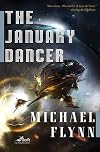
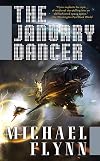
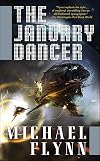
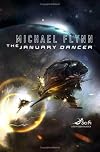
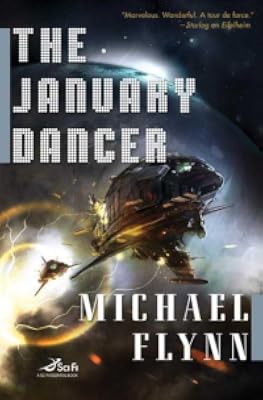
Michael Flynn, Hugo Award finalist and Robert A. Heinlein Award-winning science-fiction writer, has here written a space opera with stunningly successful results. The January Dancer tells the fateful story of an ancient prehuman artifact of great power and of the people who found it. Starting with Captain Amos January, who quickly loses it, and then the others who fought, schemed, and killed to get it, we travel around the complex, decadent, brawling, mongrelized, interstellar human show more civilization that the artifact might save or destroy. Collectors want the Dancer, pirates take it, rulers crave it, and all will kill, if necessary, to get it. This is a thrilling yarn of love, revolution, music, and mystery, and it ends, as all great stories do, with shock and a beginning. show lessTags
Recommendations







Member Reviews
A female harper enters a dark bar on a distant planet. She plays haunting traditional melodies on her harp and entrances the other customers. Yet she ignores everyone, except a scarred man sitting alone. She asks him to tell her a tale, and he does, of the discovery of a non-human artifact, the Dancer, on a nameless world, by one Captain January, the skipper of a merchant ship. This sets up the rest of the novel, as the harper plays and the scarred man spins tales related to the Dancer, as it and its powers come to the notice of those that possess wealth and influence and would find a use for the Dancer...
The feel of this novel is unique. It combines a sort of 'space opera' approach with dialogue and description from what seems like show more classic mythic literature, where yarns are spun about heroes and villains, and spaceships, even when in quantum space, seem to function more like sail boats.
There are no aliens, just humans from a miscellany of colonised planets with histories so long that they are mostly myth. Scientists like Newton and Einstein are quoted like prophets. The only thing that the ragbag of human cultures agree on is that no one much likes Terrans.
The tale slowly picks up in terms of complexity and the quality of the writing continually delivers wry smiles and unexpected delights. For example, character's attire can be most unsuitable for their task, and break every fashion rule going, yet it is still described in glorious detail. The same goes for local culinary delights. No opportunity for comic banter is left untaken. All this does slow the action down but it gives the proceedings a sort of 'shabby mythic' gloss.
So, this is a very unusual space opera, which is definitely not New Space Opera, but is too knowing and complex in all sorts of ways to be mistaken for the Golden Age variety. It is a demanding read since pretty much everything and everyone has a daft name and lots of threads are happening all over the place. If you want to read something unlike anything else around then do try this novel. I fear though that its its shear refusal to conform will cost it readers. show less
The feel of this novel is unique. It combines a sort of 'space opera' approach with dialogue and description from what seems like show more classic mythic literature, where yarns are spun about heroes and villains, and spaceships, even when in quantum space, seem to function more like sail boats.
There are no aliens, just humans from a miscellany of colonised planets with histories so long that they are mostly myth. Scientists like Newton and Einstein are quoted like prophets. The only thing that the ragbag of human cultures agree on is that no one much likes Terrans.
The tale slowly picks up in terms of complexity and the quality of the writing continually delivers wry smiles and unexpected delights. For example, character's attire can be most unsuitable for their task, and break every fashion rule going, yet it is still described in glorious detail. The same goes for local culinary delights. No opportunity for comic banter is left untaken. All this does slow the action down but it gives the proceedings a sort of 'shabby mythic' gloss.
So, this is a very unusual space opera, which is definitely not New Space Opera, but is too knowing and complex in all sorts of ways to be mistaken for the Golden Age variety. It is a demanding read since pretty much everything and everyone has a daft name and lots of threads are happening all over the place. If you want to read something unlike anything else around then do try this novel. I fear though that its its shear refusal to conform will cost it readers. show less
High 3.5 stars
_The January Dancer_ is a very good space opera…I wish it had tipped over into great. There is a lot going on here to love: a sufficiently deep future history created through the liberal use of allusion that references any number of existing earth cultures (heavily relying on Celtic and cultures from the Indian subcontinent) along with some pretty swell creations of Flynn’s own (the Hounds, ‘those of Name’, the Terran Corners, the Rift, the People of Sand & Iron, etc.) in which the diaspora of humanity has settled across the cosmos, making use of an intriguingly pseudo-scientific explanation for FTL travel; a cast of varied and interesting characters of disparate parts coming together, as though by chance, to solve show more the mystery of a powerful pre-human artifact; and perhaps most of all the well-crafted prose of Michael Flynn that provides a certain shine to what might have been little more than a bloated pulp epic in weaker hands.
And yet I just didn’t find myself utterly captivated by the story as I hoped I might. Somehow it felt as though I was being held at arm’s length from the narrative and I was unable to fully immerse myself into this world as I have done in Herbert’s [b:Dune|1685995|Dune (Dune Chronicles, #1)|Frank Herbert|http://photo.goodreads.com/books/1311873074s/1685995.jpg|3634639], Zindell’s [b:Neverness|2030987|Neverness|David Zindell|http://photo.goodreads.com/books/1336192264s/2030987.jpg|2035642], or Simmons’ [b:Hyperion|77566|Hyperion (Hyperion Cantos, #1)|Dan Simmons|http://photo.goodreads.com/books/1332885131s/77566.jpg|1383900]. Perhaps it was Flynn’s use of a dual narrative structure in which the main story was a tale being told by a character in another narrating arc, but I don’t think that’s it: I am not averse to the technique (indeed it’s not unlike that used by Simmons’ in _Hyperion_) and I don’t think Flynn did a bad job in making it work.
Perhaps the story was too much of an obvious set-up for the required sequels. There was a lot happening, but so much of it was seemingly to get the board into a state of readiness for the game to *really* proceed that it might have made the story of this volume itself seem weak, unable to support its own weight. Whatever the case may be, I did quite like the story Flynn had to tell, but I just wanted to love it more.
We follow the wanderings of a group of characters as they in turn follow the peregrinations of an alien artifact able to change its shape imperceptibly (and may have other, less benign powers) that was discovered by the tramp freighter captain Amos January (hence its name, The January Dancer) as it moves from hand to hand across large swathes of known human space. As various players from different factions come across the Dancer (or rumours of it) a race to attain the hidden power of the alien artifact begins. We are given a tour of many of the main worlds that make up the loose conglomeration of planets known as the United League of the Periphery (under the nominal control of the Ardry of High Tara and his specially trained police force, the Hounds) whose great enemy, the Confederation of Central Worlds (in which is held the lost home-world of Old Earth), lies watching and waiting across the great galactic rift.
The main characters (and even many of the secondary ones) are fairly well-fleshed out and have interesting motivations, the prose is very good, and the story moves along at a decent clip. Somehow though I just didn’t fall completely under the story’s spell. I have to admit, though, that the final reveal about the Dancer was pretty freakin’ awesome and well worth the lead-up. All-in-all a worthy read. show less
_The January Dancer_ is a very good space opera…I wish it had tipped over into great. There is a lot going on here to love: a sufficiently deep future history created through the liberal use of allusion that references any number of existing earth cultures (heavily relying on Celtic and cultures from the Indian subcontinent) along with some pretty swell creations of Flynn’s own (the Hounds, ‘those of Name’, the Terran Corners, the Rift, the People of Sand & Iron, etc.) in which the diaspora of humanity has settled across the cosmos, making use of an intriguingly pseudo-scientific explanation for FTL travel; a cast of varied and interesting characters of disparate parts coming together, as though by chance, to solve show more the mystery of a powerful pre-human artifact; and perhaps most of all the well-crafted prose of Michael Flynn that provides a certain shine to what might have been little more than a bloated pulp epic in weaker hands.
And yet I just didn’t find myself utterly captivated by the story as I hoped I might. Somehow it felt as though I was being held at arm’s length from the narrative and I was unable to fully immerse myself into this world as I have done in Herbert’s [b:Dune|1685995|Dune (Dune Chronicles, #1)|Frank Herbert|http://photo.goodreads.com/books/1311873074s/1685995.jpg|3634639], Zindell’s [b:Neverness|2030987|Neverness|David Zindell|http://photo.goodreads.com/books/1336192264s/2030987.jpg|2035642], or Simmons’ [b:Hyperion|77566|Hyperion (Hyperion Cantos, #1)|Dan Simmons|http://photo.goodreads.com/books/1332885131s/77566.jpg|1383900]. Perhaps it was Flynn’s use of a dual narrative structure in which the main story was a tale being told by a character in another narrating arc, but I don’t think that’s it: I am not averse to the technique (indeed it’s not unlike that used by Simmons’ in _Hyperion_) and I don’t think Flynn did a bad job in making it work.
Perhaps the story was too much of an obvious set-up for the required sequels. There was a lot happening, but so much of it was seemingly to get the board into a state of readiness for the game to *really* proceed that it might have made the story of this volume itself seem weak, unable to support its own weight. Whatever the case may be, I did quite like the story Flynn had to tell, but I just wanted to love it more.
We follow the wanderings of a group of characters as they in turn follow the peregrinations of an alien artifact able to change its shape imperceptibly (and may have other, less benign powers) that was discovered by the tramp freighter captain Amos January (hence its name, The January Dancer) as it moves from hand to hand across large swathes of known human space. As various players from different factions come across the Dancer (or rumours of it) a race to attain the hidden power of the alien artifact begins. We are given a tour of many of the main worlds that make up the loose conglomeration of planets known as the United League of the Periphery (under the nominal control of the Ardry of High Tara and his specially trained police force, the Hounds) whose great enemy, the Confederation of Central Worlds (in which is held the lost home-world of Old Earth), lies watching and waiting across the great galactic rift.
The main characters (and even many of the secondary ones) are fairly well-fleshed out and have interesting motivations, the prose is very good, and the story moves along at a decent clip. Somehow though I just didn’t fall completely under the story’s spell. I have to admit, though, that the final reveal about the Dancer was pretty freakin’ awesome and well worth the lead-up. All-in-all a worthy read. show less
“Myths, you mean. Legends, fables. I’ve heard them. If any two of them describe the same creatures—if any two stories even fit together logically—they’d be the first two. We don’t know when the prehumans were around, or for how long. We don’t know if they ruled this quarter of the galaxy or only roamed through it. There’s probably a tall tale to cover every possibility. People can’t tolerate the inexplicable. So they tell a story or sing a song.”—Michael Flynn, “The January Dancer”
When “Eifelheim” received a Hugo nomination last year for best novel, I immediately inserted author Michael Flynn on my “to-read-someday” list. Unfortunately, it’s a long list and most of the names never get Sharpie-d off. show more It’s like my own personal Siberian gulag for speculative fiction writers, cruel and gruel galore. Luckily Flynn avoids this fate worse than death by securing an early parole with his latest novel “The January Dancer.” And I’m ecstatic he did.
“The January Dancer” is presented as a story-within-a-story. A harper comes to the Bar on Jehovah, searching for the story of the Dancer which she plans to transform into her master-work. There she discovers “a man of remnants and shadows” who indulges her with the tale of the Dancer.
Captain Amos January and his crew discover an artifact on one of the outlying planets while mining for metals. They believe this twisting, dancing brick-like artifact (referred to as the Dancer) to be prehuman in origin, and therefore, extremely valuable. The crew trades the Dancer with the administrator of the planet New Eireann in exchange for maintenance and repair on their ship, New Angeles.
But the Dancer is not only a valuable museum piece. It’s an artifact of potentially mythological power if the fable about the Twisting Stone is to be believed. And it could be the salvation of Earth. This promise has attracted the attention of a mysterious individual known as the Fudir. The Fudir enlists the help of the outcast New Eireann leader Little Hugh O’Carroll in retrieving the Dancer.
But before they can reel the artifact in the Dancer has changed hands once again. So begins a long chain of possession as the Dancer travels amongst various worlds, constantly switching hands, with Hugh and the Fudir always a step behind in their search. Can they get to it before the true value of the Dancer is discovered?
“The January Dancer” is a revelation, a rousing space opera that’s brilliantly crafted and executed. Unlike the cotton-candy space opera out there which is yummy but essentially fluff (John Scalzi, I’m looking at you), “The January Dancer” displays a brain, placing substance behind the entertainment. This isn’t a frivolous entertainment injection filled with snappy dialogue and a flat cookie-cutter setting (once again Scalzi, eyes your direction). Characters in Flynn’s novel ponder serious ethical questions related to governing and the abuse of power. The mythical MacGuffin the characters search for in “The January Dancer” acts as a measure for each of them, revealing more about their own attitudes and beliefs.
Space opera is often hindered by lackluster settings; the worlds seemingly transplanted Earth-like societies. No planet is unique. This lack of uniqueness is difficult to believe since it’s so unlikely. A planet’s position in the universe should affect its political and social circumstances. There should be social evolution, however often there’s not. This reflects back on the quality of the story as the best science-fiction provides memorable locations. Who wants to explore an uninteresting universe?
“The January Dancer” avoids this trap with a fecund setting. Flynn imbues the various worlds with their own personalities, making each planet distinctive and detailed. The different societies go beyond setting, beyond a cutout world. They make sense from an evolutionary standpoint; trade planets are different than outliers. Flynn’s rich universe acts as another character in the story, making the adventure of Fudir and Hugh feel fuller and more robust.
The learning curve in the novel is steep at the beginning as Flynn introduces the various plotlines, characters and worlds. There are multiple starting points and the novel can feel overwhelming, like quickly jumping from subtraction to abstract algebra, but the initial effort is richly rewarded. Once Flynn has introduced the major players, the pace of the novel accelerates, twisting and turning more than the Dancer itself.
Flynn also proves himself a master wordsmith. The interludes between the harper and the storyteller in particularly are beautifully written as they comment on the tale of the Dancer.
Last Word:
“The January Dancer” is a novel that improves the longer one reads, reaching ever greater levels of entertainment as the story progresses. Michael Flynn has written an intelligent, lush novel filled with memorable characters and an unforgettable universe. A superior work that places Flynn securely on my “must-continue-reading” list. show less
When “Eifelheim” received a Hugo nomination last year for best novel, I immediately inserted author Michael Flynn on my “to-read-someday” list. Unfortunately, it’s a long list and most of the names never get Sharpie-d off. show more It’s like my own personal Siberian gulag for speculative fiction writers, cruel and gruel galore. Luckily Flynn avoids this fate worse than death by securing an early parole with his latest novel “The January Dancer.” And I’m ecstatic he did.
“The January Dancer” is presented as a story-within-a-story. A harper comes to the Bar on Jehovah, searching for the story of the Dancer which she plans to transform into her master-work. There she discovers “a man of remnants and shadows” who indulges her with the tale of the Dancer.
Captain Amos January and his crew discover an artifact on one of the outlying planets while mining for metals. They believe this twisting, dancing brick-like artifact (referred to as the Dancer) to be prehuman in origin, and therefore, extremely valuable. The crew trades the Dancer with the administrator of the planet New Eireann in exchange for maintenance and repair on their ship, New Angeles.
But the Dancer is not only a valuable museum piece. It’s an artifact of potentially mythological power if the fable about the Twisting Stone is to be believed. And it could be the salvation of Earth. This promise has attracted the attention of a mysterious individual known as the Fudir. The Fudir enlists the help of the outcast New Eireann leader Little Hugh O’Carroll in retrieving the Dancer.
But before they can reel the artifact in the Dancer has changed hands once again. So begins a long chain of possession as the Dancer travels amongst various worlds, constantly switching hands, with Hugh and the Fudir always a step behind in their search. Can they get to it before the true value of the Dancer is discovered?
“The January Dancer” is a revelation, a rousing space opera that’s brilliantly crafted and executed. Unlike the cotton-candy space opera out there which is yummy but essentially fluff (John Scalzi, I’m looking at you), “The January Dancer” displays a brain, placing substance behind the entertainment. This isn’t a frivolous entertainment injection filled with snappy dialogue and a flat cookie-cutter setting (once again Scalzi, eyes your direction). Characters in Flynn’s novel ponder serious ethical questions related to governing and the abuse of power. The mythical MacGuffin the characters search for in “The January Dancer” acts as a measure for each of them, revealing more about their own attitudes and beliefs.
Space opera is often hindered by lackluster settings; the worlds seemingly transplanted Earth-like societies. No planet is unique. This lack of uniqueness is difficult to believe since it’s so unlikely. A planet’s position in the universe should affect its political and social circumstances. There should be social evolution, however often there’s not. This reflects back on the quality of the story as the best science-fiction provides memorable locations. Who wants to explore an uninteresting universe?
“The January Dancer” avoids this trap with a fecund setting. Flynn imbues the various worlds with their own personalities, making each planet distinctive and detailed. The different societies go beyond setting, beyond a cutout world. They make sense from an evolutionary standpoint; trade planets are different than outliers. Flynn’s rich universe acts as another character in the story, making the adventure of Fudir and Hugh feel fuller and more robust.
The learning curve in the novel is steep at the beginning as Flynn introduces the various plotlines, characters and worlds. There are multiple starting points and the novel can feel overwhelming, like quickly jumping from subtraction to abstract algebra, but the initial effort is richly rewarded. Once Flynn has introduced the major players, the pace of the novel accelerates, twisting and turning more than the Dancer itself.
Flynn also proves himself a master wordsmith. The interludes between the harper and the storyteller in particularly are beautifully written as they comment on the tale of the Dancer.
Last Word:
“The January Dancer” is a novel that improves the longer one reads, reaching ever greater levels of entertainment as the story progresses. Michael Flynn has written an intelligent, lush novel filled with memorable characters and an unforgettable universe. A superior work that places Flynn securely on my “must-continue-reading” list. show less
I don't know about this one. I mean, it feels pretty awesome on so many levels, and yet the characters kinda fell a bit flat for me.
I totally recommend this novel for the wild and weird adventure of the Immovable Force, aka the Dancer as it bends the wills and minds of entire civilizations, the world-building of the Rift, a lawless portion of space and it's civil war and so oddly Irish characters, and the sense that so much is going on that it's really hard to follow the enormity of it. Drunks, scam artists, freedom fighters, and cops. This novel really has it all.
But there was something about the threads of the story that didn't really satisfy, for me, nor the characters. January, the captain, seemed kinda bland to me. The Hound show more seemed pretty interesting and the Pup, more so, but what can I really say about the Seducer?
It just felt... icky, somehow. Nothing overt. And maybe it was just me.
On the other hand, I really loved the quirkiness of the language that evolved in the galactic society. It was particularly wonderful: so many weird ideas were pulled out of our context and were turned into enormous and odd memes that get passed around like old sawhorses, and I had a great time with all of them.
Plus, there is the Immovable Force, the Dancer, too, that acts like the Spear of Destiny. Whoever holds it shall rule. Pre-human artifact or no, it's fascinating. Maybe I just wanted to see something more interesting happen with it, too.
Decent read and enough to make me continue with the trilogy. :) There's definitely a lot more good going on than blah. :) show less
I totally recommend this novel for the wild and weird adventure of the Immovable Force, aka the Dancer as it bends the wills and minds of entire civilizations, the world-building of the Rift, a lawless portion of space and it's civil war and so oddly Irish characters, and the sense that so much is going on that it's really hard to follow the enormity of it. Drunks, scam artists, freedom fighters, and cops. This novel really has it all.
But there was something about the threads of the story that didn't really satisfy, for me, nor the characters. January, the captain, seemed kinda bland to me. The Hound show more seemed pretty interesting and the Pup, more so, but what can I really say about the Seducer?
It just felt... icky, somehow. Nothing overt. And maybe it was just me.
On the other hand, I really loved the quirkiness of the language that evolved in the galactic society. It was particularly wonderful: so many weird ideas were pulled out of our context and were turned into enormous and odd memes that get passed around like old sawhorses, and I had a great time with all of them.
Plus, there is the Immovable Force, the Dancer, too, that acts like the Spear of Destiny. Whoever holds it shall rule. Pre-human artifact or no, it's fascinating. Maybe I just wanted to see something more interesting happen with it, too.
Decent read and enough to make me continue with the trilogy. :) There's definitely a lot more good going on than blah. :) show less
I actually give this 3.5 stars. Say one thing about the author, and this dovetails with my take on his Firestar series: he tells a GREAT story...but boy can he take his time getting to it.
Set in the distant future, in the same universe as the Firestar series, written in a old style; the story covers the chase for an artifact of great power that that is even yet more than it appears.
The story starts of quite slowly, but builds up a solid head of steam going right into the next installment of the series.
Bonus points for concept in the structure of the civilizations and cultures in the Spiral arm and how they are tied by travel.
Set in the distant future, in the same universe as the Firestar series, written in a old style; the story covers the chase for an artifact of great power that that is even yet more than it appears.
The story starts of quite slowly, but builds up a solid head of steam going right into the next installment of the series.
Bonus points for concept in the structure of the civilizations and cultures in the Spiral arm and how they are tied by travel.
Space Opera Sci Fi with a twist, a twisting stone that is, made by pre-humans, and with 3 different plots twisting around each other while all are trying to obtain this stone and thus to obtain infinite power over others. Many died and no one won. A good read with interesting, complex characters.
Old style Adventure told as a Bar-side tale
This one harks back to what I think SciFi should be: Adventure and exploration-- both of alien worlds and the alien world that is the Future.
This author hails from a more European veiw-- so the Sci-Fi isn't America/US centered. And be warned, this guy is deep with his cultural references from around the globe. The future he crafts is a strange amalgam of our current disparate cultures from the west to the far east melted and blended unevenly under the blow-torch of Time.
The story begins with the age-old concept: A limping space ship sends a party to an undiscovered old world and finds alien artifacts.
But after this point, the story heads off and outwards dancing from world to world and show more character to character until you will be dizzied with the complexity of the Known Universe this writer has created.
Adventure, Swashbuckler, Spy vs Spy, and a sense of human worlds that are already OLD and of course. . Alien Mystery.
Give this writer a try. show less
This one harks back to what I think SciFi should be: Adventure and exploration-- both of alien worlds and the alien world that is the Future.
This author hails from a more European veiw-- so the Sci-Fi isn't America/US centered. And be warned, this guy is deep with his cultural references from around the globe. The future he crafts is a strange amalgam of our current disparate cultures from the west to the far east melted and blended unevenly under the blow-torch of Time.
The story begins with the age-old concept: A limping space ship sends a party to an undiscovered old world and finds alien artifacts.
But after this point, the story heads off and outwards dancing from world to world and show more character to character until you will be dizzied with the complexity of the Known Universe this writer has created.
Adventure, Swashbuckler, Spy vs Spy, and a sense of human worlds that are already OLD and of course. . Alien Mystery.
Give this writer a try. show less
Members
- Recently Added By
Author Information

20+ Works 4,305 Members
Awards and Honors
Awards
Distinctions
Series

Common Knowledge
- Original publication date
- 2008
- Dedication
- To Hari, Bikram, Sandeep, Yash, and the rest of the gang down in Old Chennai
- First words
- Everything in the universe is older than it seems.
- Last words
- (Click to show. Warning: May contain spoilers.)"But it is a story for another day."
Classifications
Statistics
- Members
- 369
- Popularity
- 84,996
- Reviews
- 14
- Rating
- (3.34)
- Languages
- English
- Media
- Paper, Audiobook, Ebook
- ISBNs
- 12
- ASINs
- 4