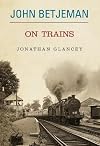
John Betjeman on Trains
by John Betjeman, Jonathan Glancey (Editor)
On This Page
Description
John Betjeman (1906-1984) was not only one of the best-loved Englishmen of the twentieth century, he was also the people's favourite poet and champion of many causes linked to the preservation of Britain's heritage. Whether those causes concerned buildings, bridges or railway branch lines, Betjeman was a feared adversary of bureaucratic excesses. This delightful little book is a celebration of his love of railways and rail travel. Ten letters selected by his daughter, Candida Lycett Green, show more each describe a journey that he made or that he planned to make or that he planned for a friend or relative. Jonathan Glancey has added his own words to each letter; words that set the scene, bring the letters to life, that describe Betjeman's moods - humorous, mischievous, brisk for business - and above all, remind us of the age of the steam locomotive in Britain and the many stations closed and track miles lost during the sixties and seventies. show lessTags
Recommendations














Member Recommendations


Member Reviews
Edited and then extensively commented on by Jonathan Glancey this little volume is based on ” ten letters selected by his daughter each describing a journey that Betjeman made or that he planned to make or that he planned for a friend or relative.” Indeed, some of these letters that form the “chapter headings” of each of the pieces are no more than a few quick lines that Betjeman jotted down for intending visitors in order to ensure they chose the right train, or alighted at the right station. From these few scraps Glancey assembles us a delicious and satisfying repast that fills.
Glancey’s elaborations on Betjeman’s friends and visitor, supported by his observations of the trains, the geography, views – or as Betjeman show more called them “landskips” - are then fleshed out with the history of the locale or the subject of the intended meeting of these visits. Some form recollections recalled in greater detail by the poet laureate himself in his work Trains and Buttered Toast.(http://www.librarything.com/work/1046085).
All are charming to read and should be valued as vinaigrettes to this meal of a time that has now passed.
It is true however; this work is far more by Glancey than Betjeman, the editor became its author, but drew directly and pleasingly on the master’s own letters and was directed by the prose John Betjeman composed. show less
Glancey’s elaborations on Betjeman’s friends and visitor, supported by his observations of the trains, the geography, views – or as Betjeman show more called them “landskips” - are then fleshed out with the history of the locale or the subject of the intended meeting of these visits. Some form recollections recalled in greater detail by the poet laureate himself in his work Trains and Buttered Toast.(http://www.librarything.com/work/1046085).
All are charming to read and should be valued as vinaigrettes to this meal of a time that has now passed.
It is true however; this work is far more by Glancey than Betjeman, the editor became its author, but drew directly and pleasingly on the master’s own letters and was directed by the prose John Betjeman composed. show less
Ratings
Members
- Recently Added By
Lists

Best of Travel Narratives (Trains)
22 works; 5 members
Author Information

130+ Works 3,914 Members
A leading modern champion of the values of an older England, John Betjeman was born in Highgate, London, to a well-off merchant family. The loneliness and suffering of his upbringing, first under nursemaids and then at a series of schools, often surface in his poetry. He went to Magdalene College, Oxford, where he belonged to the same smart social show more set as Evelyn Waugh. Deliberately free from the difficulties of much modern verse, Betjeman's poetry harks back to a more accessible British tradition that includes Alfred, Lord Tennyson and Thomas Hardy. With quiet wit he resisted the debasements of modern mass culture in favor of an older England simpler, more rural, and more religious than the current one. Both W. H. Auden and Philip Larkin especially admired his work, and Auden even edited a selection of it. His harsher critics have found him unintellectual and sentimental. His poetry has achieved a huge circulation in Great Britain, with the Collected Poems (1958) reputedly selling more than 100,000 copies. Considered a national institution, he succeeded Cecil Day Lewis as poet laureate in 1972. Betjeman worked in a variety of media and achieved wide public attention as host for a television series on the history of British architecture, one of his prime interests. He wrote a great deal on architecture, especially for the Architectural Review. Betjeman died in 1984. (Bowker Author Biography) show less

Jonathan Glancey is the architecture and design editor of The Guardian. He lives in London.
Classifications
- Genres
- Nonfiction, Literature Studies and Criticism, Biography & Memoir
- DDC/MDS
- 385.0941 — Society, government, & culture Commerce, communications & transportation regulations Railroad transportation Subdivisions History, geographic treatment, biography Europe British Isles - UK, Great Britain, Scotland, Ireland
- LCC
- HE3015 .B485 — Social sciences Transportation and communications Transportation and communications Railroads. Rapid transit systems
- BISAC
Statistics
- Members
- 45
- Popularity
- 663,720
- Reviews
- 1
- Rating
- (3.50)
- Languages
- English
- Media
- Paper
- ISBNs
- 1
- ASINs
- 1