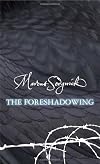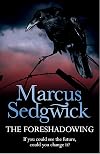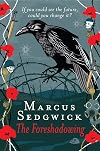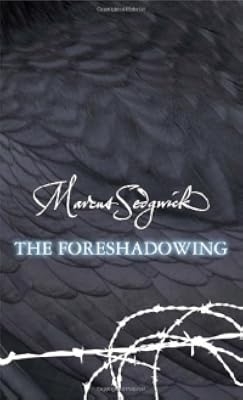
The Foreshadowing
by Marcus Sedgwick
On This Page
Description
Having always been able to know when someone is going to die, Alexandra poses as a nurse to go to France during World War I to locate her brother and to try to save him from the fate she has foreseen for him.Tags
Recommendations



















Member Reviews
During World War I, Alexandra is working in a hospital healing injured soldiers discovers she has a dark gift. She can see the deaths of the people around her. It was something she experienced a time or two in the past, but now she is surrounded by death, and she can no longer ignore the truth.
This was a surprising one for me. I admit I really only read it because I was looking for something quick and easy to read, and this YA book with big text and short chapters fit the bill. It captured my attention quick and didn't let go until the last page. The funny thing is, I'm having a difficult time explaining why. It gives a bit of historical detail but that isn't the focus, and there is a paranormal edge with Alexandra's gift/curse but it show more doesn't even really delve into magical realism or paranormal-anything. There is some family drama but it's understated, to say the least. The whole book seems fuzzy in retrospect, you could say it is as ephemeral as Alexandra's visions. Nevertheless, the plot had me hooked throughout, and it was a very satisfying read. show less
This was a surprising one for me. I admit I really only read it because I was looking for something quick and easy to read, and this YA book with big text and short chapters fit the bill. It captured my attention quick and didn't let go until the last page. The funny thing is, I'm having a difficult time explaining why. It gives a bit of historical detail but that isn't the focus, and there is a paranormal edge with Alexandra's gift/curse but it show more doesn't even really delve into magical realism or paranormal-anything. There is some family drama but it's understated, to say the least. The whole book seems fuzzy in retrospect, you could say it is as ephemeral as Alexandra's visions. Nevertheless, the plot had me hooked throughout, and it was a very satisfying read. show less
[This is a review I wrote in 2007]
Beautifully written (as always from Marcus Sedgwick), this thought provoking novel will help to bring alive a small part of the horror and sadness of the First World War for the next generation. Brings to life the reality of war in France and the senseless loss of so many men on the fields of Flanders.
In 1915 Sasha (Alexandra) Fox is 17 years old, and lives in her family home, a large house in Brighton. Sasha has a privileged background. Her father is an eminent doctor at the local hospital and Sasha is from an era where young ladies were not expected to work, but to marry well. Sasha's future seems to be mapped out. However, war alters this perspective.
Sasha has two elder brothers; Edgar who is a few show more years her senior, and Tom (her closest confidant) who is a year older than herself. Edgar enlists as an officer almost as soon as the war has begun, and in 1915 he goes off to the fields of France to fight. Tom is not so sure that he wants to follow in his brother's footsteps, but he has some time to decide as he is not yet 18. Sasha wants to help with the war effort and after much persuasion eventually persuades her father to let her train as a VAD nurse and start work in the local hospital. However, a few strange events with patients in the hospital (Sasha has visions and premonitions of death) lead to her father preventing her from working there any longer.
But Sasha won't give up... And her visions get stronger and become more personal... There's just something that Sasha has to do.
My only criticism is that the paragraphs about Sasha's visions and dreams are not as clear and well-constructed as the rest of the novel. This is probably intentional, but annoys me just slightly. If you enjoy this and want to read a real life account try Vera Brittain's "Testament of Youth" and "Letters from a Lost Generation". Although "Foreshadowing" is aimed at older children, this is equally readable by adults as well! I can recommend it. show less
Beautifully written (as always from Marcus Sedgwick), this thought provoking novel will help to bring alive a small part of the horror and sadness of the First World War for the next generation. Brings to life the reality of war in France and the senseless loss of so many men on the fields of Flanders.
In 1915 Sasha (Alexandra) Fox is 17 years old, and lives in her family home, a large house in Brighton. Sasha has a privileged background. Her father is an eminent doctor at the local hospital and Sasha is from an era where young ladies were not expected to work, but to marry well. Sasha's future seems to be mapped out. However, war alters this perspective.
Sasha has two elder brothers; Edgar who is a few show more years her senior, and Tom (her closest confidant) who is a year older than herself. Edgar enlists as an officer almost as soon as the war has begun, and in 1915 he goes off to the fields of France to fight. Tom is not so sure that he wants to follow in his brother's footsteps, but he has some time to decide as he is not yet 18. Sasha wants to help with the war effort and after much persuasion eventually persuades her father to let her train as a VAD nurse and start work in the local hospital. However, a few strange events with patients in the hospital (Sasha has visions and premonitions of death) lead to her father preventing her from working there any longer.
But Sasha won't give up... And her visions get stronger and become more personal... There's just something that Sasha has to do.
My only criticism is that the paragraphs about Sasha's visions and dreams are not as clear and well-constructed as the rest of the novel. This is probably intentional, but annoys me just slightly. If you enjoy this and want to read a real life account try Vera Brittain's "Testament of Youth" and "Letters from a Lost Generation". Although "Foreshadowing" is aimed at older children, this is equally readable by adults as well! I can recommend it. show less
This was the amazing story of a young girl racing against the clock to save her brother, and, in that process, piece her broken family back together again.
That’s my summary, and, as far as summaries go, I will admit that this is pathetic. But you’re not reading my review to read the summary of the story – doubtless, you will see dozens of other summaries should you continue to read on, or you could just read the official summary at the top and be done with it. You’re reading my review now to see what I thought of the story, how I felt when I was reading, and how I felt after I read it.
First off, this was one bloody good book. It depicts the life of a girl in WW1, but doesn’t go overboard with the details about the war. I have show more read other, similar books (which shall not be named) that are basically non-fiction, for all you read about the actual characters. This book, however, gives you details of WW1, yes, but does so in a way that it feels natural (- like, for those who have read it, [b:Between Shades of Grey]). You never once encounter boring old statistics like how many men died, or the amount of war won or anything like that, but instead read of how people had to create their own weapons, how they had ambulance trains with nurses aboard to tend the sick whilst their wounds were not yet infected.
Secondly, I loved his writing style. I loved how none of his chapters were more than two or three pages long, how some were blank, and how some had only two or three sentences. Alexandra’s character is developed really well, and the link with Cassandra was pure genius. His book was targeted for teens, and I’m sure anyone who’d read it that was a teen would agree with me when I say that I was right there beside her when she was being dealt the injustices by her father. Another thing that really hit home was how nobody believed Alexandra when she said that she could prophet people’s deaths. Everyone knows how it feels to be disbelieved in even when you know with absolute certainty that you are correct – especially when it has already been proven that you are accurate – it is the most frustrating feeling in the world.
Lastly, the climax was brilliant. The plot twist- that Alexandra shot him was so unexpected I knew myself to be gaping at the book. I thought that it would perhaps have been better if Jack had not told Alexandra that almost none survived, because although it would have made her feel guilty, it would have reinforced that point that we could not change the future – after all, Alexandra tried and ended up doing exactly what her dreams foretold. show less
That’s my summary, and, as far as summaries go, I will admit that this is pathetic. But you’re not reading my review to read the summary of the story – doubtless, you will see dozens of other summaries should you continue to read on, or you could just read the official summary at the top and be done with it. You’re reading my review now to see what I thought of the story, how I felt when I was reading, and how I felt after I read it.
First off, this was one bloody good book. It depicts the life of a girl in WW1, but doesn’t go overboard with the details about the war. I have show more read other, similar books (which shall not be named) that are basically non-fiction, for all you read about the actual characters. This book, however, gives you details of WW1, yes, but does so in a way that it feels natural (- like, for those who have read it, [b:Between Shades of Grey]). You never once encounter boring old statistics like how many men died, or the amount of war won or anything like that, but instead read of how people had to create their own weapons, how they had ambulance trains with nurses aboard to tend the sick whilst their wounds were not yet infected.
Secondly, I loved his writing style. I loved how none of his chapters were more than two or three pages long, how some were blank, and how some had only two or three sentences. Alexandra’s character is developed really well, and the link with Cassandra was pure genius. His book was targeted for teens, and I’m sure anyone who’d read it that was a teen would agree with me when I say that I was right there beside her when she was being dealt the injustices by her father. Another thing that really hit home was how nobody believed Alexandra when she said that she could prophet people’s deaths. Everyone knows how it feels to be disbelieved in even when you know with absolute certainty that you are correct – especially when it has already been proven that you are accurate – it is the most frustrating feeling in the world.
Lastly, the climax was brilliant. The plot twist
I'm a fan of Sedgwick's spare style and his always interesting stories. 2014 marks the 100th anniversary of the start of WWI, so I was interested in dipping into this story. Like some other reviewers, I wasn't sure I really knew Sasha, the main character, and what motivated her besides her brother. It's one of those books where, in the end, what really matters is what the men do and the female characters react to and reflect them, but don't have independent needs and wants. Though Sasha wants to be a nurse, when she finally becomes quite a skilled one, that achievement is always in the shadow of the dubious pursuit of saving her brother, Tom. The other brother, Edgar, is thoroughly dislikable, and a late attempt in the book to show more rehabilitate him really falls flat. A love interest at the end is a real deus ex machina, able to navigate what were likely completely unnavigable areas on the eve of the Battle of the Somme. I wish the story has made a little more sense, even with the "magic realism" of her ability to see people's deaths. Even with fantasy and magic, there has to be an internal logic. Sedgwick uses it when it serves him then ignores it when it doesn't. In terms of a child's view of WWI, Michael Morpugo's [b:War Horse|792161|War Horse (War Horse, #1)|Michael Morpurgo|https://d.gr-assets.com/books/1360677423s/792161.jpg|1575365] is quite similar -- child finds a way to join up to save a loved one and succeeds despite the atrocities around him -- and is more effective as a novel.
That said, there is some really lovely writing here. Sasha and her dispatcher, frantically trying to find Tom, end up in the middle of the Somme fighting. He crashes his motorcycle.
That said, there is some really lovely writing here. Sasha and her dispatcher, frantically trying to find Tom, end up in the middle of the Somme fighting. He crashes his motorcycle.
Some Scots were passing. They laughed at me, but I didn't care. No one could recognize me, I thought, and two of them came over and lifted the bike free with Jack's help, but we had only made our way a little farther when it ran out of petrol. I was too tired even to cry now, and we stood staring at the useless bike, lying on its side like a dead animal in the mud. With a strangely unnatural speed, the mist began to clear, the sun burning it off in a matter of minutes, and we could see it was going to be a hot day after all. We saw we were surrounded by the dead. Bodies lay here and there, uncared for, unburied, almost unnoticed. I tried not to look at them, but couldn't help staring at the huge corpses of horses that lay among the human dead.show less
This was definitely one of Marcus Sedgwick's better novels. Eerie and gothic in its own tone, if you find historical fiction to be a genre you have trouble getting into- then pick up this book. It certainly should help break some barriers and may even get you into a new genre. has a splash of 'fantasy' in it that provides an enjoyable twist and keeps the period fiction intriguing and engaging. Inspired by the Greek myth Cassandra of Troy that takes place in World War 1 is a good way to look at it! The ending is also outstanding, a twist that most readers agree never saw coming and is left ambiguously open ended.
Interesting - I liked the glimpse into what been a nurse (or doctor) in wartime is like, though I was not thrilled all the way through…
The Foreshadowing by Marcus Sedgwick is a unique blend of historical fiction and the supernatural side of sci-fi. Sedgwick uses World War I as the backdrop for his tale set in England and France. Through a series of collected thoughts, the reader follows Alexandra Fox as she reluctantly uses her ability to peek into the future and see death to prevent her brother Tom from being killed on the French Front.
Alexandra first experienced this curse when she was five and had a vision of her friend Cassandra’s impending death. This vision changed the way Alexandra’s family related to her and became a barrier between her and them.
At the outbreak of World War I, sixteen-year-old Alexandra wants to train as a nurse, but her father and oldest show more brother, Edgar, believe she is weak and incapable. They are both suspicious and hostile toward her ability to see the deaths of those around her.
Edgar soon joins the fight in France as an officer. Before long Tom, Alexandra’s other brother, enlists in the army as a private and follows Edgar across the Channel.
Alexandra struggles with accepting her visions and constantly suppresses them so that she can be seen as normal. Father reluctantly agrees to allow Alexandra to train as a nurse, all the while expecting her to fail. Meanwhile, Alexandra has been reading a collection of Greek myths and sees the parallel between her life and that of Cassandra in The Illiad.
Alexandra sees Tom’s death on the battlefield and runs away to France, in an attempt to take control of her visions and stop Tom’s death. Alexandra, who is travelling as a nurse, is assigned to a treatment station for injured soldiers where she is constantly barraged by death and the horrors of war. She soon meets Hoodoo Jack, a young soldier whose shares her ability to accurately foretell death. He uses his role as a battlefield messenger to help Alexandra find Tom’s division on the Front. Jack and Alexandra must race against time to get to Tom before her vision comes true.
The class structure and accepted system of proper behavior for young women that existed in World War I England make it an intriguing setting for the classic teenage themes of:
• Rejection based on things beyond our control
• Struggles with self-image
• Gaining acceptance by denying parts of yourself
• Trying to bear the responsibility for fixing a poor family life
• Strong desire to positively impact the lives of those around you
Running throughout The Foreshadowing is also the idea that war and death have no purpose. The causes of World War I or motivations for a soldier to fight (apart from a desire for excitement and adventure) are never addressed.
The plot of The Foreshadowing also contains a few inconsistencies in logic. For example, while Alexandra has visions of the deaths of the soldiers she is treating at the camp, she is expressing frustration about not knowing who to help first because she doesn’t know who will survive. Logically, if she has seen an imminent death, she knows that soldier is beyond her help.
Overall, The Foreshadowing is a fast-paced book that is difficult to put down. Sedgwick makes use of a unique style, counting down chapters backwards that culminate in Alexandra’s realization and acceptance of herself as a whole person.
I would recommend this book as a solid vehicle for introducing young teens to historical fiction, especially those who already enjoy modern gothic fiction. show less
Alexandra first experienced this curse when she was five and had a vision of her friend Cassandra’s impending death. This vision changed the way Alexandra’s family related to her and became a barrier between her and them.
At the outbreak of World War I, sixteen-year-old Alexandra wants to train as a nurse, but her father and oldest show more brother, Edgar, believe she is weak and incapable. They are both suspicious and hostile toward her ability to see the deaths of those around her.
Edgar soon joins the fight in France as an officer. Before long Tom, Alexandra’s other brother, enlists in the army as a private and follows Edgar across the Channel.
Alexandra struggles with accepting her visions and constantly suppresses them so that she can be seen as normal. Father reluctantly agrees to allow Alexandra to train as a nurse, all the while expecting her to fail. Meanwhile, Alexandra has been reading a collection of Greek myths and sees the parallel between her life and that of Cassandra in The Illiad.
Alexandra sees Tom’s death on the battlefield and runs away to France, in an attempt to take control of her visions and stop Tom’s death. Alexandra, who is travelling as a nurse, is assigned to a treatment station for injured soldiers where she is constantly barraged by death and the horrors of war. She soon meets Hoodoo Jack, a young soldier whose shares her ability to accurately foretell death. He uses his role as a battlefield messenger to help Alexandra find Tom’s division on the Front. Jack and Alexandra must race against time to get to Tom before her vision comes true.
The class structure and accepted system of proper behavior for young women that existed in World War I England make it an intriguing setting for the classic teenage themes of:
• Rejection based on things beyond our control
• Struggles with self-image
• Gaining acceptance by denying parts of yourself
• Trying to bear the responsibility for fixing a poor family life
• Strong desire to positively impact the lives of those around you
Running throughout The Foreshadowing is also the idea that war and death have no purpose. The causes of World War I or motivations for a soldier to fight (apart from a desire for excitement and adventure) are never addressed.
The plot of The Foreshadowing also contains a few inconsistencies in logic. For example, while Alexandra has visions of the deaths of the soldiers she is treating at the camp, she is expressing frustration about not knowing who to help first because she doesn’t know who will survive. Logically, if she has seen an imminent death, she knows that soldier is beyond her help.
Overall, The Foreshadowing is a fast-paced book that is difficult to put down. Sedgwick makes use of a unique style, counting down chapters backwards that culminate in Alexandra’s realization and acceptance of herself as a whole person.
I would recommend this book as a solid vehicle for introducing young teens to historical fiction, especially those who already enjoy modern gothic fiction. show less
Members
- Recently Added By
Lists

Unshelved Book Clubs
579 works; 5 members

Books about World War I
80 works; 14 members

World War I Fiction
94 works; 15 members

Books Read in 2015
3,299 works; 129 members

75 Books Challenge Halloween Read "Official" Selections
71 works; 7 members
Author Information

58+ Works 7,588 Members
Marcus Sedgwick was born in East Kent, England. He is primarily a young adult author. His books include She Is Not Invisible, White Crow, Revolver, and The Ghosts of Heaven. He won the 2014 Michael L. Printz Award for Midwinterblood. His first adult novel, A Love Like Blood, was published in 2014. (Bowker Author Biography)
Awards and Honors
Awards
Distinctions
Notable Lists
Common Knowledge
- Canonical title
- The Foreshadowing
- Original publication date
- 2005
- People/Characters
- Sasha; Thomas
- Important places
- England, UK
- Important events
- World War I
Classifications
- Genres
- Fiction and Literature, Teen, Young Adult
- DDC/MDS
- 823.914 — Literature & rhetoric English & Old English literatures English fiction 1900- 1901-1999 1945-1999
- LCC
- PZ7 .S4484 .F — Language and Literature Fiction and juvenile belles lettres Fiction and juvenile belles lettres Juvenile belles lettres
- BISAC
Statistics
- Members
- 471
- Popularity
- 64,393
- Reviews
- 19
- Rating
- (3.57)
- Languages
- Dutch, English, French
- Media
- Paper, Audiobook, Ebook
- ISBNs
- 13
- ASINs
- 3