
The Women's Room
by Marilyn French
On This Page
Description
This is the story of Mira Ward, a wife of the Fifties who becomes a woman of the Seventies. From the shallow excitements of suburban cocktail parties and casual affairs through the varied nightmares of rape, madness and loneliness to the dawning awareness of the exhilaration of liberation, the experiences of Mira and her friends crystallize those of a generation of modern women.Tags
Recommendations























Member Recommendations
Member Reviews
Whenever my ex-husband would see me re-reading this book, he hid, because he knew I would hate men for about a month afterward. This is one book that I truly think changed how I looked at my life. Younger women should read it so they can realize how much life has changed for women in the past five decades. One of my all-time favorite books.
A definite feminist classic and important work, or so I thought. I first read this book in the early 80's and remember how thoroughly it engaged me. I poured over every word, the women's stories moved me to tears and it was standard reading for most young women at the time. This novel opened the way to many, many discussions and we vowed to never let a man determine who we were and to firmly steer the course of our own lives. The Womens Room set me on the path of exploration; exploration into feminism and of who I was and wanted to be.
Nearly 30 years and many life experiences later I was eager to read this again. Disappointingly, the story feels very contrived, the characters don't feel real and it seems this was written mainly to show more repetitively hammer home the feminist agenda rather than because there is a tale to tell. My perspective has indeed changed so much that I felt it difficult to relate to the characters and I often just wanted to shout at them to stop whining and get on with it. However, having said that, this was still an important work for it's time. It was a catalyst for many women to start examining their lives and relationships, we do forget how incredibly and openly chauvinistic men were in those days, how difficult it was for women to break the chains of convention. We have come a long way since 1977 and it is partly due to novels like this that we opened our eyes and are now able to step up to the plate, rather than whining that someone wants us to wash it. show less
Nearly 30 years and many life experiences later I was eager to read this again. Disappointingly, the story feels very contrived, the characters don't feel real and it seems this was written mainly to show more repetitively hammer home the feminist agenda rather than because there is a tale to tell. My perspective has indeed changed so much that I felt it difficult to relate to the characters and I often just wanted to shout at them to stop whining and get on with it. However, having said that, this was still an important work for it's time. It was a catalyst for many women to start examining their lives and relationships, we do forget how incredibly and openly chauvinistic men were in those days, how difficult it was for women to break the chains of convention. We have come a long way since 1977 and it is partly due to novels like this that we opened our eyes and are now able to step up to the plate, rather than whining that someone wants us to wash it. show less
In a word, this book is terrible. The problem with reviewing The Women's Room lies in approaching a serious subject while talking about a book that is a big joke.
I'm not going to debate the plight of women, their oppression, and the limit of their scope given a thoroughly patriarchal society. All of this is real enough in life as it is in the book. My beef with the book is that a novel that purports to be about a woman's feminist awakening deals so dully with the symptoms of women's oppression and does no intelligent thinking as to the cause of it. All of the women are miserable. They have too many children, dirty dishes, and husbands that are emotionally unsupportive. That's all fine and dandy, but it never gets the reader farther show more into the question of what is this problem that has no name. Thy name (and cause) isn't simply dirty dishes.
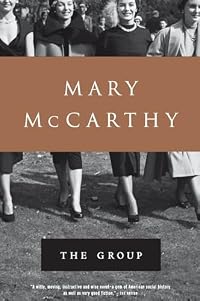
There is intelligent second wave feminism to be read out there, and this isn't it. Though not a novel, I recommend Marilyn Frye's The Politics of Reality if you'd like a thoughtful and powerful look at how patriarchy has restricted the lives of women. (I'll give you a hint--it isn't just a woman's failure to find "the right man" or her inability to have an orgasm.) Even Mary McCarthy's The Group is worth a try. While published in the 50s and set in the 30s, The Group also presents the lot of women by weaving the experiences of a group of college friends together. It's very well written (The Women's Room, in comparison, is about as stylistically slick as a brick), and still startlingly relevant. A huge difference between the books is that McCarthy's characters come from privileged backgrounds, but their position may still resonate with readers today better since, in contrast to The Women's Room, barefoot and pregnant is not the order of the day even though the problem that has no name persists. show less
I'm not going to debate the plight of women, their oppression, and the limit of their scope given a thoroughly patriarchal society. All of this is real enough in life as it is in the book. My beef with the book is that a novel that purports to be about a woman's feminist awakening deals so dully with the symptoms of women's oppression and does no intelligent thinking as to the cause of it. All of the women are miserable. They have too many children, dirty dishes, and husbands that are emotionally unsupportive. That's all fine and dandy, but it never gets the reader farther show more into the question of what is this problem that has no name. Thy name (and cause) isn't simply dirty dishes.
There is intelligent second wave feminism to be read out there, and this isn't it. Though not a novel, I recommend Marilyn Frye's The Politics of Reality if you'd like a thoughtful and powerful look at how patriarchy has restricted the lives of women. (I'll give you a hint--it isn't just a woman's failure to find "the right man" or her inability to have an orgasm.) Even Mary McCarthy's The Group is worth a try. While published in the 50s and set in the 30s, The Group also presents the lot of women by weaving the experiences of a group of college friends together. It's very well written (The Women's Room, in comparison, is about as stylistically slick as a brick), and still startlingly relevant. A huge difference between the books is that McCarthy's characters come from privileged backgrounds, but their position may still resonate with readers today better since, in contrast to The Women's Room, barefoot and pregnant is not the order of the day even though the problem that has no name persists. show less
Still Vital and Important!
Even though it was first published in 1977 and takes place between the late 1940s and the early 1970s, this novel is still powerful and relevant today. It’s the story of Mira Ward, who grows and evolves, as she struggles to find herself. Mira, stuck at home as an unhappy housewife for fifteen years, manages to survive a difficult marriage to a selfish husband. After her abusive marriage ends, Mira attends graduate school and finds work that she’s passionate about. More importantly, she learns to truly cherish her female friends, who provide valuable emotional support as well as insight into the problems of the patriarchal society they all live in.
I found Mira’s growing confidence in herself as well as her show more deep and warm relationships with other women very inspiring. It was also refreshing to read a novel about the central importance of women’s relationships to each other rather a novel where the women’s lives revolve around men and their needs. I was disappointed by the lack of positive male characters in the book; however, the author may have downplayed them to emphasize the lives of the female characters.
This unique novel is a must-read for women of all generations. It’s not to be missed! show less
Even though it was first published in 1977 and takes place between the late 1940s and the early 1970s, this novel is still powerful and relevant today. It’s the story of Mira Ward, who grows and evolves, as she struggles to find herself. Mira, stuck at home as an unhappy housewife for fifteen years, manages to survive a difficult marriage to a selfish husband. After her abusive marriage ends, Mira attends graduate school and finds work that she’s passionate about. More importantly, she learns to truly cherish her female friends, who provide valuable emotional support as well as insight into the problems of the patriarchal society they all live in.
I found Mira’s growing confidence in herself as well as her show more deep and warm relationships with other women very inspiring. It was also refreshing to read a novel about the central importance of women’s relationships to each other rather a novel where the women’s lives revolve around men and their needs. I was disappointed by the lack of positive male characters in the book; however, the author may have downplayed them to emphasize the lives of the female characters.
This unique novel is a must-read for women of all generations. It’s not to be missed! show less
from 11/2013:
last time around i didn't want to tackle so much in a review, because there is a lot that she covers in this book, and a lot to respond to, especially when i was new at writing reviews. i wish i had written more, though, because i feel so clearly differently about it this time than last.
i still won't write all that i could, because this review would be book length itself.
there is so much in this book. so much of it has stood the test of time and so much of it hasn't. so much of it is profound and so much of it is dead wrong. it's a hard book to read. it's dense and the main character isn't likable (for the most part). it's challenging (in a good way) but also off-putting.
i think this book, through it's group of women show more characters, has important conversations and realizations about feminism and gender bias and rape culture, exposing the reader to political issues, radical feminism, race issues, class issues, and lesbian issues. or it was intending to. she fell short on many of these (race and sexuality in particular) but it was a valiant attempt for its time. and realistic in that throughout their conversations, many of the women stumbled or slowly came to their convictions. but there was a lot of reinforcing of stereotypes that bothered me. and i'm not sure if she (french) meant it when she had so many of the women want (or think they want?) forcible sexual encounters. if she didn't mean for that to be true it wasn't as clear as it could be. her depiction of the token lesbian really irked me as well. iso sleeps with any of the women in their friend circle who is vulnerable basically. it's a very stereotypical (and unflattering, even as iso was one of the "better" characters) and not too typical (from my experience) representation. she used the "n word" all the time, and not always in a way that seemed to be intentionally political, but as if she was just using it. but she also manages to bring to the surface so many issues about gender that i would think reading this book when it was written would make your head explode. it's a testament to how far we've come that so much of it hasn't held up well, and a testament to how far we still need to go that much of it still reads like it could have been written yesterday.
i'm all over the place here. i think that is because, for me, this book tries to cover too much ground. it could have been hundreds of pages shorter and still gone more in depth about "women's issues" and been more accessible and more of a lightening rod.
at the same time, i know when i first read this, i really felt like this book spoke to me on a visceral level. i felt this book said things that i, and women i knew, were saying or thinking and that i wasn't reading elsewhere, even 30 years after it was written. so that's something. this time, though, while parts of it really spoke to me, other parts made me want to scream back, and i wanted the whole of it to be better, more true to life today, and more applicable. a lot has changed in the years that she wrote this, so this isn't a book that can be taken and seen as if it was written today. but at the same time, it's immediately clear that so much is still the same, so much is keeping women in many of the same or similar places we were in when french wrote this. so maybe this book has more staying power than i'm giving it credit for. and i will say that it very much makes me nostalgic for those college days of group friendship and long philosophical talks where you think you and/or your friends have just come up with the most original and profound stuff that could change the world.
lots of the quotes won't work out of context because there were pages and pages leading up to the point she makes but i'll include some of what i noted throughout:
"Wife or whore, women are the most scorned class in America. You may hate niggers and PRs and geeks, but you're a little frightened of them. Women don't even get the respect of fear."
"...everybody despised boys, everyone looked down on them, the teachers, her mother, even her father. 'Boys!' they would exclaim in disgust. But everyone admired men."
"I've often seen blushing young men with shining eyes behave the same way [as titillating young women], but no one says of them that they want to be raped. ... no one accuses them of being cunt teases."
on abortion, and one of the religious problems on ending an unwanted pregnancy that had never occurred to me:
"'I'd love to get one! But if I did it, I'd have to go to confession and say I was sorry, but I wouldn't be sorry so I couldn't say it so I couldn't go to confession and I could never take communion again!' It poured out like a stream of rage."
"'It's as though there's more freedom, but all it means is more freedom for men.'"
"What I don't understand is where women suddenly get power. Because they do. The kids, who almost always turn out to be a pile of shit, are, we all know, Mommy's fault. Well, how did she manage that, this powerless creature? Where was all her power during the years she was doing five loads of laundry a week worrying about mixing the whites with the colors? How was she able to offset Daddy's positive influence? How come she never knows she has this power until afterward, when it gets called responsibility?"
"Men always seem to think power is more attractive [to women] than lovingness. I suppose they have some reason to think so."
(3 stars)
from 4/2008
too much to discuss here, too much to think about. a feminist manifesto of sorts, with a not so feminist discussion of rape toward the end that only partially redeems itself...
2 quotes from the passage that challenges me the most (and which might not make sense out of context) :
"I've dropped out of that world. I belong to all women's groups now. I shop at a feminist market, bank in a women's bank. I've joined a militant feminist organization, and in the future I will work only in that. Fuck the dissertation, the degree, Harvard. They're all part of the male world. you can't compromise with it. It eats you alive, rapes you body and soul...."
"I don't look for pleasure any more in life. It's a luxury I can't afford. For forty-odd years I've been a member of an oppressed people consorting with the enemy, advancing the enemy's cause. In some places that's called slavery. I'm through with it."
(4 stars) show less
last time around i didn't want to tackle so much in a review, because there is a lot that she covers in this book, and a lot to respond to, especially when i was new at writing reviews. i wish i had written more, though, because i feel so clearly differently about it this time than last.
i still won't write all that i could, because this review would be book length itself.
there is so much in this book. so much of it has stood the test of time and so much of it hasn't. so much of it is profound and so much of it is dead wrong. it's a hard book to read. it's dense and the main character isn't likable (for the most part). it's challenging (in a good way) but also off-putting.
i think this book, through it's group of women show more characters, has important conversations and realizations about feminism and gender bias and rape culture, exposing the reader to political issues, radical feminism, race issues, class issues, and lesbian issues. or it was intending to. she fell short on many of these (race and sexuality in particular) but it was a valiant attempt for its time. and realistic in that throughout their conversations, many of the women stumbled or slowly came to their convictions. but there was a lot of reinforcing of stereotypes that bothered me. and i'm not sure if she (french) meant it when she had so many of the women want (or think they want?) forcible sexual encounters. if she didn't mean for that to be true it wasn't as clear as it could be. her depiction of the token lesbian really irked me as well. iso sleeps with any of the women in their friend circle who is vulnerable basically. it's a very stereotypical (and unflattering, even as iso was one of the "better" characters) and not too typical (from my experience) representation. she used the "n word" all the time, and not always in a way that seemed to be intentionally political, but as if she was just using it. but she also manages to bring to the surface so many issues about gender that i would think reading this book when it was written would make your head explode. it's a testament to how far we've come that so much of it hasn't held up well, and a testament to how far we still need to go that much of it still reads like it could have been written yesterday.
i'm all over the place here. i think that is because, for me, this book tries to cover too much ground. it could have been hundreds of pages shorter and still gone more in depth about "women's issues" and been more accessible and more of a lightening rod.
at the same time, i know when i first read this, i really felt like this book spoke to me on a visceral level. i felt this book said things that i, and women i knew, were saying or thinking and that i wasn't reading elsewhere, even 30 years after it was written. so that's something. this time, though, while parts of it really spoke to me, other parts made me want to scream back, and i wanted the whole of it to be better, more true to life today, and more applicable. a lot has changed in the years that she wrote this, so this isn't a book that can be taken and seen as if it was written today. but at the same time, it's immediately clear that so much is still the same, so much is keeping women in many of the same or similar places we were in when french wrote this. so maybe this book has more staying power than i'm giving it credit for. and i will say that it very much makes me nostalgic for those college days of group friendship and long philosophical talks where you think you and/or your friends have just come up with the most original and profound stuff that could change the world.
lots of the quotes won't work out of context because there were pages and pages leading up to the point she makes but i'll include some of what i noted throughout:
"Wife or whore, women are the most scorned class in America. You may hate niggers and PRs and geeks, but you're a little frightened of them. Women don't even get the respect of fear."
"...everybody despised boys, everyone looked down on them, the teachers, her mother, even her father. 'Boys!' they would exclaim in disgust. But everyone admired men."
"I've often seen blushing young men with shining eyes behave the same way [as titillating young women], but no one says of them that they want to be raped. ... no one accuses them of being cunt teases."
on abortion, and one of the religious problems on ending an unwanted pregnancy that had never occurred to me:
"'I'd love to get one! But if I did it, I'd have to go to confession and say I was sorry, but I wouldn't be sorry so I couldn't say it so I couldn't go to confession and I could never take communion again!' It poured out like a stream of rage."
"'It's as though there's more freedom, but all it means is more freedom for men.'"
"What I don't understand is where women suddenly get power. Because they do. The kids, who almost always turn out to be a pile of shit, are, we all know, Mommy's fault. Well, how did she manage that, this powerless creature? Where was all her power during the years she was doing five loads of laundry a week worrying about mixing the whites with the colors? How was she able to offset Daddy's positive influence? How come she never knows she has this power until afterward, when it gets called responsibility?"
"Men always seem to think power is more attractive [to women] than lovingness. I suppose they have some reason to think so."
(3 stars)
from 4/2008
too much to discuss here, too much to think about. a feminist manifesto of sorts, with a not so feminist discussion of rape toward the end that only partially redeems itself...
2 quotes from the passage that challenges me the most (and which might not make sense out of context) :
"I've dropped out of that world. I belong to all women's groups now. I shop at a feminist market, bank in a women's bank. I've joined a militant feminist organization, and in the future I will work only in that. Fuck the dissertation, the degree, Harvard. They're all part of the male world. you can't compromise with it. It eats you alive, rapes you body and soul...."
"I don't look for pleasure any more in life. It's a luxury I can't afford. For forty-odd years I've been a member of an oppressed people consorting with the enemy, advancing the enemy's cause. In some places that's called slavery. I'm through with it."
(4 stars) show less
t least once a year, I take my well used copy down from the library shelf and each time it feels like welcoming home a favourite, old friend. This was the book which introduced me to feminism, many years ago and one which literally changed my life. I have grown up with this book; it has seen me through early adulthood, motherhood and beyond. In every difficult time of my life it has always given me some insight into my predicament as sadly some of the frustrations and resentments which women experienced in the fifties are still present today. I have bought copies for my daughters and friends as I believe young women can still learn so much from this insightful and beautifully written book
This is an important book, full of emotion - anger, hope, frustration, love, sadness, regret. Mira moves from housewifery to Harvard, through relationships with family, friends, lovers and children, to a present as a writer, alone on a beach - but somehow whole. This is a book that matters because of what it says and what it feels - not because of the way it is written. Any woman will recognise parts of the book and argue with others - and will live through some of it. A life of liberated academia will never be for everyone, but a life of self awareness and choice is what French demands. It's closer now for more of us, but still too many women are locked in their rooms.
Members
- Recently Added By
Lists

Best Feminist Literature
188 works; 26 members

1970s
657 works; 23 members

Five star books
1,755 works; 107 members

Bibliography for How to be a Heroine
148 works; 12 members

Swinging Seventies
255 works; 18 members
Author Information

39+ Works 5,314 Members
Writer and feminist activist Marilyn French was born in Brooklyn, New York on November 21, 1929. She studied philosophy and English literature at Hofstra College, earning a bachelor's degree in 1951 and a master's in 1964. Before earning her doctorate from Harvard University, she taught English at Hofstra from 1964 to 1968. She was an assistant show more professor of English at the College of the Holy Cross from 1972 to 1976. She wrote numerous books throughout her lifetime including The Women's Room (1977), The War against Women (1992), and Season in Hell: A Memoir (1998). She died of heart failure on May 2, 2009 at the age of 79. (Bowker Author Biography) show less
Some Editions
Awards and Honors
Distinctions
Notable Lists
Series
Belongs to Publisher Series
Virago Modern Classics (437)
rororo (12061)
Work Relationships
Common Knowledge
- Canonical title*
- Frauen
- Original title
- The Women's Room
- Original publication date
- 1977
- Related movies
- The Women's Room (1980 | TV | IMDb)
- Dedication
- To Isabel, to Janet - sisters, friends
- First words
- Mira was hiding in the ladies' room.
- Last words
- (Click to show. Warning: May contain spoilers.)But only the tide rolls in.
- Blurbers
- Friedan, Betty
*Some information comes from Common Knowledge in other languages. Click "Edit" for more information.
Classifications
Statistics
- Members
- 2,110
- Popularity
- 9,687
- Reviews
- 41
- Rating
- (3.92)
- Languages
- 11 — Danish, Dutch, English, Finnish, French, German, Hungarian, Italian, Norwegian (Bokmål), Spanish, Swedish
- Media
- Paper, Ebook
- ISBNs
- 69
- ASINs
- 18