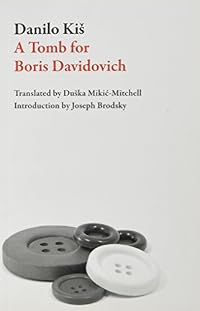
A Tomb for Boris Davidovich
by Danilo Kiš
On This Page
Description
Composed of seven dark tales, A Tomb for Boris Davidovich presents variations on the theme of political and social self-destruction throughout Eastern Europe in the first half of the twentieth century. The characters in these stories are caught in a world of political hypocrisy, which ultimately leads to death, their common fate. Although the stories Kis tells are based on historical events, the beauty and precision of his prose elevates these ostensibly true stories into works of literary show more art that transcend the politics of their time. show lessTags
Recommendations





Member Recommendations
Member Reviews
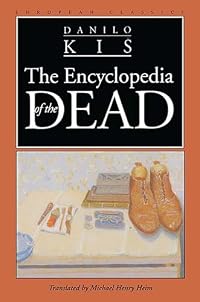
This thin volume is part of the Writers from the Other Europe series, edited by Philip Roth. It contains seven short works, including the titular story, with interwoven themes and some recurring characters. Although none of the characters are Serbo-Croatian and the stories are set in former Comintern countries, the depiction of ill treatment at the hands of Stalinists was enough to enrage Yugoslavs when the book was published in 1976. Critics also attacked the book as plagiarism, because of a technique Kiš used of including quotes directly lifted from other texts. Although he defended his use of textual transposition, the flap was enough to cause him to eventually flee to Paris where his marriage and his health deteriorated. His last show more work of note, [Encyclopedia of the Dead], partially rehabilitated him, and he finally won the [[Andric]] Prize.
One story, "Dogs and Books", is set in 1330 and describes the persecution of Jews in France by the Inquisition. Baruch David Neumann is forcibly converted to Christianity and then fights to prove that conversion by force is not legal or morally binding. A mob disagrees with his learned argument:
I was busy reading and writing when a great number of these men burst into my chamber, armed with ignorance blunt as a whip, and hatred sharp as a knife.
I love that line.
It wasn't my silks that brought blood to their eyes, but the books arranged on my shelves; they shoved the silks under their cloaks, but they threw the books on the floor, stamped on them, and ripped them to shreds before my eyes.
The parallels between this attack by the Inquisition and later attacks on intellectuals by the NKVD (or the Gestapo, for that matter) are striking.
On August 16, 1330, Baruch finally wavered, confessed, and affirmed that he had renounced the Jewish faith. Since they had read to him the record of the hearing, the said Neumann, when asked whether he had made his confession under torture or immediately thereafter, answered that he had made his confession immediately thereafter, about three o'clock in the morning, and on that same day in the evening hours he made the same confession without having been first brought into the torture chamber.
And so is a man broken. No matter who is holding the whip.
The collection ends with a pseudo-biography, "The Short Biography of A.A. Darmolatov", and the following postscript:
He remains a medical phenomenon in Russian literature: Darmolatov's case was entered in all the latest pathology textbooks. A photography of his scrotum, the size of the biggest collective farm pumpkin, is also reprinted in foreign medical books, where elephantiasis (elephantiasis nostras) is mentioned, and as a moral for writers that to write one must have more than big balls.
As Kiš discovered to his own detriment. show less
One story, "Dogs and Books", is set in 1330 and describes the persecution of Jews in France by the Inquisition. Baruch David Neumann is forcibly converted to Christianity and then fights to prove that conversion by force is not legal or morally binding. A mob disagrees with his learned argument:
I was busy reading and writing when a great number of these men burst into my chamber, armed with ignorance blunt as a whip, and hatred sharp as a knife.
I love that line.
It wasn't my silks that brought blood to their eyes, but the books arranged on my shelves; they shoved the silks under their cloaks, but they threw the books on the floor, stamped on them, and ripped them to shreds before my eyes.
The parallels between this attack by the Inquisition and later attacks on intellectuals by the NKVD (or the Gestapo, for that matter) are striking.
On August 16, 1330, Baruch finally wavered, confessed, and affirmed that he had renounced the Jewish faith. Since they had read to him the record of the hearing, the said Neumann, when asked whether he had made his confession under torture or immediately thereafter, answered that he had made his confession immediately thereafter, about three o'clock in the morning, and on that same day in the evening hours he made the same confession without having been first brought into the torture chamber.
And so is a man broken. No matter who is holding the whip.
The collection ends with a pseudo-biography, "The Short Biography of A.A. Darmolatov", and the following postscript:
He remains a medical phenomenon in Russian literature: Darmolatov's case was entered in all the latest pathology textbooks. A photography of his scrotum, the size of the biggest collective farm pumpkin, is also reprinted in foreign medical books, where elephantiasis (elephantiasis nostras) is mentioned, and as a moral for writers that to write one must have more than big balls.
As Kiš discovered to his own detriment. show less
Danilo Kis is someone whom I have wanted to read ever since I heard Susan Sontag share her admiration for him in an interview several years ago. This novel, really a collection of short stories whose characters are thematically interwoven over space and time, details a series of lives as they encounter revolutionary movements, and how those revolutions have irrevocably changed the lives of the people involved. Being a Yugoslav, Kis' primary interest might have been the Soviet occupation of Eastern Europe, but the story set in the fourteenth-century shows the universality of Kis' concern. Regardless of setting, each of the stories is set against a mental landscape of prisons and human abattoirs where suffering and horror are par for the show more course. Kis uses a lyrical, detached style which softens and distances itself from the horror we know is occurring, creating a kind of "litterature verite," full of horrible whimsy, making the stories irresistible to read.
He is deserving of a bigger audience in both Europe and the United States. show less
He is deserving of a bigger audience in both Europe and the United States. show less
Wow. Heftig.
Danilo Kis serveert ons 'zeven hoofdstukken uit eenzelfde geschiedenis' en die geschiedenis is confronterend en meedogenloos.
De verwantschap tussen de 7 verhalen is het geweld en het redeloze dat ontstaat in een maatschappij waarin een grote waarheid geld. Of die nu van geloof, dictatuur of revolutie afstamt. De onwezenlijke logica die in mensen hun hoofd ontstaat eens er een vijandbeeld gecreëerd is. De onmogelijkheid om daaraan te ontsnappen.
"want niet het lezen van veel boeken is gevaarlijk, gevaarlijk is het lezen van één enkel boek"
De encyclopedische, biografische en afstandelijke wijze waarop Kis zijn verhalen opbouwt, maakt ze des te meer confronterend. Het zorgt ervoor dat je als lezer geen ridders op witte show more paarden verwacht, waardoor de situaties waarin de personages belanden uitzichtlozer en heftiger worden. Aangenaam leesvoer lijkt het dan niet, noodzakelijk des te meer.
Dat Kis je daarin als lezer ook nog eens uitdaagt, met een wrang soort humor, vond ik helemaal geniaal. Getuige daarvan het slotverhaal, maar ook onderstaande, uitdagende quote:
"en waarmee we de lezer niet lastig zullen vallen, om hem niet de aangename illusie te ontnemen dat het hier om een verhaal gaat dat, gelukkig voor de schrijver, aan zijn verbeeldingskracht kan worden toegeschreven"
Wie heeft nood aan de opluchting dat het 'maar om personages' gaat? De schrijver? De lezer? Beide? Kis wist duidelijk wat hij wilde bereiken met dit unieke boekje en daar ben je als lezer beter klaar voor. Of net niet. Laat maar binnenkomen. show less
Danilo Kis serveert ons 'zeven hoofdstukken uit eenzelfde geschiedenis' en die geschiedenis is confronterend en meedogenloos.
De verwantschap tussen de 7 verhalen is het geweld en het redeloze dat ontstaat in een maatschappij waarin een grote waarheid geld. Of die nu van geloof, dictatuur of revolutie afstamt. De onwezenlijke logica die in mensen hun hoofd ontstaat eens er een vijandbeeld gecreëerd is. De onmogelijkheid om daaraan te ontsnappen.
"want niet het lezen van veel boeken is gevaarlijk, gevaarlijk is het lezen van één enkel boek"
De encyclopedische, biografische en afstandelijke wijze waarop Kis zijn verhalen opbouwt, maakt ze des te meer confronterend. Het zorgt ervoor dat je als lezer geen ridders op witte show more paarden verwacht, waardoor de situaties waarin de personages belanden uitzichtlozer en heftiger worden. Aangenaam leesvoer lijkt het dan niet, noodzakelijk des te meer.
Dat Kis je daarin als lezer ook nog eens uitdaagt, met een wrang soort humor, vond ik helemaal geniaal. Getuige daarvan het slotverhaal, maar ook onderstaande, uitdagende quote:
"en waarmee we de lezer niet lastig zullen vallen, om hem niet de aangename illusie te ontnemen dat het hier om een verhaal gaat dat, gelukkig voor de schrijver, aan zijn verbeeldingskracht kan worden toegeschreven"
Wie heeft nood aan de opluchting dat het 'maar om personages' gaat? De schrijver? De lezer? Beide? Kis wist duidelijk wat hij wilde bereiken met dit unieke boekje en daar ben je als lezer beter klaar voor. Of net niet. Laat maar binnenkomen. show less
This is a series of basically allegorical short stories, really cameos or vignettes, about people to whom Communism brought a swift or agonizingly long and difficult death. I was missing basically the whole layer of correspondences to Kiš's own Yugoslavia (the stories formally all take place elsewhere), but I thought this was wonderful--cold and unflinching about the horrors humans visit on humans but still somehow finding a way to keep you believing in our essential dignity and perhaps even decency as persons, and to pin the blame for making us monsters squarely on the ideology that values ideology over not making us monsters. I guess there's a "plagiarism controversy" and I didn't look into it, but I found this book strangely show more heartening as well as an artisanal wonder, and I recommend it. show less
I've had this book since the 1980s, when I bough a series edited by Philip Roth called Writers from the Other Europe, and I decided to read it now for the Reading Globally theme read on Turkey and the Balkans, since the author (at the time he wrote the book) was a Yugoslav; now I suppose he would be considered a Serbian. On the surface, the book, billed as a short novel but really a series of stories connected by theme and occasionally by characters, is not about Yugoslavia, as all but one of the stories take place in revolutionary Russia and in its aftermath of the 1930s Stalinist show trials, but it obliquely sheds light on the kind of darkness that has fallen on all too many people and places, not only in the 20th century but also, show more as the chapter/story "Dogs and Books" makes clear, in medieval and other times.
The chapters/stories are essentially condensed biographies of fictional characters portrayed so vividly they could be real historical characters. Eachis involved in some way in the revolution, and each ultimately falls victim of the 1930s purges. The fascination of the book lies in Kiš's writing,both classically descriptive and modern, his ability to characterize these people, portray the insanity of the Stalinist system, and occasionally make the reader laugh. (The medieval story deals with the inquisition and pogroms against Jews.) In the introduction to my edition, Joseph Brodsky writes, "Only the names here are fictitious. The story, unfortunately, is absolutely true; one would wish it were the other way around." I will be looking for more of Kiš's work. show less
The chapters/stories are essentially condensed biographies of fictional characters portrayed so vividly they could be real historical characters. Eachis involved in some way in the revolution, and each ultimately falls victim of the 1930s purges. The fascination of the book lies in Kiš's writing,both classically descriptive and modern, his ability to characterize these people, portray the insanity of the Stalinist system, and occasionally make the reader laugh. (The medieval story deals with the inquisition and pogroms against Jews.) In the introduction to my edition, Joseph Brodsky writes, "Only the names here are fictitious. The story, unfortunately, is absolutely true; one would wish it were the other way around." I will be looking for more of Kiš's work. show less
A collection of seven sparse tales about the dark comedies of life in the Comintern, and how revolutions devour their own children, as Saturn did. Bitterly mocking these cruel moments of fate. Read them all in one sitting, after bedtime, and will stay with me long after.
You can read this book as a description of the East Europe history (the reviews usually focus on this point), but you can also read it as a collection of stories with characters crossing their paths between them in an almost magical style. Good stories, great descriptions of the characters, their personal story and their failure or success in life.
Very well written, It is a must read, specially if you like (or are curious about) the east europe style.
Very well written, It is a must read, specially if you like (or are curious about) the east europe style.
Members
- Recently Added By
Lists

Harold Bloom - The Western Canon: D. The Chaotic Age
833 works; 24 members

100 knjiga
100 works; 1 member
Author Information

66+ Works 2,757 Members

Danilo Kiš has a Legacy Library. Legacy libraries are the personal libraries of famous readers, entered by LibraryThing members from the Legacy Libraries group.
Some Editions
Awards and Honors
Series
Belongs to Publisher Series
Work Relationships
Is contained in
Is a reply to
Common Knowledge
- Canonical title
- A Tomb for Boris Davidovich
- Original title
- Grobnica za Borisa Davidoviča: sedam poglavlja jedne zajedničke povesti
- Alternate titles*
- Een grafmonument voor Boris Davidovitsj : zeven hoofdstukken van een zelfde geschiedenis; Een grafmonument voor Boris Davidovitsj : verhalen
- Original publication date
- 1976 (original Serbo-Croatian) (original Serbo-Croatian); 1978 (English translation) (English translation)
- People/Characters
- Boris Davidovich
- Important places
- Serbia
- Dedication
- Voor Mirko Kovač
For Mirko Kovač - First words
- The story that I am about to tell, a story born in doubt and perplexity, has only the misfortune (some call it the fortune) of being true: it was recorded by the hands of honorable people and reliable witnesses.
- Original language
- Serbian
- Disambiguation notice
- Translation of: Grobnica za Borisa Davidovica
*Some information comes from Common Knowledge in other languages. Click "Edit" for more information.
Classifications
- Genres
- General Fiction, Fiction and Literature
- DDC/MDS
- 891.82354 — Literature & rhetoric Literatures of other languages East Indo-European and Celtic literatures West and South Slavic languages (Bulgarian, Slovene, Polish, Czech, Slovak, Serbo-Croatian, and Macedonian) Serbo-Croatian Fiction 1900–1991 Late 20th century 1945–1991
- LCC
- PG1419.21 .I8 .G713 — Language and Literature Slavic languages and literatures. Baltic languages. Albanian language Slavic. Baltic. Albanian Serbo-Croatian
- BISAC
Statistics
- Members
- 799
- Popularity
- 34,432
- Reviews
- 11
- Rating
- (3.95)
- Languages
- 19 — Catalan, Danish, Dutch, English, Estonian, French, Georgian, German, Greek, Hungarian, Italian, Norwegian (Bokmål), Polish, Portuguese, Romanian, Serbian, Croatian, Spanish, Swedish
- Media
- Paper, Ebook
- ISBNs
- 41
- ASINs
- 3