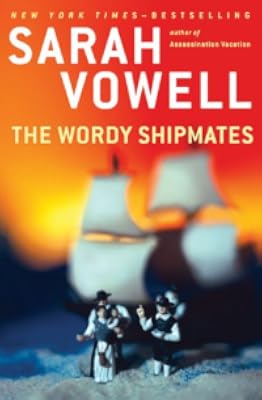
The Wordy Shipmates
by Sarah Vowell
On This Page
Description
From the author of Lafayette in the Somewhat United States, The Wordy Shipmates is New York Times bestselling author Sarah Vowell's exploration of the Puritans and their journey to America to become the people of John Winthrop's "city upon a hill," a shining example, a "city that cannot be hid."To this day, America views itself as a Puritan nation, but Vowell investigates what that means? and what it should mean. What was this great political enterprise all about? Who were these people show more who are considered the philosophical, spiritual, and moral ancestors of our nation? What Vowell discovers is something far different from what their uptight shoe-buckles-and- corn reputation might suggest. The people she finds are highly literate, deeply principled, and surprisingly feisty. Their story is filled with pamphlet feuds, witty courtroom dramas, and bloody vengeance. Along the way she asks:
*Was Massachusetts Bay Colony governor John Winthrop a communitarian, a Christlike Christian, or conformity?s tyrannical enforcer? Answer: Yes!
*Was Rhode Island?s architect, Roger Williams, America?s founding freak or the father of the First Amendment? Same difference.
*What does it take to get that jezebel Anne Hutchinson to shut up? A hatchet.
*What was the Puritans? pet name for the Pope? The Great Whore of Babylon.
Sarah Vowell?s special brand of armchair history makes the bizarre and esoteric fascinatingly relevant and fun. She takes us from the modern-day reenactment of an Indian massacre to the Mohegan Sun casino, from old-timey Puritan poetry, where ?righteousness? is rhymed with ?wilderness,? to a Mayflower-themed waterslide. Throughout, The Wordy Shipmates is rich in historical fact, humorous insight, and social commentary by one of America?s most celebrated voices. Thou shalt enjoy it. show less
Tags
Recommendations










Member Recommendations

geoffwickersham Fills in the gaps before the Mayflower folks landed.
Member Reviews
Now, you'd think a book-long exploration of the Puritans who came to the colonies as part of the Massachusetts Bay Colony, created the town of Boston, and splintered off into the state of Rhode Island due to a series of hair-splitting theological beliefs might be a little dry. And it probably would be if Vowell wasn't writing it. Lucky for the readers of the book, Vowell possesses a light touch when it comes to the names and dates and theologies of history, a good eye for making connections to present-day politics and beliefs, and a contagious enthusiasm for early America. Seriously, there are so many ways this could go wrong -- too many personal anecdotes, too smug interpretations, too detailed historical analysis. And in every one of show more those ways, plus many more, Vowell goes right.
[full review here: http://spacebeer.blogspot.com/2009/02/wordy-shipmates-2008.html ] show less
[full review here: http://spacebeer.blogspot.com/2009/02/wordy-shipmates-2008.html ] show less
I like Sarah Vowell, and I think that Ms. Vowell and I would be friends in real life were we to meet. After all, I too have gone on vacation purely as an excuse to visit key historical areas and points of interest. I get her sense of humor, her dry delivery, and her interests because they align so closely to my own.
As such, I love the opportunity to delve into the mind of Ms. Vowell with one of her books. The Wordy Shipmates is an oldie, but when the subject matter occurred four hundred years ago, it doesn't matter when you read it. So, with nothing much to do during this time of sheltering at home, I took advantage of the opportunity to learn more about the Puritans in the eyes of Ms. Vowell.
As expected, I learned more than I expected, show more like the fact that there were different sects of Puritans, one of which settled in Plymouth and the other in Boston. The Wordy Shipmates focuses mostly on the Bostonian Puritans but includes the settlement of Rhode Island, Indian massacres, and political feuds. She juxtaposes the past with what these same sites look like now, bridging the past and the present in a way that few historians are able to accomplish. The differences, sometimes shocking, between past and present, serve to emphasize her point that to call the United States a Puritan nation is misleading.
Audiobooks are the only way I will experience Ms. Vowell's books. Her writing style is so unique that I feel only she can do her writing justice when narrating. After all, she knows where the natural pauses are, as well as when to add low-level sarcasm or when to say a line straight. Plus, listening to her words in her voice makes the experience more like genuine story-telling while learning a little bit more about our nation's history.
While not my favorite Vowell novel, The Wordy Shipmates is still enjoyable. By focusing on John Winthrop and his Boston Puritans, Ms. Vowell allowed me to connect some of the dots between pieces of history I remembered with those that were new to me. She also does an excellent job of placing her field of study in context with the greater world, so that readers get a better feel for what is happening not just in one specific location but around the globe. In all, The Wordy Shipmates was an entertaining and educational way to pass a few hours. show less
As such, I love the opportunity to delve into the mind of Ms. Vowell with one of her books. The Wordy Shipmates is an oldie, but when the subject matter occurred four hundred years ago, it doesn't matter when you read it. So, with nothing much to do during this time of sheltering at home, I took advantage of the opportunity to learn more about the Puritans in the eyes of Ms. Vowell.
As expected, I learned more than I expected, show more like the fact that there were different sects of Puritans, one of which settled in Plymouth and the other in Boston. The Wordy Shipmates focuses mostly on the Bostonian Puritans but includes the settlement of Rhode Island, Indian massacres, and political feuds. She juxtaposes the past with what these same sites look like now, bridging the past and the present in a way that few historians are able to accomplish. The differences, sometimes shocking, between past and present, serve to emphasize her point that to call the United States a Puritan nation is misleading.
Audiobooks are the only way I will experience Ms. Vowell's books. Her writing style is so unique that I feel only she can do her writing justice when narrating. After all, she knows where the natural pauses are, as well as when to add low-level sarcasm or when to say a line straight. Plus, listening to her words in her voice makes the experience more like genuine story-telling while learning a little bit more about our nation's history.
While not my favorite Vowell novel, The Wordy Shipmates is still enjoyable. By focusing on John Winthrop and his Boston Puritans, Ms. Vowell allowed me to connect some of the dots between pieces of history I remembered with those that were new to me. She also does an excellent job of placing her field of study in context with the greater world, so that readers get a better feel for what is happening not just in one specific location but around the globe. In all, The Wordy Shipmates was an entertaining and educational way to pass a few hours. show less
Who were the Puritans? What did they really believe? Would you really want them living next door to you?
What you were taught in school about the Puritans and the settling of the Massachusetts Bay Colony is mostly bunk. There's a grain of truth in the "fled England to escape religious persecution", but only a grain. They believed in religious freedom - if you believed as they did. They were a bunch of contrary, ornery, fascinating folk.
Vowell's book brings to life these people who live in dry and dusty textbooks, warts and all. She does so with style and mordant humor. An excellent and enjoyable read.
What you were taught in school about the Puritans and the settling of the Massachusetts Bay Colony is mostly bunk. There's a grain of truth in the "fled England to escape religious persecution", but only a grain. They believed in religious freedom - if you believed as they did. They were a bunch of contrary, ornery, fascinating folk.
Vowell's book brings to life these people who live in dry and dusty textbooks, warts and all. She does so with style and mordant humor. An excellent and enjoyable read.
In this book, Sarah Vowell relays the history of the Massachusetts Bay Colony. This is not necessarily an area of history that I had any particular interest in learning more about, but Vowell writes history in a way that is incredibly compelling. For starters, she does a fabulous job of contextualizing this moment in history. She explains past events that help the reader to understand the motivations and backgrounds of the Puritan immigrants. Meanwhile, she also projects ahead to the present day to note what these early English settlers' contributions have wrought, whether for ill or for good. She really provides food for thought allowing the reader to see where things have changed - or not changed a great deal - from so many years show more ago.
A notable thing about Vowell's writing style is her humor, There's a fair amount of snarky or wisecracking asides sprinkled throughout her narrative that really makes the book enjoyable to read. She occasionally make references to personal experiences that tie into the book either geographically or thematically. (For example, she mentions a few times a trip to the Plymouth area that she takes with her sister and her nephew. She also references her family's Native American roots several times.) That all being said though, I never felt like Vowell was allowing the book to run amok in emotions or personal opinions, let alone that she was shoving a certain viewpoint down the reader's throat. She presented things clearly and with a great deal care in terms of providing multiple perspectives, having no qualms about painting portraits in gray scale rather than black and white villains and heroes. Vowell also makes abundant use of source documents, which I always appreciate in history books.
To sum up, I found this book to be a great example of how history should be done. The book is very readable; indeed, it could easily be finished in a matter of days. It is highly interesting, even if the topic isn't one that doesn't sound like something up your alley. I absolutely recommend it for those who are even mildly interesting in nonfiction books, especially ones dealing with historical events. show less
A notable thing about Vowell's writing style is her humor, There's a fair amount of snarky or wisecracking asides sprinkled throughout her narrative that really makes the book enjoyable to read. She occasionally make references to personal experiences that tie into the book either geographically or thematically. (For example, she mentions a few times a trip to the Plymouth area that she takes with her sister and her nephew. She also references her family's Native American roots several times.) That all being said though, I never felt like Vowell was allowing the book to run amok in emotions or personal opinions, let alone that she was shoving a certain viewpoint down the reader's throat. She presented things clearly and with a great deal care in terms of providing multiple perspectives, having no qualms about painting portraits in gray scale rather than black and white villains and heroes. Vowell also makes abundant use of source documents, which I always appreciate in history books.
To sum up, I found this book to be a great example of how history should be done. The book is very readable; indeed, it could easily be finished in a matter of days. It is highly interesting, even if the topic isn't one that doesn't sound like something up your alley. I absolutely recommend it for those who are even mildly interesting in nonfiction books, especially ones dealing with historical events. show less
Sarah Vowell makes even the most obscure history as accessible as dishing on the neighbors. Differentiating between the first band of folks coming over on the Mayflower seeking religious freedom and tolerance and those that followed them who sought to impose their own framework of ideas on the new world without a whole lot of tolerance does not whet the appetite of most readers. I started the book because it was Sarah Vowell—I have enjoyed other books by as well as her work on NPR—but almost stopped the moment I realized what the subject matter was. Fortunately, almost immediately she hooked me with her insight, humor and her knack for translating the language, intent and emotional life of the early Americans into contemporary terms show more that does not sell short who they were or what they believed. Her love of history is evident on every page. I knew virtually none of the people involved in this corner of history but I felt compelled to follow their stories none-the-less. The blend of politics and fear and hope and paranoia and just plain craziness that was mixed together into the cement of America’s cultural foundation is vividly rendered and ended all too soon. The ending felt a little bit rushed but I think that’s just because I was happy. show less
I can’t summarize this book effectively, so I’m just going to quote from the back:
“To this day, Americans think of themselves as a Puritan nation, but Vowell investigates what that means - and what it should mean. Who were these people who are considered the political and spiritual and moral ancestors of our nation? What was this great enterprise all about? What Vowell discovers is something far different from their uptight shoe-buckles-and-corn reputation. The people she finds are highly literate, deeply principled, and surprisingly feisty. Their story is filled with pamphlet feuds, witty courtroom dramas, and bloody vengeance.”
And so on. Let me say that this book is absolutely hilarious. I found myself laughing regularly show more throughout Vowell’s journey through Puritan history. She makes history that is normally dull and confusing (even for me, who loves history) into a riot of a book that I just wanted to keep reading. She also relates the past to the present and shows us a fair amount of horrifying examples where history repeats itself - or worse, when American presidents take out bits and pieces of Puritan speeches and ignore the important bits about being good to your fellow citizens. I’m not sure the book has potential for being read and understood a hundred years from now given the pop culture jokes, but it’s certainly amusing now.
Sarah Vowell does a brilliant job of showing us how history is relevant while keeping us entertained and informed. I’d wholeheartedly recommend this one.
http://chikune.com/blog/?p=281 show less
“To this day, Americans think of themselves as a Puritan nation, but Vowell investigates what that means - and what it should mean. Who were these people who are considered the political and spiritual and moral ancestors of our nation? What was this great enterprise all about? What Vowell discovers is something far different from their uptight shoe-buckles-and-corn reputation. The people she finds are highly literate, deeply principled, and surprisingly feisty. Their story is filled with pamphlet feuds, witty courtroom dramas, and bloody vengeance.”
And so on. Let me say that this book is absolutely hilarious. I found myself laughing regularly show more throughout Vowell’s journey through Puritan history. She makes history that is normally dull and confusing (even for me, who loves history) into a riot of a book that I just wanted to keep reading. She also relates the past to the present and shows us a fair amount of horrifying examples where history repeats itself - or worse, when American presidents take out bits and pieces of Puritan speeches and ignore the important bits about being good to your fellow citizens. I’m not sure the book has potential for being read and understood a hundred years from now given the pop culture jokes, but it’s certainly amusing now.
Sarah Vowell does a brilliant job of showing us how history is relevant while keeping us entertained and informed. I’d wholeheartedly recommend this one.
http://chikune.com/blog/?p=281 show less
Let me start by saying that is is not true that, if her great grandfather had not been processed through Ellis Island by a wiseacre, Sarah Vowell would be know today as Sara Aeiou. Sarah Vowell is a contributing editor the NPR weekend magazine show "This American Life," which is best known for bringing us such fine pieces of journalism as The Santaland Diaries. Her book does not disappoint.
The Wordy Shipmates is a short, concise, not at all wordy history of some of the Puritan founders of Massachusetts Bay colony. Starting with John Winthrop, who wrote and preached the sermon about "a city on a hill" that has been used and abused by John Kennedy and Ronald Reagan to such good effect. We also have John Cotton, ancestor of the more well show more known Cotton Mather, Roger Williams, psychotically enthusiastic proponent of religious freedom and theological purity, who helped found Rhode Island, Anne Hutchinson, the voice of God on earth and co-founder of Providence and even Mary Dyer, follower of Hutchinson until she becomes a Quaker and martyr to religious freedom at the hand of Winthrop and his fellow Boston magistrates. It is quite a merry crew of brawling Calvinists which Vowell gives us with tongue firmly implanted in cheek.
The gist of the book is that these people are responsible for giving us the great city of Boston. They are the ones who let a cow loose to lay out the city's streets. I'm sure that the blame for the Big Dig can be laid at their feet as well. I can't find my way around Boston with a GPS. Thanks a lot, guys.
They are also responsible in large part for our tradition of religious freedom and the separation of church and state. That concept is one of Roger Williams' crazy ideas, which got him banished from Massachusetts and is written into the charter of Rhode Island. It eventually found itself written into the First Amendment. Way to go Roger!
I can't tell you (actually I am trying to do that) how much I enjoyed reading Sarah Vowell's tale of trial and error, murder, war, bigotry, more murder, mass murder and other fun stuff, which became the foundation of Massachusetts, Rhode Island and Connecticut, and the fine precedent they set for the founding of the United States. The Wordy Shipmates should be required reading for all American middle school students. It should be included in the lovingly crafted high stakes testing that will determine their future lives. It belongs right up there with the Thanksgiving episode of Happy Days.
I'll Never Forget The Day I Read A Book!" show less
The Wordy Shipmates is a short, concise, not at all wordy history of some of the Puritan founders of Massachusetts Bay colony. Starting with John Winthrop, who wrote and preached the sermon about "a city on a hill" that has been used and abused by John Kennedy and Ronald Reagan to such good effect. We also have John Cotton, ancestor of the more well show more known Cotton Mather, Roger Williams, psychotically enthusiastic proponent of religious freedom and theological purity, who helped found Rhode Island, Anne Hutchinson, the voice of God on earth and co-founder of Providence and even Mary Dyer, follower of Hutchinson until she becomes a Quaker and martyr to religious freedom at the hand of Winthrop and his fellow Boston magistrates. It is quite a merry crew of brawling Calvinists which Vowell gives us with tongue firmly implanted in cheek.
The gist of the book is that these people are responsible for giving us the great city of Boston. They are the ones who let a cow loose to lay out the city's streets. I'm sure that the blame for the Big Dig can be laid at their feet as well. I can't find my way around Boston with a GPS. Thanks a lot, guys.
They are also responsible in large part for our tradition of religious freedom and the separation of church and state. That concept is one of Roger Williams' crazy ideas, which got him banished from Massachusetts and is written into the charter of Rhode Island. It eventually found itself written into the First Amendment. Way to go Roger!
I can't tell you (actually I am trying to do that) how much I enjoyed reading Sarah Vowell's tale of trial and error, murder, war, bigotry, more murder, mass murder and other fun stuff, which became the foundation of Massachusetts, Rhode Island and Connecticut, and the fine precedent they set for the founding of the United States. The Wordy Shipmates should be required reading for all American middle school students. It should be included in the lovingly crafted high stakes testing that will determine their future lives. It belongs right up there with the Thanksgiving episode of Happy Days.
I'll Never Forget The Day I Read A Book!" show less
Members
- Recently Added By
Published Reviews
ThingScore 71
Maybe there's something to be said for learning about the pilgrims, after all—especially from an instructor as entertaining as Vowell.
added by sduff222
As always with Vowell, her commentary is apt and frequently, startlingly
insightful. I would suggest that this book might well be used as
a sort of introductory text to the ideas of the Puritans particularly for
undergraduates. Because she engages so cleverly with popular culture,
it may help provide a successful approach to the dense and highly
intellectualized writing of this group of Puritans. show more For the nonspecialist
in this period, the book could serve as a reminder of what continues to
be so fascinating about the ideas of the New England Puritans of the
seventeenth century and the impact their thought continues to have in
popular discourse. show less
insightful. I would suggest that this book might well be used as
a sort of introductory text to the ideas of the Puritans particularly for
undergraduates. Because she engages so cleverly with popular culture,
it may help provide a successful approach to the dense and highly
intellectualized writing of this group of Puritans. show more For the nonspecialist
in this period, the book could serve as a reminder of what continues to
be so fascinating about the ideas of the New England Puritans of the
seventeenth century and the impact their thought continues to have in
popular discourse. show less
added by sduff222
Sarah Vowell is a problem. She’s a problem like Sarah Palin, Cyndi Lauper and Kathy Griffin. She’s annoying. Or, really, she’s double-annoying, because she styles herself as annoying — provocative-annoying — and if you become annoyed by her you seem to be conceding the point. She’s gotten to you.
Take “The Wordy Shipmates,” her fifth book. Vowell has integrated her sarcasm, flat show more indie-girl affect and kitsch worship — refined in print and on public radio — into a pop history of the Massachusetts Bay Colony. Known for her adenoid-helium voice, Vowell is a genial talker but an undisciplined writer. This new book mixes jiggers of various weak liquors — paraphrase, topical one-liners, blogger tics — and ends up tasting kind of festive but bad, like Long Island iced tea. show less
Take “The Wordy Shipmates,” her fifth book. Vowell has integrated her sarcasm, flat show more indie-girl affect and kitsch worship — refined in print and on public radio — into a pop history of the Massachusetts Bay Colony. Known for her adenoid-helium voice, Vowell is a genial talker but an undisciplined writer. This new book mixes jiggers of various weak liquors — paraphrase, topical one-liners, blogger tics — and ends up tasting kind of festive but bad, like Long Island iced tea. show less
added by sduff222
Lists

LT picks: Blue Books
197 works; 44 members

Penguin Random House
458 works; 4 members

Club Read's Recommended Nonfiction Written by Women
618 works; 30 members
Author Information

13+ Works 16,829 Members
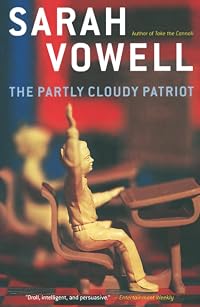
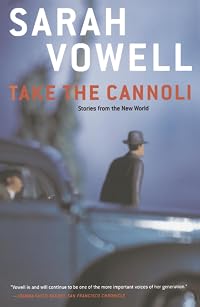
Sarah Vowell lives in New York City. Sarah Vowell was born in Muskogee, Oklahoma on December 27, 1969. She received a B.A. in modern languages and literatures from Montana State University in 1993 and an M.A. in art history from the School of the Art Institute of Chicago in 1996. She has written several nonfiction books including The Wordy show more Shipmates, Assassination Vacation, Radio On, Unfamiliar Fishes, and Lafayette in the Somewhat United States. She has also written two essay collections entitled The Partly Cloudy Patriot and Take the Cannoli. She was a contributing editor for the radio program This American Life on Public Radio International from 1996-2008. Her work has been published in numerous publications including The Village Voice, Esquire, GQ, Spin, The New York Times, Los Angeles Times, and the SF Weekly. She was also the voice of Violet in the animated film The Incredibles. (Bowker Author Biography) show less
Some Editions
Awards and Honors
Awards
Distinctions
Common Knowledge
- Canonical title
- The Wordy Shipmates
- Original publication date
- 2008
- People/Characters
- John Winthrop; John Cotton; John Endecott; Anne Hutchinson; Roger Williams; Henry Vane (show all 33); Mary Dyer; Oliver Cromwell; Uncas; Massasoit; Canonicus; Miantonomi; Cotton Mather; Giles Tilleman; Ronald Reagan; Philip Ratcliffe; William Bradford; Thomas Dudley; Edward Coke; Thomas Hooker; Wequash; Tatobem; John Stone; John Underhill; Sassacus; John Mason; Lion Gardener; John Wheelwright; Mary Dyer; Metacom; Moses Seixas; George Washington; John Fitzgerald Kennedy
- Important places
- Massachusetts Bay Colony; Rhode Island, USA; Connecticut, USA; Plymouth Colony; New England, USA; Boston, Massachusetts, USA (show all 8); Salem, Massachusetts, USA; Cambridge, Massachusetts, USA (as Newtown)
- Important events
- Pequot War (1637)
- Epigraph
- But oh! shipmates! on the starboard hand of every woe, there is a sure delight. . . Delight is to him whose strong arms yet support him, when the ship of this base treacherous world has gone down beneath him. Delight is to hi... (show all)m, who gives no quarter in the truth, and kills, burns, and destroys all sin though he pluck it out from under the robes of Senators and Judges. Delight, —top-gallant delight is to him, who acknowledges no law or lord, but the Lord his God, and is only a patriot to heaven.
—Herman Melville, Moby-Dick - Dedication
- For Scott Seeley, Ted Thompson, and Joan Kim
- First words
- The only thing more dangerous than an idea is a belief. And by dangerous I don't mean thought-provoking. I mean: might get people killed.
- Quotations
- I'm always disappointed when I see the word "Puritan" tossed around as shorthand for a bunch of generic, boring, stupid, judgmental killjoys. Because to me, they are very specific, fascinating, sometimes brilliant, judgmental... (show all) killjoys who rarely agreed on anything except that Catholics are going to hell.
Behind every bad law, a deep fear. - Last words
- (Click to show. Warning: May contain spoilers.)The mood is ominous and the fear is real. But this is a new beginning and he is not alone.
- Blurbers
- Hornby, Nick; Handy, Bruce
Classifications
- Genres
- History, General Nonfiction, Religion & Spirituality, Nonfiction
- DDC/MDS
- 974.00882859 — History & geography History of North America Northeastern United States (New England and Middle Atlantic states)
- LCC
- F7 .V69 — Local History of the United States, Canada and Latin America United States local history New England
- BISAC
Statistics
- Members
- 3,020
- Popularity
- 5,893
- Reviews
- 158
- Rating
- (3.67)
- Languages
- English
- Media
- Paper, Audiobook, Ebook
- ISBNs
- 16
- ASINs
- 14