On This Page
Description
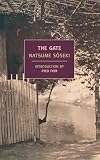
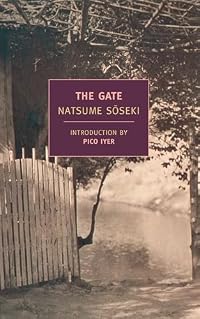
Fiction. Literature. HTML:An NYRB Classics OriginalA humble clerk and his loving wife scrape out a quiet existence on the margins of Tokyo. Resigned, following years of exile and misfortune, to the bitter consequences of having married without their families’ consent, and unable to have children of their own, S?suke and Oyone find the delicate equilibrium of their household upset by a new obligation to meet the educational expenses of S?suke’s brash younger brother. While an unlikely show more new friendship appears to offer a way out of this bind, it also soon threatens to dredge up a past that could once again force them to flee the capital. Desperate and torn, S?suke finally resolves to travel to a remote Zen mountain monastery to see if perhaps there, through meditation, he can find a way out of his predicament.
This moving and deceptively simple story, a melancholy tale shot through with glimmers of joy, beauty, and gentle wit, is an understated masterpiece by one of Japan’s greatest writers. At the end of his life, Natsume S?seki declared The Gate, originally published in 1910, to be his favorite among all his novels. This new translation captures the oblique grace of the original while correcting numerous errors and omissions that marred the first English version. show less
Tags
Recommendations








Member Reviews
For those who are familiar with Japanese film, the couple at the center of this novel reminds me of the couple in Ozu’s “Tokyo Story.” Or perhaps more usefully, Soseki draws his middle-aged, childless couple with extraordinary skill, feeling, and understated prose. The relationship between husband (Sosuke) and wife (Oyone) is hardly simple but Soseki’s portrayal is as moving as any I’ve ever read of a marriage and calls Ozu’s mastery to mind. Sosuke and Oyone married for love but without their families’ consent and have struggled ever since, bearing the enormous burden of that highly consequential disapproval. They could not have children, a life-changing disappointment. Sosuke is necessarily focused on his career because show more they struggle to make ends meet. And the novel, at heart, depends on Soseki’s brilliant illustration of their devotion to each other. That Sosuke is aimless, always avoiding confrontation, and Oyone often apparently nothing but accepting of whatever life throws at them both, is explained only well into the book. Enter Korosuke, Sosuke’s younger brother, who has turned to them to pay his educational expenses. Korosuke’s youth and financial demands threaten the couple’s finely balanced existence until an unexpected new friendship offers a solution. But that solution threatens a price so steep as to make it almost impossible to accept. What should they do? Sosuke imagines that religion will provide an answer and spends ten days at a monastery, intent on learning meditation. But this hopeless exercise ends with Sosuke as depressed and uncertain as he was when he left: “[He] looked at the great gate which would never open for him. He was never meant to pass through it. Nor was he meant to be content until he was allowed to do so.” Like Ozu, this is about the weight of life: constant, relentless, unforgiving…and insoluble. Though it may not be my favorite Soseki novel, I am hard-pressed to describe it as anything other than deeply Japanese…a profoundly satisfying evocation of the intricacies and convolutions of “ordinary” lives. show less
This is the kind of novel I would recommend only to others who enjoy reading contemporary Japanese novels. It's very slow-moving and delves deeply into a quiet husband-wife relationship throughout the entire narrative. The story begins with the couple, now in their sixties and living a meager existence in Tokyo. The husband Sosuke and the wife Oyone learn that Koroko, Sosuke's much younger brother must stop his university studies because of lack of money that their uncle frivolously lost. Koroko moves into the couple's house and upsets the delicate balance of the couple's life.
I found that I was reading this book extremely slowly so as to take in Sosuke's mood as the story was mainly from his point of view. He has a very close show more relationship with his wife whom he met and became friends with a situation which later became most uncomfortable. Hazy references to that time period appear late in the book but provide the impetus to read more to see if this is clarified further in the story.
Several parts of the book had special significance for Sosuke: his brother's being forced to give up his studies, his wife's illness, his landlord Saeki's friendship, and his attempt to engage in the practice of zazen (Zen medication) at a retreat. It was quite a ride to experience these with Sosuke. I thought the ending of this book was very realistic, and think I might have handled his problems the same way, had I been a Japanese man in his situation 100 years ago.
I love reading books by this author! I was sad to learn that this book is a trilogy of which I started with book 3. Now I have to go back and get books 1 and 2. That will make me happy! show less
I found that I was reading this book extremely slowly so as to take in Sosuke's mood as the story was mainly from his point of view. He has a very close show more relationship with his wife whom he met and became friends with a situation which later became most uncomfortable. Hazy references to that time period appear late in the book but provide the impetus to read more to see if this is clarified further in the story.
Several parts of the book had special significance for Sosuke: his brother's being forced to give up his studies, his wife's illness, his landlord Saeki's friendship, and his attempt to engage in the practice of zazen (Zen medication) at a retreat. It was quite a ride to experience these with Sosuke. I thought the ending of this book was very realistic, and think I might have handled his problems the same way, had I been a Japanese man in his situation 100 years ago.
I love reading books by this author! I was sad to learn that this book is a trilogy of which I started with book 3. Now I have to go back and get books 1 and 2. That will make me happy! show less
In a word: perfection. I didn't want this book to end. Its gentle pace and documentation of the mundanity of life hides a deeper story of betrayal, frustration and disappointment. Beautiful.
Soseki is a master at taking the ordinary and transforming it into stimulating life. What's the book about? Nothing and everything. It is life distilled into the fragments and moments and essence of living. Such a masterpiece.
Lyrical, evocative narrative following a man in total apprehension of engaging with life and those around him, so as not to upset the doldrums that he believes is all for which he can hope.
Whilst not as tedious as Sanshiro or obscure as Kusamakura, The Gate still falls short of Soseki's best. At times it's a frustrating read, since the author withholds much information that would have been useful had it even been glimpsed earlier, but overall its tale of ordinary people getting by in the world is mildly affecting. It would have been better if trimmed down and shorn of its more wooly aspects (the Zen training, the ongoing but going-nowhere relationship with the cousins) or, alternatively, expanded upon to give more life to its very regular main characters.
Fairly average as a whole. Not Soseki's best but far from his worst, too.
Fairly average as a whole. Not Soseki's best but far from his worst, too.
Was very grateful for the introduction as it explained some of the Japanese culture and how this writer has as much meaning in what is not said as in what is said. Very different read for me, but I did like it. The writing is beautiful and the meaning of this story is universal. After being married for over 19 yrs. both partners are set in a routine and find it hard to deviate from it. Part of this is cultural and part is just the characters. They wonder if this is what the rest of their life is going to be like, doing the same old things, day in and day out. Sosuke especially notices things outside of his life and wonders if he will ever experience unabated joy again. Than things happen, events that will stir up the status quo of their show more marriage and life. How they handle this is the basis for the story. Very different read for me but I really admired the way this author writes and handled this story. show less
Members
- Recently Added By
Lists

Books Read in 2018
4,360 works; 110 members
Author Information

244+ Works 11,551 Members
Natsume Soseki's early education included the study of Chinese classics and architecture, but as an English literature major he found his life's work, as well as the friendship of haiku poet Masaoka Shiki, an important personal and literary influence. Soseki's prose, for example, is often interspersed with his own haiku. In 1900 the Japanese show more government sent Soseki, who was a professor of English literature, to London, but, poorly funded and isolated, he found his years abroad painful and began to exhibit neurotic behavior. On his return, he shocked society by giving up his teaching position at Tokyo University to write fiction for the Asahi newspaper, a profession associated with the world of "entertainers." Despite poor health in the last years of his life, Soseki continued to write an average of one novel a year. (Bowker Author Biography) show less
Some Editions
Series

Belongs to Publisher Series
Common Knowledge
- Canonical title
- The Gate
- Original title
- 門
- Alternate titles
- Mon
- Original publication date
- 1910
- People/Characters
- Sosuke; Oyone (Sosuke's wife); Koroku (Sosuke's brother); Mrs. Saeki (Sosuke's aunt); Saeki Yasunosuke (Sosuke's cousin); Mr. Saeki (Sosuke's uncle) (show all 8); Kiyo (Sosuke's maid); Sakai (Sosuke's landlord)
- Important places
- Tokyo, Japan
- First words
- Sosuke had brought a cushion onto the veranda and plopped himself onto it, cross-legged, and was now basking in the midafternoon sun.
- Original language
- Japanese
Classifications
- Genres
- Fiction and Literature, General Fiction
- DDC/MDS
- 895.6 — Literature & rhetoric Asian Literature Literatures of East and Southeast Asia Japanese
- LCC
- PL812 .A8 .M613 — Language and Literature Languages and literatures of Eastern Asia, Africa, Oceania Languages of Eastern Asia, Africa, Oceania Japanese language and literature Japanese literature Individual authors and works
- BISAC
Statistics
- Members
- 527
- Popularity
- 56,509
- Reviews
- 11
- Rating
- (3.97)
- Languages
- 8 — Dutch, English, French, German, Italian, Japanese, Portuguese, Spanish
- Media
- Paper, Audiobook, Ebook
- ISBNs
- 26
- UPCs
- 1
- ASINs
- 6