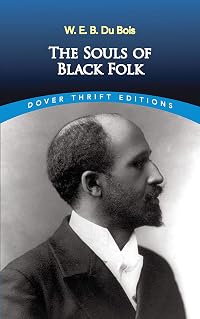
The Souls of Black Folk
by W. E. B. Du Bois
On This Page
Description
A cornerstone of African-American literary history, The Souls of Black Folk is a classic work by W. E. B. Du Bois. Originally published in 1903, it contains many essays on race and equality, but is also a piece of seminal history as laying the groundwork for the field of sociology. Some of the essays in the novel were even previously published by the Atlantic Monthly magazine. When writing, Du Bois drew from his personal experiences as an African-American in America to highlight the issues show more of prejudice that were still going on into the 20th century. show lessTags
Recommendations

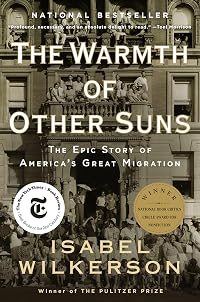
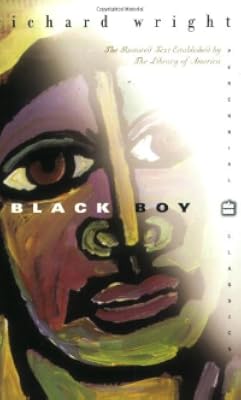
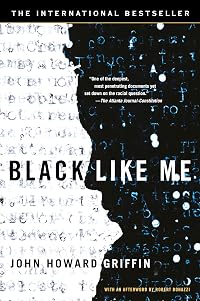
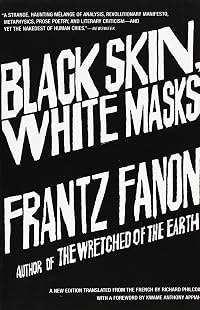
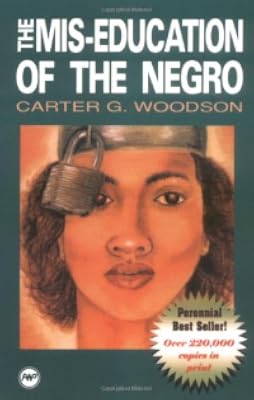
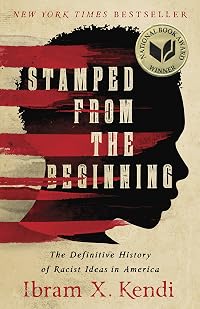
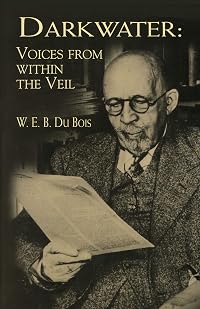
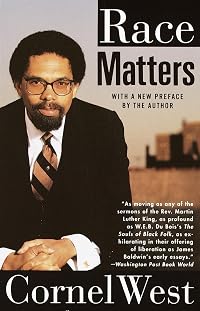

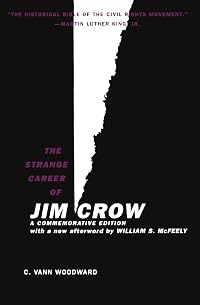
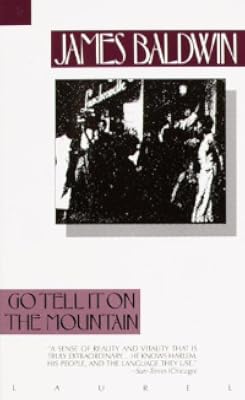
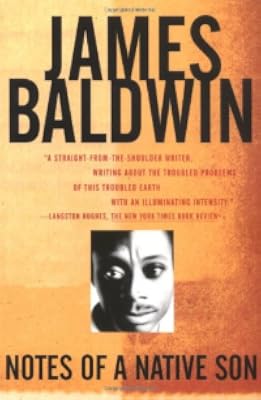
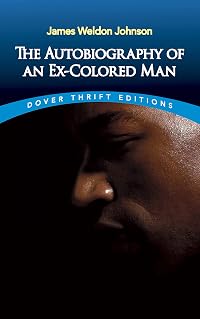







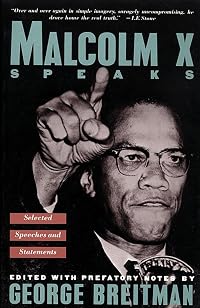
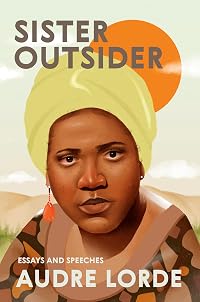
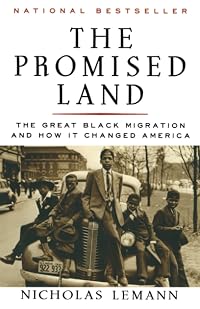
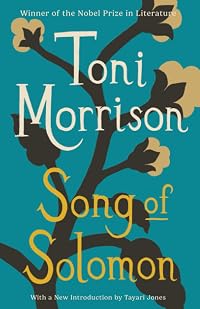
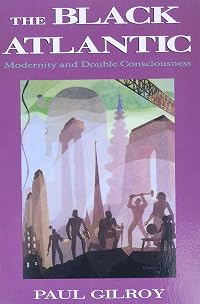
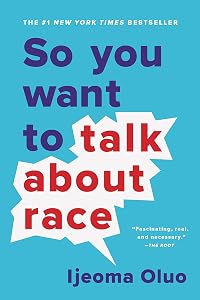


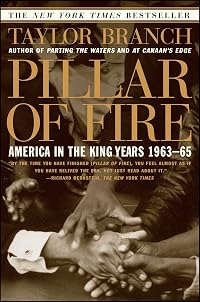
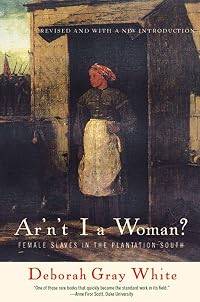
Member Recommendations
Member Reviews
note: I read a different edition, but the app isn't letting me pick which edition.
du Bois has been criticised for both elitism and sexism, and I can see why. But even for me, who does not forgive those flaws lightly, the work outshines it's failings.
this book is rightly one of the foundational texts of Africans studies, but it should be an equally foundational text in AMERICAN studies. it lays out, beautifully and convincingly, the reality of two Americas, existing side-by-side and the duality of experience of black Americans.
More than once this book moved me to tears, but more it opened my eyes to things I had heard of but never fully understood.
du Bois has been criticised for both elitism and sexism, and I can see why. But even for me, who does not forgive those flaws lightly, the work outshines it's failings.
this book is rightly one of the foundational texts of Africans studies, but it should be an equally foundational text in AMERICAN studies. it lays out, beautifully and convincingly, the reality of two Americas, existing side-by-side and the duality of experience of black Americans.
More than once this book moved me to tears, but more it opened my eyes to things I had heard of but never fully understood.
Sometimes a book just blows my mind. This is one of them!
To think that this book, with the most cogent explanation of the race situation in the US, was written over one hundred years ago is just astounding. That a black man was so well educated in the US at the start of the twentieth century was a surprise. That any person, surrounded by such prejudice, could produce such an honest book leaves me almost speechless.
Du Bois is honest about the failings of his fellows, both black and white. He manages to write without the venom that I know that would fill my prose, were I to live under such injustice.
And yet, and yet... I have still to pronounce its greatest achievement. When one reads a book and thinks, "I should have known that": it show more indicates that the facts are self evidently true.
How can this book be so little known? Were it a set book - not just in America, but in England and probably every other country too, then racism would become a thing of the past in no time. show less
To think that this book, with the most cogent explanation of the race situation in the US, was written over one hundred years ago is just astounding. That a black man was so well educated in the US at the start of the twentieth century was a surprise. That any person, surrounded by such prejudice, could produce such an honest book leaves me almost speechless.
Du Bois is honest about the failings of his fellows, both black and white. He manages to write without the venom that I know that would fill my prose, were I to live under such injustice.
And yet, and yet... I have still to pronounce its greatest achievement. When one reads a book and thinks, "I should have known that": it show more indicates that the facts are self evidently true.
How can this book be so little known? Were it a set book - not just in America, but in England and probably every other country too, then racism would become a thing of the past in no time. show less
This collection of fourteen essays is written in an ornate style that shouldn’t obscure their enduring relevance, one hundred twenty years after the book appeared. Not that everything has remained the same since then—even Du Bois developed and changed his thinking over time. Perhaps conditions are not precisely as rendered in the two essays based on his sociological fieldwork in Dougherty County, in southwest Georgia. Nevertheless, they brought to mind and helped me understand what my child’s eyes took in uncomprehendingly sixty-five, seventy years ago as we drove the pre-Interstate Georgia roads.
Perhaps the felt relevance indicates that material change can outpace change in attitude and perception.
One of my favorite essays dealt show more with the history of the Black church. Another, on the death at eighteen months of his firstborn, was a poignant, bitter expression of the divided soul of the Black man.
Reading this book, I was struck again by the thought that accompanied me throughout my visit to the Smithsonian African American History and Culture Museum. No matter which side of what Du Bois calls “the Veil” we find ourselves on, this is our story. This is a book about and for all of us. show less
Perhaps the felt relevance indicates that material change can outpace change in attitude and perception.
One of my favorite essays dealt show more with the history of the Black church. Another, on the death at eighteen months of his firstborn, was a poignant, bitter expression of the divided soul of the Black man.
Reading this book, I was struck again by the thought that accompanied me throughout my visit to the Smithsonian African American History and Culture Museum. No matter which side of what Du Bois calls “the Veil” we find ourselves on, this is our story. This is a book about and for all of us. show less
The author's attempt, through various narratives, to assist white America in 1903 to perhaps come to a better understanding of the situation and condition of America's black population.
DuBois is a masterful author. In this book he does everything from defending the Freedmen's Bureau to describing the plight of black people in a particular county in Georgia. He speaks of his own experiences as a college student, as a teacher, and of the loss of his own child to illness. He preserves the tunes of many a song and ends his book with a chapter on such songs.
Above all things DuBois proves prophetic, declaring that the 20th century would be overshadowed by the "Negro problem" and perceiving that Reconstruction would be looked upon poorly for show more many generations and could only be seen in a more positive light once black America was re-enfranchised. He provides an important perspective, writing just as a new and quite powerful wave of resentment overcame the South in the form of the Jim Crow laws and even greater restrictions than before, standing a generation removed from slavery and yet with the stories of slaves still ringing in their ears, looking forward to struggle which would take the better part of the century...and after more than a century has still not come to a complete end.
Over 100 years later the book remains compelling and a valuable read for any who would still wish to explore the "souls of black folk." show less
DuBois is a masterful author. In this book he does everything from defending the Freedmen's Bureau to describing the plight of black people in a particular county in Georgia. He speaks of his own experiences as a college student, as a teacher, and of the loss of his own child to illness. He preserves the tunes of many a song and ends his book with a chapter on such songs.
Above all things DuBois proves prophetic, declaring that the 20th century would be overshadowed by the "Negro problem" and perceiving that Reconstruction would be looked upon poorly for show more many generations and could only be seen in a more positive light once black America was re-enfranchised. He provides an important perspective, writing just as a new and quite powerful wave of resentment overcame the South in the form of the Jim Crow laws and even greater restrictions than before, standing a generation removed from slavery and yet with the stories of slaves still ringing in their ears, looking forward to struggle which would take the better part of the century...and after more than a century has still not come to a complete end.
Over 100 years later the book remains compelling and a valuable read for any who would still wish to explore the "souls of black folk." show less
One of the toughest, most interesting non-fiction reads I've experienced.
The Souls of Black Folk was required reading for me this year - although the class only dealt with five or so chapters, I was so intrigued by what I was reading that I had to finish the entire book.
Each essay provided plenty of food for thought - but most interesting to me was the essay on the education of former slaves - what was appropriate and what was not. This is a part of history that really hasn't been part of my education, and not only did I find it enlightening, historically speaking, I also found it to be relevant today - for all types.
With our focus on getting straight into college after high school (and my experience with some siblings that just show more doesn't work for), I think what Du Bois has to say is incredibly insightful. Not every person is cut out for a life of academia after high school, and specialized training is there for a reason. As I attend school, and each semester say goodbye to more and more friends who just, for whatever reason, are not coming back, I find myself thinking more about the ideas that Du Bois so eloquently writes down.
I recommend this reading. I think everyone should read it - and I challenge you to do so. show less
The Souls of Black Folk was required reading for me this year - although the class only dealt with five or so chapters, I was so intrigued by what I was reading that I had to finish the entire book.
Each essay provided plenty of food for thought - but most interesting to me was the essay on the education of former slaves - what was appropriate and what was not. This is a part of history that really hasn't been part of my education, and not only did I find it enlightening, historically speaking, I also found it to be relevant today - for all types.
With our focus on getting straight into college after high school (and my experience with some siblings that just show more doesn't work for), I think what Du Bois has to say is incredibly insightful. Not every person is cut out for a life of academia after high school, and specialized training is there for a reason. As I attend school, and each semester say goodbye to more and more friends who just, for whatever reason, are not coming back, I find myself thinking more about the ideas that Du Bois so eloquently writes down.
I recommend this reading. I think everyone should read it - and I challenge you to do so. show less
This book shows how far backward we have moved as a society in the past 120 years. In addition to stunningly beautiful prose, Du Bois analyzed the history of black (and white) people (in America overall, but particularly in the South), the problems of slavery and the then-current reconstruction and post-reconstruction south, and paths to equality for everyone. Unfortunately, I don't think anyone could write something so honest today without being attacked by at least half of society, and many of the issues identified are still problems today.
It was useful that Du Bois had the perspective of a highly educated northerner (first black man to earn a PhD from Harvard, back when a PhD from Harvard meant something...) visiting the South show more (Atlanta, specifically). When this book was written, the "great migration" to the North had still not happened, so black issues were largely separate North and South. The most interesting part for me was how a large group, mostly oppressed/uneducated/powerless at the time, had to come to terms with a small subset becoming highly educated -- and whether that subset would then work for their own interests or try to uplift everyone else. show less
It was useful that Du Bois had the perspective of a highly educated northerner (first black man to earn a PhD from Harvard, back when a PhD from Harvard meant something...) visiting the South show more (Atlanta, specifically). When this book was written, the "great migration" to the North had still not happened, so black issues were largely separate North and South. The most interesting part for me was how a large group, mostly oppressed/uneducated/powerless at the time, had to come to terms with a small subset becoming highly educated -- and whether that subset would then work for their own interests or try to uplift everyone else. show less
Du Bois weaves words together to create a pictorial masterpiece of literature. The sentences are so gorgeous that you want to read them out loud just to experience the pleasure of the sound and the speaking of them. I was absolutely blind-sided by their beauty because, in our internet age, that talent is often overlooked in favor of sharp, short sentences.
His words are often prophetic ("I insist that the question of the future is how best to keep these millions from brooding over the wrongs of the past and the difficulties of the present, so that all their energies may be bent toward a cheerful striving and cooperation with their white neighbors toward a larger, juster, and fuller future"*), heartrending (his chapters on the death of show more his son and the racism he observed and lived with), and thought-provoking (his chapters on education... have we forgotten its purpose?).
I highly recommend this book. It also gives you a good starting point into historical issues that may or may not be overlooked in our simplified history classes.
Also, fun fact, he is featured several times in [b:Invisible: The Forgotten Story of the Black Woman Lawyer Who Took Down America's Most Powerful Mobster|33898873|Invisible The Forgotten Story of the Black Woman Lawyer Who Took Down America's Most Powerful Mobster|Stephen L. Carter|https://i.gr-assets.com/images/S/compressed.photo.goodreads.com/books/1532468031l/33898873._SX50_.jpg|54863805] which also is a book worth your time.
*Pg. 94 show less
His words are often prophetic ("I insist that the question of the future is how best to keep these millions from brooding over the wrongs of the past and the difficulties of the present, so that all their energies may be bent toward a cheerful striving and cooperation with their white neighbors toward a larger, juster, and fuller future"*), heartrending (his chapters on the death of show more his son and the racism he observed and lived with), and thought-provoking (his chapters on education... have we forgotten its purpose?).
I highly recommend this book. It also gives you a good starting point into historical issues that may or may not be overlooked in our simplified history classes.
Also, fun fact, he is featured several times in [b:Invisible: The Forgotten Story of the Black Woman Lawyer Who Took Down America's Most Powerful Mobster|33898873|Invisible The Forgotten Story of the Black Woman Lawyer Who Took Down America's Most Powerful Mobster|Stephen L. Carter|https://i.gr-assets.com/images/S/compressed.photo.goodreads.com/books/1532468031l/33898873._SX50_.jpg|54863805] which also is a book worth your time.
*Pg. 94 show less
Members
- Recently Added By
Lists

Newsweek's Top 100 Books: The Meta-List
100 works; 18 members

Must-Read Books by Black Authors
114 works; 92 members

New York Public Library's Books of the Century
120 works; 20 members

Modern Library 100 Best Nonfiction Books
100 works; 8 members

New York Public Library's Books of the Century - All
170 works; 14 members

Books recommended by Barack Obama
295 works; 28 members

The Black Archives: All Power To the People! Reading List
79 works; 10 members

Phi Beta Kappa reading list
260 works; 8 members

Imani Perry: Eight Books That Explain the South
8 works; 1 member

Obama Reads
181 works; 3 members

Well-Educated Mind
150 works; 3 members

Sociology
18 works; 1 member
The Well-Educated Mind, Susan Wise Bauer, 2016
179 works; 3 members

Books Read in 2010
631 works; 11 members

Mustich's 1000 Books to Read Before You Die: A Life Changing List
1,001 works; 19 members
Read These Too
458 works; 9 members
Books I Wrote Essays on
34 works; 1 member
Books I read in high school
52 works; 1 member

Books Read in College
80 works; 5 members

Best African American Literature
53 works; 9 members

KIB Non-Fiction Book Cloud
41 works; 1 member

Trinity College Booklist (1951): Class Six, Biography
119 works; 4 members

Charleston Syllabus (waitingtoderail)
143 works; 2 members

Blue Pyramid 1,276 Best Books of All Time
1,248 works; 32 members
American Lit for Eng 11 Research Project
368 works; 6 members

Maybe This Year? Books to Look Forward To
412 works; 9 members
Author Information

185+ Works 12,971 Members
Civil rights leader and author, William Edward Burghardt Du Bois was born in Great Barrington, Massachusetts on February 23, 1868. He earned a B.A. from both Harvard and Fisk universities, an M.A. and Ph.D. from Harvard, and studied at the University of Berlin. He taught briefly at Wilberforce University before he came professor of history and show more economics at Atlanta University in Ohio (1896-1910). There, he wrote The Souls of Black Folk (1903), in which he pointed out that it was up to whites and blacks jointly to solve the problems created by the denial of civil rights to blacks. In 1905, Du Bois became a major figure in the Niagara Movement, a crusading effort to end discrimination. The organization collapsed, but it prepared the way for the founding of the National Association for the Advancement of Colored People (NAACP), in which Du Bois played a major role. In 1910, he became editor of the NAACP magazine, a position he held for more than 20 years. Du Bois returned to Atlanta University in 1932 and tried to implement a plan to make the Negro Land Grant Colleges centers of black power. Atlanta approved of his idea, but later retracted its support. When Du Bois tried to return to NAACP, it rejected him too. Active in several Pan-African Congresses, Du Bois came to know Fwame Nkrumah, the first president of Ghana, and Jono Kenyatta the president of Kenya. In 1961, the same year Du Bois joined the Communist party, Nkrumah invited him to Ghana as a director of an Encyclopedia Africana project. He died there on August 27, 1963, after becoming a citizen of that country. (Bowker Author Biography) show less
Some Editions
Awards and Honors
Awards
Notable Lists
Series
Belongs to Publisher Series
Work Relationships
Is contained in
Du Bois: Writings: The Suppression of the African Slave-Trade, The Souls of Black Folk, Dusk of Dawn, Essays and Articles by W. E. B. Du Bois
The Souls of Black Folk: With "The Talented Tenth" and "The Souls of White Folk" by W. E. B. Du Bois
Up from Slavery / The Souls of Black Folk / Narrative of the Life of Frederick Douglass by Booker T. Washington
Is abridged in
Is expanded in
Has as a student's study guide
Common Knowledge
- Canonical title
- The Souls of Black Folk
- Original publication date
- 1903
- People/Characters
- W. E. B. Du Bois
- Important places
- USA
- Dedication
- To
Burghardt and Yolande
The Lost and the Found
Classifications
- Genres
- History, Nonfiction, General Nonfiction
- DDC/MDS
- 973.0496073 — History & geography History of North America United States United States Ethnic And National Groups Other Groups African Americans African Americans
- LCC
- E185.6 .D797 — History of the United States United States Elements in the population Afro-Americans Status and development since emancipation
- BISAC
Statistics
- Members
- 6,223
- Popularity
- 1,994
- Reviews
- 73
- Rating
- (4.17)
- Languages
- 7 — Czech, Dutch, English, French, German, Spanish, Portuguese (Portugal)
- Media
- Paper, Audiobook, Ebook
- ISBNs
- 277
- UPCs
- 3
- ASINs
- 100