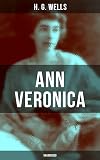
Ann Veronica
by H. G. Wells
On This Page
Description
H. G. Wells' Ann Veronica, first published in 1909, looks at political and feminist issues of the time. It's heroine goes from being a naive young girl into becoming a picture of the New Woman. The novel caused a stir when it was released because of the main character's feminist outlook and because her name was similar to Amber Reeves, with whom Wells was thought to be having an affair..
Tags
Recommendations


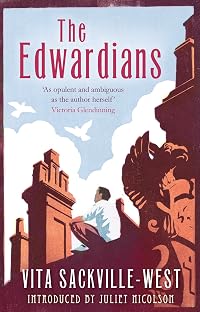
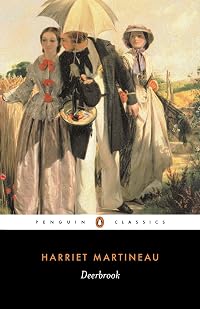

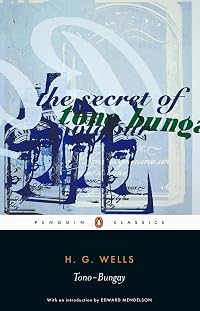


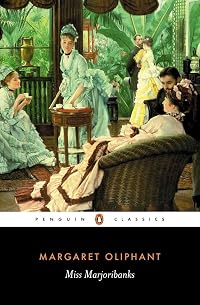


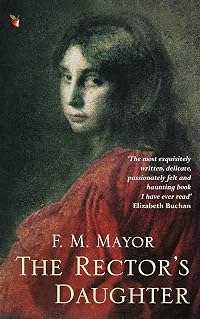


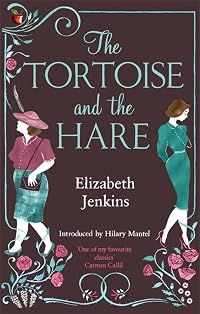


Member Recommendations

inge87 Both are semi-successful attempts at New Woman romance.
shemthepenman Stylistically very different but with some interesting thematic parallels.
Member Reviews
Ann Veronica is an interesting novel, mixing the way Wells met his second wife with the reaction to one of his first mistresses, Amber Reeves. It's about a young woman, Ann Veronica Stanley, who falls in love with her married biology demonstrator at Central Imperial College, G. Capes. (Weirdly, Capes never receives a first name, though in Wells's later novel Marriage, he is finally forenamed "Godwin.") As someone who has read more Victorian scientist novels than you can shake a test tube at, the differences from those are striking. The first is that one can take a science degree-- most Victorian scientists are self-taught, with medical degrees or the like. The second is that Ann Veronica is female-- there are very, very few fictional show more female scientists in the nineteenth century. Both of these changes can be attributed, I suspect, to the increasing professionalization of science. Now it's a thing you can take a degree in like any other thing, thus it's easier for women to enter into it because they don't have to teach it to themselves with their extra time and money.
Like many writers of scientist novels, Wells examines the relationship between science and morality, but as always, Wells charts his own path. Ann Veronica does not justify science's moral claims by showing how they replicate traditional moral strictures, nor does it denigrate science's moral claims by showing how they contradict traditional morality. Rather, Wells shows how science can be the basis of a new morality, though he is also careful to show that this is sometime a post facto rationalization, a way of justifying a behavior one has already decided to undertake.
That Ann Veronica and Capes possess an unconventional morality is most clearly demonstrated by their decision to become lovers even though Capes is married and Ann Veronica is much younger than him. When Capes objects that even their meeting together is against the rules, as he is her teacher, Ann Veronica replies that "This is something above all rules" (243). Later, she expands on this assertion, when Capes supposes that she will rationalize the story of his affair during his first marriage:
‘If I told you the facts […] you’d explain the whole business as being very fine and honourable for me – the Higher Morality, or something of that sort…. It wasn’t.’
‘I don’t deal very much,’ said Ann Veronica, ‘in the Higher Morality, or the Higher Truth, or any of those things.’
‘Perhaps you don’t. But a human being who is young and clean, as you are, is apt to ennoble – or to explain away.’
‘I’ve had a biological training. I’m a hard young woman.’ (245)
This passage attributes Ann Veronica's refusal to be bounded by the strictures of traditional Edwardian morality to her training as a scientist. Seeing like a scientist has enabled her to see events with a clarity that others lack. Her vision is not mystified by Christianity, but rather she understands the biological imperatives that underlie human interactions in the area of love. Capes cheated on his first wife because she could not satisfy him sexually, and Capes asks her how she classifies sexual relations:
‘Do you think of these things – these matters – as belonging to our Higher Nature or our Lower?’
‘I don’t deal in Higher Things, I tell you,’ said Ann Veronica, ‘or lower, for the matter of that. I don’t classify.’ She hesitated. ‘Flesh and flowers are all alike to me.’ (246)
Ann Veronica's scientific training hasn’t taught her that sex is all that matters, nor that love doesn't exist. Rather, it has caused her to classify sex and love on the same level, or even as the same thing. She sees nothing improper in sex because it is biological imperative of the flesh, and she sees nothing wrong with her love for Capes because it is tied up in that imperative. Her and Capes's love for one another is no different from her and Capes's sexual desire for one another.
But while it is possible for Ann Veronica to see this aspect of morality outside traditional thinking, it is not possible for her to do so with society more broadly. There is one passage that hints she has a larger capacity; as she learns more about biology, she begins to see that
the influence of the science radiated far beyond its own special field – beyond those beautiful but highly technical problems with which we do not propose for a moment to trouble the naturally terrified reader. Biology is an extraordinarily digestive science. […] [N]ot only did these tentacular generalizations gather all the facts of natural history and comparative anatomy together, but they always seemed stretching out further and further into a world of interests that lay altogether outside their legitimate bounds.
It came to Ann Veronica one night […] that this slowly elaborating biological scheme had something more than an academic interest for herself. And not only so, but that it was, after all, a more systematic and particular method of examining just the same questions that underlay the discussions of the Fabian Society, the West Central Arts Club, the chatter of the studios and the deep […]. It was the same Bios whose nature and drift and ways and methods and aspects engaged them all. (134-35)
That said, the narrator claims this revelation "was but a momentary gleam of personal application" that she never follows up (135). She is in the process of learning to apply scientific vision to human affairs, but in the end, she is only able to do so for her personal affairs. When self-interest is no longer at stake, she doesn't have the drive to procede.
And besides, society won't let her. Capes and Ann Veronica both have to give up their scientific careers as a result of their running off with one another. They spend some time on the continent, they eventually do get married and return to England, Capes becomes a playwright (they are allowed to be more unconventional than biology demonstrators), and Ann Veronica is about to become a mother when the novel closes. They reappear in Wells's Marriage, which I haven't read, but I'd like to, because Ann Veronica seems to me to have a somewhat bleak ending: what acceptance society has given them seems to derive from the fact that they have conformed more to its expectations. I'd be curious to know if Wells had a more optimistic vision for the unconventional than Ann Veronica indicates.
* Capes is pretty clearly based on Wells himself: Wells was a married biology demonstrator who ran off with and later married one of his students, Amy Catherine Robbins. Capes studied under the fictional biologist Russell, who played a significant role in the Darwinian controversies; Wells studied under Huxley, who played a significant role in the Darwinian controversies. Only instead of working at a university, Wells worked for a test preparation service! show less
Like many writers of scientist novels, Wells examines the relationship between science and morality, but as always, Wells charts his own path. Ann Veronica does not justify science's moral claims by showing how they replicate traditional moral strictures, nor does it denigrate science's moral claims by showing how they contradict traditional morality. Rather, Wells shows how science can be the basis of a new morality, though he is also careful to show that this is sometime a post facto rationalization, a way of justifying a behavior one has already decided to undertake.
That Ann Veronica and Capes possess an unconventional morality is most clearly demonstrated by their decision to become lovers even though Capes is married and Ann Veronica is much younger than him. When Capes objects that even their meeting together is against the rules, as he is her teacher, Ann Veronica replies that "This is something above all rules" (243). Later, she expands on this assertion, when Capes supposes that she will rationalize the story of his affair during his first marriage:
‘If I told you the facts […] you’d explain the whole business as being very fine and honourable for me – the Higher Morality, or something of that sort…. It wasn’t.’
‘I don’t deal very much,’ said Ann Veronica, ‘in the Higher Morality, or the Higher Truth, or any of those things.’
‘Perhaps you don’t. But a human being who is young and clean, as you are, is apt to ennoble – or to explain away.’
‘I’ve had a biological training. I’m a hard young woman.’ (245)
This passage attributes Ann Veronica's refusal to be bounded by the strictures of traditional Edwardian morality to her training as a scientist. Seeing like a scientist has enabled her to see events with a clarity that others lack. Her vision is not mystified by Christianity, but rather she understands the biological imperatives that underlie human interactions in the area of love. Capes cheated on his first wife because she could not satisfy him sexually, and Capes asks her how she classifies sexual relations:
‘Do you think of these things – these matters – as belonging to our Higher Nature or our Lower?’
‘I don’t deal in Higher Things, I tell you,’ said Ann Veronica, ‘or lower, for the matter of that. I don’t classify.’ She hesitated. ‘Flesh and flowers are all alike to me.’ (246)
Ann Veronica's scientific training hasn’t taught her that sex is all that matters, nor that love doesn't exist. Rather, it has caused her to classify sex and love on the same level, or even as the same thing. She sees nothing improper in sex because it is biological imperative of the flesh, and she sees nothing wrong with her love for Capes because it is tied up in that imperative. Her and Capes's love for one another is no different from her and Capes's sexual desire for one another.
But while it is possible for Ann Veronica to see this aspect of morality outside traditional thinking, it is not possible for her to do so with society more broadly. There is one passage that hints she has a larger capacity; as she learns more about biology, she begins to see that
the influence of the science radiated far beyond its own special field – beyond those beautiful but highly technical problems with which we do not propose for a moment to trouble the naturally terrified reader. Biology is an extraordinarily digestive science. […] [N]ot only did these tentacular generalizations gather all the facts of natural history and comparative anatomy together, but they always seemed stretching out further and further into a world of interests that lay altogether outside their legitimate bounds.
It came to Ann Veronica one night […] that this slowly elaborating biological scheme had something more than an academic interest for herself. And not only so, but that it was, after all, a more systematic and particular method of examining just the same questions that underlay the discussions of the Fabian Society, the West Central Arts Club, the chatter of the studios and the deep […]. It was the same Bios whose nature and drift and ways and methods and aspects engaged them all. (134-35)
That said, the narrator claims this revelation "was but a momentary gleam of personal application" that she never follows up (135). She is in the process of learning to apply scientific vision to human affairs, but in the end, she is only able to do so for her personal affairs. When self-interest is no longer at stake, she doesn't have the drive to procede.
And besides, society won't let her. Capes and Ann Veronica both have to give up their scientific careers as a result of their running off with one another. They spend some time on the continent, they eventually do get married and return to England, Capes becomes a playwright (they are allowed to be more unconventional than biology demonstrators), and Ann Veronica is about to become a mother when the novel closes. They reappear in Wells's Marriage, which I haven't read, but I'd like to, because Ann Veronica seems to me to have a somewhat bleak ending: what acceptance society has given them seems to derive from the fact that they have conformed more to its expectations. I'd be curious to know if Wells had a more optimistic vision for the unconventional than Ann Veronica indicates.
* Capes is pretty clearly based on Wells himself: Wells was a married biology demonstrator who ran off with and later married one of his students, Amy Catherine Robbins. Capes studied under the fictional biologist Russell, who played a significant role in the Darwinian controversies; Wells studied under Huxley, who played a significant role in the Darwinian controversies. Only instead of working at a university, Wells worked for a test preparation service! show less
https://nwhyte.livejournal.com/3829332.html
This is a feminist story of liberation from the shackles of convention. Ann Veronica is a young woman who is studying science, much to her parents' disapproval, and makes a break for freedom; she is pursued by various different men, becomes a suffragette (the year is 1909) and eventually settles for one of the chaps. I liked this more than some of the other Wells non-sf novels that I have read; his wit at the expense of Ann Veronica's stuffily conventional family did not seem quite as patronising as in some other cases, and his sympathy for the heroine and her friends was contagious.
This is a feminist story of liberation from the shackles of convention. Ann Veronica is a young woman who is studying science, much to her parents' disapproval, and makes a break for freedom; she is pursued by various different men, becomes a suffragette (the year is 1909) and eventually settles for one of the chaps. I liked this more than some of the other Wells non-sf novels that I have read; his wit at the expense of Ann Veronica's stuffily conventional family did not seem quite as patronising as in some other cases, and his sympathy for the heroine and her friends was contagious.
I always list this book as one of my favorites and have re-read it many times. The truth is though, it’s been a good 15 years since the last reading and I have one of those brains that just does not retain detail well. Add to that the new filter of age (this being a coming-of-age story), I did have a few new impressions/opinions this time.
I know the history and context of when this novel was originally released and yes, I can see clearly why it was as controversial as it’s reported to have been. But the truly surprising thing is that the entire novel holds up far too well 100 years later and is startlingly contemporary (other than the specific political causes featured). This is mostly a coming of age story and entire swaths of the show more novel (covering adolescent temperament and rebellion, political movements, and the balance between morality and passion) read like they were written yesterday. Frankly, I found that utterly depressing. As a child borne of the Hippie movement of the 60s, and raised through one left-wing political moment after another, I found the environment created by Wells depressingly familiar (and just a little boring, having now found a more temperate path for myself in adult life). Replace Suffrage/Fabians/etc. with Women’s Lib/Leftists/etc. (no need to swap out the whole vegetarian thing) and the book reads like the autobiography of my young adulthood. Our rights and freedoms have changed so much from the work of these movements, but the movements themselves have changed so little. Wells is rather harsh about it all – The showboating, the self-absorption, the drama and fanaticism. And yet, he was deeply committed to the causes beneath the social scene and credits the accomplishments of the groups when due. I didn’t come from the middle-class background Ann Veronica did, but after she leaves home, her experiences and story felt intimately familiar.
The other thread throughout the story – the romance and sexual relations – Were also painfully familiar. While the antiquated societal rules that set up much of Ann Veronica’s romantic interactions are no longer in place, the story remains virtually the same 100 years later. How many Ramage’s have I had in my life? How many times have I had the “can we be friends” tussle? Yeah. Painful. And being an asexual in a culture obsessed with sex left me battling with many of the same frigidity/passion issues Ann Veronica did (albeit for different reasons) during my youth.
So, how do my perceptions change from reading this as a young adult (still in the midst of the story) and as an adult (well past the drama)? I think as a young adult I loved this book as a surprisingly contemporary, frank, mature story which matched my own. I thought it was really daring and I remember wanting to discuss it with my Grandmother – To ask her if it was really like this, or if this was just a reality TV version of the times (I don’t recall that I ever got an answer). As an adult, it makes me feel a little tired (but in a good way). I worked really hard to move on from the angst and drama of young adulthood and the society around me at that time. Things aren’t necessarily any better as an adult, but I must have found some sort of balance for myself because I look back at it all with a sense of boredom and feel relieved that that part of my life (hopefully) is over. I may not have any answers, but I’m a happier human being. You couldn’t pay me to be young again. Really.
What makes this a favorite book for me? Except for her childhood home/upbringing, I completely identify with Ann Veronica all through her coming of age and the woman she becomes. I love the observations and insights Wells makes about the political/social movements he highlights. I love the observations and insights Ann Veronica moves through in her relationships and her exploration of her ability/morals regarding love. I love how readable the book is and Wells’ prose. I love the historical context of the book and exploring what Wells put into it. I love the opportunity for dialogue the book has provided me over the years.
Ugh, this is the worst book report ever! I blame it on the fact that the book is just too personal for me to properly convey my feelings about it. And I’m writing this for myself, not some magazine or something, so take it or leave it (and don’t even *try* to lecture me about my spelling or grammar.)
The two surprise impressions/negative remarks I have this time through were minor:
I’ve started to lose faith in Wells’ endings. It seems as though all his social books have a certain pace and method and then, inevitably, speed up and change tone for the wrap-up portion. I’m never really satisfied by the endings. In the case of AV, the book works for me on every single level and progresses at a slower, in-depth pace, discussing a thousand political and social ideas. Then, all of a sudden in the last few chapters, I’m thrust into a shorthanded, uber-romantic, honeymoon romance. He never really even addresses some of the key plot threads to finish them off-he just chucks in a dismissive sentence that sticks out like a sore thumb.
I don’t remember the book having so much comedy in it. Or am I making it up that there is any? There were so many moments that seemed fairly straight on paper, but if one acted it all out on one’s head, played more like a Wilde play. If that was intentional, it was nice. If it was supposed to be serious... I’m confused?
Have something to say about my comments? Do it here: http://passionrulesme.livejournal.com/6076.html show less
I know the history and context of when this novel was originally released and yes, I can see clearly why it was as controversial as it’s reported to have been. But the truly surprising thing is that the entire novel holds up far too well 100 years later and is startlingly contemporary (other than the specific political causes featured). This is mostly a coming of age story and entire swaths of the show more novel (covering adolescent temperament and rebellion, political movements, and the balance between morality and passion) read like they were written yesterday. Frankly, I found that utterly depressing. As a child borne of the Hippie movement of the 60s, and raised through one left-wing political moment after another, I found the environment created by Wells depressingly familiar (and just a little boring, having now found a more temperate path for myself in adult life). Replace Suffrage/Fabians/etc. with Women’s Lib/Leftists/etc. (no need to swap out the whole vegetarian thing) and the book reads like the autobiography of my young adulthood. Our rights and freedoms have changed so much from the work of these movements, but the movements themselves have changed so little. Wells is rather harsh about it all – The showboating, the self-absorption, the drama and fanaticism. And yet, he was deeply committed to the causes beneath the social scene and credits the accomplishments of the groups when due. I didn’t come from the middle-class background Ann Veronica did, but after she leaves home, her experiences and story felt intimately familiar.
The other thread throughout the story – the romance and sexual relations – Were also painfully familiar. While the antiquated societal rules that set up much of Ann Veronica’s romantic interactions are no longer in place, the story remains virtually the same 100 years later. How many Ramage’s have I had in my life? How many times have I had the “can we be friends” tussle? Yeah. Painful. And being an asexual in a culture obsessed with sex left me battling with many of the same frigidity/passion issues Ann Veronica did (albeit for different reasons) during my youth.
So, how do my perceptions change from reading this as a young adult (still in the midst of the story) and as an adult (well past the drama)? I think as a young adult I loved this book as a surprisingly contemporary, frank, mature story which matched my own. I thought it was really daring and I remember wanting to discuss it with my Grandmother – To ask her if it was really like this, or if this was just a reality TV version of the times (I don’t recall that I ever got an answer). As an adult, it makes me feel a little tired (but in a good way). I worked really hard to move on from the angst and drama of young adulthood and the society around me at that time. Things aren’t necessarily any better as an adult, but I must have found some sort of balance for myself because I look back at it all with a sense of boredom and feel relieved that that part of my life (hopefully) is over. I may not have any answers, but I’m a happier human being. You couldn’t pay me to be young again. Really.
What makes this a favorite book for me? Except for her childhood home/upbringing, I completely identify with Ann Veronica all through her coming of age and the woman she becomes. I love the observations and insights Wells makes about the political/social movements he highlights. I love the observations and insights Ann Veronica moves through in her relationships and her exploration of her ability/morals regarding love. I love how readable the book is and Wells’ prose. I love the historical context of the book and exploring what Wells put into it. I love the opportunity for dialogue the book has provided me over the years.
Ugh, this is the worst book report ever! I blame it on the fact that the book is just too personal for me to properly convey my feelings about it. And I’m writing this for myself, not some magazine or something, so take it or leave it (and don’t even *try* to lecture me about my spelling or grammar.)
The two surprise impressions/negative remarks I have this time through were minor:
I’ve started to lose faith in Wells’ endings. It seems as though all his social books have a certain pace and method and then, inevitably, speed up and change tone for the wrap-up portion. I’m never really satisfied by the endings. In the case of AV, the book works for me on every single level and progresses at a slower, in-depth pace, discussing a thousand political and social ideas. Then, all of a sudden in the last few chapters, I’m thrust into a shorthanded, uber-romantic, honeymoon romance. He never really even addresses some of the key plot threads to finish them off-he just chucks in a dismissive sentence that sticks out like a sore thumb.
I don’t remember the book having so much comedy in it. Or am I making it up that there is any? There were so many moments that seemed fairly straight on paper, but if one acted it all out on one’s head, played more like a Wilde play. If that was intentional, it was nice. If it was supposed to be serious... I’m confused?
Have something to say about my comments? Do it here: http://passionrulesme.livejournal.com/6076.html show less
I had serious doubts about this book when I first started it, not only is it not science fiction, but a ROMANCE, from HG Wells? Yeah, okay. I was thinking it was going to be ridiculous, but once I started reading it, I realized it was completely different from what I had first thought — it’s an early book about feminism. And you know what? It’s done rather splendidly.
Ann Veronica is the youngest of a fairly well-to-do family. She’s not your typical turn-of-the-20th-century girl — she studies biology at a college (with her father’s permission) and enjoys talking about her intellectual interests with others. Her close friends are burgeoning suffragists, so she often joins their discussions about how women aren’t free to do show more what they want and how they’re caged up in society because men keep them imprisoned, basically. So, when her father literally locks her in her bedroom to prevent her from going to a ball, she runs away to the city to make it on her own. She quickly finds out that there’s not a great way for women to make a lot of money, and renting out an apartment in London actually costs quite a lot. Basically, she has to face harder truths than she realized were out there and more fully understands the plight of women because of her decision to not live under her father’s roof.
What I love about this story is how it covers everything and doesn’t sugarcoat anything. It gives a clear, honest look at exactly what the situation of women was for that time period — hardly any job prospects (and any available were drudgery for pennies), no respect, and no vote. Their lives were at the mercy of the men in their lives and they weren’t taught anything about how to survive or live in the world. Ann Veronica even gets herself into a misunderstanding with a man and it’s sad how much that particular “misunderstanding” can still be seen in today’s world. They talk as if they’re friends, and they go out to lunch together as friends, and then he locks her in a room with him “to make love” because of course she had to know that they weren’t really friends and he wanted her, and deserved her after all that he’d given her. (Isn’t it creepy how familiar that sounds?) HG Wells does a tremendous job in outlining the various difficulties that women faced when they fought for equal rights and equal opportunities in London and really hits, if not all, then at least most of the points.
The first half was wonderful, but it does start to drag a bit as the book goes on. I think the first half of the book is perfect and it would have been 5 stars if it had continued in that vein, but then Ann Veronica falls in love and the whole story sort of starts to fall apart and get into themes that don’t make sense for where the book started. Alas. Basically, I would recommend this to anyone who has an interest in feminism, its roots, or even how it was viewed during this time. I was blown away by how insightful this story was and a little saddened by how true those themes remain. If not a great story, it’s interesting to see the thoughts and themes of feminism from a male author born in the 19th century.
Also posted on Purple People Readers. show less
Ann Veronica is the youngest of a fairly well-to-do family. She’s not your typical turn-of-the-20th-century girl — she studies biology at a college (with her father’s permission) and enjoys talking about her intellectual interests with others. Her close friends are burgeoning suffragists, so she often joins their discussions about how women aren’t free to do show more what they want and how they’re caged up in society because men keep them imprisoned, basically. So, when her father literally locks her in her bedroom to prevent her from going to a ball, she runs away to the city to make it on her own. She quickly finds out that there’s not a great way for women to make a lot of money, and renting out an apartment in London actually costs quite a lot. Basically, she has to face harder truths than she realized were out there and more fully understands the plight of women because of her decision to not live under her father’s roof.
What I love about this story is how it covers everything and doesn’t sugarcoat anything. It gives a clear, honest look at exactly what the situation of women was for that time period — hardly any job prospects (and any available were drudgery for pennies), no respect, and no vote. Their lives were at the mercy of the men in their lives and they weren’t taught anything about how to survive or live in the world. Ann Veronica even gets herself into a misunderstanding with a man and it’s sad how much that particular “misunderstanding” can still be seen in today’s world. They talk as if they’re friends, and they go out to lunch together as friends, and then he locks her in a room with him “to make love” because of course she had to know that they weren’t really friends and he wanted her, and deserved her after all that he’d given her. (Isn’t it creepy how familiar that sounds?) HG Wells does a tremendous job in outlining the various difficulties that women faced when they fought for equal rights and equal opportunities in London and really hits, if not all, then at least most of the points.
The first half was wonderful, but it does start to drag a bit as the book goes on. I think the first half of the book is perfect and it would have been 5 stars if it had continued in that vein, but then Ann Veronica falls in love and the whole story sort of starts to fall apart and get into themes that don’t make sense for where the book started. Alas. Basically, I would recommend this to anyone who has an interest in feminism, its roots, or even how it was viewed during this time. I was blown away by how insightful this story was and a little saddened by how true those themes remain. If not a great story, it’s interesting to see the thoughts and themes of feminism from a male author born in the 19th century.
Also posted on Purple People Readers. show less
[Ann Veronica] by H G Wells subtitled a modern love story
A grown up story about a young lady growing up in early 20th Century Edwardian England. When Ann veronica was published in 1909; Suffragette militancy had been a fact of life for the last five years, the first world war was still five years away and women would not get the vote on the same terms as men until 1928. The newspaper paper talk was of a sex war and Wells does not hesitate to plunge into this maelstrom of opinions with his story of Ann Veronica.
H G Wells' progressive, socialist views were well known to all his readers and it could be argued that many of his novels take on a sort of preachiness in tone that makes some of them disjointed, perhaps they are even used as an show more excuse for Wells to beat his readers over the head with his views. This is not the case in Ann Veronica, Wells had found a subject where he only had to give a true impression of a young unmarried woman's lot in life, and the difficulties that she faced to become independent, for him to demonstrate the follies of Edwardian social structures.
The story is told from Ann Veronica's point of view; we find her as a 21 year old woman living under the protection of her father in the suburbs of London. She is a bright, intelligent and attractive all of the things her father wishes she wasn't. He sees her role as looking after his household and caring for him. He is far too busy dealing with his work in the city of London to worry about Veronica. A crisis is reached when Veronica wants to go to an art school dance, her father forbids her to go and when she defies him he physically restrains her so that she cannot leave the house. Her only recourse is to run away, there is no one who she can turn to who can help her in her situation.
"“I want to be a Person said Ann Veronica to the downs and the open sky “I wii not let this happen to me, whatever else may happen in its place”
There is a note of desperation in her voice as she sees herself in a pit from which there is no escape. She escapes to London and manages to find a bedsitter, but she has no way of earning a living or continuing with her work at the Imperial college of science. She meets Mr Rammage who she knows form her home town, he is a successful business man and when she goes to him for help he suggests a business arrangement and makes her a loan of 40 pounds sterling. Rammage we understand is a lover of women, rather like Wells;
“A young man comes into life asking how best he may place himself” Ramage had said “a Woman comes into life thinking instinctively how best she may give herself.”
Rammage of course expects that Veronica will become his mistress and it is only when she narrowly avoids being raped by him that she realises the burden of debt that she is under. In desperation she turns her attention to the womens suffragette movement and volunteers to take militant action. She is involved in an attempt to disrupt Parliament for which she is unceremoniously arrested and sentenced to a month in prison. Wells' treatment of this suffragette raid is even handed, but told from Veronica's point of view it appears a desperate, frightening act, but one which she could easily view as her only course of action.
In jail she has plenty of time to think and comes to realise that the only course of action left to her is to return home to her father and negotiate the best deal for her independence that she can:
“I suppose all life is an affair of chances. But a woman’s life is all chance. It’s artificial chance. Find your man that’s the rule. All the rest is humbug and delicacy. He’s the handle of life for you. He will let you live if it pleases him."
She gets to continue her work at the Imperial College and there falls in love with her tutor (Capes). Veronica never makes easy choices however and she discovers that Capes is married, but separated from his wife, who will not divorce him. The love affair between Capes and Veronica takes up the second half of the novel, but there are tensions here as well. It is only when Veronica takes decisive action that these can be resolved.
The novel falls neatly into two parts, but both depict the difficulties of being an independent woman in Edwardian England. Veronicas struggles in the first part are totally absorbing and the suffragette raid is vividly depicted. There are also the tensions of the love affair in the second part, but when these are resolved the novel fades a little at the end to a depiction of a young loves dream. Well's novel caused a bit of a scandal in 1909, not because of his sympathetic depiction of the suffragette movement but because of Veronica's decision to become Capes' mistress. A leading critic John St Leo Strachey condemned the book as "poisonous" because it treated female sexuality and sex outside marriage, not as shockingly sinful but as natural behaviour. Wells had not made Veronica pay for her actions and this is what upset some of the critics. I think there can be no better testimony as to how difficult it was for a woman at that time, and Wells brings this out brilliantly.
I have now read over twenty books by H G Wells and Ann Veronica is one of his best. You are never going to get a finely judged well balanced novel from him because he was always so impatient to move onto the next thing, but this one is better than most and so a four star read. show less
A grown up story about a young lady growing up in early 20th Century Edwardian England. When Ann veronica was published in 1909; Suffragette militancy had been a fact of life for the last five years, the first world war was still five years away and women would not get the vote on the same terms as men until 1928. The newspaper paper talk was of a sex war and Wells does not hesitate to plunge into this maelstrom of opinions with his story of Ann Veronica.
H G Wells' progressive, socialist views were well known to all his readers and it could be argued that many of his novels take on a sort of preachiness in tone that makes some of them disjointed, perhaps they are even used as an show more excuse for Wells to beat his readers over the head with his views. This is not the case in Ann Veronica, Wells had found a subject where he only had to give a true impression of a young unmarried woman's lot in life, and the difficulties that she faced to become independent, for him to demonstrate the follies of Edwardian social structures.
The story is told from Ann Veronica's point of view; we find her as a 21 year old woman living under the protection of her father in the suburbs of London. She is a bright, intelligent and attractive all of the things her father wishes she wasn't. He sees her role as looking after his household and caring for him. He is far too busy dealing with his work in the city of London to worry about Veronica. A crisis is reached when Veronica wants to go to an art school dance, her father forbids her to go and when she defies him he physically restrains her so that she cannot leave the house. Her only recourse is to run away, there is no one who she can turn to who can help her in her situation.
"“I want to be a Person said Ann Veronica to the downs and the open sky “I wii not let this happen to me, whatever else may happen in its place”
There is a note of desperation in her voice as she sees herself in a pit from which there is no escape. She escapes to London and manages to find a bedsitter, but she has no way of earning a living or continuing with her work at the Imperial college of science. She meets Mr Rammage who she knows form her home town, he is a successful business man and when she goes to him for help he suggests a business arrangement and makes her a loan of 40 pounds sterling. Rammage we understand is a lover of women, rather like Wells;
“A young man comes into life asking how best he may place himself” Ramage had said “a Woman comes into life thinking instinctively how best she may give herself.”
Rammage of course expects that Veronica will become his mistress and it is only when she narrowly avoids being raped by him that she realises the burden of debt that she is under. In desperation she turns her attention to the womens suffragette movement and volunteers to take militant action. She is involved in an attempt to disrupt Parliament for which she is unceremoniously arrested and sentenced to a month in prison. Wells' treatment of this suffragette raid is even handed, but told from Veronica's point of view it appears a desperate, frightening act, but one which she could easily view as her only course of action.
In jail she has plenty of time to think and comes to realise that the only course of action left to her is to return home to her father and negotiate the best deal for her independence that she can:
“I suppose all life is an affair of chances. But a woman’s life is all chance. It’s artificial chance. Find your man that’s the rule. All the rest is humbug and delicacy. He’s the handle of life for you. He will let you live if it pleases him."
She gets to continue her work at the Imperial College and there falls in love with her tutor (Capes). Veronica never makes easy choices however and she discovers that Capes is married, but separated from his wife, who will not divorce him. The love affair between Capes and Veronica takes up the second half of the novel, but there are tensions here as well. It is only when Veronica takes decisive action that these can be resolved.
The novel falls neatly into two parts, but both depict the difficulties of being an independent woman in Edwardian England. Veronicas struggles in the first part are totally absorbing and the suffragette raid is vividly depicted. There are also the tensions of the love affair in the second part, but when these are resolved the novel fades a little at the end to a depiction of a young loves dream. Well's novel caused a bit of a scandal in 1909, not because of his sympathetic depiction of the suffragette movement but because of Veronica's decision to become Capes' mistress. A leading critic John St Leo Strachey condemned the book as "poisonous" because it treated female sexuality and sex outside marriage, not as shockingly sinful but as natural behaviour. Wells had not made Veronica pay for her actions and this is what upset some of the critics. I think there can be no better testimony as to how difficult it was for a woman at that time, and Wells brings this out brilliantly.
I have now read over twenty books by H G Wells and Ann Veronica is one of his best. You are never going to get a finely judged well balanced novel from him because he was always so impatient to move onto the next thing, but this one is better than most and so a four star read. show less
I'd only read HG Wells' science-fiction, which all reek of their era, so this book was a surprise because it was published in 1909 but feels modern: the suffragettes, socialists and other trendy radicals that the heroine Anne Veronica gets involved with seem straight out of the late sixties/early seventies. Wells describes the confusion of Fabian meetings and the “inexplicable enthusiasm” of the suffrage movement, with its “incoherent cries for unsoundly formulated ends”. The trendy revolutionaries have difficulty agreeing on anything and many of them are crackpots. The now familiar feminist political theories are presumably obtained from the author's many (all very bright) girlfriends - “Women have practically NO economic show more freedom,” said Miss Miniver, “because they have no political freedom."
The atmosphere is modern even though there are still horse-drawn cabs, (along with electric lighting).
Anne Veronica wants to escape the prison-like restrictions imposed on her by her father, and runs away from home. She goes to suffragette meetings, but she can’t stand the thought of getting involved in demonstrations, badgering cabinet ministers and all the undignified consequences. The laboratory where she attempts to pursue scientific studies provides a retreat for her: she loves its relevance, everything in it is focused on pursuing and identifying biological structures. But she is not a wimpy Victorian woman (definitely not like most of Charles Dickens' females); she's a toughnut. When a neighbour, Mr Ramage (note, change the "m" to a "v" and you get the idea), tries to force himself on her, she beats him up. In reaction afterwards, she gets involved in a suffragette riot and spends a month in prison.
The end of the book drifts and gets soppy, as Anne Veronica runs off with her One True Love (a scientist) and they wander all over the continent, presumably screwing their bums off. It all ends in unlikely happiness when he turns to writing and makes a fortune. Nevertheless worth reading for the strange familiarity of this now more than one-hundred year old world. show less
The atmosphere is modern even though there are still horse-drawn cabs, (along with electric lighting).
Anne Veronica wants to escape the prison-like restrictions imposed on her by her father, and runs away from home. She goes to suffragette meetings, but she can’t stand the thought of getting involved in demonstrations, badgering cabinet ministers and all the undignified consequences. The laboratory where she attempts to pursue scientific studies provides a retreat for her: she loves its relevance, everything in it is focused on pursuing and identifying biological structures. But she is not a wimpy Victorian woman (definitely not like most of Charles Dickens' females); she's a toughnut. When a neighbour, Mr Ramage (note, change the "m" to a "v" and you get the idea), tries to force himself on her, she beats him up. In reaction afterwards, she gets involved in a suffragette riot and spends a month in prison.
The end of the book drifts and gets soppy, as Anne Veronica runs off with her One True Love (a scientist) and they wander all over the continent, presumably screwing their bums off. It all ends in unlikely happiness when he turns to writing and makes a fortune. Nevertheless worth reading for the strange familiarity of this now more than one-hundred year old world. show less
I like this just as much as I did the first time I read it. Ann's voice is so fresh and modern. Wells must have really been carefully listening to the women (and there were a lot of them) in his life. Ann's trajectory from her father's house to life on her own is fascinating, as is her foray into the sufferage movement. There's some wooly Wellsian writing here, but also some crisply expressed ideas and vivid, almost visceral scenes.
I like the ambiguous ending more this time around.
A wonderful book for anyone interested in the New Woman.
I like the ambiguous ending more this time around.
A wonderful book for anyone interested in the New Woman.
Members
- Recently Added By
Lists

Books Read in 2017
4,249 works; 129 members

Books referenced in A Very Great Profession: The Woman's Novel 1914-39
199 works; 6 members
Author Information

1,555+ Works 109,084 Members
H. G. Wells was born in Bromley, England on September 21, 1866. After a limited education, he was apprenticed to a draper, but soon found he wanted something more out of life. He read widely and got a position as a student assistant in a secondary school, eventually winning a scholarship to the Royal College of Science in South Kensington, where show more he studied biology. He graduated from London University in 1888 and became a science teacher. He also wrote for magazines. When his stories began to sell, he left teaching to write full time. He became an author best known for science fiction novels and comic novels. His science fiction novels include The Time Machine, The War of the Worlds, The Wonderful Visit, The Island of Doctor Moreau, The Invisible Man, The First Men in the Moon, and The Food of the Gods. His comic novels include Love and Mr. Lewisham, Kipps: The Story of a Simple Soul, The History of Mr. Polly, and Tono-Bungay. He also wrote several short story collections including The Stolen Bacillus, The Plattner Story, and Tales of Space and Time. He died on August 13, 1946 at the age of 79. (Bowker Author Biography) show less
Some Editions
Series
Belongs to Publisher Series
Everyman's Library (977)
Work Relationships
Is contained in
Has as a reference guide/companion
Has as a study
Common Knowledge
- Canonical title
- Ann Veronica
- Original publication date
- 1909
- People/Characters
- Ann Veronica Stanley; Capes; Ramage
- Important places
- London, England, UK
- Related movies
- Ann Veronica (1964 | TV | IMDb)
- First words
- One Wednesday afternoon in late September, Ann Veronica Stanley came down from London in a state of solemn excitement and quite resolved to have things out with her father that very evening.
- Last words
- (Click to show. Warning: May contain spoilers.)I understand."
Classifications
Statistics
- Members
- 553
- Popularity
- 53,748
- Reviews
- 18
- Rating
- (3.47)
- Languages
- 7 — Danish, English, French, German, Portuguese, Russian, Spanish
- Media
- Paper, Audiobook, Ebook
- ISBNs
- 99
- ASINs
- 33