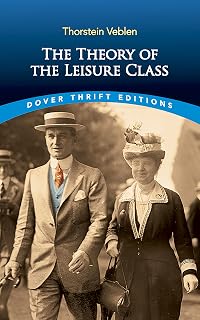
The Theory of the Leisure Class
by Thorstein Veblen
On This Page
Description
Considered the first in-depth critique of consumerism, economist Thorstein Veblen's 1899 book The Theory of the Leisure Class has come to be regarded as one of the great works of economic theory. Using contemporary and anthropological accounts, Veblen held that our economic and social norms are driven by traces of our early tribal life, rather than ideas of utility..
Tags
Recommendations














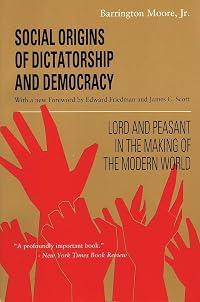



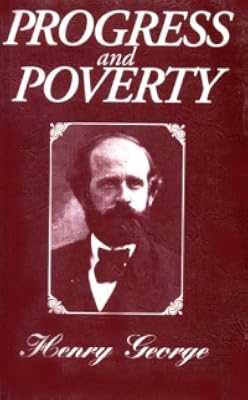




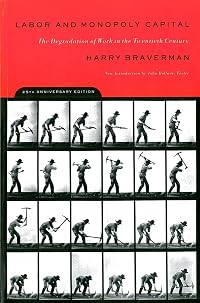


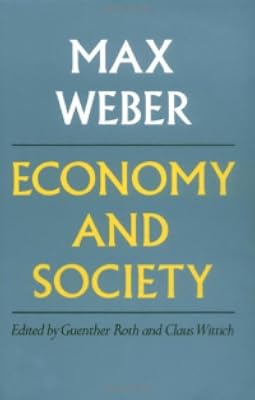








Member Recommendations
The Science of Happiness: How Our Brains Make Us Happy-and What We Can Do to Get Happier by Stefan Klein
mercure Mr. Veblen's book is over 100 years old. Mr. Klein's book dedicates some chapters on the effect of money and income distribution in our time. Plus he has footnotes!
Member Reviews
Professor Veblen’s book, first published in 1899 is a sharp critique of the wealth elite of the Gilded Age. In abstract academic prose, which drips with sarcastic venom, he describes the wealthy as a holdover from humanity’s barbaric past. He uses few examples to back up his theory, relying on the common knowledge of his contemporary readers, but when he does it’s truly enlightening.
For example, in his chapter on “Modern Survivals of Prowess” he uses the example of an upper-class gentleman who carries a walking stick for show, and not as an aid to waking.
The walking-stick serves the purpose of an advertisement that the bearer’s hands are employed otherwise than in useful effort, and it therefore has utility as an evidence show more of leisure. But it is also a weapon, and it meets a felt need of barbarian man on that ground. The handling of so tangible and primitive a means of offense is very comforting to any one who is gifted with even a moderate share of ferocity. –pages 172-173 (in this edition)
He goes on to explain why this mindset, although it may be economically useful to the individual, is detrimental to the general population as a whole.
The two barbarian traits, ferocity and astuteness, go to make up the predaceous temper or spiritual attitude. They are the expressions of a narrowly self-regarding habit of mind. Both are highly serviceable for individual expediency in a life looking for invidious success. Both also have a high aesthetic value. Both are fostered by the pecuniary culture. But both alike are of no use for the purpose of the collective life. Page 179
In addition to the wealthy, he also eviscerates “conspicuous consumption,” athletics, religion, luck, and forms of higher education which have no practical application. As a result, his dry, droll prose, even if the reader does not agree with him, is hilarious to read, or to others infuriating. I loved it. show less
For example, in his chapter on “Modern Survivals of Prowess” he uses the example of an upper-class gentleman who carries a walking stick for show, and not as an aid to waking.
The walking-stick serves the purpose of an advertisement that the bearer’s hands are employed otherwise than in useful effort, and it therefore has utility as an evidence show more of leisure. But it is also a weapon, and it meets a felt need of barbarian man on that ground. The handling of so tangible and primitive a means of offense is very comforting to any one who is gifted with even a moderate share of ferocity. –pages 172-173 (in this edition)
He goes on to explain why this mindset, although it may be economically useful to the individual, is detrimental to the general population as a whole.
The two barbarian traits, ferocity and astuteness, go to make up the predaceous temper or spiritual attitude. They are the expressions of a narrowly self-regarding habit of mind. Both are highly serviceable for individual expediency in a life looking for invidious success. Both also have a high aesthetic value. Both are fostered by the pecuniary culture. But both alike are of no use for the purpose of the collective life. Page 179
In addition to the wealthy, he also eviscerates “conspicuous consumption,” athletics, religion, luck, and forms of higher education which have no practical application. As a result, his dry, droll prose, even if the reader does not agree with him, is hilarious to read, or to others infuriating. I loved it. show less
If you want to understand American society and can only read one book, this is the book to read. Veblen introduces the concepts of conspicuous consumption, which we all know, but more importantly, he describes what he calls conspicuous leisure which explains everything from wine snobbery, foodie-ism and designer clothes, to elaborate Powerpoint graphics and English butlers. The analysis is trenchant and is as applicable to our new gilded age as it was to the original one in which the book was written. I've read the book several times and each reading produces a new aha moment.
Being European and therefore inclined to laziness, I returned from my holiday to home and office with the certainty that I was ready to join the ranks of the leisure class. Idleness is the parent of vice, but the occasional book review here would keep me sufficiently occupied.
I am afraid Mr. Veblen’s book did not really bring me the theory that I was looking for. In pompous language, Mr. Veblen basically declares that all man is ever interested in is showing off his status vis-à-vis his fellow creatures. He/she does so by as much conspicuous consumption as he/she can possibly afford. And this does not require the use of a credit card: housekeeping, pets, sports, banking, management, religion, and every other activity that is not show more about creating the bare necessities of late 1800’s life is considered “leisure”. Sometimes this leads to wonderful sweeping statements like this one:
The lawyer is exclusively occupied with the details of predatory fraud, either in achieving or in checkmating chicane, and success in the profession is therefore accepted as marking a large endowment of that barbarian astuteness which has always commanded men’s respect and fear.
But do Mr. Veblen’s extremely Puritanical theories make sense in the 21st century? Modern science confirms that people are very aware of their status relative to others, and are willing to spend hundreds of euros extra to show off a bag with the right label tagged to it. But the economy has grown increasingly complex, and few people will still accept Mr. Veblen’s definition of “leisure”. Nor does this book make sense as a study of happiness. Modern research shows that status is just one factor that defines happiness, including such things as a secure environment, a balanced distribution of income in a society, and a trade off between purchasing power and leave from work. Therefore I would recommend this book only to students of Mr. Veblen’s day and age. Others I would like to suggest Stefan Klein’s The Science of Happiness, which contains chapters on the effect of wealth and income distribution, substantiated by footnotes. show less
I am afraid Mr. Veblen’s book did not really bring me the theory that I was looking for. In pompous language, Mr. Veblen basically declares that all man is ever interested in is showing off his status vis-à-vis his fellow creatures. He/she does so by as much conspicuous consumption as he/she can possibly afford. And this does not require the use of a credit card: housekeeping, pets, sports, banking, management, religion, and every other activity that is not show more about creating the bare necessities of late 1800’s life is considered “leisure”. Sometimes this leads to wonderful sweeping statements like this one:
The lawyer is exclusively occupied with the details of predatory fraud, either in achieving or in checkmating chicane, and success in the profession is therefore accepted as marking a large endowment of that barbarian astuteness which has always commanded men’s respect and fear.
But do Mr. Veblen’s extremely Puritanical theories make sense in the 21st century? Modern science confirms that people are very aware of their status relative to others, and are willing to spend hundreds of euros extra to show off a bag with the right label tagged to it. But the economy has grown increasingly complex, and few people will still accept Mr. Veblen’s definition of “leisure”. Nor does this book make sense as a study of happiness. Modern research shows that status is just one factor that defines happiness, including such things as a secure environment, a balanced distribution of income in a society, and a trade off between purchasing power and leave from work. Therefore I would recommend this book only to students of Mr. Veblen’s day and age. Others I would like to suggest Stefan Klein’s The Science of Happiness, which contains chapters on the effect of wealth and income distribution, substantiated by footnotes. show less
Thorstein Veblen's Theory of the Leisure Class is a "Famous Classic of Economic Thought" according to the front of this fifty year old paperback. It was originally published in America in 1899, and has been in print ever since, as it is indeed a classic, for at least two reasons: Firstly, it is a very insightful work that explains a lot of what initially appear from an economic perspective to be irrational acts. Secondly, it is written in an unusual style that is highly satiric, yet retains no ambiguity in its theoretical points like other ironic works often do. This makes it fairly entertaining in places for such a serious academic work.
Though you might not have heard of this book before (I hadn't, but I'm not an economist), you are show more likely to be familiar with at least one of the two main concepts that it coins – Conspicuous Consumption, and Conspicuous Leisure. Together these initially appear to be paradoxical in economic terms, however the author provides convincing economic, social and pyschological explanations for their existence, and why they typically manifest in certain forms. These two concepts have great power in explaining scoial behaviour through the ages, and throughout society, not just among the leisure class (though this is where they are most obvious). When viewed with some detatchment, what results from these two diriving forces is often ridiculuous behaviour, of which many historical and modern examples could be provided. As well as the more obviously ridiculous examples (such as fish knives and stretch Limousines), the effect of these forces permeate society right into the mundane and everyday items and conventions that we take for granted. This is not to say that what originated for the reasons of social status, has not persisted for other reasons such as aesthetics, and it is acknowledged here that the purposes of conspicuous consumption and leisure rarely work alone but are often joined by other motivations.
All the essentials of the theory, and its more interesting implications are contained in the first 7 chapters (roughly the first half of the book), while the remainder could largely be skipped as it goes into a lot of trivialities that the reader could infer from what they had read in the first half. Also chapter 9 is largely useless due to its basis on an out-of-date and often wrong understanding of biological inheritance of traits.
Aside from these few complaints this is surely a very important work for economists to read, and probably of large interest to a proportion of the general intellectual readership due to the vast applicability of its therories throughout modern culture. In fact, despite a lot of the theory being based on American society 120 years ago, much of what is said is true in greater degree today than it was then, and not in America alone but across the world. This is easily appreciated by the way recent trends in social media (Facebook, Instagram etc) have amplified the ease, reach and extent of the conspicuoulsy consuming and taking leisure. A modern book on this could hardly better expose the vanity and vacuity of these trends than what is said here, which is huge credit to the insight of Veblen. show less
Though you might not have heard of this book before (I hadn't, but I'm not an economist), you are show more likely to be familiar with at least one of the two main concepts that it coins – Conspicuous Consumption, and Conspicuous Leisure. Together these initially appear to be paradoxical in economic terms, however the author provides convincing economic, social and pyschological explanations for their existence, and why they typically manifest in certain forms. These two concepts have great power in explaining scoial behaviour through the ages, and throughout society, not just among the leisure class (though this is where they are most obvious). When viewed with some detatchment, what results from these two diriving forces is often ridiculuous behaviour, of which many historical and modern examples could be provided. As well as the more obviously ridiculous examples (such as fish knives and stretch Limousines), the effect of these forces permeate society right into the mundane and everyday items and conventions that we take for granted. This is not to say that what originated for the reasons of social status, has not persisted for other reasons such as aesthetics, and it is acknowledged here that the purposes of conspicuous consumption and leisure rarely work alone but are often joined by other motivations.
All the essentials of the theory, and its more interesting implications are contained in the first 7 chapters (roughly the first half of the book), while the remainder could largely be skipped as it goes into a lot of trivialities that the reader could infer from what they had read in the first half. Also chapter 9 is largely useless due to its basis on an out-of-date and often wrong understanding of biological inheritance of traits.
Aside from these few complaints this is surely a very important work for economists to read, and probably of large interest to a proportion of the general intellectual readership due to the vast applicability of its therories throughout modern culture. In fact, despite a lot of the theory being based on American society 120 years ago, much of what is said is true in greater degree today than it was then, and not in America alone but across the world. This is easily appreciated by the way recent trends in social media (Facebook, Instagram etc) have amplified the ease, reach and extent of the conspicuoulsy consuming and taking leisure. A modern book on this could hardly better expose the vanity and vacuity of these trends than what is said here, which is huge credit to the insight of Veblen. show less
Amusingly dated in some respects and disturbingly relevant in others, this book is full of engaging ideas and dry humor. So I am at a loss to explain why I could rarely make it through more than five pages at a time without starting to fall asleep. I think that the lack of a scholarly apparatus, rather than making the writing more accessible, actually made it more monotonous to me. It's a nice addition to the intellectual toolkit, and I don't regret reading it, but I plan to make my next read something less soporific.
Overambitious, arrogant, almost offensively Darwinian in its discussion of institutions, but nonetheless insightful and fun. (lol Veblen)
I'm not versed in economic theory, so I was worried about making it through this one, but it ended up being extremely readable. It's a bit flat to read in long marathon sessions instead of a chapter here and there, but Veblen does a good job of balancing much needed explanation with more technical discussions of terminology and historical development. At times, there's some repetition, but for the most part it's necessary (at least for a layperson like myself). It's dry at times, but at other times it's a bit horrifying, especially when you realize that much of Veblen's discussion can apply to our society, despite the passage of time.
In the end, I do recommed this if you're interested in American History or the economic drives behind show more society and societal norms--at times, it really is frightening how on target Veblen's analysis seems in the connections he makes. show less
In the end, I do recommed this if you're interested in American History or the economic drives behind show more society and societal norms--at times, it really is frightening how on target Veblen's analysis seems in the connections he makes. show less
Members
- Recently Added By
Lists

New York Public Library's Books of the Century - All
170 works; 14 members

Works referenced in Capital in the Twenty-First Century by Thomas Piketty
62 works; 2 members

culture
320 works; 1 member

My List
302 works; 1 member

The Torchlight List
95 works; 1 member

Sociology
18 works; 1 member

In Our Time books
4,934 works; 2 members
Author Information

38+ Works 3,685 Members
Thorstein Bunde Veblen was an American economist and social scientist best known for challenging the economic theories of his time. He rejected the neat logic and natural laws of his contemporaries, asserting instead that economic order was evolutionary and that this evolution was strongly influenced by institutions such as labor unions, business show more organizations, schools, and even churches. In so doing, Veblen laid the basis for what is now known as the institutional school of economics. Veblen was often described as being an aloof and isolated, albeit gifted, misfit. His sense of isolation was established early; he was born on a farm in rural Wisconsin to immigrant Norwegian parents. English was spoken only as a second language in the tight-knit Norwegian community and Veblen did not perfect his use of the language until he entered college. A voracious reader with a distinct aversion to farm work, he was sent to nearby Carleton College to study for the Lutheran ministry. While at Carleton, Veblen alienated some of the faculty with inflammatory and agnostic writings, and, although he graduated in 1880, it was without the divinity degree that would have enabled him to teach at one of the many small religious colleges of the time. After graduate work at Johns Hopkins University and Yale University, he returned to his parents' home, where he spent the next seven years relaxing, reading, and doing odd jobs. In 1888 he married Ellen Rolfe, much to the dismay of her uncle who happened to be the president of Carleton College. During this period, Veblen had little luck finding a job, even with the benefit of his wife's and her uncle's connections. Finally, at the age of 34, Veblen went to Cornell University to seek a teaching position. Despite his frontier appearance---corduroy trousers and coonskin cap---he was given a one-year teaching assignment. The next year he joined the faculty at the University of Chicago, where he taught until 1906. While at the University of Chicago, he wrote two of his most important works, The Theory of the Leisure Class (1899) and The Theory of Business Enterprise (1904). The Theory of the Leisure Class was an insightful, if not contemptuous, analysis of the excess consumption and wasteful behavior of the wealthy. Veblen contended that the modern quest for the accumulation of money, and its lavish display, was derived from the predatory barbarian practice of seizing goods and wealth without work. In The Theory of Business Enterprise, he described the heads of corporate enterprises as saboteurs of the economic system---people interested only in the financing of production rather than the process of production. This was a radical view, but Veblen was writing during the period when the "robber barons" seemed obsessed by the profits that could be made from stock flotations, bond issues, and other complex financial deals. Veblen's notorious womanizing cost him his position with the University of Chicago in 1906. He moved on to Stanford University, then the University of Missouri, and finally to the New School for Social Research in New York, where he taught briefly before retiring to a small rustic cabin in California. Divorced from his wife in 1911, he remarried in 1914, but his second wife was institutionalized shortly after for psychological problems. Veblen was one of the most provocative economists of his time, but his ideas were such that he attracted few disciples. Even so, economists have come to recognize the importance of institutions and their impact on economic behavior. Additional testament to the influence of his work is the fact that many of the terms he coined are in wide use today, among them conspicuous consumption conspicuous consumption, the leisure class, and cultural lag. (Bowker Author Biography) show less
Some Editions
Awards and Honors
Series
Belongs to Publisher Series
Work Relationships
Is contained in
Has as a student's study guide
Common Knowledge
- Canonical title
- The Theory of the Leisure Class
- Original title
- The Theory of the Leisure Class: An Economic Study of Institutions
- Alternate titles*
- La teoria della classe agiata
- Original publication date
- 1899
- First words
- PREFACE
It is the purpose of this inquiry to discuss the place and value of the leisure class as an economic factor in modern life, but it has been found impracticable to confine the discussion strictly within the li... (show all)mits
so marked out. Some attention is perforce given to the origin and the line of derivation of the institution, as well as to features of social life that are not commonly classed as economic.
CHAPTER I: Introductory
The institution of a leisure class is found in its best development at the higher stages of the barbarian culture; as, for instance, in feudal Europe or feudal Japan. In such communities the d... (show all)istinction between
classes is very rigorously observed; and the feature of most striking economic significance in these class differences is the distinction maintained between the employments proper to the several classes. - Last words
- (Click to show. Warning: May contain spoilers.)Classic speech has the honorific virtue of dignity; it commands attention and respect as being the
accredited method of communication under the leisure-class scheme of life, because it carries a pointed suggestion of the industrial exemption of the speaker. The advantage of the accredited locutions lies in their reputability; they are reputable because they are cumbrous and out of date, and therefore argue waste of time and exemption from the use and the need of direct and forcible speech. - Original language
- English
*Some information comes from Common Knowledge in other languages. Click "Edit" for more information.
Classifications
- Genres
- Sociology, Economics, Nonfiction, General Nonfiction, Philosophy
- DDC/MDS
- 305.5 — Society, government, & culture Social sciences, sociology & anthropology Social group - Age, Gender, Ethnicity People by social and economic levels
- LCC
- HB831 .V4 — Social sciences Economic theory. Demography Economic theory. Demography Consumption. Demand
- BISAC
Statistics
- Members
- 2,536
- Popularity
- 7,555
- Reviews
- 25
- Rating
- (3.84)
- Languages
- 18 — Chinese, Czech, Dutch, English, Estonian, Finnish, French, German, Hungarian, Italian, Japanese, Norwegian (Bokmål), Polish, Portuguese, Russian, Spanish, Swedish, Turkish
- Media
- Paper, Audiobook, Ebook
- ISBNs
- 144
- UPCs
- 3
- ASINs
- 76