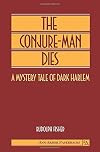
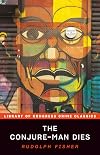
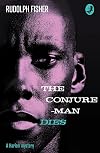
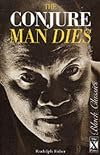
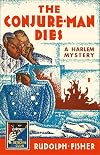
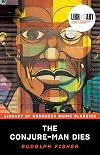
The Conjure-Man Dies
by Rudolph Fisher
On This Page
Description
An unmissable entry in the esteemed Library of Congress Crime Classics, an exciting new classic mystery series created in exclusive partnership with the Library of Congress to highlight the best of American crime fiction When the body of N'Gana Frimbo, the African conjure-man, is discovered in his consultation room, Perry Dart, one of Harlem's ten Black police detectives, is called in to investigate. Together with Dr. Archer, a physician from across the street, Dart is determined to solve show more the baffling mystery, helped and hindered by Bubber Brown and Jinx Jenkins, local boys keen to clear themselves of suspicion of murder and undertake their own investigations. This groundbreaking mystery is the first ever to feature a Black detective and all Black characters, written by Black author Rudolph Fisher, who was a principal writer of the Harlem Renaissance. show lessTags
Recommendations












Member Reviews
Fisher gives us a mystery that pulls us along and doesn’t come clear until the end. The setting and characters must have been unusual for the time (1932), and reading it almost 100 years later still feels like being allowed to see something rare. The spooky labyrinthine headquarters of the conjure-man reminded me of the Hollow Temple in The Dain Curse. Fisher’s skill with dialogue is a highlight, both the cutting banter of Bubber and Jinx, and the more erudite repartee of Dart, Archer, and Frimbo. The sly humor and the way that Fisher keeps us wondering make this a great read.
A compelling, fast-paced mystery novel from 1930s Harlem, written by the brilliant author, physician, and musician Rudolph Fisher. Fisher is one of the earliest Black American mystery writers to be published: a detailed introduction from Leslie Klinger in this Library of Congress provides some interesting biographical context about him and the era he was writing in.
The Conjure-Man dies features a cast of characters in Harlem, reflecting Fisher's deliberate choice to write only Black characters for this book. Our victim is N’Gana Frimbo, a 'conjure-man' who practices some form of voodoo. He's found dead, alone in his room, after an evening of meeting clients and his landlady, all of whom form a range of suspects. Investigating the show more mystery are Dr. Archer, the local doctor called to attend to the body, and Detective Dart. Assisting them are Jinx and Bubber Brown, local young men who first found the body, and fancying themselves private eyes, tag along with the investigators to try and find the perpetrators. Midway through their investigation, the body disappears and Frimbo reappears - but is it really Frimbo? And what happened to the body? Whose body was it?
Fisher takes us through 1930s Harlem: into homes, bars, clubs, pool rooms, and offices. The scenes are very vivid and I found myself repeatedly thinking what a fantastic movie this book might make (alas, we'll only get 27 Marvel movies instead). Much of the language is outdated by today's standards, and the style is very classic to the era: slow, dense, and descriptive. Klinger, who introduces the book, has done a fantastic job of footnoting the era's slang and providing a warning at the outset about the use of words that are now recognised as slurs. Klinger frequently refers to an essay Fisher himself wrote, titled 'Harlamese' which documented 1930s slang and language usage of the time. I particularly enjoyed this footnote: "A 'daddy' is a provider of affection and other more tangible delights." which Klinger cites to Fisher's 'Harlamese' essay.
Fisher was a working radiologist in Harlem at the time, and eventually became the superintendent of a large hospital there, in addition to many contributions to medical research. It's not surprising then, that you can feel his finger on the pulse of the time. I enjoyed this. If you read it, go in remembering it was written in the 1930s, and prepare accordingly for the slow, gentle style that still manages to sustain the twisty pace of a mystery. show less
The Conjure-Man dies features a cast of characters in Harlem, reflecting Fisher's deliberate choice to write only Black characters for this book. Our victim is N’Gana Frimbo, a 'conjure-man' who practices some form of voodoo. He's found dead, alone in his room, after an evening of meeting clients and his landlady, all of whom form a range of suspects. Investigating the show more mystery are Dr. Archer, the local doctor called to attend to the body, and Detective Dart. Assisting them are Jinx and Bubber Brown, local young men who first found the body, and fancying themselves private eyes, tag along with the investigators to try and find the perpetrators. Midway through their investigation, the body disappears and Frimbo reappears - but is it really Frimbo? And what happened to the body? Whose body was it?
Fisher takes us through 1930s Harlem: into homes, bars, clubs, pool rooms, and offices. The scenes are very vivid and I found myself repeatedly thinking what a fantastic movie this book might make (alas, we'll only get 27 Marvel movies instead). Much of the language is outdated by today's standards, and the style is very classic to the era: slow, dense, and descriptive. Klinger, who introduces the book, has done a fantastic job of footnoting the era's slang and providing a warning at the outset about the use of words that are now recognised as slurs. Klinger frequently refers to an essay Fisher himself wrote, titled 'Harlamese' which documented 1930s slang and language usage of the time. I particularly enjoyed this footnote: "A 'daddy' is a provider of affection and other more tangible delights." which Klinger cites to Fisher's 'Harlamese' essay.
Fisher was a working radiologist in Harlem at the time, and eventually became the superintendent of a large hospital there, in addition to many contributions to medical research. It's not surprising then, that you can feel his finger on the pulse of the time. I enjoyed this. If you read it, go in remembering it was written in the 1930s, and prepare accordingly for the slow, gentle style that still manages to sustain the twisty pace of a mystery. show less
The Conjure-Man Dies: A Mystery Tale of Dark Harlem is a reissue of the first known mystery novel (published in 1932) with an all-Black cast of characters. This alone makes it worth reading—but it's also a solid mystery novel worth reading in its own right and not just notable for the publishing watershed it represents.
The cast of characters includes a police detective, an undertaker, a medical doctor, a Pullman porter, a small-time numbers runner, an aspiring P.I., and, of course, the conjure-man of the title. The Conjure-Man dies during a spiritual "reading" and is initially examined by the police detective and M.D. Then his body disappears. Then he returns alive, explaining that since his mind was outside his body when he was show more killed, he came back to life when his mind reentered that body. It's a clever conundrum that keeps readers guessing.
The real heart of the novel, though lies in the relationships between characters. The detective and the M.D. are quirky and well acquainted with each others' foibles. These are intelligent, driven men who push one another, tease one another, and combine their intelligence with purpose. The aspiring P.I. and his friend who discovered the Conjure-Man's death engage in ongoing verbal sparring that can't hide their mutual affection.
A second, novella-length story focusing on the detective and the M.D. is also included in this book—a much appreciated bonus.
Whether or not you enjoy discovering milestones in detective fiction, you will enjoy this novel. It's a good read.
I received a free electronic review copy of this book; the opinions are my own. show less
The cast of characters includes a police detective, an undertaker, a medical doctor, a Pullman porter, a small-time numbers runner, an aspiring P.I., and, of course, the conjure-man of the title. The Conjure-Man dies during a spiritual "reading" and is initially examined by the police detective and M.D. Then his body disappears. Then he returns alive, explaining that since his mind was outside his body when he was show more killed, he came back to life when his mind reentered that body. It's a clever conundrum that keeps readers guessing.
The real heart of the novel, though lies in the relationships between characters. The detective and the M.D. are quirky and well acquainted with each others' foibles. These are intelligent, driven men who push one another, tease one another, and combine their intelligence with purpose. The aspiring P.I. and his friend who discovered the Conjure-Man's death engage in ongoing verbal sparring that can't hide their mutual affection.
A second, novella-length story focusing on the detective and the M.D. is also included in this book—a much appreciated bonus.
Whether or not you enjoy discovering milestones in detective fiction, you will enjoy this novel. It's a good read.
I received a free electronic review copy of this book; the opinions are my own. show less
This is a 1930s murder mystery set in Harlem, the first murder mystery written by a black author with an all-black cast: black victim, black suspects, black detectives, including a black police detective and a black physician. It's been republished a few times since, most recently as part of the Library of Congress's "Crimes Classics" series, with an introduction and footnotes by Leslie S. Klinger.
It's pretty good, if not great. The basic premise is that a "conjure-man" has apparently been killed, and there are all too many suspects; a police detective and a doctor end up working together to solve the crime. The opening half is the best part, with the detective methodically interviewing and verifying the different suspects and show more accumulating all the clues, aided by the insight of the doctor. We get a lot of different segments of 1930s Harlem life; my favorite was Bubber Brown, who used to be a street sweeper but decided to launch a new career as a private detective investigating infidelity, reasoning anybody can follow someone. He's a funny character, and the source of the book's best jokes. (When Detective Dart points out he can't put "Inc." on his business card if he's not actually incorporated, Bubber claims it says "ink" because he's black.)
As the mystery unspooled, I found it got a bit overcomplicated and technical, and the ending felt very abrupt. I mean, I know you don't want a mystery to be very guessable, but I wasn't convinced this one was guessable at all, based on the clues provided. Enjoyable, and I'd recommend it, but unlikely to be anyone's favorite. I am curious to track down the previous appearance of Bubber and his friend Jinx Jenkins in Fisher's first novel, The Walls of Jericho. (Speaking of which, though overall Klinger's apparatus is pretty good, with lots of useful clarifications, but not condescending overexplanations, I had to infer these characters were reused from an earlier book by a passing reference in a footnote; weirdly, it's never explicitly stated.) show less
It's pretty good, if not great. The basic premise is that a "conjure-man" has apparently been killed, and there are all too many suspects; a police detective and a doctor end up working together to solve the crime. The opening half is the best part, with the detective methodically interviewing and verifying the different suspects and show more accumulating all the clues, aided by the insight of the doctor. We get a lot of different segments of 1930s Harlem life; my favorite was Bubber Brown, who used to be a street sweeper but decided to launch a new career as a private detective investigating infidelity, reasoning anybody can follow someone. He's a funny character, and the source of the book's best jokes. (When Detective Dart points out he can't put "Inc." on his business card if he's not actually incorporated, Bubber claims it says "ink" because he's black.)
As the mystery unspooled, I found it got a bit overcomplicated and technical, and the ending felt very abrupt. I mean, I know you don't want a mystery to be very guessable, but I wasn't convinced this one was guessable at all, based on the clues provided. Enjoyable, and I'd recommend it, but unlikely to be anyone's favorite. I am curious to track down the previous appearance of Bubber and his friend Jinx Jenkins in Fisher's first novel, The Walls of Jericho. (Speaking of which, though overall Klinger's apparatus is pretty good, with lots of useful clarifications, but not condescending overexplanations, I had to infer these characters were reused from an earlier book by a passing reference in a footnote; weirdly, it's never explicitly stated.) show less
The Conjure-Man Dies is a detective novel long forgotten, but now getting a new lease on life thanks to the Library of Congress. The novel, the first to feature a black detective, tells of the investigation into the death of Frimbo, an African soothsayer practicing in Harlem. Dr. John Archer, a.black physician (like the author), who lives across the street from the now deceased Frimbo, joins forces with Detective Dart, a black man, to solve the murder. Without spilling the beans, the plot is somewhat convoluted, helping to maintain interest, and the resolution is a surprise.
This well written novel is more than just an historical curiosity. While it gives the reader an insight into life in Harlem during its golden age, it is also a show more deftly plotted murder mystery, and the characters who populate the novel are well drawn. It’s a shame the author died young, as the association between Dr. Archer and Detective Dart laid the foundation for future stories.
For those offended by racial stereotypes in books, despite the period in which they were written, The Conjure-Man Dies is full of dialogue that was presumably spoken in the streets of Harlem that may now seem offensive to modern readers. This should not detract from an otherwise enjoyable reading experience.
My thanks to Netgalley and Poisoned Pen Press for providing an advance copy in exchange for an honest review. show less
This well written novel is more than just an historical curiosity. While it gives the reader an insight into life in Harlem during its golden age, it is also a show more deftly plotted murder mystery, and the characters who populate the novel are well drawn. It’s a shame the author died young, as the association between Dr. Archer and Detective Dart laid the foundation for future stories.
For those offended by racial stereotypes in books, despite the period in which they were written, The Conjure-Man Dies is full of dialogue that was presumably spoken in the streets of Harlem that may now seem offensive to modern readers. This should not detract from an otherwise enjoyable reading experience.
My thanks to Netgalley and Poisoned Pen Press for providing an advance copy in exchange for an honest review. show less
Billed as "the first known mystery novel written by an African-American", the Conjure Man Dies, published in 1932, is an entertaining story of the investigation into the death of the title character, an African King, educated at Harvard, who becomes a very high class fortune teller in New York City. The narrative features one twist after another as an African-American detective, one of the few on the NYC police force, a highly intellectual African-American doctor living across the street (who obviously has a thing for Sherlock Holmes), and an out-of-work African-American who has styled himself as a private detective try to figure out what happened and who did it. The final solution makes sense, but isn't terribly satisfying. The story show more itself is more interesting as we come into contact with a cross-section of Harlem life. The author uses language and includes a lot of dialogue, however, that if it came from a white writer, would be considered racist, so it is a bit hard to know what to think. Some characters are very smart; others are upstanding citizens; some are caricatures. Many characters are introduced by describing their skin tone. Characters insult one another about their looks, including skin tone. This white reader doesn't quite know what to make of it. I was introduced to this book by a Great Courses lecture on African-American detective fiction. I'm glad I read it--but clearly the genre's writers have greatly improved since. show less
Harlem, the 1930s. N’Gana Frimbo, a conjure-man, dies in the middle of a consultation with one of his clients. It’s a locked-room mystery; nobody seems to have been able to get in or out, and he’s been killed in a way that definitely cannot be construed as suicide or an accident. Naturally, Jinx Jenkins, the person who was consulting with him at the time of his murder, is the first suspect. Jinx’s friend, Bubber Brown, is an aspiring private detective and undertakes to clear his friend while the police, led by Detective Perry Dart and local physician Dr. Archer, conduct their official investigation.
I found this a bit heavy going. The writing is ornate and I found some of the twists hard to follow. At one point, I was tempted to show more flip to the end to see how it worked out. Still, it was interesting to read the first crime novel written by an African American author. Be warned, though, that there is some outdated language in the book—there is a disclaimer at the beginning, but it’s still jarring to encounter. show less
I found this a bit heavy going. The writing is ornate and I found some of the twists hard to follow. At one point, I was tempted to show more flip to the end to see how it worked out. Still, it was interesting to read the first crime novel written by an African American author. Be warned, though, that there is some outdated language in the book—there is a disclaimer at the beginning, but it’s still jarring to encounter. show less
Members
- Recently Added By
Lists

Anticipated 2022 & Early 2023 Releases
209 works; 4 members

Books Read in 2025
4,128 works; 98 members
Author Information

6+ Works 341 Members
Some Editions
Awards and Honors
Series
Belongs to Publisher Series
Work Relationships
Common Knowledge
- Canonical title
- The Conjure-Man Dies
- Original publication date
- 1932
- Important places
- Harlem, New York, New York, USA
- First words
- Encountering the bright-lighted gaiety of Harlem's Seventh Avenue, the frigid midwinter night seemed to relent a little.
- Last words
- (Click to show. Warning: May contain spoilers.)And deep in meditation the two wandered on side by side down Seventh Avenue.
- Original language
- English
Classifications
Statistics
- Members
- 233
- Popularity
- 140,100
- Reviews
- 18
- Rating
- (3.61)
- Languages
- English, Portuguese
- Media
- Paper, Audiobook, Ebook
- ISBNs
- 17
- ASINs
- 5