
Leslie S. Klinger
Author of The New Annotated Sherlock Holmes: The Complete Short Stories
About the Author
Disambiguation Notice:
(ger) https://en.wikipedia.org/wiki/Leslie_S._Klinger
Series
Works by Leslie S. Klinger
The New Annotated Sherlock Holmes: The Complete Short Stories (2004) — Editor — 887 copies, 8 reviews
In the Shadow of Agatha Christie: Classic Crime Fiction by Forgotten Female Writers, 1850-1917 (2018) — Editor — 108 copies, 8 reviews
Weird Women: Classic Supernatural Fiction by Groundbreaking Female Writers: 1852-1923 (2020) — Editor — 108 copies, 2 reviews
In the Shadow of Edgar Allan Poe: Classic Tales of Horror, 1816-1914 (2015) — Editor — 107 copies, 3 reviews
Weird Women: Volume 2: 1840-1925: Classic Supernatural Fiction by Groundbreaking Female Writers (2021) — Editor — 38 copies
The Grand Game: A Celebration of Sherlockian Scholarship, Volume One (1902-1959) (2011) — Editor — 7 copies
The Grand Game: A Celebration of Sherlockian Scholarship, Volume Two (1960-2010) (2012) — Editor — 7 copies
The Grand Game, Vol. One and Two and Bonus Material — Editor — 2 copies
Writing about the canon 1 copy
Too much Sherlock? 1 copy
Associated Works
The New Annotated Sherlock Holmes: The Short Stories, Volume 1 of 2 (The Adventures of Sherlock Holmes + The Memoirs of Sherlock Holmes) (2005) — Editor — 247 copies, 2 reviews
The Rivals of Sherlock Holmes: A Collection of Victorian Detective Tales (2008) — Introduction — 141 copies, 1 review
The MX Book of New Sherlock Holmes Stories, Part 1 : 1881–1889 (2015) — Foreword, some editions — 46 copies
The Rivals of Sherlock Holmes: The Greatest Detective Stories: 1837-1914 (2019) — Preface — 37 copies
A Vindication of Monsters: Essays on Mary Wollstonecraft and Mary Shelley (2023) — Introduction — 3 copies
Art in the Blood: Special Edition — Foreword, some editions — 1 copy
Tagged
Common Knowledge
- Birthdate
- 1946-05-02
- Gender
- male
- Education
- University of California (AB | English)
University of California School of Law (JD) - Occupations
- attorney
editor - Organizations
- Baker Street Irregulars
The Illustrious Clients of Indianapolis
BSI Biography Series (general editor)
Mystery Writers of America
Horror Writers Association - Nationality
- USA
- Birthplace
- Chicago, Illinois, USA
- Disambiguation notice
- https://en.wikipedia.org/wiki/Leslie_S...
- Associated Place (for map)
- Illinois, USA
Members
Discussions
Annotated Sandman: Neil Gaiman (New) in Easton Press Collectors (January 2024)
A Study in Sherlock - New Pastiche Collection in Baker Street and Beyond (November 2013)
Author files Sherlock Holmes suit in Baker Street and Beyond (March 2013)
Reviews
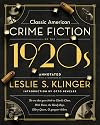
This book is massive. 1100 pages, hardbound. This is the kind of book you want to use to wallop burglars. That'd be an especially appropriate use of this anthology, too, since it covers a full range of 1920s crime novels. Overall, it's a fascinating read. You get the first books of several major detective series, like Charlie Chan and Ellery Queen. Even the book with an almost unbearable protagonist, Philo Vance, gave me oodles of useful research notes and an interesting mystery as the show more backbone of the piece. Dashiell Hammet's first book is a veritable blood bath, but a masterfully done one at that. Reading Little Caesar, I can well understand how this established the gangster novel--and movie--genres.
There is a lengthy introduction at the start, giving context for each book. The annotations throughout were very useful (indeed, for the gangster novel Little Caesar, the lingo would've been a challenge to parse otherwise) but I also found myself wanting more annotations.
If you love classic mysteries and want a showcase book, this is worth the hefty price. (I bought my signed edition from Poisoned Pen Bookstore in Scottsdale, Arizona.) But do be aware it is a difficult read because of the sheer size of the book. Not only is this book impossible to tuck away in a purse to read on the go, it's awkward to read wherever you may be. Still, I found the challenge to be more than worthwhile in the end.
My reviews for each included book are found below, and are also posted under the individual book listings on Goodreads and LibraryThing.
---
The House Without a Key: Charlie Chan #1 by by Earl Derr Biggers
Charlie Chan is an iconic character, and it was interesting to see him within the context of his first novel, published with its original text. The book surprised me in many ways. First of all, the settings within the book are masterfully portrayed. I've never seen a book so vividly describe Hawaii in the 1920s. The annotations remarked a few times on inaccuracies or fictionalized bits, but many of the details felt spot-on (I say that, having extensively read on early 20th century Hawaii for my own novel). While I expected issues with racism and caricatures because of the era, this was not as bad as I expected it would be (how's that for an endorsement?). Charlie Chan is regarded as something of a mockery now, but as the notes observed, he does not speak pidgin Chinese, but talks as a very highly educated man. The text of the book demonstrated that well. The way white characters reacted to Chan felt realistic (though sad), but I also understood well why the original text had Chan racist against the Japanese. Within the context of the time, that made perfect sense; it's worth noting that these racist snippets were toned down or removed in later editions of the book.
This does not develop as a modern murder mystery does--often with a corpse in chapter one. Instead, the start is slow as the reader gets to know the Winterslip family of both Boston and Honolulu. The dead body doesn't show up until almost a hundred pages in, with Charlie Chan's arrival immediately after. I think my biggest surprise about the book was that Chan was a minor character with a pivotal role. Instead, most of the novel followed the stuffy scion of the Winterslip family. His was not a bad perspective--it was enjoyable to watch him grow across the book--but I expected a Charlie Chan book to, well, be more about Charlie Chan. The murderer was fairly obvious to be from early on, though there were some nice twists and turns leading up to the big reveal at the end.
I feel no urge to read onward in the series, but if I need to do more research on 1920s Hawaii, I just might. The book was not a bad read at all. Intriguing, I'd say.
---
The Benson Murder Case (Philo Vance #1)
by S.S. Van Dine
I must say, the first chapter of this book convinced me that it was going to be absolutely dreadful. It probably didn't help that preceding information in the book had pointed out that the Philo Vance series eventually withered and died because the insufferable, rambling nature of the lead character became too aggravating to bear. But once I made it past that initial introductory chapter and to the actual murder, the story was much more engaging.
The positives: It's a good murder mystery. The set-up is complex and intriguing, and it nicely utilizes New York City. Alvin Benson is found dead, shot in the head, and the clues in his house are myriad, from the handbag and gloves left on the mantle to the car parked out front during the night. The district attorney invites his friend Philo Vance to see the crime, and on a whim, the insufferable art collector digs into the mystery, and digs in deep. The way Philo Vance psychologically examines people is fascinating. I liked that I guessed the murderer quite early on.
The negatives: Philo Vance. He's aggravating. He boasts throughout that he's known who the murderer is from the time he first viewed the corpse at the crime scene, but he strings along his DA friend for days, relentlessly teasing him and shredding apart his reliance on circumstantial evidence. While the latter is necessary (the DA was ready to convict several people on tenuous evidence), the whole know-it-all aspect gets old really fast.
The choice of narrator felt utterly useless, too. Another of Vance's friends is the observer of everything, and he contributes nothing to the story. He's no Watson, there to offer occasional advice or act as a foil or do medical examinations. No, this guy is just there, a shadow. I can't even remember his name; it only came up at the very beginning, I think.
The annotations probably helped my reading experience a lot, too, providing translations or context for the French and Latin Vance often employs, explaining Vance's commentary on art, and noting what NYC locations were real and fictional. Interestingly, the author muddled a lot of period details himself. By the calendar within the book, the murder should be set in 1918, but various details on geographical locations or police technology didn't exist until the early 1920s. Writers these days can check those kinds of things through Google...
I wouldn't read onward in this series, I think, because the very idea of Philo Vance becoming even more annoying is a big turn off. That said, this book offered me a tremendous boon in terms of research, with fantastic period details and cultural references.
---
The Roman Hat Mystery by Ellery Queen
Thus far in this collection, I've read the first books about Charlie Chan and Philo Vance. Both had issues, from my modern perspective--a painfully slow start and barely any Charlie Chan in the first, and the rambling, annoying presence of Philo Vance in the second. But in this, the first Ellery Queen novel, I finally encountered a 1920s mystery I absolutely loved. The writing is fantastic from page one, the mystery utterly intriguing, and the cast of characters diverse and amusing. I could see myself reading and enjoying more Ellery Queen novels.
---
Red Harvest (The Continental Op #1) by Dashiell Hammett
Red Harvest is aptly named, a bloodbath of a 1920s noir novel. When the unnamed private detective rolls into Personville to meet a new client, the client is found murdered. The Op goes about solving that murder, and becomes embroiled in pretty intense gang warfare that gets far nastier after the original murder is solved. This is a fast read, with knife-sharp language and wit. The Op is a character with virtually no background or personality, but he has a brutal edge and a will to survive. It's no wonder this character helped to establish the very trope of the hard-boiled PI, complete with steady applications of scotch.
---
Little Caesar by W.R. Burnett
Little Caesar is the first major gangster novel, published in 1929. It was made into a famous 1931 movie--and essentially created the gangster stereotype (one I became most familiar with through Bugs Bunny cartoons). The book itself is an interesting study on the 'voice' of a book, as the author goes deep into gangster lingo. At the end of my edition, the editor included a foreword that the author wrote in the 1950s about the writing and rejection process behind the book. He made a conscious choice to strip away adjectives to make the prose bloody and blunt. It works. The book doesn't try to make you like its characters--it just shows them as they are. I was grateful to have the annotations to help me parse the lingo and explain details about Chicago and guns of the period.
I never would have expected to like the book this much, but it fascinated me. It shows the era with all its ugliness and racism and dames and plates of spaghetti with wine. Now I want to watch the movie to compare.
--- show less
There is a lengthy introduction at the start, giving context for each book. The annotations throughout were very useful (indeed, for the gangster novel Little Caesar, the lingo would've been a challenge to parse otherwise) but I also found myself wanting more annotations.
If you love classic mysteries and want a showcase book, this is worth the hefty price. (I bought my signed edition from Poisoned Pen Bookstore in Scottsdale, Arizona.) But do be aware it is a difficult read because of the sheer size of the book. Not only is this book impossible to tuck away in a purse to read on the go, it's awkward to read wherever you may be. Still, I found the challenge to be more than worthwhile in the end.
My reviews for each included book are found below, and are also posted under the individual book listings on Goodreads and LibraryThing.
---
The House Without a Key: Charlie Chan #1 by by Earl Derr Biggers
Charlie Chan is an iconic character, and it was interesting to see him within the context of his first novel, published with its original text. The book surprised me in many ways. First of all, the settings within the book are masterfully portrayed. I've never seen a book so vividly describe Hawaii in the 1920s. The annotations remarked a few times on inaccuracies or fictionalized bits, but many of the details felt spot-on (I say that, having extensively read on early 20th century Hawaii for my own novel). While I expected issues with racism and caricatures because of the era, this was not as bad as I expected it would be (how's that for an endorsement?). Charlie Chan is regarded as something of a mockery now, but as the notes observed, he does not speak pidgin Chinese, but talks as a very highly educated man. The text of the book demonstrated that well. The way white characters reacted to Chan felt realistic (though sad), but I also understood well why the original text had Chan racist against the Japanese. Within the context of the time, that made perfect sense; it's worth noting that these racist snippets were toned down or removed in later editions of the book.
This does not develop as a modern murder mystery does--often with a corpse in chapter one. Instead, the start is slow as the reader gets to know the Winterslip family of both Boston and Honolulu. The dead body doesn't show up until almost a hundred pages in, with Charlie Chan's arrival immediately after. I think my biggest surprise about the book was that Chan was a minor character with a pivotal role. Instead, most of the novel followed the stuffy scion of the Winterslip family. His was not a bad perspective--it was enjoyable to watch him grow across the book--but I expected a Charlie Chan book to, well, be more about Charlie Chan. The murderer was fairly obvious to be from early on, though there were some nice twists and turns leading up to the big reveal at the end.
I feel no urge to read onward in the series, but if I need to do more research on 1920s Hawaii, I just might. The book was not a bad read at all. Intriguing, I'd say.
---
The Benson Murder Case (Philo Vance #1)
by S.S. Van Dine
I must say, the first chapter of this book convinced me that it was going to be absolutely dreadful. It probably didn't help that preceding information in the book had pointed out that the Philo Vance series eventually withered and died because the insufferable, rambling nature of the lead character became too aggravating to bear. But once I made it past that initial introductory chapter and to the actual murder, the story was much more engaging.
The positives: It's a good murder mystery. The set-up is complex and intriguing, and it nicely utilizes New York City. Alvin Benson is found dead, shot in the head, and the clues in his house are myriad, from the handbag and gloves left on the mantle to the car parked out front during the night. The district attorney invites his friend Philo Vance to see the crime, and on a whim, the insufferable art collector digs into the mystery, and digs in deep. The way Philo Vance psychologically examines people is fascinating. I liked that I guessed the murderer quite early on.
The negatives: Philo Vance. He's aggravating. He boasts throughout that he's known who the murderer is from the time he first viewed the corpse at the crime scene, but he strings along his DA friend for days, relentlessly teasing him and shredding apart his reliance on circumstantial evidence. While the latter is necessary (the DA was ready to convict several people on tenuous evidence), the whole know-it-all aspect gets old really fast.
The choice of narrator felt utterly useless, too. Another of Vance's friends is the observer of everything, and he contributes nothing to the story. He's no Watson, there to offer occasional advice or act as a foil or do medical examinations. No, this guy is just there, a shadow. I can't even remember his name; it only came up at the very beginning, I think.
The annotations probably helped my reading experience a lot, too, providing translations or context for the French and Latin Vance often employs, explaining Vance's commentary on art, and noting what NYC locations were real and fictional. Interestingly, the author muddled a lot of period details himself. By the calendar within the book, the murder should be set in 1918, but various details on geographical locations or police technology didn't exist until the early 1920s. Writers these days can check those kinds of things through Google...
I wouldn't read onward in this series, I think, because the very idea of Philo Vance becoming even more annoying is a big turn off. That said, this book offered me a tremendous boon in terms of research, with fantastic period details and cultural references.
---
The Roman Hat Mystery by Ellery Queen
Thus far in this collection, I've read the first books about Charlie Chan and Philo Vance. Both had issues, from my modern perspective--a painfully slow start and barely any Charlie Chan in the first, and the rambling, annoying presence of Philo Vance in the second. But in this, the first Ellery Queen novel, I finally encountered a 1920s mystery I absolutely loved. The writing is fantastic from page one, the mystery utterly intriguing, and the cast of characters diverse and amusing. I could see myself reading and enjoying more Ellery Queen novels.
---
Red Harvest (The Continental Op #1) by Dashiell Hammett
Red Harvest is aptly named, a bloodbath of a 1920s noir novel. When the unnamed private detective rolls into Personville to meet a new client, the client is found murdered. The Op goes about solving that murder, and becomes embroiled in pretty intense gang warfare that gets far nastier after the original murder is solved. This is a fast read, with knife-sharp language and wit. The Op is a character with virtually no background or personality, but he has a brutal edge and a will to survive. It's no wonder this character helped to establish the very trope of the hard-boiled PI, complete with steady applications of scotch.
---
Little Caesar by W.R. Burnett
Little Caesar is the first major gangster novel, published in 1929. It was made into a famous 1931 movie--and essentially created the gangster stereotype (one I became most familiar with through Bugs Bunny cartoons). The book itself is an interesting study on the 'voice' of a book, as the author goes deep into gangster lingo. At the end of my edition, the editor included a foreword that the author wrote in the 1950s about the writing and rejection process behind the book. He made a conscious choice to strip away adjectives to make the prose bloody and blunt. It works. The book doesn't try to make you like its characters--it just shows them as they are. I was grateful to have the annotations to help me parse the lingo and explain details about Chicago and guns of the period.
I never would have expected to like the book this much, but it fascinated me. It shows the era with all its ugliness and racism and dames and plates of spaghetti with wine. Now I want to watch the movie to compare.
--- show less
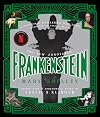
For most of us, Frankenstein begins in 1931: the storm, the tower, Boris Karloff’s stitched face. Reading Mary Shelley’s actual novel feels like having the pop-culture scaffolding ripped away. There’s no “It’s alive!” moment of triumph—only a spiral of privilege, guilt, and self-delusion told entirely through other people’s retellings.
The Frankenstein family is a study in blindness. They’re rich, virtuous on paper, and utterly insulated from the consequences of their own show more choices. Victor grows up in that vacuum of accountability—pampered by a father too detached to guide him—and predictably becomes the kind of man who mistakes ambition for destiny. When he creates life, it’s less divine spark than spoiled experimentation. And when things fall apart, he spends the rest of the book performing misery instead of fixing anything.
Shelley gives us no stable truth. Everything we know is filtered through Victor’s confession and Walton’s transcription of it. It’s gossip elevated to theology, which makes the story feel eerily modern—an early case study in unreliable narration. Was there ever a Creature at all, or is it the guilt made flesh inside Victor’s sleepless mind? Shelley never says, and that’s what makes it brilliant.
The Creature himself starts out as a kind of Elizabeth—gentle, observant, yearning to be loved—but isolation erodes that goodness until he becomes Victor’s mirror: proud, wounded, obsessed with being seen. They destroy each other not because one is evil and one is pure, but because they’re the same man in different skins.
The real shock of Frankenstein isn’t horror—it’s recognition. Behind every lightning bolt and graveyard myth is a story about privilege unchecked, empathy withheld, and the way power can narrate its own sins as tragedy. It’s messier, sadder, and far more human than the movie ever let on. show less
The Frankenstein family is a study in blindness. They’re rich, virtuous on paper, and utterly insulated from the consequences of their own show more choices. Victor grows up in that vacuum of accountability—pampered by a father too detached to guide him—and predictably becomes the kind of man who mistakes ambition for destiny. When he creates life, it’s less divine spark than spoiled experimentation. And when things fall apart, he spends the rest of the book performing misery instead of fixing anything.
Shelley gives us no stable truth. Everything we know is filtered through Victor’s confession and Walton’s transcription of it. It’s gossip elevated to theology, which makes the story feel eerily modern—an early case study in unreliable narration. Was there ever a Creature at all, or is it the guilt made flesh inside Victor’s sleepless mind? Shelley never says, and that’s what makes it brilliant.
The Creature himself starts out as a kind of Elizabeth—gentle, observant, yearning to be loved—but isolation erodes that goodness until he becomes Victor’s mirror: proud, wounded, obsessed with being seen. They destroy each other not because one is evil and one is pure, but because they’re the same man in different skins.
The real shock of Frankenstein isn’t horror—it’s recognition. Behind every lightning bolt and graveyard myth is a story about privilege unchecked, empathy withheld, and the way power can narrate its own sins as tragedy. It’s messier, sadder, and far more human than the movie ever let on. show less
It is astounding that Mary Shelley wrote this novel at the age of nineteen and that she created a story with themes that still resonate two hundred years later. Lesley Klinger does a terrific job annotating the work. He covers everything from the author's life to natural history, the French Revolution and polar exploration. He provides the original 1818 published text and those sections of the 1831 text that Shelley revised from the original. Reading this book was like taking an intensive show more seminar on the novel. Through the annotations you come to understand that the novel is far more than a horror story, although it is that too. show less
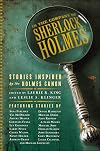
Some of these were good, and some weren’t, but this is definitely a case of the whole being better than the sum of its parts. I enjoyed the experience of listening to these stories far more than I enjoyed some of the individual contributions. These stories are all related to Sherlock in some way, but there is tremendous variety in each interpretation. Some of the stories are about Sherlock, or about minor characters in the Sherlock stories, or about Doyle, or about people who have read the show more Sherlock stories; the tones are pleasant, or bleak, or serious, or humorous. They are parodies, or straight retellings, or brand-new stories. They are set in modern day, or Victorian England, or WWII. There is one crossover and one graphic novel. This collection, one big celebration of Sherlock Holmes and Sherlock culture, offers the unique chance to see the iconic character from a variety of perspectives. And while some of these stories would get 5 stars from me and some others only 2, I relished the chance to see Sherlock from someone else’s eyes. show less
Lists
Awards


You May Also Like


Associated Authors
Statistics
- Works
- 44
- Also by
- 16
- Members
- 6,079
- Popularity
- #4,050
- Rating
- 4.1
- Reviews
- 137
- ISBNs
- 119
- Languages
- 4
- Favorited
- 2
