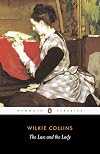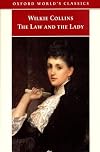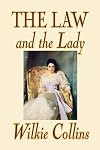
The Law and the Lady
by Wilkie Collins
On This Page
Description
In addition to his reputation as one of the important early innovators in the genre of detective fiction, Wilkie Collins is recognized as being one of the first writers to feature female sleuths in his stories. In The Law and the Lady, Collins' heroine succeeds in cracking a tough case that has left professional investigators stumped..
Tags
Recommendations





















Member Reviews
Wilkie Collins is known as one of the inventors of the modern detective-story, and before this I'd only ever read his two most famous books, The Moonstone (1868) and The woman in white (1859).
The law and the lady pushes the detective story into new territory, by creating a situation in which an enterprising young woman finds herself investigating a murder mystery. It is probably also one of the first crime stories in which the main physical clue is obtained as a result of forensic archaeology (the investigators even set up a tent over their work-site, in the best traditions of TV detectives...). To recommend it even further to the modern reader, one of the main witnesses is a disabled person, and there is a minor (but quite visible) show more character who seems to be either Trans or Intersex in modern terms. And another character who goes off to do relief work on the fringes of the Spanish Civil War (no, not that Spanish Civil War, one of the other ones).
However, interesting as though all that is, it's undermined by the complex manoeuvres Collins deems necessary to justify the use of a female investigator. There's a whole, rather ridiculous Bluebeard's Castle story to get through — "As long as you don't try to find out what my Dark Secret is, we can have a happy marriage" — before we even find out about the real mystery Valeria will have to solve. Also, like Harriet Vane, Valeria always has a man in the background to do the heavy thinking for her. Her role seems to be more to run around prodding people into activity. Although Collins was by no means a conventional man in his own life, he does seem to put a lot of very conventional Victorian (male) ideas about women into his portrait of Valeria, and she's ultimately not all that convincing.
Moreover, Collins obviously became too fond of his eccentric, wheelchair-bound misanthrope Miserrimus Dexter, and we spend far too much of the second part of the book being shown what an extraordinary creature he is, without any of it advancing the story very much. This is fun for a while, but it soon turns into a kind of freak-show.
Interesting, certainly, but ultimately not all that successful either as a novel or as a detective story. show less
The law and the lady pushes the detective story into new territory, by creating a situation in which an enterprising young woman finds herself investigating a murder mystery. It is probably also one of the first crime stories in which the main physical clue is obtained as a result of forensic archaeology (the investigators even set up a tent over their work-site, in the best traditions of TV detectives...). To recommend it even further to the modern reader, one of the main witnesses is a disabled person, and there is a minor (but quite visible) show more character who seems to be either Trans or Intersex in modern terms. And another character who goes off to do relief work on the fringes of the Spanish Civil War (no, not that Spanish Civil War, one of the other ones).
However, interesting as though all that is, it's undermined by the complex manoeuvres Collins deems necessary to justify the use of a female investigator. There's a whole, rather ridiculous Bluebeard's Castle story to get through — "As long as you don't try to find out what my Dark Secret is, we can have a happy marriage" — before we even find out about the real mystery Valeria will have to solve. Also, like Harriet Vane, Valeria always has a man in the background to do the heavy thinking for her. Her role seems to be more to run around prodding people into activity. Although Collins was by no means a conventional man in his own life, he does seem to put a lot of very conventional Victorian (male) ideas about women into his portrait of Valeria, and she's ultimately not all that convincing.
Moreover, Collins obviously became too fond of his eccentric, wheelchair-bound misanthrope Miserrimus Dexter, and we spend far too much of the second part of the book being shown what an extraordinary creature he is, without any of it advancing the story very much. This is fun for a while, but it soon turns into a kind of freak-show.
Interesting, certainly, but ultimately not all that successful either as a novel or as a detective story. show less
It's unfortunate that [[Wilkie Collins]] doesn't get much attention these days, for unusually among male Victorian writers, his female characters often illustrate an injustice in society, frequently in the way they are treated in law. [The Law and the Lady] differs somewhat from those novels, in that here it is a man who has suffered the perceived injustice at law, but his wife who will seek to correct it.
I use 'perceived' here as the law in question is Scots law, with its additional verdict of 'Not Proven', generally taken to mean that the jury cannot in all conscience declare the defendant innocent, but on the other hand the prosecution has not presented enough evidence to prove guilt. The defendant is set free, but naturally a taint show more of suspicion trails after him or her for life. Collins's protagonist, Valeria Woodville, being English, is unable to accept the validity of such a verdict. She called it cowardly, vowing to "...change that underhand Scotch Verdict of Not Proven into an honest English verdict of Not Guilty"*
[The Law and the Lady] is a detective novel at heart, a format at which Collins excelled. It is narrated by Valeria. Without giving too much away, it starts with Valieria's marriage to Eustace Woodville, following a brief courtship. It soon became evident that her husband had a secret past. Once Valeria discovered what it was, her husband left, telling her it was the only honourable solution. Determined to appeal the verdict at the heart of it all, Valeria set out to discover everything she could surrounding the trial.
Detectives were a new occupation in 1875, and female detectives were almost nonexistent. Valeria took on the role with all the zest and bravado Collins bestowed on his unconventional women. Her interviews and research, let alone her visits to Scotland, show just how hard it was for a female to get anywhere without a protector or intervenor. Although willing to defy convention Valeria soon realized she must make use of every male connection available to further her cause. Here is a woman who knew how to use social expectations to her own ends, often prevailing on men to help her against their own inclinations.
Amongst these was Miserrimus Dexter. Hideously deformed, brilliant, by turns completely rational and horrifyingly unpredictable, he is crucial to Valeria's quest. His condition and the discussions around it provide not only suspense, but also an insight into Victorian ideas on 'madness' and disability.
Was Eustace worth all this? Probably not. Although presented as an honourable man throughout, this is after all his wife narrating, nonetheless he egregiously decieved her before and after marriage by what could be seen as a sin of omission rather than one of commission. Secrecy and repression are another recurring theme here with Collins, through Valeria clearly advocating for openness, since misunderstanding and worse are otherwise their only outcome. The nature of marriage, property and what constitutes marriage, frequent Collins themes, are all seen from this view.
The pacing here was excellent. Even if some of the scenes were predictable, others were not, and all displayed the writer's skill. Unfortunately the ending was a nod to Victorian convention. It's possible Collins couldn't get the novel published without it, as he had already had to fight to keep in a crucial chapter his publishers considered salacious. Still, the ending is ambiguous enough: "Not as I thought it would end, not perhaps as you thought it would end" to offer possibilities.
--------------------
*emphasis mine show less
I use 'perceived' here as the law in question is Scots law, with its additional verdict of 'Not Proven', generally taken to mean that the jury cannot in all conscience declare the defendant innocent, but on the other hand the prosecution has not presented enough evidence to prove guilt. The defendant is set free, but naturally a taint show more of suspicion trails after him or her for life. Collins's protagonist, Valeria Woodville, being English, is unable to accept the validity of such a verdict. She called it cowardly, vowing to "...change that underhand Scotch Verdict of Not Proven into an honest English verdict of Not Guilty"*
[The Law and the Lady] is a detective novel at heart, a format at which Collins excelled. It is narrated by Valeria. Without giving too much away, it starts with Valieria's marriage to Eustace Woodville, following a brief courtship. It soon became evident that her husband had a secret past. Once Valeria discovered what it was, her husband left, telling her it was the only honourable solution. Determined to appeal the verdict at the heart of it all, Valeria set out to discover everything she could surrounding the trial.
Detectives were a new occupation in 1875, and female detectives were almost nonexistent. Valeria took on the role with all the zest and bravado Collins bestowed on his unconventional women. Her interviews and research, let alone her visits to Scotland, show just how hard it was for a female to get anywhere without a protector or intervenor. Although willing to defy convention Valeria soon realized she must make use of every male connection available to further her cause. Here is a woman who knew how to use social expectations to her own ends, often prevailing on men to help her against their own inclinations.
Amongst these was Miserrimus Dexter. Hideously deformed, brilliant, by turns completely rational and horrifyingly unpredictable, he is crucial to Valeria's quest. His condition and the discussions around it provide not only suspense, but also an insight into Victorian ideas on 'madness' and disability.
Was Eustace worth all this? Probably not. Although presented as an honourable man throughout, this is after all his wife narrating, nonetheless he egregiously decieved her before and after marriage by what could be seen as a sin of omission rather than one of commission. Secrecy and repression are another recurring theme here with Collins, through Valeria clearly advocating for openness, since misunderstanding and worse are otherwise their only outcome. The nature of marriage, property and what constitutes marriage, frequent Collins themes, are all seen from this view.
The pacing here was excellent. Even if some of the scenes were predictable, others were not, and all displayed the writer's skill. Unfortunately the ending was a nod to Victorian convention. It's possible Collins couldn't get the novel published without it, as he had already had to fight to keep in a crucial chapter his publishers considered salacious. Still, the ending is ambiguous enough: "Not as I thought it would end, not perhaps as you thought it would end" to offer possibilities.
--------------------
*emphasis mine show less
The later Collins novels are less successful than his 1860s ones. Not commercially - he was very well paid in those days - but the novels lost the sharpness that makes Moonstone or Woman in White really great novels. On the other hand, he used his almost independence (everyone wanted his work so he could write almost anything) to experiment - with varying success.
If you are expecting a realistic novel, you probably won't like some parts of this novel. Not that anything supernatural happens - but the novel plays with the Gothic very strongly (with not just one but two houses that will fit into the genre) and with the Dexter/Ariel relationship (although in places this leaves even the Gothic and goes straight into horror - even more than show more Shakespeare's Prospero/Ariel - if anything the the treatment of Ariel here is a mix between these of Ariel and Caliban in the play, with the gender flipped into female). That change of gender is there in the whole novel although it is a lot less obvious that with Dexter/Ariel a lot of the characters exhibit some characteristics that go against the accepted gender roles in these days - Valeria wants to investigate while her husbands runs away, Benjamin is meek and submissive, the Major, albeit being a Don Juan, is a gossiping busybody. And yet, outside of the grotesque of the Dexter household, the non-usual behavior is just pushing at the norms, without flipping them completely. On the other hand the disability differences (mental vs physical until it turns out that it is both on both sides) are so exaggerated that I was not sure if Collins was trying for a parody or for horror or for something in between.
When a novel starts with a woman promising to submit to her new husband and then have her disobey him within the week, you really have no idea what to expect. But then Valeria really cannot stand not learning the truth - even if it cost her everything. She needs to know what secret Eustace keeps and why he used an assumed name - or her happiness is not worth it. Considering the socio-economic status of everyone involved in the novel, there are conceivable only three reasons for Eustace's behavior: craziness in the male line, a suspect death or illegitimacy. Early in the novel any of these can fit.
The publishing in the Victorian era was pretty rigid - most new novels were coming out as three volumes edition and all novels had to fit the format (that was changing but not fast enough for Collins's work). While I was reading this one I was wondering if he would not have cut a lot of the superfluous material if he had a chance. Despite being originally serialized in The Graphic, it still conforms to the 3-volumes format - in the first Valeria learns that there is a secret, in the second she learns all about the secret and in the third the truth comes out. The weakest part is the second volume - while I enjoyed the reading of the court recordings (through the eyes of Valeria), the whole Dexter story was bizarre (even if one expected the Gothic undertones and nothing earlier in the book was pointing to them).
Collins chose to write the story as if told by an older Valeria. Someone else may have been able to pull it off but here Valeria is more of an ideal than a woman and she just does not feel real very often - things happen, we are invested into the story but Valeria feels more like a narrator than a participant. It does add a level of unreliable narration which pays off in places but writing women's voices is not one of the Collins's strengths here. It did make me wonder if what seems like a pushing of the gender roles in society is not a part of that weird writing of Valeria though - did her memories enhanced some of it?
Despite it being a very uneven novel (the middle is barely readable in places), I ended up liking it quite a lot. It is important for the evolution of the detective genre because it contains one of the first women detectives. But important and likeable are not synonyms and looking at it from that perspective actually makes the novel less of what it is. It is the mix of the Gothic and the detective fiction that makes this one enjoyable (if you like both genres anyway - I suspect fans of only one of those genres may really dislike it). Throw in some legal drama (checking some notes and/or commentaries on Scottish law when the topic arises is useful in understanding what the whole fuss is about in places) and it gets things even more confused. The mix is not perfect and it often leaves one wondering what was Collins trying to do but when the parts click together, it works well enough.
I also wonder if the end was not done in that way to appease the readers. On one hand it looks like a betrayal - the independent woman decides to submit. But if you look at the story, she never meant to be independent and at that point that was the logical thing for her to do. As much as Valeria ended up being a detective (of a type) and an independent woman, she never stopped wanting to be a wife. And in her world, reconciling the two was not easy, especially when your husband is Eustace Macallan (the less we say about him, the better).
If you had never read Collins, don't start here. But if you had read his major novels, this one may be worth checking - despite its issues. show less
If you are expecting a realistic novel, you probably won't like some parts of this novel. Not that anything supernatural happens - but the novel plays with the Gothic very strongly (with not just one but two houses that will fit into the genre) and with the Dexter/Ariel relationship (although in places this leaves even the Gothic and goes straight into horror - even more than show more Shakespeare's Prospero/Ariel - if anything the the treatment of Ariel here is a mix between these of Ariel and Caliban in the play, with the gender flipped into female). That change of gender is there in the whole novel although it is a lot less obvious that with Dexter/Ariel a lot of the characters exhibit some characteristics that go against the accepted gender roles in these days - Valeria wants to investigate while her husbands runs away, Benjamin is meek and submissive, the Major, albeit being a Don Juan, is a gossiping busybody. And yet, outside of the grotesque of the Dexter household, the non-usual behavior is just pushing at the norms, without flipping them completely. On the other hand the disability differences (mental vs physical until it turns out that it is both on both sides) are so exaggerated that I was not sure if Collins was trying for a parody or for horror or for something in between.
When a novel starts with a woman promising to submit to her new husband and then have her disobey him within the week, you really have no idea what to expect. But then Valeria really cannot stand not learning the truth - even if it cost her everything. She needs to know what secret Eustace keeps and why he used an assumed name - or her happiness is not worth it. Considering the socio-economic status of everyone involved in the novel, there are conceivable only three reasons for Eustace's behavior: craziness in the male line, a suspect death or illegitimacy. Early in the novel any of these can fit.
The publishing in the Victorian era was pretty rigid - most new novels were coming out as three volumes edition and all novels had to fit the format (that was changing but not fast enough for Collins's work). While I was reading this one I was wondering if he would not have cut a lot of the superfluous material if he had a chance. Despite being originally serialized in The Graphic, it still conforms to the 3-volumes format - in the first Valeria learns that there is a secret, in the second she learns all about the secret and in the third the truth comes out. The weakest part is the second volume - while I enjoyed the reading of the court recordings (through the eyes of Valeria), the whole Dexter story was bizarre (even if one expected the Gothic undertones and nothing earlier in the book was pointing to them).
Collins chose to write the story as if told by an older Valeria. Someone else may have been able to pull it off but here Valeria is more of an ideal than a woman and she just does not feel real very often - things happen, we are invested into the story but Valeria feels more like a narrator than a participant. It does add a level of unreliable narration which pays off in places but writing women's voices is not one of the Collins's strengths here. It did make me wonder if what seems like a pushing of the gender roles in society is not a part of that weird writing of Valeria though - did her memories enhanced some of it?
Despite it being a very uneven novel (the middle is barely readable in places), I ended up liking it quite a lot. It is important for the evolution of the detective genre because it contains one of the first women detectives. But important and likeable are not synonyms and looking at it from that perspective actually makes the novel less of what it is. It is the mix of the Gothic and the detective fiction that makes this one enjoyable (if you like both genres anyway - I suspect fans of only one of those genres may really dislike it). Throw in some legal drama (checking some notes and/or commentaries on Scottish law when the topic arises is useful in understanding what the whole fuss is about in places) and it gets things even more confused. The mix is not perfect and it often leaves one wondering what was Collins trying to do but when the parts click together, it works well enough.
I also wonder if the end was not done in that way to appease the readers. On one hand it looks like a betrayal - the independent woman decides to submit. But if you look at the story, she never meant to be independent and at that point that was the logical thing for her to do. As much as Valeria ended up being a detective (of a type) and an independent woman, she never stopped wanting to be a wife. And in her world, reconciling the two was not easy, especially when your husband is Eustace Macallan (the less we say about him, the better).
If you had never read Collins, don't start here. But if you had read his major novels, this one may be worth checking - despite its issues. show less
Collins writes like low-rent Dickens crossed with Trollop. He loves creating quirky characters and writing satirically and judgementally about them. He is addicted to unnecessary hystrionics and suspense--an entire chapter will just be one character warning another of the SHOCKING news they are about to impart. Then, just as they are finally going to tell the truth, the chapter ends. Even worse, the Shocking Truth is always something completely petty and anticlimatic.
The story is told by Valeria, a young and pretty woman of good birth and excellent character. She is astounded when she learns her new husband married her under an assumed name. MINOR SPOILERS FROM HERE ON OUT. She rapidly discovers that several years before, he was accused show more of murdering his first wife--and never cleared of the crime. When he hears of her discovery, he flees the country and will not let her contact him. Valeria decides that the only way to regain her husband is to discover the true poisoner, and clear Eustace's name.
I am used to anti-non-Protestant, sexist, and racist view points polluting Victorian narratives. The usual tropes are at work here--but so is an extreme prejudice against the differently abled. One of the main characters, Dexter, was born with no legs, and his cousin is "an idiot." Every single time they appear, they are described in the most disgusting and bigoted terms--Dexter is described as grotesque, a Thing, an It, a monkey...When he tries to participate in the murder investigation, a preeminent doctor is summoned to examine him, and concludes that he will inevitably go mad or imbecilic--at any moment! I was shocked by the unfair treatment of these characters. I had some hope that Collins was brutal to Dexter to showcase needless, baseless prejudice. My idealism was dashed in chapter 40, when he goes mad because of how evil and unnatural he is: "nothing but a mute, vacant face turned up to the ceiling, with eyes that looked blindly, with lips parted in a senseless, changeless grin...Even the horror of that fearful sight seemed only to increase the pity that I felt for the stricken wretch." Um, screw you, Collins.
Mystery spoiling SPOILERS!
Dexter proves to have hounded Eustace's first wife into reading her husband's diary. She was so shocked and hurt when she realized that he did not love her, that she killed *herself* with arsenic. Dexter wanted to protect her memory and harm Eustace, so he destroyed her suicide letter. Valeria's investigation uncovers fragments of the letter, and her friends piece them together. Dexter dies of being mad (?) and his cousin Ariel throws herself on his grave and dies of exposure. Meanwhile, Valeria tells her husband of the discovery of his first wife's suicide note. She councils him not to read it, so his wife's reputation will remain untouched. They leave the suicide note for their infant son when he grows up.
This is crazy, right? Why not take care of the unproved murder trial now, and by the time the kid grows up it will be a non-issue? In a decade or two, no one will remember that a woman completely unrelated to him committed suicide. Instead, Valeria and Eustace decide to be martyrs, and even worse, force their son to make the decision they themselves chose not to make. And THIS is supposed to be the Right Thing To Do. Victorians, you are messed in the head.
http://www.gutenberg.org/etext/1622 show less
The story is told by Valeria, a young and pretty woman of good birth and excellent character. She is astounded when she learns her new husband married her under an assumed name. MINOR SPOILERS FROM HERE ON OUT. She rapidly discovers that several years before, he was accused show more of murdering his first wife--and never cleared of the crime. When he hears of her discovery, he flees the country and will not let her contact him. Valeria decides that the only way to regain her husband is to discover the true poisoner, and clear Eustace's name.
I am used to anti-non-Protestant, sexist, and racist view points polluting Victorian narratives. The usual tropes are at work here--but so is an extreme prejudice against the differently abled. One of the main characters, Dexter, was born with no legs, and his cousin is "an idiot." Every single time they appear, they are described in the most disgusting and bigoted terms--Dexter is described as grotesque, a Thing, an It, a monkey...When he tries to participate in the murder investigation, a preeminent doctor is summoned to examine him, and concludes that he will inevitably go mad or imbecilic--at any moment! I was shocked by the unfair treatment of these characters. I had some hope that Collins was brutal to Dexter to showcase needless, baseless prejudice. My idealism was dashed in chapter 40, when he goes mad because of how evil and unnatural he is: "nothing but a mute, vacant face turned up to the ceiling, with eyes that looked blindly, with lips parted in a senseless, changeless grin...Even the horror of that fearful sight seemed only to increase the pity that I felt for the stricken wretch." Um, screw you, Collins.
Mystery spoiling SPOILERS!
Dexter proves to have hounded Eustace's first wife into reading her husband's diary. She was so shocked and hurt when she realized that he did not love her, that she killed *herself* with arsenic. Dexter wanted to protect her memory and harm Eustace, so he destroyed her suicide letter. Valeria's investigation uncovers fragments of the letter, and her friends piece them together. Dexter dies of being mad (?) and his cousin Ariel throws herself on his grave and dies of exposure. Meanwhile, Valeria tells her husband of the discovery of his first wife's suicide note. She councils him not to read it, so his wife's reputation will remain untouched. They leave the suicide note for their infant son when he grows up.
This is crazy, right? Why not take care of the unproved murder trial now, and by the time the kid grows up it will be a non-issue? In a decade or two, no one will remember that a woman completely unrelated to him committed suicide. Instead, Valeria and Eustace decide to be martyrs, and even worse, force their son to make the decision they themselves chose not to make. And THIS is supposed to be the Right Thing To Do. Victorians, you are messed in the head.
http://www.gutenberg.org/etext/1622 show less
Summary: Valeria Woodville discovers her new husband has a past that is under the cloud of a "not proven" murder accusation, and pursues an investigation to fully vindicate his innocence.
Wilkie Collins is one of the early writers of detective fiction, most famous for his The Woman in White and The Moonstone, two works that established his reputation among the reading public of his time who eagerly awaited the serialized releases of each of his stories. The Law and the Lady is a later work (1875) with probably the first female sleuth in the genre.
Valeria Woodville's marriage to Eustace Woodville begins with an ill omen when she signs the wedding register with her married rather than maiden name. On her honeymoon she discovers the show more Eustace's real surname was Macallan after a chance encounter with her mother-in-law, who had disapproved of the marriage. Valeria recognized her from a photograph she had found among her husband's effects. She is discouraged by her husband from inquiring further into the circumstances that led to their marriage under an assumed name.
Instead she persists, returns to London, and tracks down Major Fitz-David, a ladies' man who, while refusing to divulge her husband's secret, permits her to discover it in his study. She finds a picture of her husband with another woman, Sarah Macallan, and after further searching finds a book with a narrative of the trial of Eustace Macallan for the murder of Sarah by arsenic poisoning. The trial ended with neither a "guilty" nor a "not guilty" verdict but a third allowed in Scottish law, "not proven." Such a verdict left Eustace under a cloud of suspicion, a permanent blot upon his reputation.
Valeria determines to remove that blot, even though Eustace, and her old family friend, Benjamin, urge her to leave it alone. When she refuses, Eustace leaves her to fight in a distant war in Spain, where he is later seriously wounded. Assisted by Benjamin, and Eustace's attorney, Mr. Playmore, who is eventually won over to her cause, she pursues an investigation to uncover the real murderer. Much of the inquiry centers around Misserimus Dexter, a friend of Eustace born without legs, an eccentric bordering on madness, whose testimony on behalf of Eustace may have saved him from a guilty verdict, and suggested suspicion of a female guest. In the course of the novel, Dexter descends into insanity, but one of his last, raving statements, taken down by Benjamin, leads Mr. Playmore to the discovery of the truth.
One of the distinctive features of the novel is that it is written as the first person narrative of Valeria. Combined with the fact that she is one of the first female detectives, the novel gives us one of the more memorable character portrayals in detective fiction that paved the way for other women detectives. Valeria's determination to read the trial accounts, to familiarize herself with the law, and to mount an investigation (helped by the fact that she was a woman of independent means), in defiance of all the urgings that she content herself in her husband's love, makes her a strong female character pushing the boundaries of Victorian role expectations.
At the same time, most critics do not consider this among Collins' best, and I would have to agree. Given Valeria's strength of character, at least this reader thought that Eustace wasn't worthy of her, and I wondered what she saw in him. But, the heart has its reasons! I wondered why Eustace, if innocent, did not himself pursue the efforts Valeria pursued to find his former wife's murderer but acquiesced in the "not proven" verdict. He chose instead to marry under an assumed name, and false pretenses. Even his mother, also a strong character, considers this unworthy of him. Also, there is a studied avoidance of the one possibility that turned out to be the truth, one that occurred to me early in the narrative. I can even think of some red herrings Collins might have used to put the reader off the track.
What redeemed it for me was the strong character of Valeria, who is the good wife in the best sense, and yet refuses to be "the good wife." Her persistence despite setbacks and apparent dead ends, and the bizarre character of Dexter and his household, her ability both to take counsel and make up and assert her own mind (even while expressing her inner misgivings in the narrative) offers us not merely a female detective but a woman of refreshing and unusual strength who must have appealed to Collins' female readers. Her strength combined with her loyalty suggests possibilities for a richer, yet unconventional, marriage with Eustace, possibilities it appears he only begins to grasp in his convalescence from his wounds. How interesting it would have been if Collins had made Valeria into a recurring character! show less
Wilkie Collins is one of the early writers of detective fiction, most famous for his The Woman in White and The Moonstone, two works that established his reputation among the reading public of his time who eagerly awaited the serialized releases of each of his stories. The Law and the Lady is a later work (1875) with probably the first female sleuth in the genre.
Valeria Woodville's marriage to Eustace Woodville begins with an ill omen when she signs the wedding register with her married rather than maiden name. On her honeymoon she discovers the show more Eustace's real surname was Macallan after a chance encounter with her mother-in-law, who had disapproved of the marriage. Valeria recognized her from a photograph she had found among her husband's effects. She is discouraged by her husband from inquiring further into the circumstances that led to their marriage under an assumed name.
Instead she persists, returns to London, and tracks down Major Fitz-David, a ladies' man who, while refusing to divulge her husband's secret, permits her to discover it in his study. She finds a picture of her husband with another woman, Sarah Macallan, and after further searching finds a book with a narrative of the trial of Eustace Macallan for the murder of Sarah by arsenic poisoning. The trial ended with neither a "guilty" nor a "not guilty" verdict but a third allowed in Scottish law, "not proven." Such a verdict left Eustace under a cloud of suspicion, a permanent blot upon his reputation.
Valeria determines to remove that blot, even though Eustace, and her old family friend, Benjamin, urge her to leave it alone. When she refuses, Eustace leaves her to fight in a distant war in Spain, where he is later seriously wounded. Assisted by Benjamin, and Eustace's attorney, Mr. Playmore, who is eventually won over to her cause, she pursues an investigation to uncover the real murderer. Much of the inquiry centers around Misserimus Dexter, a friend of Eustace born without legs, an eccentric bordering on madness, whose testimony on behalf of Eustace may have saved him from a guilty verdict, and suggested suspicion of a female guest. In the course of the novel, Dexter descends into insanity, but one of his last, raving statements, taken down by Benjamin, leads Mr. Playmore to the discovery of the truth.
One of the distinctive features of the novel is that it is written as the first person narrative of Valeria. Combined with the fact that she is one of the first female detectives, the novel gives us one of the more memorable character portrayals in detective fiction that paved the way for other women detectives. Valeria's determination to read the trial accounts, to familiarize herself with the law, and to mount an investigation (helped by the fact that she was a woman of independent means), in defiance of all the urgings that she content herself in her husband's love, makes her a strong female character pushing the boundaries of Victorian role expectations.
At the same time, most critics do not consider this among Collins' best, and I would have to agree. Given Valeria's strength of character, at least this reader thought that Eustace wasn't worthy of her, and I wondered what she saw in him. But, the heart has its reasons! I wondered why Eustace, if innocent, did not himself pursue the efforts Valeria pursued to find his former wife's murderer but acquiesced in the "not proven" verdict. He chose instead to marry under an assumed name, and false pretenses. Even his mother, also a strong character, considers this unworthy of him. Also, there is a studied avoidance of the one possibility that turned out to be the truth, one that occurred to me early in the narrative. I can even think of some red herrings Collins might have used to put the reader off the track.
What redeemed it for me was the strong character of Valeria, who is the good wife in the best sense, and yet refuses to be "the good wife." Her persistence despite setbacks and apparent dead ends, and the bizarre character of Dexter and his household, her ability both to take counsel and make up and assert her own mind (even while expressing her inner misgivings in the narrative) offers us not merely a female detective but a woman of refreshing and unusual strength who must have appealed to Collins' female readers. Her strength combined with her loyalty suggests possibilities for a richer, yet unconventional, marriage with Eustace, possibilities it appears he only begins to grasp in his convalescence from his wounds. How interesting it would have been if Collins had made Valeria into a recurring character! show less
The Law and the Lady is often hailed as the first English mystery novel to feature a female detective. Collins employs his narrative skills to tell the story in Valeria Macallen's own words.
A few days after their wedding, Valeria learns that her husband married her under a false name. She is determined to find out why, although in all other areas their relationship is mutually happy. Valeria's researches lead her to a horrifying discovery: her husband had been tried for the murder of his first wife, and the Scotch Verdict had been "Not Proven." This verdict acquits the defendant, but leaves a definite stigma as to his innocence. Collins colorfully imagines what life would be like between a husband and wife with this shadow from the show more past over their marriage. The foreseen result is misery and loneliness, and Eustace Macallen feels so terrible about it that he leaves Valeria. Valeria believes in his innocence, but the mystery had never been solved, and no woman could undergo the little irritations of even a happy married life without stumbling onto doubts every now and then.
And so Valeria determines to find the truth, if she can. She researches the infamous Trial and interviews the people who were at Gleninch when the poisoning occurred. Bit by bit, we learn with Valeria about the many disparate personalities and frustrated hopes that were simmering under that roof the night of the murder. We also face the cruelest obstacles with Valeria: she is a woman, her beloved husband wants nothing more than for her to give up her resolution, and the Trial was over and done three or four years ago. Will Valeria see her mission through to the end, despite the likelihood of her ultimate failure?
Collins' character studies are quite fun, as usual. Miserrimus Dexter is a very interesting character, extraordinarily handsome in his face and upper body, but horribly deformed from birth with no legs. He has a decidedly artistic temperament and teeters between sanity and madness, a great egoist who yet sometimes delights in the most abject abasement. It is on this capricious and dangerous person that Valeria must depend for the clues to lead her to the truth of the first Mrs. Macallen's death. What is he hiding?
Right after reading the account of the official Trial, I made a guess as to who the murderer was. It seemed obvious, when all of Valeria's thoughts were tending in one direction, that Collins really meant it to be the other. Well, he pulled an upset on me yet again! But I console myself with the fact that I was partly right and was able to deduce a good deal more about certain characters than was immediately evident from their actions during the Trial.
For the most part, Collins' adoption of a female voice to narrate firsthand is very well-done. Victorian ideas slip in here and there, but taken with the prejudices of the times, Collins comes across as much less of a chauvinist than one might expect. It's interesting that the one thing that could galvanize a woman into the role of resolute detective would be the happiness of her husband. I don't find this offensive at all, though I can see how some would.
This isn't one of Collins' best, but it will certainly keep you reading. I'd recommend this to fans of the mystery genre because of the female detective. Fans of Collins' work, who love the drama, gloom, and stagey wonderfulness of his absorbing plots, will also enjoy this story. show less
A few days after their wedding, Valeria learns that her husband married her under a false name. She is determined to find out why, although in all other areas their relationship is mutually happy. Valeria's researches lead her to a horrifying discovery: her husband had been tried for the murder of his first wife, and the Scotch Verdict had been "Not Proven." This verdict acquits the defendant, but leaves a definite stigma as to his innocence. Collins colorfully imagines what life would be like between a husband and wife with this shadow from the show more past over their marriage. The foreseen result is misery and loneliness, and Eustace Macallen feels so terrible about it that he leaves Valeria. Valeria believes in his innocence, but the mystery had never been solved, and no woman could undergo the little irritations of even a happy married life without stumbling onto doubts every now and then.
And so Valeria determines to find the truth, if she can. She researches the infamous Trial and interviews the people who were at Gleninch when the poisoning occurred. Bit by bit, we learn with Valeria about the many disparate personalities and frustrated hopes that were simmering under that roof the night of the murder. We also face the cruelest obstacles with Valeria: she is a woman, her beloved husband wants nothing more than for her to give up her resolution, and the Trial was over and done three or four years ago. Will Valeria see her mission through to the end, despite the likelihood of her ultimate failure?
Collins' character studies are quite fun, as usual. Miserrimus Dexter is a very interesting character, extraordinarily handsome in his face and upper body, but horribly deformed from birth with no legs. He has a decidedly artistic temperament and teeters between sanity and madness, a great egoist who yet sometimes delights in the most abject abasement. It is on this capricious and dangerous person that Valeria must depend for the clues to lead her to the truth of the first Mrs. Macallen's death. What is he hiding?
Right after reading the account of the official Trial, I made a guess as to who the murderer was. It seemed obvious, when all of Valeria's thoughts were tending in one direction, that Collins really meant it to be the other. Well, he pulled an upset on me yet again! But I console myself with the fact that I was partly right and was able to deduce a good deal more about certain characters than was immediately evident from their actions during the Trial.
For the most part, Collins' adoption of a female voice to narrate firsthand is very well-done. Victorian ideas slip in here and there, but taken with the prejudices of the times, Collins comes across as much less of a chauvinist than one might expect. It's interesting that the one thing that could galvanize a woman into the role of resolute detective would be the happiness of her husband. I don't find this offensive at all, though I can see how some would.
This isn't one of Collins' best, but it will certainly keep you reading. I'd recommend this to fans of the mystery genre because of the female detective. Fans of Collins' work, who love the drama, gloom, and stagey wonderfulness of his absorbing plots, will also enjoy this story. show less
[The Law and the Lady] by [[Wilkie Collins]]
I picked up this novel because it was chosen as a quarter 2 group read for our Victorian theme in Club Read. I loved [The Woman in White] and [The Moonstone] but had never branched out to Collins's lesser known works. I found [The Law and the Lady] an entertaining novel, about a woman who's mysterious marriage leads her to detective work to clear her husband's name.
If I give too much plot description, it will be very spoiler-y and this novel is very plot driven. I don't think the actual mystery was much of one, but this book does get credit as possibly the first novel where a woman does most of the detective work. I was a little disappointed that she doesn't really follow through to the end - show more leaving the pivotal last investigations to the men to solve.
This novel centers around two characters that will give modern readers pause. One is a crippled man, Misserimus Dexter, in a wheel chair who is, at times, treated as almost a circus act - racing around rooms on his hands only and horrifying those who get a glimpse of his entire body. And his "sidekick" is a woman, Ariel, described sometimes as a man in appearance who has some sort of developmental disability. I actually wondered if she was based on early knowledge of those with Downs' Syndrome based on how her physical attributes were described and on her mental state plus her extreme loyalty to Misserimus.
I found this an "entertaining enough" novel but I wouldn't widely recommend it. If you haven't read Wilkie Collins, this is not the place to start in my opinion.
Original publication date: 1875
Author’s nationality: British
Original language: English
Length: 413 pages
Rating: 3 stars
Format/where I acquired the book: purchased paperback
Why I read this: group read show less
I picked up this novel because it was chosen as a quarter 2 group read for our Victorian theme in Club Read. I loved [The Woman in White] and [The Moonstone] but had never branched out to Collins's lesser known works. I found [The Law and the Lady] an entertaining novel, about a woman who's mysterious marriage leads her to detective work to clear her husband's name.
If I give too much plot description, it will be very spoiler-y and this novel is very plot driven. I don't think the actual mystery was much of one, but this book does get credit as possibly the first novel where a woman does most of the detective work. I was a little disappointed that she doesn't really follow through to the end - show more leaving the pivotal last investigations to the men to solve.
This novel centers around two characters that will give modern readers pause. One is a crippled man, Misserimus Dexter, in a wheel chair who is, at times, treated as almost a circus act - racing around rooms on his hands only and horrifying those who get a glimpse of his entire body. And his "sidekick" is a woman, Ariel, described sometimes as a man in appearance who has some sort of developmental disability. I actually wondered if she was based on early knowledge of those with Downs' Syndrome based on how her physical attributes were described and on her mental state plus her extreme loyalty to Misserimus.
I found this an "entertaining enough" novel but I wouldn't widely recommend it. If you haven't read Wilkie Collins, this is not the place to start in my opinion.
Original publication date: 1875
Author’s nationality: British
Original language: English
Length: 413 pages
Rating: 3 stars
Format/where I acquired the book: purchased paperback
Why I read this: group read show less
Members
- Recently Added By
Lists

the law is an ass
20 works; 5 members

Books Read in 2016
4,666 works; 197 members

KayStJ's to-read list
1,616 works; 11 members

Books mentioned in Julian Symons’ Bloody Murder
438 works; 6 members

Troublesome bodies
110 works; 7 members
Talk Discussions
Past Discussions
Victorian Q2 Read-Along: The Law and the Lady in Club Read 2022 (May 2022)
Group Read: The Law and the Lady in 75 Books Challenge for 2011 (April 2011)
Author Information

395+ Works 40,103 Members
Wilkie Collins was born in London, England on January 8, 1824. He worked first in business and then law, but eventually turned to literature. During his lifetime, he wrote 30 novels, more than 60 short stories, at least 14 plays, and more than 100 non-fiction pieces. His works include Antonia, The Woman in White, The Moonstone, The Haunted Hotel, show more and Heart and Science. He was a close friend of Charles Dickens and collaborated with him. He died on September 23, 1889. (Bowker Author Biography) show less
Some Editions
Series
Belongs to Publisher Series
Work Relationships
Is contained in
Common Knowledge
- Canonical title
- The Law and the Lady
- Original title
- The Law and the Lady
- Original publication date
- 1874 - 1875 (serialized in The Graphic) (serialized in The Graphic); 1875 (Chatto & Windus) (Chatto & Windus)
- People/Characters
- Valeria Macallan; Eustace Macallan; Major Fitz-David; Merrisimus Dexter; Mrs. Beauly
- Important places
- London, England, UK
- Dedication
- Inscribed to REGNIER (of the Theatre Francais, Paris) in token of admiration for the great actor and of affection for the true friend
- First words
- "For after this manner in the old time the holy women also, who trusted in God, adorned themselves, being in subjection unto their own husbands; even as Sarah obeyed Abraham, calling him lord; whose daughters ye are, as long ... (show all)as ye do well, and are not afraid with any amazement."
Concluding the Marriage Service of the Church of England in those well-known words, my uncle Starkweather shut up his book, and looked at me across the altar rails with a hearty expression of interest on his broad, red face. - Last words
- (Click to show. Warning: May contain spoilers.)But pray think kindly of Eustace, for my sake.
- Publisher's editor
- Skilton, David
- Original language
- English
Classifications
Statistics
- Members
- 851
- Popularity
- 32,225
- Reviews
- 26
- Rating
- (3.64)
- Languages
- English, French, Italian, Spanish
- Media
- Paper, Audiobook, Ebook
- ISBNs
- 86
- ASINs
- 24