On This Page
Description
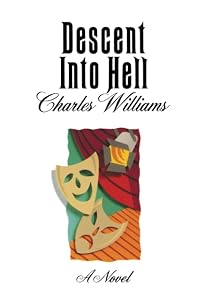
In every moment, we choose between Heaven and H The good people of Battle Hill are getting ready to put on a play by the renowned playwright, Peter Stanhope. As the rehearsals continue and the date of the premier draws closer, many things that are hidden are revealed. Among them is the fact that nearly every choice presents us with both an invitation and a temptation. Pauline Anstruther is invited to face her deepest fear, and to dare to believe that she can offer succor and support to a show more long-dead relative at the moment of his greatest need. Lawrence Wentworth is tempted to forsake the company of real (and therefore difficult) people and retreat into illusion and isolation. To choose connection and community is to choose Heaven, to reject it is to descend into H Descent into Hell is among the most subtle and profound of Williams' novels. In it, he most fully presents his theology of substituted love. show lessTags
Recommendations















Member Recommendations
paradoxosalpha It could probably be said without too much distortion, that The Sea Priestess is to Fortune's Hermetic outlook what Descent into Hell is to Williams' Christian spiritual reflection.
Member Reviews
This is not an easy book. In fact, it is a very difficult book on two grounds - the style and the content. But it is a minor masterpiece that deserves much wider readership.
The style owes something to its period. The emotionally cold world of 1930s Britain. It is cerebral. The artistry - like the play at the centre of the first half - is classical and functional. Conversations can seem rhetorical and clipped. The approach to the supernatural is 'Roman' rather than romantic.
Williams is not merely a highly educated Christian but he has read his Dante and his classics. His readership is uncompromisingly assumed to know the 'canon' - a barrier in itself to post-modern man.
I found it very difficult and only mastered the style, to the extent show more that I did, by imagining it first as part-poetic and second to be read out aloud, perhaps on occasions declaimed. As one reads, one senses quotation after quotation for the cognoscenti. This calls for a critical edition.
I came to this book as a result of the enthusiasm of the literary historian Glen Cavaliero, whose ‘The Supernatural in English Fiction’ (reviewed elsewhere on GoodReads) praised Williams for his startling portrayal of the supernatural.
Williams’ books are not easy to find in modern London so I had to resort, not to the edition noted here, but to an old post-war standard edition from Faber & Faber, which is unusually defensive about its limited appeal on the dust jacket, obtained by rummaging through the shelves of our local antiquarian bookshop.
Williams writes as a High Anglican, an Elizabethan Settlement Christian, whose theological commitment is deep, so deep that I will confess that I could not always understand it.
There are obscurities, arrogances almost. The cold word play might alienate many but it is worth persevering – to the point, in my case, where I might well choose to pick up this book again in ten years and know that I will see the great deal that was missed on first reading.
Where his genius lies is in the literary elision of a recognisable material reality into the spiritual realm.
I have seen no writing like this – perhaps the equally difficult and intense but very un-Christian John Cowper Powys might come close and perhaps there is something of the chilled intellect and emotional desert of the world of Brief Encounter in it, but it is rare to find something that can convey so effectively not what we might feel like if we met a ghost but what it is to be a ghost, as a rational possibility.
And that is the point – Williams makes supernaturalism vividly possible, based on persons who are real rather than merely allegorical (though there is a dash of minor key allegory in each).
Centred in a place embedded in history – the appropriately named Battle Hill – the book mixes up space, time and other worlds with more panache than the usual English business of going through a cupboard door, climbing into a police box or getting on a magical train.
The continuity of an existence in which the natural and the supernatural flow ‘naturally’ into one another, all providentially one in space-time with Zion and Gehenna embedded within the Republic (our material world of work and more or less orderly administration), is masterfully handled.
Spirits co-exist who are barely aware or are unaware of each other. A building may be built and not built at the same time. A spirit who dies in one place in time is met much later in time as if scarcely any time had passed.
The occasion for the story is a play at a country house in a village. Far away is the Big City. Journeys between village and City have meaning. The world of work has ultimate meaning.
But the play is the thing – a rather conventional poetic affair that sets off the more fantastic narrative that centres on, amongst others, the ghost of a beaten man, a woman troubled by a doppelganger, a succubus created by a man whose destiny is hell and an earthy and sinister Lilith figure.
The play is to its writer, what the world is to God - a formal affair with poetry and beauty added. Between the formalities, the word play and the disquisitions are moments of exceptional expressive writing.
We see a determined leaden journey to suicide, the ghost that slowly comes to terms with his new world without ever truly realising what he is, the descent into madness or evil (as distance from God) of one character, the haunting but dessicated temptation to lust (in its pure, not sexual sense) of another.
At the bottom of all this is an attempt to express an inexpressible – the ‘mysterium tremendum’ of Christianity. This book does not exist without the author’s faith, intellectualised perhaps but only because the matters of which he writes are so deep that any explanation requires the dignity of intellect, rather than the expression of sentiment. It is a standing rebuke to shallow sentiment.
Rather than do the impossible and try to explain what I might think Williams means, I will hone in one central idea – and the title of a central chapter - ‘The Doctrine of Substituted Love’. What this is, in essence, is redemption through charity where the pain and suffering of another can be taken through will and in trust that another will take yours.
Pauline who wills her own redemption (God is referred to only elliptically throughout) is aided by two ‘saintly’ figures – the poet-playwright Stanhope who introduces her to the Doctrine and her aunt, Mrs Anstruther, an aged person close to the end of existence who is ready for the next stage. The hope for and faith in an eternal redemption is to be expressed through charity.
The character of Wentworth, the darkest of the figures drawn, and the Lilith figure of Mrs Sammile are willfully disregarding of others’ true needs and are expressions of hate and lust respectively. Wentworth’s lust is the negation of love in his construction of a succubus out of the image of his desire. His descent into hell of the title is progressive.
But no more on the content. Although not a thriller with a plot in quite that way, too much information could spoil the story. There is no surprise in persons getting their just deserts but how they get there, the temptations on the way and the opportunities for redemption ignored, that is for you to read.
A highly recommended book – especially if you are not, as I am not, a believer in the religions of the book.
The Christian tradition has degenerated in our eyes into stories of institutional tyranny and abuse and insane irrational politics or we have tried to construct some Gnostic version for our own times but Williams reminds us that, though we may not think it true, the Christian tradition can be noble in the Roman sense.
This book did not get a large readership in its own time and probably will not appeal to most people today. The sensibility is Early Modern and aristocratic. It is also absurdly unscientific. But it will give some people some inkling of a religion that provided solace to many in darker ages.
Above all, it does so by not being ‘traditionalist’ – which is the current fashion of conservative pessimists operating without a myth that is actively present in the world.
Williams is not a Larkin or a Lovecraft. Things change in the material world and this is just how things are (as Pauline and Stanhope understand). Death just ‘is’ and it is not a matter for torment if a life is led well (as Mrs Anstruther demonstrates). Such Christianity is of the Stoic kind.
New housing estates are built and jobs are taken in the City but all such phenomena are still built on the past and on a living tradition rather than some constructed '-ism': religion here is not ideology, at least in the eyes of the author. The torments and sufferings of ancestors are owed their own duty of substituted love.
This is a book of conservative England at its best – and I write as a left-libertarian who wars with this tendency in his own world. Yes, very difficult - but rewarding. show less
The style owes something to its period. The emotionally cold world of 1930s Britain. It is cerebral. The artistry - like the play at the centre of the first half - is classical and functional. Conversations can seem rhetorical and clipped. The approach to the supernatural is 'Roman' rather than romantic.
Williams is not merely a highly educated Christian but he has read his Dante and his classics. His readership is uncompromisingly assumed to know the 'canon' - a barrier in itself to post-modern man.
I found it very difficult and only mastered the style, to the extent show more that I did, by imagining it first as part-poetic and second to be read out aloud, perhaps on occasions declaimed. As one reads, one senses quotation after quotation for the cognoscenti. This calls for a critical edition.
I came to this book as a result of the enthusiasm of the literary historian Glen Cavaliero, whose ‘The Supernatural in English Fiction’ (reviewed elsewhere on GoodReads) praised Williams for his startling portrayal of the supernatural.
Williams’ books are not easy to find in modern London so I had to resort, not to the edition noted here, but to an old post-war standard edition from Faber & Faber, which is unusually defensive about its limited appeal on the dust jacket, obtained by rummaging through the shelves of our local antiquarian bookshop.
Williams writes as a High Anglican, an Elizabethan Settlement Christian, whose theological commitment is deep, so deep that I will confess that I could not always understand it.
There are obscurities, arrogances almost. The cold word play might alienate many but it is worth persevering – to the point, in my case, where I might well choose to pick up this book again in ten years and know that I will see the great deal that was missed on first reading.
Where his genius lies is in the literary elision of a recognisable material reality into the spiritual realm.
I have seen no writing like this – perhaps the equally difficult and intense but very un-Christian John Cowper Powys might come close and perhaps there is something of the chilled intellect and emotional desert of the world of Brief Encounter in it, but it is rare to find something that can convey so effectively not what we might feel like if we met a ghost but what it is to be a ghost, as a rational possibility.
And that is the point – Williams makes supernaturalism vividly possible, based on persons who are real rather than merely allegorical (though there is a dash of minor key allegory in each).
Centred in a place embedded in history – the appropriately named Battle Hill – the book mixes up space, time and other worlds with more panache than the usual English business of going through a cupboard door, climbing into a police box or getting on a magical train.
The continuity of an existence in which the natural and the supernatural flow ‘naturally’ into one another, all providentially one in space-time with Zion and Gehenna embedded within the Republic (our material world of work and more or less orderly administration), is masterfully handled.
Spirits co-exist who are barely aware or are unaware of each other. A building may be built and not built at the same time. A spirit who dies in one place in time is met much later in time as if scarcely any time had passed.
The occasion for the story is a play at a country house in a village. Far away is the Big City. Journeys between village and City have meaning. The world of work has ultimate meaning.
But the play is the thing – a rather conventional poetic affair that sets off the more fantastic narrative that centres on, amongst others, the ghost of a beaten man, a woman troubled by a doppelganger, a succubus created by a man whose destiny is hell and an earthy and sinister Lilith figure.
The play is to its writer, what the world is to God - a formal affair with poetry and beauty added. Between the formalities, the word play and the disquisitions are moments of exceptional expressive writing.
We see a determined leaden journey to suicide, the ghost that slowly comes to terms with his new world without ever truly realising what he is, the descent into madness or evil (as distance from God) of one character, the haunting but dessicated temptation to lust (in its pure, not sexual sense) of another.
At the bottom of all this is an attempt to express an inexpressible – the ‘mysterium tremendum’ of Christianity. This book does not exist without the author’s faith, intellectualised perhaps but only because the matters of which he writes are so deep that any explanation requires the dignity of intellect, rather than the expression of sentiment. It is a standing rebuke to shallow sentiment.
Rather than do the impossible and try to explain what I might think Williams means, I will hone in one central idea – and the title of a central chapter - ‘The Doctrine of Substituted Love’. What this is, in essence, is redemption through charity where the pain and suffering of another can be taken through will and in trust that another will take yours.
Pauline who wills her own redemption (God is referred to only elliptically throughout) is aided by two ‘saintly’ figures – the poet-playwright Stanhope who introduces her to the Doctrine and her aunt, Mrs Anstruther, an aged person close to the end of existence who is ready for the next stage. The hope for and faith in an eternal redemption is to be expressed through charity.
The character of Wentworth, the darkest of the figures drawn, and the Lilith figure of Mrs Sammile are willfully disregarding of others’ true needs and are expressions of hate and lust respectively. Wentworth’s lust is the negation of love in his construction of a succubus out of the image of his desire. His descent into hell of the title is progressive.
But no more on the content. Although not a thriller with a plot in quite that way, too much information could spoil the story. There is no surprise in persons getting their just deserts but how they get there, the temptations on the way and the opportunities for redemption ignored, that is for you to read.
A highly recommended book – especially if you are not, as I am not, a believer in the religions of the book.
The Christian tradition has degenerated in our eyes into stories of institutional tyranny and abuse and insane irrational politics or we have tried to construct some Gnostic version for our own times but Williams reminds us that, though we may not think it true, the Christian tradition can be noble in the Roman sense.
This book did not get a large readership in its own time and probably will not appeal to most people today. The sensibility is Early Modern and aristocratic. It is also absurdly unscientific. But it will give some people some inkling of a religion that provided solace to many in darker ages.
Above all, it does so by not being ‘traditionalist’ – which is the current fashion of conservative pessimists operating without a myth that is actively present in the world.
Williams is not a Larkin or a Lovecraft. Things change in the material world and this is just how things are (as Pauline and Stanhope understand). Death just ‘is’ and it is not a matter for torment if a life is led well (as Mrs Anstruther demonstrates). Such Christianity is of the Stoic kind.
New housing estates are built and jobs are taken in the City but all such phenomena are still built on the past and on a living tradition rather than some constructed '-ism': religion here is not ideology, at least in the eyes of the author. The torments and sufferings of ancestors are owed their own duty of substituted love.
This is a book of conservative England at its best – and I write as a left-libertarian who wars with this tendency in his own world. Yes, very difficult - but rewarding. show less
Among Charles Williams' six novels, Descent Into Hell has a special place, according to a number of reviewers. It is purportedly his best or most important. I will quickly agree that it is somehow different from the other three I have read. It is far more interior in its focus, and thus it reminds me more of Lillith by George MacDonald. (Interestingly, Lillith herself features by name in Descent, though the name is only in the title of MacDonald's book.) Stylistically, this interiority sometimes leads to real stream-of-consciousness passages, and the prose feels far more "modern" than that in War in Heaven, for example.
The notion that Descent Into Hell is a cornerstone work exposing the author's worldview is supported by the arrangement show more of characters. The playwright Peter Stanhope is clearly a Mary Sue or idealized authorial proxy for Williams, flagged by explicit allusions to that hoary Mary Sue, Shakespeare's Prospero! In addition, Williams supplies an "Yram Eus" -- an inverted Mary Sue to embody the culpable perversion of his own dearest virtues -- in the form of the historian Lawrence Wentworth. Stanhope and Wentworth are alike defined by their relationships with female disciples, in keeping with a notable feature of Williams' biography.
In addition to these and other polarities of character, the novel advances a dualist scheme under a metaphor borrowed from Augustine of Hippo. Where Augustine's City of God used Rome as the contrast for the New Jerusalem, Williams uses Gomorrah as the pole opposite Zion. He explains his choice of the city by way of the vulgarly misconstrued "sin of Sodom" as homosexuality, with the "sin of Gomorrah" being the ultimate love of self to the exclusion of others (174). At another point, Williams offers and subsequently applies the idea that there are only four possible human responses to any circumstance: revolt, obedience, compromise, and deception (185). These options are presented with moral valences, and for all his evident psychological subtlety in this book, Williams seems unequipped to appreciate the wisdom offered by his elder cousin in esoteric initiation who wrote, "The Key of Joy is disobedience."
In any case, there is but one character in this novel who descends to hell through "Gomorrah," and while the terminus of that descent is the close of the book, that storyline is mixed with other, more hopeful passages. The universalization of certain Christian doctrines is carried out deftly; on the religious front, Williams may have been pious, but he was no bigot. As in all of Williams' books, the focus is on characters who are immured in "bourgeois propriety." But the author, who was himself of comparatively humble stock, offers some unusual (for him) glimpses of "The poor, who had created [the estate in which the story is set]," although they "had been as far as possible excluded, nor (except as hired servants) were they permitted to experience the bitterness of others' stairs" (9).
On the whole, I enjoyed the book, and I would rank it within the author's oeuvre next to Many Dimensions for insight, and probably a bit higher for its language. show less
The notion that Descent Into Hell is a cornerstone work exposing the author's worldview is supported by the arrangement show more of characters. The playwright Peter Stanhope is clearly a Mary Sue or idealized authorial proxy for Williams, flagged by explicit allusions to that hoary Mary Sue, Shakespeare's Prospero! In addition, Williams supplies an "Yram Eus" -- an inverted Mary Sue to embody the culpable perversion of his own dearest virtues -- in the form of the historian Lawrence Wentworth. Stanhope and Wentworth are alike defined by their relationships with female disciples, in keeping with a notable feature of Williams' biography.
In addition to these and other polarities of character, the novel advances a dualist scheme under a metaphor borrowed from Augustine of Hippo. Where Augustine's City of God used Rome as the contrast for the New Jerusalem, Williams uses Gomorrah as the pole opposite Zion. He explains his choice of the city by way of the vulgarly misconstrued "sin of Sodom" as homosexuality, with the "sin of Gomorrah" being the ultimate love of self to the exclusion of others (174). At another point, Williams offers and subsequently applies the idea that there are only four possible human responses to any circumstance: revolt, obedience, compromise, and deception (185). These options are presented with moral valences, and for all his evident psychological subtlety in this book, Williams seems unequipped to appreciate the wisdom offered by his elder cousin in esoteric initiation who wrote, "The Key of Joy is disobedience."
In any case, there is but one character in this novel who descends to hell through "Gomorrah," and while the terminus of that descent is the close of the book, that storyline is mixed with other, more hopeful passages. The universalization of certain Christian doctrines is carried out deftly; on the religious front, Williams may have been pious, but he was no bigot. As in all of Williams' books, the focus is on characters who are immured in "bourgeois propriety." But the author, who was himself of comparatively humble stock, offers some unusual (for him) glimpses of "The poor, who had created [the estate in which the story is set]," although they "had been as far as possible excluded, nor (except as hired servants) were they permitted to experience the bitterness of others' stairs" (9).
On the whole, I enjoyed the book, and I would rank it within the author's oeuvre next to Many Dimensions for insight, and probably a bit higher for its language. show less
In my opinion, Descent Into Hell is to some extent a Gothic variation on C.S. Lewis' The Great Divorce. I see no need to summarize the plot, and will discuss only what I find most interesting.
More significantly, also near the end (if well before the mention of Cromwell), Williams starts regularly mentioning and quoting Dante--specifically, the Inferno; and after several progressively more substantial allusions to it, it becomes clear that the Inferno is probably the primary inspiration for Williams' thought about hell, whether or not his depiction of it resembles Dante's. (It mostly doesn't, indicating that the Inferno is not a source, only an inspiration.) The Divine Comedy, although of interest to any reader, probably holds more prominent stature among Catholic readers and thinkers--my impression.
While writing the above comments, additional Catholic themes this story occurred to me. Non-believing characters are depicted in a shadowland between life and death (which may or may not have anything to do with purgatory), and some are convinced with the help of Christians who are also in this shadowland to accept God's love. One of the Christian characters is either dying or already dead when a character in the shadowland receives her help) and some are alive. It goes in both directions: the Christian character who is probably dead helps a living character and a dead one; and later, the living character she rescued helps convince a long-dead ancestor to accept salvation. Williams does not depict God or his angels as physically present in this dark, mysterious place. As a Christian mostly ignorant of Catholic doctrine, I'm now going out on a limb, but I believe Williams was creating a fictionalized representation of the Catholic doctrine of intercession of the saints.
In the visions of the physical hell that torment some of the characters (mostly Wentworth, despite that Wentworth doesn't die in the story), Williams depicts the means of passage into hell with great simplicity: climbing either a rope or a ladder. A character who continually rejects God, while locking his soul in a prison of its own self-love, sees visions (growing longer over time) of himself climbing down a rope into a bottomless cavern. A character who says yes to God (in a vision given after he dies, apparently) climbs up a ladder (closely pursued by a crush of skulls at the bottom) to escape the cavern.
From looking at other reviews, I see I am not the only reader who noticed this novel's strong thematic similarity to The Great Divorce. Both Williams and Lewis posit that all who go to hell choose it by preferring it--anything's better than surrendering themselves to God, they think. That Williams and Lewis would share a theme is actually not surprising, because they were both members of the Inklings literary club at Oxford, and could have discussed this idea together (even if one brought it up first) and determined to individually explore it as a theme in their own books.
Although sharing the same theme, Descent Into Hell's Gothic atmosphere contrasts with The Great Divorce's definitely pastoral vision, making them like mirror images. Whereas The Great Divorce depicts Heaven and makes characters who reject it simply disappear from it without showing where they go, Descent Into Hell does the opposite: it skips visions of Heaven and goes straight for characters' experiences of a personal and then physical hell: whether entering (because they don't want to be with God) or being allowed to leave (because they accept the offer of release, depicted as loving assistance from Christian characters).
Lewis is not the only other Christian writer Williams shares a theme with. Williams touches on the extrabiblical legend of Lilith, and Lilith figures heavily in a same-named novel by George MacArthur (whom Lewis considered a mentor, interestingly).
Wentworth--the character who creates his own prison on earth (and sees himself climbing down into the physical hell at the end of the book)--is visited by a demon, a succubus who takes the form of a girl he desires who is with another man. The false Adela becomes his constant companion, perfectly fulfilling his every desire. Only later, in one or two short statements that can be missed by a careless reader, does Williams make clear that the succubus is the same Lilith who, in Jewish folklore, became the original wife of Adam, later to be replaced by Eve. The succubus leaves him when, his soul's imprisonment complete, he voluntarily descends into the physical hell in a vision.
Putting aside the themes, which themselves aren't particularly difficult to understand (especially if the reader has read The Great Divorce), Descent Into Hell is actually an enormously difficult novel to get through, possibly the most difficult I've ever read. It's only about 220 pages, but took me five weeks to finish. It's not the themes at all; it's Williams' idiosyncratic and eccentric writing style. It's highly prone to a dense pseudo-poetry that usually distracts from, rather than supporting, the essence of what the narration describes. (There may be a literary word for this, but I don't know it. It appears in both Lewis' and MacArthur's works as well--in much smaller, more controlled dispensations.) I could usually tease meaning out of this that I call pseudo-poetry, but occasionally it descends into what I consider babbling.
I think Williams' writing is unfocused, and had it been focused, this book might have been published at half its ultimate length--yes, the tortuous style probably accounts for that much of the 222 pages. Williams occasionally dispenses with it and comments succinctly on what is happening. These statements are brilliant but startlingly to-the-point in comparison to the dense tangle of meandering attempt at poetry that often surrounds them on both sides, and they can come off as didactic for that reason.
This weakness makes the book much less accessible than any work by Lewis, but has not dissuaded me from planning to read the rest of the six-book series by Williams that Descent Into Hell is apparently the last and best-known book in. I liked it well enough.
...
August 9, 2018
Williams' thought is only more interesting since I discovered no, he was not Catholic at all--but a devoted Anglican, like his friend C.S. Lewis. Which reflects how similar to Catholicism the Church of England has historically been, due to its origin.
I think this is much the best book you have given us yet.
In the first place I find the form of evil that you are dealing with much more real than the Evil (with a big E) that appears in the other books and which, though I enjoy it, (like pantomime red fire) in a story, I do not believe in. But your Gomorrah is the real thing, and Wentworth a truly tragic study. Of course he can't in the nature of things be as good fun as Sir Giles Tumulty [a character from another of Williams' books], but he's more important. And Mrs. Sammile is excellent too.
In the second place I'm glad to have got off the amulet or 'sacred object' theme.
Thirdly - I hope this doesn't sound patronising - in sheer writing I think you have gone up, as we examiners say, a show more whole class. Chapter II is in my opinion your high water mark so far. You have completely overcome a certain flamboyance which I always thought your chief danger: this is crisp as grape nuts, hard as a hammer, clear as glass. I am a little worried in the Wentworth part by the tendency to Gertrude Steinisms (eaves eves, guard card, etc.) I agree, of course, that if there is any place for this kind of writing, the descent into Hell is the place...
The worst of trying to explain one's minor objections to a book one has very much liked is that they don't sound minor enough when the inevitably lengthy explanation has been made.
This is a thundering good book and a real purgation to read. I shall come back to it again and again...
- from a 23 September 1937 letter to the author, in The collected letters of C.S. Lewis, volume II show less
In the first place I find the form of evil that you are dealing with much more real than the Evil (with a big E) that appears in the other books and which, though I enjoy it, (like pantomime red fire) in a story, I do not believe in. But your Gomorrah is the real thing, and Wentworth a truly tragic study. Of course he can't in the nature of things be as good fun as Sir Giles Tumulty [a character from another of Williams' books], but he's more important. And Mrs. Sammile is excellent too.
In the second place I'm glad to have got off the amulet or 'sacred object' theme.
Thirdly - I hope this doesn't sound patronising - in sheer writing I think you have gone up, as we examiners say, a show more whole class. Chapter II is in my opinion your high water mark so far. You have completely overcome a certain flamboyance which I always thought your chief danger: this is crisp as grape nuts, hard as a hammer, clear as glass. I am a little worried in the Wentworth part by the tendency to Gertrude Steinisms (eaves eves, guard card, etc.) I agree, of course, that if there is any place for this kind of writing, the descent into Hell is the place...
The worst of trying to explain one's minor objections to a book one has very much liked is that they don't sound minor enough when the inevitably lengthy explanation has been made.
This is a thundering good book and a real purgation to read. I shall come back to it again and again...
- from a 23 September 1937 letter to the author, in The collected letters of C.S. Lewis, volume II show less
I am a huge fan of Charles Williams. “All Hallow’s Eve” is a flawed but brilliant masterpiece. For me this was not as strong as the magnificent “All Hallow’s Eve.” But with “Descent Into Hell,” too many sentences read as solipsistic labyrinths of incoherence. The gestalt that pulled “All Hallow’s Eve” together couldn’t overcome the muddle of “Descent Into Hell.” It seemed like the idea for “Descent Into Hell” was never fully formed and that came across in the execution. I feel like it needed a vicious and ruthless editor.
That being said, it IS Charles Williams and, while the wording is cumbersome instead of dazzling, there are flashes of brilliance—such as his characterization of Gomorrah.
It took me two show more reads to fully grok All Hallow’s Eve; I may need another read-through for this one as well … I’m just not sure it’s worth it. show less
That being said, it IS Charles Williams and, while the wording is cumbersome instead of dazzling, there are flashes of brilliance—such as his characterization of Gomorrah.
It took me two show more reads to fully grok All Hallow’s Eve; I may need another read-through for this one as well … I’m just not sure it’s worth it. show less
This review is written with a GPL 4.0 license and the rights contained therein shall supersede all TOS by any and all websites in regards to copying and sharing without proper authorization and permissions. Crossposted at WordPress, Blogspot, & Librarything by Bookstooge’s Exalted Permission
Title: Descent Into Hell
Series: ----------
Author: Charles Williams
Rating: 2.5 of 5 Stars
Genre: Christian Fiction
Pages: 178
Words: 73.5K
Synopsis:
From Wikipedia
The action takes place in Battle Hill, outside London,[1] amidst the townspeople's staging of a new play by Peter Stanhope. The hill seems to reside at the crux of time, as characters from the past appear, and perhaps at a doorway to the beyond, as characters are alternately summoned show more Heavenwards or descend into Hell.
Pauline Anstruther, the heroine of the novel, lives in fear of meeting her own doppelgänger, which has appeared to her throughout her life. But Stanhope, in an action central to the author's own theology, takes the burden of her fears upon himself—Williams called this the Doctrine of Substituted Love—and enables Pauline, at long last, to face her true self. Williams drew this idea from the biblical verse, "Ye shall bear one another's burdens"[2]
And so, Stanhope does take the weight, with no surreptitious motive, in the most affecting scene in the novel, and Pauline, liberated, is able to accept truth.
On the other hand, Lawrence Wentworth, a local historian, finding his desire for Adela Hunt to be unrequited, falls in love instead with a spirit form of Adela, which seems to represent a kind of extreme self-love on his part. As he isolates himself more and more with this insubstantial figure, and dreams of descending a silver rope into a dark pit, Wentworth begins the descent into Hell.
The book ends with Wentworth reaching the bottom of the rope and realizing all understanding has been taken from him and that he is truly alone. There is no way for him to climb the rope back up. He is lost.
My Thoughts:
I had to think long and hard about what to write about this book. Unlike the other Williams' book I read, this came across as poetic, mystical bushwah. The closest thing I can accept for poetry is Patricia McKillip's writing. Anything else, I toss it out the door as useless trash.
A poet and playwright forms the bones of this book and I should have known from the get go that it was going to be half-finished sentences, unspoken thoughts, all that kind of garbage that people seem to think is mystical and too wonderful for words.
It also didn't help that I am strongly against some of the theology presented by Williams, namely that Hell is some sort of internalized thingamajig instead of a literal lake of flame and eternal fires and that people can affect events in the past or future directly from their timeline. While God may encompass all of time, we certainly don't and while Hell might be described stylistically, it is most definitely a real place with real utter torment.
Overall, I just waded my through this, wondering if I should read any more by him. I'm hoping to do a buddy-read with one or two people from Librarything in a couple of months on one of Williams' books, but after that, I'm done. Williams puts his mysticism on full display here and I won't be bothering to look anymore. Tell me what you mean as plainly as possible, don't dance around in circles and avoid the point.
★★✬☆☆ show less
Title: Descent Into Hell
Series: ----------
Author: Charles Williams
Rating: 2.5 of 5 Stars
Genre: Christian Fiction
Pages: 178
Words: 73.5K
Synopsis:
From Wikipedia
The action takes place in Battle Hill, outside London,[1] amidst the townspeople's staging of a new play by Peter Stanhope. The hill seems to reside at the crux of time, as characters from the past appear, and perhaps at a doorway to the beyond, as characters are alternately summoned show more Heavenwards or descend into Hell.
Pauline Anstruther, the heroine of the novel, lives in fear of meeting her own doppelgänger, which has appeared to her throughout her life. But Stanhope, in an action central to the author's own theology, takes the burden of her fears upon himself—Williams called this the Doctrine of Substituted Love—and enables Pauline, at long last, to face her true self. Williams drew this idea from the biblical verse, "Ye shall bear one another's burdens"[2]
And so, Stanhope does take the weight, with no surreptitious motive, in the most affecting scene in the novel, and Pauline, liberated, is able to accept truth.
On the other hand, Lawrence Wentworth, a local historian, finding his desire for Adela Hunt to be unrequited, falls in love instead with a spirit form of Adela, which seems to represent a kind of extreme self-love on his part. As he isolates himself more and more with this insubstantial figure, and dreams of descending a silver rope into a dark pit, Wentworth begins the descent into Hell.
The book ends with Wentworth reaching the bottom of the rope and realizing all understanding has been taken from him and that he is truly alone. There is no way for him to climb the rope back up. He is lost.
My Thoughts:
I had to think long and hard about what to write about this book. Unlike the other Williams' book I read, this came across as poetic, mystical bushwah. The closest thing I can accept for poetry is Patricia McKillip's writing. Anything else, I toss it out the door as useless trash.
A poet and playwright forms the bones of this book and I should have known from the get go that it was going to be half-finished sentences, unspoken thoughts, all that kind of garbage that people seem to think is mystical and too wonderful for words.
It also didn't help that I am strongly against some of the theology presented by Williams, namely that Hell is some sort of internalized thingamajig instead of a literal lake of flame and eternal fires and that people can affect events in the past or future directly from their timeline. While God may encompass all of time, we certainly don't and while Hell might be described stylistically, it is most definitely a real place with real utter torment.
Overall, I just waded my through this, wondering if I should read any more by him. I'm hoping to do a buddy-read with one or two people from Librarything in a couple of months on one of Williams' books, but after that, I'm done. Williams puts his mysticism on full display here and I won't be bothering to look anymore. Tell me what you mean as plainly as possible, don't dance around in circles and avoid the point.
★★✬☆☆ show less
I enjoyed this a lot. Williams' novels first ground the reader firmly in this world, then reveal the cosmic significance of the lives and actions of ordinary people. This book, considered his best, involves the residents of Battle Hill - where the veil between this world and the next is very thin. The theme of this story comes from St. Paul - "Bear ye one another's burdens and so fulfill the law of Christ". Not necessarily an easy read, but worth the effort. Recommended.
Members
- Recently Added By
Lists

Best Fantasy Novels
821 works; 361 members

In or About the 1930s
198 works; 27 members

Religious Fiction
58 works; 13 members

Blue Pyramid 1,276 Best Books of All Time
1,248 works; 32 members
Recommendations by Peter Kreeft
45 works; 4 members

Read For Your Life
157 works; 1 member
Author Information

74+ Works 6,938 Members
Charles Williams (1886-1945) joined, in 1908, the staff of the Oxford University Press, the publishing house in which he worked for the rest of his life. Throughout these years, poetry, novels, plays, biographies, history, literary criticism, and theology poured from his pen. At the beginning of the Second World War the publishing house was show more evacuated to Oxford where, in addition to his own writing and his editorial work for the Press, he taught in the University. show less
Awards and Honors
Notable Lists
Series

Work Relationships
Is contained in
Charles Williams Omnibus: War in Heaven / Many Dimensions / The Place of the Lion / Shadows of Ecstasy / The Greater Trumps / Descent into Hell / All Hallows' Eve / Et in Sempiternum Pereant by Charles Williams
Война в небесах. Ч. 1 [Война в небесах. Иные миры]. Ч. 2 [Место льва. Старшие Арканы. Тени восторга]. Ч. 3 [Сошествие в Ад. Канун дня всех святых. Стихи] by Charles Williams
Common Knowledge
- Original publication date
- 1937
- People/Characters
- Pauline Anstruther; Peter Stanhope; Lawrence Wentworth
- First words
- "It undoubtedly needs", Peter Stanhope said, "a final pulling together, but there's hardly time for that before July, and if you're willing to take it as it is, why----"
- Quotations
- Much difficulty in finding what? in finding it? the it that could be found if he thought of himself more; that was what he had said or she had said, whichever had said that the thing was to be found, as if Adela had said it, ... (show all)Adela in her real self, by no means the self that went with Hugh; no, but the true, the true Adela who was apart and his; for that was the difficulty all the while, that she was truly his, and wouldn't be, but if he thought more of her truly being, and not of her being untruly away, on whatever way, for the way that went away was not the way she truly went, but if they did away with the way she went away, then Hugh could be untrue and she true, then he would know themselves, two, true and two, on the way he was going, and the peace in himself, and the scent of her in him, and the her, meant for him, in him; that was the she he knew, and he must think the more of himself.
- Last words
- (Click to show. Warning: May contain spoilers.)Presently then the shape went out and he was drawn, steadily, everlastingly, inward and down through the bottomless circles of the void.
Classifications
- Genres
- Fiction and Literature, General Fiction, Fantasy, Christian Fiction, Horror
- DDC/MDS
- 823.912 — Literature & rhetoric English & Old English literatures English fiction 1900- 1901-1999 1901-1945
- LCC
- PZ3 .W67144 — Language and Literature Fiction and juvenile belles lettres Fiction and juvenile belles lettres Fiction in English
- BISAC
Statistics
- Members
- 964
- Popularity
- 27,312
- Reviews
- 18
- Rating
- (3.87)
- Languages
- English
- Media
- Paper, Audiobook, Ebook
- ISBNs
- 28
- ASINs
- 29