On This Page
Description
Surveys the history of the ancient world from the earliest farmers to the fall of the Roman Empire.Tags
Recommendations











Member Reviews
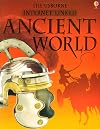
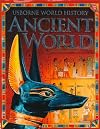
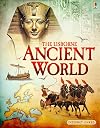
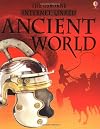
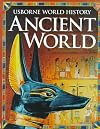
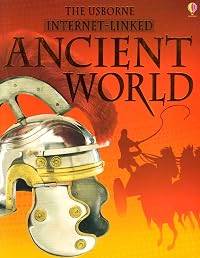
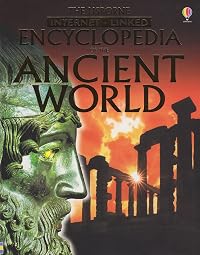
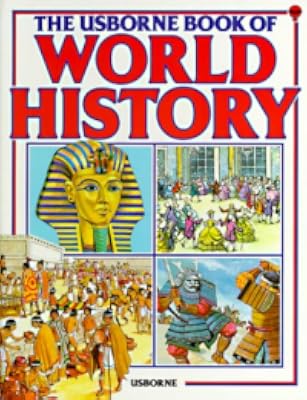
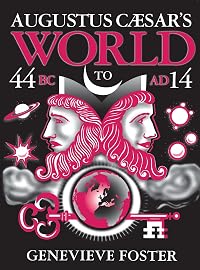
This book covers about ten thousand years of history through double page spreads on specific cultures and topics. It begins with the first farmers, and ends at the collapse of the Roman Empire. It has tons of illustrations, as well as numerous photographs of archeological finds.
It covers all of the ancient cultures, from every continent, from 10,000 B.C. to 500 A.D. The information that I think connects most to using this book for science contributions comes from the Egyptians, changes in shipbuilding, and the engineering of shelters or homes across different cultures. The Egyptians’ contributions to technology and engineering revolve mostly around the construction of the pyramids, and the process of mummification. Both the pyramids show more and mummies are discussed in the book, with wonderful illustrations. One of the developments pictured and discussed for many of the cultures in the book is their type of ship or ships. This could easily connect to engineering, as could the different ways in which buildings are constructed. The book also talks a lot about natural resources and what purpose they served for each society, as well as what kind of values they held. The use and creation of metals is also discussed for many of the cultures mentioned, and could be a plug for a lesson on metals and what they are made of or how they are made.
I really like this book. It is not only a wealth of information, but it has great visuals and quality facts. I also like how it is divided into so many sections, because as a teacher I could easily use one or more sections for a particular lesson, depending on our focus. It is also a Scholastic book, therefore I trust that the scientific content is accurate. I could use this book for a variety of lessons on both science and natural history, but my favorite lesson plan idea that I found to use with it is on cubits and measurement, which connects to the Egyptians and pyramid building. In it, the students make cubit measures out of wood, and then use them to measure what different things would be in cubits. This would directly reinforce the science process skill of measurement, and be a part of a unit on the pyramids. show less
It covers all of the ancient cultures, from every continent, from 10,000 B.C. to 500 A.D. The information that I think connects most to using this book for science contributions comes from the Egyptians, changes in shipbuilding, and the engineering of shelters or homes across different cultures. The Egyptians’ contributions to technology and engineering revolve mostly around the construction of the pyramids, and the process of mummification. Both the pyramids show more and mummies are discussed in the book, with wonderful illustrations. One of the developments pictured and discussed for many of the cultures in the book is their type of ship or ships. This could easily connect to engineering, as could the different ways in which buildings are constructed. The book also talks a lot about natural resources and what purpose they served for each society, as well as what kind of values they held. The use and creation of metals is also discussed for many of the cultures mentioned, and could be a plug for a lesson on metals and what they are made of or how they are made.
I really like this book. It is not only a wealth of information, but it has great visuals and quality facts. I also like how it is divided into so many sections, because as a teacher I could easily use one or more sections for a particular lesson, depending on our focus. It is also a Scholastic book, therefore I trust that the scientific content is accurate. I could use this book for a variety of lessons on both science and natural history, but my favorite lesson plan idea that I found to use with it is on cubits and measurement, which connects to the Egyptians and pyramid building. In it, the students make cubit measures out of wood, and then use them to measure what different things would be in cubits. This would directly reinforce the science process skill of measurement, and be a part of a unit on the pyramids. show less
Each page has quick access to Internet sites, mostly interactive ones that extend the text.
A very nice encyclopedia on its own, great resource for homeschoolers, information junkies and reluctant readers.
A very nice encyclopedia on its own, great resource for homeschoolers, information junkies and reluctant readers.
Ratings
Members
- Recently Added By
Author Information
21 Works 5,715 Members
All Editions
Series

Common Knowledge
- Canonical title
- Ancient World (Usborne World History) (Usborne World History)
- Original title
- Ancient World (Usborne World History) (Usborne World History)
Classifications
Statistics
- Members
- 858
- Popularity
- 31,814
- Reviews
- 2
- Rating
- (4.64)
- Languages
- Czech, English, Spanish
- Media
- Paper
- ISBNs
- 13