
George Hart (1) (1945–2021)
Author of Ancient Egypt (Eyewitness Books)
For other authors named George Hart, see the disambiguation page.
About the Author
George Hart was staff lecturer and educator on the Ancient Egyptian collections in the Education Department of the British Museum.
Image credit: via Egypt Exploration Society
Series
Works by George Hart
Tagged
Common Knowledge
- Canonical name
- Hart, George
- Legal name
- Hart, George Arthur John
- Birthdate
- 1945-10-28
- Date of death
- 2021-02-15
- Gender
- male
- Education
- University College London (BA|M.Phil)
- Occupations
- egyptologist
curator
education officer
writer
lecturer - Organizations
- British Museum
Egyptian Exploration Society - Short biography
- George Hart (28 October 1945 – 15 February 2021) was a British Egyptologist. He studied classics and Egyptology at University College London. He was a staff lecturer in Egypt and the classical world at the British Museum from 1973 until his retirement in 2004. In addition to his museum work, he also taught Egyptian hieroglyphs and lectured on cruises. He served on the council of the Egypt Exploration Society, on the editorial board of Egyptian Archaeology, and on the committee of the Sudan Archaeological Research Society.
- Cause of death
- cancer
- Nationality
- UK
- Birthplace
- Dunfermline, Fife, Scotland, UK
- Map Location
- Scotland, UK
Members
Reviews
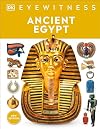
I enjoyed simply scrutinizing the various illustrations: weapons, foods, toys, a strainer for drinking beer through.
My favorite illustration is a photograph of a Roman sculpture of the Egyptian god Horus. Horus is in Roman sandals, a Roman toga, and a scale cuirass that does make you think of feathers, but his head is that of a falcon. That's some real fusion sculpture.
The original author died in 2021, when this book came out in a new revised edition. The original edition was published in show more 1990. In the chapter, "Weapons of War" a strange transformation has occurred. One of the images shows a painting on the side of a casket taken from the ante-chamber of Tutankhamon's tomb. The caption reads "King at War: This scene from the side of a box discovered in Tutankhamun's tomb shows the king attacking enemies from Nubia. His foes are falling in disarray. He rides in a chariot drawn by two horses, followed by fan bearers. In real life the king had a charioteer to drive for him." (Did a king at war, in a chariot, really have a posse of fan bearers chasing after him on foot all the time?!! Probably not. The objects in question do look like fans, but maybe they are military standards instead, like the eagles of the Roman legions? That would make a bit more sense, actually.) In 2021, both image and text have been changed. "This scene from a box discovered in Tutankhamen's tomb shows the king attacking the Nubians. He rides alone in a chariot drawn by two horses, although in real life a charioteer would have driven him. His enemies are falling in disarray." The image in this case is taken from the other side of the box and the king is depicted slaughtering not Nubians, but enemies from the north and east of Egypt, perhaps from a city like Kadesh, that his imperial ancestor, Thutmose III had conquered. Zahi Hawass, who is probably an authority on this, identifies these warriors as Syrians. So, we see two types of deterioration. 1) The captions have become less precise than formerly, because generally shorter. The scene is taken not "from the side of a box" but "from a box". 2) And the caption no longer correctly describes the image. Somebody from the very extensive DK editorial team, with little knowledge of Ancient Egypt, or perhaps no understanding of how to examine ancient artifacts, swapped in the different image from the other side of the box and failed to revise the caption correctly. I wonder what else went wrong with the new edition? show less
My favorite illustration is a photograph of a Roman sculpture of the Egyptian god Horus. Horus is in Roman sandals, a Roman toga, and a scale cuirass that does make you think of feathers, but his head is that of a falcon. That's some real fusion sculpture.
The original author died in 2021, when this book came out in a new revised edition. The original edition was published in show more 1990. In the chapter, "Weapons of War" a strange transformation has occurred. One of the images shows a painting on the side of a casket taken from the ante-chamber of Tutankhamon's tomb. The caption reads "King at War: This scene from the side of a box discovered in Tutankhamun's tomb shows the king attacking enemies from Nubia. His foes are falling in disarray. He rides in a chariot drawn by two horses, followed by fan bearers. In real life the king had a charioteer to drive for him." (Did a king at war, in a chariot, really have a posse of fan bearers chasing after him on foot all the time?!! Probably not. The objects in question do look like fans, but maybe they are military standards instead, like the eagles of the Roman legions? That would make a bit more sense, actually.) In 2021, both image and text have been changed. "This scene from a box discovered in Tutankhamen's tomb shows the king attacking the Nubians. He rides alone in a chariot drawn by two horses, although in real life a charioteer would have driven him. His enemies are falling in disarray." The image in this case is taken from the other side of the box and the king is depicted slaughtering not Nubians, but enemies from the north and east of Egypt, perhaps from a city like Kadesh, that his imperial ancestor, Thutmose III had conquered. Zahi Hawass, who is probably an authority on this, identifies these warriors as Syrians. So, we see two types of deterioration. 1) The captions have become less precise than formerly, because generally shorter. The scene is taken not "from the side of a box" but "from a box". 2) And the caption no longer correctly describes the image. Somebody from the very extensive DK editorial team, with little knowledge of Ancient Egypt, or perhaps no understanding of how to examine ancient artifacts, swapped in the different image from the other side of the box and failed to revise the caption correctly. I wonder what else went wrong with the new edition? show less
Este libro lo tine todo para despertar la curiosidad de los niños a partir de 9 años. Sus magnificas ilustraciones muestran la construcción de una pirámide, la preparación de un sarcófago o el culto de los dioses. Además, el apartado " ¿lo sabías? ", los recuadros temáticos y las preguntas con respuestas sencillas ayudan a comprender cómo se organizaba la sociedad egipcia antigua. ¡Un sorprendente libro divulgativo con el que el niño nunca se cansará de aprender!
Life in Ancient Egypt : 3,000 years of mystery to unlock and discover (Treasure Chests) by George Hart
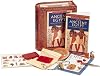
The Life in Ancient Egypt treasure chest was one of my favorite as a kid. It's the perfect mix of education and fun. With a myriad of items to discover and learn about including maps, stickers, a small book, hieroglyphic stamps and inkpad, a hieroglyphic decoder, papyrus, and more it provided me with hours of entertainment and learning as a kid on many occasions.
This is an account of Egyptian mythology that begins with the creation legends of Heliopolis, Memphis, and Hermopolis. Myths that are included range from stories about the gods – the murder of Osiris and vengeance of Horus, Isis and the seven scorpions, Sakhmet and the virtual slaughter of mankind – to fables such as the Shipwrecked Sailor and the Enchanted Island
Lists
Awards

You May Also Like


Associated Authors
Statistics
- Works
- 15
- Members
- 2,806
- Popularity
- #9,160
- Rating
- 3.8
- Reviews
- 15
- ISBNs
- 155
- Languages
- 15