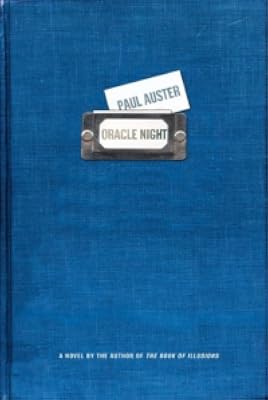
Oracle Night
by Paul Auster
On This Page
Description
Several months into his recovery from a near-fatal illness, thirty-four-year-old novelist Sidney Orr enters a stationery shop in the Cobble Hill section of Brooklyn and buys a blue notebook. It is September 18, 1982, and for the next nine days Orr will live under the spell of this blank book, trapped inside a world of eerie premonitions and puzzling events that threaten to destroy his marriage and undermine his faith in reality. Why does his wife suddenly break down in tears in the backseat show more of a taxi just hours after Sidney begins writing in the notebook? Why does M. R. Chang, the owner of the stationery shop, precipitously close his business the next day? What are the connections between a 1938 Warsaw telephone directory and a lost novel in which the hero can predict the future? At what point does animosity explode into violence? To what degree is forgiveness the ultimate expression of love? Paul Auster's mesmerizing eleventh novel reads like an old-fashioned ghost story. But, there are no ghosts in this book-only flesh-and-blood human beings, wandering through the haunted realms of everyday life. At once, a meditation on the nature of time and a journey through the labyrinth of one man's imagination, Oracle Night is a narrative tour de force that confirms Auster's reputation as one of the boldest, most original writers at work in America today. show lessTags
Recommendations





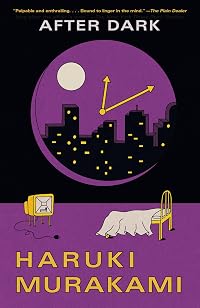

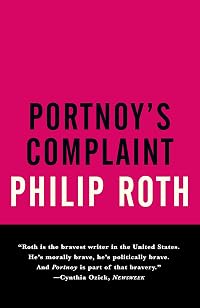
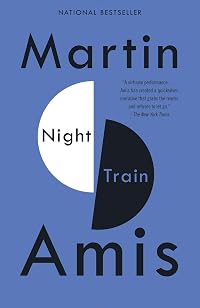
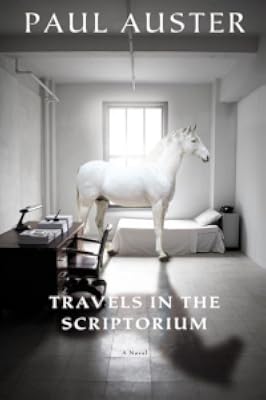
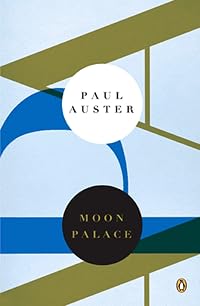
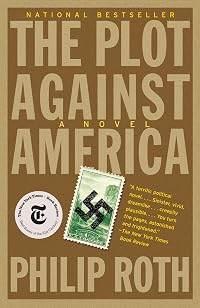
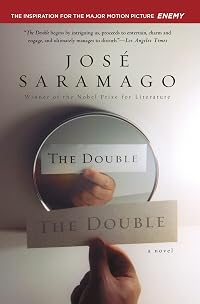
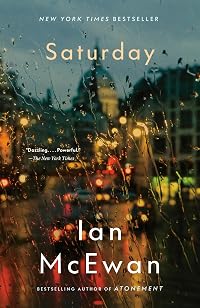

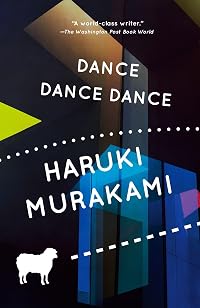
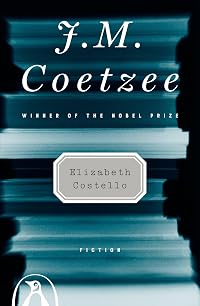
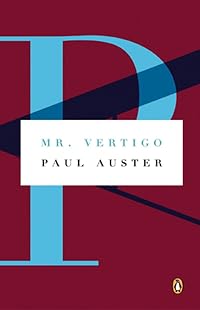

Member Recommendations

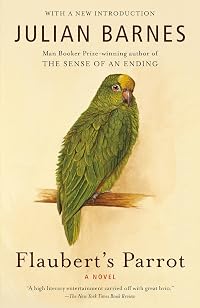
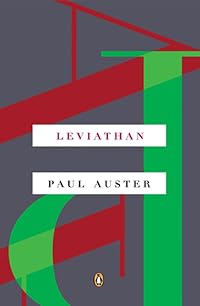
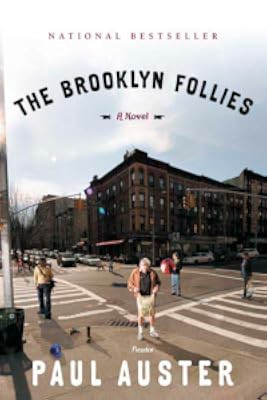
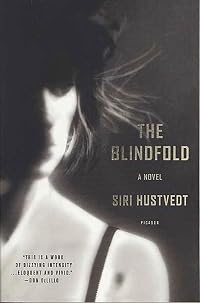
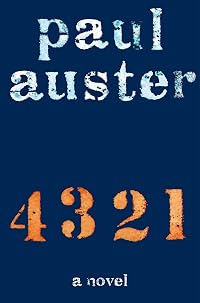
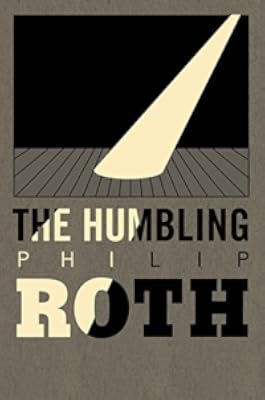
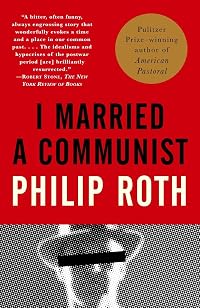
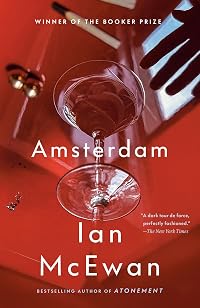
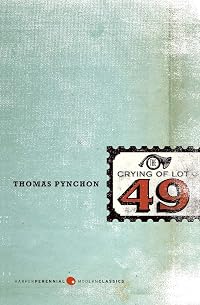
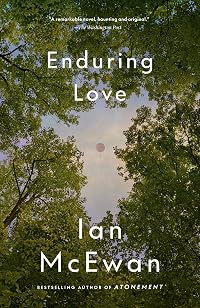
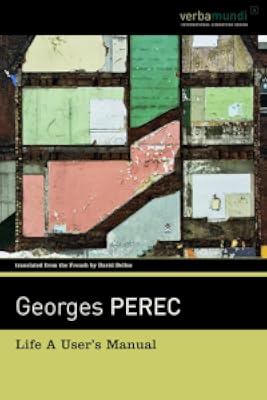
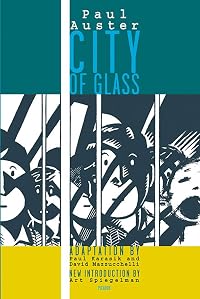
EerierIdyllMeme Novels about writers recombining aspects of their experiences into their writing.
Member Reviews
Auster here takes story-telling and uses that as a means to ponder reality and every labyrinthine way this translates through perception. He takes the maze and straightens it out so that every turn, every fork, every dead end corridor or way in or out is set parallel. Then what is left is something like the strata of rock, each layer signifying different eras in soil but here the unknowable passage we take from our point of view, fractured, subjective and incomplete. Auster takes that sample in stone and removes it from its original position, cuts out a slab, showing each layer stark in its particular colour and bleeding into every other, and polishes it until it reflects a clear light. Then he lays it down flat so that there is no show more point of orientation, we can't make out the bottom from the top, but we can glide over its slippery surface taking great care and occasionally glance down at some weird reflection.
The way in of the story within a story within a story within a going on for infinity is almost the least relevant aspect when experiencing this novel. Sure, it is the point of entry, the conceit, but that is not what is delivered whilst reading this. This is not a puzzle waiting to be solved, or a challenge, or somewhere to find solidity. I feel I float through the best of what he does and it is difficult to get a handle on what is being reached for. In The New York Trilogy Auster writes:
"It was something like the word 'it' in the phrase 'it is raining' or 'it is night'. What that 'it' referred to Quinn had never known."
And that is where I find this novel: walking hand in hand with the 'it'. For all the urban mysticism, the disambiguation folding back on itself, the necessary clarity of prose, the deft straddling of psychological nuance and the conveyance of time and perception relative to existence, I'm none the wiser. Perhaps that is precisely 'it'.
I have added a blue notebook to my Christmas wishlist. show less
The way in of the story within a story within a story within a going on for infinity is almost the least relevant aspect when experiencing this novel. Sure, it is the point of entry, the conceit, but that is not what is delivered whilst reading this. This is not a puzzle waiting to be solved, or a challenge, or somewhere to find solidity. I feel I float through the best of what he does and it is difficult to get a handle on what is being reached for. In The New York Trilogy Auster writes:
"It was something like the word 'it' in the phrase 'it is raining' or 'it is night'. What that 'it' referred to Quinn had never known."
And that is where I find this novel: walking hand in hand with the 'it'. For all the urban mysticism, the disambiguation folding back on itself, the necessary clarity of prose, the deft straddling of psychological nuance and the conveyance of time and perception relative to existence, I'm none the wiser. Perhaps that is precisely 'it'.
I have added a blue notebook to my Christmas wishlist. show less
Sydney, a Brooklyn writer recovering from a near-fatal illness wanders into a stationery store owned by Mr. Chan, purchases a blue notebook, and for the first time in a long while begins writing, the story magically pouring from his pen. He writes of an editor, Nick Bowen, who is given a strange manuscript by a long dead writer to edit. But on his way to the office one day, Nick is nearly killed by a heavy falling object, and this experience impels him to just drop everything in his life and run away to the first place he can buy a plane ticket for, Kansas City as it happens. In Kansas City, Nick becomes involved with a man who collects worldwide telephone books and stores them in a "museum" hidden away underground under the railroad show more tracks, where Nick becomes trapped with no way out when the telephone book collector suddenly dies of heart disease.....So we have a story within a story, within a story: The manuscript of a novel called Oracle Night by a deceased writer, being edited by Nick, who has just abandoned his life to run away to Kansas City, as written/imagined by Sydney, a writer in Brooklyn who hasn't written in a while, as written/imagined by Paul Auster (a writer living in Brooklyn I believe). There's layer after layer here, and it was sometimes a challenge keeping track of whose story we were in, especially if I had set the book aside for a few days. But it was all thoroughly enjoyable. I'm a fan of most of the Paul Auster books I've read. I like the way he frequently plays games with the reader of his books, and I constantly marvel at his imaginative powers.
4 stars show less
4 stars show less
This is a dense story, with many ramifications, stories nested within the story and metaphysical coincidences. Thanks to Auster's precise writing and impeccable storytelling, the reader never feels lost in the multiple plots. Reading Oracle Night is quite like wandering the rooms of a museum: they are arranged in a precise, chronological order, yet multiple doors allow visitors to momentarily get back in time or immerge in a different genre before returning to the main exhibit. This meandering must be how a writer feels when he is obsessed with a story, and Auster manages to bring this feeling to his readers in a remarkable way.
El primer libro que leo de Auster, a pesar de las advertencias. Supongo que gana cinco estrellas porque no tengo con qué compararlo.
Cuarenta páginas antes del final pensé que no iba a llegar a nada. En seguida descubrí que la cadena de casualidades e historias ficticias que crean historias reales armonizaba a la perfección, tanto me acabo de descubrir llamando "historia real" a una novela.
En definitiva a las historias las barre el tiempo, y todo lo que existe es construido por palabras.
Un escritor manipula los ladrillos que lo manipulan a él.
Cuarenta páginas antes del final pensé que no iba a llegar a nada. En seguida descubrí que la cadena de casualidades e historias ficticias que crean historias reales armonizaba a la perfección, tanto me acabo de descubrir llamando "historia real" a una novela.
En definitiva a las historias las barre el tiempo, y todo lo que existe es construido por palabras.
Un escritor manipula los ladrillos que lo manipulan a él.
A strange little book about a writer who buys a notebook at a mysterious stationery store and finds that the stories he writes in it affect his real life. The premise was more interesting than the execution, I think, and the mysterious Asian man who owns the store becomes such a disturbing stereotype that I didn't know what to think (at first it's a self-conscious use of a noir trope and our narrator is aware of it as such, but when Mr. Chang starts bringing said narrator to sinister brothels and making threats, I got really uncomfortable). Auster makes it clear that he's working with noir conventions and so everything is stylized and overdramatized, but that made it difficult for me to care about any of the characters. I was a bit show more disappointed; the only other book of his I've read was Mr. Vertigo, which I loved. This one was interesting as a writing exercise but not necessarily as a novel. show less
This blew my mind. One of the most lucid arguments I've ever read on 'what is a novel', argued in the form of a novel. Not to be missed!
When Sydney Orr, a writer on the mend from a serious illness, buys a beautiful blue notebook one day, he immediately starts writing a story. When the protagonist of this story ends up in a hopeless situation (locked up in an underground cellar with no one knowing of this cellar's existence), he decides to abandon this idea for a novel. He is asked to write the screenplay for an adaptation of the Time Machine by H.G. Wells, which he is prepared to do as it pays very well, but his treatment is rejected. A famous writer friend gives him a never published early work to adapt for the movies, but he manages to lose the manuscript in the subway. This same friend (John Trause) asks for Sidney's help with his son Jacob, who is currently in a show more rehabilitation center for drug addicts. Sidney visits him there, but to no avail. On the very night that John Trause, who had been suffering from phlebitis/thrombosis, dies of a pulmonary embolism, Jacob comes to Sidney and Grace's home to ask them for 5000 dollar to help him pay off his drug dealers. He beats up Grace until Sidney threatens him with a kitchen knife. Grace has a miscarriage and is in a terrible state. It turns out that John Trause had mailed Sidney and Grace a cheque for 36.000 dollars to help them with their financial problems right before his death. Jacob is found some time later with two bullets in his head.
Oracle Night knocked me out flat. This is storytelling at its very best. You are drawn into one story and from there you are plunged into the next one and the next one and the next one and in the end it all fits together. Auster's writing style is so smooth, his characters are so utterly human and understandable. This novel also gives you an insight into the life of an author. It must be a terrible feeling to find one of your protagonists in a fix like the one described in this story and not being able to get him out of it. As an author, your created the protagonist, you created the situation and yet you cannot come up with a solution. Even I, as a reader, was haunted by this. show less
Oracle Night knocked me out flat. This is storytelling at its very best. You are drawn into one story and from there you are plunged into the next one and the next one and the next one and in the end it all fits together. Auster's writing style is so smooth, his characters are so utterly human and understandable. This novel also gives you an insight into the life of an author. It must be a terrible feeling to find one of your protagonists in a fix like the one described in this story and not being able to get him out of it. As an author, your created the protagonist, you created the situation and yet you cannot come up with a solution. Even I, as a reader, was haunted by this. show less
Members
- Recently Added By
Lists

1001 Books You Must Read Before You Die
1,448 works; 1,135 members

Best 21st Century Books (So Far)
679 works; 86 members

Metafiction
86 works; 23 members

Story Within a Story
65 works; 16 members

Books Read in 2022
5,226 works; 115 members

Llibres que he llegit el 2020
50 works; 1 member

Books Featured on Gilmore Girls
307 works; 21 members

Novels that you shouldn't waste your time on
94 works; 52 members
The Complete Rory Gilmore Reading List
506 works; 5 members

Books Read in 2012
816 works; 34 members
Author Information

106+ Works 64,977 Members
Paul Auster was born on February 3, 1947, in Newark, New Jersey. He received a B.A. and a M.A. in English and Comparative Literature from Columbia University. In addition to his career as a writer, Auster has been a census taker, tutor, merchant seaman, little-league baseball coach, and a telephone operator. He started his writing career as a show more translator. He soon gained popularity for the detective novels that make up his New York Trilogy. His other works include The Invention of Solitude; Leviathan; Moon Palace; Facing the Music; In the Country of Last Things; The Music of Chance; Mr. Vertigo; and The Brooklyn Follies. His latest novels are entitled, Invisible and Sunset Park. In addition to his novels, Auster has written screenplays and directed several films. He is the recipient of a fellowship from the National Endowment for the Arts and a French Prix Medicis for Foreign Literature. (Bowker Author Biography) show less
Series
Belongs to Publisher Series
Punane raamat (66)
Compactos Anagrama (418)
El balancí [Edicions 62] (496)
Keltainen kirjasto (372)
rororo (23987)
Work Relationships
Is contained in
Common Knowledge
- Canonical title
- Oracle Night
- Original title
- Oracle Night
- Original publication date
- 2004
- People/Characters
- Sidney Orr
- Important places
- New York, USA
- Dedication
- for Q.B.A.S.G.
(in memory) - First words
- I had been sick for a long time.
- Last words
- (Click to show. Warning: May contain spoilers.)Ten minutes later, I was out on the street again, walking toward the hospital to see Grace.
- Original language
- English
Classifications
Statistics
- Members
- 3,393
- Popularity
- 4,973
- Reviews
- 51
- Rating
- (3.72)
- Languages
- 20 — Catalan, Danish, Dutch, English, Estonian, Finnish, French, German, Greek, Hebrew, Italian, Norwegian (Bokmål), Farsi/Persian, Polish, Portuguese, Russian, Slovenian, Spanish, Swedish, Turkish
- Media
- Paper, Audiobook, Ebook
- ISBNs
- 80
- ASINs
- 15