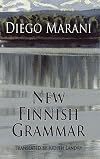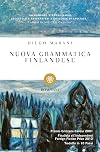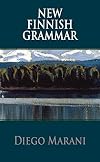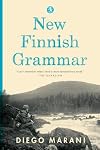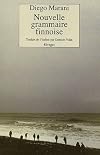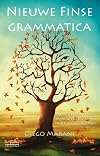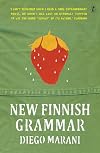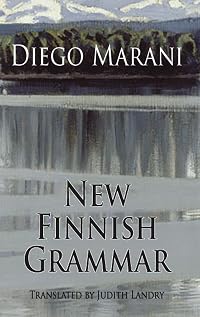
New Finnish Grammar
by Diego Marani
On This Page
Description
"One night at Trieste in September 1943, a seriously wounded soldier is found on the quay. The doctor, of a newly arrived German hospital ship, Pietri Friari, gives the unconscious soldier medical assistance. His new patient has no documents or anything that can identifying him. When he regains consciousness he has lost his memory and cannot even remember what language he speaks. From a few things found on the man the doctor, who is originally from Finland, believes him to be a sailor and a show more fellow countryman, who somehow or other has ended up in Trieste. The doctor dedicates himself to teaching the man Finnish, beginning the reconstruction of the identity of Sampo Karjalainen, leading the missing man to return to Finland in search of his identity and his past"--P. [4] of cover. show lessTags
Recommendations












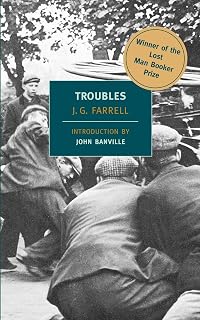


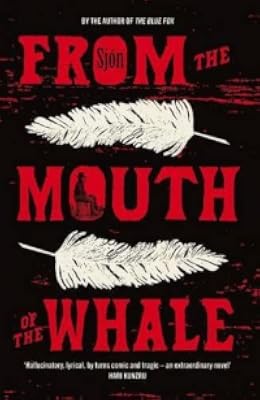



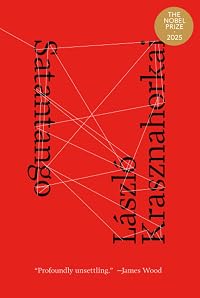
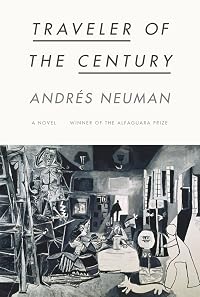











Member Recommendations
Member Reviews
An injured man is found on a dockside in Trieste - he has no memory of anything, but as he's wearing a Finnish sailor's jacket, he's taken to a Finnish doctor who starts painstakingly reteaching him the language he believes to be his. With the name inside the jacket the only possible clue to who he is, the amnesiac throws himself into his studies in the desperate hope of recovering himself. But while a language has rules, life doesn't. Without memory, personal history or identity, and with a handicapped ability to communicate with other people, what will he be able to rebuild?
This book is beautifully written (and translated - fittingly, as the book itself is supposed to be a 'translation' by the doctor of the amnesiac's fragmentary and show more ungrammatical notes).
Since I live in a place where I'm not totally fluent in the local language, I especially enjoyed the passages about the man's struggles with Finnish:
That cavity which was my mouth, which seemed so small, would suddenly become immense. It seemed impossible to me that everything should be played out within those fractions of a millimetre, that a segment of muscle, if too tense, should alter a meaning completely, that one puff of air too much, or too little, should be enough to cause me to be mistaken for an Estonian or Ingrian, or indeed break off the thread of meaning entirely.
and
Sometimes a few letters were enough to tell me all I needed to know about a verb and then a whole line would dance before me, the words opening out one after another, letting the meaning shine through. But often whole sentences remained unclear, clouded by very little words, like so many padlocks obstructing the flow of meaning.
Although the author is Italian, the themes are rather Scandinavian - loss, the pain of life, and how humans can ever manage to deal with it. The man's favourite Finnish case is the absessive, "a declension for things we haven't got". But somehow the theme is dealt with lightly, so even though the book is rather sad it is a pleasure to read.
I can't resist quoting one more passage (out of the many where I've turned down the pages):
Finnish is a solid language, slightly rounded at the sides, with narrow slits for eyes, like the houses in Helsinki, the faces of our people. It is a language whose sounds are sweetish and soft, like the flesh of the perch and trout we cook on summer evenings on the shores of lakes whose depths are covered in red algae, the colour of the hunters' houses and the berries which bead from the bushes in summer. Finland is a cuttlefish bone, a great concave stone within whose sandy womb trees sprout like mould beneath the endless northern light.
I am already re-reading this. show less
This book is beautifully written (and translated - fittingly, as the book itself is supposed to be a 'translation' by the doctor of the amnesiac's fragmentary and show more ungrammatical notes).
Since I live in a place where I'm not totally fluent in the local language, I especially enjoyed the passages about the man's struggles with Finnish:
That cavity which was my mouth, which seemed so small, would suddenly become immense. It seemed impossible to me that everything should be played out within those fractions of a millimetre, that a segment of muscle, if too tense, should alter a meaning completely, that one puff of air too much, or too little, should be enough to cause me to be mistaken for an Estonian or Ingrian, or indeed break off the thread of meaning entirely.
and
Sometimes a few letters were enough to tell me all I needed to know about a verb and then a whole line would dance before me, the words opening out one after another, letting the meaning shine through. But often whole sentences remained unclear, clouded by very little words, like so many padlocks obstructing the flow of meaning.
Although the author is Italian, the themes are rather Scandinavian - loss, the pain of life, and how humans can ever manage to deal with it. The man's favourite Finnish case is the absessive, "a declension for things we haven't got". But somehow the theme is dealt with lightly, so even though the book is rather sad it is a pleasure to read.
I can't resist quoting one more passage (out of the many where I've turned down the pages):
Finnish is a solid language, slightly rounded at the sides, with narrow slits for eyes, like the houses in Helsinki, the faces of our people. It is a language whose sounds are sweetish and soft, like the flesh of the perch and trout we cook on summer evenings on the shores of lakes whose depths are covered in red algae, the colour of the hunters' houses and the berries which bead from the bushes in summer. Finland is a cuttlefish bone, a great concave stone within whose sandy womb trees sprout like mould beneath the endless northern light.
I am already re-reading this. show less
Noi siamo la lingua che parliamo? Questo è il tema di questo interessantissimo e insolito romanzo ambientato durante la seconda guerra mondiale, dove un medico cerca di ricostruire quella che lui ritiene essere l'identità di un marinaio gravemente ferito e in preda all'amnesia insegnandogli quella che ritiene essere la sua lingua, il finlandese.
Ma la scintilla del riconoscimento non scatterà, sia perché l'uomo non è finlandese, ma soprattutto perché, quando sarebbe quasi pronto a rinunciare alla ricerca del suo passato, viene a conoscenza dell'equivoco che ha generato il suo falso riconoscimento.
Una dimostrazione di come una trama legata esclusivamente alla linguistica possa generare un romanzo davvero avvincente, e la scelta del show more finlandese, una delle lingue più complicate e misteriose parlate in Europa, rende ancora più preziosa la vicenda. show less
Ma la scintilla del riconoscimento non scatterà, sia perché l'uomo non è finlandese, ma soprattutto perché, quando sarebbe quasi pronto a rinunciare alla ricerca del suo passato, viene a conoscenza dell'equivoco che ha generato il suo falso riconoscimento.
Una dimostrazione di come una trama legata esclusivamente alla linguistica possa generare un romanzo davvero avvincente, e la scelta del show more finlandese, una delle lingue più complicate e misteriose parlate in Europa, rende ancora più preziosa la vicenda. show less
Trieste, 1943: A man is found with his head bashed in, almost dead, severely brain damaged, and completely amnesiac - even his language is completely forgotten. The only clue to his identity is a Finnish navy uniform and a name sewn onto it. He's taken on board a German ambulance ship, where the doctor just happens to be a Finnish expat, who takes it upon himself to save his unfortunate countryman. He starts re-teaching him Finnish, that weird language of dozens of cases and almost no prepositions, and eventually manages to have him sent to Helsinki to recuperate and rediscover his identity in his supposed home town. There, our hero keeps a diary (helpfully transcribed and improved by his rescuer) of his painful, slow reintegration into show more Finnish society, Finnish history, Finnish language, all while the Continuation War rages at the Russian border.
New Finnish Grammar is an odd little novel, often both beautiful and frighteningly subtle, that I can't help feel deserves better than the slightly hamfisted (though justified) ending. It's most definitely a story for Europe in the 21st century, the European as a character who's forgotten who he is, and who has to be taught why he's better than others, his origin stories, his archnemeses; who is too caught up in trying to figure out who he was in some mythical past to see who he is now. An Italian writing a story of Finland in WWII, with absolutely nobody acknowledging whose side they're on in the struggle against a common scary subhuman enemy. A story written by a Eurocrat, set outside but never in Trieste and Vyborg, two of the major multi-ethnic cities that completely changed their identity following the war. A story about how language and myth is used to create and prevent thought, possibilities, futures and pasts. All centered around a simple tale of a man without a past (yes, Kaurismäki could film this) trying to figure out who he is by using grammar and music (the Finnish word for "Bible" literally means "grammar", he notes - or rather, it's noted for him) to create a context, a continuity.
I like it. I just wish I was better read up on the Kalevala. show less
New Finnish Grammar is an odd little novel, often both beautiful and frighteningly subtle, that I can't help feel deserves better than the slightly hamfisted (though justified) ending. It's most definitely a story for Europe in the 21st century, the European as a character who's forgotten who he is, and who has to be taught why he's better than others, his origin stories, his archnemeses; who is too caught up in trying to figure out who he was in some mythical past to see who he is now. An Italian writing a story of Finland in WWII, with absolutely nobody acknowledging whose side they're on in the struggle against a common scary subhuman enemy. A story written by a Eurocrat, set outside but never in Trieste and Vyborg, two of the major multi-ethnic cities that completely changed their identity following the war. A story about how language and myth is used to create and prevent thought, possibilities, futures and pasts. All centered around a simple tale of a man without a past (yes, Kaurismäki could film this) trying to figure out who he is by using grammar and music (the Finnish word for "Bible" literally means "grammar", he notes - or rather, it's noted for him) to create a context, a continuity.
I like it. I just wish I was better read up on the Kalevala. show less
During the Second World War an unconscious man is found in Trieste, the only clues to his identity a name label in his jacket and a monogrammed handkerchief. A doctor takes this to mean that the man is a Finnish sailor and arranges for him to be sent to Helsinki. After the war Doctor Friari goes to Helsinki himself to find the man but all that is left is the jacket, the handkerchief, three letters, a volume of the Kalevala, an empty bottle and a tattered notebook. The doctor then proceeds to attempt to put the man's story into a coherent tale and to understand what has happened.
From the first we know that the Doctor was mistaken about the identity of the man and as the story unfolds we gradually learn of his fate. Adrift in a foreign show more place that he believes to be his homeland the man struggles to make connections, find his past and hope for a future. This is a novel about memory, nationality, language and identity. I loved the way that the story was told and the snippets of Finnish mythology; song and the war torn background of Helsinki. A thought provoking novel that I really enjoyed. show less
From the first we know that the Doctor was mistaken about the identity of the man and as the story unfolds we gradually learn of his fate. Adrift in a foreign show more place that he believes to be his homeland the man struggles to make connections, find his past and hope for a future. This is a novel about memory, nationality, language and identity. I loved the way that the story was told and the snippets of Finnish mythology; song and the war torn background of Helsinki. A thought provoking novel that I really enjoyed. show less
Firstly, what this book is not. It is not a book of grammar or a text book for anyone learning the Finnish language. It is an exploration of language and identity written by an Italian who as a senior linguist for the European Union in Brussels, and the inventor of the whole new language of Europanto, is probably well placed to comment on how language shapes the different European identities.
Set largely during the second World War, the book follows the story of an unknown man discovered with severe head injuries in Trieste in 1943. From his clothing he is assumed to be a sailor and is taken to a German hospital ship moored in the harbour. Rather than dying from his injuries as had been expected he begins to recover, but with total show more memory loss. His injuries have even deprived him of the very idea of language itself. His case is taken up by the medical officer on the ship, Dr Petri Friairi, exiled from Finland as a result of his father's part in an uprising many years before, and now a naturalised German. Because of the Finnish name 'Sampo Karjalainen' sown into the back of his jacket Dr Friari assumes that he is a Finnish sailor of that name and proceeds to help him relearn what Dr Friari believes to be his native language. Thinking that only by being in familiar surroundings will Sampo have any hope of recovering his memory Dr Friari arranges for him to return to Helsinki. However, it is clear from the very start of the book that Dr Friari has made a crucial error in these assumptions, and a train of events has been set in motion which will lead ultimately to the death of the man known as Sampo Karjalainen.
Returning to a war-torn Helsinki suffering frequent bombing raids and full of refugees, Sampo finds himself in a state of limbo as the neurologist to who he has been referred to by Dr Friari is constantly expected but never reappears. Befriended by the hospital chaplain Pastor Koskela he continues his study of Finnish but the hoped for familiarity with his surroundings never appears. Rather he says ' I had a distinct impression that I was running headlong down the wrong road. In the innermost recesses of my unconscious I was plagued by the feeling that, within my brain, another brain was beating, buried alive.'. Eventually the evidence that he is basing his whole existence on a misconception is revealed by a chance encounter and the fate of 'Sampo Karjalainen' is sealed.
Much more that just a straightforward narrative the book reflects on the Finnish language itself and on the process of language acquisition. As a non-Finnish speaker and someone who knew nothing about the language before starting the book other than it is not Indo-European, I find some of his writing about the language intriguing: 'In the Finnish sentence the words are grouped around the verb like moons around a planet, and whichever one is nearest to the verb becomes the subject. In European languages the sentence is a straight line; in Finnish it is a circle, within which something happens.' And as well as language the book reflects on the cultural heritage of the country and the extent to which that defines national identity, and in doing so introduced me to a whole new mythology of which I was unaware: that contained in the Finnish Kalevala.
Overall, a thought provoking and memorable read, but one which it would be difficult to appreciate if you had no experience of learning a language or a culture other than the one you were born into. So strongly recommended - but probably not for everyone. show less
Set largely during the second World War, the book follows the story of an unknown man discovered with severe head injuries in Trieste in 1943. From his clothing he is assumed to be a sailor and is taken to a German hospital ship moored in the harbour. Rather than dying from his injuries as had been expected he begins to recover, but with total show more memory loss. His injuries have even deprived him of the very idea of language itself. His case is taken up by the medical officer on the ship, Dr Petri Friairi, exiled from Finland as a result of his father's part in an uprising many years before, and now a naturalised German. Because of the Finnish name 'Sampo Karjalainen' sown into the back of his jacket Dr Friari assumes that he is a Finnish sailor of that name and proceeds to help him relearn what Dr Friari believes to be his native language. Thinking that only by being in familiar surroundings will Sampo have any hope of recovering his memory Dr Friari arranges for him to return to Helsinki. However, it is clear from the very start of the book that Dr Friari has made a crucial error in these assumptions, and a train of events has been set in motion which will lead ultimately to the death of the man known as Sampo Karjalainen.
Returning to a war-torn Helsinki suffering frequent bombing raids and full of refugees, Sampo finds himself in a state of limbo as the neurologist to who he has been referred to by Dr Friari is constantly expected but never reappears. Befriended by the hospital chaplain Pastor Koskela he continues his study of Finnish but the hoped for familiarity with his surroundings never appears. Rather he says ' I had a distinct impression that I was running headlong down the wrong road. In the innermost recesses of my unconscious I was plagued by the feeling that, within my brain, another brain was beating, buried alive.'. Eventually the evidence that he is basing his whole existence on a misconception is revealed by a chance encounter and the fate of 'Sampo Karjalainen' is sealed.
Much more that just a straightforward narrative the book reflects on the Finnish language itself and on the process of language acquisition. As a non-Finnish speaker and someone who knew nothing about the language before starting the book other than it is not Indo-European, I find some of his writing about the language intriguing: 'In the Finnish sentence the words are grouped around the verb like moons around a planet, and whichever one is nearest to the verb becomes the subject. In European languages the sentence is a straight line; in Finnish it is a circle, within which something happens.' And as well as language the book reflects on the cultural heritage of the country and the extent to which that defines national identity, and in doing so introduced me to a whole new mythology of which I was unaware: that contained in the Finnish Kalevala.
Overall, a thought provoking and memorable read, but one which it would be difficult to appreciate if you had no experience of learning a language or a culture other than the one you were born into. So strongly recommended - but probably not for everyone. show less
A few years ago I got into a rather intense discussion along the lines of whether there is any association between the currency used by a country and their population's feeling of national pride and identity. It was prompted by comments from someone in the British government who was arguing vehemently in favour of Britain keeping the pound sterling as its national currency. Part of the politician's argument seemed to be that if Britain adopted the Euro, like other members of the European Community, it would lose a critical element of what makes Britain special. It was an argument that held no merit for my three dinner companions, all of whom came from countries which had already 'lost' the peseta and the franc in favour of the Euro.
If show more currency doesn't define a person's identity and affiliation to a country, what about language? New Finnish Grammar by Diego Marani suggests that without our language, we have no roots and no memory. Don't be misled by the title, this isn't a turgid academic study about a fringe language, but an intelligently written novel by a linguist working for the European Community.
The story is quite a simple one. It begins with the discovery of a badly-beaten man on a quayside in Trieste during World War 2. Though he recovers consciousness he has no memory and no language and nothing to identify himself except for the name tag of "SAMPO KARJALAINEN" sewn inside the seaman's jacket which suggests he is of Finnish origin. A passing military doctor Petri Friari, resolves to re-aquaint the mystery man with the language of his homeland as a way of restoring his memory and rebuilding his life. Petri tells his patient:
The merest breath is enough if there is still any fire at all beneath the ashes…. You will have to work hard. Finnish is the language in which you were brought up, the language of the lullaby that sent you to sleep each night. Apart from studying it you must learn to love it. think of each word as though it was a magic charm which might open a door to memory. Say each word aloud as though it were a prayer…
Sampo recovers sufficiently to be repatriated to a hospital in his supposed home in Helsinki. There with the aid of another doctor, a pastor who believes in the restorative power of Finnish myths and legends and a Red Cross nurse, he tries to find himself once again. It's not an easy task. Finnish apparently is a fiendishly difficult language "thorny but delicate."
...the Finnish sentence is like a cocoon, impenetrable, closed in on itself; here meaning ripens slowly and when, when ripe flies off, bright and elusive ... whin foreigners listen to a Finn speaking they always have the sense that something is flying out of his moth, the words fan out and lightly close in again; they hover in the air and then dissolve. It is pointless to try and capture them, because their meaning is in their flight…
Sampo meets the challenge head on, diligently applying himself to his lessons everyday but though his vocabulary and understanding improves, his knowledge of his identity remains elusive.
I had a distinct suspicion that I was running headlong down the wrong road. In the innermost recesses of my unconscious I was plagued by the feeling that, within my brain, another brain was beating, buried alive.
This is a novel about alienation, about isolation, how we relate to our pasts, to our cultural traditions and to our mother tongue. It has an overwhelming sense of sadness, the feeling that no matter how much we try, it's impossible to find the way back. It's a book that makes you think and to appreciate the value of the language we heard from our first moments on earth and that we use every day without giving it a second thought.
A wonderful novel, that was considered a masterpiece when it was published in Marani's native Italian. It's taken more than 10 years to become available in English but well worth the wait. show less
If show more currency doesn't define a person's identity and affiliation to a country, what about language? New Finnish Grammar by Diego Marani suggests that without our language, we have no roots and no memory. Don't be misled by the title, this isn't a turgid academic study about a fringe language, but an intelligently written novel by a linguist working for the European Community.
The story is quite a simple one. It begins with the discovery of a badly-beaten man on a quayside in Trieste during World War 2. Though he recovers consciousness he has no memory and no language and nothing to identify himself except for the name tag of "SAMPO KARJALAINEN" sewn inside the seaman's jacket which suggests he is of Finnish origin. A passing military doctor Petri Friari, resolves to re-aquaint the mystery man with the language of his homeland as a way of restoring his memory and rebuilding his life. Petri tells his patient:
The merest breath is enough if there is still any fire at all beneath the ashes…. You will have to work hard. Finnish is the language in which you were brought up, the language of the lullaby that sent you to sleep each night. Apart from studying it you must learn to love it. think of each word as though it was a magic charm which might open a door to memory. Say each word aloud as though it were a prayer…
Sampo recovers sufficiently to be repatriated to a hospital in his supposed home in Helsinki. There with the aid of another doctor, a pastor who believes in the restorative power of Finnish myths and legends and a Red Cross nurse, he tries to find himself once again. It's not an easy task. Finnish apparently is a fiendishly difficult language "thorny but delicate."
...the Finnish sentence is like a cocoon, impenetrable, closed in on itself; here meaning ripens slowly and when, when ripe flies off, bright and elusive ... whin foreigners listen to a Finn speaking they always have the sense that something is flying out of his moth, the words fan out and lightly close in again; they hover in the air and then dissolve. It is pointless to try and capture them, because their meaning is in their flight…
Sampo meets the challenge head on, diligently applying himself to his lessons everyday but though his vocabulary and understanding improves, his knowledge of his identity remains elusive.
I had a distinct suspicion that I was running headlong down the wrong road. In the innermost recesses of my unconscious I was plagued by the feeling that, within my brain, another brain was beating, buried alive.
This is a novel about alienation, about isolation, how we relate to our pasts, to our cultural traditions and to our mother tongue. It has an overwhelming sense of sadness, the feeling that no matter how much we try, it's impossible to find the way back. It's a book that makes you think and to appreciate the value of the language we heard from our first moments on earth and that we use every day without giving it a second thought.
A wonderful novel, that was considered a masterpiece when it was published in Marani's native Italian. It's taken more than 10 years to become available in English but well worth the wait. show less
In WWII Trieste, a German neurologist of Finnish origin is asked to treat a patient with head injuries. When the patient regains consciousness he has amnesia and has lost all knowledge of his language. Since the jacket the patient was wearing had a Finnish name sewn into the collar, the doctor teaches him some rudimentary Finnish and arranges for him to be sent to Helsinki.
I really enjoyed this exploration of identity, language, and cultural belonging in an Italian author's ponderings on Finnish-ness. It was the author's first novel and I've put his second on my wislist
I really enjoyed this exploration of identity, language, and cultural belonging in an Italian author's ponderings on Finnish-ness. It was the author's first novel and I've put his second on my wislist
Members
- Recently Added By
Published Reviews
ThingScore 100
There is more than one reason, one comes to realise, why Marani – an Italian – chose Finnish as the lost language of his hero. This is a novel about loss, about not having: asked by a nurse what he likes most about the language, Karjalainen replies: "the abessive . . . a declension for things we haven't got: koskenkorvsatta, toivatta, no koskenkorva, no hope, both are declined in the show more abessive. It's beautiful, it's like poetry! And also very useful, because there are more things we haven't got than that we have."
And this is also about the madness of war, the importance of love ("without someone else beside us, watching us live, we might as well be dead"), about memory and forgetting, about the tragedy of existence, and all these "abouts" are handled so subtly and naturally, occurring so inevitably in the narrative that all I can do, unless I go away and think about it for two weeks, a luxury unavailable to this reviewer, is simply to tell you to read it, and brace yourself for something special. show less
And this is also about the madness of war, the importance of love ("without someone else beside us, watching us live, we might as well be dead"), about memory and forgetting, about the tragedy of existence, and all these "abouts" are handled so subtly and naturally, occurring so inevitably in the narrative that all I can do, unless I go away and think about it for two weeks, a luxury unavailable to this reviewer, is simply to tell you to read it, and brace yourself for something special. show less
added by wandering_star
Lists

Top Five Books of 2013
1,562 works; 715 members

Italian Literature
558 works; 42 members

A Novel Cure
742 works; 23 members

BingoDOG - Language in Fiction
35 works; 12 members
Author Information

21+ Works 637 Members
Some Editions
Awards and Honors
Awards
Series
Belongs to Publisher Series
Common Knowledge
- Canonical title
- New Finnish Grammar
- Original title
- Nuova grammatica finlandese
- Original publication date
- 2000
- Important places
- Trieste, Friuli-Venezia Giulia, Italy; Helsinki, Finland
- Important events
- World War II
- Epigraph
- Ei Suomi ole mikään kieli, se on tapa istua penkin päässä karvat korvilla.
Paavo Haavikko - Dedication
- To Simona, Alessandro and Elisabetta
- First words*
- Mijn naam is Pietri Friari, ik woon in Hamburg, in de Kaiser-Wilhelmstraat nummer 16 en ik werk als neuroloog in het universiteitsziekenhuis.
- Last words*
- (Click to show. Warning: May contain spoilers.)Ik loop naar buiten, naar het midden van de binnenplaats en blijf in het donker staan luisteren naar de vallende sneeuw.
- Original language
- Italian
*Some information comes from Common Knowledge in other languages. Click "Edit" for more information.
Classifications
- Genres
- General Fiction, Fiction and Literature
- DDC/MDS
- 853.914 — Literature & rhetoric Italian, Romanian & related literatures Italian fiction 1900- 20th Century 1945-1999
- LCC
- PQ4873 .A691545 .N8613 — Language and Literature French, Italian, Spanish and Portuguese literatures Italian literature Individual authors, 1961-2000
- BISAC
Statistics
- Members
- 422
- Popularity
- 73,223
- Reviews
- 24
- Rating
- (3.40)
- Languages
- 10 — Danish, Dutch, English, Finnish, French, Hungarian, Italian, Norwegian (Bokmål), Portuguese, Swedish
- Media
- Paper, Ebook
- ISBNs
- 23
- ASINs
- 6