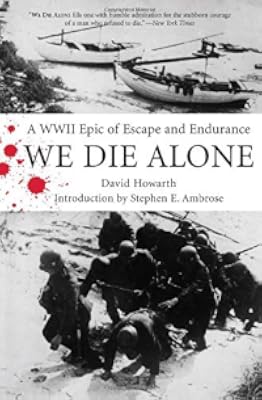
We Die Alone: A WWII Epic of Escape and Endurance
by David Howarth
On This Page
Description
Jan Baalsrud's escape from Nazi-occupied arctic Norway is one of the most exciting escape narratives to emerge from the challenges and miseries of World War II chronicles . In March 1943, a team of expatriate Norwegian commandos sailed from northern England for Nazi-occupied arctic Norway to organize and supply the Norwegian resistance. But they were betrayed and the Nazis ambushed them. Only one man survived - Jan Baalsrud. This is the incredible and gripping story of his escape. show more Frostbitten and snowblind, pursued by the Nazis, he dragged himself on until he reached a small arctic village. He was near death, delirious, and a virtual cripple. But the villagers, at mortal risk to themselves, were determined to save him, and - through impossible feats - they did. We Die Alone is an astonishing true story of heroism and endurance. Like Salvomir Rawicz's, The Long Walk, it is also an unforgettable portrait of the determination of the human spirit. show lessTags
Recommendations

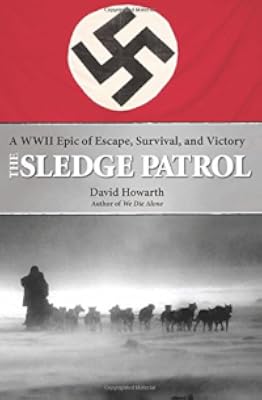




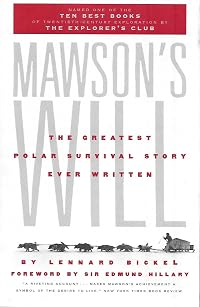
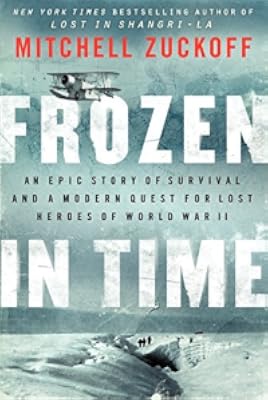





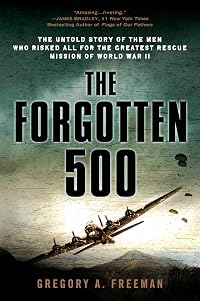
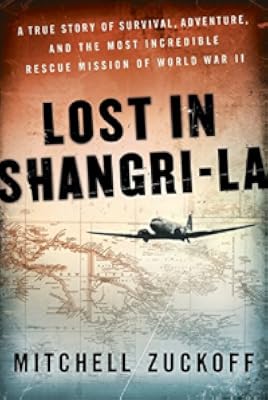

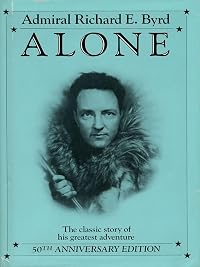


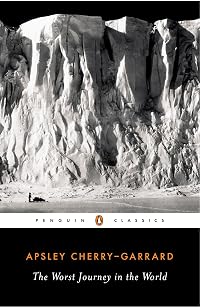
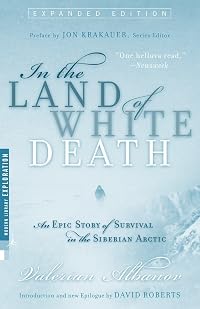





Member Recommendations
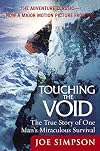
srdr Although this book is about mountain climbing rather than WW II, it is an equally gripping survival story.
Member Reviews
I first read of Jan Baalsrud's amazing World War II adventure in a March 2016 NY Times Magazine article. Haunted by the description of a failed attempt by 12 Norwegians sailing from Scotland to land in Nazi occupied Norway in order to sabotage German installations, I had to find the book that chronicled the lone survivor, Jan Baalsrud and his perilous journey to freedom. By turns horrifying, awe-inspiring, and suspenseful David Howarth meticulously introduces the reader to "ordinary" Norwegians, who despite certain death if discovered by the Nazis, aided Baalsrud over a nine week period and ultimately enabled him to escape to Sweden.
Baalsrud's physical and mental stamina despite overwhelming odds, and the stories of the many villagers show more who bravely assisted him, make for a spellbinding true story that displays the very best of human nature. This is a story I cannot forget. show less
Baalsrud's physical and mental stamina despite overwhelming odds, and the stories of the many villagers show more who bravely assisted him, make for a spellbinding true story that displays the very best of human nature. This is a story I cannot forget. show less
I read this excellent memoir on a transcontinental flight and couldn't put it down. The night I arrived at my destination, I stayed up to the wee hours finishing it. The author David Howarth ran a spy ring during WWII called the Shetland Bus, which ran spies from the Shetland Islands into occupied Norway. This book is derived from the story of one of those spies. Jan Baalstrud was a Norwegian, who had escaped the Germans and received special forces training in England. He and a few others were sent to the Norwegian coast by fishing vessel; their mission was to infiltrate inland, hook up with native resistance groups, and support them as much as possible. Unfortunately the group is betrayed shortly after their arrival and only Jan makes show more it off the beach alive. The story of his escape through the Norwegian Arctic is spellbinding. He faces hunger, unbearable cold, isolation, avalanches, snow blindness, frostbite, you name it. But thanks to the bravery and generosity of some individuals he meets along the way, he survives. His story is so incredible that the author takes pains to assure the reader of the verification process he went through in checking Jan's story. Sometimes truth is stranger than fiction. Highly recommended. show less
A quite incredible story of escape and survival – and one told extremely well by author David Howarth, who ran the wartime operation that send Jan Baalstrud into Nazi-occupied Norway in March 1943. Howarth provides good, clean, no-nonsense writing which is just what the story demands. It doesn't need superfluous detail or lyrical prosing: the tale is incredible enough on its own.
For Jan's story – first of escape from the Nazis after his clandestine mission goes wrong, leaving only himself of his team alive, and then of survival as he combats the elements of winter in inhospitable and inaccessible mountainous terrain – is truly incredible. I don't want to merely repeat in this review what Jan went through but the story – a true show more story, remember – gets more and more remarkable with every passing page. It is a mind-boggling feat of endurance, bravery and sheer bloody-mindedness that turns We Die Alone into a real page-turner. Jan knows the Germans' search for him "would gradually widen, like a ripple on a pond", and so, "at all costs, he must travel faster than the ripple" (pg. 52). Beyond the simply astonishing feats of mental strength and physical endurance, what was most impressed on me by Jan's plight was just how many variables can alter in a plan, and how many small, overlooked things can give you away in a hostile land: not only little tells that might alert the Germans but small mercies or aids that could be the difference between hope and despair, and indeed life and death, in the wilderness.
Aside from his own phenomenal strength of mind, Jan's successful escape was down in no small part to the ordinary Norwegians he encountered. From the simple "acts of shining charity" provided by ordinary fishermen and housewives he encounters – whether shelter, transport, a fire, a meal, or even just directions – to the more organized resistance movement which performs its own feats to haul Jan over mountains and through blizzards, everything that was done for Jan came at great personal risk. The Germans were, shall we say, not known for their clemency, and we develop through reading the book a real admiration for that quiet dignity and unassuming heroism that often ensures good wins out – in the long run – over evil.
At one point in the narrative (pg. 72), a 72-year-old fisherman rises in the dead of night to escort a stricken stranger – Jan – across a fjord in his rowboat. A storm is raging and the Germans are in pursuit. His wife is worried. "Now, don't worry," the old man replies calmly. "He must get across, you see. It's one of those things we mustn't talk about." If, as Howarth remarks of those few Norwegian quislings who were found wanting in the occupation, it is not for an Englishman to pass judgment on those who lived under the German yoke (pg. 71), it is certainly for us to express admiration for the vast majority who perform great deeds not because of profit or patriotism or even hot-blooded courage but simply because it is the decent thing to do, and the world would not be the same place if they didn't. Through the endurance of Jan and the sheer goodness of the people in the story, the author of We Die Alone proves that we do not die alone: we live, and it is because of the aid and kindness of others that we do so. show less
For Jan's story – first of escape from the Nazis after his clandestine mission goes wrong, leaving only himself of his team alive, and then of survival as he combats the elements of winter in inhospitable and inaccessible mountainous terrain – is truly incredible. I don't want to merely repeat in this review what Jan went through but the story – a true show more story, remember – gets more and more remarkable with every passing page. It is a mind-boggling feat of endurance, bravery and sheer bloody-mindedness that turns We Die Alone into a real page-turner. Jan knows the Germans' search for him "would gradually widen, like a ripple on a pond", and so, "at all costs, he must travel faster than the ripple" (pg. 52). Beyond the simply astonishing feats of mental strength and physical endurance, what was most impressed on me by Jan's plight was just how many variables can alter in a plan, and how many small, overlooked things can give you away in a hostile land: not only little tells that might alert the Germans but small mercies or aids that could be the difference between hope and despair, and indeed life and death, in the wilderness.
Aside from his own phenomenal strength of mind, Jan's successful escape was down in no small part to the ordinary Norwegians he encountered. From the simple "acts of shining charity" provided by ordinary fishermen and housewives he encounters – whether shelter, transport, a fire, a meal, or even just directions – to the more organized resistance movement which performs its own feats to haul Jan over mountains and through blizzards, everything that was done for Jan came at great personal risk. The Germans were, shall we say, not known for their clemency, and we develop through reading the book a real admiration for that quiet dignity and unassuming heroism that often ensures good wins out – in the long run – over evil.
At one point in the narrative (pg. 72), a 72-year-old fisherman rises in the dead of night to escort a stricken stranger – Jan – across a fjord in his rowboat. A storm is raging and the Germans are in pursuit. His wife is worried. "Now, don't worry," the old man replies calmly. "He must get across, you see. It's one of those things we mustn't talk about." If, as Howarth remarks of those few Norwegian quislings who were found wanting in the occupation, it is not for an Englishman to pass judgment on those who lived under the German yoke (pg. 71), it is certainly for us to express admiration for the vast majority who perform great deeds not because of profit or patriotism or even hot-blooded courage but simply because it is the decent thing to do, and the world would not be the same place if they didn't. Through the endurance of Jan and the sheer goodness of the people in the story, the author of We Die Alone proves that we do not die alone: we live, and it is because of the aid and kindness of others that we do so. show less
A Most Wanted Man
Read by: Stuart Langton
Length: 6 hrs and 42 mins
This is a true story of a Norwegian, Jan Baalsrud‘s attempt to escape the Nazi occupiers of his country as he travels alone from the Arctic to southern Norway and from there hopefully to neutral Sweden. He's been injured in a failed attack against the Nazi occupiers. The rest of his group was killed and he survived though injured.
Told in present tense in the third person, we follow Jan on his journey. The background is white, there are no markers to get bearings. He can’t see mountains till he is almost upon them, and then only knows only when he discovers that he climbing.
Are there Nazis following his trail? He’s a wanted man. His injuries increase and the frostbite show more is working from his toes up his legs. He manages to survive from his own perseverance and with the occasional help from sympathizers who he is able to contact but who cannot accompany him.
As well as the elements and the fear of being discovered by the Nazis, he fears the people he finds in the early part of his trek. Will they betray him to the Nazis? Is it fair to put them in a difficult position. Even if they are unafraid to help, what will happen to their families if they are captured? Jan is an honorable man.
As the book progresses we cannot imagine how Jan can possibly survive. His snow-blindness, his weeks alone unable to move because of his injuries, his hallucinations, his pain, his descent into madness.
I can’t even comment on the prose. I was so bound up in Jan’s struggle I could think of nothing else. And after completing the book I could not take to any other. It’s a compelling and gripping read, expertly executed. David Howarth manages to put us into 1940s Norway, into a landscape the likes of which is far from my own experience. I could imagine the fjords, avalanches and glaciers - words I’ve never really known the meaning of. I was there with Jan, in the bleak landscape of a Nazi Norway.
I highly recommend this book. show less
Read by: Stuart Langton
Length: 6 hrs and 42 mins
This is a true story of a Norwegian, Jan Baalsrud‘s attempt to escape the Nazi occupiers of his country as he travels alone from the Arctic to southern Norway and from there hopefully to neutral Sweden. He's been injured in a failed attack against the Nazi occupiers. The rest of his group was killed and he survived though injured.
Told in present tense in the third person, we follow Jan on his journey. The background is white, there are no markers to get bearings. He can’t see mountains till he is almost upon them, and then only knows only when he discovers that he climbing.
Are there Nazis following his trail? He’s a wanted man. His injuries increase and the frostbite show more is working from his toes up his legs. He manages to survive from his own perseverance and with the occasional help from sympathizers who he is able to contact but who cannot accompany him.
As well as the elements and the fear of being discovered by the Nazis, he fears the people he finds in the early part of his trek. Will they betray him to the Nazis? Is it fair to put them in a difficult position. Even if they are unafraid to help, what will happen to their families if they are captured? Jan is an honorable man.
As the book progresses we cannot imagine how Jan can possibly survive. His snow-blindness, his weeks alone unable to move because of his injuries, his hallucinations, his pain, his descent into madness.
I can’t even comment on the prose. I was so bound up in Jan’s struggle I could think of nothing else. And after completing the book I could not take to any other. It’s a compelling and gripping read, expertly executed. David Howarth manages to put us into 1940s Norway, into a landscape the likes of which is far from my own experience. I could imagine the fjords, avalanches and glaciers - words I’ve never really known the meaning of. I was there with Jan, in the bleak landscape of a Nazi Norway.
I highly recommend this book. show less
In the winter of 1943, a fishing trawler with 12 men—eight sailors and four commandos—landed at the coast of Northern Norway above the Arctic Circle with plans to start up a guerilla operation against the Nazi occupiers. They were betrayed by Quislings almost on the first day, the boat was attacked and sunk, and 11 of the men were killed.
Jan Baalsrud escaped just 100 yards ahead of the German troops chasing him, through sub-zero weather while soaking wet (he had to swim through ice-filled water twice that first night), with a bare foot (one toe shot off). These were the easy moments.
In the coming weeks, aided by the Norwegian farmers of this remote region, hunted by Germans, he made his way to neutral Sweden. Along the way, he show more endured severe frostbite, gangrene, an avalanche, a major concussion, repeated starvation, multiple blizzards, a self-performed amputation, being buried for days, abandonment on a mountain plateau (wet) for weeks.
The impact of this story is that it is non-fiction. In a work of fiction, this might not be believable even in a Dirk Pitt book. As history, about the only thing that might compare with it is Shackleton.
The book flows along quite quickly. About the only off-key note is the author's portrayal of the Sámi...or Lapps, as he calls them (most articles indicate that the Sámi consider the latter term derogatory). His descriptions are generally patronizing at best, offensive at times. Unfortunate, since two of the Sámi complete Baalsrud's rescue.
Howarth's writing falls short of inspirational but the tale is amazing and worth reading. show less
Jan Baalsrud escaped just 100 yards ahead of the German troops chasing him, through sub-zero weather while soaking wet (he had to swim through ice-filled water twice that first night), with a bare foot (one toe shot off). These were the easy moments.
In the coming weeks, aided by the Norwegian farmers of this remote region, hunted by Germans, he made his way to neutral Sweden. Along the way, he show more endured severe frostbite, gangrene, an avalanche, a major concussion, repeated starvation, multiple blizzards, a self-performed amputation, being buried for days, abandonment on a mountain plateau (wet) for weeks.
The impact of this story is that it is non-fiction. In a work of fiction, this might not be believable even in a Dirk Pitt book. As history, about the only thing that might compare with it is Shackleton.
The book flows along quite quickly. About the only off-key note is the author's portrayal of the Sámi...or Lapps, as he calls them (most articles indicate that the Sámi consider the latter term derogatory). His descriptions are generally patronizing at best, offensive at times. Unfortunate, since two of the Sámi complete Baalsrud's rescue.
Howarth's writing falls short of inspirational but the tale is amazing and worth reading. show less
In this clandestine spy-mission-gone-wrong, to say the protagonist had nine lives would be a bit of an understatement. As a matter of fact, I had to confirm with some outside sources that this non-fiction account of a WWII reconnaissance was actually true because this story is just absolutely unbelievable.
In 1943, a team of Norwegians are trained by British intelligence to take a fishing boat from the Shetland Islands to German-occupied Norway, where they will train the resistance. The mission is unsuccessful and all but one of the participants are killed or captured. The book documents the unlikely survival of Jan Baalsrud. He manages, with the help of many, completely selfless Norwegians from the lonely, rural Arctic North, to make show more his way across the frozen tundra that is Norway to freedom and safety in Sweden. The story of his journey is loaded with on the edge of your seat suspense as he fights off not only the Germans, who managed to shoot off the toes on one foot, but bone-chilling cold, snow blindness, and a 300 foot fall on a snowy plateau until he finally collapsed in a small cabin to the utter shock of the woman residing within. That’s when the brave villagers took it upon themselves to help this ex-patriot get to Sweden and safety. Before that happens, Baalsrud will spend a month outside in the elements, either in a cave or a paper hut after being hauled up the sheer cliffs from the village to the plateau. His survival is nothing short of unbelievable. Read it yourself for the thrill a minute ride and for the insight into a brave, selfless people under the yoke of Nazi occupation. Highly recommended. show less
In 1943, a team of Norwegians are trained by British intelligence to take a fishing boat from the Shetland Islands to German-occupied Norway, where they will train the resistance. The mission is unsuccessful and all but one of the participants are killed or captured. The book documents the unlikely survival of Jan Baalsrud. He manages, with the help of many, completely selfless Norwegians from the lonely, rural Arctic North, to make show more his way across the frozen tundra that is Norway to freedom and safety in Sweden. The story of his journey is loaded with on the edge of your seat suspense as he fights off not only the Germans, who managed to shoot off the toes on one foot, but bone-chilling cold, snow blindness, and a 300 foot fall on a snowy plateau until he finally collapsed in a small cabin to the utter shock of the woman residing within. That’s when the brave villagers took it upon themselves to help this ex-patriot get to Sweden and safety. Before that happens, Baalsrud will spend a month outside in the elements, either in a cave or a paper hut after being hauled up the sheer cliffs from the village to the plateau. His survival is nothing short of unbelievable. Read it yourself for the thrill a minute ride and for the insight into a brave, selfless people under the yoke of Nazi occupation. Highly recommended. show less
This true-life story of human endurance is genuinely gripping, a factual account which is as riveting as any fictionalised adventure tale. Every chapter rings with the echo of authenticity. It’s as grim and as gritty as any noir novel, but does ultimate justice to the inner strength of an indomitable human spirit.
We Die Alone is a detailed account of a military operation which went horribly wrong, back in WW2 when Norway was occupied by Nazi forces. A Norwegian resistance unit sneaks from the British Shetlands to the northern fjords, on a fishing boat stuffed to the gunwales with explosives and equipment. Yet before they can even land safely, everything goes horribly wrong.
And it’s here that the story really begins, with Jan, the show more surviving fighter, isolated in an utterly unfamiliar landscape, facing torture and execution if captured. He doesn’t know who he can trust; any locals he involves run the same risks as he does, and the weather, water and towering mountains stand between him and a possible safe haven in Sweden…
The writing is crisp, descriptive without being fussy, detailed enough to explain the situation without overwhelming the reader in acres of exposition. Half of the chapters end on a cliff-hanger – and that’s not simply through deft story-telling but because that’s how the actual events unravelled. Jan faced a seemingly insurmountable series of disasters – frostbite, septicaemia, starvation, avalanche, abandonment, being buried alive – yet somehow contrives not to die, not to sleep, not to be swallowed by the deep snowdrifts.
The story also reflects the bravery of the people who helped him, and of those who died during this operation. It’s a powerful reminder of the strength of the human spirit, told with subtlety and quite some style. How it hasn’t been made into a blockbuster movie is a total mystery.
9/10 show less
We Die Alone is a detailed account of a military operation which went horribly wrong, back in WW2 when Norway was occupied by Nazi forces. A Norwegian resistance unit sneaks from the British Shetlands to the northern fjords, on a fishing boat stuffed to the gunwales with explosives and equipment. Yet before they can even land safely, everything goes horribly wrong.
And it’s here that the story really begins, with Jan, the show more surviving fighter, isolated in an utterly unfamiliar landscape, facing torture and execution if captured. He doesn’t know who he can trust; any locals he involves run the same risks as he does, and the weather, water and towering mountains stand between him and a possible safe haven in Sweden…
The writing is crisp, descriptive without being fussy, detailed enough to explain the situation without overwhelming the reader in acres of exposition. Half of the chapters end on a cliff-hanger – and that’s not simply through deft story-telling but because that’s how the actual events unravelled. Jan faced a seemingly insurmountable series of disasters – frostbite, septicaemia, starvation, avalanche, abandonment, being buried alive – yet somehow contrives not to die, not to sleep, not to be swallowed by the deep snowdrifts.
The story also reflects the bravery of the people who helped him, and of those who died during this operation. It’s a powerful reminder of the strength of the human spirit, told with subtlety and quite some style. How it hasn’t been made into a blockbuster movie is a total mystery.
9/10 show less
Members
- Recently Added By
Lists

The Works of David Howarth
24 works; 1 member

Mustich's 1000 Books to Read Before You Die: A Life Changing List
1,001 works; 19 members

Books Read in 2023
5,638 works; 145 members

THE WAR ROOM
813 works; 24 members

War Literature
101 works; 19 members
Author Information

35+ Works 5,607 Members
Some Editions
Awards and Honors
Series
Belongs to Publisher Series
Work Relationships
Is contained in
Common Knowledge
- Canonical title*
- Ni liv
- Original title
- We Die Alone
- Alternate titles
- Escape Alone
- Original publication date
- 1955
- People/Characters
- Jan Baalsrud
- Important places
- Norway; Sweden
- Important events
- World War II (1939 | 1945); World War II, German Occupation of Norway (1940-04-09 | 1945-05-08)
- Related movies
- Ni liv (1957 | IMDb)
- Epigraph
- On mourra seul - Pascal, 1623-1662
- First words
- Even at the end of March, on the Arctic coast of northern Norway, there is no sign of spring.
- Last words
- (Click to show. Warning: May contain spoilers.)The other shouted and suddenly, like a flood released, the herd poured over the edge of the hill and down the steep slope towards the lake, the sledge rocking and careering down among them, snow flying from the pounding hoofs, rifle shots whining past and over, across the frozen beach, out in a mad stampede on to the slushy groaning ice and away full tilt towards the Swedish shore.
- Blurbers
- Ambrose, Stephen E.
- Original language
- English
- Disambiguation notice
- We die alone was later published as Escape Alone.
*Some information comes from Common Knowledge in other languages. Click "Edit" for more information.
Classifications
- Genres
- History, Nonfiction, General Nonfiction, Biography & Memoir
- DDC/MDS
- 940.547243 — History & geography History of Europe History of Europe 1918- Military history of World War II Prisoners of war; medical and social services Prisoner-of-War Camps German & Central European POW camps
- LCC
- D805 .N8 .W4 — History of Europe, Asia, Africa and Oceania History (General) World War II (1939-1945)
- BISAC
Statistics
- Members
- 1,209
- Popularity
- 20,549
- Reviews
- 46
- Rating
- (3.99)
- Languages
- 8 — English, Finnish, French, Norwegian (Bokmål), Norwegian, Portuguese, Spanish, Swedish
- Media
- Paper, Audiobook, Ebook
- ISBNs
- 34
- UPCs
- 1
- ASINs
- 37