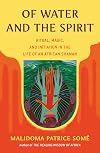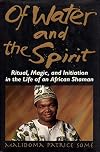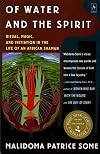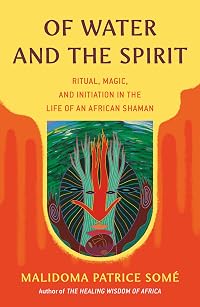
Of Water and the Spirit: Ritual, Magic and Initiation in the Life of an African Shaman (Compass)
by Malidoma Patrice Some
On This Page
Description
Born in West Africa in the early 1950s Some? was kidnapped at age four by a French Jesuit missionary to be trained as a priest, for the next 15 years enduring the harsh regimen of a seminary where his native language and tribal traditions were systematically suppressed. At age 20 he escaped, but when he returned to his Dugara people in Upper Volta (now Burkina Faso) they rejected him as an outsider. To reconnect with his native culture, Some? underwent a month-long initiation into shamanism show more during which he reports that he journeyed to the underworld, became a bird, then a porcupine and was buried alive. show lessTags
Recommendations





Member Reviews
"I still often suffered from being a man of two worlds", 9 November 2015
This review is from: Of Water And Spirit (Paperback)
Malidoma Some was born into a village in Burkina Faso when it was still under French rule. He describes his first four years, focussing particularly on his close relationship with his grandfather, an elder and shaman. As he recalls his grandfather's funeral - spirit voices, and the dead man walking - I thought perhaps these were the confused recollections of a small child.
At four, the author was 'stolen' by the local priest, and compelled to live in a Catholic boarding school. Forced to communicate in French, he soon forgot his native tongue. And Catholic dogma replaced tribal rites. But while he was persuaded by show more the religion, to the extent of wanting to become a priest, he was also repelled at the sexual and physical abuse he witnessed, and at the colonial attitudes towards the African people.
At twenty he ran back to his village; much of the book now tells of (parts of) the month-long initiation ceremony he underwent. And here the reader must decide for himself what to make of the author's otherworldly experiences, as he enters other dimensions, communes with spirits and much more. Was he drugged? hypnotized? Was it Satanism or is there really a way into other universes? The descriptions are very vivid and persuasive, and I never realized initiation rituals included all this. show less
This review is from: Of Water And Spirit (Paperback)
Malidoma Some was born into a village in Burkina Faso when it was still under French rule. He describes his first four years, focussing particularly on his close relationship with his grandfather, an elder and shaman. As he recalls his grandfather's funeral - spirit voices, and the dead man walking - I thought perhaps these were the confused recollections of a small child.
At four, the author was 'stolen' by the local priest, and compelled to live in a Catholic boarding school. Forced to communicate in French, he soon forgot his native tongue. And Catholic dogma replaced tribal rites. But while he was persuaded by show more the religion, to the extent of wanting to become a priest, he was also repelled at the sexual and physical abuse he witnessed, and at the colonial attitudes towards the African people.
At twenty he ran back to his village; much of the book now tells of (parts of) the month-long initiation ceremony he underwent. And here the reader must decide for himself what to make of the author's otherworldly experiences, as he enters other dimensions, communes with spirits and much more. Was he drugged? hypnotized? Was it Satanism or is there really a way into other universes? The descriptions are very vivid and persuasive, and I never realized initiation rituals included all this. show less
A renowned healer and shaman’s life-changing journey of discovery, healing, and wisdom
“Malidoma has kept faith with the ancestors and with his own heart. His journey is a shimmering ‘missing piece’ in the story of the earth.” —Alice Walker
When he was a young boy growing up in Burkina Faso, Malidoma Somé was taken from his village and brought to a Jesuit mission school, where he spent years being harshly indoctrinated in European ways of thought and worship. In this vivid and paradigm-shifting memoir, Malidoma recounts his journey home—and his initiation into the healing traditions of the Dagara culture, where the natural and supernatural blend together, and every person is encircled by family, community, and the wisdom of show more ancestors.
By turns humbling, harrowing, magical, and transcendent, Malidoma’s spiritual awakening imparted ancient wisdom that he would spend the rest of his life sharing with others around the world—as an antidote to alienation, a tool for self-transformation, and a bridge between cultures and worlds. Source: Publisher show less
“Malidoma has kept faith with the ancestors and with his own heart. His journey is a shimmering ‘missing piece’ in the story of the earth.” —Alice Walker
When he was a young boy growing up in Burkina Faso, Malidoma Somé was taken from his village and brought to a Jesuit mission school, where he spent years being harshly indoctrinated in European ways of thought and worship. In this vivid and paradigm-shifting memoir, Malidoma recounts his journey home—and his initiation into the healing traditions of the Dagara culture, where the natural and supernatural blend together, and every person is encircled by family, community, and the wisdom of show more ancestors.
By turns humbling, harrowing, magical, and transcendent, Malidoma’s spiritual awakening imparted ancient wisdom that he would spend the rest of his life sharing with others around the world—as an antidote to alienation, a tool for self-transformation, and a bridge between cultures and worlds. Source: Publisher show less
Burkina Faso (Upper Volta)
As a child, Somé was kidnapped by Jesuits, to be trained as a priest and used as an intermediary with his people. He escaped as an adult (after assaulting a teacher, he fled the Jesuit school) and returned to his village. There, he was out of place and unable to assume an adult role. He was both lacking in local knowledge and had been taught a different way to see the world. Much of the memoir recounts Somé's grueling initiation and transition to cultural adulthood. Even after initiation, however, Somé remains a man of two worlds, charged by his elders to bridge his culture and the Western world.
Like many memoirs and narratives from non-Western cultures, magic and symbolism abound. This is not how I show more understand the world and its workings, so it is interesting to read Somé's descriptions. He addresses the worldview differences, but I would have wished for more commentary on the contrasts. Also like many memoirs from countries affected by colonialism and war, the questions of identity, identification, and multiple cultures are pervasive, critical, and ultimately unanswerable. show less
As a child, Somé was kidnapped by Jesuits, to be trained as a priest and used as an intermediary with his people. He escaped as an adult (after assaulting a teacher, he fled the Jesuit school) and returned to his village. There, he was out of place and unable to assume an adult role. He was both lacking in local knowledge and had been taught a different way to see the world. Much of the memoir recounts Somé's grueling initiation and transition to cultural adulthood. Even after initiation, however, Somé remains a man of two worlds, charged by his elders to bridge his culture and the Western world.
Like many memoirs and narratives from non-Western cultures, magic and symbolism abound. This is not how I show more understand the world and its workings, so it is interesting to read Somé's descriptions. He addresses the worldview differences, but I would have wished for more commentary on the contrasts. Also like many memoirs from countries affected by colonialism and war, the questions of identity, identification, and multiple cultures are pervasive, critical, and ultimately unanswerable. show less
Maliodoma Patrice Some was born in a Dagara Village, however he was soon to be abducted to a Jesuit school, where he remained for the next fifteen years, being harshly indoctrinated into european ways of thought and worship. The story tells of his return to his people, his hard initiation back into those people, which lead to his desire to convey their knowledge to the world. Of Water and the Spirit is the result of that desire; it is a sharing of living African traditions, offered in compassion for those struggling with our contemporary crisis of the spirit.
Malidoma Patrice Some was born into a Dagara village in Burkina Faso in 1956. Hi s grandfather was a well respected elder and shaman. His father followed the Catholic teachings.
Although it is not clear if his father had arranged his ‘kidnapping’, when Malidoma was four he and other youngsters were seized by the Jesuits and removed to their orphanage where they were taught French, Latin, and European ways. Eventually after several years there, Malidoma was transferred to the Jesuit seminary. It was planned that he would become a native Jesuit priest; but after enduring years of what Malidoma called outright abuse, he escaped and made his way back to his village as a man of twenty.
By this time, he had missed all the boyhood show more initiations into Dagara manhood and had been thoroughly indoctrinated in the white man’s world. He met with great skepticism when he expressed interest in going through the Dagara initiation rites as the elders believed his intrinsic tribal spirit had already withdrawn and was replaced with a white man’s spirit. They believed it would be dangerous and perhaps impossible for him to complete the thirty day travels in the spirit world. Nevertheless, Some persisted and successfully completed the initiations.
The latter half of the book is a detailed account of his spiritual journeys during the initiation. Visiting other realms during spiritual journeys has never been a favorite topic of mine, ever since I read the Carlos Castenada books many decades ago. Others may find these journeys the most intriguing parts of the book.
Recommended for those with an interest in French Colonialism and the Jesuits in Africa or those interested in alternative spiritual journeys and African shamanism.
Two quotes from the book : “One of my greatest problems was that the things I talk about here did not happen in English; they happened in a language that has very different mindset about reality.” P 2
“In the culture of my people, the Dagara, we have no word for the supernatural. The closest we come to this concept is Yielbongura, “the thing that knowledge can’t eat”. " P 8 show less
Although it is not clear if his father had arranged his ‘kidnapping’, when Malidoma was four he and other youngsters were seized by the Jesuits and removed to their orphanage where they were taught French, Latin, and European ways. Eventually after several years there, Malidoma was transferred to the Jesuit seminary. It was planned that he would become a native Jesuit priest; but after enduring years of what Malidoma called outright abuse, he escaped and made his way back to his village as a man of twenty.
By this time, he had missed all the boyhood show more initiations into Dagara manhood and had been thoroughly indoctrinated in the white man’s world. He met with great skepticism when he expressed interest in going through the Dagara initiation rites as the elders believed his intrinsic tribal spirit had already withdrawn and was replaced with a white man’s spirit. They believed it would be dangerous and perhaps impossible for him to complete the thirty day travels in the spirit world. Nevertheless, Some persisted and successfully completed the initiations.
The latter half of the book is a detailed account of his spiritual journeys during the initiation. Visiting other realms during spiritual journeys has never been a favorite topic of mine, ever since I read the Carlos Castenada books many decades ago. Others may find these journeys the most intriguing parts of the book.
Recommended for those with an interest in French Colonialism and the Jesuits in Africa or those interested in alternative spiritual journeys and African shamanism.
Two quotes from the book : “One of my greatest problems was that the things I talk about here did not happen in English; they happened in a language that has very different mindset about reality.” P 2
“In the culture of my people, the Dagara, we have no word for the supernatural. The closest we come to this concept is Yielbongura, “the thing that knowledge can’t eat”. " P 8 show less
Ratings
Members
- Recently Added By
Lists

Burkina Faso
13 works; 1 member
Author Information

9+ Works 800 Members
Malidoma Patrice Some is from Burkina Faso, West Africa. In his native language, Malidoma means "Be friends with the stranger." A gifted medicine man of the Dagara tribe, he holds three master's degrees and two doctorates, from the Sorbonne and Brandeis.
Common Knowledge
- Original publication date
- 1994
- People/Characters
- Malidoma Patrice Some
- Important places
- Burkina Faso
- First words
- The story I am going to tell comes from a place deep inside of myself, a place that perceives all that I have irremediably lost and, perhaps, what gain there is behind the loss.
- Quotations
- One of my greatest problems was that the things I talk about here did not happen in English; they happened in a language that has very different mindset about reality. P 2
In the culture of my people, the Dagara, we have no word for the supernatural. The closest we come to this concept is Yielbongura, “the thing that knowledge can't eat”. P 8 - Last words
- (Click to show. Warning: May contain spoilers.)An entire culture was going abroad to be swallowed.
Classifications
- Genres
- Nonfiction, Religion & Spirituality, Biography & Memoir, General Nonfiction
- DDC/MDS
- 291 — Religion Other religions [Formerly: General Religious Topics]
- LCC
- DT555.45 .D35 .S667 — History of Europe, Asia, Africa and Oceania Africa History of Africa West Africa. West Coast French West Africa. French Sahara. West Sahara. Burkina Faso. Upper Volta Ethnography
- BISAC
Statistics
- Members
- 413
- Popularity
- 75,189
- Reviews
- 6
- Rating
- (4.21)
- Languages
- English, German
- Media
- Paper, Audiobook
- ISBNs
- 6
- ASINs
- 6