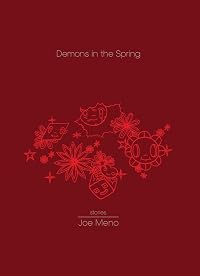
Demons in the Spring
by Joe Meno
On This Page
Description
New paperback edition; twenty artists illustrate twenty stories from the best-selling author of Hairstyles of the Damned.
Tags
Recommendations







Member Reviews
I have sort of a thing about fiction author Joe Meno. Years and years ago, a friend gave me his short story collection Bluebirds Used to Croon in the Choir, and I loved it (and much later, after a reread, reviewed it here). On the basis of my liking that book, I more recently read his novel The Great Perhaps, which I liked much less (reviewed here). Meno for me is much like Richard Powers, in that I think there's a lot of potential there but he fails to live up to it, so far, more than he lives up to it. Having recently read and not much liked Powers's Gain, I'm on the brink of giving up on him. After reading the first few stories of Meno's collection Demons in the Spring, I began to fear I had reached the same breaking point with his show more work. The jury's still out.
Meno's short stories are quirky, often outlandish, and I like that. But in this collection, they seem very uneven. Some of the stories seemed half finished and some simply not good. I felt at times as if I was reading unrevised workshop material, and I occasionally thought Meno was doing the cutesy, quirky thing without the literary punch that earns you the right to play such games. These stories I found myself reading hurriedly, just hoping to get to the next (and hoping it would be a better story).
But there were some stories that I liked, some of them very much. As in Bluebirds, Meno writes often of loneliness, of people just trying to peer through the murk of their alienation and make a connection with somebody. Among them, we meet in "Miniature Elephants are Popular" the sad man made happy at last by the possession of a tiny elephant whom, for the sake of helping another person, he drives to a bad end. Here Meno may pull a bit too much of the cutesy-pie business, but ultimately the story redeems it.
In "I Want the Quiet Moments of a Party Girl," we meet a not-terribly-likable couple who endure a tragedy and find a way through it. It's a rare dip for Meno into something resembling realism, and he does it pretty well. It occurs to me only now that he ends the story in the way certain types of thematically similar movies that make me want to wretch tend to end, but here, with these characters, it seemed a good ending.
"The Architecture of the Moon" is a fanciful piece in which all nighttime light (including that produced by the moon and stars) is extinguished, the city reconfigures itself at random, and people wander around lost at night. The main character of the story speaks with his wandering father on the phone nightly, often trying to guide him homeward. It's easy enough to read this as a story about Alzheimer's and a son working to shepherd an afflicted parent through the confusing mess of it all, though it could also just be a fanciful story. There's a simple tenderness and innocence about it that I found very appealing.
In "The Unabomber and My Brother," Meno treats us to an unlikely juxtaposition of his burn-out brother and the Unabomber. It's another story that has a soft, unexpected landing at the end, and I thought the Unabomber tie-in and the way in which Meno handles an emotional finish in a weird emotional-and-yet-still-detached way was pretty nice.
It's hard to read "Oceanland" without hearing echoes of George Saunders's various stories about theme parks in which he depicts sorrow among the shabby ruins of tourist destinations designed to -- and of course failing horribly to -- provide pleasure. Saunders does it better, but I thought this one was ultimately pretty satisfying.
Until I read the last line or two of "Iceland Today," I wondered what the point was. It's a funny, fictitious history of Iceland in which we learn all sorts of zany facts. It's the kind of little sidebar I'd expect to read nestled in almost as a sort of set piece within one of the sorts of sprawling encyclopedic novels I tend to be fond of (as, e.g., a student term paper). But however much I chuckled while reading it, I couldn't quite figure out why Meno had written the thing or put it in a collection instead of on a blog. He punches you in the gut with the point at the very end of the piece, and I'm ambivalent about how he handled it. This story I regard as a curiosity, neither exactly a failure nor exactly a success.
Meno finishes strong with "Children Are the Only Ones Who Blush," which has sort of a Juno vibe to it. It's easy enough to envision the main character played on the screen by the ever-baffled, eager-to-please, neurotic screw-up type best given life in recent years (and in Juno) by Michael Cera. This story manages to be both delightful and sort of sad, which I suspect is pretty hard to pull off.
The stories I've not commented on here generally left me cold or frustrated.
I made a note at one point that Meno dwells a lot in this collection on architecture and city-planning type topics. We also see action at several art schools, and if ever there was a collection about family members betraying or disappointing one another, this is it (though we do also see the occasional redemption). Of the collection's title I can make little sense, though the wry dual-meaning (are the demons in the season or in the water?) I suppose is cute. Each story had accompanying illustrations by a different artist (hence, perhaps, the preoccupation with art schools, though the artists Meno portrays are almost all wretched folk), and some portion of the proceeds from sales of the book is being donated to 826Chicago, a branch of the student writing outreach organization Dave Eggers founded.
On the basis of this book, I'm still a little unsure how I feel about Meno's work. I loved Bluebirds so much that the two things I've since read and found at best uneven have left me leery. Maybe he wrote just the one outstanding book. Do I dare risk the disappointment of buying others and confirming that maybe to be true (as, so far, I seem to have done with Powers)? show less
Meno's short stories are quirky, often outlandish, and I like that. But in this collection, they seem very uneven. Some of the stories seemed half finished and some simply not good. I felt at times as if I was reading unrevised workshop material, and I occasionally thought Meno was doing the cutesy, quirky thing without the literary punch that earns you the right to play such games. These stories I found myself reading hurriedly, just hoping to get to the next (and hoping it would be a better story).
But there were some stories that I liked, some of them very much. As in Bluebirds, Meno writes often of loneliness, of people just trying to peer through the murk of their alienation and make a connection with somebody. Among them, we meet in "Miniature Elephants are Popular" the sad man made happy at last by the possession of a tiny elephant whom, for the sake of helping another person, he drives to a bad end. Here Meno may pull a bit too much of the cutesy-pie business, but ultimately the story redeems it.
In "I Want the Quiet Moments of a Party Girl," we meet a not-terribly-likable couple who endure a tragedy and find a way through it. It's a rare dip for Meno into something resembling realism, and he does it pretty well. It occurs to me only now that he ends the story in the way certain types of thematically similar movies that make me want to wretch tend to end, but here, with these characters, it seemed a good ending.
"The Architecture of the Moon" is a fanciful piece in which all nighttime light (including that produced by the moon and stars) is extinguished, the city reconfigures itself at random, and people wander around lost at night. The main character of the story speaks with his wandering father on the phone nightly, often trying to guide him homeward. It's easy enough to read this as a story about Alzheimer's and a son working to shepherd an afflicted parent through the confusing mess of it all, though it could also just be a fanciful story. There's a simple tenderness and innocence about it that I found very appealing.
In "The Unabomber and My Brother," Meno treats us to an unlikely juxtaposition of his burn-out brother and the Unabomber. It's another story that has a soft, unexpected landing at the end, and I thought the Unabomber tie-in and the way in which Meno handles an emotional finish in a weird emotional-and-yet-still-detached way was pretty nice.
It's hard to read "Oceanland" without hearing echoes of George Saunders's various stories about theme parks in which he depicts sorrow among the shabby ruins of tourist destinations designed to -- and of course failing horribly to -- provide pleasure. Saunders does it better, but I thought this one was ultimately pretty satisfying.
Until I read the last line or two of "Iceland Today," I wondered what the point was. It's a funny, fictitious history of Iceland in which we learn all sorts of zany facts. It's the kind of little sidebar I'd expect to read nestled in almost as a sort of set piece within one of the sorts of sprawling encyclopedic novels I tend to be fond of (as, e.g., a student term paper). But however much I chuckled while reading it, I couldn't quite figure out why Meno had written the thing or put it in a collection instead of on a blog. He punches you in the gut with the point at the very end of the piece, and I'm ambivalent about how he handled it. This story I regard as a curiosity, neither exactly a failure nor exactly a success.
Meno finishes strong with "Children Are the Only Ones Who Blush," which has sort of a Juno vibe to it. It's easy enough to envision the main character played on the screen by the ever-baffled, eager-to-please, neurotic screw-up type best given life in recent years (and in Juno) by Michael Cera. This story manages to be both delightful and sort of sad, which I suspect is pretty hard to pull off.
The stories I've not commented on here generally left me cold or frustrated.
I made a note at one point that Meno dwells a lot in this collection on architecture and city-planning type topics. We also see action at several art schools, and if ever there was a collection about family members betraying or disappointing one another, this is it (though we do also see the occasional redemption). Of the collection's title I can make little sense, though the wry dual-meaning (are the demons in the season or in the water?) I suppose is cute. Each story had accompanying illustrations by a different artist (hence, perhaps, the preoccupation with art schools, though the artists Meno portrays are almost all wretched folk), and some portion of the proceeds from sales of the book is being donated to 826Chicago, a branch of the student writing outreach organization Dave Eggers founded.
On the basis of this book, I'm still a little unsure how I feel about Meno's work. I loved Bluebirds so much that the two things I've since read and found at best uneven have left me leery. Maybe he wrote just the one outstanding book. Do I dare risk the disappointment of buying others and confirming that maybe to be true (as, so far, I seem to have done with Powers)? show less
All it took was to see the spine of this beautifully crafted book of short stories on the library shelf and I was sold. Picking it up and seeing its beautiful design confirmed that is was something special. Hoping the writer was up to the challenge I checked it out and took it home. He did. The tempo and of his style reminded me of the Band King Missile, and the unique characters stay with you long after the book has been closed.
I never guessed that I would love a book as sad as this one. With the exception of the first two, I really liked Joe Meno's short, weird, dreamlike stories . Meno has a knack with creating compelling characters that get stuck in my head [ full review ]
I can no longer say "I'm not really a fan of short stories but..." I've just read too many great stories lately for that statement to apply.
I absolutely loved this book. My favorite stories were The Unabomber and My Brother and Art School is Boring So, but honestly most of them were fantastic.
I absolutely loved this book. My favorite stories were The Unabomber and My Brother and Art School is Boring So, but honestly most of them were fantastic.
I've been skimming through this book again lately, and I still love Meno's style.
Miniature Elephants Are Popular is one of the saddest things I've read. As sad even as that episode of Futurama with Fry's dog.
Miniature Elephants Are Popular is one of the saddest things I've read. As sad even as that episode of Futurama with Fry's dog.
a collection of short stories on subjects like miscarriage, tumors with building, factories, air ports, and pollution, the loss of the moon and then all lighting at night...great reading
(Reprinted from the Chicago Center for Literature and Photography [cclapcenter.com]. I am the original author of this essay, as well as the owner of CCLaP; it is not being reprinted illegally.)
Earlier this year I was asked by our pals at Akashic Books to contribute a review of a single short story as a promotional project for Joe Meno's 2008 collection Demons in the Spring, recently reissued in paperback form as a fundraiser for the very worthy 826CHICAGO. And that garnered me a review copy of the entire book, which is why I thought I'd get a review of the entire book posted before the end of the year as well, although regular readers can of course already see the problem; that since I'm an unusually analytical reviewer, I have a hard show more time coming up with much to say about story collections, which to me always seem to consist of some pieces that are great, some that are terrible, and none long enough for me to really sit and sink my teeth into. So instead this is mostly a reminder simply that the book exists, gorgeously illustrated by a series of hipster artists like Charles Burns, Ivan Brunetti, Jay Ryan and Archer Prewitt, and that the profits go to a great organization that deserves your time and money. I'm giving it the standard score I give all story collections here, although will give you ample warning that the quality of individual pieces are all over the board.
Out of 10: 7.5 show less
Earlier this year I was asked by our pals at Akashic Books to contribute a review of a single short story as a promotional project for Joe Meno's 2008 collection Demons in the Spring, recently reissued in paperback form as a fundraiser for the very worthy 826CHICAGO. And that garnered me a review copy of the entire book, which is why I thought I'd get a review of the entire book posted before the end of the year as well, although regular readers can of course already see the problem; that since I'm an unusually analytical reviewer, I have a hard show more time coming up with much to say about story collections, which to me always seem to consist of some pieces that are great, some that are terrible, and none long enough for me to really sit and sink my teeth into. So instead this is mostly a reminder simply that the book exists, gorgeously illustrated by a series of hipster artists like Charles Burns, Ivan Brunetti, Jay Ryan and Archer Prewitt, and that the profits go to a great organization that deserves your time and money. I'm giving it the standard score I give all story collections here, although will give you ample warning that the quality of individual pieces are all over the board.
Out of 10: 7.5 show less
Members
- Recently Added By
Author Information

18+ Works 2,680 Members
Awards and Honors
Awards
Classifications
Statistics
- Members
- 123
- Popularity
- 266,709
- Reviews
- 9
- Rating
- (3.85)
- Languages
- English
- Media
- Paper, Ebook
- ISBNs
- 3
- ASINs
- 1