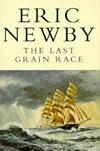
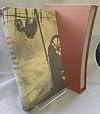
The Last Grain Race
by Eric Newby
On This Page
Description
An engaging and informative first-hand account of the last 'grain race' of maritime history, from respected travel writer Eric Newby. In 1939, a young Eric Newby - later renowned as a travel writer of exceptional talent - set sail aboard Moshulu, the largest sailing ship still employed in the transportation of grain from Australia to Europe. Every year from 1921 to 1939, the vessels involved in the grain trade would strive to find the shortest, fastest passage home - 'the grain race' - in show more the face of turbulent seas, atrocious weather conditions and hard graft. First published in 1956, 'The Last Grain Race', featuring many photographs from the author's personal collection, celebrates both the spirit of adventure and the thrill of sailing on the high seas. Newby's first-hand account - engaging and informative, with frequent bursts of humour and witty observations from both above and below deck - chronicles this classic sailing voyage of the Twenties and Thirties, and records the last grain race of maritime history. show lessTags
Recommendations








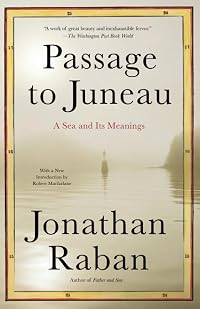



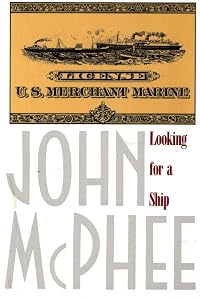
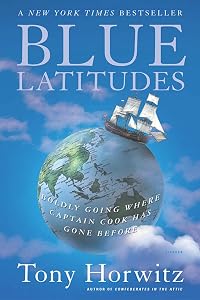


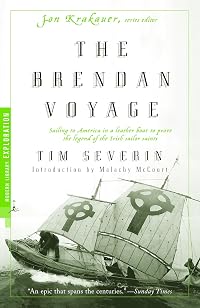
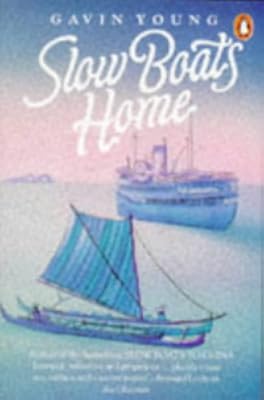


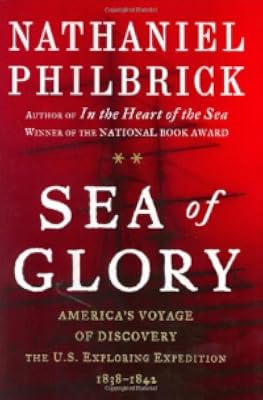


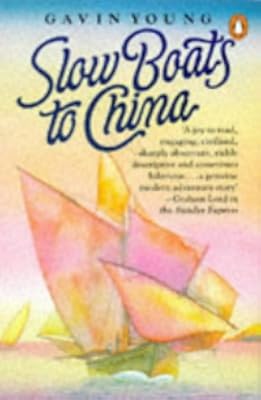


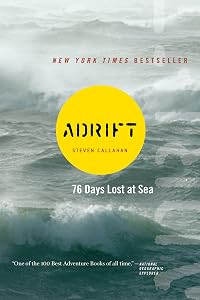
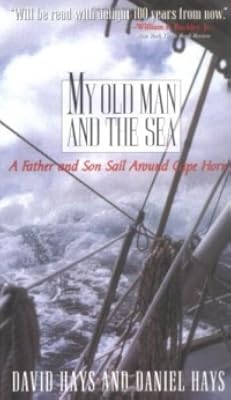
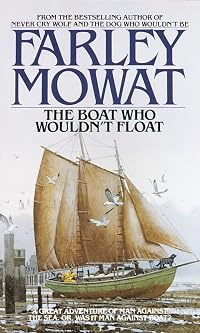


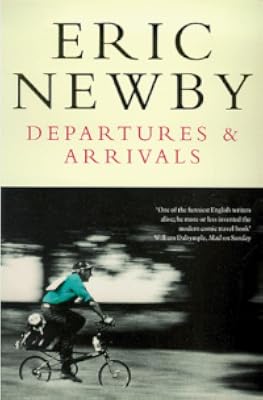


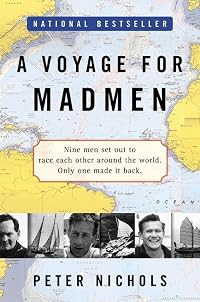



Member Recommendations
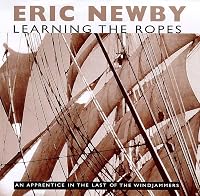
DuncanHill "Learning the Ropes" contains the photographs taken by Newby on the voyage which he wrote up as "The Last Grain Race". The two books are natural companions.
20
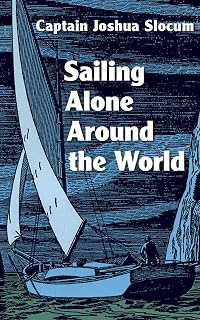
John_Vaughan Same wanderings but under sail.

by anonymous user

by anonymous user

John_Vaughan Two famous authors and two tall Ships
John_Vaughan Another of the greatest invention of man sails away


thorold Annette Brock Davis and Eric Newby both served as apprentices on Swedish/Finnish sailing ships running between Europe and Australia in the thirties. EN is the better writer, but ABD has the unusual perspective of a woman in a "man's job".

Member Reviews
Another one of this author’s books that did not last nearly long enough – why oh why was Eric not as wordy as say Norman Sherry, or Simon Schama!
Having gone to sea just before my sixteenth birthday, and arrived for the first time in America nine weeks later, I can attest the truth of this account, not the sailing though as by then those beauties of the seas were rarely seen at all. Eric is a strapping eighteen and … perhaps fearing that his first ship, on a world circumnavigation, in a four masted barque would not be challenging enough … he joins a Finnish ship with no knowledge of any of the languages the orders were issued in by his Swedish, Finnish and other polyglot officers. He joins with a wildly inappropriate and insecure show more Louis Vuitton “folio” sea-chest, is sent immediately up the main-mast to the very truck and trades nicknames as he acquires skills and acceptance, from ”Kossuri” an aristocratic derision to match his trunk, to a more respectful "Strongbody” after the usual first-trip fist fight, that he won.
The trip turns out to be (1938) the last of the ‘grain races’ from Australia back to Europe and Moshulu sails magnificently enough to actually win – through storms of force 8 and 9 to near hurricanes. He is thrown onto the deck when “she ships them green” and nearly, more fatally, falls from the top mast when furling.
On his first working day he drops a hammer over the side and his pay is docked for the replacement cost. I was once washed off the flying bridge and onto the well-deck in a gale, surfacing from the tons of green, cold water to find myself in the scuppers hanging on with everything – teeth included. My pay was subsequently docked too – I had let go the coffee pot I was carrying, and it joined Eric’s hammer.
Yet the author is wistful in his goodbyes to seamanship, “I look back to my time in her with great pleasure”, perhaps feeling, like me and Conrad, who wrote in Youth - “Wasn’t that he best time when we were young at sea?” show less
Having gone to sea just before my sixteenth birthday, and arrived for the first time in America nine weeks later, I can attest the truth of this account, not the sailing though as by then those beauties of the seas were rarely seen at all. Eric is a strapping eighteen and … perhaps fearing that his first ship, on a world circumnavigation, in a four masted barque would not be challenging enough … he joins a Finnish ship with no knowledge of any of the languages the orders were issued in by his Swedish, Finnish and other polyglot officers. He joins with a wildly inappropriate and insecure show more Louis Vuitton “folio” sea-chest, is sent immediately up the main-mast to the very truck and trades nicknames as he acquires skills and acceptance, from ”Kossuri” an aristocratic derision to match his trunk, to a more respectful "Strongbody” after the usual first-trip fist fight, that he won.
The trip turns out to be (1938) the last of the ‘grain races’ from Australia back to Europe and Moshulu sails magnificently enough to actually win – through storms of force 8 and 9 to near hurricanes. He is thrown onto the deck when “she ships them green” and nearly, more fatally, falls from the top mast when furling.
On his first working day he drops a hammer over the side and his pay is docked for the replacement cost. I was once washed off the flying bridge and onto the well-deck in a gale, surfacing from the tons of green, cold water to find myself in the scuppers hanging on with everything – teeth included. My pay was subsequently docked too – I had let go the coffee pot I was carrying, and it joined Eric’s hammer.
Yet the author is wistful in his goodbyes to seamanship, “I look back to my time in her with great pleasure”, perhaps feeling, like me and Conrad, who wrote in Youth - “Wasn’t that he best time when we were young at sea?” show less
Absorbing, first person narrative of a round trip on a four masted barque, from Ireland to Australia. In many ways a grim tale as the Author, as a junior crew member, obviously worked extremely hard in often treacherous conditions, with basic rations and living in unappealing and often squalid conditions. Still, on can only admire the grit and determination that kept the whole enterprise under way, on what turned out to be the last 'race' to bring the first grain of the season from Australia, in 1938-39. A window on a vanished world.
This is a delightful travel adventure with details of the sort of voyages that are no longer. Yet the young Eric Newby, fresh from a job in the ad business, makes the details come alive with enthusiasm and panache. A great book for lovers of the sea and any who relish a great adventure.
I have had a Folio Society edition sitting in my TBR pile for some years, but have not got around to reading it until recently. I was prompted to pick it up and read by a very favourable review by David Ross of a new reprint that appeared in the Weekend Australian newspaper for the weekend of 21-22 May 2022.
The review is very fair and I agree with its conclusion: this is not a dry piece of travel writing but rather one written by (according to Ross) 'surely one of the best travel writers, with a flair for the foul, able to recount trips at length long after, and willing to poke fun at himself and everyone else.'
What I had not realised when I had originally purchased it, is that this is not Newby writing of this piece of history as a show more third party, but as a participant. And what I also did not realise was that these journeys by sail only vessels, conveying nearly 5000 t of grain from Australia to Europe continued up to the outbreak of WWII, the vessels having first sailed under ballast from Europe in the first place to South Australia.
That Newby participated in 1938- 39 starting as an 18 year old (he was not the only one, some younger) with no practical experience, as the only Englishman on a vessel occupied by many other nationalities, and with the 'official' language on the vessel being Swedish, makes it all the remarkable, as is that they did not lose anyone overboard or to other dangers.
I am not a sailor but the technical language is not a problem; nor is the almost pidgin used as between the 28 or so members of the crew. There are 2 (small) sections as to more technical information which Newby helpfully highlights may be skipped if of not of interest to particular readers, but they are short and easy to read - even if not easy to remember by a non sailor, and certainly not easily recalled by a novice when, on Newby's first day on board, is sent some 198 feet above the keel of the vessel, with only ropes, lines and slippery masts to cling to. That was when the vessel was moored alongside the pier whilst being prepared for its voyage to South Australia. It was much worse during the voyage, when such work was undertaken in high winds, with the vessel bucking around as large if not rogue waves did their best to throw bodies off into the abyss.
That Newby learns to realise (pg 70-71) ' Crossing the midships deck to the leeward of the Captain on our way aft to brace the yards, touching our forelocks to him as we went, we were no longer in the twentieth century at all. Being told to go aloft and make up that gasket on the mizzen royal and look alive, we were a hundred years out of our time.'
Much of the book is very amusing. The description of the food available (pg 79-82) cannot be true in all details! As are the depiction of the many misunderstandings between the members of the crew as to all and sundry.
Newby visited Adelaide and had some not very fond memories!.
Newby had already decided to not remain with the vessel (or similar) at the end of the voyage, but one wonders whether that was at least in part due to the outbreak of WWII and his almost immediate enlisting. Apparently there are other books by Newby which address these amongst other adventures. Based on this read alone I will be having a look at those further works.
In the interim, I recommend this volume to anyone with even a half interest in sailing or voyages in this period, or as to what the transition from one tradition to another looks like, or simply a humorous tale as to the interactions between a random group of people thrown together in difficult circumstances.
Big Ship
28 May 2022 show less
The review is very fair and I agree with its conclusion: this is not a dry piece of travel writing but rather one written by (according to Ross) 'surely one of the best travel writers, with a flair for the foul, able to recount trips at length long after, and willing to poke fun at himself and everyone else.'
What I had not realised when I had originally purchased it, is that this is not Newby writing of this piece of history as a show more third party, but as a participant. And what I also did not realise was that these journeys by sail only vessels, conveying nearly 5000 t of grain from Australia to Europe continued up to the outbreak of WWII, the vessels having first sailed under ballast from Europe in the first place to South Australia.
That Newby participated in 1938- 39 starting as an 18 year old (he was not the only one, some younger) with no practical experience, as the only Englishman on a vessel occupied by many other nationalities, and with the 'official' language on the vessel being Swedish, makes it all the remarkable, as is that they did not lose anyone overboard or to other dangers.
I am not a sailor but the technical language is not a problem; nor is the almost pidgin used as between the 28 or so members of the crew. There are 2 (small) sections as to more technical information which Newby helpfully highlights may be skipped if of not of interest to particular readers, but they are short and easy to read - even if not easy to remember by a non sailor, and certainly not easily recalled by a novice when, on Newby's first day on board, is sent some 198 feet above the keel of the vessel, with only ropes, lines and slippery masts to cling to. That was when the vessel was moored alongside the pier whilst being prepared for its voyage to South Australia. It was much worse during the voyage, when such work was undertaken in high winds, with the vessel bucking around as large if not rogue waves did their best to throw bodies off into the abyss.
That Newby learns to realise (pg 70-71) ' Crossing the midships deck to the leeward of the Captain on our way aft to brace the yards, touching our forelocks to him as we went, we were no longer in the twentieth century at all. Being told to go aloft and make up that gasket on the mizzen royal and look alive, we were a hundred years out of our time.'
Much of the book is very amusing. The description of the food available (pg 79-82) cannot be true in all details! As are the depiction of the many misunderstandings between the members of the crew as to all and sundry.
Newby visited Adelaide and had some not very fond memories!.
Newby had already decided to not remain with the vessel (or similar) at the end of the voyage, but one wonders whether that was at least in part due to the outbreak of WWII and his almost immediate enlisting. Apparently there are other books by Newby which address these amongst other adventures. Based on this read alone I will be having a look at those further works.
In the interim, I recommend this volume to anyone with even a half interest in sailing or voyages in this period, or as to what the transition from one tradition to another looks like, or simply a humorous tale as to the interactions between a random group of people thrown together in difficult circumstances.
Big Ship
28 May 2022 show less
A comic masterpiece that can be enjoyed by readers with no interest in the subject, - if this book doesn't make you laugh often, you're dead (or Finnish). But the title is a misnomer; it should have been something along with: "The adventures of an English ad-man in a real sailing ship full of completely crazy Finns." It’s a first-tripper-voyage where everything - for natural reasons - seems doubly strange, that is: CRAZY. In short: as a portrait of life at sea I don't give it that many points, but as literature it’s heartily recommended!
The writing itself is reason enough to pick up this wonderful account. And that account records the end of an important maritime era, the age of working windjammers. The Lonely Planet edition I read seems to have been set from a prior edition using optical character recognition; there are a number of odd typographical errors. Only the original editions have photographs, so one gets additional pleasure reading this book alongside Newby's 1999 "Learning the Ropes", an album of photographs of the voyage and the crew, some of whom are identified.
Outstanding coming of age tale from the last moments of the age of sail, just as the Second World War was about to break out. Newby signed up almost straight from school as an apprentice on a Baltic 4 masted sailing ship which travelled from Belfast out to Australia to bring back a harvest of grain. He describes an incredibly hard and dangerous life for the sailors as well as the isolation of the voyages that kept them months at sea.
Members
- Recently Added By
Lists

Top Five Books of 2016
795 works; 229 members

Folio Society
831 works; 53 members

A Good Read (Radio 4)
287 works; 1 member
Author Information

28+ Works 6,350 Members
Eric Newby is the author of many books. As a boy, his interest in travel was piqued by the book Children's Colour Book of Lands and People, with its photos and descriptions of exotic places to which he dreamed of traveling one day. When not traveling, he makes his home in Dorset, England, with his wife, Wanda
Series
Belongs to Publisher Series
Work Relationships
Has as a reference guide/companion
Common Knowledge
- Canonical title*
- De laatste graanrace : zijn grootse avontuur tijdens de nadagen van de zeilvaart
- Original title
- The Last Grain Race
- Original publication date
- 1956
- People/Characters
- Eric Newby
- Original language
- English
- Disambiguation notice
- Wikipedia page.
*Some information comes from Common Knowledge in other languages. Click "Edit" for more information.
Classifications
- Genres
- Travel, Nonfiction, Biography & Memoir, General Nonfiction
- DDC/MDS
- 910.45 — History & geography Geography & travel modified standard subdivisions of Geography and travel Pirates & Shipwrecks Ocean voyages, pirates
- LCC
- G540 .N46 — Geography, Anthropology and Recreation Geography (General) Seafaring life, ocean travel, etc.
- BISAC
Statistics
- Members
- 543
- Popularity
- 54,905
- Reviews
- 10
- Rating
- (3.94)
- Languages
- 7 — Czech, Dutch, English, Finnish, German, Italian, Swedish
- Media
- Paper, Audiobook, Ebook
- ISBNs
- 20
- ASINs
- 19