
Two Years Before the Mast
by Richard Henry Dana
On This Page
Description
After a bout with the measles that left his vision impaired, Harvard undergrad Richard Henry Dana signed up for a two-year engagement as a sailor, thinking that the fresh sea air might improve his vision. The diary that Dana kept during his stint on the open sea formed the basis for this wildly popular memoir, which was later made into a movie. A must-read for fans of rip-roaring nautical tales or social history buffs.Tags
Recommendations




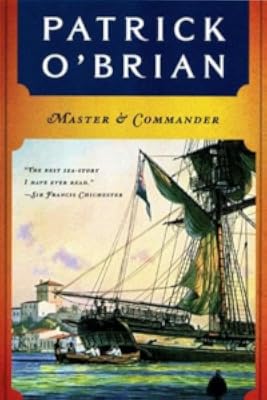


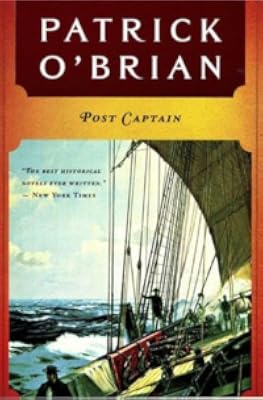
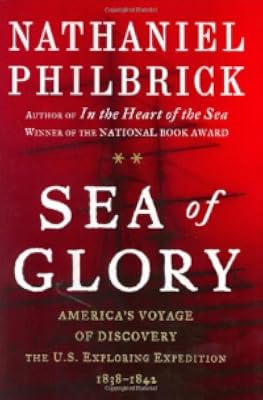

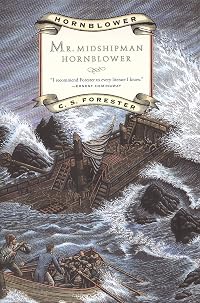






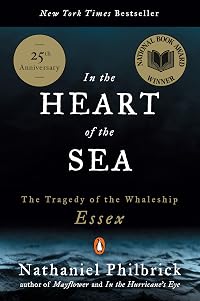
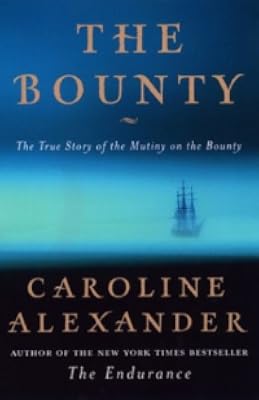
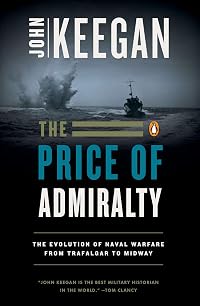

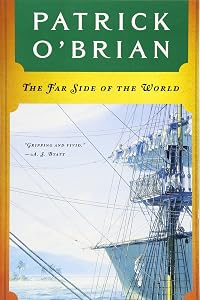




Member Recommendations


A Voyage From Plymouth to Melbourne in 1839 the Shipboard and Early Melbourne Diary by Jonathan Binns Were
bernsad Another good description of daily shipboard life.


Member Reviews
Delightful, just delightful. Started out thinking g I would tire of it as I still don’t truly follow the whole sails thing (which ones go up or down in a storm or get added or subtracted in which wind) but still enjoyed the enthusiasm of the descriptions. Then he hit the California coast and I had a blast reading the descriptions of the coastal “towns” (like San Francisco) in 1820….then it blew me away to read the epilogue where he returns in 1855 and sees all the huge changes of the gold rush…Truly fun read..
Richard Henry Dana tells the story of his trip, subtitled "A Sailor's Life at Sea", in the brig Pilgrim out of Boston in 1834. Only 19 years old, the Harvard student signed on as a deck hand. For the next two years he experienced a sailor's rugged life, traveling around Cape Horn, visiting Mexico's California territory a full 15 years before it became a U.S. state, and returning home in 1836. The Pilgrim was 'a swearing ship', in which the brutal and choleric Captain Thompson imposed his discipline by bad language, and the Sabbath, normally a kind of token rest day for the crew, was never observed, except by the black African cook reading his bible all day alone in his galley. Apparently Captain Thompson was from the same mold as Herman show more Wouk's Captain Queeg in The Caine Mutiny.
The everyday details of his journey are surprisingly vivid. On their first week at sea, they spot a pirate ship, and must outrun it on a moonless night. Dolphins follow the ship as it heads for Cape Horn. The Captain's patience is tried by a lazy first mate who refuses to watch for icebergs. And when a man falls overboard, the captain must assure the crew that a thorough search was conducted. The discipline was brutal and flogging was cruel. The author did not attempt to oppose the Captain, but he did devote much of his subsequent life towards improving the conditions of seamen's lives aboard ship.
What made his story unique was that Dana chose to go "before the mast" and live the life of a real sailor unlike those narratives told by passengers on board ship. The edition I read included a glossary that was helpful since there were so many terms in the book unique to sailing. I found the book to be an exciting story made interesting by the well-educated young man who chose to go to sea as a shipmate 'before the mast' rather than a cabin passenger in the officers' quarters. show less
The everyday details of his journey are surprisingly vivid. On their first week at sea, they spot a pirate ship, and must outrun it on a moonless night. Dolphins follow the ship as it heads for Cape Horn. The Captain's patience is tried by a lazy first mate who refuses to watch for icebergs. And when a man falls overboard, the captain must assure the crew that a thorough search was conducted. The discipline was brutal and flogging was cruel. The author did not attempt to oppose the Captain, but he did devote much of his subsequent life towards improving the conditions of seamen's lives aboard ship.
What made his story unique was that Dana chose to go "before the mast" and live the life of a real sailor unlike those narratives told by passengers on board ship. The edition I read included a glossary that was helpful since there were so many terms in the book unique to sailing. I found the book to be an exciting story made interesting by the well-educated young man who chose to go to sea as a shipmate 'before the mast' rather than a cabin passenger in the officers' quarters. show less
I rarely enjoy historical fiction. I find that authors often don't do enough to forget prejudices and sensibilities of their present day and carry this baggage into the imaginary past they are trying to recreate. This time machine for language, notions, ideas, stereotypes is difficult to avoid for authors and might be easy to spot for readers. It is almost impossible to purge, to surgically remove all vestiges of now from a creating mind, something is bound to slip in unconsciously.
Why not read an account of an actual eyewitness then? Something written at the time of the events in question is certainly going to be free of the interferences from the future.
Ever since setting foot in the Golden State for the first time I was interested show more in one point in history of California - the time when it stood at the crossroads of possible futures, the time when it was an almost forgotten province on the outer reaches of newly independent Mexico, the time when Russians used it as a supply zone to access the riches of fur trade in Alaska, the time when no reliable passage overland was known to open it up for pioneer wagons from the East.
In comes Richard Henry Dana Jr, a Harvard student tired of his studies, so intense that they affected his eyesight, looking for adventure. In 1834 he is recruited as a common sailor on board of a brig Pilgrim bound for California. His two-year voyage spent on the open seas and on the desolate western coast forms a basis for this book, published to great acclaim in 1840.
In addition to giving a historical perspective on a far away land and accurately depicting miserable living and working conditions of sailors, the book had a significant influence on many a traveler to the West, sparking in imagination of the masses the comparative ease of making it in the fertile lands of California. Was Dana instrumental in determining the course of California's history by directing the stream of pioneers to the land of plenty years before gold was discovered there? That we cannot say with certainty, but we can surely be grateful to Dana for his contribution to literature, if not by his own writing, but as a person responsible for pushing Melville to write his own masterpiece.
Another interesting aspect of the book is that it can be read today as a postmodernist recount by an unreliable narrator. It is evident from a close reading how the author hides his own failures and shortcomings, trying to paint himself in a more favorable light than he likely deserves. He uses his influence in Boston to secure his own early return back home ahead of the rest of the crew, he hides from his duties with a toothache when things get too tough around Cape Horn, he recounts the cruel punishment of sailors by the captain but fails to stand up to the captain when he is clearly the only one in a position to do so. Dana's personal deficiencies are complemented by prejudices common to many if not all in his days. These are necessary to paint a complete picture of the time and place: repeated references to inferior nations and races (pretty much anyone who is not Anglo-Saxon), propagation of stereotypes of the day (lazy Native Americans, good natured but stupid Hawaiians, fat loving and also stupid Russians, unenterprising Spaniards, etc), an attitude of reverence to everything English, an unshakable belief in Protestant values as the only acceptable ones.
In summary, it's an entertaining book of dwindling importance as the values it promotes no longer rhyme with the modern understanding of humanity. I would recommend it for everyone interested in that period in history and specifically the history of California. I would suggest to skip the Concluding Chapter as its moralizing and preaching can get tiring very quickly. show less
Why not read an account of an actual eyewitness then? Something written at the time of the events in question is certainly going to be free of the interferences from the future.
Ever since setting foot in the Golden State for the first time I was interested show more in one point in history of California - the time when it stood at the crossroads of possible futures, the time when it was an almost forgotten province on the outer reaches of newly independent Mexico, the time when Russians used it as a supply zone to access the riches of fur trade in Alaska, the time when no reliable passage overland was known to open it up for pioneer wagons from the East.
In comes Richard Henry Dana Jr, a Harvard student tired of his studies, so intense that they affected his eyesight, looking for adventure. In 1834 he is recruited as a common sailor on board of a brig Pilgrim bound for California. His two-year voyage spent on the open seas and on the desolate western coast forms a basis for this book, published to great acclaim in 1840.
In addition to giving a historical perspective on a far away land and accurately depicting miserable living and working conditions of sailors, the book had a significant influence on many a traveler to the West, sparking in imagination of the masses the comparative ease of making it in the fertile lands of California. Was Dana instrumental in determining the course of California's history by directing the stream of pioneers to the land of plenty years before gold was discovered there? That we cannot say with certainty, but we can surely be grateful to Dana for his contribution to literature, if not by his own writing, but as a person responsible for pushing Melville to write his own masterpiece.
Another interesting aspect of the book is that it can be read today as a postmodernist recount by an unreliable narrator. It is evident from a close reading how the author hides his own failures and shortcomings, trying to paint himself in a more favorable light than he likely deserves. He uses his influence in Boston to secure his own early return back home ahead of the rest of the crew, he hides from his duties with a toothache when things get too tough around Cape Horn, he recounts the cruel punishment of sailors by the captain but fails to stand up to the captain when he is clearly the only one in a position to do so. Dana's personal deficiencies are complemented by prejudices common to many if not all in his days. These are necessary to paint a complete picture of the time and place: repeated references to inferior nations and races (pretty much anyone who is not Anglo-Saxon), propagation of stereotypes of the day (lazy Native Americans, good natured but stupid Hawaiians, fat loving and also stupid Russians, unenterprising Spaniards, etc), an attitude of reverence to everything English, an unshakable belief in Protestant values as the only acceptable ones.
In summary, it's an entertaining book of dwindling importance as the values it promotes no longer rhyme with the modern understanding of humanity. I would recommend it for everyone interested in that period in history and specifically the history of California. I would suggest to skip the Concluding Chapter as its moralizing and preaching can get tiring very quickly. show less
Loved this. Dana writes in a clear, straightforward style and in a down-to-earth tone. This book, more than many sea accounts of that period, showcases the contrast between life behind the mast (officers) and before it (the crew). Issues of class and dignity are central to this memoir, and Dana's first-hand experience of the work required of sailors gives his account a certain degree of weight. His concern for others is palpable throughout, and it's clear that his ideas of how to improve life at sea are the informed suggestions of one who has live that life. This book also serves as a sort of travelogue, as Dana describes the different places he visits and people he encounters. This was before California was part of the US, so much was show more different, and I appreciate the way that Dana breathed life into that time and place. Finally, I greatly enjoyed the portions about the sea journey itself. His account of Cape Horn was riveting, one of the most powerful and stunning passages I've read in any memoir. I was especially glad that Dana didn't try to over-simplify the technical aspects of sailing: his use of correct nautical terminology was a wise decision. To people who understand it, it makes perfect sense. To people who don't understand, it still conveys a sense of the amount of work involved, and the different elements connected to sailing. It also in no way hinders one's understanding of the narrative. On the contrary, it imbues it with a richness not to be found in many books of the sea. An afterward gives more details as to the changes out west and the fates of his fellow crew members. Brilliant, and not to be missed. show less
This book, a perennial best-seller in the 19th century, reads a bit old-fashioned today, but to a reader like me, that was part of its charm. What’s it about? A Harvard student interrupts his studies to see if he can save his troubled eyesight. So far understandable, but probably not the basis for an interesting book. The idea arises of a long sea voyage to restore his health. Warmer, but not quite there. Then this youth decides to ship out, not as a passenger, but as a seaman, although he has no experience. Now that could be interesting, if the result is also well-written. As this book is.
Dana boards a merchant ship setting out from his home, Boston, to the coast of California, via Cape Horn. The aim: to bring back a hold so tightly show more stuffed with hides (and a few horns) that the ship is barely above the waterline for the return voyage. Rounding the Cape is hazardous, going and returning, but even the coast of California is not danger-free: a violent wind from a clear sky sends the boat half-way to the Sandwich Islands (Hawaii) in the two weeks that it rages.
The California Dana reaches is sparsely populated, tenuously held by Mexico. Monterrey is the capital and finest bay on the coast; the chapter describing his impressions of it was one of my favorites. San Francisco has one brand-new adobe house, replacing a canvas tent within the previous year, in between the inevitable mission and presidio. Even then, the largest settlement in “Upper” California was Pueblo de los Angeles, with its 40,000 residents.
The tale is replete with incisive portraits of people he encountered — shipmates and their yarns, Kanakas (Sandwich Islanders who had settled on the coast, and whom he particularly admired), and Spanish aristocrats. One of the most famous passages is his description of the unjust flogging of one of the seamen. It is only one evidence of the sympathy and sense of humanity with which he encountered all.
Dana's tale is liberally sprinkled with nautical terminology, much of it unfamiliar to me. I wouldn’t be able to point to a mizzen, royal, or jib sail, and have no idea what it means to reef or to clew one. But I decided not to interrupt my reading to look up these terms. Even without understanding them, the author invoked in me the romance of a well-rigged ship scudding along under full sail.
No, this isn’t The Perfect Storm — although it includes masterful accounts of battling storms at sea. What it is: a remarkable memoir of a young man who leaves safety and shelter to embark on an unexpected course. It is finely-observed and honestly recounted. Will I ever see for myself the Southern Cross and the Clouds of Magellan? Perhaps not, but Dana’s description fired my imagination. What more can one ask of a memoir? show less
Dana boards a merchant ship setting out from his home, Boston, to the coast of California, via Cape Horn. The aim: to bring back a hold so tightly show more stuffed with hides (and a few horns) that the ship is barely above the waterline for the return voyage. Rounding the Cape is hazardous, going and returning, but even the coast of California is not danger-free: a violent wind from a clear sky sends the boat half-way to the Sandwich Islands (Hawaii) in the two weeks that it rages.
The California Dana reaches is sparsely populated, tenuously held by Mexico. Monterrey is the capital and finest bay on the coast; the chapter describing his impressions of it was one of my favorites. San Francisco has one brand-new adobe house, replacing a canvas tent within the previous year, in between the inevitable mission and presidio. Even then, the largest settlement in “Upper” California was Pueblo de los Angeles, with its 40,000 residents.
The tale is replete with incisive portraits of people he encountered — shipmates and their yarns, Kanakas (Sandwich Islanders who had settled on the coast, and whom he particularly admired), and Spanish aristocrats. One of the most famous passages is his description of the unjust flogging of one of the seamen. It is only one evidence of the sympathy and sense of humanity with which he encountered all.
Dana's tale is liberally sprinkled with nautical terminology, much of it unfamiliar to me. I wouldn’t be able to point to a mizzen, royal, or jib sail, and have no idea what it means to reef or to clew one. But I decided not to interrupt my reading to look up these terms. Even without understanding them, the author invoked in me the romance of a well-rigged ship scudding along under full sail.
No, this isn’t The Perfect Storm — although it includes masterful accounts of battling storms at sea. What it is: a remarkable memoir of a young man who leaves safety and shelter to embark on an unexpected course. It is finely-observed and honestly recounted. Will I ever see for myself the Southern Cross and the Clouds of Magellan? Perhaps not, but Dana’s description fired my imagination. What more can one ask of a memoir? show less
I'll try to be brief.
"Two Years Before the Mast" draws the clearest portraits of early nineteenth-century merchant marine written. It is also THE indispensable document of early California, the hide trade and the trading posts that dotted the coast, and really of international maritime trade in the 1830s. Dana also writes a Dickens-like account of American class structure with the sea trade as a microcosm that stands for all. This book is a time machine in the best sense of the word, a window into a world now nearly 200 years past, as viscerally evocative and tangible as could be. You can feel the salt crusting on your skin as you read. _Highly recommended_ to anyone interested in the real, not fictional, past, in all things maritime, show more someone looking for immersive escape, or the work of a significant 19th-century legal reformer (Dana was.).
Dana's book has some issues that cannot be overlooked, however. A well-born Bostonian of the early 1800s, he attended a school overseen by Emerson and his influences were the same New England transcendentalist tenets evoked by his contemporary Thoreau. His prose does not rise above theirs, and that is not a compliment; though there are passages that rise to poetic, his writing is mostly wooden, repetitive, and self-indulgent. Be advised that this is a journal-based memoir and does not deviate from that object. His attitudes are also rather uncomfortable to 21st century sensibilities as, while he waxes rhapsodic about human rights and the nobility of the poor, he voices clearly racist attitudes towards non-WASPs (especially Mexicans...wowzers), wants to convert everyone to Christianity to save them, feels the illiterate poor cannot help but be so, and cannot see past "savages" with "savage languages" when it comes to Native Americans. Yes, he was a product of his time and must be seen so.
A final point, one that other reviewers do not seem to have seen as I did. To wit, Dana was 19-21 years old during the voyage and published his account when 25. Also, he was a Boston Brahmin scion who shipped as a Jack Tar and published when back among his kind. A reader can see how these facts play out in his text: there are many long passages so chock-a-block with nautical jargon as to be incomprehensible to most of his readers even in 1840, let alone today. Further, he goes to great lengths until the last part of the voyage to describe the great health and vigor he and his fellow sailors enjoy on a diet of salt beef and ship's biscuit ... until scurvy hits, that is. Maybe it's because I was like him once, maybe because I have now-grown sons, but this rings of youthful swagger, braggadocio, and smugness. "Look how cool I am! I know sailing things and am a bad-ass!" Yeesh; it gets old, and begins to wear by the halfway point. Best grin and bear it.
I tried to be brief and, like Dana, missed that mark. But he scored dead-center hits with other shots in this book. Give it a read, but you'll have to bring your own salt. show less
"Two Years Before the Mast" draws the clearest portraits of early nineteenth-century merchant marine written. It is also THE indispensable document of early California, the hide trade and the trading posts that dotted the coast, and really of international maritime trade in the 1830s. Dana also writes a Dickens-like account of American class structure with the sea trade as a microcosm that stands for all. This book is a time machine in the best sense of the word, a window into a world now nearly 200 years past, as viscerally evocative and tangible as could be. You can feel the salt crusting on your skin as you read. _Highly recommended_ to anyone interested in the real, not fictional, past, in all things maritime, show more someone looking for immersive escape, or the work of a significant 19th-century legal reformer (Dana was.).
Dana's book has some issues that cannot be overlooked, however. A well-born Bostonian of the early 1800s, he attended a school overseen by Emerson and his influences were the same New England transcendentalist tenets evoked by his contemporary Thoreau. His prose does not rise above theirs, and that is not a compliment; though there are passages that rise to poetic, his writing is mostly wooden, repetitive, and self-indulgent. Be advised that this is a journal-based memoir and does not deviate from that object. His attitudes are also rather uncomfortable to 21st century sensibilities as, while he waxes rhapsodic about human rights and the nobility of the poor, he voices clearly racist attitudes towards non-WASPs (especially Mexicans...wowzers), wants to convert everyone to Christianity to save them, feels the illiterate poor cannot help but be so, and cannot see past "savages" with "savage languages" when it comes to Native Americans. Yes, he was a product of his time and must be seen so.
A final point, one that other reviewers do not seem to have seen as I did. To wit, Dana was 19-21 years old during the voyage and published his account when 25. Also, he was a Boston Brahmin scion who shipped as a Jack Tar and published when back among his kind. A reader can see how these facts play out in his text: there are many long passages so chock-a-block with nautical jargon as to be incomprehensible to most of his readers even in 1840, let alone today. Further, he goes to great lengths until the last part of the voyage to describe the great health and vigor he and his fellow sailors enjoy on a diet of salt beef and ship's biscuit ... until scurvy hits, that is. Maybe it's because I was like him once, maybe because I have now-grown sons, but this rings of youthful swagger, braggadocio, and smugness. "Look how cool I am! I know sailing things and am a bad-ass!" Yeesh; it gets old, and begins to wear by the halfway point. Best grin and bear it.
I tried to be brief and, like Dana, missed that mark. But he scored dead-center hits with other shots in this book. Give it a read, but you'll have to bring your own salt. show less
I can't believe I stayed awake until 11:30 last night, reading. I've been totally blown away by Two Years Before the Mast. Somebody at work mentioned it to me a month or so ago (now I don't remember who it was, but thank you so much!) Always assumed it was "just" a sea story, but it's the history (1830s) of MY southern California.
I'm not sure what grabbed me so strongly from the first page to the last. One of my interests is narratives of 19th century scientific (which this was not) exploration, fascinated by how hard people had to work to get to places where today we just hop a truck or a plane--of course the really interesting places still are not so easy. So there was that. But I guess the real draw was the extensive look at show more California at the time of the decline of the missions, before the gold rush brought the whole world here. Living my whole life in San Diego, these places are the cities and beaches I know. Fascinating. I could go on and on, but I just did, didn't I? show less
I'm not sure what grabbed me so strongly from the first page to the last. One of my interests is narratives of 19th century scientific (which this was not) exploration, fascinated by how hard people had to work to get to places where today we just hop a truck or a plane--of course the really interesting places still are not so easy. So there was that. But I guess the real draw was the extensive look at show more California at the time of the decline of the missions, before the gold rush brought the whole world here. Living my whole life in San Diego, these places are the cities and beaches I know. Fascinating. I could go on and on, but I just did, didn't I? show less
Members
- Recently Added By
Published Reviews
ThingScore 100
Almost two centuries later, we are all made richer by Dana's classic memoir, "Two Years Before the Mast," which is among the finest books ever written about the immensely popular subject of adventure at sea, and is as relevant and readable today as it was then.
added by tim.taylor
Lists

Best 19th and 20th Century Travel
22 works; 4 members

Best Sea Stories
33 works; 5 members

CCE 1000 Good Books List
1,033 works; 12 members

Blue Pyramid 1,276 Best Books of All Time
1,248 works; 32 members

Harold Bloom - The Western Canon: C. The Democratic Age
336 works; 15 members

Trinity College Booklist (1951): Class Five, Travel and Geography
52 works; 2 members

Geography and Travel from The Book-Lover
291 works; 1 member

Libros Californianos: Hanna's List
23 works; 1 member

Unread books
1,063 works; 83 members

Books Read in 2022
5,226 works; 115 members

Publisher's Weekly Bestsellers Prior to 1895 in Chronological Order
95 works; 6 members

Books Read in 2021
5,361 works; 114 members

Books Read in 2023
5,638 works; 147 members

Book Titles Mentioned In Newberry Medal And Honor Books
884 works; 3 members

Recommended Reading : 600 Classics Reviewed, Editors of Salem Press, 2015
634 works; 6 members
Author Information

4+ Works 3,880 Members
Some Editions
Awards and Honors
Series
Belongs to Publisher Series
Collateral Classics (CC-520)
Penguin American Library (PAL8)
Westvaco American Classics (1992)
Doubleday Dolphin (C76)
Airmont Classics (85)
Everyman's Library (588)
Work Relationships
Is contained in
Contains
Has the adaptation
Is abridged in
Has as a student's study guide
Common Knowledge
- Canonical title
- Two Years Before the Mast
- Original title
- Two years before the mast
- Original publication date
- 1840
- People/Characters
- Richard Henry Dana, Jr.; George Marsh; Bill Jackson; Pablo (Don Pablo de la Guerra); Alfred Robinson (agent); Don Juan Bandini (show all 16); Dona Angustias; Jack Stewart; Ben Stimson; Tom Harris; Jim Hall; Andrew Amerzene; Henry Mellus; Richard Brown (Chief Mate of Alert); Harry Bennett; Harry May
- Important places
- Boston, Massachusetts, USA; California, USA; Cape Horn, Chile; Los Angeles, California, USA; Massachusetts, USA; Monterey, California, USA (show all 18); Monterey County, California, USA; San Diego, California, USA; San Juan Capistrano, California, USA (Mission San Juan Capistrano); San Pedro, California, USA; Santa Barbara, California, USA; Atlantic Ocean; Pacific Ocean; Yerba Buena, California, USA; San Francisco Bay, California, USA; Juan Fernandez Island, Chile; Golden Gate, San Francisco, California, USA; Yosemite National Park, California, USA
- Important events
- Age of Sail
- Related movies
- Two Years Before the Mast (1946 | IMDb); Two Years Before the Mast is a 1946 adventure film based on Richard Henry Dana Jr.'s travel book of the same name. It stars Alan Ladd, Brian Donlevy, William Bendix, and Barry Fitzgerald.
- Epigraph
- Crowded in the rank and narrow ship, --
Housed on the wild sea with wild usages, --
Whate'er in the inland dales the land conceals
Of fair and exquisite, O! nothing, nothing,
Do we behold of that in our rude voya... (show all)ge.
Coleridge's Wallenstein - First words
- I am unwilling to present this narrative to the public without a few words in explanation of my reasons for publishing it.
“The fourteenth of August was the day fixed upon for the sailing of the brig Pilgrim, on her voyage from Boston, round Cape Horn, to the western coast of North America.” - Quotations
- Yet a sailor's life is at best but a mixture of a little good with much evil, and a little pleasure with much pain. The beautiful is linked with the revolting, the sublime with the commonplace, and the solemn with the ludicro... (show all)us.
Yet a sailor's life is at best, but a mixture of a little good with much evil, and a little pleasure with much pain. The beautiful is linked with the revolting, the sublime with the commonplace, and the solemn with the ludicr... (show all)ous.
Death is at all times solemn, but never so much so at sea. A man dies on shore, his body remains with his friends, and the mourners go about the streets; but when a man falls overboard at sea and is lost, these is a suddeness... (show all) in the event, and a difficulty in realizing it, which give to it an air of awful mystery. ...you miss a man so much. A dozen men are shut up together in a little bark upon the wide, wide sea, and for months and months see no forms and hear no voices but their own, and one is taken suddenly from among them, and they miss him at every turn. It is like losing a limb.
His is one of those cases which are more numerous than those suppose who have never lived anywhere but in their own homes, and never walked but in one line from their cradles to their graves. We must come down from our height... (show all)s, and leave our straight paths for the by-ways and low places of life, if we would learn truths by strong contrasts; and in hovels, in forecastles, and among our own outcasts in foreign lands, see what has been wrought among our fellow-creatures by accident, hardship, or vice.
So quiet, too, was the sea, and so steady the breeze, that if these sails had been sculptured marble they could not have been more motionless. Not a ripple upon the surface of the canvas; not even a quivering of the extreme e... (show all)dges of the sail, so perfectly were they distended by the breeze. I was so lost in the sight that I forgot the presence of the man who came out with me, until he said (for he, too, rough old man-of-war’s-man as he was, had been gazing at the show), half to himself, still looking at the marble sails,— ``How quietly they do their work! - Last words
- (Click to show. Warning: May contain spoilers.)I wish the rather to do this, since I feel that whatever attention this book may gain, and whatever favor it may find, I shall owe almost entirely to that interest in the sea, and those who follow it, which is so easily excited within us all.
- Disambiguation notice
- This work is Dana's Two Years Before the Mast (unabridged). Please do not combine with anthologies or abridged editions.
Classifications
Statistics
- Members
- 3,808
- Popularity
- 4,188
- Reviews
- 60
- Rating
- (3.93)
- Languages
- 10 — Czech, Danish, Dutch, English, French, German, Italian, Norwegian (Bokmål), Spanish, Swedish
- Media
- Paper, Audiobook, Ebook
- ISBNs
- 161
- ASINs
- 211